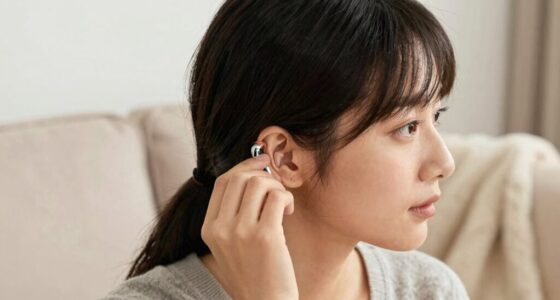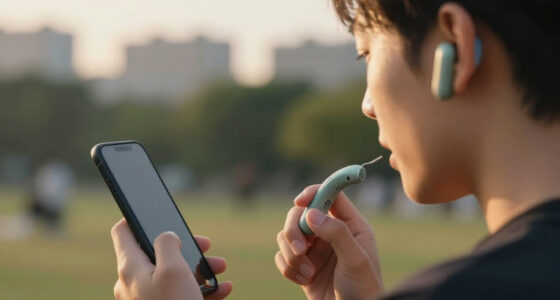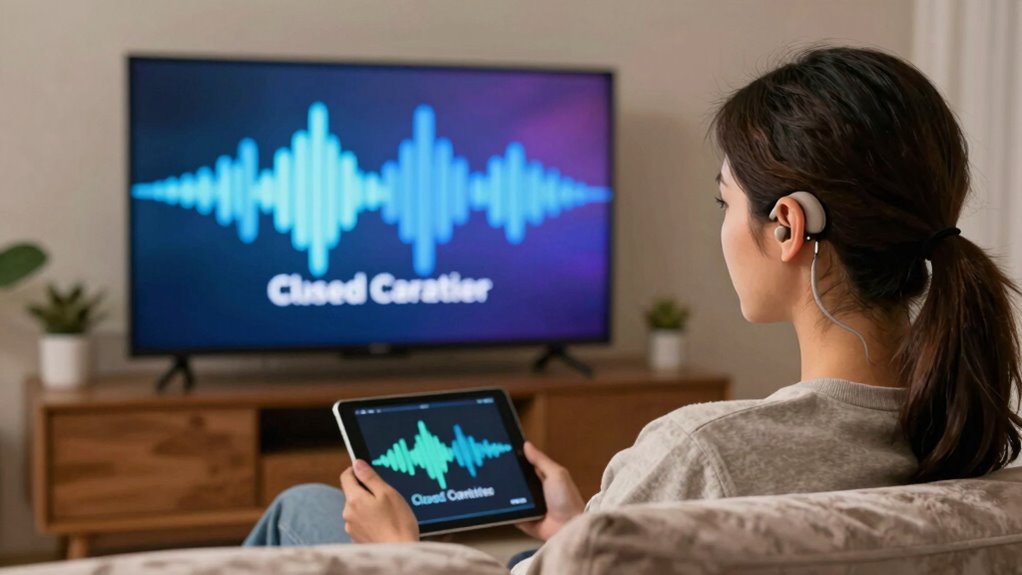

At home, closed captions and hearing devices work together by synchronizing text with audio in real time, helping you follow conversations and media easily even in noisy environments. Modern hearing aids can connect to smart TVs and streaming services via Bluetooth, displaying captions directly or aligning audio with visual text. This seamless integration creates a natural, inclusive experience, making it easier to stay connected and confident. Keep exploring to discover how these technologies combine for a better hearing experience.

Get everyday helpers delivered free with Prime
- Fast, free delivery on millions of items
- Prime Video, Amazon Music and more included
- Member-only deals all year
Key Takeaways
- Hearing devices can connect to smart TVs and streaming services to display synchronized closed captions alongside audio.
- Modern hearing aids support visual text options, allowing easy switching between listening and reading modes.
- Advanced captioning systems reduce audio latency, ensuring captions stay in sync with spoken words.
- Bluetooth pairing enables seamless integration of captions and high-quality audio from home entertainment devices.
- Proper device setup enhances accessibility, providing a cohesive experience that combines audio and visual information.

For many people with hearing loss, combining closed captions with hearing devices can substantially improve their ability to understand spoken words. When you’re at home, this combination can be especially powerful, providing clearer communication and reducing frustration. To get the most benefit, understanding how these tools work together is vital. Central to this integration is audio synchronization, which ensures that the captions match the spoken words in real-time. If captions lag behind or are out of sync, it can be confusing or distracting, defeating their purpose. Modern technology has advanced to minimize these issues, allowing captions to be precisely aligned with the audio stream. This synchronization guarantees that what you’re reading on the screen corresponds directly to what you’re hearing through your device, making comprehension seamless. Additionally, audio latency has been significantly reduced in recent devices, further enhancing real-time captioning accuracy. Advances in technology continue to improve the responsiveness and precision of captioning systems, making them more reliable than ever. These improvements are driven by ongoing research and development in assistive listening technology, ensuring users benefit from the latest innovations.
Audio synchronization ensures captions match speech in real-time, enhancing clarity and reducing confusion for better understanding.
User accessibility remains a primary focus when integrating closed captions with hearing devices. Many hearing aids and cochlear implants now include features that support visual text, so you can switch easily between listening and reading. This flexibility is vital, especially in noisy environments or during conversations with multiple people, where sound alone might be insufficient. When captions are readily accessible through your device, you can activate or deactivate them effortlessly, tailoring your experience based on your needs. This ease of accessibility encourages independence, allowing you to navigate daily activities confidently without relying solely on others for clarification. Moreover, compatibility with smart devices enhances the overall user experience, making it easier to access captions across various platforms. Advances in device integration have also made it possible to seamlessly connect hearing devices with multiple smart home systems, further streamlining accessibility. These innovations are designed to support diverse user needs, ensuring everyone can enjoy an inclusive auditory environment.
At home, these systems work best when paired with compatible devices that prioritize user accessibility. For example, smart TVs and streaming services often offer integrated caption options that synchronize with audio output. When your hearing device connects to these systems, it can often display captions directly on the screen, or through a paired device like a smartphone or tablet. This setup creates a cohesive experience, where audio and text work in harmony. Additionally, some hearing devices support Bluetooth connections that transmit audio directly from your TV or computer, ensuring high-quality sound and synchronized captions. This setup not only enhances clarity but also reduces latency, keeping captions in perfect alignment with the audio. Proper configuration of these devices is essential to achieve optimal performance and a seamless experience. Seamless integration between devices is crucial for ensuring a smooth and effective user experience, especially as technology continues to evolve rapidly.
In essence, understanding and leveraging audio synchronization and user accessibility features allow you to maximize the benefits of closed captions with your hearing devices at home. When these elements are well-integrated, you gain a more natural, inclusive listening experience. You’ll find yourself better equipped to follow conversations, enjoy your favorite shows, and stay connected with loved ones — all on your terms. This marriage of technology empowers you to create a more accessible and comfortable environment, guaranteeing that spoken words are always within your reach, whether through sound or text.
Bluetooth compatible hearing aids
As an affiliate, we earn on qualifying purchases.
As an affiliate, we earn on qualifying purchases.
Frequently Asked Questions
Can Closed Captions Be Customized for Different Content Types?
Yes, you can customize closed captions for different content types. You have options for visual customization, like adjusting font size, color, and background to suit your preferences. Content filtering allows you to select which captions appear, removing unnecessary information or focusing on specific details. These features help you tailor the viewing experience, making it more accessible and comfortable based on the type of content you’re watching.
Do Hearing Devices Automatically Sync With Closed Captioning Systems?
Like a symphony in harmony, hearing devices often automatically sync with closed captioning systems through hearing aid synchronization technology. This seamless connection guarantees captions align with what you’re listening to, enhancing understanding. While some systems allow caption customization for different content types, automatic sync isn’t universal. Check your device’s features, as many modern hearing aids and caption systems are designed to work together effortlessly, providing a more integrated home entertainment experience.
Are Closed Captions Available in Multiple Languages for Hearing Devices?
Yes, many hearing devices now support multilingual accessibility, offering closed captions in multiple languages. You can benefit from caption translation features that provide real-time subtitles in your preferred language, making conversations more understandable. Check your device’s settings or app options to activate multilingual captioning. This way, you enjoy inclusive communication, whether you’re watching TV or participating in video calls, ensuring everyone stays connected regardless of language barriers.
How Do Closed Captions Impact Battery Life of Hearing Devices?
Closed captions can impact your hearing device’s battery life slightly because they require the device to process additional visual information, which may lead to increased power consumption. To optimize your battery life, focus on battery optimization features and make sure your device is compatible with captioning functions. While the impact is usually minimal, turning off captions when not needed can help extend your hearing device’s usability throughout the day.
Can Closed Captions Be Used Without a Hearing Device?
Using closed captions is like having a visual conversation. You can certainly access them without a hearing device, through TV settings, apps, or devices. They’re especially helpful alongside sign language or visual cues, offering additional understanding. While hearing aids enhance sound, captions provide a text-based alternative, making it easier to follow dialogue. So, even without a hearing device, you can enjoy clear, accessible content with closed captions.
Conclusion
As you sit comfortably at home, closed captions and hearing devices become your silent allies, weaving a clear tapestry of words and sounds. Together, they transform your space into a sanctuary of connection, where every laugh, whisper, and song is within reach. Feel the warmth of understanding wrapping around you, like a gentle embrace, reminding you that even in silence, you’re never alone. Your world blooms with clarity, hope, and the simple joy of being truly heard.
Fall Picks
fall essentials
As an affiliate, we earn on qualifying purchases.