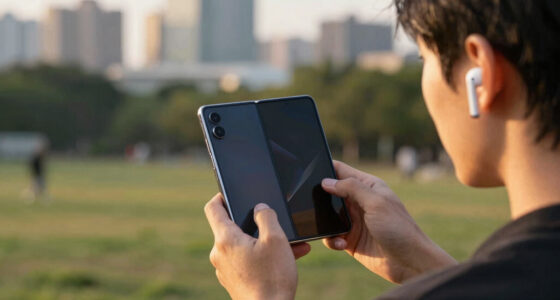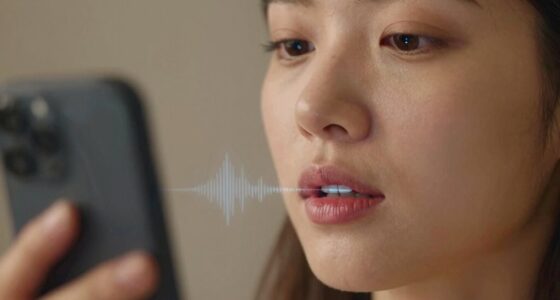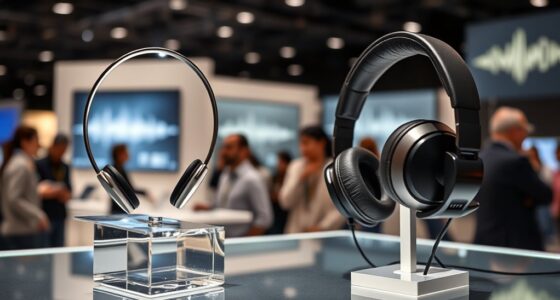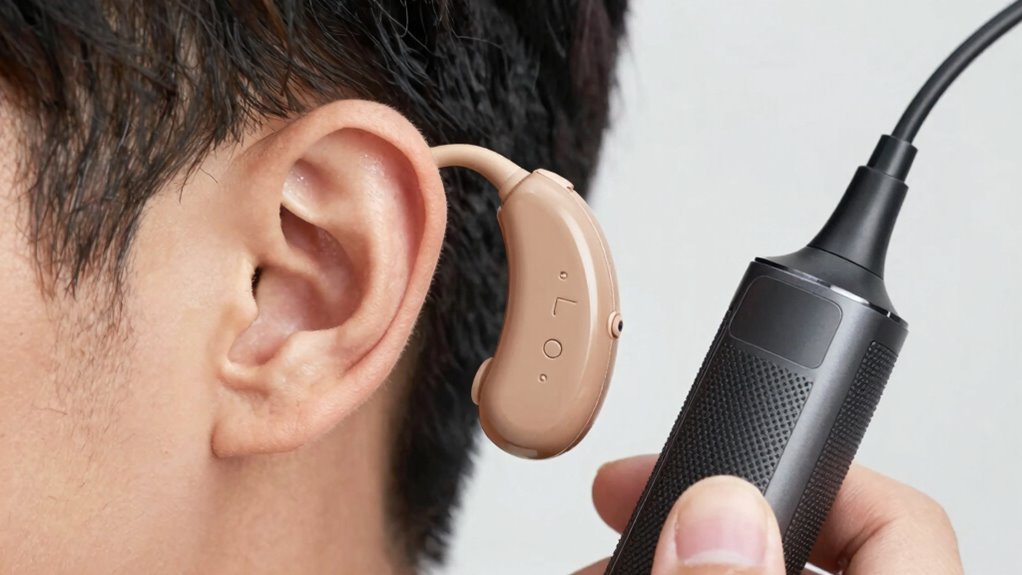

Hearing aids are specialized medical devices fitted by audiologists to treat hearing loss, offering customized sound processing, noise reduction, and connectivity features. Personal amplifiers, on the other hand, are consumer-grade tools you can buy online or in stores to amplify sounds in specific environments without professional guidance. While hearing aids focus on long-term hearing health and improved clarity, personal amplifiers are more for temporary use. Keep exploring to discover how these devices differ in features and benefits.

Get everyday helpers delivered free with Prime
- Fast, free delivery on millions of items
- Prime Video, Amazon Music and more included
- Member-only deals all year
Key Takeaways
- Hearing aids are medically prescribed devices tailored to individual hearing loss, while personal amplifiers are general consumer devices for mild sound enhancement.
- Hearing aids process sounds with sophisticated technology, including noise reduction and directional microphones; amplifiers simply increase volume.
- Hearing aids are customized and fitted by audiologists; personal amplifiers are portable, easy-to-use devices available over-the-counter.
- Hearing aids often connect to smartphones and include security features, whereas personal amplifiers lack advanced connectivity and privacy protections.
- Hearing aids support long-term hearing health and address underlying loss; amplifiers are temporary solutions for situational listening.
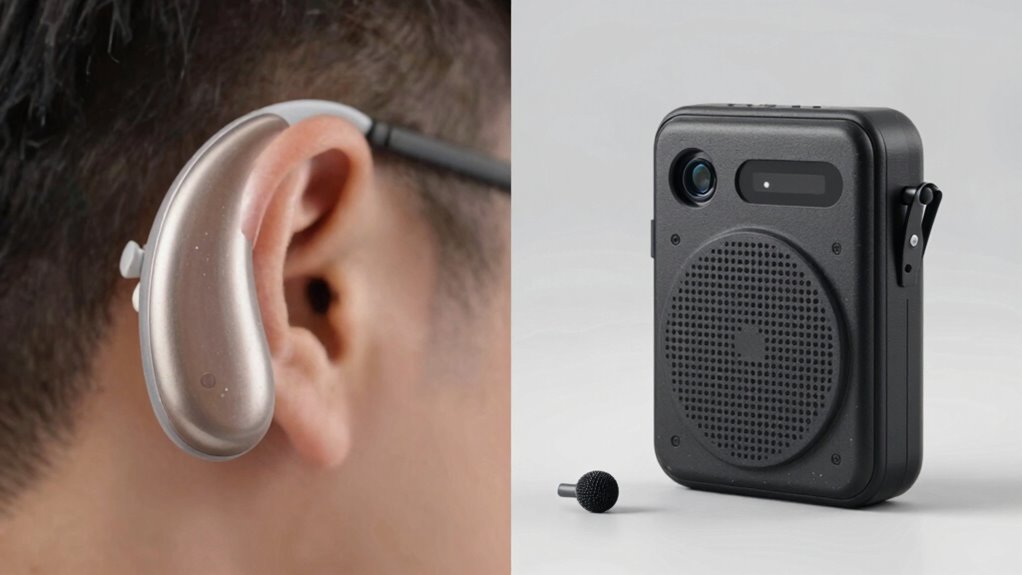
Hearing aids are specialized medical devices designed to treat hearing loss. They are custom-fitted by audiologists and calibrated to your specific hearing profile. These devices process sounds more precisely, filtering out background noise and amplifying speech to improve clarity. Because they’re tailored to your hearing needs, hearing aids often come with advanced features like directional microphones, noise reduction, and connectivity to smartphones or other devices. They’re engineered with your long-term hearing health in mind, helping prevent further deterioration by providing consistent and appropriate amplification. Modern hearing aids are discreet, comfortable, and packed with technology advancements that make wearing them less intrusive and more natural. Additionally, they often incorporate digital security features to protect user data and privacy, reflecting ongoing innovations in the field. Furthermore, the integration of connectivity options allows users to seamlessly sync their devices with other technology for a more personalized experience. As technology continues to evolve, some models now even include health monitoring capabilities, adding value beyond basic hearing enhancement. Understanding the technological complexity behind these devices can help users appreciate the level of customization and sophistication involved.
digital hearing aids with noise reduction
As an affiliate, we earn on qualifying purchases.
As an affiliate, we earn on qualifying purchases.
Frequently Asked Questions
Are Personal Amplifiers Legal to Use in Public Spaces?
Personal amplifiers are generally legal for public usage, but legal considerations vary by location. You need to check local laws and regulations, as some places restrict their use in certain public spaces or require specific approvals. Always use personal amplifiers responsibly to avoid disturbing others or violating privacy. If you’re unsure about legal restrictions, consult local authorities or legal experts to confirm you’re compliant when using these devices in public.
Can Hearing Aids Be Used for Tinnitus Relief?
Absolutely, hearing aids can help with tinnitus relief. Think of it as a modern-day wizard’s wand—using tinnitus masking to drown out ringing sounds and providing hearing therapy to retrain your brain. Many models include features specifically designed for tinnitus management, making your experience more comfortable. So, if tinnitus bothers you, consulting an audiologist about hearing aids with these features could be a smart move.
How Long Do Hearing Aids Typically Last?
Hearing aids typically last between 3 to 7 years, depending on how well you maintain them. Regular hearing aid maintenance, like cleaning and battery checks, can prolong their lifespan. Personal amplifier pricing is generally lower, but they may not last as long or offer the same features. Investing in quality hearing aids and proper upkeep ensures you get the most from your device, making it a worthwhile long-term choice.
Do Personal Amplifiers Require a Prescription?
Think of a personal amplifier as a friendly helper, not a key to a secret door. Usually, you don’t need a prescription for these devices, especially basic types. While hearing aids have advanced hearing aid features and require prescriptions, personal amplifier types are more straightforward. They’re designed for simple use, making them accessible without medical approval. So, you can often pick one up at stores or online without needing a doctor’s note.
Are There Bluetooth Options for Hearing Aids?
Yes, many modern hearing aids offer Bluetooth connectivity, allowing you to wirelessly stream audio directly from your smartphone, tablet, or other devices. This wireless streaming feature enhances your listening experience by providing clear, synchronized sound for calls, music, or TV. With Bluetooth-enabled hearing aids, you can enjoy seamless integration with your devices, making it easier to stay connected and improve your overall hearing comfort and convenience.
Conclusion
Whether you choose hearing aids or personal amplifiers, think of them as different melodies in your life’s song. Hearing aids are like skilled conductors, fine-tuning your hearing with precision, while personal amplifiers are more like enthusiastic amplifiers, boosting sound with energy. Your choice shapes your listening journey—each note, each sound, woven into your daily symphony. Embrace what resonates with you, and let your world come alive with clarity and confidence.
Fall Picks
fall essentials
As an affiliate, we earn on qualifying purchases.