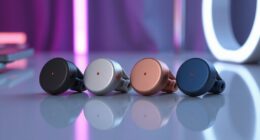
Electrode arrays in cochlear implants differ mainly in shape and placement. Straight arrays sit along the cochlear wall and are flexible, making them easier to insert and suitable for various anatomies. Perimodiolar arrays are pre-curved, positioning closer to the cochlear modiolus for more precise nerve stimulation. Each type influences sound quality, surgical risks, and hearing outcomes. If you want to understand how these differences impact performance, keep exploring to uncover more details.
Key Takeaways
- Straight arrays sit along the cochlear lateral wall, offering flexibility and easier insertion, suitable for varied anatomies.
- Perimodiolar arrays are pre-curved to sit closer to the modiolus, providing more precise nerve fiber stimulation.
- Straight arrays cover broader frequency ranges but may have less targeted nerve stimulation compared to perimodiolar arrays.
- Perimodiolar arrays enable lower stimulation currents, potentially improving sound clarity and speech perception.
- Array choice depends on cochlear anatomy, surgical expertise, and desired balance between ease of insertion and stimulation precision.

Electrode arrays are indispensable tools in modern neurotechnology, enabling precise stimulation and recording of neural activity. When selecting an electrode array, understanding how electrode positioning impacts performance is vital. Straight and perimodiolar designs differ markedly in how they are positioned within the cochlea, influencing their effectiveness. Straight arrays are designed to sit along the lateral wall of the cochlea, offering a more flexible approach to electrode positioning. Their flexibility allows them to conform to the cochlear shape, minimizing trauma during insertion and enabling easier adjustments post-implantation. This array flexibility makes them suitable for patients with varied cochlear anatomies, providing a less invasive option that reduces the risk of damaging delicate structures. Because of their design, straight arrays tend to have a broader insertion pathway, which can be advantageous for covering a wider frequency range. However, their more lateral placement may sometimes result in less precise stimulation of the auditory nerve fibers compared to other designs. Additionally, the choice of array can influence the overall surgical outcomes and long-term device performance.
Perimodiolar arrays, on the other hand, are engineered to sit closer to the modiolus—the central core of the cochlea where the auditory nerve fibers are concentrated. This positioning allows for more accurate electrode placement, directly stimulating the nerve fibers with less current, which can improve sound clarity and speech perception. Their design involves a pre-curved shape that guides the electrodes toward the modiolus, ensuring close proximity to the target neural tissue. Despite the benefits of precise electrode positioning, perimodiolar arrays tend to be less flexible than straight arrays. Their rigidity can make insertion more challenging and increases the risk of trauma if not carefully managed. Nonetheless, their closer proximity to the nerve fibers often translates into better signal fidelity and potentially superior hearing outcomes for users.
Choosing between a straight and a perimodiolar array depends on various factors, including cochlear anatomy, patient-specific needs, and surgical expertise. If flexibility and ease of insertion are priorities, a straight array might be preferable. Conversely, if maximizing electrode proximity to the auditory nerve is more critical, a perimodiolar array could offer advantages. Ultimately, understanding how electrode positioning and array flexibility influence performance helps you make informed decisions about the most suitable design for each patient’s unique cochlear structure. This knowledge guarantees ideal stimulation, reduces surgical risks, and enhances overall hearing outcomes.

16PCS Cochlear Implant Cable Wrap, Colorful Cochlear Hearing Aid Wires Twist Protector Helps to Protect and Strengthen The Wire, Hearing Aids Accessories Help Protect Enhance The Service Life of Wires
Premium Material :The cochlear implant cable twist is made of soft plastic, which is about 4 inches and…
As an affiliate, we earn on qualifying purchases.
As an affiliate, we earn on qualifying purchases.
Frequently Asked Questions
How Do Electrode Arrays Affect Long-Term Hearing Outcomes?
Your choice of electrode arrays influences long-term hearing outcomes by affecting how well the implant stimulates your auditory nerve. Proper fitting strategies guarantee ideal performance and comfort, leading to higher patient satisfaction. Perimodiolar arrays, which sit closer to the nerve, may provide clearer sound, while straight arrays might be easier to implant. Ultimately, selecting the right array and fitting approach helps maximize your hearing benefits over time.
What Are the Manufacturing Differences Between Straight and Perimodiolar Arrays?
You’ll notice that manufacturing differences between straight and perimodiolar arrays mainly involve manufacturing precision and material selection. Straight arrays are designed for flexibility, often using softer materials to ease insertion. Perimodiolar arrays require high manufacturing precision to achieve a close fit around the modiolus, often using rigid materials. These differences guarantee each design’s functionality, impacting ease of insertion, stability, and long-term performance.
Are There Specific Patient Conditions Favoring One Design Over the Other?
Imagine steering a narrow, winding path versus a wide-open trail—your choice depends on your patient’s unique features. For those with complex cochlear pathology or unusual anatomy, a straight array offers flexibility, gently fitting irregular cases. Conversely, perimodiolar arrays suit patients with normal anatomy, providing close cochlear nerve contact. Tailoring the design to patient anatomy guarantees ideal hearing outcomes, especially when cochlear pathology complicates implantation.
How Do Electrode Arrays Impact Postoperative Surgical Procedures?
You should consider how electrode arrays impact your surgical procedures by paying attention to surgical positioning and intraoperative monitoring. Straight arrays are easier to insert and may require less complex positioning, simplifying intraoperative monitoring. Perimodiolar arrays, however, might demand more precise positioning and careful monitoring to guarantee proper placement, which can influence your surgical planning and technique. Being aware of these factors helps optimize outcomes and minimize complications during cochlear implantation.
What Are the Latest Technological Advancements in Electrode Array Design?
Think of electrode array design as upgrading your toolkit for better performance. Recent advancements include wireless connectivity, which streamlines external device communication, and biocompatible materials that enhance safety and longevity. These innovations allow for more precise, less invasive surgeries, improving patient outcomes. As technology evolves, you benefit from more seamless integration and durability, making your cochlear implant experience more natural and reliable.

Cochlear Implant Heairing Aid Sound Device T-Shirt
Hearing Aid Device design. The Cochlear Implant is for hearing impaired person or deaf who loves to have…
As an affiliate, we earn on qualifying purchases.
As an affiliate, we earn on qualifying purchases.
Conclusion
Choosing between straight and perimodiolar electrode arrays isn’t just a technical decision—it’s about shaping a person’s future. While straight arrays offer flexibility and ease of insertion, perimodiolar designs hug the cochlea tightly, promising better sound clarity. Each has its strengths and challenges, but ultimately, your choice impacts someone’s ability to reconnect with the world’s sounds. It’s a reminder that behind every device lies the hope of hearing, and the power to change lives.
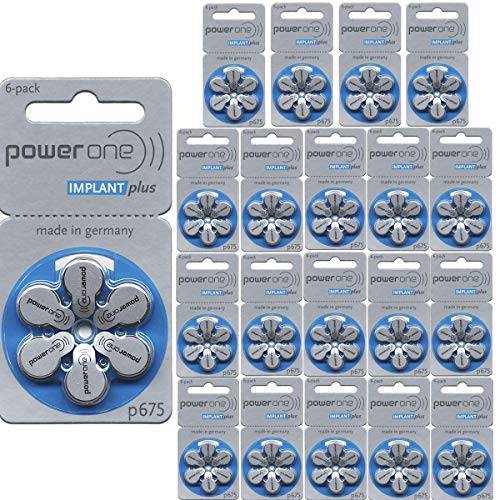
Power One Cochlear Implant Batteries (120 Batteries)
Premium Batteries designed for Cochlear Implants
As an affiliate, we earn on qualifying purchases.
As an affiliate, we earn on qualifying purchases.

GEMQUEEN Piercing Curved and Straight Forceps for Changing Jewelry – 316L Surgical Stainless Steel Pliers Tool Set Locking Tweezers Clamps for Removal Earrings Lip Nose Rings 2 PCS
Details of Piercing Forceps Set: These forceps are made of surgical stainless steel, includes a curved pliers and…
As an affiliate, we earn on qualifying purchases.
As an affiliate, we earn on qualifying purchases.