
Hearing aid compatibility on modern phones means your device is designed to connect easily and work effectively with your hearing aids. It guarantees clearer sound, less background noise, and simple wireless connections, often through Bluetooth or telecoil features. Higher HAC ratings mean better performance and less interference, making conversations more natural. If you want to learn how these features can improve your daily interactions with your hearing aids, there’s more to discover ahead.

Get everyday helpers delivered free with Prime
- Fast, free delivery on millions of items
- Prime Video, Amazon Music and more included
- Member-only deals all year
Key Takeaways
- Hearing Aid Compatibility (HAC) ratings indicate how well a phone works with hearing aids, especially via microphone (M) and telecoil (T) functions.
- Higher HAC ratings mean better audio clarity and less interference during phone calls or media streaming.
- Modern phones support Bluetooth streaming, allowing direct, wireless audio transmission to hearing aids.
- Compatibility features include adjustable sound profiles and easy setup for personalized listening experiences.
- Improved HAC and connectivity help users achieve clearer conversations and seamless integration with hearing aids.
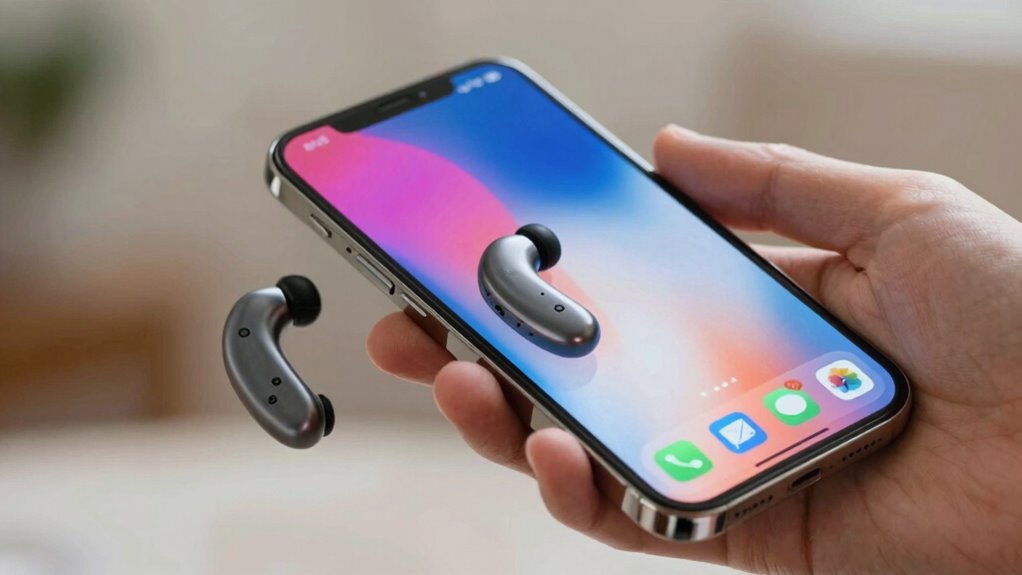
Modern phones are increasingly designed to work seamlessly with hearing aids, making communication clearer and more accessible for users with hearing impairments. This integration often includes features like Bluetooth streaming, which allows your phone to directly send audio signals to your hearing device. When you connect your phone via Bluetooth, you can listen to calls, music, or videos without the need for additional accessories or cables, providing a more natural and distraction-free experience. This wireless connection enhances convenience and reduces background noise, allowing you to focus on speech and other important sounds.
Modern phones seamlessly connect with hearing aids via Bluetooth for clearer, distraction-free listening.
Speech enhancement technology plays an essential role in modern hearing aid compatibility. Phones equipped with speech enhancement algorithms can better analyze and amplify speech signals while suppressing background noise. When you receive a call or use voice chat, this feature helps you understand conversations more clearly, even in noisy environments. It works in tandem with your hearing aid, ensuring that spoken words are delivered with improved clarity. This makes everyday communication more effortless, whether you’re in a crowded restaurant or a busy street. Additionally, speech enhancement technology continues to evolve, providing users with increasingly natural sound experiences. Developers are also working on noise reduction features to further improve audio quality in challenging listening situations. These advancements help create a more natural sound experience, making conversations feel more lifelike.
Another key aspect of hearing aid compatibility on phones is the availability of dedicated hearing aid compatibility (HAC) ratings. These ratings, usually marked as M (microphone) and T (telecoil), indicate how well a phone works with hearing aids. A higher HAC rating means better performance, especially when using telecoil or microphone modes. When you choose a phone with good HAC ratings, you’re more likely to experience minimal interference and clearer audio transmission. Many modern phones also support a variety of hearing aid features, including adjustable sound profiles and customized settings, giving you control over your listening experience. Additionally, HAC ratings can help you compare different models to find the best fit for your needs.
Smartphone manufacturers are continually improving these features, ensuring that users with hearing aids get the most out of their devices. You’ll find that newer models often include built-in compatibility with popular hearing aid brands, making setup straightforward. Additionally, some phones allow you to customize sound settings directly through their accessibility menus, further enhancing speech clarity and comfort. These advancements mean you no longer need separate devices or complicated setups; your phone becomes an integrated tool that complements your hearing aids.
In essence, hearing aid compatibility on modern phones isn’t just about meeting technical standards—it’s about providing you with a more connected, clearer, and more comfortable communication experience. By leveraging features like Bluetooth streaming and speech enhancement, your phone can considerably improve your ability to hear and engage with the world around you, making daily interactions smoother and more natural.
Hearing aid compatible smartphones
As an affiliate, we earn on qualifying purchases.
As an affiliate, we earn on qualifying purchases.
Frequently Asked Questions
How Do I Test if My Phone Is Hearing Aid Compatible?
To test if your phone is hearing aid compatible, start by enabling hearing aid settings or compatibility features in your device’s accessibility options. Next, try making a call with your hearing aids in place, ensuring they’re set to the correct mode. You can also check your phone’s specifications for hearing aid compatibility ratings (like M or T ratings). If unsure, visit a store to test or consult your device’s user manual for detailed instructions.
Are All Hearing Aids Compatible With Modern Smartphones?
Not all hearing aids are compatible with modern smartphones. Some hearing aids support Bluetooth pairing, allowing direct connection for better sound quality and convenience. Others rely on sound amplification features, but might not connect directly via Bluetooth. To guarantee compatibility, check your hearing aid’s specifications or consult with an audiologist. Upgrading to a hearing aid with Bluetooth capabilities can enhance your experience with modern phones, providing seamless communication and improved sound clarity.
What Does the Hearing Aid Compatibility (HAC) Rating Indicate?
HAC ratings tell you how well your phone plays with hearing aids, like a compatibility report for tech lovers. Higher ratings mean better Compatibility standards, so you won’t need to yell into your phone or endure awkward silences. Think of HAC ratings as a secret handshake between your device and hearing aids, ensuring smooth conversations. If you want clear sound and hassle-free chats, aim for a higher HAC rating—your ears will thank you.
Can Hearing Aid Compatibility Change With Software Updates?
Hearing aid compatibility can change with software updates because manufacturers often improve wireless connectivity and Bluetooth standards. These updates may enhance audio quality, reduce interference, or optimize how your phone communicates with hearing aids. So, if you notice differences after an update, it’s likely due to improvements in wireless technology or Bluetooth standards, which can positively impact your hearing aid experience and maintain compatibility over time.
Do Hearing Aids Need to Be Upgraded for Better Phone Compatibility?
Yes, you may need to upgrade your hearing aids for better phone compatibility. Imagine a seamless dance between your hearing aids and your phone, with wireless streaming and Bluetooth connections flowing effortlessly. As technology evolves, newer hearing aids often feature improved wireless capabilities, guaranteeing clearer calls and smoother streaming. Upgrading guarantees you stay connected, maximizing your phone’s compatibility and enjoying a richer audio experience without static or interruptions.
Conclusion
Now that you understand what hearing aid compatibility really means, you might wonder what’s next. Are future phones going to be even more seamless for your hearing needs? The technology is constantly evolving, and the possibilities are exciting. Stay tuned—there’s more on the horizon that could transform your experience even further. The question is, are you ready to see what’s coming next? The answer could change the way you connect forever.
Fall Picks
fall essentials
As an affiliate, we earn on qualifying purchases.