Noise reduction in hearing aids helps you understand speech better and enjoy more comfort by analyzing incoming sounds and filtering out background noise. It can reduce unwanted sounds and improve clarity in busy places, but it doesn’t eliminate all noise, especially in very noisy environments. Sometimes, it may cause sound distortion or reduce important alerts. To get the most out of this technology, understanding its limitations and proper use is key—keep exploring to find out more.
Key Takeaways
- Noise reduction filters background sounds to improve speech clarity but cannot eliminate all noise, especially in very noisy environments.
- It helps reduce listening fatigue and enhances comfort by minimizing distracting sounds during conversations.
- Excessive filtering may distort sounds or remove important cues, leading to unnatural audio experiences.
- Effectiveness depends on environment, device quality, and proper fitting; it works best with steady sounds.
- Noise reduction is a valuable feature but should be complemented with other settings and techniques for optimal hearing aid performance.
How Do Noise Reduction Features Work in Hearing Aids?

Noise reduction features in hearing aids work by analyzing incoming sounds and filtering out background noise to improve speech clarity. They use advanced sound filtering algorithms to distinguish speech from unwanted noise, making conversations easier to follow. Feedback loops can sometimes cause whistling or squealing, but modern hearing aids monitor and adjust sound output to minimize this issue. These devices actively detect sounds that are distracting or repetitive, reducing their volume or removing them altogether. Free Floating technologies can help improve overall sound quality by allowing the device to adapt to different environments more effectively. Additionally, many devices incorporate adaptive noise control, which dynamically adjusts filtering parameters based on real-time acoustic conditions. The goal is to enhance important sounds while suppressing background noise, creating a more natural listening experience. Through real-time processing, hearing aids continuously refine their filtering, helping you focus on conversations without being overwhelmed by surrounding noise. Noise analysis plays a crucial role in identifying which sounds to amplify or reduce, further enhancing listening comfort. Moreover, ongoing research into auditory processing is helping to improve how hearing aids interpret complex sound environments for better user experience. Advances in sound environment adaptation are making these devices more effective at handling diverse and changing auditory settings.
What Are the Benefits of Noise Reduction Technology?

Implementing noise reduction technology in hearing aids offers significant advantages for users. It helps minimize background noise, making environments like busy restaurants or crowded streets more manageable. This reduction allows you to focus better on conversations, improving speech clarity. As a result, you experience less listening fatigue and frustration when trying to understand speech amid noise. Noise reduction features automatically adjust to different settings, providing a more natural listening experience. By filtering out unnecessary sounds, your hearing aids enhance your ability to participate confidently in social situations. Overall, this technology makes everyday listening more comfortable and less strenuous, allowing you to enjoy clearer communication without constantly struggling against background noise. Sound filtering technology can further optimize auditory experiences by selectively reducing unwanted sounds while preserving speech clarity. Additionally, understanding the limitations of noise reduction helps set realistic expectations for what the technology can achieve. Being aware of sound filtering capabilities allows users to better utilize these features for improved listening comfort. Recognizing the role of ambient sound management can also help users fine-tune their devices for different environments.
What Are the Limitations of Noise Reduction in Hearing Aids?
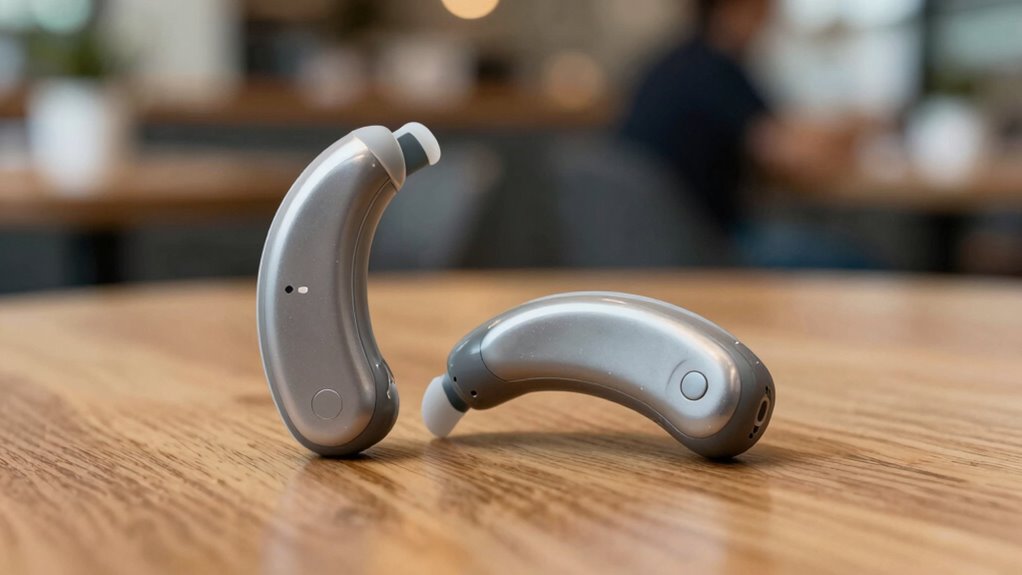
While noise reduction technology in hearing aids offers many benefits, it also has limitations that can affect your listening experience. One major challenge is background noise, which can sometimes still be distracting despite the technology. Technical limitations mean that noise reduction may not perfectly distinguish between speech and unwanted sounds, leading to occasional muffling or misinterpretation. Here are some key limitations to contemplate:
- It can’t eliminate all background noise, especially in very noisy environments.
- It may reduce important sounds, like speech cues or alerts.
- Excessive filtering can cause unnatural sound quality or listening fatigue.
- Technical constraints mean noise reduction works best with consistent, steady sounds, not sudden or complex noises.
- Modern sound processing techniques are continually evolving, but current technology still faces challenges in replicating natural hearing experiences.
- The effectiveness of noise reduction can vary depending on the environment and the specific hearing aid model.
- Additionally, sensor accuracy plays a crucial role in how well noise reduction performs across different situations.
- Ongoing research aims to improve these technological limitations to better mimic natural hearing.
How Can Users Maximize Noise Reduction Effectiveness?
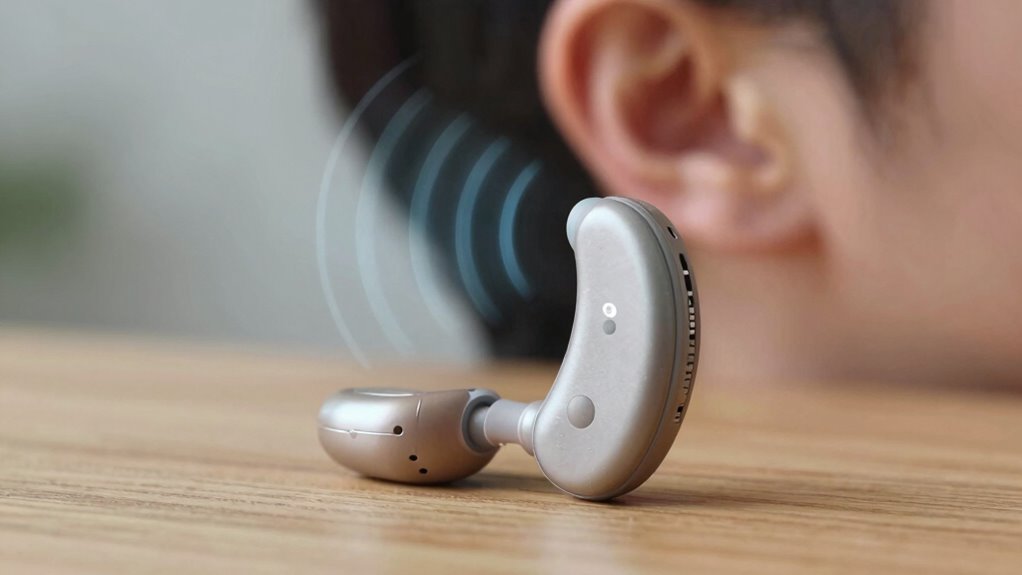
To get the most out of your hearing aids’ noise reduction features, it’s important to customize and fine-tune your device regularly. Adjust settings to balance background noise and speech clarity. Position yourself to face the speaker, reducing competing sounds from behind or the sides. Use directional microphones when available to focus on speech directly in front of you. Keep your hearing aids clean and updated for excellent performance. Remember, real-world environments vary, so don’t hesitate to revisit settings for different situations. Utilizing drone insights can help you better understand how to adapt your hearing devices to various acoustic environments. Additionally, understanding sound environment considerations can guide you in selecting optimal settings for different locations. Regularly monitoring your environment and making adjustments can significantly enhance your listening experience in diverse settings. Being aware of acoustic environment factors can further improve your ability to optimize your hearing aid performance in various situations. Staying informed about environmental acoustics can also help you anticipate and adapt to challenging listening conditions more effectively.
When Should You Consider Additional Hearing Aid Features?

Knowing when to explore additional hearing aid features can considerably enhance your listening experience. If you notice your battery life is diminishing faster or you struggle to connect seamlessly with your devices, it’s time to consider extra features. Ask yourself:
- Are my hearing aids lasting through the day without frequent charging or battery swaps?
- Do I want better connectivity options to stream music, phone calls, or other devices?
- Am I missing out on advanced noise reduction features that improve clarity in challenging environments?
- Do I desire customizable settings to adapt to different listening situations?
- Understanding the role of sound quality and how contrast ratios in projectors affect image clarity can help you appreciate the importance of clear, accurate audio and visuals. Additionally, exploring hearing aid technology can help you identify the latest innovations that might benefit your hearing needs. Staying informed about hearing aid features can guide you in making the most effective upgrades for your situation. Recognizing how personalization options can tailor the hearing experience ensures you select the most suitable features for your lifestyle. Moreover, being aware of user-friendly controls can make managing your hearing aids more convenient and accessible.
These features can boost your confidence and enjoyment, but only when your current setup falls short. Recognizing these signs helps you decide when to upgrade or add features for ideal hearing aid performance.
Frequently Asked Questions
How Does Noise Reduction Impact Speech Understanding in Noisy Environments?
Noise reduction improves your speech understanding in noisy environments by enhancing sound clarity and helping you focus on conversations. It automatically adapts to different environments, filtering out background noise so you don’t get overwhelmed. While it won’t eliminate all noise, this feature makes it easier for you to pick up speech signals, allowing you to communicate more effectively and comfortably even in challenging settings.
Can Noise Reduction Features Be Customized to Individual Preferences?
Ever wondered if you can truly customize noise reduction features? The answer is yes. Many hearing aids offer personalization options that allow you to adjust noise reduction settings to match your user preferences. You can tailor the level of noise suppression, balancing clarity and comfort. This customization helps you feel more in control, ensuring your hearing aids work best for your unique environment and listening needs.
Do All Hearing Aids Incorporate the Same Noise Reduction Technology?
Not all hearing aids incorporate the same noise reduction technology. You’ll find variations in technology, with some devices offering advanced features while others have basic options. Keep in mind, feature limitations exist due to design differences and cost. You should compare models carefully, focusing on how their noise reduction technology aligns with your needs, as not every hearing aid provides the same level of noise control.
How Does Noise Reduction Affect Battery Life in Hearing Aids?
Noise reduction can slightly increase your hearing aid’s battery drain because it boosts power consumption to analyze and filter sounds. When you activate advanced noise reduction features, your device uses more energy, which may reduce battery life. However, modern hearing aids are designed to balance noise reduction with power efficiency, so while there’s some impact on battery life, it’s usually minimal and depends on how often you use these features.
Are There Specific Settings Recommended for Different Types of Noisy Environments?
You should adjust your hearing aid settings based on your environment. For noisy places, enable environmental adjustments that focus on reducing background noise, and guarantee your device calibration is optimized for clarity. In restaurants or crowded areas, activate noise reduction features designed for speech understanding. Regularly update these settings through your audiologist’s guidance to make sure your hearing aids perform best in different noisy environments, enhancing your listening experience.
Conclusion
Understanding what noise reduction can and can’t do helps you navigate your hearing journey wisely. While it’s a helpful tool that clears the path through noisy environments, it’s not a magic wand. Think of it as a helpful guide, not a substitute for other features or proper hearing care. By working with your audiologist and exploring all options, you’ll find your hearing aid becomes a trusted companion, turning up the volume on clarity and reducing background chaos like a lighthouse in a storm.