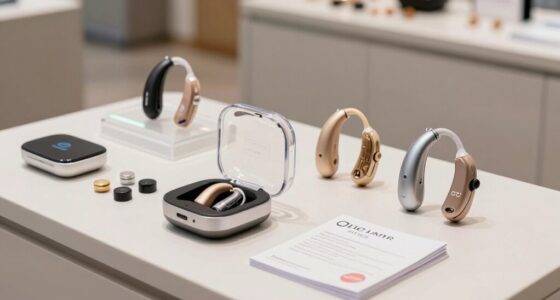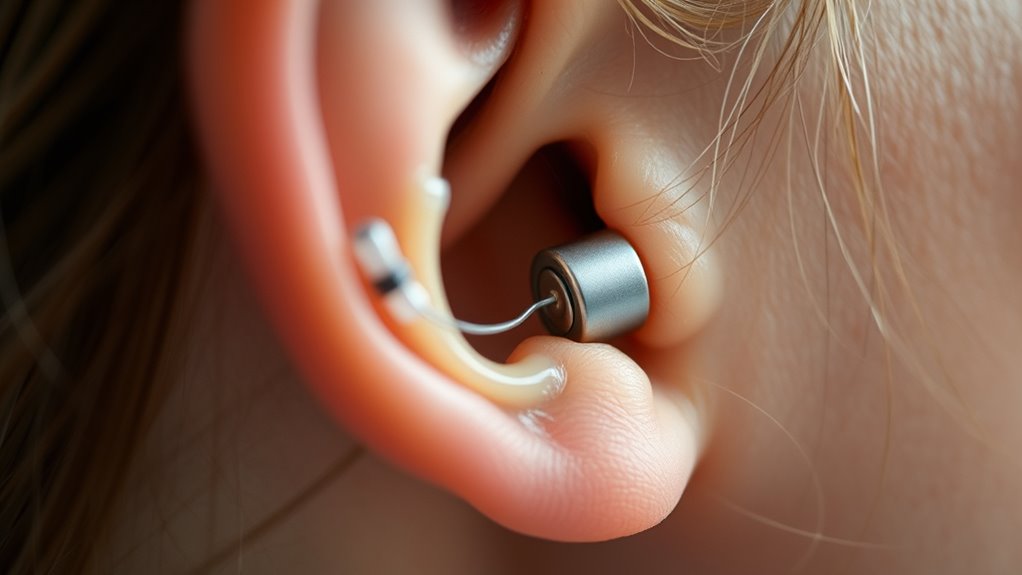

A cochlear implant is a device that helps you hear by directly stimulating your auditory nerve, bypassing damaged parts of your ear. It has an internal part placed under your skin and an external processor worn on your head. The external part captures sound and sends digital signals wirelessly to the internal implant, which activates electrodes to send impulses to your nerve. This process allows your brain to interpret sounds more clearly, and exploring further reveals how these components work together to restore hearing.

Get everyday helpers delivered free with Prime
- Fast, free delivery on millions of items
- Prime Video, Amazon Music and more included
- Member-only deals all year
Key Takeaways
- Cochlear implants bypass damaged ear parts to directly stimulate the auditory nerve, restoring hearing for severe hearing loss.
- They consist of an internal implant surgically placed under the skin and an external processor worn on the ear.
- The external processor captures sounds, processes them into digital signals, and wirelessly transmits them to the internal implant.
- Electrodes within the implant stimulate the auditory nerve at different points based on sound frequency, sending electrical impulses.
- The brain interprets these signals as sounds, with success depending on nerve health and proper device calibration.
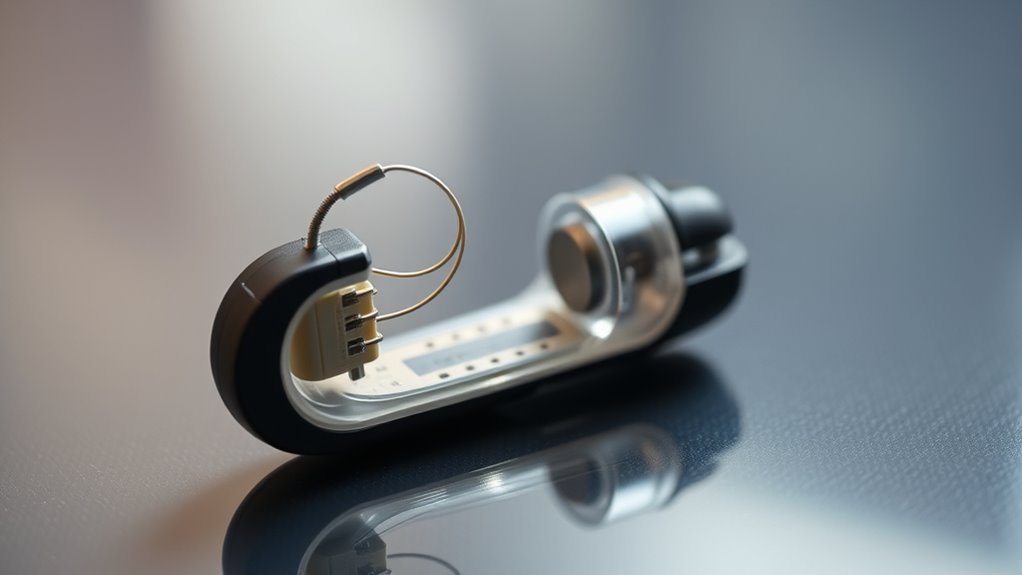
A cochlear implant is a sophisticated medical device that restores hearing for people with severe to profound sensorineural hearing loss. Unlike hearing aids that amplify sound, a cochlear implant bypasses damaged parts of your ear and directly stimulates the auditory nerve, allowing you to perceive sound. This process depends heavily on how well your auditory nerve responds to electrical signals, making the integrity of this nerve essential for effective speech perception. When your auditory nerve is healthy enough, the implant can send clear signals to your brain, resulting in improved understanding of speech and environmental sounds.
The device comprises two main parts: an internal implant and an external processor. The internal component is surgically placed under your skin behind your ear and contains electrodes that directly stimulate your auditory nerve. The external processor sits on your head, typically over the ear, and captures sound from your environment. It processes these sounds into digital signals, which are then transmitted wirelessly to the internal implant via a magnet. This seamless communication is vital because it ensures that your auditory nerve receives precise, timed electrical impulses that mimic natural hearing.
Once the signals reach the electrodes, they stimulate your auditory nerve at different points, depending on the frequency of the sound. This stimulation allows your brain to interpret these signals as specific sounds, ranging from speech to music and environmental noises. Your brain’s ability to interpret these signals accurately hinges on the clarity of the electrical impulses and the health of your auditory nerve. Over time, with consistent use and auditory training, your brain adapts to these signals, significantly improving speech perception even in noisy environments.
The process of adjusting and fine-tuning the cochlear implant is crucial. Your audiologist calibrates the device to match your specific hearing needs, ensuring the stimulation of your auditory nerve is optimized for clear sound perception. This customization helps you distinguish speech sounds more accurately, which is especially important for understanding conversations in complex acoustic settings. As you continue to use the implant, your brain learns to interpret the electrical signals more effectively, enhancing your overall speech perception and ability to enjoy the sounds around you.
In essence, the cochlear implant works by directly stimulating your auditory nerve with carefully crafted electrical signals, bypassing damaged cochlear structures. This approach leverages your nerve’s ability to transmit sound information to your brain, making speech perception possible for those who previously struggled with hearing loss. The success of this process depends on the health of your auditory nerve and your commitment to auditory training, ultimately helping you reconnect with the soundscape of your world. Additionally, understanding the importance of auditory nerve health can significantly influence the effectiveness of the implant and your hearing outcomes.
cochlear implant external processor
As an affiliate, we earn on qualifying purchases.
As an affiliate, we earn on qualifying purchases.
Frequently Asked Questions
How Long Does It Take to Adapt to a Cochlear Implant?
You can expect to see auditory adaptation within a few weeks, but full adjustment varies. The rehabilitation timeline depends on your age, hearing history, and dedication to therapy. Typically, it takes several months for your brain to learn to interpret new sounds effectively. Consistent practice and support from audiologists help speed up this process, making your progression smoother and more successful over time.
Are Cochlear Implants Suitable for All Types of Hearing Loss?
Not all hearing loss types qualify for cochlear implants. While they suit severe to profound sensorineural loss, age restrictions and hearing aid compatibility matter. Younger children often benefit, but older adults may face limitations. If your hearing loss is conductive or mixed, implants might not help. You should consult an audiologist to assess your specific condition, age, and device compatibility, ensuring the best treatment plan.
What Are the Risks and Potential Complications?
You should know that cochlear implants carry some risks, such as surgical risks and device failure. Surgical risks include infection, bleeding, or nerve damage, which might require additional procedures. Device failure can occur over time, possibly needing repairs or replacements. While serious complications are rare, it’s essential to discuss these potential issues with your ENT specialist to understand the risks and make certain of proper care during and after surgery.
How Much Does a Cochlear Implant Cost?
Like a dial-up modem, cochlear implant costs can seem outdated, but they usually range from $30,000 to $50,000 per ear. Insurance coverage varies, often covering a significant portion, while financial assistance programs may help reduce your out-of-pocket expenses. it is crucial to check with your provider and explore options like grants or charity programs to make this life-changing device more affordable for you.
Can Children With Cochlear Implants Learn to Speak Naturally?
Yes, children with cochlear implants can learn to speak naturally. Your child’s language development depends on early implantation, consistent use, and speech therapy. With dedicated speech therapy, they improve their ability to develop normal speech and language skills. You should work closely with speech-language pathologists, who help your child practice sounds, words, and sentences, enabling them to communicate confidently and naturally over time.
Conclusion
A cochlear implant is more than just a device; it’s a bridge to new worlds of sound and connection. Like a lighthouse guiding a ship through darkness, it illuminates the path to communication and understanding. With each sound it restores, it symbolizes hope and resilience, transforming silence into a symphony of life. Embrace this marvel of technology, knowing it empowers you to navigate the melodies of the world with renewed confidence and clarity.
Columbus Day / Indigenous Peoples' Day Picks
long weekend sales
As an affiliate, we earn on qualifying purchases.