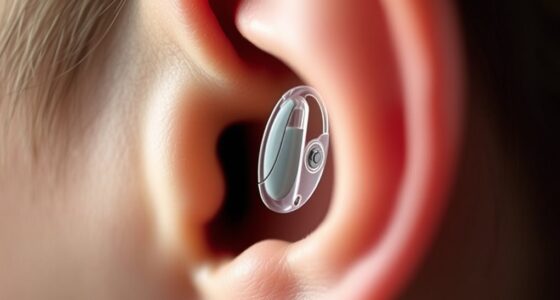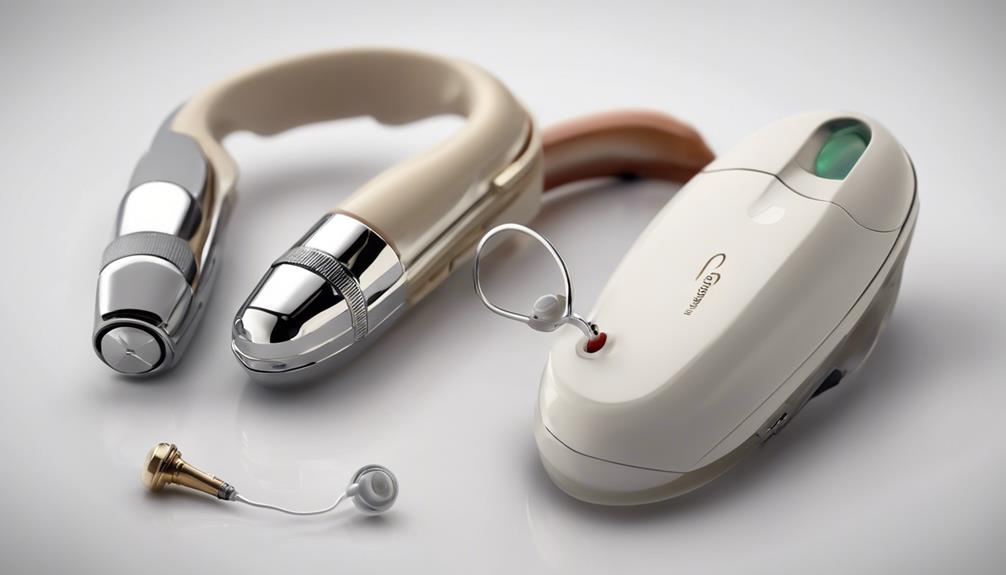
“Wireless hearing aids” can mean aids that stream audio from a phone, aids that recharge without disposable batteries, or models with both features. Bluetooth hearing aids are the better match for people who want calls, music, or app controls sent directly to their ears. Rechargeable hearing aids suit people who want a simple nightly charging routine and fewer battery changes. These categories overlap: many current Bluetooth models are rechargeable. The practical decision is whether direct device connectivity justifies the extra cost and setup, and whether the model also meets your hearing, comfort, and service needs.

Get everyday helpers delivered free with Prime
- Fast, free delivery on millions of items
- Prime Video, Amazon Music and more included
- Member-only deals all year

EarCentric EasyCharge Rechargeable Behind-the-Ear Hearing Aids, Pair
- ✔ Fit: Behind-the-ear
- ✔ Package quantity: Pair
- ✔ Controls: Button control; adjustable volume
OTC Hearing Aids for Seniors with Noise Cancellation and 100+ Hour Battery Life
- ✔ Fit: In-ear
- ✔ Audio processing: 16-channel
- ✔ Noise control: Adaptive noise cancellation

Oldriv K159 Rechargeable In-Ear Hearing Aids with Noise Reduction
- ✔ Fit: Completely-in-canal, in-ear
- ✔ Controls: Button control
- ✔ Noise features: Noise reduction and feedback cancellation
This comparison treats Bluetooth hearing aids as the connectivity-first option (A) and rechargeable hearing aids as the charging-first option (B). Neither label tells you how well an aid will address your hearing loss. Fitting, adjustment, and ongoing support can matter more than either feature. Compare the specific model, its compatibility with your phone, battery expectations, total cost, and return or follow-up terms before choosing.
At a Glance
| Criteria | Bluetooth hearing aids | Rechargeable hearing aids | Winner |
|---|---|---|---|
| Phone calls and audio streaming | Direct streaming and, on supported models, hands-free calls; features vary by phone and aid. | Basic models may not stream; many rechargeable models also include Bluetooth. | A |
| Daily power routine | May use disposable batteries or a rechargeable case; check the specific model. | Place aids in a charger overnight; avoids routine disposable battery changes. | B |
| Compatibility and setup | Requires compatible devices and sometimes app or connection setup. | Usually simple charging, though Bluetooth models still need pairing and compatibility checks. | Depends |
| Hearing care and adjustment | May be prescription-fit or self-fit; connectivity does not determine care quality. | May be prescription-fit or self-fit; rechargeable design does not determine care quality. | Depends |
| Cost and ongoing expenses | Often costs more when advanced streaming and app features are included; varies widely. | Charging can reduce battery purchases; purchase price and service costs depend on model and provider. | Depends |
| Best fit for the user | People who will use phone, TV, or other audio streaming. | People who value charging convenience and do not need frequent streaming. | Depends |
EarCentric EasyCharge Rechargeable Behind-the-Ear Hearing Aids, Pair
For buyers who want a straightforward starting point, EarCentric EasyCharge makes the strongest all-around case. It is explicitly sold as a pair and uses a behind-the-ear design, which is generally easier to see and handle than a tiny in-canal device. Adjustable button volume and environmental noise reduction offer basic control without the more involved five-level saved-setting setup described for the other OTC in-ear model.Its charging system is the distinguishing advantage. The manufacturer states up to three days of use per charge, and the pocket-size case carries three additional charges. That is more useful for travel or busy routines than the Oldriv’s single stated 24-hour cycle, although the two runtime claims are not directly comparable without a common testing method. EarCentric also lists a 12-month warranty and on-demand support, details absent from the Oldriv description.The tradeoff is a more visible behind-the-ear fit, and the listing does not clarify software update support. Buyers looking for the most discreet option may prefer the Oldriv K159, while those prioritizing longer stated runtime per charge and saved volume preferences may favor the OTC in-ear model. We also should not read “wireless” as proof of Bluetooth streaming: compatible-device listings name phones, tablets, and televisions, but the supplied details do not specify streaming functionality.
Pros:
- Sold as a pair with a behind-the-ear fit
- Button controls provide adjustable volume
- Case carries three additional charges
- Includes a 12-month warranty and on-demand support
Cons:
- Behind-the-ear devices are more visible than the two in-ear alternatives
- Software update support is listed as unknown
- Bluetooth audio streaming is not confirmed in the provided details
Best for: Buyers who want a clearly listed pair, visible button controls, adjustable volume, and a charging case for use away from an outlet.
Not ideal for: People who prioritize an in-canal, less visible fit or require confirmed Bluetooth streaming and software update support.
Bottom line: We rank EasyCharge first for its clearly specified pair, accessible controls, and case-based charging flexibility, provided a behind-the-ear fit suits us.
“We rank EasyCharge first for its clearly specified pair, accessible controls, and case-based charging flexibility, provided a behind-the-ear fit suits us.”
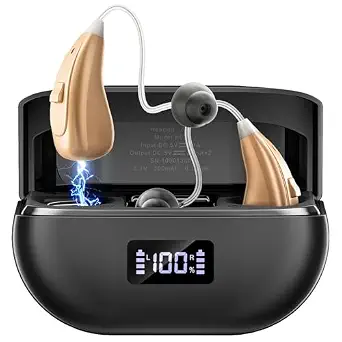
OTC Hearing Aids for Seniors with Noise Cancellation and 100+ Hour Battery Life
The main reason to choose this OTC in-ear model is its stated battery endurance and saved settings. Each device is listed for 25+ hours per charge, with 100+ hours when including the charging case. That gives it the longest stated use in this group, though buyers should remember that runtime depends on use and the listing does not describe a shared measurement method. Its case also has an LED display, giving us a visible charging-status cue.Control is simple but more adjustable than the Oldriv K159: there is one-button operation, five volume levels, and the device stores preferred settings. Its 16-channel processing and adaptive noise cancellation are presented as tools to enhance speech and reduce background sound. Those are relevant features for people who want basic tuning, but the supplied information gives no clinical performance results or hearing-loss range. We therefore cannot tell from these claims how well it may suit a particular listening profile.Compared with EarCentric, this device is more compact and offers more explicitly described volume steps and a longer stated runtime, but EarCentric is the clearer choice for buyers who want an expressly listed pair, a visible behind-the-ear form, and warranty/support details. Compared with Oldriv, this model charges in two hours or less rather than three and documents its controls more fully. The downsides are uncertainty about case weight and unclear package quantity in the provided description; check the listing for exactly what is included before ordering.
Pros:
- States 25+ hours per charge and 100+ hours with the case
- Five volume levels and saved preferred settings
- One-button operation with an LED charging display
- Lightweight device listed at 3 g
Cons:
- No specific hearing-loss range or clinical performance details are provided
- Charging case weight is unspecified
- The supplied description does not clearly state package quantity
Best for: Buyers who prefer an in-ear fit, want several volume choices with saved settings, and value a long stated runtime between charging opportunities.
Not ideal for: People who need a clearly documented hearing-loss range, clinical performance evidence, known case weight, or confirmed Bluetooth streaming.
Bottom line: We choose this model when long stated runtime and saved volume settings matter more than a clearly documented pair, warranty, or clinical suitability.
“We choose this model when long stated runtime and saved volume settings matter more than a clearly documented pair, warranty, or clinical suitability.”
Oldriv K159 Rechargeable In-Ear Hearing Aids with Noise Reduction
Oldriv K159 is the lineup’s most discreet fit: a completely-in-canal device designed to sit inside the ear rather than behind it. That makes it the natural candidate for buyers who put low visibility ahead of easy handling. It also includes button controls, noise reduction, and feedback cancellation, along with domes and wax caps that support basic fitting and upkeep. This is a compactness-first choice, not the most fully documented option in the comparison.The stated runtime is up to 24 hours per charge, with a wireless charging box and USB-C cable included. This is a useful daily cycle, but it trails the OTC model’s stated 25+ hours and 100+ hours with its case. Oldriv also takes about three hours to charge, versus two hours or less for the OTC device. Its supplied cleaning tool and wax caps make maintenance more visible in the package description than for the other products, but they do not resolve fit questions.Our biggest caution is quantity: the product description calls these “hearing aids,” yet package details list only one item. We should confirm whether the order includes one device or a pair before choosing it. EarCentric is a safer match for shoppers who want the package quantity spelled out, and its case offers more charging reserves. Oldriv’s in-canal shape may be appealing, but the listing provides no hearing-loss range or clinical performance details, so compactness alone should not decide whether it is suitable.
Pros:
- Completely-in-canal design emphasizes a discreet fit
- Noise reduction and feedback cancellation are listed
- Up to 24 hours of stated use per charge
- Includes wireless charging box, USB-C cable, domes, wax caps, and cleaning tool
Cons:
- Charging takes about 3 hours
- Package details list only one item, leaving quantity unclear
- No hearing-loss range or clinical performance details are provided
Best for: Buyers who prioritize a completely-in-canal shape and want rechargeable operation with included domes and cleaning accessories.
Not ideal for: People who want a clearly specified pair, faster charging, a long reserve in the case, or documented clinical suitability.
Bottom line: We recommend Oldriv only when a compact canal fit is the priority and the buyer first verifies package quantity and personal suitability.
“We recommend Oldriv only when a compact canal fit is the priority and the buyer first verifies package quantity and personal suitability.”
As an Amazon Associate we earn from qualifying purchases.
Key Differences
The clearest advantage of Bluetooth is access to sound from compatible phones and other devices. Calls, navigation, video, and music can be sent to the aids, sometimes with controls in a companion app. This can be useful in noisy places, but call handling, app features, and compatibility differ by model and phone. Streaming can also consume more power. A Bluetooth label alone does not guarantee hands-free calls or reliable connections.
Rechargeability changes the daily routine: put the aids in their charger and avoid handling small disposable batteries. That can be a meaningful convenience for people with limited dexterity, though it requires charging access and a habit of charging each night. Neither feature improves the underlying fit by itself. A properly adjusted model with suitable support is usually a better choice than a feature-rich aid that is uncomfortable or difficult to maintain.
For many buyers, the choice is not strictly one or the other. Bluetooth and rechargeable designs often appear together. Compare the precise models and prioritize the feature you will use regularly. If streaming is central, pay for Bluetooth that works well with your devices. If it is not, a simpler rechargeable model may deliver more useful value. In either case, account for fitting appointments, adjustments, repairs, and the provider’s follow-up policy.
Detailed Comparison
Phone calls and audio streaming (Bluetooth hearing aids wins — major)
Bluetooth hearing aids win by a major margin when you want sound from a compatible phone, tablet, or television accessory sent to your ears. Some models support calls through built-in microphones; others offer more limited call control. A basic rechargeable aid may not stream at all, although many rechargeable models combine charging with Bluetooth. Confirm compatibility and call features for the exact devices you own. If you rarely stream, this advantage may have little value.
Daily power routine (Rechargeable hearing aids wins — moderate)
Rechargeable hearing aids win for routine convenience, a moderate difference for many users and a major one for anyone who finds tiny batteries difficult to handle. Charging overnight avoids keeping replacement batteries on hand. The tradeoff is dependence on a charged case and access to power; a forgotten charge can leave you without a full day’s use. Bluetooth use may shorten time between charges on models that stream heavily, so check the manufacturer’s estimates for your routine.
Compatibility and setup (moderate difference)
This is a model-specific decision, so neither category wins outright. Bluetooth adds pairing and compatibility questions: an aid may support some phones or features but not others. A rechargeable aid without wireless streaming can be simpler to set up, but a rechargeable Bluetooth model still needs pairing. Ask the provider to demonstrate the connection with your own phone and explain what happens when you switch devices or replace your phone.
Hearing care and adjustment (major difference)
Neither feature determines how well an aid is fitted or supported, making this a tie. A good outcome depends on whether the device suits your hearing profile, feels comfortable, and can be adjusted as your needs change. Ask who handles fitting, follow-up visits, repairs, and returns. A provider’s service may be more valuable than adding streaming or a charging case, particularly if you are a first-time wearer or expect to need regular adjustments.
Cost and ongoing expenses (moderate difference)
There is no reliable winner across all models. Bluetooth features can increase the price, while rechargeable designs may reduce the ongoing purchase of disposable batteries. But the total depends on the device, care plan, repairs, and how long it lasts. Compare the full purchase and service costs over the period you expect to use the aids. Paying more for Bluetooth is sensible when you will use streaming often; otherwise, a less expensive model may be better value.
Best fit for the user (major difference)
Bluetooth wins for people who regularly take calls or listen to audio and want compatible devices connected directly to their hearing aids. Rechargeability wins for people who value a straightforward charging routine, especially if battery handling is inconvenient. The gap is major only when one feature addresses a frequent, concrete need. Many buyers can get both, but should compare the added cost against their likely use rather than choosing on feature count alone.
Bluetooth hearing aids: Pros and Cons
Pros:
- Streams compatible calls and audio directly to the aids.
- May offer phone apps for volume or program adjustments.
- Useful for people who want less dependence on earbuds.
Cons:
- Phone and feature compatibility varies by model.
- Pairing and app setup can take extra effort.
- Streaming may use more power, and advanced features can raise the price.
Rechargeable hearing aids: Pros and Cons
Pros:
- Nightly charging avoids routine disposable battery replacement.
- Simple charging routine may help people with limited dexterity.
- Many models also include Bluetooth, so the features can coexist.
Cons:
- Needs regular charging and access to a powered charger.
- A basic model may not stream calls or audio.
- A depleted battery can interrupt use until the aids are charged.
Who Should Choose What
Choose Bluetooth hearing aids if:
- You take frequent calls and want to hear them through your aids.
- You regularly listen to phone, tablet, or television audio and have compatible devices.
- You are comfortable pairing devices and would use the streaming features often.
Choose Rechargeable hearing aids if:
- You want to avoid handling small disposable batteries.
- You prefer a repeatable nightly charging routine and can keep the charger accessible.
- You do not need direct streaming, or you find a rechargeable model that includes Bluetooth at a price you accept.
Skip both if: Neither label addresses a poor fit, uncomfortable sound, or inadequate support. Keep comparing models and providers if you cannot get a suitable fitting, clear follow-up and repair terms, or a trial or return policy that lets you assess the aids.
Value for Money
Pay more for Bluetooth when you will use calls or audio streaming regularly and the exact aid supports your phone and preferred features. If streaming is an occasional novelty, the higher cost may not earn its keep; prioritize fitting, comfort, support, and a reliable warranty instead. Rechargeability can be worth paying for if disposable battery changes are troublesome, but compare the case, expected charge life, and repair terms. Because many aids offer both features, ask for the price difference between a basic rechargeable model and a rechargeable Bluetooth model rather than comparing labels alone.
Final Verdict
Choose Bluetooth hearing aids if direct streaming is a regular part of how you communicate or listen, and verify compatibility with your phone before purchase. Choose rechargeable hearing aids if easy daily charging is your priority and streaming matters little. For most buyers who want both, a rechargeable Bluetooth model is the most practical target if the added price fits the budget. The deciding factor should be the feature you will use most, weighed against fit and follow-up care; do not pay a premium for connectivity you will rarely use.
Frequently Asked Questions
Are wireless hearing aids the same as Bluetooth hearing aids?
No. “Wireless” can refer to Bluetooth streaming, communication between the two aids, or rechargeable charging systems. Ask what wireless features a specific model supports.
Can rechargeable hearing aids also use Bluetooth?
Yes. Many models combine a rechargeable battery with Bluetooth streaming. Check the product specifications, phone compatibility, and which call features are supported.
Do Bluetooth hearing aids work with every phone?
No. Compatibility varies by hearing aid, phone model, and operating system. Confirm the exact pairing and call features with your current phone before buying.
Are rechargeable hearing aids worth the extra cost?
They may be if you want to avoid disposable batteries or find battery changes difficult. Compare the upfront price and charging routine with the cost and convenience of replacement batteries for the model you are considering.
Fall Picks
fall essentials
As an affiliate, we earn on qualifying purchases.