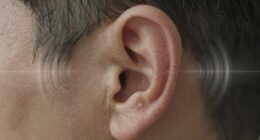
When you listen in wind, your ears and brain work together to pick out important sounds despite noisy, deceptive backgrounds. Your outer ear, especially the shape of your pinna, helps filter sounds and provide cues about direction and elevation, even in windy conditions. Your brain filters out consistent wind noise and uses tiny timing differences to locate sounds accurately. With experience, your neural system adapts to windy environments, improving your ability to focus. Keep exploring to discover more about these fascinating adaptive features.

Get everyday helpers delivered free — and shop member deals
- Fast, free delivery on millions of items
- Access to Prime Big Deal Days deals on October 6–7
- Prime Video, Amazon Music and more included
Key Takeaways
- The outer ear’s shape modifies incoming sounds, enhancing directional cues in windy conditions.
- The brain filters consistent wind noise to focus on relevant sounds and improve localization.
- Neural plasticity allows the auditory system to adapt to frequent wind interference over time.
- Minute timing and frequency differences between ears help distinguish sounds amid wind noise.
- Adaptations in ear morphology and neural processing enable better sound detection despite auditory camouflage.

Have you ever paused to truly listen to the wind? When you do, you might notice how it masks or distorts sounds around you, making it harder to pinpoint where noises originate. This is where your brain’s remarkable ability for sound localization comes into play. Sound localization is your brain’s skill in determining the direction and distance of a sound source, even amid the chaotic noise of wind. It relies on subtle cues like differences in loudness, timing, and frequency between your ears. But in windy conditions, these cues become muddled. The wind creates auditory camouflage, blending sounds into a background noise that challenges your sense of hearing. This auditory camouflage acts like a natural filter, making it harder for you to distinguish important sounds from the ambient noise.
Wind creates auditory camouflage, masking sounds and challenging your brain’s ability to localize noise sources effectively.
Despite these challenges, your auditory system has adapted to navigate wind’s interference. One key adaptation involves the way your ears and brain work together to compensate for the wind’s masking effects. For instance, your ears are designed to pick up minute timing differences between sounds reaching each ear, helping your brain decode the direction of a source even when the wind is noisy. At the same time, your brain learns to filter out consistent wind noise, sharpening your focus on sounds that are relevant or urgent. This ability to distinguish meaningful sounds from wind-induced noise is essential for survival, alerting you to approaching danger, calling for help, or simply allowing you to enjoy the subtle sounds of nature despite the wind’s presence. Additionally, the auditory system’s neural plasticity enables ongoing adaptation to different environments and wind conditions, improving your listening skills over time.
Your brain also uses the shape of your outer ear to help you localize sounds better in windy conditions. The way your pinna modifies incoming sounds provides cues about elevation and direction, assisting your brain in filtering through the auditory camouflage created by the wind. Over time, your auditory system adjusts to frequent wind exposure, improving your ability to focus on specific sounds even in challenging environments. This isn’t just luck; it’s a finely tuned process that involves neural plasticity, allowing you to adapt and maintain effective hearing despite the wind’s interference.
In essence, your ability to listen in wind is a tribute to the resilience and sophistication of your auditory system. By leveraging sound localization skills and overcoming auditory camouflage, you can still pick up important sounds amid the wind’s chaos. Whether you’re outdoors in a breezy landscape or caught in a gusty storm, your ears and brain work together seamlessly, helping you stay aware of your surroundings. It’s a fascinating dance of adaptation that keeps your hearing sharp, even when nature’s noisy cloak attempts to deceive you. Recognizing the importance of auditory cues and how they adapt helps explain the remarkable resilience of your hearing in windy environments.
noise-canceling ear protection for wind
As an affiliate, we earn on qualifying purchases.
As an affiliate, we earn on qualifying purchases.
Frequently Asked Questions
How Do Animals Distinguish Wind Noise From Essential Sounds?
You might wonder how animals tell wind noise apart from important sounds. They use wind noise filtering, which helps reduce background wind sounds. Through auditory scene analysis, they identify and focus on relevant sounds, like prey or calls from other animals. This process allows their brains to distinguish essential sounds from the constant, often distracting, wind noise, improving their ability to respond quickly and effectively in their environment.
Can Humans Adapt Their Hearing to Windy Environments?
You can adapt your hearing in windy environments through auditory plasticity, which allows your brain to reorganize and improve sound filtering over time. By consistently exposing yourself to wind, your auditory system becomes better at distinguishing important sounds from noise. This natural adaptation helps you focus on essential sounds, reducing wind interference. With practice, your hearing can become more efficient at filtering sound, making windy conditions less disruptive.
What Role Does Ear Anatomy Play in Wind Sound Adaptation?
Your ear anatomy plays a vital role in wind sound adaptation. The ear canal helps filter out some wind noise, reducing interference. Additionally, the cochlear shape can influence how you perceive different sound frequencies, allowing better distinction of important sounds amid wind noise. These features work together to improve your ability to hear clearly in windy environments, making your hearing more resilient and adaptable.
Are There Technological Devices That Mimic Natural Wind Hearing?
You might be surprised to learn that technological devices like acoustic sensors can mimic natural wind hearing for wind detection. These sensors pick up sound patterns and vibrations, functioning similarly to how some animals hear wind. They’re used in weather monitoring, aviation, and environmental testing, providing real-time data. By replicating natural wind hearing, these devices improve our ability to detect and analyze wind conditions accurately and efficiently.
How Does Weather Influence the Effectiveness of Wind Hearing Adaptations?
Imagine you’re a sailor steering unpredictable seas; weather patterns and wind speed are your compass and storm. Similarly, weather influences wind hearing adaptations—calm days let subtle breezes whisper, while high wind speeds can drown out faint sounds. The effectiveness of these adaptations depends on the environment, with gusty conditions challenging your ability to detect even the faintest breeze, much like steering through a storm obscuring your view of the horizon.
Conclusion
You now see how animals adapt their hearing to survive in windy conditions. Their specialized features let them pick up faint sounds and ignore noise, giving them an edge. Remember, “adapt or perish,” and nature’s ingenuity proves this true every time. By understanding these features, you gain a deeper appreciation for the resilience of life in even the harshest environments. So, next time you hear the wind, think about the incredible ways life listens and responds.
Fall Picks
fall essentials
As an affiliate, we earn on qualifying purchases.