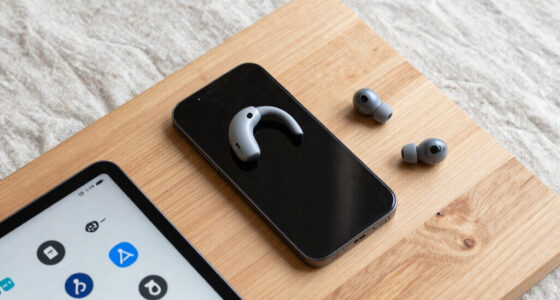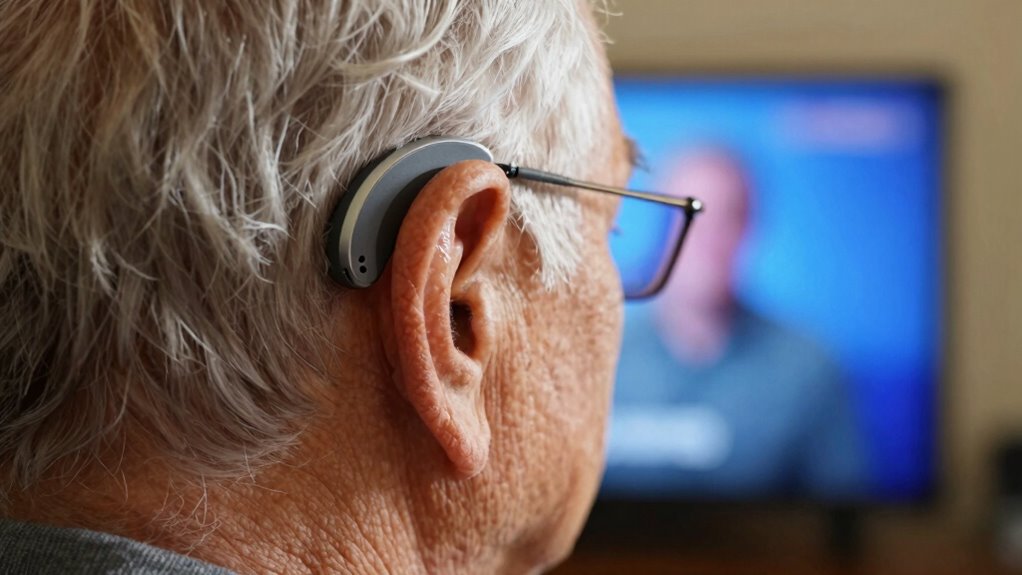

Hearing tech works better for TV because these devices are designed for controlled environments with minimal background noise, focusing on clear, direct audio. They often have features like directional microphones optimized for stationary sound sources, making TV audio clearer. In conversations, however, background chatter and multiple speakers make it harder for devices to isolate speech. If you want to understand why some tech handles conversations better, keep exploring to discover the latest advancements.

Get everyday helpers delivered free with Prime
- Fast, free delivery on millions of items
- Prime Video, Amazon Music and more included
- Member-only deals all year
Key Takeaways
- TV environments are controlled with minimal background noise, making sound sources predictable and easier for hearing devices to optimize.
- Directional microphones work best with stationary, front-facing sounds typical of TV audio, but struggle with multiple, moving speakers in conversations.
- Advanced noise reduction and adaptive filtering technologies are more effective in static, predictable soundscapes like TV listening.
- Compatibility with wireless streaming devices enables clear audio transmission from TV, enhancing sound quality over real-world conversations.
- Hearing devices are often optimized for specific environments; features designed for TV may not perform well in dynamic, noisy social settings.
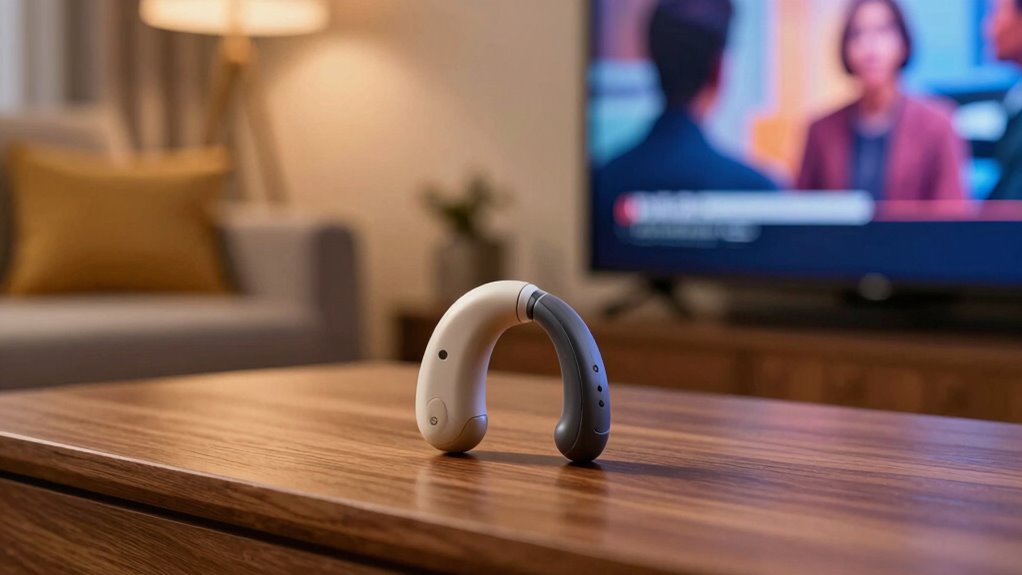
Many hearing devices excel at enhancing TV audio but struggle with everyday conversations, and understanding why involves looking at how these technologies process sound. When you’re watching TV, the environment is usually controlled—there’s minimal background noise, and the sound source is direct and predictable. Hearing devices are often optimized for this scenario, allowing clear audio streams that are easy to amplify without interference. However, in daily conversations, background noise is almost always present, and sounds come from multiple directions, making it much more complex for hearing devices to distinguish speech from noise. This difference in sound environments explains why some hearing tech performs well with TV but less effectively in real-world conversations.
A key factor here is how these devices handle background noise. Many hearing aids are designed with features like directional microphones that focus on sounds coming from in front of you. This works great when the sound source is stationary—like a TV speaker directly in front of you. The device can lock onto that source, suppressing unwanted ambient noise. But in conversations, where people move around and speak from various angles, this focus becomes less effective. The device might struggle to isolate speech from background chatter, resulting in muffled or unclear audio. This is especially true if the environment is noisy or if there’s competing sound from multiple people. Sound processing technologies are continually evolving to better handle these complex environments, but many devices still have limitations. Additionally, advancements in adaptive filtering are helping these devices better manage changing soundscapes, though they are not yet perfect. Furthermore, some devices now incorporate machine learning algorithms to improve speech recognition in noisy settings, but these features are not universally available. Improving sound environment adaptability remains a key goal for manufacturers to enhance real-world performance.
Device compatibility also plays a vital role. Not all hearing aids are equally compatible with the latest TV streaming accessories or wireless connections. Some devices can easily connect to a TV via Bluetooth or other wireless tech, providing a clear, direct audio feed. These devices are often tuned specifically for such use, making TV listening seamless. Conversely, when it comes to conversations, your hearing aid must be compatible with other audio sources or smartphones and should have features like multiple microphones and noise reduction algorithms to help differentiate speech from background noise. If your device isn’t compatible or lacks these features, it can make understanding speech in social settings much more difficult.
Ultimately, the technology behind hearing devices is optimized for specific environments. While some devices excel at delivering crisp TV audio because of their ability to focus on a single sound source and their compatibility with TV accessories, they often fall short in dynamic, noisy situations like conversations. To improve your experience, look for hearing aids with advanced noise management and device compatibility features tailored for both entertainment and social interaction. That way, you get the best of both worlds—crystal-clear TV sound and better conversational understanding.
As an affiliate, we earn on qualifying purchases.
Frequently Asked Questions
Can Hearing Aids Automatically Switch Between TV and Conversation Modes?
Yes, many hearing aids can automatically switch between TV and conversation modes thanks to sound synchronization and wireless streaming technology. They detect the source of sound—whether it’s a phone call, TV, or speech—and adjust settings accordingly. This automatic shift helps you stay focused on conversations or enjoy TV without manual adjustments, providing a seamless listening experience and improving overall comfort.
Do Different Hearing Devices Have Specialized Settings for TV Listening?
Did you know over 80% of hearing aids now offer specialized settings for TV listening? You can customize programming to optimize sound clarity for TV, making the experience more natural. Many devices also feature compatibility with remote controls or smartphone apps, allowing you to switch easily between settings. This tailored approach enhances your listening experience, ensuring you get clear audio whether you’re watching TV or engaging in conversation.
How Does Background Noise Affect Hearing Aid Performance During Conversations?
Background noise can considerably impact your hearing aid performance during conversations. When there’s a lot of sound around you, it challenges sound isolation and makes it harder to focus on speech. Modern hearing aids use noise filtering technology to reduce unwanted background noise, but excessive noise can still overwhelm these systems. To improve clarity, make sure your device’s settings are optimized for noisy environments, and consider additional accessories like directional microphones.
Are There Specific Brands Better Suited for TV Audio Clarity?
Some brands are better suited for TV audio clarity due to their superior audio processing and compatibility features. Brands like Phonak, Oticon, and Resound often excel because they offer better brand compatibility with TV accessories and advanced sound filtering. You’ll notice clearer sound, especially when using compatible streaming devices, making TV listening more enjoyable. Selecting a brand with strong audio clarity features guarantees you get crisp, natural sound during your TV time.
What Maintenance Is Required to Optimize Hearing Tech for TV Use?
To optimize your hearing tech for TV use, you should regularly check the battery lifespan and replace batteries as needed to guarantee clear sound. Establish cleaning routines by gently wiping your devices with a dry cloth and removing any earwax or debris from the ear tips and microphones. Keeping your hearing aids or cochlear implants clean and well-maintained helps maintain sound quality, reduces issues, and prolongs device lifespan.
Conclusion
So, next time you notice your hearing tech seems to excel with your TV but struggles during conversations, remember—there’s more beneath the surface. The technology’s design, your environment, and even your own hearing nuances all play a role. Could future innovations bridge this gap? Or will the challenge remain, quietly waiting to be unraveled? The answer might just change how you experience sound forever—if you’re ready to explore what’s next.
Fall Picks
fall essentials
As an affiliate, we earn on qualifying purchases.