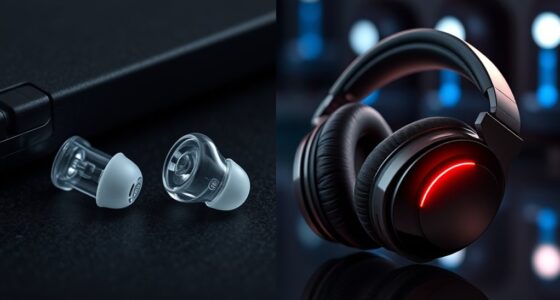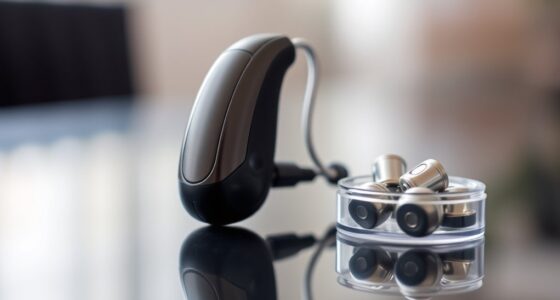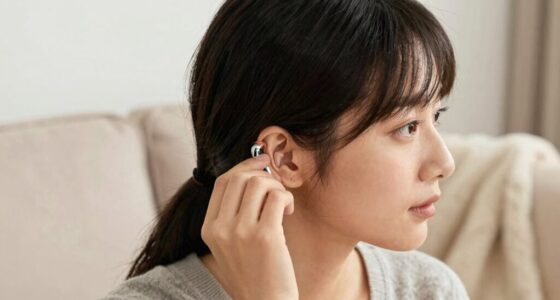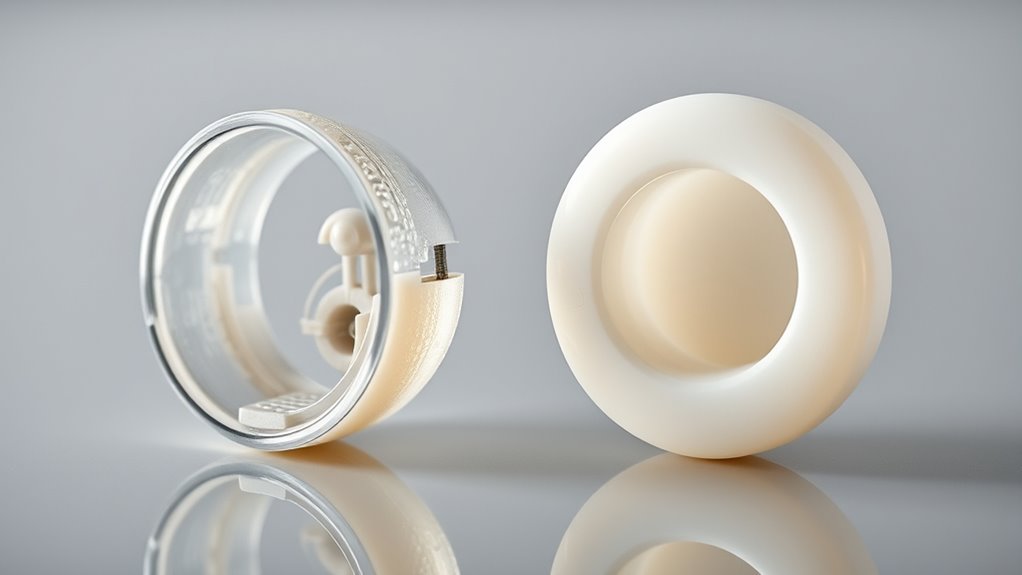

Choosing between open-fit and custom-mold hearing aids depends on your hearing needs and lifestyle. If you want a discreet, comfortable device that provides natural sound and minimal intrusion, open-fit aids are a great choice. If you have more severe hearing loss or need a secure fit, custom molds offer better sound quality and stability. To find the best option for you, consider your preferences and activities—more details can help you make an informed decision.
Key Takeaways
- Open-fit aids are less bulky, discreet, and ideal for mild to moderate hearing loss, while custom molds provide a snug fit for severe loss.
- Open-fit devices offer a natural sound with less muffling, whereas custom molds can enhance sound quality and reduce feedback.
- Open-fit aids are more comfortable for long-term wear and active lifestyles, while custom molds provide stability for complex hearing needs.
- The choice depends on your hearing loss severity, lifestyle, and preference for comfort versus secure fit.
- Consulting an audiologist helps determine whether an open-fit or custom mold shell best suits your individual hearing and lifestyle needs.

Are open-fit and custom mold hearing aids truly different choices, or do they simply serve different needs? The answer depends on what matters most to you—whether it’s sound quality, comfort level, or a combination of both. Both styles aim to improve your hearing, but they do so in distinct ways that can influence your overall experience. Understanding the differences can help you decide which shell suits your lifestyle and preferences best.
Open-fit hearing aids are designed to be discreet and non-intrusive. They typically rest behind your ear, with a slim tube or wire running into your ear canal. Because they don’t fill the entire ear, they often deliver a more natural sound quality. You might notice clearer speech and less muffling, especially in quiet environments. Many users find that open-fit styles provide a more open soundscape, which can be particularly beneficial if you’re sensitive to the “plugged-up” feeling some traditional hearing aids cause. When it comes to comfort, open-fit aids are generally less bulky and less invasive, making them suitable for extended wear. Their smaller size means less pressure inside your ear canal, reducing discomfort and irritation. If you’re active or frequently wear glasses, the open-fit design minimizes interference, adding to overall comfort. Additionally, open-fit hearing aids often have fewer issues with feedback, enhancing sound clarity.
On the other hand, custom mold hearing aids are crafted specifically for your ear’s shape. You’ll have an impression taken by an audiologist, which is then used to create a shell that fits snugly. Because of this precise fit, custom molds can enhance sound quality by reducing feedback or whistling and providing a more consistent amplification. They’re often preferred if you have a more severe hearing loss or need a device that stays securely in place during physical activities. Comfort levels vary depending on your ear shape and sensitivity, but some users find the custom fit more comfortable because it conforms exactly to their ear. The trade-off is that the larger size might feel more noticeable or bulky, especially compared to the sleek open-fit options. However, for many, this bulkiness translates into better sound delivery and a secure fit, which is crucial if you’re very active or if your hearing loss requires more power.
Ultimately, choosing between open-fit and custom mold hearing aids hinges on your lifestyle, hearing needs, and personal comfort preferences. If you prioritize a natural sound and minimal intrusion, open-fit might be the way to go. But if you want a device tailored precisely for your ear, offering maximum stability and potentially superior sound quality for complex hearing loss, a custom mold could be the better fit. Consider consulting with your audiologist to explore which option aligns best with your daily routines and hearing goals. Being aware of the technology differences can also help you make an informed decision tailored to your preferences.

Retekess T130S (2nd Gen T130) Assistive Listening System, Upgraded Longer Range, Simultaneous Interpretation Equipment, Easier to Use, Whisper System for Church School (2 TX 18 RX)
Longer working range; Retekess T130S tour guide system has a working distance of up to 328ft/100m, twice as...
As an affiliate, we earn on qualifying purchases.
Frequently Asked Questions
How Long Do Open-Fit and Custom Molds Typically Last?
You might wonder how long open-fit and custom molds last. Generally, open-fit shells have a durability comparison that shows they last about 3 to 6 years, depending on usage and maintenance. Custom molds tend to have better material longevity, often lasting 5 to 10 years with proper care. Your choice depends on how durable you need your hearing aid shell to be and how well you maintain it over time.
Are Open-Fit or Custom Molds More Suitable for Sports Activities?
Like a glove, your hearing protection should fit snugly during sports. Open-fit molds offer quick fit adjustments and are lightweight, making them ideal for active use. Custom molds, crafted from durable materials, provide a secure, tailored fit but may feel less flexible. For high-impact sports, opt for open-fit options with reliable material durability, ensuring your protection stays in place without sacrificing comfort or fit adjustment.
What Maintenance Is Required for Each Type of Shell?
To maintain your shells, follow simple cleaning routines like wiping them with a damp cloth and avoiding harsh chemicals. For storage tips, keep them in a cool, dry place away from direct sunlight, and make certain they’re completely dry before storing. Regular cleaning helps prevent dirt buildup, and proper storage prolongs their lifespan. Whether open-fit or custom-mold, consistent maintenance keeps your shells comfortable and effective.
Can I Upgrade From Open-Fit to Custom Mold Later?
Just like upgrading from a rotary phone to a smartphone, you can switch from open-fit to custom mold hearing protection later. It’s a common upgrade for better comfort considerations and improved sound quality. Most providers can help you shift smoothly, ensuring your hearing protection fits perfectly. Keep in mind, this change might involve a new fitting session, but it’s worth it for increased comfort and enhanced hearing clarity.
How Do Costs Compare Between Open-Fit and Custom Mold Options?
When comparing costs between open-fit and custom mold options, you should consider insurance coverage and aesthetic preferences. Custom molds usually cost more upfront because of personalized fitting and materials, but some insurance plans may cover part of the expense. Open-fit options tend to be more affordable initially and are less invasive, making them a good choice if you want a budget-friendly solution or prefer a less noticeable appearance.

Avantree C82 Aura – Auracast Transmitter with Private & Public Modes for Auracast Hearing Aids, Qualcomm Bluetooth 5.4, Firmware Upgradeable, USB-C Audio Adapter for PC, Mac, Tablets, Phones
【FOR Auracast Hearing Aid Users】 Designed for Auracast-enabled hearing aids to stream audio from USB-C devices like PCs,...
As an affiliate, we earn on qualifying purchases.
Conclusion
Choosing between open-fit and custom mold hearing aids depends on your lifestyle and needs. For example, if you’re active and want a discreet option, open-fit might suit you better. However, if you have severe hearing loss, a custom mold could provide a better fit and sound quality. Consider your daily activities and comfort. Ultimately, consulting with an audiologist guarantees you find the best shell for your hearing journey and long-term satisfaction.

Retekess T130 Wireless Tour Guide Audio System, Church Translation Equipment, Clear Sound Quality, Tour Guide Headsets for Simultaneous Interpreting,Court (1 Transmitter 10 Receivers)
FCC certified. FCC ID:2AAR8T130; Retekess T130 interpreting equipment simple basic easy pairing in just two steps; PLL technology...
As an affiliate, we earn on qualifying purchases.

Retekess T130 Wireless Tour Guide System, Church Translation System, Easy to Set Up, Clear Sound Quality, Tour Guide Headsets for Plant Tour, School (1 Transmitter 15 Receivers)
Clear sound quality; tour guide microphone and speaker uses PLL technology to automatically avoid interference, obtain a more...
As an affiliate, we earn on qualifying purchases.