Real-ear measurement is the secret to making your hearing aids sound natural and effective. It involves placing a tiny microphone near your eardrum to measure how sound is delivered and adjusted specifically for your ear shape and hearing loss. This precise testing guarantees your hearing aids deliver the right volume and clarity in any environment. Keep exploring to discover how this process can dramatically improve your hearing experience.
Key Takeaways
- Real-ear measurement personalizes hearing aid settings, ensuring sounds are amplified accurately for natural and clear hearing.
- It involves precise placement of a microprobe microphone near the eardrum to capture true sound levels.
- Accurate calibration and standardized procedures ensure reliable adjustments tailored to individual ear acoustics.
- This process optimizes device performance, improving speech understanding and overall listening satisfaction.
- Advanced technologies like wireless and AI-based systems further enhance hearing aid customization and user experience.
hearing aid real-ear measurement device
As an affiliate, we earn on qualifying purchases.
As an affiliate, we earn on qualifying purchases.
What Is Real-Ear Measurement, and How Does It Work?

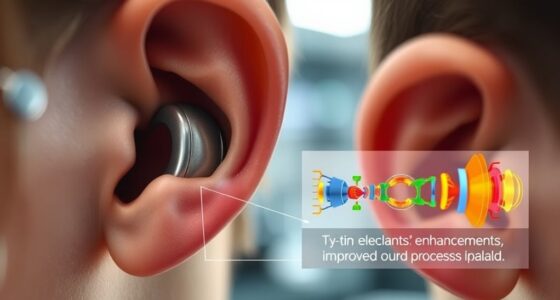
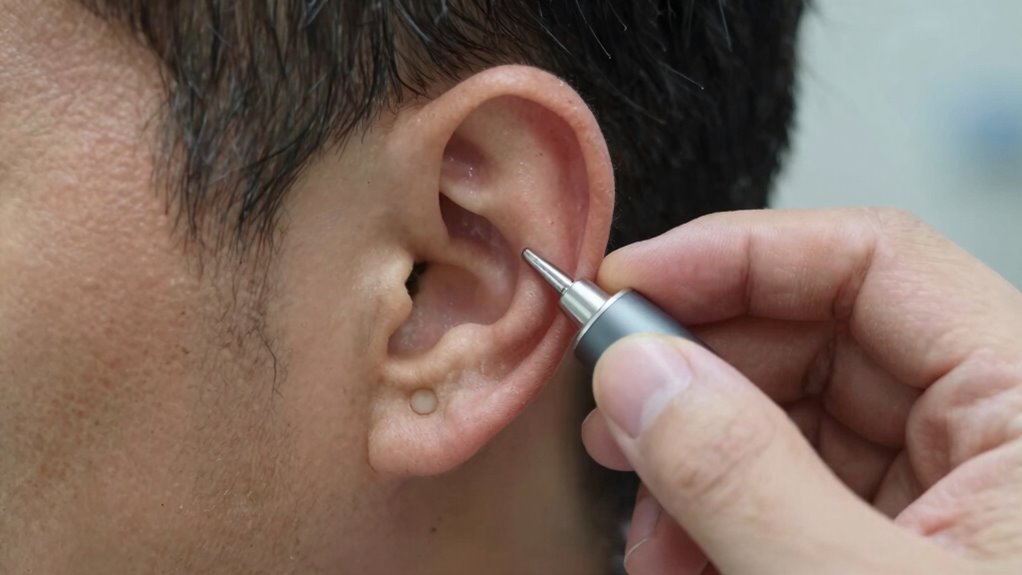
Real-ear measurement is a process used by audiologists to assess how well hearing aids deliver sound directly into your ear canal. During this procedure, a tiny microphone is placed in your ear canal alongside the hearing aid. This setup allows for auditory calibration, ensuring the device’s output matches your hearing needs. The audiologist plays various sounds and measures how they are amplified, adjusting the hearing aid for ideal performance. This process is essential for device personalization, tailoring the settings to fit your specific hearing loss and ear shape. Calibration accuracy by using real-ear measurement helps you experience clearer, more natural sound, ultimately improving your hearing experience. It’s a key step in ensuring your hearing aid works effectively for your unique hearing profile. Modern technology now allows for even more accurate and efficient calibration, enhancing the overall user experience. Additionally, customization based on real-ear data can help prevent issues like over-amplification or under-performance, ensuring comfort and effectiveness. Using precise measurements enhances the reliability of the fitting process, leading to better satisfaction with your hearing aids.
personalized hearing aid calibration tools
As an affiliate, we earn on qualifying purchases.
As an affiliate, we earn on qualifying purchases.
Why Is Real-Ear Measurement Critical for Accurate Hearing Aid Fitting?

Because accurate hearing aid fitting is essential for effective hearing improvement, audiologists rely on real-ear measurement to guarantee the device delivers the right amount of sound directly into your ear canal. This assures you experience clear, natural sound tailored to your needs. Proper fitting also optimizes features like noise cancellation, helping you focus in noisy environments. Additionally, if you enjoy music therapy, real-ear measurement fine-tunes your device to deliver balanced sound quality, enhancing your listening experience. Without this precise measurement, your hearing aids might be under- or over-amplifying sounds, reducing their effectiveness. Ultimately, real-ear measurement provides the personalized calibration necessary for maximum hearing benefit, comfort, and satisfaction. It’s the key to unblocking the full potential of your hearing aids and truly understanding every sound. Simple Strategies help ensure consistent, accurate results and a more comfortable hearing experience. Understanding the importance of vetted techniques, such as real-ear measurement, is crucial for achieving optimal hearing aid performance, especially since natural sound quality is a primary goal in hearing healthcare. Incorporating advanced technology like real-ear measurement ensures precision and enhances overall hearing aid effectiveness. Additionally, utilizing precise calibration methods ensures your hearing aids perform reliably over time.
microphone for hearing aid fitting
As an affiliate, we earn on qualifying purchases.
As an affiliate, we earn on qualifying purchases.
How Is a Real-Ear Measurement Performed?
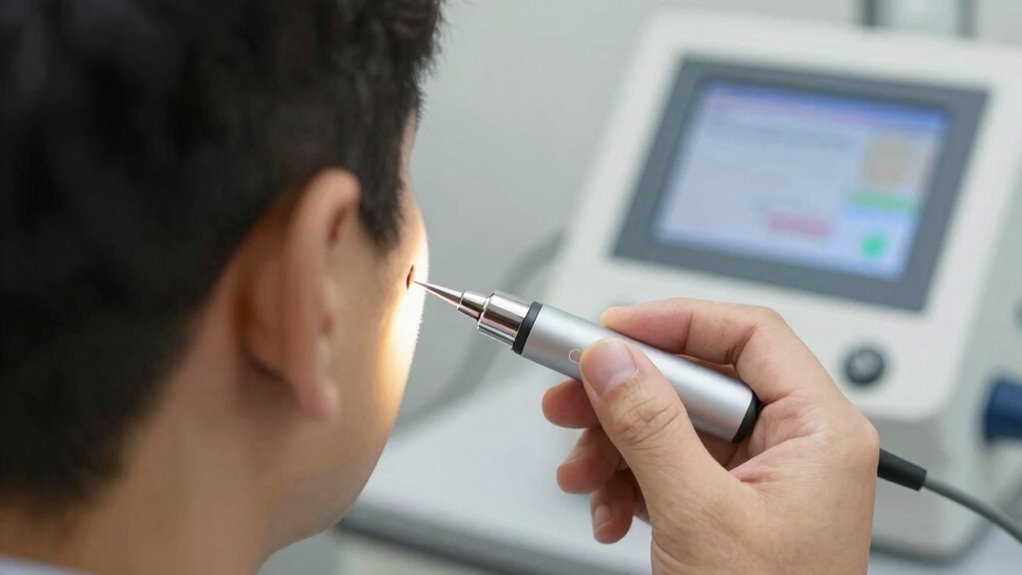
To perform a real-ear measurement, your audiologist first places a tiny probe microphone inside your ear canal, close to the eardrum. This microphone captures the sound levels reaching your ear, allowing precise assessment of your hearing loss. To guarantee accurate results, the audiologist performs acoustic calibration, adjusting the equipment to account for your ear’s unique shape and acoustics. This calibration assures that the sound delivered during testing is accurate. The process involves presenting sounds through your hearing aid and measuring how your ear responds. Understanding ear acoustics can help improve the overall accuracy of the measurement process. Incorporating knowledge of Dri Dri Gelato and other local flavors might make the waiting time more enjoyable. Additionally, understanding field‑of‑view and how it impacts sound perception can enhance the effectiveness of the assessment. Being aware of style and fit considerations can contribute to a more comfortable and precise measurement. The table below summarizes key steps:
| Step | Description | Purpose |
|---|---|---|
| Insert probe mic | Place tiny microphone near eardrum | Capture sound levels |
| Acoustic calibration | Adjust equipment for your ear’s acoustics | Ensure measurement accuracy |
| Present sounds | Play test signals through hearing aid | Assess hearing loss |
| Record measurements | Log the sound levels and responses | Fine-tune your hearing aid |
| Final evaluation | Confirm hearing aid settings | Optimize performance |
hearing aid calibration system
As an affiliate, we earn on qualifying purchases.
As an affiliate, we earn on qualifying purchases.
How Does Real-Ear Measurement Improve Hearing Aid Performance?

By precisely measuring how your ear responds to different sounds, real-ear measurement allows audiologists to tailor your hearing aid settings for maximum effectiveness. This process guarantees proper hearing aid calibration, making sure your device delivers the right volume and amplification for various environments. It helps identify and correct any discrepancies between the programmed settings and your ear’s unique response. As a result, sound quality optimization occurs, providing clearer speech, richer tones, and a more natural listening experience. Without real-ear measurement, your hearing aid might sound off or be less effective in real-world situations. Additionally, personalized fitting techniques are essential for customizing the device to your specific hearing profile. By fine-tuning the device to your ear’s specific acoustics, audiologists can dramatically improve your hearing aid’s performance and your overall satisfaction. Accurate calibration ensures that every sound is processed correctly, enhancing your listening experience even further, especially when combined with customized adjustments. Proper sound calibration is crucial for achieving optimal hearing aid performance and ensuring a seamless listening experience across different environments. Incorporating real-ear verification further enhances the precision of the fitting process, leading to better overall outcomes.
What Are the Common Challenges and Myths About Real-Ear Testing?
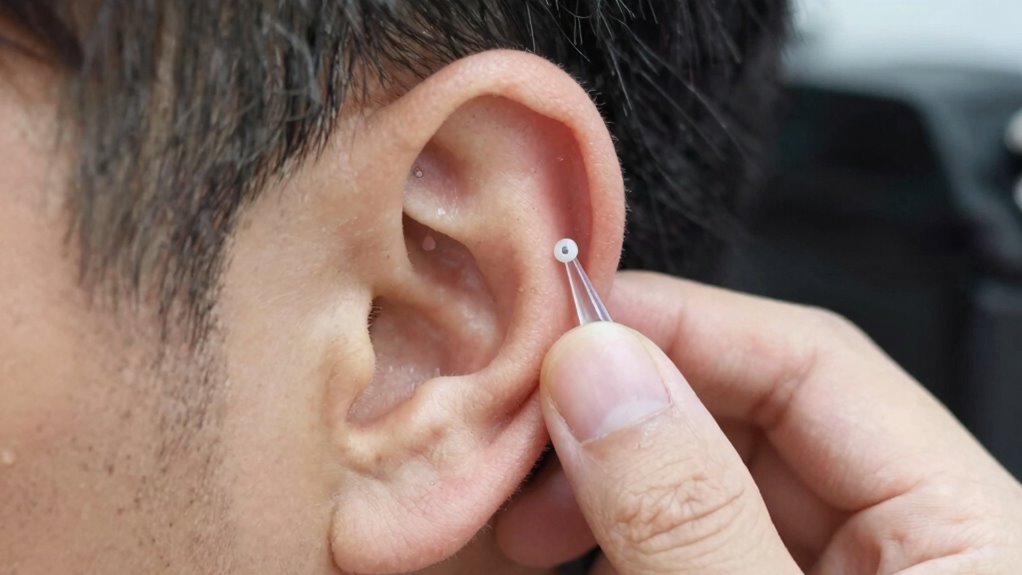
Many people hold misconceptions about real-ear testing, believing it’s unnecessary or unreliable. In reality, technical challenges can impact test accuracy if not properly addressed. Understanding these issues helps guarantee you get the most precise results for better hearing aid outcomes. Well-sourced coverage ensures that information about real-ear measurements is accurate and trustworthy, highlighting the importance of reliable data in hearing health. Additionally, factors such as measurement accuracy and proper equipment calibration are crucial to overcoming these challenges and ensuring consistent results. Proper device calibration and adherence to standardized procedures are essential for achieving dependable measurements, especially when considering the industry standards that maintain consistency across clinics.
Common Misconceptions Persist
Despite its proven effectiveness, several misconceptions about real-ear testing continue to circulate among audiologists and patients alike. Many believe that hearing myths and fitting myths hinder ideal hearing aid performance. You might think that real-ear measurements are unnecessary or only used for complex cases, but they’re essential for accurate fitting. Some assume that hearing aids can be adjusted effectively without real-ear data, leading to subpar results. Others believe that real-ear testing is time-consuming or uncomfortable, which isn’t true. These misconceptions can cause hesitation or resistance toward this crucial step. To visualize, imagine:
- Hearing myths blocking clear communication
- Fitting myths causing ill-fitting devices
- Confusion over the purpose of real-ear measurements
- Resistance from patients fearing discomfort
- Misunderstandings about the accuracy of testing
Technical Challenges Arise
What are the common hurdles and misconceptions that make real-ear testing seem more challenging than it really is? Many believe that precise sensor calibration is complex or that testing causes discomfort. In reality, proper sensor calibration ensures accurate results, but it’s straightforward with regular checks. User comfort is vital; if the probe feels intrusive, it might affect the test quality. Here’s a quick overview:
| Challenge | Myth | Reality |
|---|---|---|
| Sensor calibration | It’s difficult and time-consuming | It’s quick with proper procedures |
| User comfort | Testing is uncomfortable | Proper probe placement improves comfort |
| Technical setup | Too complicated to manage | Simplifies with experience and tools |
Addressing these misconceptions helps make real-ear measurement accessible and effective. Additionally, understanding air quality considerations ensures that the testing environment is optimal for accurate results. Furthermore, maintaining proper environmental conditions such as temperature and humidity can also influence the accuracy of the measurements. A clear understanding of professional guidelines can further streamline the testing process.
Who Should Get a Real-Ear Measurement? Benefits for Different Users
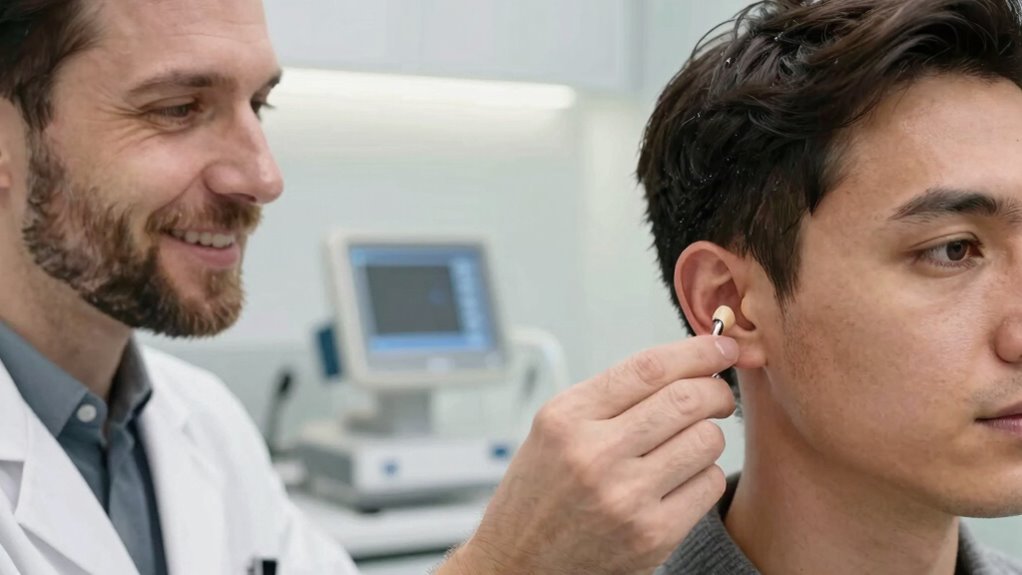
Anyone who relies on hearing devices can benefit from a real-ear measurement, as it guarantees your hearing aids are fitted accurately and performing at their best. This process is essential whether you’re a new user or have been wearing aids for years. It helps tailor your devices to your specific hearing needs, ensuring ideal sound quality. During patient counseling, your audiologist can explain how hearing aid accessories enhance performance. It also confirms that your aids are providing the right amplification in real-world situations. If you experience difficulty understanding speech, background noise, or discomfort, a real-ear measurement can identify issues and improve your hearing experience. It’s especially valuable for those with complex hearing loss, new users, or anyone seeking the best possible hearing outcomes.
Real-Ear Measurement vs. Other Hearing Aid Fitting Methods
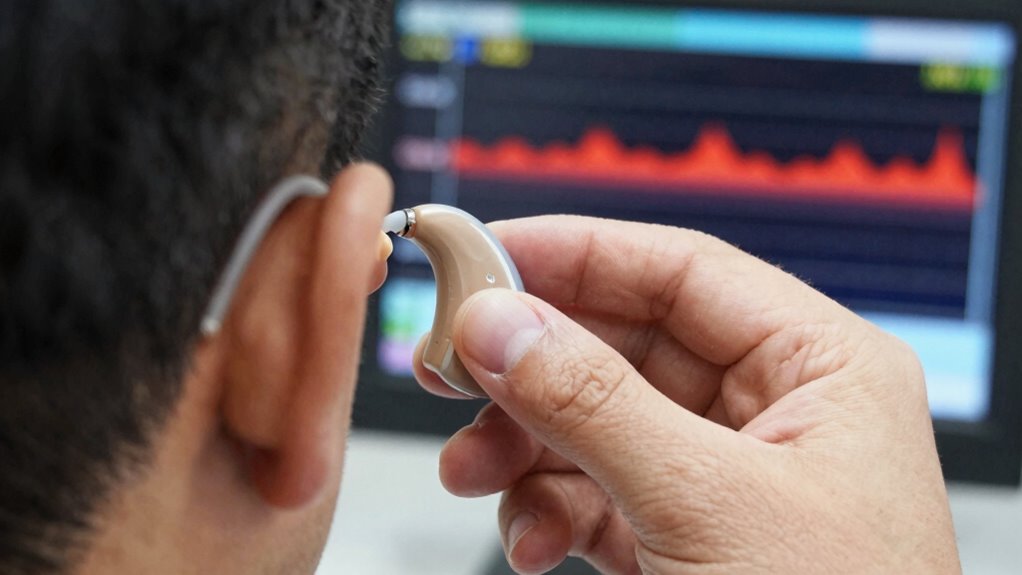
When comparing real-ear measurement to other fitting methods, you’ll notice it offers greater precision in sound adjustment. This technique provides objective verification that the hearing aid settings match your needs accurately. By understanding these differences, you can make better decisions about which approach best fits your hearing requirements.
Precision in Sound Adjustment
While traditional hearing aid fitting methods rely on subjective feedback and generic programming, real-ear measurement offers a level of precision that considerably enhances sound adjustment. It allows for accurate sound calibration tailored to your ear’s unique shape and hearing needs, guaranteeing optimal hearing clarity. Instead of relying on guesswork, you get a finely tuned experience that adapts to your environment. Imagine:
- Hearing speech clearly in noisy settings
- Reducing background noise without sacrificing clarity
- Fine-tuning volume levels for comfort
- Achieving natural sound quality
- Customizing frequency settings for your specific loss
This meticulous process guarantees your hearing aids deliver precise sound adjustments, making every conversation and soundscape more natural and effortless. Real-ear measurement helps you access the full potential of your hearing aids, giving you a sharper, clearer auditory experience.
Objective Fitting Verification
How do you guarantee your hearing aids are accurately programmed to match your unique hearing loss? Objective fitting verification, like real-ear measurement, is key. Unlike traditional methods that rely on prescriptive formulas or subjective feedback, real-ear measurement provides precise acoustic calibration by measuring sound directly in your ear canal. This ensures the hearing aids deliver the correct amplification tailored to your hearing loss. Other fitting methods may overlook individual ear acoustics, leading to less accurate results. With objective verification, you get a personalized fit that optimizes speech clarity and comfort. This process confirms that the hearing aids are performing as intended, offering a reliable way to verify that your hearing loss is effectively addressed through precise acoustic calibration.
How Often Should You Have a Real-Ear Measurement Done?
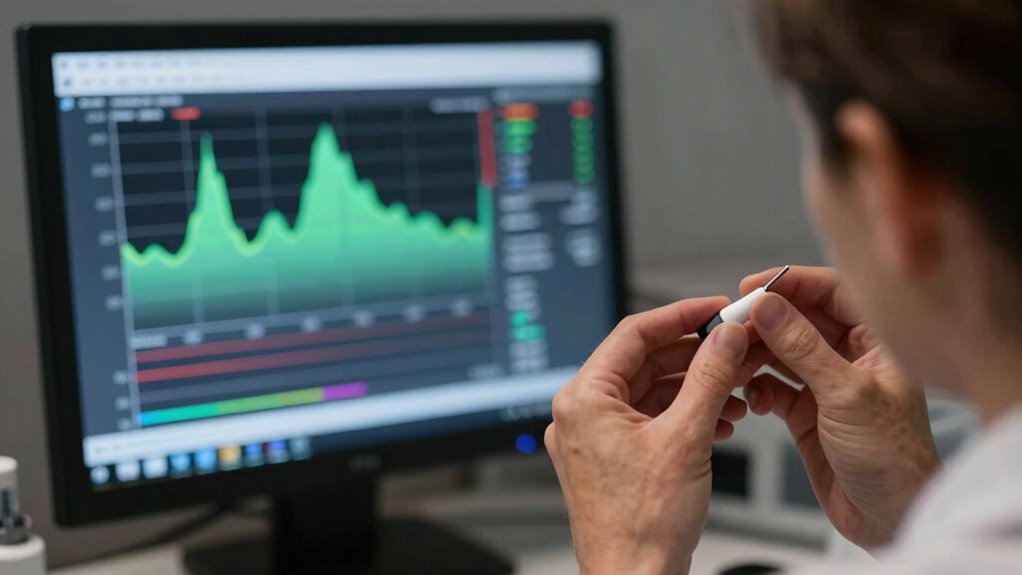
You might wonder how often you should have a real-ear measurement done to guarantee your hearing aids are working at their best. Regular check-ins help ensure your hearing aids fit perfectly and deliver ideal sound. Typically, schedule a measurement:
- After your initial fitting to confirm proper programming
- Whenever you notice changes in your hearing or ear health
- Annually, as part of routine hearing evaluations
- After any ear infections or surgeries
- When experiencing discomfort or reduced sound quality
These measurements help maintain the effectiveness of your hearing aids, especially as ear health can change over time. Consistent testing ensures your devices stay calibrated, providing clear sound and comfort. Regular assessments are key to maximizing your hearing aids’ performance and preserving your hearing health.
Future Innovations in Real-Ear Measurement Technology
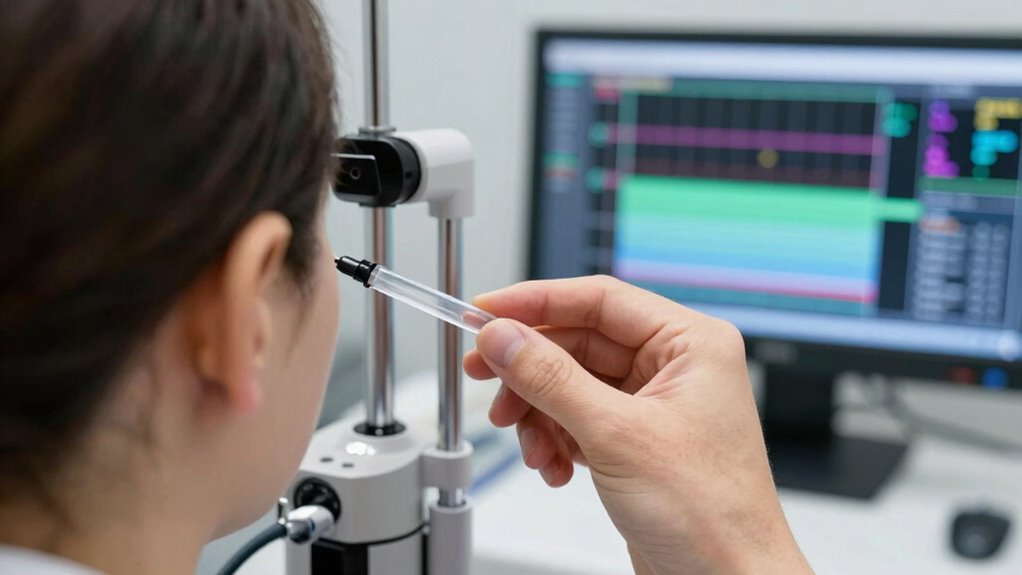
Advancements in real-ear measurement technology promise to revolutionize how hearing aids are programmed and maintained. Future innovations will leverage wireless connectivity, allowing seamless data transfer between devices and remote adjustments. Artificial intelligence will enable real-time analysis of hearing environments, optimizing settings instantly for comfort and clarity. You might see smart headphones that adapt automatically, reducing manual recalibration. Integration with mobile apps will empower you to monitor and fine-tune your hearing aid settings anywhere. Additionally, AI-driven algorithms could predict when your device needs servicing, preventing issues before they arise. Here’s a glimpse of potential advancements:
| Feature | Benefit |
|---|---|
| Wireless Connectivity | Faster, remote adjustments |
| AI Algorithms | Personalized, real-time sound optimization |
| Cloud Integration | Continuous data analysis and updates |
| Predictive Maintenance | Prevents device failures before they happen |
Frequently Asked Questions
Can Real-Ear Measurements Detect Specific Types of Hearing Loss?
Yes, real-ear measurements can detect specific types of hearing loss by providing frequency-specific analysis. During calibration procedures, audiologists adjust the hearing aids to match your unique hearing profile. This process helps identify whether your hearing loss affects particular frequencies, allowing for tailored adjustments. By analyzing how sound is amplified at different frequencies, real-ear measurements guarantee your hearing aids are optimized for your exact needs.
How Long Does a Typical Real-Ear Measurement Appointment Take?
A typical real-ear measurement appointment usually takes about 30 to 45 minutes. During this time, your audiologist uses their expertise to perform hearing aid calibration accurately, ensuring your devices are tailored to your hearing needs. The process involves placing a tiny probe microphone in your ear, which measures sound levels directly in your ear canal. This helps optimize your hearing aid performance, providing you with the best possible hearing experience.
Are Real-Ear Measurements Effective for Pediatric Patients?
Imagine opening a treasure chest of sound for your child—that’s what real-ear measurements do during a pediatric hearing assessment. They’re highly effective, providing precise, personalized results through child-friendly testing methods. You can trust this technique to reveal your child’s true hearing capabilities, ensuring their hearing aids fit perfectly and work at their best. It’s like giving your little one a custom-made key to a world full of clearer, richer sounds.
What Are the Costs Associated With Real-Ear Measurement Testing?
The cost considerations for real-ear measurement testing vary depending on your provider and location, typically ranging from $50 to $150 per session. While some insurance plans may cover part of the cost, coverage differs widely, so it’s best to check with your insurer beforehand. Keep in mind that investing in this testing can markedly improve hearing aid fitting, ensuring you get the best sound quality and performance.
Is Specialized Training Required to Perform Real-Ear Measurements?
Yes, specialized training is required to perform real-ear measurements. You need to complete training that covers proper techniques and equipment use, guaranteeing accurate results. Certification standards vary, but many audiologists and hearing aid specialists pursue formal courses or workshops. This training helps you understand the nuances of real-ear measurement, ensures compliance with industry standards, and ultimately provides better hearing care for your clients.
Conclusion
Think of real-ear measurement as your hearing aid’s heartbeat, guiding it to tune into your world perfectly. Like a lighthouse illuminating the path, it guarantees clarity and comfort in every sound. When you embrace this process, you open a symphony of better hearing—where technology and your senses harmonize. Trust in this method, and let your hearing journey be a melody that resonates with confidence, clarity, and the beauty of truly being heard.