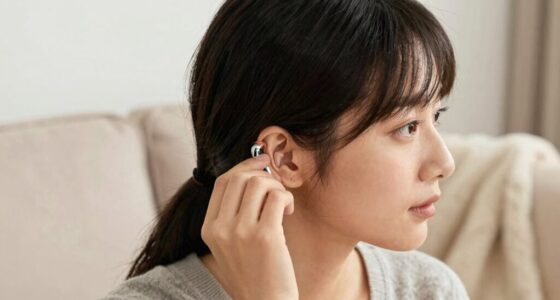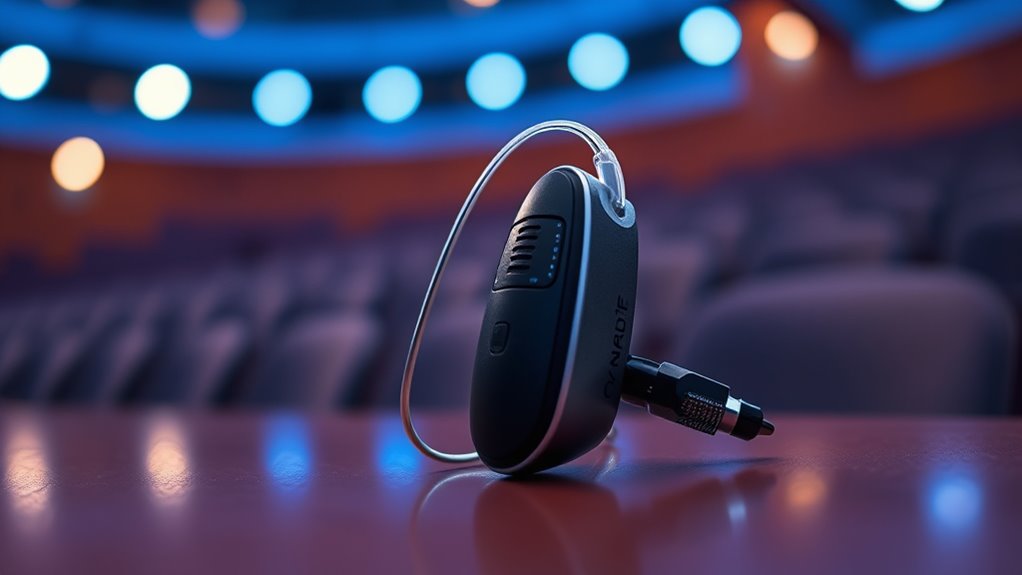

Telecoils and loop systems remain essential for clear hearing in public spaces. They allow your hearing aid to pick up electromagnetic signals directly from wire loops installed around rooms, reducing background noise and enhancing speech clarity. This technology helps you follow conversations and announcements more easily without extra devices. Despite advances in hearing aid tech, telecoils provide a discreet, reliable solution that continues to support confident listening. Keep exploring to discover how these systems can benefit you in various settings.
Play games included with Prime
Start a Prime free trial and play with Amazon Luna on your devices.
As an affiliate, we earn on qualifying purchases.
Key Takeaways
- Telecoils enable direct, clear sound transmission, reducing background noise in public spaces equipped with loop systems.
- Loop systems are cost-effective and easy to install, providing consistent assistive listening in various venues.
- Telecoils and loops are compatible with existing hearing aid technology, requiring no external devices.
- They enhance speech understanding and comfort, especially in noisy or reverberant environments.
- Despite advancements, telecoils and loop systems remain a reliable, low-maintenance solution for accessible listening.

Have you ever wondered how people with hearing aids can better hear in noisy environments or over speakers? The answer often lies in assistive listening devices, especially telecoils and loop systems, which provide essential acoustic enhancements. These systems are designed to improve sound clarity and reduce background noise, making conversations and announcements much easier to understand. If you wear a hearing aid, understanding how telecoils work can markedly enhance your listening experience in challenging settings.
Telecoils, or T-coils, are small electromagnetic coils built into many hearing aids. When you enter a space equipped with a loop system, the telecoil automatically picks up the electromagnetic signal transmitted through the loop wire. This direct connection bypasses much of the ambient noise and reverberation that typically make hearing difficult. As a result, you experience a clearer, more focused sound, which is especially useful in places like churches, theaters, or concert halls. With acoustic enhancements provided by the loop system, the sound is delivered directly to your hearing aid, reducing the strain on your ears and allowing you to follow conversations more effortlessly.
Telecoils pick up electromagnetic signals in loop systems, delivering clearer sound and reducing ambient noise for easier listening.
Loop systems, also called induction loop systems, are simple yet effective. They consist of a wire loop installed around a room or a designated area. When a compatible sound source, such as a microphone or public address system, broadcasts through the loop, the electromagnetic field it creates is captured directly by telecoils in hearing aids within the looped area. This setup transforms the environment into an assistive listening platform, ensuring that sound signals are transmitted with minimal distortion or interference. Because the sound is delivered directly to your hearing device, you experience less feedback and background noise, which often hamper understanding in crowded or noisy settings.
Using telecoils and loop systems not only enhances sound quality but also promotes independence and confidence. You don’t need to constantly adjust your hearing aids or ask people to speak louder; instead, you can simply activate your telecoil setting and enjoy improved hearing in many public spaces. This technology is particularly valuable because it’s discreet, requiring no additional devices or cumbersome equipment. It’s a reliable, low-maintenance solution that continues to be relevant despite advancements in modern hearing aid technology.
As an affiliate, we earn on qualifying purchases.
Frequently Asked Questions
How Do Telecoils Differ From Standard Hearing Aids?
You’ll find telecoils differ from standard hearing aids because they use telecoil technology to directly connect to compatible audio systems, enhancing sound clarity. This makes your hearing aid more compatible with public loop systems, reducing background noise. Unlike regular hearing aids, telecoils allow you to hear better in environments like theaters or churches without interference, offering a seamless listening experience. It’s a smart feature that improves your overall hearing comfort.
Are Loop Systems Compatible With All Hearing Aids?
Did you know over 70% of hearing aids are compatible with loop systems? You’ll find that most modern hearing aids support assistive listening via telecoils, but compatibility isn’t universal. Check your device’s features or consult your audiologist to guarantee seamless use with loop systems. If compatible, you’ll enjoy clearer sound in public spaces, making your listening experience much more comfortable and effective.
What Maintenance Do Telecoils Require?
You should regularly maintain your telecoil by cleaning the coil with a soft, dry cloth to remove dust and debris that can affect performance. Additionally, conduct signal testing periodically to verify it’s functioning correctly. Avoid using liquids or harsh cleaners that could damage the coil. Proper maintenance helps your telecoil deliver clear audio, ensuring you get the most benefit from your loop system and stay connected in various environments.
Can Loop Systems Be Installed Outdoors?
Yes, you can install loop systems outdoors, but it’s not straightforward. Outdoor installation requires careful weatherproofing considerations to protect components from moisture, dirt, and temperature changes. You’ll need specialized outdoor-grade wiring and enclosures to guarantee durability. Ignoring these details could lead to system failure just when you need it most. So, plan thoroughly, choose weatherproof equipment, and consult professionals to keep your loop system reliable in any weather.
Are There Any Costs Associated With Using Telecoils?
Yes, there are cost considerations when using telecoils, mainly related to installation expenses and the price of compatible hearing aids. You might need to pay for the telecoil feature if your device doesn’t already include it. Additionally, some venues with loop systems may require donations or fees to access their facilities. Overall, though, the benefits of improved sound quality often outweigh these costs, making telecoils a worthwhile investment.
Conclusion
Think of telecoils and loop systems as your personal lighthouse in a busy harbor. They guide you safely through the noise and chaos of daily life, ensuring you catch every important sound without distraction. Just as a lighthouse stands firm against the storm, these systems remain essential, illuminating your world with clarity. Never underestimate their power—they’re your steadfast beacon, helping you navigate conversations and environments with confidence and ease.
NFL season / tailgating Picks
team gear
As an affiliate, we earn on qualifying purchases.