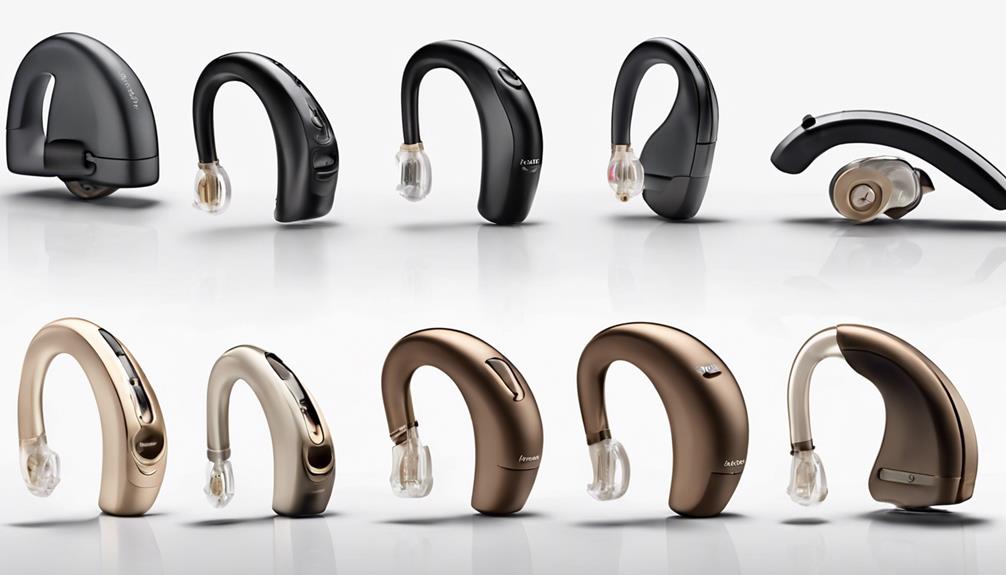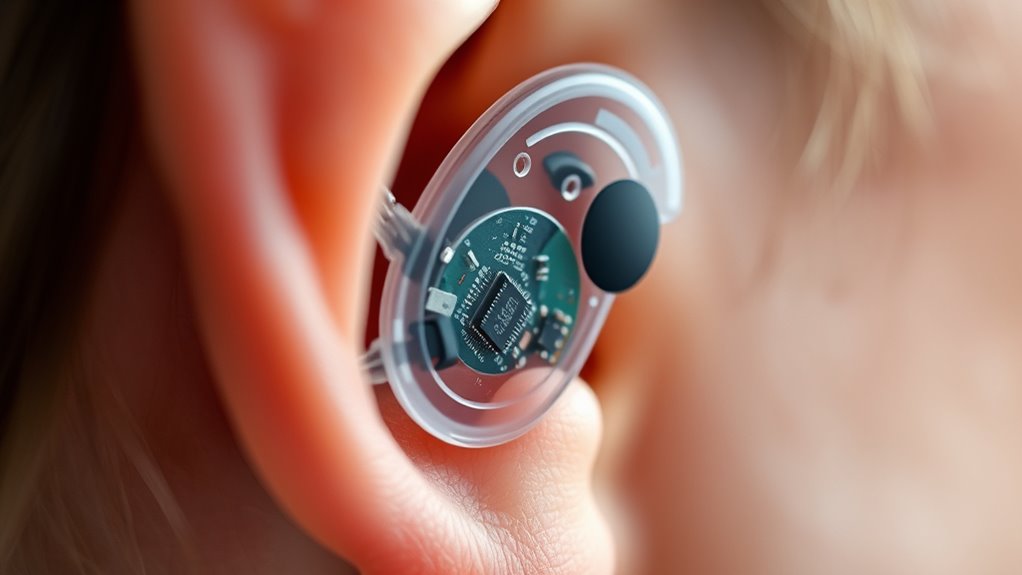

Modern hearing aids are sophisticated devices that automatically adapt to different environments to improve your listening experience. They connect wirelessly to your phones and other devices, allowing you to stream calls, music, and notifications directly. Advanced sound processing filters important sounds like speech while reducing background noise, making conversations clearer. Features like directional microphones help focus on sounds in front of you. To discover how these features work together, keep exploring how modern hearing aids can help you hear better.

Get everyday helpers delivered free with Prime
- Fast, free delivery on millions of items
- Prime Video, Amazon Music and more included
- Member-only deals all year
Key Takeaways
- Modern hearing aids are sophisticated devices that adapt to different environments and hearing needs.
- They connect wirelessly to smartphones and other devices for seamless communication and control.
- Advanced sound processing automatically adjusts settings to enhance speech and reduce background noise.
- Noise reduction technology filters out unwanted sounds, improving clarity in noisy settings.
- Future features include directional microphones and more discreet, user-friendly designs for personalized hearing experiences.
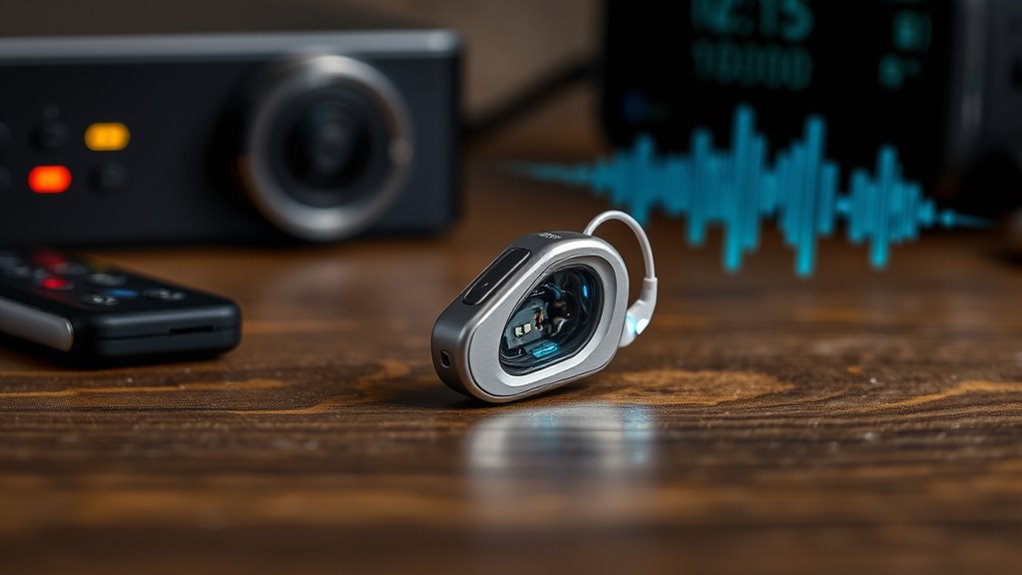
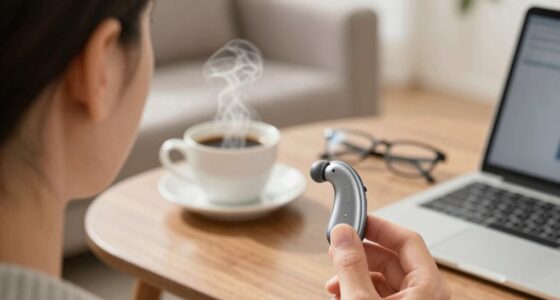
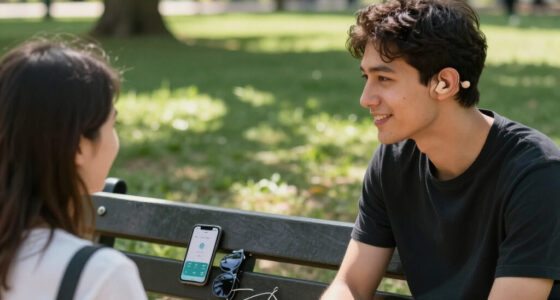
Have you ever wondered how modern hearing aids help people hear better? It’s a fascinating combination of advanced technology that works seamlessly to improve your hearing experience. Today’s devices are much more than simple amplifiers; they are sophisticated systems designed to adapt to your environment and your specific hearing needs. One of the key features that make these devices so effective is wireless connectivity. This allows your hearing aid to connect directly to your smartphone, tablet, or other compatible devices via Bluetooth or similar technologies. With wireless connectivity, you can stream phone calls, music, or even notifications straight into your hearing aids, eliminating the need for bulky accessories and providing a more natural listening experience. This seamless connection also means you can control your hearing aid settings through a dedicated app on your device, adjusting volume, changing programs, or customizing sound profiles on the go. It’s all about giving you greater control and convenience, ensuring you’re never disconnected from your digital world. Additionally, many modern hearing aids incorporate advanced sound processing that automatically adjusts to different listening environments, further enhancing sound quality and user comfort.
Another critical aspect of modern hearing aids is noise reduction technology. In noisy environments like restaurants or busy streets, background noise can make hearing difficult and exhausting. Modern devices combat this by using advanced algorithms that identify and suppress unwanted sounds while amplifying speech and other important audio cues. Noise reduction works in real-time, analyzing incoming sounds and filtering out consistent background noises, such as hums or chatter, without distorting the speech you want to hear. This process allows you to focus on conversations more easily and reduces listening fatigue, making social interactions more comfortable and less tiring. Many hearing aids also feature directional microphones that automatically zero in on sounds coming from in front of you, further enhancing speech clarity. When combined with noise reduction, these features create a listening environment that’s much clearer and less overwhelming, no matter where you are.
Together, wireless connectivity and noise reduction make modern hearing aids powerful tools that adapt to your environment, improve clarity, and provide a more natural listening experience. They are designed to be intuitive and user-friendly, so you can enjoy better hearing without constant adjustments or complicated setups. As technology continues to evolve, these devices will only become more discreet, efficient, and personalized to your unique needs. Whether you’re in a quiet room or a bustling street, modern hearing aids work behind the scenes to help you hear better, smarter, and with greater ease.
As an affiliate, we earn on qualifying purchases.
Frequently Asked Questions
Can Hearing Aids Connect to Smartphones Bluetooth?
Yes, your hearing aids can connect to smartphones via Bluetooth. This allows for wireless streaming of calls, music, and other audio directly to your devices. Plus, many models feature app integration, letting you customize settings and adjust sound preferences easily. Simply pair your hearing aids with your smartphone, and you’ll enjoy seamless wireless streaming and control, enhancing your overall hearing experience effortlessly.
How Long Do Hearing Aid Batteries Typically Last?
Hearing aid batteries typically last between 3 to 10 days, depending on usage and battery size. Your device’s battery lifespan is influenced by power management features, which optimize energy use. To prolong battery life, turn off your hearing aids when not in use and keep spare batteries handy. Regularly replacing batteries ensures your hearing aid functions smoothly, providing clear sound and reliable performance throughout the day.
Are Modern Hearing Aids Waterproof or Water-Resistant?
Modern hearing aids often feature waterproof or water-resistant designs, so you don’t have to worry about sweat resistance or accidental splashes. Many models are built with waterproof features that protect against moisture, making them suitable for active lifestyles. While not entirely waterproof, they usually handle everyday moisture well, giving you peace of mind. Always check specific product details to verify your hearing aids meet your needs for water exposure.
Do Hearing Aids Require Regular Maintenance or Cleaning?
Think of your hearing aids as tiny symphonies that need regular tuning. You should clean them daily with soft cloths and keep them dry, following simple maintenance tips. Regular cleaning routines prevent buildup and guarantee they perform at their best. By giving your hearing aids proper care, you’ll enjoy clear sound and longer-lasting devices. Don’t forget, a little upkeep now saves big trouble later, keeping your hearing experience harmonious.
Can Hearing Aids Be Customized for Specific Hearing Loss Types?
Yes, hearing aids can be customized for specific hearing loss types through various customization options. When you visit your audiologist, they tailor the device’s settings and features to match your unique hearing profile. This guarantees you get the best possible sound quality and clarity. Customization options include adjusting frequency responses, amplification levels, and noise reduction, allowing your hearing aids to effectively address your particular hearing loss needs.
Conclusion
Now that you know how modern hearing aids work, you can see they’re like tiny superheroes, transforming muffled silence into crystal-clear sound. With their advanced technology, they’re more powerful than a rocket launching into the stars, helping you reconnect with every whisper, laugh, and song. So, don’t just hear—listen to life’s beautiful symphony. Embrace these incredible devices and let them take your hearing to new heights you never thought possible!
Halloween Picks
halloween
As an affiliate, we earn on qualifying purchases.