To keep your home safe from unseen carbon monoxide, invest in reliable detectors with loud alarms, digital displays, and backup power sources. Place them on every level near sleeping areas and guarantee regular testing and maintenance. Be aware that traditional detectors might miss low-level leaks or false alarms, so choose advanced models with real-time monitoring. Proper installation and ongoing care are essential. Keep going to discover how to choose, test, and maintain your CO detectors effectively.
Key Takeaways
- Use air quality monitors with visual alerts and digital displays for reliable CO detection beyond audible alarms.
- Install CO detectors on every level, especially near sleeping areas, ensuring proper placement to avoid blind spots.
- Regularly test, clean, and replace detectors and batteries to maintain accurate and continuous safety coverage.
- Choose detectors with advanced sensors, loud alarms (≥85 dB), and features like backup power and performance monitoring.
- Implement immediate response procedures: evacuate, ventilate, contact emergency services, and stay outside until safe.

Kidde Carbon Monoxide Detector, Plug-In with 9V Battery Backup, Digital Display, 85 dB Alarm, LED Status Light Indicators, 3rd Edition
Easy Installation – simply plug-in to a standard, 120V outlet in your home
As an affiliate, we earn on qualifying purchases.
As an affiliate, we earn on qualifying purchases.
Why Carbon Monoxide Is a Silent Danger in Your Home

Although it’s invisible and odorless, carbon monoxide poses a serious threat to your household. It contributes to indoor pollution, making it hard to detect without proper tools. This silent gas can originate from malfunctioning furnaces, gas appliances, or vehicles left running in attached garages. Because you can’t see or smell it, many people unknowingly breathe in dangerous levels. Installing air quality monitors specifically designed to detect carbon monoxide can provide immediate alerts and help prevent poisoning. Proper ventilation systems can further reduce the buildup of this hazardous gas in your home. Regular home safety checks are also crucial to identify potential sources of CO leaks before they become dangerous. This makes fire safety essential, not just for flames but for deadly gases as well. Without warning signs, you might only discover a problem after symptoms appear or an alarm sounds too late. That’s why understanding this hidden danger is vital. You need proactive measures to protect your home, family, and indoor environment from this silent threat. Carbon monoxide detection devices are an essential part of a comprehensive safety plan.
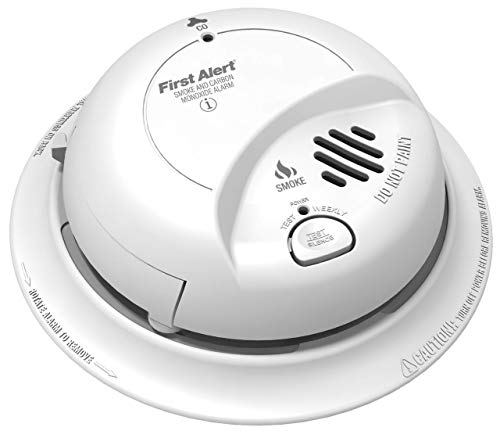
FIRST ALERT BRK SC9120FF Hardwired Smoke and Carbon Monoxide (CO) Detector with Battery Backup, 1 pack , White
Keep your family safe with this hardwired smoke and carbon monoxide alarm; The battery backup means constant monitoring,…
As an affiliate, we earn on qualifying purchases.
As an affiliate, we earn on qualifying purchases.
What Traditional CO Detectors Can and Can’t Do

Traditional CO detectors can alert you to high levels of carbon monoxide, but they have limitations you should be aware of. They may trigger false alarms or miss low-level leaks, creating blind spots in your safety. Understanding what they can and can’t do helps you stay better protected. Incorporating reliable detection methods can enhance your overall safety by providing more comprehensive monitoring. Additionally, understanding the limitations of detectors helps you make more informed safety decisions. Regular maintenance and awareness of emerging safety technologies further strengthen your home’s protection against carbon monoxide risks. Being aware of air purifier maintenance dos and don’ts can also contribute to maintaining a healthier indoor environment, reducing other airborne pollutants that may compound safety concerns.
Detection Capabilities and Limitations
While carbon monoxide detectors are vital for alerting you to dangerous levels of CO, they have limitations in what they can detect and how quickly. Sensor limitations mean they may not respond to low or rapidly rising CO levels immediately. Proper alarm placement is essential; placing detectors too close to vents, windows, or sources of combustion can impair detection. For example, a detector placed near a furnace might not sense CO leaking elsewhere, and one placed too high or low might miss CO at certain levels. Here’s a quick overview:
| Sensor Limitations | Alarm Placement Challenges | Detection Speed |
|---|---|---|
| May not detect low-level CO | Incorrect placement reduces effectiveness | May not alert during rapid CO buildup |
Additionally, some detectors may have delayed response times, which can affect early warning efforts.
False Alarms and Blind Spots
Many CO detectors can trigger false alarms, causing unnecessary panic or leading you to ignore warning sounds altogether. False alarm triggers often occur from cooking fumes, steam, or chemicals, making it hard to distinguish real danger from everyday noise. These false alarms can desensitize you, so you might dismiss genuine CO threats. Additionally, traditional detectors have blind spots; they only monitor specific areas, leaving parts of your home unprotected. Poor placement or overlooked areas can allow dangerous CO buildup unnoticed. Relying solely on these detectors risks missing subtle leaks or delayed alerts. To protect your home effectively, consider devices with advanced false alarm filtering and extensive coverage. This approach reduces the chance of blind spots and ensures you’re better informed about potential CO dangers. Incorporating Free Floating detection technology can further enhance safety by providing more comprehensive coverage and minimizing false alarms. Moreover, understanding detection coverage helps you select the most reliable system for your household.

Professional Indoor Air Quality Monitor with AQI Alerts, Portable Real-Time Detector for Home, Car, Plants & Pet
【Professional 16-in-1 Real-time Air Quality Monitor】: With real-time detection of PM1.0 | PM2.5 | PM10 | CO2 |…
As an affiliate, we earn on qualifying purchases.
As an affiliate, we earn on qualifying purchases.
Features to Look for in an Effective CO Detector

When choosing a CO detector, you want accurate sensor technology that reliably detects dangerous levels. It should have loud, distinct alerts so you can hear them clearly, even if you’re asleep or in another room. Don’t forget to check for battery life indicators to guarantee your detector stays powered and ready at all times. Additionally, consider models that feature vetted safety standards to ensure maximum reliability and effectiveness. Incorporating performance cookies can help manufacturers monitor the device’s operation and improve future models for better safety.
Accurate Sensor Technology
An effective CO detector relies on sensor technology that provides accurate and quick readings, so you can respond promptly to potential dangers. Look for detectors with high sensor accuracy, ensuring they detect even low levels of carbon monoxide reliably. This precision helps prevent false alarms, which can cause unnecessary panic and lead you to disable the device. Advanced sensor technology minimizes false alarm occurrences by differentiating between harmless sources and genuine CO buildup. Reliable sensors are essential for maintaining safety without constant interruptions. When choosing a detector, verify that it uses proven sensor technology known for accuracy and false alarm prevention. Additionally, sensor calibration ensures ongoing precision and reliability, giving you peace of mind knowing the device will alert you only when there’s a real threat.
Loud, Distinct Alerts
A loud, distinct alarm is essential because it guarantees you immediately notice when carbon monoxide is detected, even if you’re asleep or distracted. The sound frequency should be sharp and attention-grabbing, making it impossible to ignore. The alert volume needs to be loud enough to be heard throughout your home, especially in noisy environments. When choosing a CO detector, look for features like:
- A high alert volume (at least 85 decibels) to ensure it can wake you up.
- A clear, piercing sound frequency that’s distinguishable from other household noises.
- An alarm that produces a consistent, attention-grabbing tone, so you recognize it instantly.
- Power supply options are also important to ensure proper power management during outages, helping prevent dangerous situations. Additionally, selecting a detector with long-term reliability can provide ongoing safety without frequent replacements.
These features help ensure your safety by providing an unmistakable warning in any situation.
Battery Life Indicators
Battery life indicators are a key feature to take into account when selecting a carbon monoxide detector, as they help guarantee your device remains functional when you need it most. These indicators alert you when the battery is running low, preventing unexpected failures. Look for detectors with clear battery indicators that show the current power source status at a glance. Many models use visual signals like LED lights or display screens to indicate battery health. Reliable power sources, whether batteries or hardwired systems with backup batteries, are essential for continuous protection. A detector with a good battery life indicator ensures you won’t be caught off guard by a dead battery, maintaining safety and peace of mind in your home. Regularly check these indicators to keep your CO detector functioning properly. Proper maintenance of your detector includes monitoring battery status and replacing batteries promptly to ensure ongoing safety. Additionally, choosing a detector with long-lasting batteries or smart alerts can further enhance your home’s safety by providing timely notifications before power issues occur. In addition, some models now feature automatic alerts, which notify you via smartphone apps when there is a problem with the device or battery.
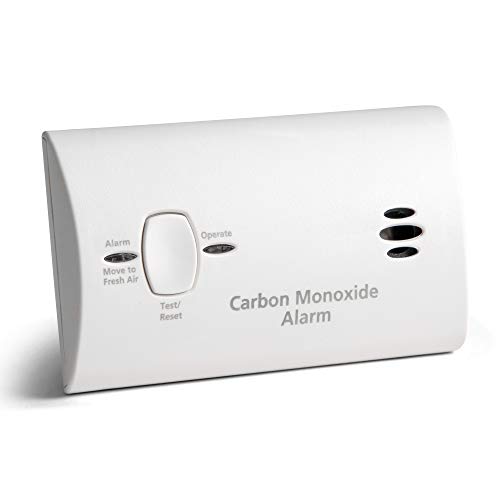
Kidde Carbon Monoxide Detector, AA Battery Powered, Portable for Travel or Home, 85 dB Alarm, LED Status Indicators, 3rd Edition
Electrochemical sensor technology detects CO gas
As an affiliate, we earn on qualifying purchases.
As an affiliate, we earn on qualifying purchases.
How to Pick the Best Carbon Monoxide Alarm for Your Home

Choosing the right carbon monoxide alarm for your home involves considering several key factors to guarantee your safety. First, verify it has a digital display for real-time readings, so you can monitor CO levels easily. Second, select a unit with interconnectivity, allowing multiple alarms to alert you simultaneously, especially important if you’re also managing radon mitigation or fire safety gear. Third, check for certifications from recognized agencies like UL or CSA, ensuring reliability. Additionally, opt for alarms with a loud alarm sound and long-lasting batteries. Remember, a high-quality CO detector works best when paired with other safety measures, like proper ventilation and fire safety gear. Your choice should prioritize accuracy, ease of use, and integration with your overall home safety plan. Incorporating reliable safety features can further enhance your home’s protection against invisible threats like carbon monoxide. It’s also beneficial to consider the certification standards to ensure the device meets industry safety benchmarks. Furthermore, selecting an alarm with advanced detection technology can improve responsiveness to fluctuating CO levels and reduce false alarms. Ensuring your alarm has proper installation and maintenance is essential for ongoing effectiveness and safety. Understanding narcissistic traits can help identify manipulative or overly controlling behaviors, which is useful when managing household safety and boundaries.
Easy Steps to Test and Maintain Your CO Detectors
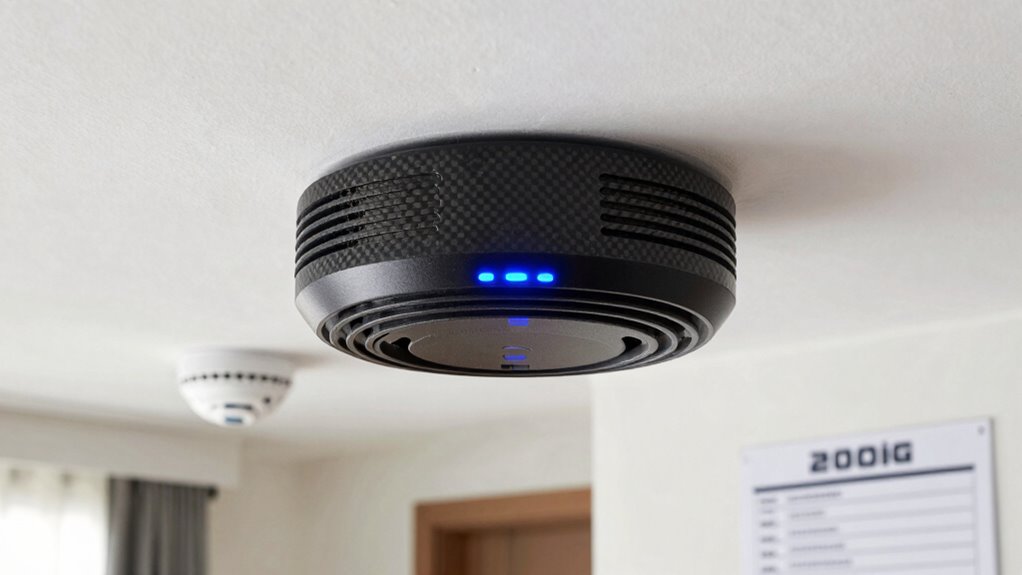
Regularly testing and maintaining your carbon monoxide detectors is essential to guarantee they function properly when you need them most. Start by checking the sensor placement; detectors should be installed at recommended heights, usually on every level and near sleeping areas. Follow a consistent maintenance schedule—usually once a month—to test the alarm using the built-in test button. Replace batteries annually or as indicated by the device. Clean the detector with a soft cloth to remove dust and debris that may interfere with sensor performance. Also, check the expiration date on your CO detector; most last about 5-7 years. Proper sensor placement and regular maintenance ensure your detector remains reliable, giving you peace of mind and early warning in case of carbon monoxide buildup. Understanding how carbon monoxide hazards are detected is key to maintaining a safe home environment.
What to Do Immediately If Your CO Alarm Goes Off

If your carbon monoxide alarm goes off, you need to act immediately to protect yourself and your family. First, evacuate everyone from the home, ensuring no one re-enters until safety is confirmed. Then, call emergency services to report the situation and get professional assistance. While waiting for help, follow these steps to maintain fire safety and emergency preparedness:
- Ventilate the area by opening windows and doors to disperse CO.
- Turn off any appliances or devices that could be producing carbon monoxide, like gas heaters or stoves.
- Stay outside in fresh air until emergency responders declare the home safe and the CO levels are clear.
Quick, decisive action minimizes risk and keeps everyone safe.
Frequently Asked Questions
How Often Should I Replace My Carbon Monoxide Detector?
You should replace your carbon monoxide detector every 5 to 7 years, following the detector lifespan and replacement guidelines. Check the manufacturer’s instructions for specific recommendations, as some models may need earlier replacement. Regularly test your detector monthly and replace batteries as needed. Staying on top of these guidelines guarantees your home remains safe, providing reliable alerts and peace of mind in case of carbon monoxide buildup.
Can Pets Detect Carbon Monoxide Leaks Before Alarms Sound?
Pets can sometimes detect carbon monoxide leaks before alarms sound, thanks to their heightened detection capabilities. You might notice changes in pet behavior, like restlessness, lethargy, or unusual breathing, which could indicate a leak. While pets can be sensitive to the gas, they shouldn’t replace carbon monoxide detectors. Always rely on functioning alarms and regularly check them, ensuring your pet’s natural detection capabilities add a layer of safety.
Are There Legal Requirements for CO Detector Placements in Homes?
Did you know that carbon monoxide poisoning causes about 430 deaths annually? Legal regulations often mandate specific placement guidelines for CO detectors to guarantee safety. You should place detectors on every level of your home, near sleeping areas, and away from vents or windows. These rules help prevent deadly CO buildup. Always check local laws, as requirements can vary, and proper placement is vital for effective alerts and your safety.
Do Smart Home Systems Integrate With CO Alarms?
Yes, smart home systems often integrate with CO alarms to enhance safety through smart home integration and co alarm connectivity. You can connect your CO detector to a compatible smart system, allowing alerts to be sent directly to your phone or smart speaker. This integration makes monitoring easier and more reliable, ensuring you’re promptly notified of any danger, even when you’re away or asleep.
What Are Common False Alarms and How Can I Prevent Them?
False alarms can be as frustrating as a fire drill that’s unnecessary. Common false alarm causes include dusty sensors, cooking fumes, or low batteries. To prevent them, regularly clean your CO alarms, keep sensors free of dust, and replace batteries annually. For example, I once ignored a false alarm caused by steam from the shower, only to realize that proper maintenance safeguarded me from unnecessary stress and ensured real alerts remain trustworthy.
Conclusion
Don’t wait until it’s too late—regularly check and maintain your CO detectors to stay protected. Some might think alarms are enough, but without proper testing and awareness, you could still be at risk. Taking just a few minutes to verify your alarms work can save your life. Remember, silent dangers require proactive steps—stay vigilant and keep your home safe from carbon monoxide. Your safety is worth the effort.