To support students with hearing loss, you should use classroom accommodations like assistive listening devices such as FM systems, and implement clear communication strategies like facing the student, using visual cues, and rephrasing information. Arranging seating to optimize hearing and visibility, incorporating visual aids, and providing captioned media also help. Teacher training on these strategies and adapting to individual needs are key. Keep exploring these techniques to create an inclusive learning environment.

Get everyday helpers delivered free with Prime
- Fast, free delivery on millions of items
- Prime Video, Amazon Music and more included
- Member-only deals all year
Key Takeaways
- Use assistive listening devices like FM systems to improve sound clarity and reduce background noise.
- Implement visual aids, captioned videos, and real-time transcription to support understanding.
- Optimize classroom seating to enhance hearing and visual access, placing students closer to the teacher.
- Train teachers in communication strategies such as facing students, using gestures, and rephrasing instructions.
- Establish consistent routines and a supportive environment to promote active participation and confidence.
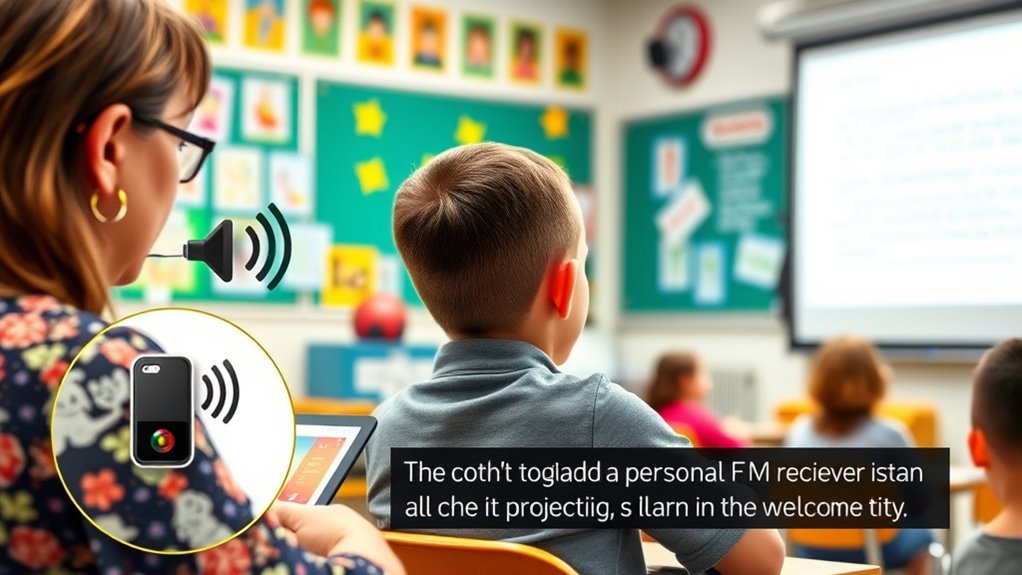
Students with hearing loss often face unique challenges in the classroom, but with the right accommodations, they can access learning just as effectively as their peers. One of the most important tools you can use is assistive listening devices. These devices, such as FM systems or hearing aids, help improve the clarity of sound by transmitting the teacher’s voice directly to the student. When the teacher uses an assistive listening system, it minimizes background noise and guarantees the student hears instructions, discussions, and lessons more clearly. Implementing these devices requires cooperation and understanding from both teachers and students, but the payoff is significant: better engagement and comprehension. Alongside assistive listening, communication strategies play a vital role in creating an inclusive classroom environment. As a teacher or peer, you can adopt specific strategies to facilitate understanding, such as facing the student when speaking, using visual cues, and repeating or rephrasing information. These approaches help clarify meaning and guarantee the student stays connected to the lesson. You should also be mindful of your speaking pace, pausing frequently to allow the student time to process information. Visual aids, like charts, pictures, and written instructions, complement spoken words and serve as essential tools for reinforcing learning. Encouraging the student to ask questions and providing opportunities for clarification helps build their confidence and promotes active participation. It’s also beneficial to establish clear communication routines, so the student knows what to expect and feels comfortable engaging in discussions. When planning lessons, consider seating arrangements that optimize the student’s hearing and visibility. Sitting closer to the teacher or in a spot where visual cues are easily seen can make a significant difference. Additionally, incorporating technology, such as captioned videos or real-time transcription services, can enhance understanding during multimedia presentations. It’s important to foster an environment where the student feels comfortable advocating for their needs and where peers understand how to communicate effectively. Teachers should receive training on assistive listening and communication strategies to guarantee they’re prepared to implement these accommodations successfully. Understanding individual needs and adapting strategies accordingly is crucial for creating a truly inclusive classroom environment. Ultimately, your goal is to create a classroom setting where students with hearing loss can thrive academically and socially, feeling supported and included. By integrating assistive listening devices and employing effective communication strategies, you help eliminate barriers and promote equal access to learning for all students. These accommodations aren’t just tools—they’re essential components of a responsive, inclusive educational environment that recognizes and respects each student’s unique needs.
assistive listening devices FM systems for classrooms
As an affiliate, we earn on qualifying purchases.
As an affiliate, we earn on qualifying purchases.
Frequently Asked Questions
How Can Teachers Effectively Communicate With Students Who Have Hearing Aids?
To effectively communicate with students who have hearing aids, you should face them directly, speak clearly, and use a normal pace. Incorporate sign language or gestures when helpful, and make certain your face is well-lit for lip reading. Use visual aids and written instructions to reinforce understanding. Always check for comprehension, and be patient, giving the student time to process and respond. Your proactive approach enhances their learning experience.
Are There Specific Training Programs for Educators on Hearing Loss Accommodations?
Yes, there are specific training programs for educators focused on hearing loss accommodations. You should seek out professional development courses that cover hearing loss and curriculum adaptation strategies. These programs equip you with essential skills to modify instruction and communicate effectively. By participating, you’ll better support students with hearing impairments, ensuring an inclusive learning environment. Continued training helps you stay updated on best practices and legal requirements for accommodating diverse needs.
What Technology Options Are Available for Classroom Amplification?
You can enhance classroom hearing with technology options like wireless microphones and assistive listening devices. Wireless microphones help you project your voice clearly across the room, reducing strain and ensuring students hear you. Assistive listening systems, such as FM or infrared devices, transmit sound directly to students’ hearing aids or cochlear implants. These tools create an inclusive environment, allowing students with hearing loss to participate fully and improve their learning experience.
How Do Accommodations Differ for Students With Varying Degrees of Hearing Loss?
You’ll find that accommodations vary considerably with hearing loss severity—studies show that nearly 60% of students with moderate to severe loss need tailored support. For mild cases, simple hearing devices or preferential seating may suffice, but for profound loss, degree-based adjustments like FM systems or sign language interpreters become essential. You must assess each student’s specific needs to guarantee effective communication and full classroom participation.
What Strategies Support Social Inclusion for Students With Hearing Impairments?
You can support social inclusion for students with hearing impairments by encouraging peer interactions and facilitating inclusive activities. Promote group work that fosters communication, and pair students with buddies to build friendships. Use visual cues and sign language when possible, ensuring all students feel valued. Create a welcoming environment where everyone participates, helping students with hearing loss engage confidently and form meaningful relationships, enhancing their social experience in the classroom.
Conclusion
By implementing these classroom accommodations, you’re lighting the path for students with hearing loss, guiding them toward understanding and inclusion. Think of each adjustment as a beacon, shining brightly to break down barriers and foster connection. When you create an accessible environment, you’re not just helping one student—you’re illuminating a future where every voice is heard and valued. Your efforts become the steady lighthouse guiding all students safely home to learning and growth.
Halloween Picks
halloween
As an affiliate, we earn on qualifying purchases.