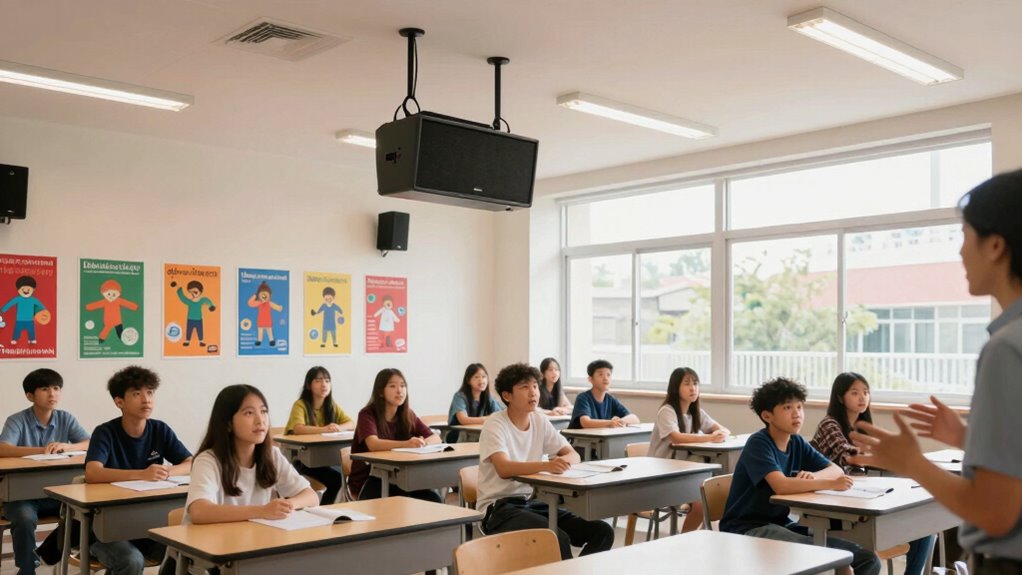

Using soundfield systems in your classroom helps amplify your voice evenly so every student can hear clearly, no matter where they sit. They reduce the need for you to shout, making your lessons more natural and comfortable. The systems also improve acoustics, minimizing background noise and echoes. This boosts access for students with hearing difficulties or learning challenges, encouraging participation. If you keep exploring, you’ll discover how to optimize these systems for even better classroom inclusion and engagement.

Get everyday helpers delivered free with Prime
- Fast, free delivery on millions of items
- Prime Video, Amazon Music and more included
- Member-only deals all year
Key Takeaways
- Install strategically placed microphones and speakers to amplify teachers’ voices evenly throughout the classroom.
- Use soundfield systems to reduce background noise and echoes, improving speech clarity for all students.
- Integrate the system with classroom acoustics to enhance overall sound quality and accessibility.
- Support students with hearing impairments and language challenges for more inclusive participation.
- Promote natural speech patterns for teachers, reducing vocal strain and ensuring consistent, clear communication.

Soundfield systems are transforming classrooms by amplifying teachers’ voices clearly and evenly throughout the room. This technology provides effective acoustic enhancement, ensuring that every student, no matter where they sit, can hear and understand instruction without straining. When you implement a soundfield system, you’re creating an environment where teacher amplification is optimized, reducing the need for teachers to shout or strain their voices—saving energy and promoting vocal health. With consistent voice clarity, teaching becomes more engaging, and students stay focused because they don’t have to work as hard to catch what’s being said.
Using a soundfield system makes a noticeable difference in how well students access the content. When the teacher’s voice is evenly distributed, students with hearing difficulties or those sitting at the back of the room benefit from improved sound quality. The system’s microphones pick up your voice directly, amplifying it through speakers that are strategically placed throughout the classroom. This setup minimizes background noise and echoes, providing a clean, crisp sound that makes comprehension easier. As a result, students are more likely to stay attentive and participate actively, knowing they won’t miss important details.
Teacher amplification through a soundfield system also supports a more inclusive classroom environment. When your voice is amplified evenly, students with hearing impairments or language processing challenges receive better access to instruction. The consistent sound quality helps them follow along more easily, reducing frustration and increasing their confidence. Additionally, a well-designed soundfield setup can reduce the auditory fatigue that often accompanies prolonged speaking, helping you maintain your energy and effectiveness throughout the day. Effective acoustic enhancement also plays a crucial role in creating a healthier indoor environment by reducing the need for teachers to raise their voices excessively. Incorporating soundfield technology can also contribute to better overall classroom acoustics, which is essential for supporting diverse learning needs. Understanding the role of building infrastructure can help optimize the placement and performance of soundfield systems within the classroom environment.
Implementing a soundfield system isn’t just about technology; it’s about improving communication and accessibility. It allows you to focus on your teaching, rather than worrying about whether everyone can hear you. As you speak naturally, your voice is projected at a comfortable volume, making your instructions more natural and engaging. Students are more likely to stay attentive when they can hear every word clearly, which improves learning outcomes across the board. Properly integrating acoustic design into the classroom can further enhance the effectiveness of soundfield systems. Additionally, understanding room acoustics can help in designing a space that maximizes the benefits of sound amplification for all students.
soundfield classroom amplification system
As an affiliate, we earn on qualifying purchases.
As an affiliate, we earn on qualifying purchases.
Frequently Asked Questions
What Is the Typical Cost of Installing a Soundfield System?
The typical cost of installing a soundfield system ranges from $1,500 to $5,000, depending on the size of your classroom and the system’s features. Cost considerations include equipment, installation, and maintenance. You might face installation challenges like ensuring proper speaker placement and wiring. Planning ahead helps you stay within budget and avoid delays, making sure the system effectively enhances audio clarity for better student access.
How Do Soundfield Systems Affect Students With Hearing Impairments?
Think of soundfield systems as your classroom’s secret weapon, much like a lighthouse guiding ships safely. They considerably improve hearing accessibility for students with hearing impairments by evenly distributing sound, reducing background noise, and enhancing clarity. This boosts classroom acoustics, allowing these students to follow lessons more easily, participate actively, and feel more included. Ultimately, soundfield systems create a more equitable learning environment where every student can thrive.
Are Soundfield Systems Compatible With Existing Classroom Technology?
Yes, soundfield systems are compatible with existing classroom technology. They often feature wireless integration, making it easy to connect with microphones, computers, and other devices. To maximize effectiveness, you should consider classroom acoustics, as a well-designed space enhances sound distribution. Most systems are designed for seamless compatibility, so you can upgrade your setup without overhauling your current tech infrastructure, improving overall communication and learning experiences.
What Maintenance Is Required for Soundfield Systems?
Imagine you’re in a 90s sci-fi flick—sound system maintenance is straightforward. You’ll need to regularly check the sound system durability and keep microphones clean to prevent buildup. Replace batteries as needed and guarantee connections stay secure. Routine inspections help avoid issues and keep audio clear. With proper upkeep, your soundfield system remains reliable, supporting effective teaching and enhancing student access through consistent, high-quality sound delivery.
Can Soundfield Systems Be Used in Outdoor or Irregularly Shaped Classrooms?
Yes, you can use soundfield systems outdoors or in irregularly shaped classrooms, but you’ll need to take outdoor acoustics and irregular room design into account. In outdoor settings, choose weather-resistant speakers and ensure proper placement to minimize noise interference. For irregular rooms, adjust the system’s microphone and speaker placement to optimize sound coverage. Proper calibration helps ensure clear audio, regardless of the room shape or outdoor environment.
Conclusion
Just as the lighthouse guides ships safely to harbor, soundfield systems illuminate every corner of your classroom, ensuring no student is left in the shadows of silence. By embracing this technology, you create an environment where clarity and understanding shine through, empowering every learner to reach their full potential. Remember, in the domain of education, a clear signal can make all the difference—turn on the soundfield and watch your students thrive like never before.
Halloween Picks
halloween
As an affiliate, we earn on qualifying purchases.