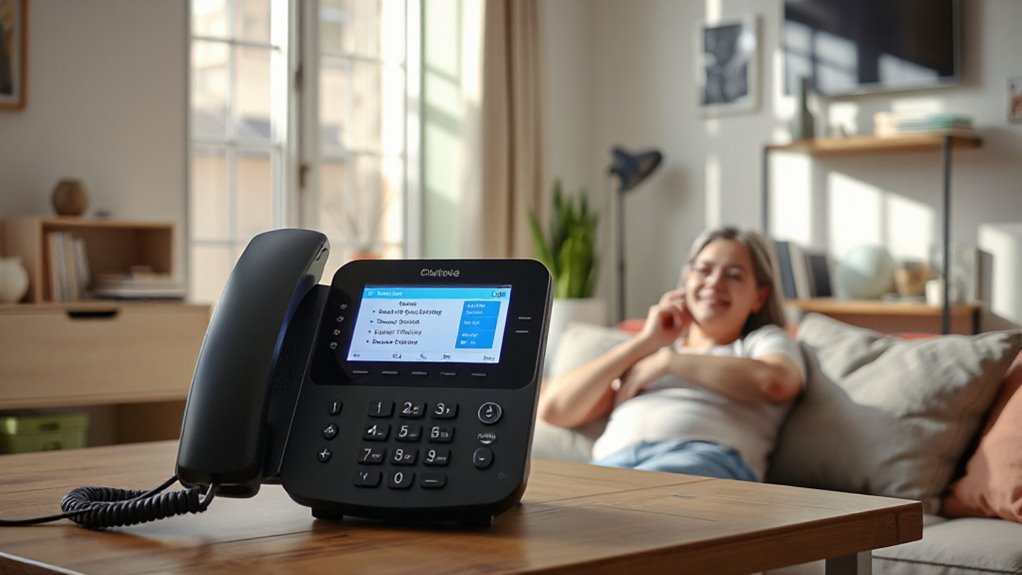

Finding the right cordless caption phone for hearing impaired users involves balancing clarity, ease of use, and compatibility. The Panasonic KX-TGM420W stands out as the overall best due to its amplified sound and expandability. For those prioritizing large displays and simple operation, the Hamilton CapTel 840i offers excellent captioning with hearing aid compatibility. Meanwhile, the Panasonic KX-TGM450S provides a more advanced hearing aid-friendly option. Buyers often face tradeoffs between affordability, caption accuracy, and ease of setup. Keep reading for a detailed breakdown of these options and how to choose the best fit for your needs.

Get everyday helpers delivered free — and shop member deals
- Fast, free delivery on millions of items
- Access to Prime Big Deal Days deals on October 6–7
- Prime Video, Amazon Music and more included
Key Takeaways
- Amplification and sound boosting are key features that differentiate top models like Panasonic KX-TGM420W.
- Large displays and big buttons significantly improve usability for users with visual or dexterity challenges.
- Hearing aid compatibility varies across models; checking this feature ensures seamless integration.
- Caption accuracy and speed are critical, especially for users relying heavily on captions for understanding calls.
- Expandability and additional handset options add value for users needing multiple phones in different rooms.
| Panasonic KX-TGM420W + 2 KX-TGMA44W Amplified Cordless Phone with Digital Answering Machine, Expandable up to 6 Handsets, Voice Volume Booster 40 dB |  | Best Overall for Hearing-Impaired Users Seeking a Complete System | Expandable to: 6 handsets | Voice Volume Booster: up to 40 dB | Ringer Volume: up to 100 dB | VIEW ON AMAZON | See Our Full Breakdown |
| Panasonic Cordless Phone with Large Display and Big Buttons, 2 Handsets |  | Best for Simplicity and Ease of Use | Number of Handsets: 2 | Display Size: 2.1 inches | Call Blocking: Yes | VIEW ON AMAZON | See Our Full Breakdown |
| Hamilton CapTel 840i Captioned Telephone with Large Buttons and Hearing Aid Compatibility |  | Best for Real-Time Captioning and Hearing Aid Users | Volume Boost: up to 40 dB | Captioning: Real-time with auto and assisted options | Compatibility: Hearing aid compatible | VIEW ON AMAZON | See Our Full Breakdown |
| Hamilton CapTel 2400iSPNBT Captioned Telephone with Large Touch Screen and Hearing Aid Compatibility |  | Best for Visual Captioning and Advanced Features | Display: Large touchscreen | Amplified Volume: up to 40 dB | Hearing Aid Compatibility: Yes | VIEW ON AMAZON | See Our Full Breakdown |
| Hamilton CapTel 2400iSPNBT Captioned Telephone with Large Touch Screen and Hearing Aid Compatibility | | Best for Visual Captioning with Customizable Settings | Display: Large touchscreen | Amplified Volume: up to 40 dB | Hearing Aid Compatibility: Yes | VIEW ON AMAZON | See Our Full Breakdown |
| Panasonic KX-TGM420W + KX-TGMA44W Amplified Cordless Phone with Digital Answering Machine and Voice Volume Booster |  | Best Overall Amplified Cordless Phone for Hearing Impairment | Volume Boost: up to 40 dB | Number of Handsets: 2 | Expandable: Yes, up to 6 handsets | VIEW ON AMAZON | See Our Full Breakdown |
| Panasonic KX-TGM450S Amplified Cordless Phone with Hearing Aid Compatibility |  | Best for High Amplification and Hearing Aid Use | Volume Boost: 50 dB | LCD Display: 1.8 inch | Number of Handsets: Expandable to 6 | VIEW ON AMAZON | See Our Full Breakdown |
| cordless caption phones for hearing impaired | Volume Boost |
|---|---|
| Panasonic KX-TGM420W + 2 KX-TG | — |
| Panasonic Cordless Phone with | +12 dB |
| Hamilton CapTel 840i Captioned | up to 40 dB |
| Hamilton CapTel 2400iSPNBT Cap | — |
| Hamilton CapTel 2400iSPNBT Cap | — |
| Panasonic KX-TGM420W + KX-TGMA | up to 40 dB |
| Panasonic KX-TGM450S Amplified | 50 dB |
More Details on Our Top Picks
Panasonic KX-TGM420W + 2 KX-TGMA44W Amplified Cordless Phone with Digital Answering Machine, Expandable up to 6 Handsets, Voice Volume Booster 40 dB
This system stands out for its substantial 40 dB volume boost and noise reduction features, making it ideal for those with significant hearing difficulties. Unlike the more basic models, such as the Panasonic Cordless Phone with Large Display, this setup offers an expandable multi-handset design, allowing users to place phones throughout their home for better accessibility. The large backlit LCD and talking caller ID enhance usability in low light, while the noise reduction and Slow Talk features improve clarity during conversations. The main tradeoff is its bulkier size and potentially higher cost, which may be less appealing for users seeking a simple, minimal setup. Still, for those prioritizing hearing assistance and system expandability, this model offers a comprehensive solution.
Pros:- Up to 40 dB volume boost for severe hearing loss
- Expandable to six handsets for whole-home coverage
- Noise reduction and Slow Talk improve conversation clarity
- Large, backlit display for easy reading
Cons:- Bulkier design may be less suitable for small spaces
- Higher price point due to advanced features
- Complex setup for some users
Best for: Hearing-impaired individuals who need a robust, expandable system with strong volume and clarity features
Not ideal for: Users who prefer a compact design or minimal features, as this system is relatively bulky and feature-rich
- Expandable to:6 handsets
- Voice Volume Booster:up to 40 dB
- Ringer Volume:up to 100 dB
- Talk Time:13 hours
- Standby Time:9 days
- Voice Messaging:17 minutes
Our verdict“This model is best suited for users needing a powerful, expandable solution with maximum hearing assistance features.”
Panasonic Cordless Phone with Large Display and Big Buttons, 2 Handsets
This phone excels at providing straightforward accessibility with its large 2.1-inch display, big buttons, and built-in flashlight, making it a great choice for seniors or users new to technology. Compared with the Hamilton CapTel models, which offer real-time captioning, this model focuses on visual clarity and simplicity, with volume boost (+12 dB) and call blocking features that improve call quality without the complexity of captioning setup. However, its contact storage is limited to just three entries, making it less suitable for users who need to manage many contacts. Its basic feature set makes it ideal for those who want reliable, easy-to-operate phone functions without additional tech requirements.
Pros:- Large display and big buttons for easy operation
- Built-in flashlight for emergencies
- Volume boost (+12 dB) enhances speech clarity
- Call blocking reduces unwanted calls
Cons:- Limited contact storage (up to 3 contacts)
- Basic feature set may not satisfy advanced users
- No integrated captioning or voice-to-text features
Best for: Elderly users or beginners who prioritize simplicity and large controls over advanced captioning features
Not ideal for: Tech-savvy users or those needing detailed call management and captioning options
- Number of Handsets:2
- Display Size:2.1 inches
- Call Blocking:Yes
- Volume Boost:+12 dB
- Favorites Key:Yes
- Built-in Flashlight:Yes
Our verdict“This phone is ideal for users seeking a simple, reliable device with large controls and basic hearing assistance features.”
Hamilton CapTel 840i Captioned Telephone with Large Buttons and Hearing Aid Compatibility
The Hamilton CapTel 840i offers real-time captioning, amplifying the conversation experience for users with hearing loss, especially when combined with hearing aids. Its large buttons and large display ensure easy navigation, while the captioning feature provides instant text of spoken words, reducing misunderstandings. Compared to simpler amplified phones like the Panasonic Cordless Phone, this model adds a layer of clarity through captions, making it suitable for users who prefer reading along. The setup involves a high-speed internet connection, which could be a barrier for some. Despite its complexity, this phone excels at providing accurate, real-time conversation support for those comfortable with internet-enabled devices.
Pros:- Real-time captions improve conversation clarity
- Amplified sound up to 40 dB plus hearing aid compatibility
- Large buttons facilitate easy operation
- Captioned voicemail adds convenience
Cons:- Requires high-speed internet and landline connection
- Complex setup may be difficult for some users
- Limited to US residents with landline service
Best for: Hearing aid users who want real-time captioning and are comfortable with internet-based setup
Not ideal for: Users without high-speed internet or those seeking a straightforward, landline-only device
- Volume Boost:up to 40 dB
- Captioning:Real-time with auto and assisted options
- Compatibility:Hearing aid compatible
- Connectivity:High-speed internet required
Our verdict“Ideal for hearing aid users who prioritize captioning and are comfortable with internet setup, despite the more involved installation process.”
Hamilton CapTel 2400iSPNBT Captioned Telephone with Large Touch Screen and Hearing Aid Compatibility
The Hamilton CapTel 2400iSPNBT emphasizes visual clarity with its large touchscreen and captioning, making it highly suitable for users who prefer reading captions instead of relying solely on sound. Compared with the 840i model, this version offers Wi-Fi connectivity, providing flexibility in setup and integration, along with high amplification (up to 40 dB). Its hearing aid compatibility and captioned voicemail make it a comprehensive choice for those with complex hearing needs. The main challenge is its reliance on internet connectivity and the potential complexity in setup, which can be a barrier for less tech-savvy users. Nonetheless, its emphasis on visual captions makes it a strong choice for those who need clear, easy-to-read text during calls.
Pros:- Large, easy-to-read touchscreen for captions
- Amplified sound up to 40 dB
- Wi-Fi capable for flexible connectivity
- Captioned voicemail for message review
Cons:- Requires high-speed internet and power
- Setup complexity may be challenging
- Limited to US residents with landline and internet
Best for: Users seeking a visually oriented captioned phone with Wi-Fi flexibility and hearing aid compatibility
Not ideal for: Users who lack internet access or prefer simple, landline-only devices
- Display:Large touchscreen
- Amplified Volume:up to 40 dB
- Hearing Aid Compatibility:Yes
- Connectivity:Wi-Fi capable
Our verdict“Best suited for users who prioritize visual captioning and Wi-Fi connectivity, despite the setup requirements.”
Hamilton CapTel 2400iSPNBT Captioned Telephone with Large Touch Screen and Hearing Aid Compatibility
This version of the Hamilton CapTel offers a large touchscreen with real-time captioning, making reading captions straightforward for users with hearing impairments. Similar to the B00ZYHA1KI model, it provides high amplification and hearing aid compatibility, but with added convenience features like a built-in answering machine with captioned voicemail and customizable caption settings. Compared to simpler models, it offers a more comprehensive package for users who want detailed caption control and message management. The main drawbacks are the need for high-speed internet and the potential learning curve for adjusting caption settings. Overall, it’s an excellent choice for users who want a highly customizable, visually oriented captioned phone.
Pros:- Large touchscreen with real-time captions
- High amplification up to 40 dB
- Hearing aid compatible design
- Captioned voicemail and customizable captions
Cons:- Requires high-speed internet and landline service
- Setup and configuration may be complex
- Limited to US residents with compatible services
Best for: Tech-savvy users who want detailed caption customization and integrated voicemail
Not ideal for: Individuals without reliable internet or those preferring straightforward phones without advanced features
- Display:Large touchscreen
- Amplified Volume:up to 40 dB
- Hearing Aid Compatibility:Yes
- Connectivity:Wi-Fi capable
- Additional Features:Captioned voicemail, customizable captions
Our verdict“Ideal for users who need detailed caption control and message management, despite the setup complexity.”
Panasonic KX-TGM420W + KX-TGMA44W Amplified Cordless Phone with Digital Answering Machine and Voice Volume Booster
This model stands out for its solid amplification, offering a loud volume boost of up to 40 dB, which is sufficient for many users with moderate hearing loss. Compared to the Panasonic KX-TGM450S, which provides an even higher boost of 50 dB, the KX-TGM420W is slightly less powerful but still delivers clear sound and effective noise reduction. Its bright backlit LCD and enlarged touch keys improve usability, especially in noisy environments or for users with visual impairments. The inclusion of a digital answering machine and call blocking enhances functionality, though its setup can be somewhat complex, and the two-handset package may limit coverage for larger households. The bulkiness might also be a concern in small spaces. Overall, this pick makes the most sense for users who need a reliable, straightforward amplified phone with essential features without the highest volume capacity.
Pros:- Loud volume booster up to 40 dB for clearer hearing
- Bright backlit LCD and large keys aid visibility and ease of use
- Includes digital answering machine and call blocking for convenience
Cons:- Limited to two handsets in the package, restricting coverage
- Can be bulky and heavy for small spaces
- Setup may be complicated for some users
Best for: Users with moderate hearing loss seeking a dependable amplified cordless phone with good additional features and easy call management.
Not ideal for: Small-space users or those needing the highest amplification—over 50 dB—or a more compact design.
- Volume Boost:up to 40 dB
- Number of Handsets:2
- Expandable:Yes, up to 6 handsets
- Backlit LCD:Yes
- Additional Features:Digital answering machine, noise reduction, talking caller ID, call block, intercom
Our verdict“This model suits users who want a dependable, well-rounded amplified phone with essential features for moderate hearing impairment.”
Panasonic KX-TGM450S Amplified Cordless Phone with Hearing Aid Compatibility
This model is distinguished by its powerful 50 dB volume boost, making it ideal for users with severe hearing difficulties. Unlike the KX-TGM420W, which offers a slightly lower amplification, the KX-TGM450S’s extra loud volume provides clearer conversations even in challenging listening environments. Its large 1.8-inch backlit LCD and enlarged memory dial buttons improve readability and usability, while features like noise reduction, talking caller ID, and talking keypad add to its clarity. However, it operates solely on cordless power, which could be limiting for those who prefer or require corded options for stability or ease of charging. Some users might find its interface somewhat complex, especially if they are not familiar with advanced features, and rechargeability is essential for continuous use. Overall, this pick is best for users with significant hearing challenges who value high amplification and hearing aid compatibility over simplicity.
Pros:- Loud volume boost up to 50 dB for maximum clarity
- Large backlit LCD and enlarged buttons improve usability
- Includes noise reduction, talking caller ID, and talking keypad for better comprehension
Cons:- Operates only on cordless power, limiting placement options
- Interface may be complex for some users unfamiliar with advanced features
- Requires rechargeable batteries, adding to maintenance
Best for: Individuals with severe hearing loss needing maximum volume and hearing aid compatibility, especially those comfortable with advanced features.
Not ideal for: Users seeking a simple, plug-and-play device or those who prefer corded phones for stability or ease of use.
- Volume Boost:50 dB
- LCD Display:1.8 inch
- Number of Handsets:Expandable to 6
- Memory Dial Buttons:Enlarged
- Call Block Capacity:250 numbers
- Additional Features:Noise reduction, talking caller ID, talking keypad, intercom, speakerphone
Our verdict“This model is ideal for users with severe hearing loss who prioritize maximum amplification and hearing aid compatibility, accepting some complexity and cordless-only operation.”

How We Picked
The products in this roundup were selected based on their hearing assistance features, ease of use, build quality, and value for money. We prioritized models with clear captioning, sound amplification, hearing aid compatibility, and user-friendly interfaces. Additional considerations included expandability, durability, and customer feedback about reliability. The ranking reflects a balance between performance and affordability, aiming to match different user needs from beginners to advanced users. Our evaluation ensures that each option offers meaningful advantages within its category, helping buyers find the best fit for their specific hearing challenges.Factors to Consider When Choosing Cordless Caption Phones For Hearing Impaired
Choosing the right cordless caption phone involves understanding several key factors. Beyond basic features, you should consider how well the phone integrates with hearing aids, the quality of captioning, ease of use, and expandability. Knowing what tradeoffs exist can help avoid common pitfalls like overspending on features you won’t use or selecting a model with poor caption accuracy. The following sections highlight these considerations to help you make an informed decision.Sound Amplification and Clarity
For users with hearing impairments, amplified volume and clear audio are fundamental. Look for models with adjustable volume controls, tone settings, and sound boosters. Keep in mind that more amplification can sometimes introduce background noise, so a balance is necessary. Picking a phone with proven audio clarity ensures calls are intelligible without straining your ears or needing additional devices.
Captioning Accuracy and Speed
Accurate, real-time captioning is the core feature of caption phones. Some models use specialized technologies to ensure captions are synchronized with speech. However, caption quality can vary, and delays or errors may occur. Reading reviews or testing the captioning feature before purchase can prevent frustration, especially if you rely heavily on captions for understanding conversations.
Hearing Aid Compatibility
Compatibility with hearing aids is essential for seamless use. Check if the phone supports T-coil or other hearing aid-friendly features. Not all caption phones are equally compatible, and some may require additional accessories or settings adjustments. Ensuring this feature works well can greatly improve the overall experience and reduce the need for external amplification devices.
Ease of Use and Design
Large buttons, high-contrast displays, and simple menus make a big difference for ease of operation. If you or your loved one has dexterity issues or visual impairments, these features can reduce frustration. However, overly simplified interfaces may limit advanced functionalities, so find a balance that offers both simplicity and necessary features.
Expandability and Additional Features
Some models allow multiple handsets or integration with other home devices, providing flexibility as needs change. Consider whether you need extra units in different rooms or additional features like digital answering machines. These options can add convenience but may also increase the overall cost, so evaluate whether they match your long-term requirements.
Frequently Asked Questions
Can I use a cordless caption phone with my existing hearing aids?
Most modern cordless caption phones offer hearing aid compatibility, especially with T-coil support. However, compatibility can vary depending on your hearing aids’ features. It’s advisable to check the specific model’s specs and consult with your audiologist if needed. Ensuring this feature works seamlessly can significantly enhance your calling experience, reducing the need for additional devices or adjustments.
How accurate are captioning features on these phones?
Caption accuracy is a crucial factor, but it can fluctuate based on the technology used and the quality of the speech recognition software. While many models provide near real-time captions with minimal delays, occasional errors or missed words are possible. Reading customer reviews and testing the captioning in real scenarios can give a better sense of performance before making a purchase.
Are amplified phones suitable for all types of hearing loss?
Amplified phones are particularly helpful for those with moderate to severe hearing loss, but effectiveness varies. Some individuals may also benefit from additional hearing aids or assistive listening devices. If your hearing loss is profound, consider pairing amplification with other assistive technologies and consult with an audiologist for tailored solutions.
Do these phones work well in noisy environments?
Many caption phones include noise reduction and sound enhancement features, but performance can vary. Captioning typically remains effective regardless of background noise, as it relies on speech recognition rather than audio clarity alone. However, for optimal clarity, choose models with noise suppression features and consider using in quieter settings whenever possible.
What should I consider if I want a phone with multiple handsets?
Expanding to multiple handsets can increase convenience but also adds to the cost. Check if the model supports additional units and whether they maintain the same features, such as captioning and amplification. Consider your home’s size and your mobility needs to determine if multiple handsets are worth the investment, ensuring you get the most value for your money.
Conclusion
For those new to caption phones, the Panasonic KX-TGM420W offers excellent amplification and expandability, making it ideal for general use. The Hamilton CapTel 840i shines for users prioritizing caption accuracy and ease of use, especially with hearing aid compatibility. Buyers seeking a premium experience with advanced features should look at the Panasonic KX-TGM450S, which balances hearing aid friendliness with high-quality captioning. If simplicity and affordability are your goals, models with large buttons and straightforward setups will serve you well. Ultimately, your choice depends on your specific hearing needs, technical comfort, and budget.
Fall Picks
fall essentials
As an affiliate, we earn on qualifying purchases.