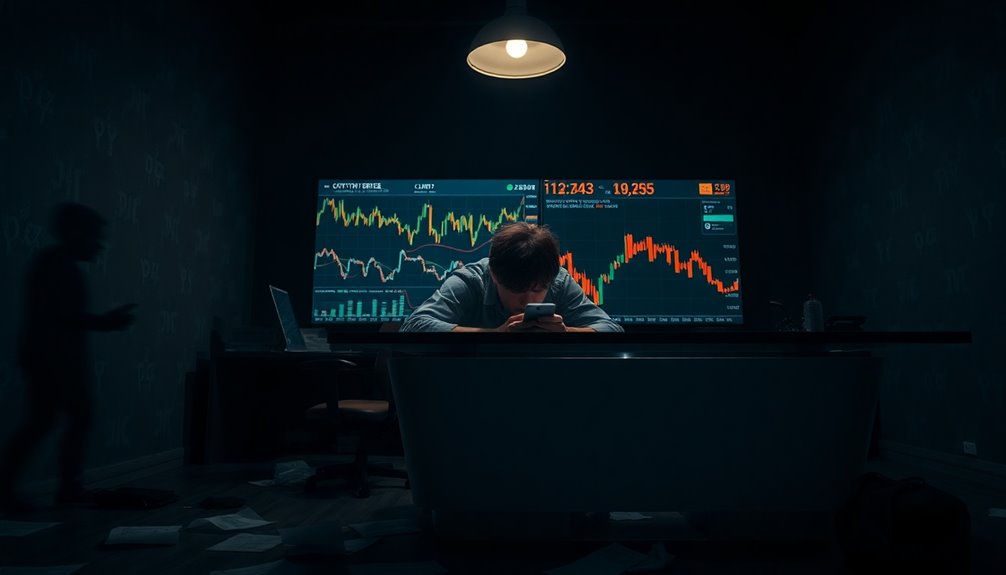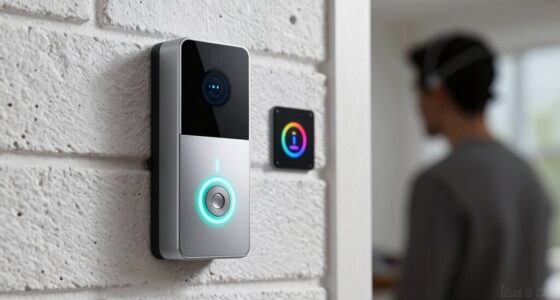

Good lighting acts as a powerful communication tool because it sets the mood, influences perceptions, and subtly guides behavior without words. By adjusting color temperature and brightness, you can create feelings of warmth, professionalism, or intimacy, signaling your true intent. For example, soft warm light invites trust, while cool, bright light boosts focus. These silent cues shape how others see and respond to your environment. Keep exploring to discover more ways lighting speaks volumes without saying a word.

Get everyday helpers delivered free with Prime
- Fast, free delivery on millions of items
- Prime Video, Amazon Music and more included
- Member-only deals all year
Key Takeaways
- Lighting conveys mood and atmosphere silently, influencing perceptions and emotional responses without spoken words.
- Color temperature and brightness guide behavior, signaling warmth, professionalism, or urgency strategically.
- Adjustments in lighting set the tone, establishing rapport and shaping environments to communicate specific messages.
- Psychological effects of lighting influence trust, approachability, and focus, serving as nonverbal cues in communication.
- Lighting enhances branding and ambiance, subtly reinforcing desired impressions and interactions within a space.

Lighting isn’t just about visibility; it’s a powerful tool for communication. When you choose the right lighting, you send subtle signals that influence mood, behavior, and even perceptions. The key lies in understanding how elements like color temperature and brightness control shape the environment and communicate nonverbally. Color temperature, measured in Kelvins, determines whether the light feels warm and inviting or cool and clinical. A warm, yellowish glow can evoke comfort and relaxation, signaling a cozy, welcoming space. Conversely, a cool, bluish light suggests professionalism, alertness, and efficiency, often used in offices or hospitals. By adjusting the color temperature, you communicate subtle cues that help set the tone without a word spoken. Brightness control offers similar potential to communicate. Bright lighting can energize a space, encouraging activity and alertness, while dim lighting fosters intimacy and calm. When you dim the lights in a restaurant, for example, it signals a relaxed, romantic atmosphere, encouraging diners to unwind and linger. Bright, direct lighting in a retail store, on the other hand, draws attention to products and signals urgency or importance, influencing purchasing behavior. You can use brightness control to guide people’s focus and mood, shaping their experience in a space without explicit instructions.
Your choices in lighting also influence how others perceive the environment and, by extension, your intentions. In a workspace, bright, cool lighting communicates efficiency and professionalism, signaling that productivity is a priority. In contrast, softer, warmer lighting can make a space feel more personal and approachable, encouraging interaction and trust. By deliberately manipulating color temperature and brightness, you communicate your desired atmosphere and expectations. This nonverbal language helps establish rapport, reinforce branding, or create a specific ambiance. It’s a silent dialogue that shapes perceptions without the need for words. When you understand how different lighting qualities serve as communication tools, you gain greater control over your environment. Additionally, understanding how lighting impacts perception can help you craft spaces that resonate emotionally with visitors or clients. For example, lighting quality plays a vital role in shaping emotional responses and overall impressions of a space. Recognizing how lighting impacts environmental perception can help you craft spaces that resonate emotionally with visitors or clients. Whether you want to energize, relax, focus, or welcome, the way you adjust color temperature and brightness becomes your language. Essentially, good lighting isn’t just about seeing; it’s about conveying meaning, setting moods, and guiding behavior through a carefully curated visual environment.
A deeper understanding of lighting psychology can enhance your ability to design spaces that truly communicate your intended message.
adjustable color temperature LED bulbs
As an affiliate, we earn on qualifying purchases.
As an affiliate, we earn on qualifying purchases.
Frequently Asked Questions
How Does Lighting Influence Mood in Different Environments?
Lighting influences mood in different environments by shaping the ambient ambiance and triggering psychological effects. Bright, natural light energizes you and boosts positivity in workspaces, while dim, warm lighting creates a cozy, relaxed feel in homes. In retail settings, lighting guides your mood and behavior, making you feel excited or calm. You notice how lighting subtly impacts your emotions, helping you feel more alert, comfortable, or serene depending on its intensity and color.
Can Lighting Adjustments Improve Workplace Productivity?
Yes, lighting adjustments can improve workplace productivity through effective lighting design and task illumination. By tailoring the light levels to specific tasks, you reduce eye strain and increase focus. Proper task illumination ensures that work areas are well-lit, boosting efficiency. You should consider adjustable lighting options so employees can customize their environment, creating a comfortable space that promotes better concentration and overall productivity.
What Are the Best Lighting Options for Emergency Communication?
For emergency communication, you should choose lighting options that feature clear emergency signals and effective safety illumination. Use illuminated exit signs and backup lighting to guide people safely during power outages or crises. Consider LED-based emergency lights that activate automatically, ensuring visibility. These options make your emergency communication clear and reliable, helping everyone navigate safely and quickly in critical situations. Proper lighting enhances safety and minimizes confusion during emergencies.
How Does Color Temperature Affect Message Clarity?
Ironically, your message’s clarity hinges on color temperature, which influences how you perceive color and visual contrast. Cooler temperatures (bluish light) enhance clarity by sharpening contrast, making signs and signals more visible. Warmer temperatures (yellowish light), however, can obscure details and muddle color perception, diminishing message effectiveness. So, selecting the right color temperature guarantees your communication is as clear and impactful as possible, avoiding misinterpretation in critical moments.
Are There Cultural Differences in Interpreting Lighting Signals?
Yes, cultural differences influence how you interpret lighting signals. Cultural symbolism and lighting customs shape perceptions—what’s seen as welcoming in one culture might seem intense or inappropriate in another. For example, soft lighting might symbolize peace in some societies, while bright, vibrant lighting signals celebration elsewhere. When designing spaces or communicating through lighting, consider these cultural nuances to guarantee your message resonates clearly across diverse audiences.
Conclusion
In the end, lighting is like a silent language that speaks volumes without words. It guides, influences, and shapes perceptions, making your message clear and compelling. When you understand how to use light effectively, you’re like a painter with a full palette—creating moods and meanings with every stroke. So, don’t underestimate the power of good lighting; it’s your secret tool for impactful communication, illuminating your intentions just as a lighthouse guides ships safely home.
Halloween Picks
halloween
As an affiliate, we earn on qualifying purchases.