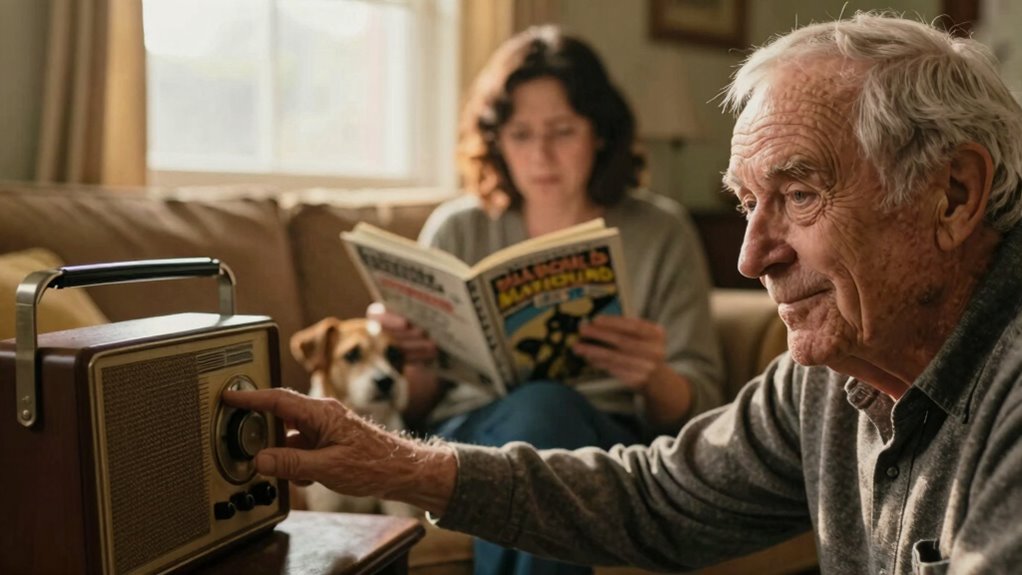
Hearing loss can make it harder for you to catch jokes and funny moments, as you miss subtle cues like tone, timing, and vocal inflections. You might find yourself feeling left out or confused during conversations, which can lead to feelings of social isolation. Your responses may shift from laughter to silence or confusion, sometimes causing misunderstandings. However, with better communication strategies and assistive devices, you can still reconnect with humor and strengthen your social bonds. Keep exploring to learn more.

Get everyday helpers delivered free — and shop member deals
- Fast, free delivery on millions of items
- Access to Prime Big Deal Days deals on October 6–7
- Prime Video, Amazon Music and more included
Key Takeaways
- Hearing loss makes it difficult to perceive nuances like tone and timing, causing missed punchlines and subtle humor cues.
- It can lead to feelings of social exclusion and awkwardness during conversations involving humor.
- Responses to jokes may shift from laughter to confusion, affecting social bonds and perceived interest.
- Assistive devices and visual cues improve sound perception and help reconnect with shared humor.
- Increased awareness and communication strategies help mitigate emotional disconnection caused by hearing difficulties.

Hearing loss can considerably impact how you experience humor, often making jokes and funny moments harder to catch or enjoy fully. When your sound perception isn’t what it used to be, the nuances that make humor funny—like tone, timing, and vocal inflections—become more difficult to pick up. You might find yourself missing punchlines or the subtle cues that signal a joke’s arrival. This can lead to feeling left out during conversations or missing the spontaneous laughter that usually accompanies shared humor. Over time, this change can create a sense of disconnection, as humor often acts as a social glue, helping people bond and relax.
Because sound perception is altered, your ability to interpret humorous cues diminishes, which can influence your social interactions profoundly. When you’re unable to fully hear or understand jokes, you might feel awkward or hesitant to join in conversations. You may even avoid social gatherings where humor is a key part of the interaction, fearing you’ll miss out or not catch the joke. This can lead to feelings of isolation, as you’re physically present but emotionally detached from the shared laughter. Consequently, your social interactions become more strained, and you might start to withdraw from situations where humor plays a central role.
Altered sound perception can make humor feel out of reach, leading to social withdrawal and emotional disconnect.
You may also notice that your response to humor shifts. Instead of laughing or smiling at jokes, you might respond with confusion or silence, which can be misinterpreted by others as disinterest or aloofness. This miscommunication can further hinder your social bonds, making others less likely to include you in playful banter or lighthearted conversations. As a result, you might feel like an outsider, even among friends and family who are trying to be inclusive. Additionally, sound perception can be affected by hearing aids or assistive listening devices, which can help improve your ability to interpret auditory cues related to humor. Recognizing the importance of auditory cues can aid in finding strategies to adapt and reconnect with shared moments of joy. It is also helpful to recognize that auditory processing can be affected by hearing loss, further complicating the interpretation of complex or rapid speech.
Adapting to these changes requires awareness and sometimes proactive steps. Using hearing aids or assistive listening devices can enhance sound perception, helping you catch more of the auditory cues that signal humor. Additionally, communicating openly with those around you about your hearing loss can foster understanding and patience. When people are aware of your challenges, they can adjust their speaking style, such as speaking clearly or adding visual cues, which can improve your social interactions and overall enjoyment of humorous moments. Engaging in social support networks or seeking advice from audiologists can also provide valuable strategies for navigating these challenges. Though your experience of humor may change, reconnecting with the joy of shared laughter is still possible with the right tools and support.
hearing aids for better humor perception
As an affiliate, we earn on qualifying purchases.
As an affiliate, we earn on qualifying purchases.
Frequently Asked Questions
Can Hearing Aids Fully Restore Humor Appreciation in Hearing-Impaired Individuals?
Hearing aids can’t fully restore your humor perception because they primarily improve auditory perception, but some nuances of humor rely on subtleties like tone, timing, and facial expressions. You might find it easier to catch jokes, but certain elements of humor, especially those involving sarcasm or wordplay, still pose challenges. While hearing aids help, they don’t completely bridge the gap in experiencing humor the way hearing people do.
How Does Hearing Loss Affect Understanding Sarcasm or Subtle Jokes?
Did you know that around 70% of sarcasm relies on tone perception? Hearing loss makes it harder for you to pick up on subtle cues like tone and pitch, which are key to understanding sarcasm or nuanced jokes. Without clear tone perception, you might miss the sarcasm entirely or interpret humor differently. Relying on context clues becomes essential, but hearing impairment can still make decoding these subtle cues more challenging.
Do Children With Hearing Loss Develop Different Senses of Humor?
You might notice that children with hearing loss develop a different sense of humor, often relying more on visual cues and tactile humor. They may enjoy jokes involving gestures, facial expressions, or physical interaction, rather than relying solely on spoken words or auditory cues. This shift helps them connect with humor in ways that suit their sensory experiences, fostering unique, creative ways to find joy and laughter.
Are There Specific Types of Humor More Accessible to Those With Hearing Impairments?
Yes, you find that visual cues and contextual humor are more accessible to those with hearing impairments. Since they rely less on auditory cues, they often enjoy jokes that use facial expressions, body language, or situational context. These forms of humor create a shared understanding that transcends spoken words, making them more inclusive and enjoyable for people with hearing loss. You might notice they connect more deeply with visual and situational comedy.
How Do Social Interactions Change for Humor Comprehension in Hearing-Impaired People?
You might find that your social interactions shift as you rely more on non-verbal cues and facial expressions to understand humor. Instead of just hearing jokes, you interpret the humor through gestures, body language, and facial reactions. This change can make conversations more visual, allowing you to actively participate by observing cues others might miss. It encourages a different, often richer, way to connect and share laughter.
Conclusion
Despite hearing loss changing the way you experience humor, it opens doors to new forms of connection and understanding. You might miss the punchline, but you gain a deeper appreciation for silent cues—laughter in a glance or shared smiles. While humor may shift, your ability to find joy isn’t lost; it simply evolves. In silence, you discover that laughter isn’t just heard but felt, reminding you that true connection goes beyond sound.
Evergreen bestsellers Picks
bestsellers
As an affiliate, we earn on qualifying purchases.