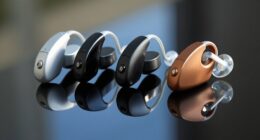

Finding your way through dating and relationships with hearing loss can have its challenges, but effective communication is key. Use visual cues like facial expressions and gestures, choose quieter settings, and share your needs openly with your partner. Technology such as captioned calls and speech-to-text apps can also help bridge gaps. By planning ahead and staying patient, you can build deeper understanding and connection. If you want to explore more strategies, there’s much more to discover.
Key Takeaways
- Openly share your hearing loss condition to foster understanding and tailor communication strategies with your partner.
- Use visual cues, assistive devices, and technology to enhance communication in noisy or unfamiliar settings.
- Plan social activities in quieter venues and sit facing each other to improve lip-reading and reduce misunderstandings.
- Develop effective communication techniques, including gestures, facial expressions, and shared needs, to strengthen your connection.
- Foster patience, openness, and mutual support to deepen understanding and maintain a strong, supportive relationship.

Managing dating and relationships can be challenging when you have hearing loss, but it’s also an opportunity to build deeper understanding and connection. One of the most important aspects is developing effective communication strategies. Since hearing loss can create accessibility challenges, you’ll need to be proactive in finding ways to stay connected with your partner. This might mean using visual cues, such as facial expressions and gestures, to supplement spoken words. You can also incorporate technology, like hearing aids or captioned phone calls, to enhance understanding during conversations. Sharing your needs openly helps your partner learn how to better support you, making your interactions more comfortable and meaningful.
Accessibility challenges can sometimes make social situations tricky, especially when you’re in noisy environments or unfamiliar places. To overcome this, plan ahead by choosing quieter venues or discussing potential obstacles with your partner beforehand. For example, you might suggest a quiet café instead of a busy restaurant or sit facing each other to ensure better visibility of lip movements. Using assistive devices, like personal amplifiers or speech-to-text apps, can also reduce misunderstandings and make conversations more accessible. Remember, your willingness to address these challenges openly can foster patience and cooperation from your partner, helping both of you navigate obstacles together. Additionally, understanding your hearing loss can help both of you develop tailored strategies to improve communication and strengthen your relationship.
Frequently Asked Questions
How Can I Improve Communication With a Hearing-Impaired Partner?
You can improve communication with your hearing-impaired partner by using visual cues, like facial expressions and gestures, to enhance understanding. Additionally, incorporate technological aids such as hearing aids or speech-to-text apps to facilitate clearer conversations. Make sure to face your partner directly, reduce background noise, and be patient. These strategies help bridge the communication gap, making your interactions more effective and enjoyable for both of you.
What Are Common Misconceptions About Dating With Hearing Loss?
Misconceptions about dating with hearing loss are like fog clouds over clear skies, distorting reality. Many assume stereotypes that you’re less capable or socially isolated, but that’s far from the truth. These myths create barriers, making it harder to connect genuinely. Remember, hearing loss doesn’t define your worth or ability to love. Breaking these misconceptions opens the door to authentic relationships filled with understanding, patience, and mutual respect.
How Do I Disclose My Hearing Loss to a New Partner?
You should share your hearing loss early in the relationship to build trust. Be honest about your experiences and how it might affect communication. Set boundaries by explaining what helps you understand better, like facing your partner or using assistive devices. Sharing these details openly encourages understanding and patience. Remember, honesty fosters stronger connections, making it easier to navigate challenges together and create a supportive, loving partnership.
Are There Specific Activities Better Suited for Couples With Hearing Challenges?
Think of your relationship like a vibrant tapestry, each activity adding color. Visual activities like painting or watching movies suit couples with hearing challenges, allowing clear communication through sight. Outdoor adventures, such as hiking or picnics, also work well, offering natural settings where body language and shared experiences strengthen your bond. These activities minimize reliance on hearing, making your connection richer and more meaningful.
How Can Friends and Family Support Couples With Hearing Impairments?
You can support couples with hearing impairments by encouraging them to explore listening strategies and use technological aids like hearing aids or captioning devices. Be patient and attentive during conversations, maintaining eye contact and reducing background noise. Offer to help them practice communication techniques, and stay informed about new tools that can enhance their hearing experience. Your understanding and proactive support make a meaningful difference in their daily interactions.
Conclusion
Exploring love with hearing loss might bring its own quiet melodies and gentle harmonies. Embrace the unique rhythm you share with your partner, knowing that understanding and patience create a symphony worth cherishing. Every shared glance and whispered word deepens your connection, turning challenges into opportunities for growth. Remember, love’s true language goes beyond sound—it’s found in the heartfelt moments and quiet bonds that make your relationship truly special.