Conductive hearing loss occurs when something blocks sound from reaching your inner ear, often caused by infection, blockage, or damage to the outer or middle ear, and it’s usually reversible. Sensorineural hearing loss happens when inner ear hair cells or nerves are damaged, making it harder to interpret sounds, and it tends to be permanent. Understanding these differences can help you identify symptoms and treatment options—continue exploring to learn more about managing hearing health.

Get everyday helpers delivered free with Prime
- Fast, free delivery on millions of items
- Prime Video, Amazon Music and more included
- Member-only deals all year
Key Takeaways
- Conductive hearing loss blocks sound transmission to the inner ear, often reversible, caused by issues like infections or blockages.
- Sensorineural hearing loss results from inner ear or nerve damage, is usually permanent, and affects sound processing clarity.
- Conductive loss affects sound detection volume; sensorineural loss impacts sound clarity and may distort speech.
- Causes of conductive loss include ear infections and obstructions; sensorineural loss is linked to aging, noise exposure, or genetic factors.
- Treatment varies: conductive loss often improves with medical or surgical intervention; sensorineural loss typically requires hearing aids or cochlear implants.
best hearing aids for sensorineural hearing loss
As an affiliate, we earn on qualifying purchases.
As an affiliate, we earn on qualifying purchases.
Definition and Basic Concepts
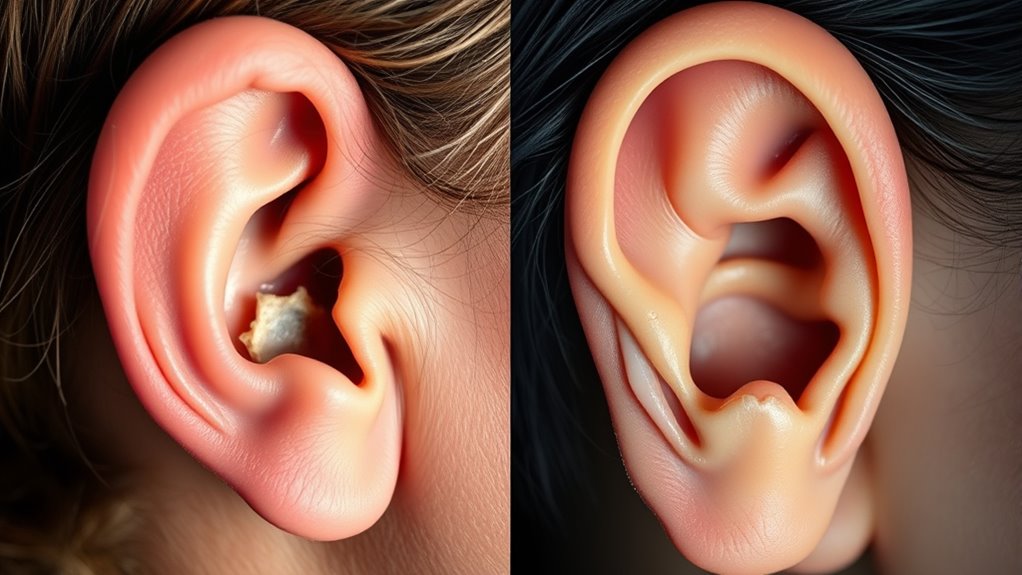
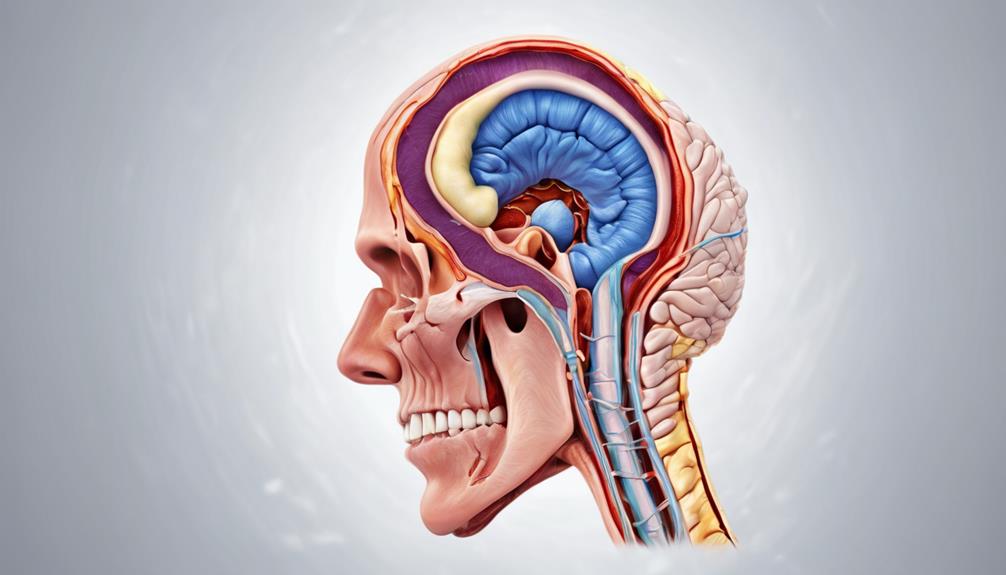
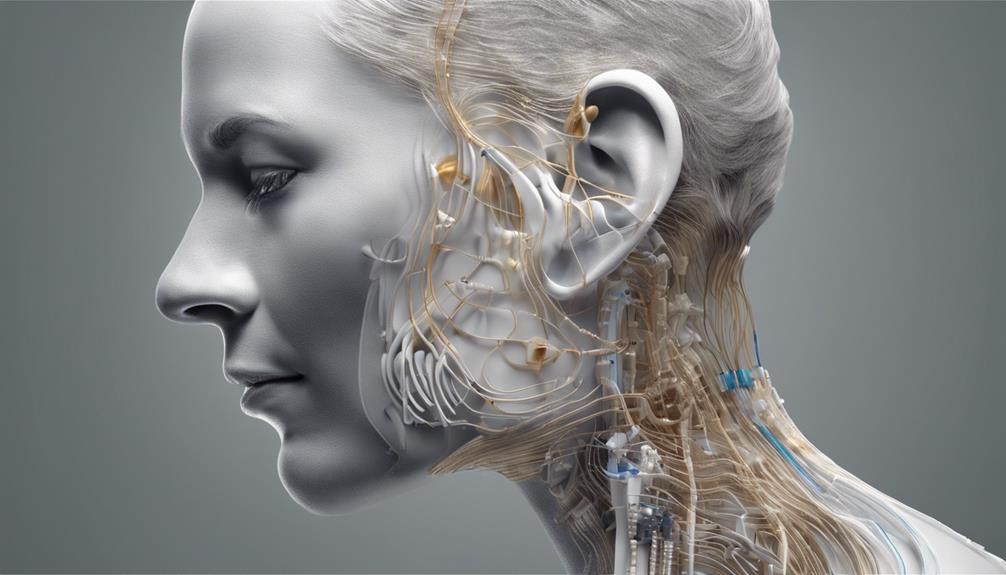
Have you ever wondered why some people hear perfectly in one ear but struggle in the other? This difference often relates to how your ears and brain work together. Hearing involves two main parts: the outer and middle ear, which transmit sound, and the inner ear, where sound is converted into neural signals. These signals travel along neural pathways to your brain, allowing you to interpret sounds. Conductive hearing loss happens when something blocks sound from reaching the inner ear, like ear infections or blockages. Sensorineural loss, on the other hand, involves damage to the inner ear or neural pathways, affecting how signals are processed. Understanding these basic concepts helps clarify how different types of hearing loss affect your ability to hear. Additionally, high-quality projectors can significantly improve the clarity and detail of visual information, which parallels how proper diagnosis and treatment can restore clearer hearing.
Causes and Risk Factors

Various factors can cause or increase the risk of conductive and sensorineural hearing loss. Genetic factors play a significant role, as some conditions run in families and affect ear development or nerve function. For example, hereditary disorders can lead to congenital hearing loss or make you more susceptible to ear infections. Environmental exposures are also major contributors; loud noises, for instance, can damage hair cells in your inner ear, causing sensorineural loss. Ear infections, ototoxic medications, and head trauma are additional risk factors. Age naturally increases risk, especially for sensorineural loss, as nerve cells deteriorate over time. Recognizing these causes helps you take preventive steps, like protecting your ears from loud sounds and seeking early treatment for infections. Understanding hereditary factors can aid in early diagnosis and intervention.
Affected Parts of the Ear
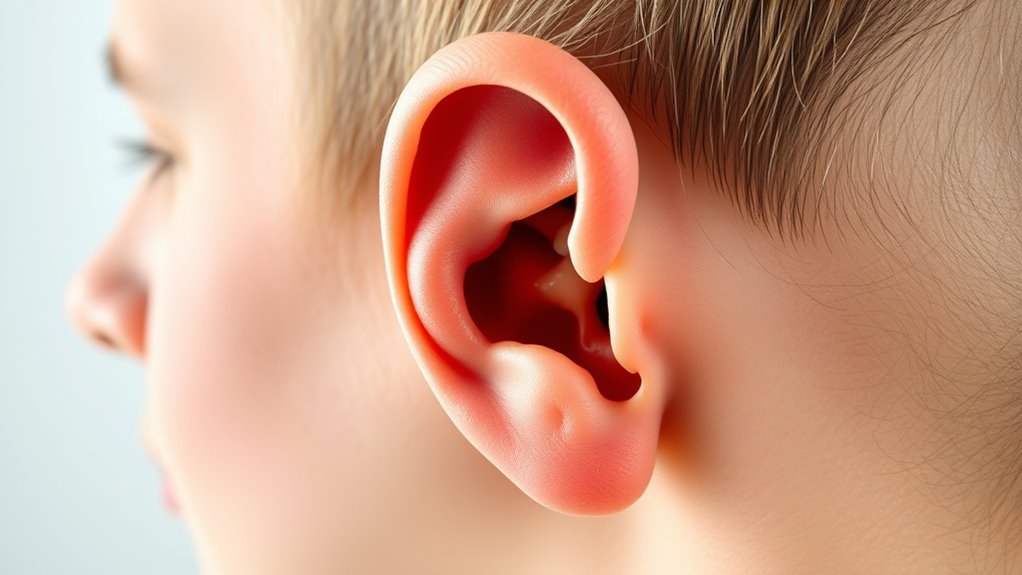
Understanding which parts of the ear are affected is essential to grasping how hearing loss occurs. Different types impact specific areas:
- Outer ear—blockages or damage hinder sound entry.
- Middle ear—issues like fluid or ossicle problems disrupt vibrations.
- Inner ear—damage here, especially to the cochlea, causes sensorineural loss.
- Cochlear damage directly affects how sound signals are transmitted to your brain.
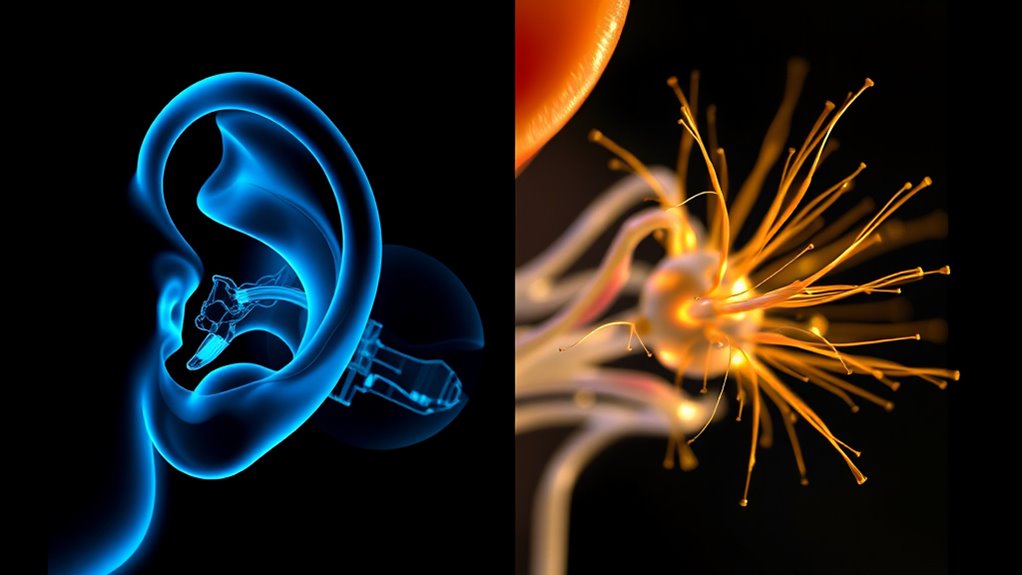
In sensorineural hearing loss, the inner ear or cochlea is often compromised, impairing the hair cells responsible for translating sound. If the inner ear or cochlea is affected, it’s usually permanent, making understanding this area vital for diagnosis and treatment. Recognizing which parts are involved helps you better understand your condition and its potential solutions. Hearing loss can result from damage to any of these parts, emphasizing the importance of accurate diagnosis.
Symptoms and Signs
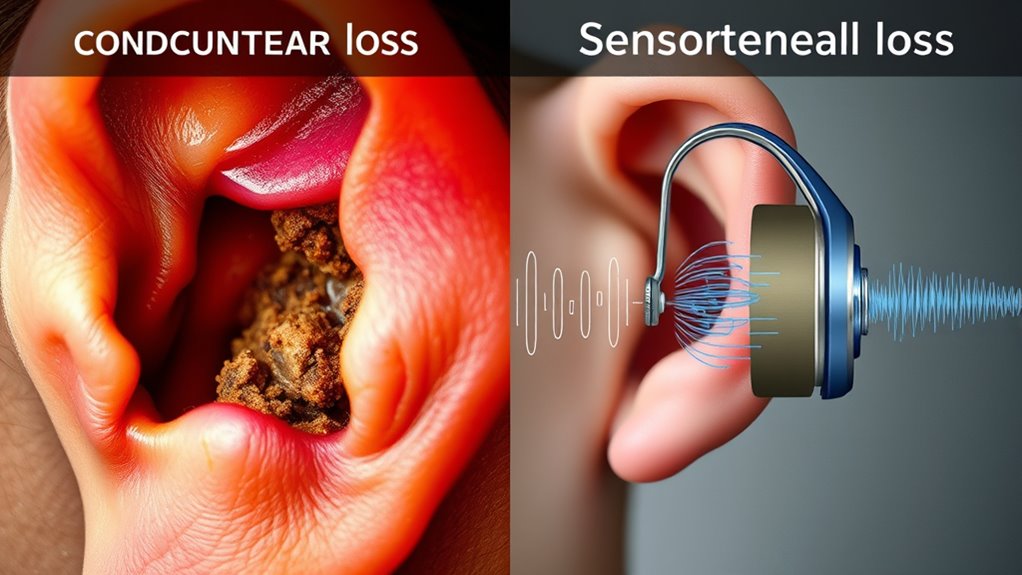
Recognizing the signs of hearing loss can help you identify the type and severity of the problem early on. If you experience ear canal symptoms, like a feeling of fullness, muffled sounds, or occasional popping, it might indicate conductive hearing loss. You could notice difficulty hearing faint sounds or understanding speech, especially in noisy environments. Inner ear signs, such as dizziness, balance issues, or ringing (tinnitus), often point to sensorineural loss. You may find that sounds are distorted or that speech sounds are unclear, despite hearing normal or near-normal loudness levels. Paying attention to these symptoms helps you understand whether the hearing issue involves the outer or inner ear, prompting you to seek appropriate medical evaluation.
Diagnostic Procedures and Tests

To accurately diagnose your hearing loss, you’ll undergo various tests like audiometric testing to assess your hearing thresholds. Tympanometry evaluates your middle ear function, helping identify issues like fluid or eardrum problems. Additionally, otoacoustic emissions analysis checks the inner ear’s health by measuring sound responses from your cochlea. Some tests may also involve sound wave analysis to further understand the nature of your hearing impairment.
Audiometric Testing Procedures
Audiometric testing procedures are essential tools for diagnosing the type and severity of hearing loss. These tests help you identify whether conductive or sensorineural loss is present. During testing, you’ll encounter several key steps:
- Hearing thresholds are measured across various frequencies to determine the softest sounds you can hear.
- Battery technology in hearing aids is considered to understand how different devices may support your specific needs.
- The tests can reveal which hearing aid features will best improve your hearing experience.
- Results guide audiologists in tailoring treatment plans, ensuring your hearing devices are optimized for your condition.
- Additionally, understanding the types of hearing loss can help in selecting the most effective diagnostic procedures and treatment options.
Tympanometry and Middle Ear Evaluation
Tympanometry and middle ear evaluation are essential diagnostic procedures that help determine how well your middle ear is functioning. During this test, you’ll observe how the tympanic membrane responds to changes in air pressure, providing insight into its mobility. A healthy tympanic membrane moves freely, indicating normal middle ear pressure and function. The test also assesses the role of middle ear muscles, which control the movement of the tympanic membrane and ossicles. If these muscles aren’t working properly, it can cause conductive hearing issues. By measuring how the tympanic membrane responds, you can identify issues like fluid buildup, eardrum perforation, or ossicular chain problems. This evaluation is critical in differentiating conductive hearing loss from sensorineural issues. Additionally, expert voice actors often utilize detailed auditory assessments to enhance diagnostic accuracy.
Otoacoustic Emissions Analysis
Otoacoustic emissions analysis is a non-invasive test that measures sounds produced by your inner ear, specifically the cochlea, in response to auditory stimuli. This test helps assess cochlear function and detect hearing issues early. Here’s what you should know:
- It involves placing a small probe in your ear canal to deliver sounds.
- The device records otoacoustic emissions generated by healthy cochlear cells.
- If emissions are present, your cochlear function is likely normal.
- Absent emissions may indicate sensorineural hearing loss or cochlear damage.
- The test results can also provide insights into the health of the cochlear hair cells, which are essential for converting sound vibrations into electrical signals.
This simple test provides valuable insights into how well your cochlea responds to sound, making it a vital tool for distinguishing sensorineural hearing loss from other types.
Treatment Options and Interventions
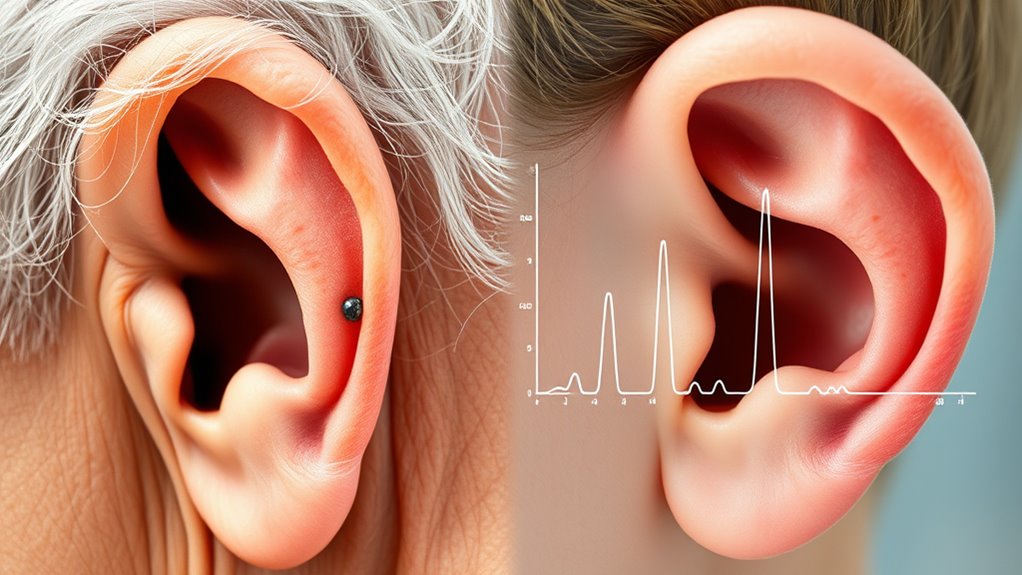
When it comes to treating hearing loss, the approach depends largely on whether the damage is conductive or sensorineural. For conductive loss, surgical intervention options like ossiculoplasty or cochlear implants can restore hearing by repairing or bypassing damaged structures. Hearing aid technology also plays a crucial role, amplifying sounds for better clarity. Sensorineural loss often requires advanced hearing aids with sophisticated features, as surgery is less effective. These devices can improve speech understanding and sound quality.
| Treatment Type | Suitable for | Description |
|---|---|---|
| Hearing aid technology | Both types | Amplifies sounds, tailored to individual needs |
| Surgical intervention options | Conductive hearing loss | Includes procedures like ossiculoplasty or cochlear implants |
| Cochlear implants | Severe sensorineural loss | Bypasses damaged hair cells, directly stimulates nerves |
| Bone conduction devices | Conductive loss or mixed | Transmits sound via skull bones to inner ear |
| Medical management | Underlying causes | Treats infections or other reversible issues |
Hearing Improvement Outcomes
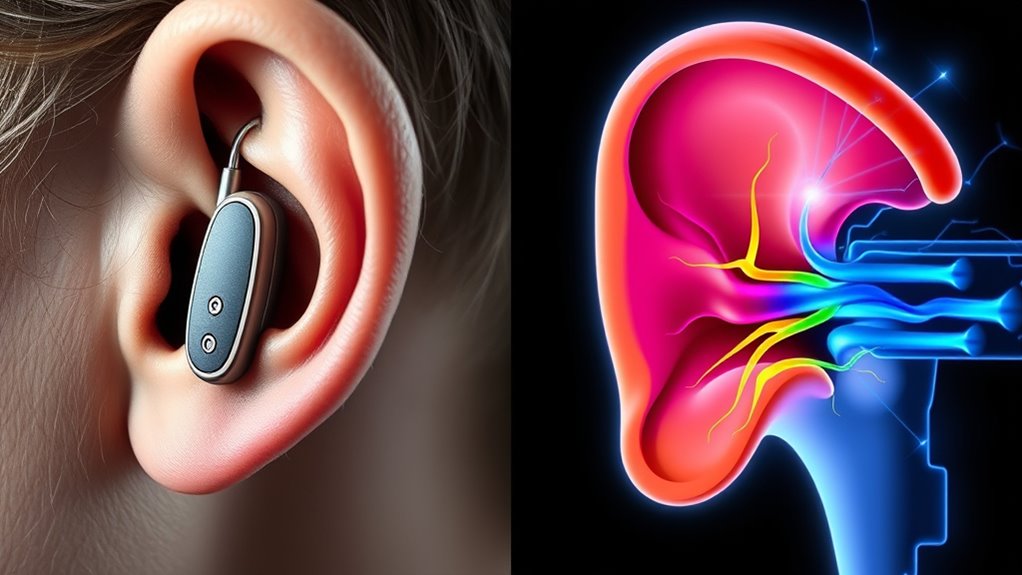
Have you ever wondered how effective different treatments are in improving hearing? The outcomes vary based on the type of hearing loss. With advancements in hearing aid technology, many people experience significant improvements, especially for conductive loss. For sensorineural loss, cochlear implant advancements now help users hear more clearly than ever before. Here’s what you can expect:
- Hearing aids can restore sound detection and clarity, especially for mild to moderate losses.
- Modern cochlear implants can provide better speech understanding for severe sensorineural loss.
- Sound quality has improved thanks to digital processing and noise reduction features.
- Overall, treatment success depends on the type, severity, and technology used, but most users notice substantial hearing improvements.
Impact on Daily Life and Communication

Hearing loss can profoundly affect your daily interactions and overall quality of life. It creates communication barriers that make conversations challenging, leading to misunderstandings and frustration. Social interactions may become strained as you struggle to catch every word or tone, causing feelings of isolation. Whether at work, family gatherings, or casual chats, hearing difficulties impact your ability to connect naturally. Here’s a visual to imagine:
| Situation | Challenge | Impact |
|---|---|---|
| Talking with friends | Missing subtle cues | Reduced social bonding |
| Listening in meetings | Overlapping sounds | Communication breakdown |
| Phone conversations | Inability to hear clearly | Feelings of exclusion |
These barriers can make everyday life more stressful, emphasizing how essential effective communication is for well-being.
Prevention and When to Seek Help
Preventing hearing loss begins with protecting your ears from loud noises and avoiding prolonged exposure to loud environments. To reduce risk, consider these lifestyle modifications:
- Use ear protection, like earplugs, in noisy settings.
- Keep volume levels on devices at safe levels.
- Take breaks from loud environments to give your ears a rest.
- Schedule regular hearing checkups for early intervention if issues arise.
Knowing when to seek help is essential. If you experience persistent ringing, difficulty hearing, or ear pain, consult a healthcare professional promptly. Early intervention can prevent further damage and improve outcomes. Adopting these habits and being attentive to changes in your hearing are key steps in maintaining long-term ear health.
Frequently Asked Questions
Can Conductive and Sensorineural Hearing Loss Occur Simultaneously?
Yes, you can experience both conductive and sensorineural hearing loss at the same time, known as mixed hearing loss. This situation can create diagnostic challenges because symptoms overlap, making it harder to identify the exact cause. You’ll need extensive testing to determine the extent of each type. Recognizing mixed hearing loss is vital, as it requires a tailored treatment plan addressing both the conductive and sensorineural components.
How Do Age-Related Factors Influence Each Type of Hearing Loss?
Age-related factors play a significant role in hearing decline patterns. You might notice age-related degeneration affecting your inner ear or auditory nerve, leading to sensorineural loss. Conversely, age can also cause changes in ear structures, contributing to conductive hearing issues. These processes often occur simultaneously, but understanding how aging influences each type helps you better address hearing health. Regular check-ups guarantee early detection and effective management of age-related hearing changes.
Are There Specific Medications That Can Cause Conductive or Sensorineural Loss?
Like a thief in the night, some medications can stealthily steal your hearing. Ototoxic medications, such as certain antibiotics and chemotherapy drugs, can cause drug-induced hearing loss, affecting either conductive or sensorineural pathways. You should be aware of these risks, especially if you’re taking medications known for ototoxicity. Always consult your healthcare provider if you notice changes in your hearing, as early detection can make a difference.
What Are the Long-Term Prognosis Differences Between the Two Types?
You want to understand how prognosis variations affect treatment outcomes for different hearing loss types. With conductive loss, the prognosis is often favorable since addressing the underlying issue, like infections or blockages, can restore hearing effectively. However, sensorineural loss usually has a more limited prognosis, as damage to the inner ear or auditory nerve might be permanent. Early intervention improves outcomes for both, but long-term prognosis varies substantially.
How Do These Hearing Losses Impact Balance and Spatial Awareness?
You might notice that hearing loss impacts your balance and spatial awareness because your inner ear‘s vestibular function helps control equilibrium. When hearing issues occur, especially if they involve the inner ear, it can disrupt this balance system, leading to dizziness or difficulty orienting yourself within your environment. Conductive or sensorineural loss can impair how your brain processes spatial cues, making you feel unsteady or disoriented, especially in challenging or unfamiliar settings.
Conclusion
Understanding the key differences between conductive and sensorineural hearing loss helps you take swift action, just like a trusty knight in shining armor. Whether it’s a simple fix or requires more advanced intervention, early diagnosis can save your day—no need to wait for the dawn of a new age. Stay vigilant, seek help when needed, and remember: your hearing health is your kingdom’s greatest treasure. Don’t let silence reign—fight back today!
Halloween Picks
halloween
As an affiliate, we earn on qualifying purchases.