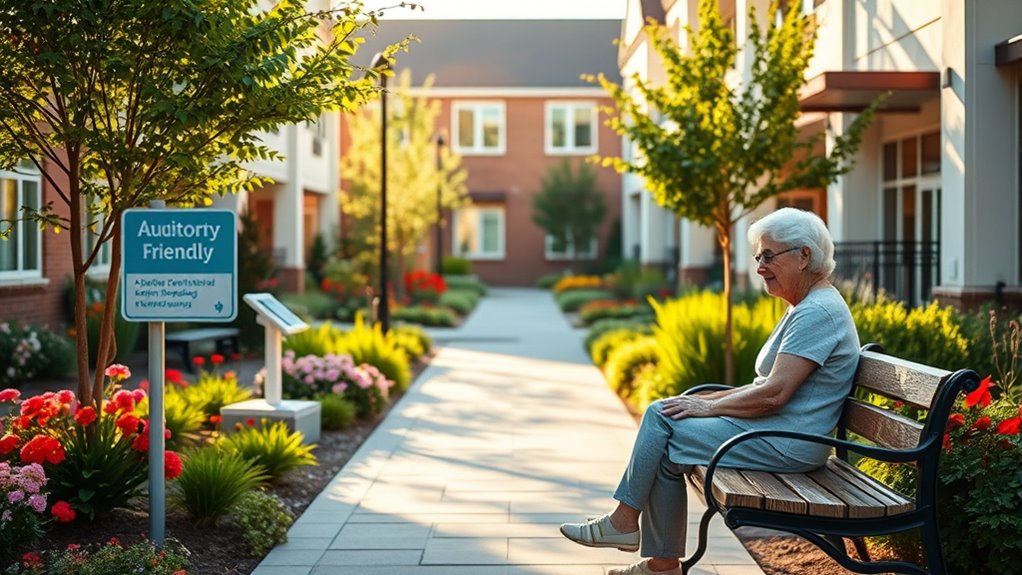

When choosing senior living, prioritize communities that focus on hearing accessibility by offering assistive devices, sound-optimized spaces, and effective communication strategies. Look for facilities with good acoustics, visual aids, and staff trained to support hearing needs. Ensuring these features helps you stay connected, independent, and engaged with loved ones and activities. Exploring more details will help you find a community that truly supports your hearing health and overall quality of life.
Key Takeaways
- Verify that the community offers and supports various assistive listening devices and technologies.
- Ensure spaces are designed to minimize background noise and echo, enhancing speech clarity.
- Confirm staff training on communication strategies and availability of visual aids or captioned systems.
- Inquire about the community’s resources for device maintenance, upgrades, and troubleshooting.
- Prioritize environments that foster social engagement and independence through accessible communication features.

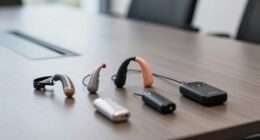
When choosing a senior living community, prioritizing hearing accessibility can greatly enhance quality of life. You want to guarantee that communication remains clear and effortless, allowing you to stay connected with loved ones, participate fully in activities, and maintain your independence. One of the most important steps is to evaluate the availability and integration of assistive devices. These devices, such as hearing aids, cochlear implants, or personal amplifiers, can make a significant difference in daily interactions. When touring potential communities, ask about their support for assistive technology—are they equipped to accommodate your existing devices, and do they offer on-site resources for maintenance and upgrades? Having easy access to assistive devices within your living environment ensures you won’t face unnecessary barriers to hearing well.
Beyond devices, communication strategies play a crucial role in fostering an accessible environment. Effective communication isn’t just about hearing; it’s about making sure your messages are understood and that you can engage comfortably. Look for communities that provide training or resources for staff and residents on communication techniques, like facing the speaker directly, speaking clearly, or using visual cues. These strategies can dramatically improve your ability to participate in conversations, even if your hearing isn’t perfect. Consider whether the community encourages the use of visual aids, captioned phones, or assistive listening systems in common areas. These tools and practices help create an inclusive atmosphere where everyone feels heard and understood. Additionally, advancements in AI in Education, such as intelligent tutoring systems, demonstrate the potential for technology to support personalized and accessible communication—similar principles can be applied in senior living environments to enhance hearing accessibility.
It’s also worth considering the layout and acoustics of the community. Look for spaces designed to minimize background noise and echoes, which can distort sound and make hearing more difficult. Good lighting and visual signage support communication by helping you locate people and understand messages more easily. If you have specific needs, discuss them with staff beforehand; a community committed to hearing accessibility will often tailor solutions to individual residents.
Ultimately, choosing a senior living community that emphasizes hearing accessibility means you won’t have to sacrifice your social life or independence. You’ll benefit from a supportive environment that values communication and offers practical tools to overcome hearing challenges. By prioritizing assistive devices and communication strategies, you set yourself up for a comfortable, engaging, and connected retirement. It’s about finding a place where you feel confident, understood, and able to enjoy each day to the fullest.

SuperEar Model SE5000 (PSAP) for Seniors – Hearing Amplifiers for Seniors, Super Ear Personal Sound Amplifier, Sound Amplifier Listening Device and Audio Accessories in 50dB Ambient Sounds Increase
COMPATIBILITY: Response to sound amplification is completely dependent on an individual's unique ability to detect sounds. For this…
As an affiliate, we earn on qualifying purchases.
As an affiliate, we earn on qualifying purchases.
Frequently Asked Questions
How Do I Assess Hearing Accessibility Options During a Tour?
During a tour, you can assess hearing accessibility by paying attention to visual cues like clear signage and lighting, which help with orientation. Listen to the room acoustics by speaking softly and noticing if sounds echo or are muffled. Ask staff about assistive listening devices and how they enhance communication. Check if common areas have good sound management, ensuring conversations are clear without excessive background noise, making the space truly accessible.
Are There Specific Technologies Available for Hearing-Impaired Residents?
Did you know that over 15% of adults worldwide experience some hearing loss? You’ll find helpful technologies like assistive listening devices that amplify sound and visual alert systems that notify residents of important events. These tools enhance communication and safety, making the environment more inclusive. When touring, ask about these options to guarantee the community meets your hearing accessibility needs, providing you peace of mind and better quality of life.
What Staff Training Is Provided for Assisting Residents With Hearing Challenges?
You’ll find staff receive thorough communication training focused on hearing accessibility, emphasizing staff sensitivity to residents’ needs. They learn techniques like clear speech, face-to-face communication, and using visual cues to assist residents with hearing challenges. This training guarantees staff can respond promptly and compassionately, fostering an inclusive environment. By prioritizing these skills, they help residents feel understood and comfortable, enhancing overall quality of life in the senior living community.
How Are Emergency Alert Systems Adapted for Hearing-Impaired Seniors?
Emergency alert systems are adapted for hearing-impaired seniors by incorporating assistive listening devices and visual alerts. You’ll find flashing lights and vibrating alerts that activate during emergencies, ensuring you’re notified even if you don’t hear sirens. These systems are integrated into emergency protocols, so staff can quickly assist you using visual cues and assistive technology, providing reassurance that you’ll be promptly informed and supported during any urgent situation.
Can Hearing Aids or Assistive Devices Be Accommodated in All Common Areas?
Yes, hearing aids and assistive devices are accommodated in all common areas, thanks to thoughtful design considerations. You’ll find features like loop systems, visual alerts, and acoustic modifications that support hearing accessibility. Resident feedback plays a crucial role in these adjustments, ensuring spaces are comfortable and inclusive. This proactive approach helps you stay connected and engaged, making your living environment both accessible and welcoming for all residents with hearing needs.

Hamilton CapTel 2400iSPNBT Captioned Telephone, Hearing Impaired Phones, Volume Control with up to 40dB Amplification Gain, Large Touch Screen Display, Wi-Fi Capable, Answering Machine & Speakerphone
Unmatched Accessibility and Convenience: Hamilton CapTel empowers people with hearing loss by transforming everyday calls into clear conversations….
As an affiliate, we earn on qualifying purchases.
As an affiliate, we earn on qualifying purchases.
Conclusion
By prioritizing hearing accessibility, you create a living environment that fosters connection, promotes independence, and enhances quality of life. Choosing a community that values clear communication, offers supportive technology, and embraces inclusivity guarantees you’re not just living, but thriving. Make your choice with confidence, knowing you’re investing in a future where understanding, comfort, and companionship are always within reach. Ultimately, selecting a senior living space with hearing accessibility means choosing a life of engagement, empowerment, and ease.

Fitness Forever-Exercises to Age Gracefully with Strength and Prevent Osteoporosis
As an affiliate, we earn on qualifying purchases.
As an affiliate, we earn on qualifying purchases.

Aphasia Communication Cards for Adults & Stroke Survivors, Non Verbal Communication Board & AAC Aid, Dementia Products for Elderly, Speech Therapy Materials for Recovery
[IMMEDIATE COMMUNICATION BRIDGE] Designed as an essential non-verbal communication tool for adults suffering from Aphasia, Stroke, or Dementia….
As an affiliate, we earn on qualifying purchases.
As an affiliate, we earn on qualifying purchases.