To stay in the game safely and protect your hearing, always wear protective gear like earplugs or earmuffs during loud sports events. Use communication methods like hand signals or visual cues to avoid relying solely on speech in noisy environments. Take breaks if you notice ringing or muffled sounds, and get regular hearing check-ups if you’re frequently exposed to loud noises. Keep these tips in mind, and you’ll learn how to enjoy sports while safeguarding your hearing health.
Key Takeaways
- Use ear protection like earplugs or earmuffs during practices and games to reduce noise exposure.
- Incorporate visual and non-verbal communication methods to stay connected safely in noisy environments.
- Take regular breaks from loud settings to prevent hearing fatigue and potential damage.
- Choose high-fidelity or custom earplugs that block harmful noise while preserving important sounds.
- Educate players and coaches about hearing risks and protective strategies to promote long-term hearing health.
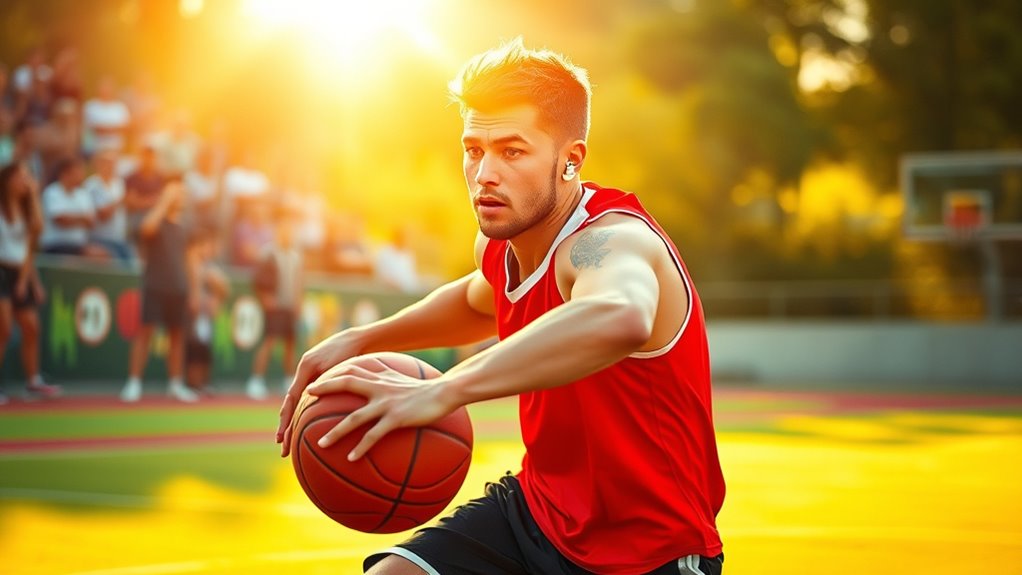
Playing sports offers many benefits, but it can also pose risks to your hearing health. Whether you’re on the field, court, or ice rink, loud noises from collisions, equipment, or nearby crowds can damage your ears over time. To stay safe, it’s essential to understand how to protect your hearing while still enjoying your favorite activities.
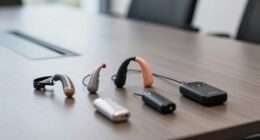
One of the best ways to safeguard your hearing is by using adaptive equipment designed for noise reduction. Earplugs or earmuffs can considerably decrease the risk of noise-induced hearing loss, especially during loud games or practices. Look for high-fidelity earplugs that block harmful sounds without muffling important cues like whistles, player calls, or referee signals. These custom or over-the-counter options help preserve your hearing while allowing you to stay aware of your environment. Incorporating adaptive equipment into your sports routine isn’t just about safety; it’s about maintaining your ability to hear critical sounds that can influence your performance and safety.
Communication strategies also play a key role in preventing hearing issues during sports. When you’re in noisy environments, relying solely on verbal cues can be challenging and potentially dangerous. Developing non-verbal communication methods, such as hand signals or visual cues, can help you stay connected with teammates without increasing your risk of hearing damage. Additionally, if you wear hearing aids or assistive listening devices, ensure they’re suitable for active use and don’t interfere with your safety gear. Discussing your needs with coaches and teammates can foster a supportive environment where everyone understands the importance of clear communication, especially in high-noise situations.
It’s equally important to be mindful of your surroundings and recognize early signs of hearing fatigue or discomfort. If you notice ringing in your ears, muffled sounds, or a feeling of fullness, take a break and remove yourself from the noise. Regular hearing check-ups, especially if you participate in sports frequently, can help catch any issues early. Educating yourself about the risks and proactive measures guarantees you don’t have to choose between safety and playing your favorite sport. Hearing health awareness is crucial for maintaining your overall well-being and ensuring you can continue enjoying sports safely for years to come.
Ultimately, protecting your hearing while staying active involves a combination of adaptive equipment, effective communication strategies, and being attentive to your body’s signals. By taking these precautions, you can continue to enjoy sports and maintain your hearing health for years to come. Remember, staying in the game safely means being proactive about your hearing protection—so gear up, communicate clearly, and listen to your body.

Hearprotek Concert Ear Plugs, 2Pairs Reusable high Fidelity Musician Ear Plugs for Concerts Loud Music-Noise Reduction Ear Protection earplugs for Rave,Festival,Music,Tinnitus Relief
High Fidelity: Hearprotek Music ear plugs do an effective job of bringing down the overall volume, blocking background…
As an affiliate, we earn on qualifying purchases.
As an affiliate, we earn on qualifying purchases.
Frequently Asked Questions
How Can Hearing Loss Affect Athletic Performance?
Hearing loss can impact your athletic performance by creating balance challenges, making it harder to stay steady during movement or sudden changes. It also causes communication barriers, which can hinder team coordination and quick decision-making. You might miss important sounds like whistles or calls, affecting your timing and awareness. Staying alert and adapting your strategies can help you overcome these obstacles, so you can perform confidently and safely in your sport.
Are There Specific Sports More Risky for Hearing Health?
Did you know that contact sports like hockey and boxing pose higher risks for hearing loss? These sports often involve helmets and headgear that can cause ear injuries, and exposure to loud impacts increases risk. To stay safe, consider waterproof earbuds for protection and better hearing health. Some sports, especially those with loud environments or physical contact, are more risky for hearing health—so always prioritize ear safety during gameplay.
What Types of Hearing Protection Are Best for Athletes?
When choosing hearing protection, you should consider earplug options like foam or silicone plugs for convenience, but custom molded protectors offer the best fit and protection. They conform precisely to your ear shape, providing comfort and a secure seal. As an athlete, investing in high-quality custom protectors helps prevent hearing damage while allowing you to stay focused and active without worry.
Can Sports-Related Noise Cause Permanent Hearing Damage?
Ever wondered if noise from sports can cause permanent hearing damage? It definitely can if you’re exposed to loud noises repeatedly. Noise-induced hearing loss results from intense sound levels that harm your ear safety, potentially leading to irreversible damage. Protecting your ears during sports is essential to prevent long-term issues. Using proper ear protection and avoiding prolonged exposure to loud environments helps keep your hearing safe and your game strong.
How Should Athletes With Hearing Aids Manage Their Equipment During Sports?
You should prioritize hearing aid maintenance and equipment safety during sports. Secure your hearing aids with sports-specific accessories like headbands or sports clips to prevent loss or damage. Always check your hearing aids before and after activity, and keep extra batteries handy. Consider using sweat-resistant covers and avoid exposing your devices to water or excessive impact. Staying vigilant helps you stay in the game safely while protecting your hearing health.
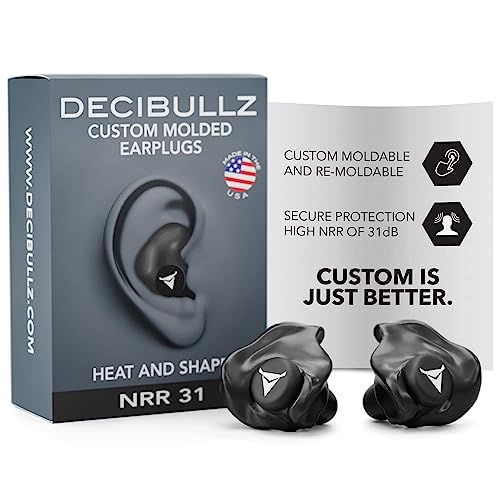
Decibullz – Custom Molded Earplugs, 31dB Highest NRR, Comfortable Hearing Protection for Shooting, Travel, Swimming, Work and Concerts (Black)
CUSTOM MOLDED EARPLUGS: Easily and quickly fitted to the exact shape of your ear. This creates a perfect…
As an affiliate, we earn on qualifying purchases.
As an affiliate, we earn on qualifying purchases.
Conclusion
Remember, “forewarned is forearmed.” Staying aware of how sports can impact your hearing helps you protect your ears while still enjoying the game. Wear appropriate hearing protection, take breaks, and listen to your body. Don’t let hearing loss sideline you—stay proactive and keep the game alive. By taking these steps, you can enjoy sports safely and keep your hearing in the game for years to come.

Dr.meter Ear Muffs for Noise Reduction: 27.4SNR Noise Cancelling Headphones for Kids Adults, EM100 Adjustable Hearing Protection Earmuffs for Monster Jam, Autism Sensory, Concerts, Fireworks
【Extremely Comfortable to Wear】: Wrap your child's ears in cloud-like softness! Dr.meter noise cancelling headphone is made of…
As an affiliate, we earn on qualifying purchases.
As an affiliate, we earn on qualifying purchases.

Scuba Diving Hand Signals: Underwater Communication Pocket Companion for Recreational Scuba Divers
As an affiliate, we earn on qualifying purchases.
As an affiliate, we earn on qualifying purchases.