
Conductive hearing loss happens when sound can’t reach your inner ear due to issues in the outer or middle ear, like earwax buildup or infections, and is usually treatable with medication or surgery. Sensorineural loss occurs when damage happens to the inner ear or auditory nerve, often permanently, caused by aging, loud noises, or illness. Understanding these differences helps determine the best treatment options and ways to improve your hearing health. Keep exploring to learn more about these types and solutions.

Get everyday helpers delivered free with Prime
- Fast, free delivery on millions of items
- Prime Video, Amazon Music and more included
- Member-only deals all year
Key Takeaways
- Conductive hearing loss involves outer or middle ear issues blocking sound transmission, while sensorineural loss involves inner ear or nerve damage.
- Conductive loss is often correctable with medical treatment or hearing aids; sensorineural loss is usually permanent.
- Causes of conductive loss include earwax buildup and infections; sensorineural loss results from aging, noise exposure, or genetic factors.
- Conductive loss typically affects volume, whereas sensorineural loss impacts sound clarity and speech understanding.
- Treatment for conductive loss may involve surgery or medication; sensorineural loss often requires digital hearing aids or cochlear implants.
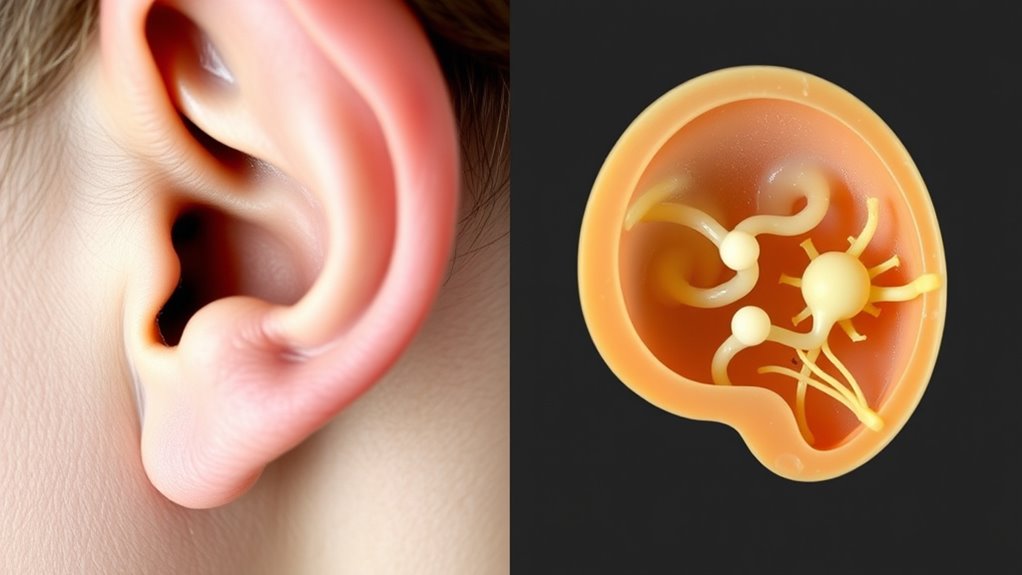
Have you ever wondered what distinguishes conductive hearing loss from sensorineural hearing loss? Understanding these differences begins with knowing your ear anatomy. Your ear is divided into three main parts: the outer ear, middle ear, and inner ear. Conductive hearing loss occurs when there’s a problem in the outer or middle ear that prevents sound from reaching the inner ear effectively. This could be caused by ear infections, earwax buildup, a perforated eardrum, or malformations of the ear structures. Because the issue lies outside or in the middle ear, it often can be corrected with medical treatment or hearing aids. When considering hearing aid options, you’ll find that they can amplify sounds to overcome the transmission barrier in conductive loss, especially when the damage isn’t permanent. In many cases, hearing aids can restore hearing to a functional level, making communication easier.
On the other hand, sensorineural hearing loss involves damage to the inner ear or the auditory nerve pathways that carry signals to your brain. This type of hearing loss often results from aging, exposure to loud noises, genetic factors, or illnesses that affect the inner ear structures. Unlike conductive loss, it’s usually permanent because it involves the sensory cells or nerve pathways that can’t regenerate. The anatomy of your inner ear, particularly the cochlea and auditory nerve, plays a vital role here. When these parts are damaged, amplifying sound alone isn’t enough—you need a different approach. Hearing aid options for sensorineural loss typically include devices that not only amplify sounds but also improve clarity and reduce background noise. Modern digital hearing aids can be programmed to enhance speech and filter out unwanted sounds, helping you understand conversations better despite the nerve or inner ear damage.
While both types of hearing loss impact your ability to hear, their causes and treatments differ markedly. Conductive loss often responds well to medical interventions, such as surgery or medication, and hearing aids can effectively compensate for the sound transmission issues. Conversely, sensorineural loss is more complex, requiring advanced hearing aid technology or cochlear implants in severe cases. Your choice of hearing aid options will depend on the specific nature of your hearing loss, which your audiologist can evaluate through detailed tests. Recognizing whether your hearing loss is conductive or sensorineural is vital because it guides the most effective treatment plan. Whether it’s addressing an obstruction or repairing damaged inner ear structures, understanding your ear’s anatomy helps you make informed decisions about your hearing health. Additionally, awareness of the causes of hearing loss can aid in prevention and early intervention.
digital hearing aids for sensorineural loss
As an affiliate, we earn on qualifying purchases.
As an affiliate, we earn on qualifying purchases.
Frequently Asked Questions
Can Conductive and Sensorineural Hearing Loss Occur Simultaneously?
Yes, you can experience both conductive and sensorineural hearing loss simultaneously, called mixed hearing loss. This happens when issues affect your middle ear, like fluid or a blockage, and your inner ear, such as nerve damage. When both types occur together, you might notice a significant hearing reduction. It is crucial to see an audiologist for proper diagnosis and treatment, as this combined loss can be more complex to manage.
How Does Age Affect the Likelihood of Each Type?
Imagine age as a slow river shaping your hearing. As you grow older, age-related hearing changes become more evident, with demographic factors playing a role. You’re more likely to experience sensorineural loss due to nerve degeneration, while conductive issues might stem from infections or injuries. Age influences the likelihood of each type, with older adults typically facing more sensorineural challenges, highlighting the importance of early detection and care.
Are There Genetic Factors Influencing Conductive or Sensorineural Loss?
You might wonder if genetics play a role in hearing loss types. Genetic predispositions and hereditary factors can influence both conductive and sensorineural loss, though they’re more commonly linked to sensorineural issues. If you have a family history of hearing problems, you could be at higher risk. Understanding your genetic background helps in early diagnosis and treatment, potentially preserving your hearing health longer.
What Are the Latest Technological Advancements in Hearing Loss Treatment?
You’ll find that recent advancements in hearing loss treatment include digital hearing aids, which offer personalized sound adjustments and connectivity features. Cochlear implants have also improved remarkably, providing better sound clarity for severe losses. These technologies are more discreet, affordable, and effective, allowing you to regain more natural hearing experiences. Staying updated on these innovations can help you choose the best options for your needs and improve your overall quality of life.
How Do Lifestyle Choices Impact the Development of Hearing Loss?
Your lifestyle choices directly impact your hearing health. Regularly exposing yourself to loud noise without ear protection can cause damage over time, increasing your risk of hearing loss. To protect your ears, avoid prolonged noise exposure and always wear ear protection when in loud environments. Making these small adjustments helps prevent damage to your ear structures, preserving your hearing and maintaining overall ear health for years to come.
Conclusion
Understanding the key differences between conductive and sensorineural hearing loss helps you seek the right treatment. You might worry that hearing loss is unavoidable, but early diagnosis can markedly improve your quality of life. With proper medical attention, many hearing issues are manageable or reversible. Don’t wait until it worsens—taking action now can reconnect you with the sounds and conversations that matter most. Your hearing health is worth it.
Fall Picks
fall essentials
As an affiliate, we earn on qualifying purchases.