The anatomy of your ear consists of three main parts: the outer ear, middle ear, and inner ear, each serving essential roles in hearing and balance. The outer ear catches sound waves and directs them inward. The middle ear amplifies vibrations through tiny bones, while the inner ear converts these vibrations into electrical signals and helps maintain your balance. If you keep exploring, you’ll discover how each part works together to keep you hearing clearly and staying balanced.
Key Takeaways
- The outer ear captures sound waves and protects the middle and inner ear from debris and infections.
- The middle ear contains ossicles that amplify sound vibrations for efficient transfer.
- The inner ear includes the cochlea for hearing and semicircular canals for balance.
- Sound signals are converted into electrical signals by cochlear hair cells and transmitted via the auditory nerve.
- The ear’s structures work together to facilitate hearing and maintain body balance seamlessly.
LEIPUT Ear Wax Removal – Earwax Remover Tool with 8 Pcs Ear Set – Ear Canal Cleaner with 1080P Camera – FSA HSA Eligible – Ear Cleaning Kit with 6 Ear Spoon – Ear Camera for iOS & Android (Black)
1080P HD Ear Camera: The earwax removal kit is equipped with 6 LED lights and a 1080P HD…
As an affiliate, we earn on qualifying purchases.
As an affiliate, we earn on qualifying purchases.
Outer Ear: The Sound Collector

The outer ear, also known as the pinna, acts as the body’s primary sound collector. It captures sound waves and funnels them into your ear canal. Your ear’s shape helps focus these sounds, making it easier to hear. Inside the ear canal, earwax production plays a crucial role. It traps dust, debris, and microorganisms, preventing infections. Regular, gentle cleaning can help prevent ear infections caused by bacteria buildup, but avoid over-cleaning, which can remove protective wax. Maintaining a healthy balance of earwax is essential for ear health and sound clarity. The outer ear’s design also helps protect your middle and inner ear from dirt and pathogens. By taking care of your outer ear, you support overall hearing health and reduce the risk of infections that could impair your hearing. Additionally, proper ear hygiene and awareness of ear health can help ensure long-term auditory well-being.
LEIPUT Ear Wax Removal – Earwax Remover Tool with 8 Pcs Ear Set – Ear Canal Cleaner with 1080P Camera – FSA HSA Eligible – Ear Cleaning Kit with 6 Ear Spoon – Ear Camera for iOS & Android (Black)
1080P HD Ear Camera: The earwax removal kit is equipped with 6 LED lights and a 1080P HD…
As an affiliate, we earn on qualifying purchases.
As an affiliate, we earn on qualifying purchases.
Middle Ear: The Amplification Chamber
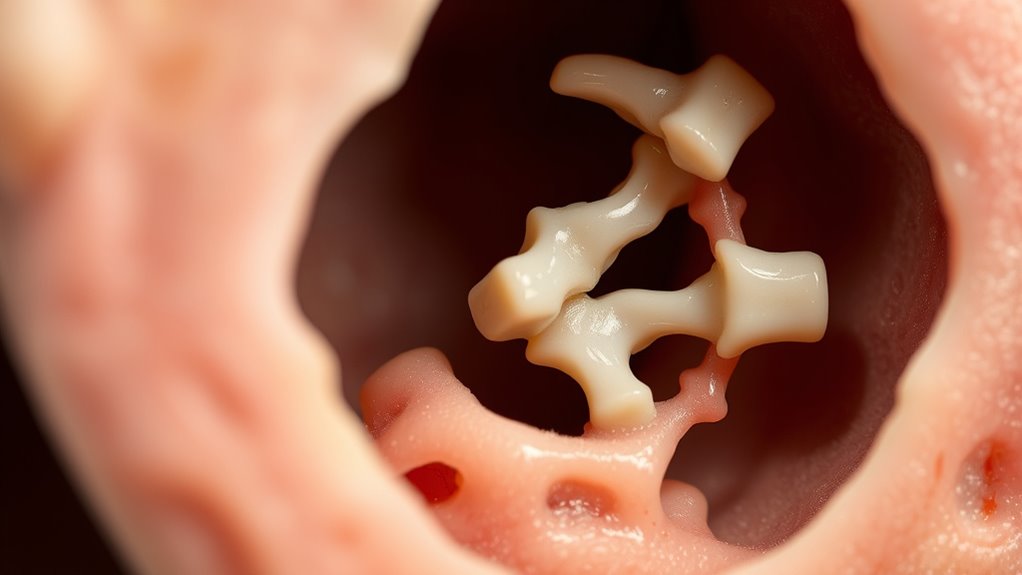
In your middle ear, tiny bones called ossicles connect and transmit sound vibrations. This air-filled cavity amplifies these vibrations, making sounds clearer and stronger. Without this process, hearing would be much less effective. Additionally, the ossicles are crucial for maintaining proper hearing sensitivity and preventing damage from loud noises sound amplification.
Ossicles: Tiny Bones Connection
Have you ever wondered how your ear efficiently transmits sound from the outer environment to your inner hearing system? It all comes down to the ossicles, the tiny bones in your middle ear that form a vital connection. These tiny bones — malleus, incus, and stapes — work together to amplify sound vibrations. The ossicles connection allows sound waves to travel smoothly from your eardrum to the inner ear. Their precise movement boosts the sound signal, making it strong enough for your brain to interpret. Here’s a quick overview:
| Ossicle | Function | Connection Point |
|---|---|---|
| Malleus | Attached to eardrum | Connects to incus |
| Incus | Acts as a bridge | Connects malleus and stapes |
| Stapes | Transmits to inner ear | Connects to cochlea |
These tiny bones are essential for hearing clarity. Advances in automation technology have also contributed to innovations in hearing aids and auditory diagnostics.
Air-filled Cavity Function
Following the ossicles, sound vibrations reach the middle ear, where an air-filled cavity acts as a chamber for amplification. This air-filled cavity helps regulate ear pressure, ensuring consistent transmission of sound waves. You might notice that changes in altitude or pressure affect your ear, but this cavity adjusts to maintain balance. The air-filled space connects to the Eustachian tube, which opens to the throat, allowing pressure equalization. This regulation prevents discomfort and protects the inner ear from pressure-related damage. The middle ear’s air-filled cavity is essential for maintaining stable ear pressure, enabling clearer sound perception. Additionally, the water parks in various locations often incorporate features that promote relaxation and fun, making the environment more enjoyable for visitors. Without it, fluctuations could distort sound signals or cause discomfort, underscoring its role as a crucial component in hearing health.
Sound Amplification Process
Once sound vibrations reach the middle ear, they enter the ossicles, a set of tiny bones that serve as an amplification chamber. These bones – the malleus, incus, and stapes – work together to boost the sound wave’s energy. When a sound wave hits the eardrum, it causes it to vibrate, and these vibrations transfer to the ossicles. The ossicles increase the amplitude of the vibrations, making the sound stronger before reaching the inner ear. This amplification is vital because it helps overcome the hearing threshold, the minimum sound level needed for you to perceive a sound. Without this process, many faint sounds would remain inaudible. The ossicles guarantee even soft sounds are transmitted clearly, enabling you to hear a wide range of noises. Powerful persuasive words can enhance the effectiveness of auditory communication, making sounds more impactful and engaging.

Peltor Sport Tri-Flange Corded Reusable Earplugs, 3 Pair, Noise Reduction Rating (NRR) 26 dB, Comfortable Fit, Ideal For Range, Shooting & Hunting, Washable and Corded, Neon Yellow (97317-10C)
26 dB Noise Reduction Rating (NRR)
As an affiliate, we earn on qualifying purchases.
As an affiliate, we earn on qualifying purchases.
Inner Ear: The Balance and Hearing Hub

Did you know that the inner ear serves as both the body’s balance center and a key player in hearing? Inside, the inner ear contains structures vital for your vestibular function, which helps you stay upright and navigate your environment. The semicircular canals detect rotational movements, while the otolith organs sense gravity and linear motion. These components send signals to your brain, keeping your balance steady. Additionally, the cochlea within the inner ear transforms sound vibrations into electrical signals your brain interprets as sound. This intricate system allows you to maintain equilibrium and hear clearly. The inner ear’s dual role highlights its significance in everyday activities, from walking to listening. Regular maintenance and understanding of ear health are essential for optimal function.

Hyland's Earache Drops, Natural Relief of Swimmer's Ear, Cold and Flu, Allergy Symptoms, Ages 4 and up, Day and Night, 0.33 Fl Oz
RELIEF OF EARACHE SYMPTOMS: Temporarily relieves pain or itching from swimmer’s ear, clogged ears, and ear pain or…
As an affiliate, we earn on qualifying purchases.
As an affiliate, we earn on qualifying purchases.
The Ear Canal and Eardrum
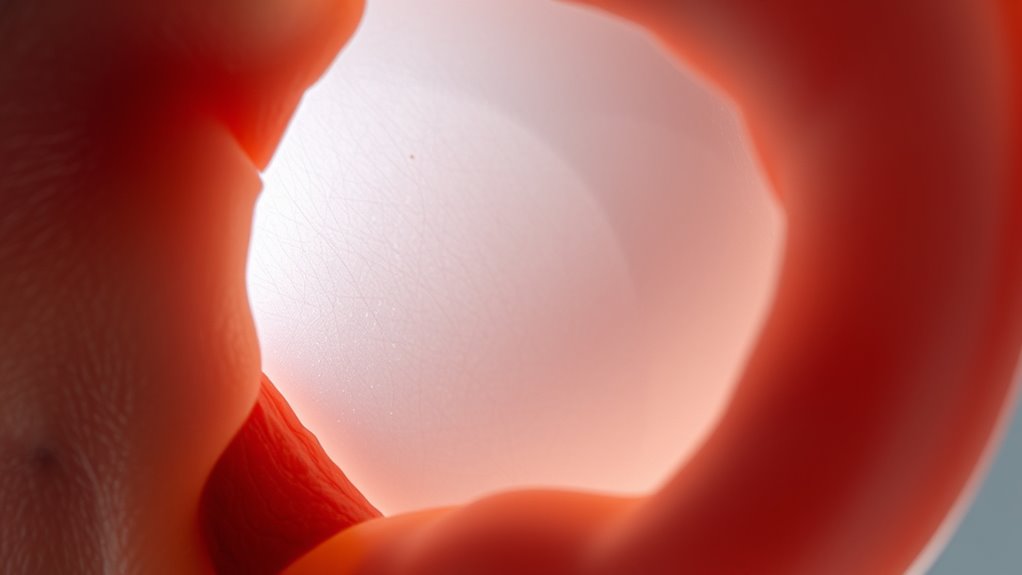
Have you ever wondered how sound travels from the outside world into your inner ear? It all starts with your ear canal, a tube that directs sound waves toward your eardrum. The ear canal acts as a natural amplifier, helping you hear quieter sounds more clearly. At the end of the canal sits the eardrum, a thin, flexible membrane that vibrates when sound waves hit it. These vibrations transfer energy into your middle ear, beginning the process of hearing. The ear canal also protects the eardrum from dirt, debris, and injury. Its slight curve helps trap particles, keeping your middle and inner ear safe. Additionally, tuning modifications to the ear canal can influence how sound is transmitted and perceived. Understanding this part of your ear helps you appreciate how your body captures and processes sound efficiently.
The Cochlea and Auditory Nerve

The cochlea is a spiral-shaped structure that converts sound vibrations into electrical signals your brain can interpret. These signals travel along the auditory nerve, which carries them to your brain for processing. Understanding how the cochlea and nerve work together reveals how you perceive sound so clearly.
Cochlear Structure Overview
Ever wondered how the ear converts sound waves into signals your brain can interpret? It all starts with the cochlear anatomy. The cochlea is a spiral-shaped, fluid-filled structure that houses the sensory cells responsible for hearing. Its unique design amplifies sound vibrations, allowing the cochlear function to translate them into electrical signals. Inside, tiny hair cells detect specific sound frequencies, creating a detailed map of sounds. The auditory nerve then carries these signals to your brain for processing. Understanding the cochlear structure is key to grasping how your ear performs its remarkable task of hearing. Each part works seamlessly to transform vibrations into the neural language your brain understands, making the cochlea a true marvel of biological engineering. Additionally, the cochlea’s sensory cells are specialized to respond to different sound pitches, which is fundamental to our ability to perceive a wide range of auditory information.
Signal Transmission Pathways
When sound waves are converted into electrical signals by the cochlear hair cells, these signals must then travel along specialized pathways to reach your brain. The neural pathways carry information from the cochlea through the auditory nerve, which acts as a communication highway. These pathways are indispensable for sound localization, helping you determine the direction and distance of sounds. As signals move along, they pass through several relay stations in the brainstem, refining your auditory perception. Your brain then interprets these signals, creating the auditory experience. Managing Bitcoin Volatility Strategies such as diversification and setting stop-loss orders can help mitigate risks associated with fluctuating market conditions. Key points include:
- Neural pathways transfer electrical signals efficiently
- They enable precise sound localization
- Signals travel through relay stations in the brainstem
- The auditory nerve is a critical link in this system
- Proper transmission is essential for hearing clarity
Auditory Nerve Function
Understanding how your cochlea and auditory nerve work together is vital to grasping how you hear. When sound waves reach the cochlea, tiny hair cells convert vibrations into electrical signals. These signals travel along the auditory nerve to your brain, where neural processing occurs. Your brain interprets these signals, transforming them into recognizable sounds. The auditory nerve plays a key role in sensory integration, linking the ear’s mechanical functions to your perception of sound. It guarantees that complex auditory information—like pitch, volume, and timing—is accurately transmitted. This seamless communication allows you to distinguish speech, music, and environmental noises effortlessly. Proper functioning of both the cochlea and auditory nerve is essential for sound perception, ensuring that auditory signals are transmitted accurately and efficiently. Without the proper functioning of the cochlea and auditory nerve, your ability to process and understand sounds would be severely impaired.
The Semicircular Canals and Vestibular System

Have you ever wondered how your body keeps its balance even when you move quickly or suddenly change direction? That’s thanks to your semicircular canals, part of the vestibular system. These tiny, looped structures in your inner ear detect rotational movements and send signals to your brain to maintain stability. The vestibular system integrates information from the semicircular canals, otolith organs, and visual cues to help you stay upright.
- Detects head movement in all directions
- Sends signals to coordinate eye and body movements
- Works continuously without conscious effort
- Helps recover balance after sudden shifts
- Works seamlessly with your visual system for spatial awareness
How the Ear Works Together to Hear and Balance

Your ear is a remarkable organ that works tirelessly to help you hear and maintain your balance. When sound waves enter your ear, the outer ear funnels them toward the eardrum, causing it to vibrate. These vibrations are transferred through tiny bones in the middle ear, amplifying the sound. Meanwhile, your inner ear’s cochlea converts vibrations into electrical signals sent to your brain, allowing you to interpret sounds. The vestibular system, including the semicircular canals, helps you stay balanced. However, issues like ear infections or earwax buildup can disrupt this process. Ear infections may cause pain and muffled hearing, while excess earwax can block sound transmission. Together, these components and conditions ensure your ear functions properly, keeping you both hearing and balanced.
Frequently Asked Questions
How Does Ear Anatomy Differ Across Various Age Groups?
You might notice that ear anatomy differs across age groups due to ear canal development and eustachian tube maturation. In infants, the ear canal is shorter and more horizontal, making infections common. As you grow, the ear canal lengthens and angles downward, improving drainage. Eustachian tubes also mature, helping equalize pressure better. These changes influence hearing and susceptibility to ear issues throughout your life.
What Are Common Ear Infections and Their Symptoms?
You might experience common ear ailments like ear infections, which often show symptoms such as ear pain, difficulty hearing, fluid drainage, and a feeling of fullness. Ear infection symptoms can vary, but they typically include discomfort, redness, and sometimes fever. If you notice these signs, it’s important to see a healthcare professional promptly, as untreated ear infections can lead to complications or hearing issues.
How Can Hearing Loss Be Prevented or Managed?
Think of your ears as precious treasures—you’d safeguard them like the crown jewels. To prevent or manage hearing loss, use ear protection in noisy environments, and seek medical advice for persistent issues. Hearing aids can help restore hearing if damage occurs. Regular check-ups, avoiding loud sounds, and caring for your ears ensure you keep your hearing sharp, much like safeguarding your most valuable possessions.
What Are the Latest Advancements in Ear Health Technology?
You’ll find that the latest advancements in ear health technology include innovative implants and digital diagnostics. These innovations help you detect issues early and improve hearing more effectively. For example, innovative implants restore hearing by directly stimulating your auditory nerve, while digital diagnostics allow for precise, real-time assessments of ear health. Staying informed about these technologies can help you better manage hearing health and guarantee ideal ear wellness.
How Do Different Sounds Affect Our Ear Health Over Time?
Think of your ears as delicate gardens. Constant noise exposure is like harsh winds that damage the plants over time, risking your hearing health. Loud sounds can cause irreversible harm, so you need hearing protection, just like a shield for your garden. By limiting exposure to loud noises and using protection, you nurture your ears, ensuring they stay healthy and vibrant for years to come.
Conclusion
Think of your ear as a finely tuned orchestra, where each part plays a essential role in creating harmony. From capturing sound waves to sending signals to your brain, every component works together seamlessly. When you understand how your ear functions as a complex symphony, you gain a deeper appreciation for this incredible sensory instrument. Keep exploring, and you’ll discover how your ear keeps your world in perfect tune, balancing sound and sensation effortlessly.