
Regular hearing screenings are vital at any age because early detection can prevent serious health issues and improve your quality of life. Identifying hearing loss early helps you take steps like using hearing aids or protecting your ears from damage. Ignoring signs increases the risk of social withdrawal, depression, and cognitive decline. Staying proactive with routine checks keeps your hearing sharp and your communication clear. Keep exploring to discover how you can protect your hearing health long-term.
Key Takeaways
- Early detection through regular screenings prevents worsening hearing loss and maintains better communication abilities.
- Hearing tests help identify subtle signs of hearing loss before significant damage occurs.
- Routine screenings enable timely interventions like hearing aids, improving quality of life at any age.
- Protecting ears with regular checkups reduces the risk of noise-induced damage and long-term issues.
- Incorporating hearing checks into health routines supports overall well-being and cognitive health.
Understanding the Importance of Early Detection
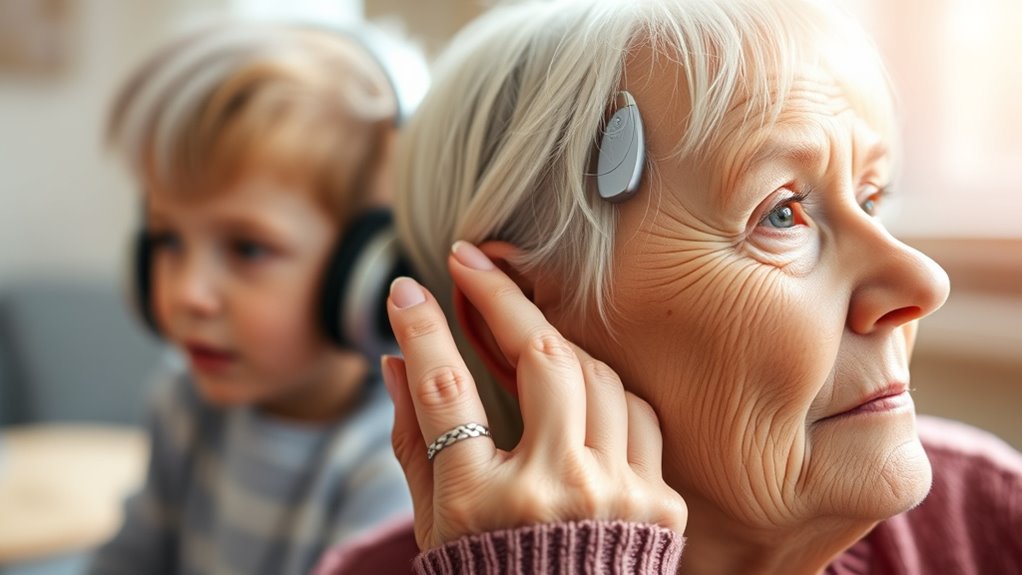
Early detection of hearing issues can substantially improve outcomes and quality of life. Recognizing signs early allows you to seek solutions like hearing aids promptly, restoring communication and confidence. Regular screenings help identify hearing loss before it worsens, making treatment more effective. Protecting your ears with ear protection, especially in noisy environments, reduces the risk of damage that could lead to hearing problems later. When you catch issues early, you can adapt quickly, preventing social withdrawal or cognitive decline associated with untreated hearing loss. Prioritizing early detection means you stay connected and engaged in daily life. Incorporating regular hearing screenings into your health routine is essential for maintaining long-term auditory health. Don’t wait for problems to become severe—early intervention is key to maintaining your hearing health long-term.
Risks of Ignoring Hearing Health at Any Age
Ignoring your hearing health at any age can lead to serious consequences that affect your overall well-being. Untreated hearing loss may cause social withdrawal, depression, and cognitive decline. Noise exposure, especially without hearing protection, accelerates damage, making hearing aids less effective later. The table below highlights some risks:
| Risk | Impact |
|---|---|
| Hearing loss progression | Worsens over time, reducing communication ability |
| Cognitive decline | Increased risk of dementia |
| Social isolation | Leads to loneliness and mental health issues |
When you neglect hearing health, you risk more than missing sounds—you risk your mental and emotional health. Regular screenings help catch issues early, preventing these serious outcomes. For example, understanding the importance of early detection can significantly improve treatment success.
How Routine Screenings Can Prevent Further Damage
Regular hearing screenings play an essential role in stopping damage before it worsens. By catching early signs of hearing loss, you can take proactive steps to protect your hearing health. If a hearing loss is detected, hearing aids can be prescribed to improve your quality of life and prevent further decline. Additionally, screenings help identify harmful noise exposure that might be be damaging your ears without you realizing it. Recognizing these issues early allows you to implement protective measures, such as using ear protection or reducing loud noise levels. Regular checkups empower you to address problems promptly, minimizing the risk of permanent damage. Vetted hearing products ensure safe and effective use if hearing aids are needed. In this way, routine screenings serve as a vital tool in maintaining your hearing health and preventing conditions from worsening over time.
Recognizing Subtle Signs of Hearing Loss

Since hearing loss often develops gradually, you might not notice the subtle signs at first. You could find yourself asking people to repeat themselves or struggling to hear in noisy places. Tinnitus management might become necessary if you notice ringing or buzzing in your ears. You might also notice that you turn up the volume on your TV or devices more often. Pay attention to these clues, as they can indicate early hearing loss. Recognizing these signs early allows you to explore hearing aid options that fit your lifestyle and improve your quality of life. Addressing these subtle symptoms promptly can prevent further deterioration and help you stay engaged in conversations and activities. Regular hearing checks are essential, even when these signs seem minor. Additionally, understanding the importance of early detection can significantly impact your ability to preserve hearing health over time.
Incorporating Hearing Checks Into Overall Wellness Practices
Integrating hearing checks into your overall wellness routine can help you maintain ideal health and detect issues early. Regular audiology appointments allow you to identify potential hearing problems before they *considerably* impact your daily life. If you notice any changes, your audiologist can recommend hearing aids or other solutions to improve your hearing quality. Including hearing assessments alongside screenings for blood pressure, cholesterol, and other health markers *guarantees* a *thorough* approach to wellness. Being aware of different headphone types and their proper use can also prevent hearing damage caused by excessive volume or improper fit. By making hearing checks a routine part of your health care, you stay proactive and informed. This habit not only preserves your hearing but also supports your overall well-being, communication, and safety. Prioritizing hearing health now can save you time and money in the future.
Frequently Asked Questions
How Often Should I Get My Hearing Tested Regardless of Age?
You should get your hearing tested at least once every three years if you’re under 50, and annually if you’re over 50 or have hearing concerns. Regular checkups guarantee you stay updated with the latest hearing technology and can take advantage of hearing insurance benefits. Even if your hearing seems fine, early detection helps prevent deterioration. Don’t wait—schedule your hearing test regularly to maintain your hearing health.
Can Hearing Loss Be Reversed if Detected Early?
Imagine your ears as delicate gardens, needing early care to flourish. If hearing loss is caught early, you can often preserve your soundscape with hearing aids that act like gentle shepherds guiding you back to clarity. While some ear infections can cause temporary hearing loss, others may lead to irreversible damage if untreated. Regular check-ups help detect issues early, giving your ears the best chance to stay healthy and vibrant.
Are There Specific Populations at Higher Risk for Hearing Loss?
You’re at higher risk for hearing loss if you work in noisy environments or have a genetic predisposition. Occupational noise exposure, like in factories or construction sites, can damage your hearing over time. Similarly, if your family has a history of hearing issues, your risk increases. Regular screenings help catch problems early, especially for these groups, so you can take steps to protect your hearing and maintain your quality of life.
What Are the Long-Term Health Impacts of Untreated Hearing Issues?
Untreated hearing issues can lead to serious long-term health impacts, affecting your hearing health and overall well-being. When you ignore hearing problems, you risk social isolation, communication difficulties, and cognitive decline. Untreated consequences may also increase your chances of depression and dementia. Regular hearing screenings help detect issues early, preventing these long-term effects and maintaining your quality of life. Don’t wait—prioritize your hearing health today.
How Do Lifestyle Choices Influence Hearing Health Over Time?
Your lifestyle choices dramatically shape your hearing health. Poor diet and lack of exercise can weaken your ears, making you vulnerable to damage. Excessive noise exposure is like shouting into a hurricane—continually harming your hearing over time. To protect your ears, prioritize a balanced diet, regular exercise, and avoid loud environments. Small daily habits can prevent hearing loss and keep your hearing sharp for years to come.
Conclusion
Regular hearing screenings are like a safety net, catching issues before they become big problems. By staying proactive, you protect your hearing health at any age and avoid the risks of neglect. Think of it as tuning a musical instrument—you’ll enjoy clearer sounds and better communication. Don’t wait for problems to loud and clear; make screenings a part of your wellness routine, and keep your world sounding vibrant and full of life.

Jamie is one of the creative forces behind the words that resonate with our audience at Deaf Vibes. With a passion for storytelling and advocacy, Jamie delves into topics that matter deeply to the deaf and hard-of-hearing community. Jamie’s articles are crafted with empathy, insight, and a commitment to positive change, from exploring the latest advancements in hearing technologies to shedding light on the everyday challenges and victories of those within the community. Jamie believes in the power of shared stories to inspire action, foster understanding, and create a more inclusive world for everyone.