
For seniors who want help hearing conversations or nearby sounds, the Williams Sound PockeTalker Ultra DUO is my best overall pick for its flexible headphone and earbud options. The SuperEar SE5000 is a simpler alternative for people who want a straightforward personal amplifier, while the Blue Deer bone-conduction model may suit listeners who prefer an open-ear design. The main tradeoffs are how the device is worn, how much control it offers, and whether its power and upkeep fit the user’s routine. Personal sound amplifiers can make nearby sounds easier to hear, but they are not a substitute for a hearing evaluation or prescription hearing aids when those are needed. Read on for the full comparison, buying advice, and picks for different needs.

Get everyday helpers delivered free with Prime
- Fast, free delivery on millions of items
- Prime Video, Amazon Music and more included
- Member-only deals all year
Complete the kit


Key Takeaways
- The PockeTalker Ultra DUO ranks first for flexibility: its included headphone and earbud choices make it easier to adapt the listening setup than a model tied to one style.
- Williams Sound and SuperEar offer distinct routes to simple listening: compare their controls, wearing options, and daily handling needs rather than assuming one brand suits every senior.
- Rechargeable and battery-powered designs call for different routines: the Eduitai rechargeable model may reduce battery changes, while buyers should check charging habits and operating details before choosing.
- Maximum gain is not the same as comfortable, clear listening: the Reizen 110dB and 120dB models should be compared by the user’s needs and control comfort, not by the larger number alone.
- Fit and listening style divide this lineup more than headline claims: pocket units, ear-worn options, and Blue Deer’s open-ear bone-conduction design serve different preferences and dexterity needs.
| Williams Sound PockeTalker Ultra DUO Sound Amplifier with Headphone & Earbud |  | Best for Flexible Everyday Listening | Power source: Two AAA alkaline batteries | Stated battery life: Up to 100 hours | Controls: External volume and tone controls; button control | VIEW LATEST PRICE | See Our Full Breakdown |
| Reizen Loud Ear 110dB Gain Personal Amplifier |  | Best for Simple, Long-Distance Pickup | Sensitivity: 110 dB ±3 dB per mW | Frequency range: 20 Hz–20 kHz | Stated battery life: 48 hours | VIEW LATEST PRICE | See Our Full Breakdown |
| SuperEar SE5000 Personal Sound Amplifier with Headphones and Earbuds |  | Best Starter Kit | Amplification: Up to 50+ dB | Stated battery life: Up to 30 hours | Battery: One AAA battery included | VIEW LATEST PRICE | See Our Full Breakdown |
| Williams Sound Pocketalker 2.0 Hearing Amplifier for Seniors |  | Best for Straightforward Conversation Use | Power source: Two AAA batteries included | Sound sensitivity: 104 dB | Controls: Button control; adjustable volume and tone | VIEW LATEST PRICE | See Our Full Breakdown |
| Eduitai Rechargeable Digital Hearing Amplifier with Noise Cancellation |  | Best Rechargeable In-Canal Pick | Model: HEARING AMPLIFIER (ASD123) | Noise-reduction modes: 2 | Volume levels: 5 | VIEW LATEST PRICE | See Our Full Breakdown |
| Reizen Loud Ear 120dB Gain Personal Amplifier |  | Best for Long-Distance Listening | Sound gain: 120dB | Pickup range: Up to 100 feet | Battery life: Up to 48 hours | VIEW LATEST PRICE | See Our Full Breakdown |
| SuperEar SE9000HP Hearing Amplifier for Seniors, Personal Sound Amplifier |  | Best for Adjustable Listening | Model: SE9000HP | Frequency settings: High, medium, and low | Battery life: Up to 40 hours | VIEW LATEST PRICE | See Our Full Breakdown |
| Blue Deer Bluetooth Bone Conduction Hearing Amplifiers for Seniors Open Ear |  | Best Open-Ear Option | Technology: Bone conduction and Bluetooth 5.3 | Battery life: Up to 8 hours | Water resistance: IPX5 | VIEW LATEST PRICE | See Our Full Breakdown |
| SuperEar Plus SE7500 Personal Sound Amplifier |  | Best for Extended Battery Life | Model: SE7500 | Ambient sound gain: Up to 50+ dB | Battery life: Up to 80 hours | VIEW LATEST PRICE | See Our Full Breakdown |
| Pocket Personal Sound Amplifiers for Seniors, Elderly People, Adults | 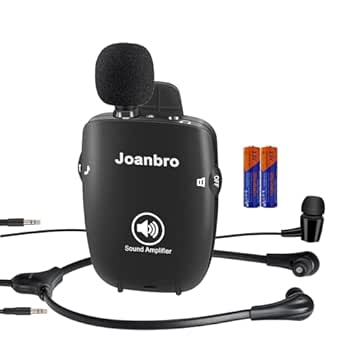 | Best for Customizing Tone | Amplification: Up to 108 dB | Microphones: Three removable types | Tone settings: Bass, normal, and treble | VIEW LATEST PRICE | See Our Full Breakdown |
| Williams Sound Pocketalker Ultra Hearing Amplifier |  | Best for Simple, Adjustable Listening | Power source: Battery powered | Battery composition: Alkaline | Amplification: Up to 40 dB | VIEW LATEST PRICE | See Our Full Breakdown |
| personal sound amplifiers for senior | Weight | Power source |
|---|---|---|
| Williams Sound PockeTalker Ult | — | Two AAA alkaline batteries |
| Reizen Loud Ear 110dB Gain Per | 2.4 ounces | Two AAA batteries |
| SuperEar SE5000 Personal Sound | — | — |
| Williams Sound Pocketalker 2.0 | 0.09 kg | Two AAA batteries included |
| Eduitai Rechargeable Digital H | — | — |
| Reizen Loud Ear 120dB Gain Per | 1.76 ounces | Battery powered |
| SuperEar SE9000HP Hearing Ampl | 13.4 ounces | — |
| Blue Deer Bluetooth Bone Condu | 1.06 ounces (30 g) | — |
| SuperEar Plus SE7500 Personal | — | — |
| Pocket Personal Sound Amplifie | 11 g | Two AAA batteries included |
| Williams Sound Pocketalker Ult | 16 ounces | Battery powered |
More Details on Our Top Picks
Williams Sound PockeTalker Ultra DUO Sound Amplifier with Headphone & Earbud
The PockeTalker Ultra DUO is the most adaptable choice here for seniors who want one amplifier for conversation, television listening, and car rides. Its removable microphone can be positioned near a speaker or sound source, while external volume and tone controls make adjustments easier without searching through menus. Compared with the Reizen Loud Ear 110dB, it offers more ways to tailor listening and a stated battery life of up to 100 hours rather than 48. The tradeoff is that it still relies on disposable AAA batteries, which are not included, and its supplied listening options may not suit every ear. It is a stronger fit for varied listening situations than a basic, single-ear amplifier, but buyers seeking a rechargeable in-canal device should look at the Eduitai instead.
Pros:- Removable microphone helps place the pickup closer to the person or sound source.
- External volume and tone controls support quick listening adjustments.
- Up to 100 hours of use per two AAA batteries is longer than the Reizen Loud Ear 110dB’s stated 48 hours.
- Includes both a headphone and an earbud option.
Cons:- Two AAA batteries are required and are not included.
- In-ear listening may be uncomfortable for some seniors.
- The listed specs do not identify a dedicated noise-control feature.
Best for: Seniors who want adjustable amplification for nearby conversations and TV listening, plus the option to move the microphone closer to the speaker.
Not ideal for: People who prefer rechargeable devices or find in-ear listening uncomfortable; it uses two AAA batteries and its included ear-worn options may not suit every user.
- Power source:Two AAA alkaline batteries
- Stated battery life:Up to 100 hours
- Controls:External volume and tone controls; button control
- Microphone:Removable
- Included listening options:Headphone and earbud
- Additional feature:Belt clip
- Warranty:5 years
Our verdict“Choose the PockeTalker Ultra DUO if you want long battery life and flexible microphone placement more than rechargeable convenience.”
Reizen Loud Ear 110dB Gain Personal Amplifier
The Reizen Loud Ear 110dB suits seniors who want a straightforward handheld amplifier with a built-in microphone and basic volume control. Its listed pickup distance of up to 100 feet makes it distinct from the Williams Sound Pocketalker 2.0, which is described as best for nearby, one-on-one or small-group conversations. That reach may help when listening to a speaker across a room, but this is a simple amplifier, not a selective speech system: distant background sounds can also be amplified. The package includes a single earphone and batteries, so setup is direct, though one-sided listening will not suit everyone. Its 48-hour battery life also trails the PockeTalker Ultra DUO’s stated 100 hours. Choose it for basic reach, not for extensive sound customization or fewer battery changes.
Pros:- Built-in microphone is specified to pick up sounds from up to 100 feet away.
- Adjustable volume control keeps operation simple.
- Portable body includes a belt clip.
- Batteries and a single earphone are included.
Cons:- Only one earphone is included, which may not suit users who prefer two-sided listening.
- Stated battery life is 48 hours, shorter than the PockeTalker Ultra DUO’s stated 100 hours.
- Basic controls provide less listening adjustment than the PockeTalker models.
Best for: Seniors who want a basic handheld amplifier for listening to a speaker at a distance and are comfortable using one earphone.
Not ideal for: People who need tone controls, stereo listening, or long intervals between battery changes; its controls are basic, it includes one earphone, and battery life is stated as 48 hours.
- Sensitivity:110 dB ±3 dB per mW
- Frequency range:20 Hz–20 kHz
- Stated battery life:48 hours
- Power source:Two AAA batteries
- Dimensions:2.5 × 1.75 × 0.75 inches
- Weight:2.4 ounces
- Included listening option:Single earphone
Our verdict“Pick the Reizen Loud Ear 110dB for uncomplicated, longer-distance pickup if one-ear listening and regular battery changes are acceptable.”
SuperEar SE5000 Personal Sound Amplifier with Headphones and Earbuds
The SuperEar SE5000 is a practical starting point for seniors who want to try different listening styles without buying separate accessories. It comes with both stereo headphones and stereo earbuds, a swivel microphone, and a volume wheel, giving it more out-of-the-box flexibility than the single-ear Reizen Loud Ear 110dB. Its handheld design and belt clip also make it easy to carry between rooms or take along for a conversation. The tradeoff is a stated battery life of up to 30 hours, well below the PockeTalker Ultra DUO‘s stated 100 hours. It also does not connect directly or wirelessly to a television, so TV listening means using the microphone to pick up room sound rather than routing audio from the set. This is a useful trial option, but not the best fit for long runtimes or direct TV audio.
Pros:- Includes stereo headphones and stereo earbuds for different listening preferences.
- Swivel microphone can be repositioned toward nearby sound.
- Adjustable volume wheel is easy to operate.
- Lightweight handheld design includes a stainless steel belt clip.
Cons:- Does not connect directly or wirelessly to a television.
- Up to 30 hours of battery life is shorter than the PockeTalker Ultra DUO’s stated runtime.
- Requires one AAA battery.
Best for: Seniors new to personal amplifiers who want both headphone and earbud options to see which feels more comfortable.
Not ideal for: TV viewers seeking direct or wireless audio from their television, or users who want longer battery life than the stated 30 hours.
- Amplification:Up to 50+ dB
- Stated battery life:Up to 30 hours
- Battery:One AAA battery included
- Included listening options:Stereo headphones and stereo earbuds
- Microphone:Swivel microphone
- Control:Adjustable volume wheel
- TV connectivity:No direct or wireless connection
Our verdict“Choose the SE5000 as a flexible first amplifier if trying headphones and earbuds matters more than direct TV connection or extended battery life.”
Williams Sound Pocketalker 2.0 Hearing Amplifier for Seniors
The Williams Sound Pocketalker 2.0 is aimed at seniors who want a simple setup for nearby conversation rather than a feature-heavy listening device. It amplifies nearby sounds and is described as reducing background noise, while adjustable volume and tone controls give users some room to tune speech to their preference. Unlike the Reizen Loud Ear 110dB, whose appeal is pickup at a stated distance of up to 100 feet, the Pocketalker 2.0 is better matched to one-on-one or small-group settings. Its included two AAA batteries make initial setup easier than with the PockeTalker Ultra DUO, whose batteries are not included. Still, it remains battery-powered and performance can vary with the environment. Buyers who want all-day rechargeable in-canal wear may prefer the Eduitai, though that model offers fewer fit details.
Pros:- Simple setup and button controls suit users who prefer straightforward operation.
- Adjustable volume and tone allow personal sound adjustments.
- Two AAA batteries are included.
- Lightweight design is suited to portable conversation use.
Cons:- Best suited to nearby or small-group conversations rather than broad listening coverage.
- Battery-powered operation means batteries must be replaced.
- Sound quality may vary with the listening environment.
Best for: Seniors who mainly need help following nearby one-on-one conversations and want physical volume and tone adjustments.
Not ideal for: People seeking long-distance pickup, a rechargeable in-canal design, or reliable performance in varied noisy settings.
- Power source:Two AAA batteries included
- Sound sensitivity:104 dB
- Controls:Button control; adjustable volume and tone
- Material:ABS/polycarbonate plastic
- Weight:0.09 kg
- Compatible connection:Devices with a 3.5 mm audio jack
- Features:In-ear design, noise control, sound isolation, folding
Our verdict“Choose the Pocketalker 2.0 for simple, nearby conversation support if you do not need the Reizen’s stated long-distance pickup or a rechargeable design.”
Eduitai Rechargeable Digital Hearing Amplifier with Noise Cancellation
The Eduitai rechargeable amplifier is the clear choice in this group for seniors who dislike buying and swapping AAA batteries. Its USB-C charging takes a stated one hour, with up to 24 hours of use per charge, while two noise-reduction modes and five volume levels provide more adjustment than the basic Reizen Loud Ear 110dB. The discreet in-canal design also differs from the handheld SuperEar SE5000, which uses a microphone and separate headphones or earbuds. The tradeoff is less flexibility in how sound is picked up: the listed description does not specify adjustable fit options, and the package contents list only one unit. The information also does not describe its fit range or software update support. Choose this model for rechargeable, close-wearing convenience, but not if you need a separate microphone to position near another speaker.
Pros:- USB-C charging takes a stated one hour.
- Up to 24 hours of use per charge avoids frequent disposable-battery changes.
- Two noise-reduction modes and five volume levels offer more adjustment than the Reizen Loud Ear 110dB’s basic controls.
- Lightweight in-canal design is intended for discreet wear.
Cons:- Adjustable fit options are not specified.
- Only one unit is listed in the included items.
- The provided information does not establish software update support.
Best for: Seniors who prefer a discreet in-canal amplifier with rechargeable power and several noise and volume settings.
Not ideal for: Users who need a microphone they can place near a speaker, want detailed fit options, or prefer a handheld amplifier with multiple listening accessories.
- Model:HEARING AMPLIFIER (ASD123)
- Noise-reduction modes:2
- Volume levels:5
- Stated battery life:Up to 24 hours
- Recharge time:1 hour
- Charging port:USB-C
- Battery composition:Lithium polymer
- Design:Lightweight in-canal
Our verdict“Pick the Eduitai if rechargeable, discreet in-canal wear is your priority and the unspecified fit options are acceptable.”
Reizen Loud Ear 120dB Gain Personal Amplifier
The Reizen Loud Ear is the strongest fit here for someone who wants to pick up a speaker at a distance, with the listed range reaching up to 100 feet. Its 120dB gain and belt-clip design suit lectures or small-group settings where carrying a pocket amplifier is easier than holding one near the speaker. Compared with the SuperEar Plus SE7500, it emphasizes stated amplification and distance rather than a longer listed battery life or a broad accessory kit. The 48-hour battery life is useful for frequent listening, but it runs on replaceable batteries, so ongoing battery changes are part of ownership. It also relies on a single in-ear earphone and basic volume control; buyers wanting adjustable tone, multiple listening options, or more noise-management features should look at the Pocket Personal Sound Amplifier instead.
Pros:- Listed 120dB gain and sound pickup range up to 100 feet suit distant speakers.
- Up to 48 hours of battery life reduces how often batteries need replacing.
- Lightweight body and belt clip make it easier to carry during outings.
- Includes batteries and an earphone for getting started.
Cons:- Single in-ear listening style may be uncomfortable or unsuitable for some users.
- Uses replaceable batteries rather than a rechargeable battery.
- Basic volume control offers fewer sound-shaping options than the Pocket Personal Sound Amplifier.
Best for: Seniors who attend lectures or small gatherings and want a lightweight, belt-clipped amplifier for hearing speakers at a distance.
Not ideal for: People who dislike in-ear listening, need adjustable tone or advanced noise reduction, or prefer a rechargeable device.
- Sound gain:120dB
- Pickup range:Up to 100 feet
- Battery life:Up to 48 hours
- Power source:Battery powered
- Fit:In-ear
- Dimensions:2.5 x 1.75 x 0.75 inches
- Weight:1.76 ounces
- Frequency range:20Hz–20KHz
Our verdict“Choose the Reizen Loud Ear if distance and a compact belt-clipped design matter more than rechargeable power or multiple listening styles.”
SuperEar SE9000HP Hearing Amplifier for Seniors, Personal Sound Amplifier
The SuperEar SE9000HP stands out for its three-position frequency switch, giving users a simple way to choose high, medium, or low settings for different listening situations. That makes it a more adaptable pick than the Reizen Loud Ear 120dB, which offers straightforward volume adjustment but no listed frequency settings. The SE9000HP also includes both stereo headphones and earbuds, so a buyer can try different wearing styles instead of being tied to one format. Its up-to-40-hour battery life supports regular use, though the product information is mixed: it calls the unit rechargeable while also listing two AAA batteries. At 13.4 ounces and with a larger case-like footprint than the Reizen, it is less compelling for someone seeking a truly pocketable amplifier. Its stated amplification range is also limited to up to 50+ dB.
Pros:- High, medium, and low frequency settings offer a simple way to tailor sound.
- Includes stereo headphones and earbuds for different listening preferences.
- Up to 40 hours of battery life supports extended use between power changes.
- Includes a USB cable, belt clip, and manual alongside the listening accessories.
Cons:- Listed weight and dimensions make it bulkier than the Reizen Loud Ear 120dB.
- Power details are unclear because the description says rechargeable while the specs list two AAA batteries.
- Amplification is specified as up to 50+ dB, which may not suit people seeking stronger gain.
Best for: Seniors who want basic frequency choices and both headphone and earbud options for conversations, TV, and outdoor listening.
Not ideal for: Buyers prioritizing a very small, lightweight amplifier or those who need clearly specified, high amplification rather than up to 50+ dB.
- Model:SE9000HP
- Frequency settings:High, medium, and low
- Battery life:Up to 40 hours
- Battery information:Rechargeable listed; two AAA batteries included in specifications
- Weight:13.4 ounces
- Dimensions:8.19 x 6.57 x 1.73 inches
- Included listening accessories:Stereo headphones and earbuds
- Other included accessories:USB cable, belt clip, and owner’s manual
Our verdict“Pick the SE9000HP if adjustable frequency settings and two listening styles outweigh its larger body and unclear battery setup.”
Blue Deer Bluetooth Bone Conduction Hearing Amplifiers for Seniors Open Ear
Unlike the in-ear Reizen Loud Ear 120dB and the headphone-and-earbud-focused SuperEar SE9000HP, the Blue Deer uses bone conduction with an open-ear fit. That design may appeal to seniors who dislike plugging their ears or want to remain more aware of nearby sounds while listening. Bluetooth 5.3 and app control add a wireless, modern setup, while independent volume control for each ear allows separate adjustment. The tradeoff is endurance: its listed battery life is up to eight hours, far below the 40 hours listed for the SE9000HP and 48 hours for the Reizen. Its IPX5 rating covers splashes and sweat, not swimming or submersion. The product data also does not specify sound gain, so buyers comparing amplification strength should favor options with a stated gain figure.
Pros:- Open-ear bone-conduction design avoids placing an earbud inside the ear.
- Independent left- and right-side volume control supports separate adjustment.
- Bluetooth 5.3 and app control provide wireless operation.
- Lightweight 1.06-ounce build and IPX5 water resistance suit everyday wear and light splashes.
Cons:- Up to eight hours of battery life is shorter than the listed runtimes of the Reizen and SuperEar SE9000HP.
- No sound-gain figure is provided for direct comparison with other amplifiers.
- IPX5 does not make the device suitable for swimming or submersion.
Best for: Seniors who avoid earbuds and want a wireless, open-ear wearable for everyday listening and light outdoor activity.
Not ideal for: People who need all-day battery life, want a clearly stated amplification level, or need a device for swimming or heavy water exposure.
- Technology:Bone conduction and Bluetooth 5.3
- Battery life:Up to 8 hours
- Water resistance:IPX5
- Weight:1.06 ounces (30 g)
- Controls:Buttons and app
- Volume adjustment:Independent control for each ear
- Materials:Nickel-titanium alloy and silicone
- Included components:Sound amplifier, user manual, and Type-C charging cable
Our verdict“Choose Blue Deer if an open-ear wireless fit matters more than long battery life or a published gain specification.”
SuperEar Plus SE7500 Personal Sound Amplifier
The SuperEar Plus SE7500 is the practical choice for seniors who would rather change batteries infrequently than recharge after every few outings: its listed runtime reaches up to 80 hours, the longest in this group. It also includes both earbuds and headphones, plus a carry case with a belt clip, giving it more flexibility than the single-earphone Reizen Loud Ear 120dB. The SE7500 lists up to 50+ dB of ambient sound gain and a microphone designed to reduce handling noise, which suits nearby conversations and TV listening. Its automatic shut-off can help conserve battery life. The tradeoff is that it needs two AAA batteries, unlike the rechargeable Blue Deer, and the available sound controls are limited to adjustable volume. It is a better fit for everyday ambient listening than for buyers seeking app control or extensive tone adjustment.
Pros:- Up to 80 hours of listed battery life is longer than the other products in this batch.
- Includes both earbuds and headphones for different listening preferences.
- Microphone is designed to minimize handling noise during use.
- Carry case with belt clip makes the amplifier easier to transport.
Cons:- Requires two AAA batteries rather than offering listed USB recharging.
- Provides adjustable volume but no listed tone or frequency settings.
- Its up-to-50+ dB gain is lower than the Reizen’s listed 120dB gain.
Best for: Seniors who use an amplifier often and want long battery life, simple volume control, and a choice between earbuds and headphones.
Not ideal for: Buyers who want USB recharging, Bluetooth or app control, or more sound adjustment than a volume control.
- Model:SE7500
- Ambient sound gain:Up to 50+ dB
- Battery life:Up to 80 hours
- Batteries:Two AAA batteries included
- Controls:Adjustable volume control
- Power-saving feature:Automatic shut-off
- Included listening accessories:Earbuds and headphones
- Included carrying accessory:Carry case with belt clip
Our verdict“Choose the SE7500 if extended battery life and included listening options matter more than rechargeable power or advanced controls.”
Pocket Personal Sound Amplifiers for Seniors, Elderly People, Adults
This pocket amplifier gives buyers more direct sound adjustments than the simpler Reizen Loud Ear 120dB: its three tone modes—bass, normal, and treble—pair with nine volume levels. That combination makes it a strong option for seniors who want to tailor the sound for conversations, TV, or outdoor listening without relying on an app. The product also includes three removable microphone types, plus an anti-dropping headphone and dual stereo earbuds, offering more setup choices than the SuperEar Plus SE7500’s bundled earbuds and headphones. At just 11 grams, it is the lightest listed option in this batch. The compromises are replaceable AAA batteries and a reliance on headphones or in-ear listening; unlike the open-ear Blue Deer, it does not leave the ear unobstructed. No water-resistance rating is provided.
Pros:- Three tone modes and nine volume levels provide more adjustment than the Reizen Loud Ear 120dB.
- Three removable microphone types allow different microphone setups.
- At 11 grams, it is lighter than the other listed amplifiers in this batch.
- Includes an anti-dropping headphone and dual stereo earbuds.
Cons:- Requires two AAA batteries, unlike the rechargeable Blue Deer.
- Listening is limited to headphones or earbuds rather than an open-ear design.
- No water-resistance information is provided.
Best for: Seniors who want lightweight portability, selectable tone modes, and multiple microphone and listening accessories for different settings.
Not ideal for: People who prefer open-ear wear, need a rechargeable device, or expect a stated water-resistance rating for outdoor use.
- Amplification:Up to 108 dB
- Microphones:Three removable types
- Tone settings:Bass, normal, and treble
- Volume settings:Nine levels
- Battery life:Approximately 40 hours
- Power source:Two AAA batteries included
- Weight:11 g
- Included listening accessories:Anti-dropping headphone and dual stereo earbuds
Our verdict“Choose this pocket amplifier if lightweight carrying and hands-on tone adjustment are more important than recharging or open-ear comfort.”
Williams Sound Pocketalker Ultra Hearing Amplifier
The Pocketalker Ultra is a practical choice for seniors who want straightforward control over nearby sounds rather than a hearing aid with advanced processing. Its adjustable volume and tone controls let the listener tailor amplification, while the included headphones, single-ear earbud, and microphone extension offer flexibility for different listening situations. The stated amplification of up to 40 dB suits mild to moderate hearing needs, and its portable body-worn design is simpler than the Bluetooth setup of the Blue Deer bone-conduction amplifier. Compared with the newer Williams Sound Pocketalker 2.0, this model’s appeal is its included accessory variety and familiar button controls, not advanced digital features. The tradeoffs are battery dependence and basic amplification without noise processing; it is not a substitute for professionally fitted hearing aids, especially for severe hearing loss.
Pros:- Separate volume and tone controls allow adjustment to individual listening preferences
- Includes headphones, a single-ear earbud, and a microphone extension for flexible use
- Portable body-worn design suits listening in different settings
- Batteries are included, reducing the need to source power separately at first
Cons:- Runs on alkaline batteries rather than a rechargeable battery
- Provides basic amplification without advanced sound processing
- Not intended to replace a hearing aid, particularly for severe hearing loss
Best for: Seniors with mild to moderate hearing difficulty who want physical volume and tone controls, a choice of listening accessories, and a portable amplifier for conversations or television.
Not ideal for: People with severe hearing loss, shoppers seeking rechargeable operation or advanced noise processing, and anyone who needs a professionally fitted hearing aid.
- Power source:Battery powered
- Battery composition:Alkaline
- Amplification:Up to 40 dB
- Controls:Button control; adjustable volume and tone
- Fit type:Body-worn
- Included listening accessories:Headphones, single-ear earbud, and microphone extension
- Dimensions:3.38 × 2.23 inches
- Weight:16 ounces
Our verdict“Choose the Pocketalker Ultra if you want a straightforward, accessory-rich amplifier with adjustable volume and tone, and skip it if you need rechargeable convenience or hearing-aid-level processing.”

How We Picked
I ranked these personal sound amplifiers for seniors around practical listening and day-to-day handling, not headline numbers alone. I compared wearing options, control simplicity, power format, likely fit for different listening preferences, and how clearly each product’s listed design supports common situations such as following nearby conversation. I also weighed maintenance demands—especially battery replacement, charging, and handling small parts—because a device that is hard to operate may be a poor match even if its amplification claims sound appealing.
The PockeTalker Ultra DUO leads for its choice of listening accessories, while the remaining picks fill narrower roles: simpler personal amplification, rechargeable operation, higher stated gain, or an open-ear approach. I treated feature claims cautiously and did not equate maximum gain with better speech clarity or clinical hearing support. Products with less flexible wear or less clearly stated everyday advantages rank below models that give buyers a more useful choice of setup. Personal amplifiers are not prescription hearing aids; anyone with sudden hearing changes, pain, or ongoing difficulty should seek advice from a hearing professional.
| personal sound amplifiers for senior | Power source |
|---|---|
| Williams Sound PockeTalker Ult | Two AAA alkaline batteries |
| Reizen Loud Ear 110dB Gain Per | Two AAA batteries |
| SuperEar SE5000 Personal Sound | — |
| Williams Sound Pocketalker 2.0 | Two AAA batteries included |
| Eduitai Rechargeable Digital H | — |
| Reizen Loud Ear 120dB Gain Per | Battery powered |
| SuperEar SE9000HP Hearing Ampl | — |
| Blue Deer Bluetooth Bone Condu | — |
| SuperEar Plus SE7500 Personal | — |
| Pocket Personal Sound Amplifie | Two AAA batteries included |
| Williams Sound Pocketalker Ult | Battery powered |
Factors to Consider When Choosing Personal Sound Amplifiers For Seniors
Before choosing a model, I would match the device to the listener’s routines and handling abilities, not just the hearing challenge. These factors can help narrow the field beyond the individual product differences above.
Match the Wearing Style to Comfort and Routine
A personal amplifier is only useful if the listener is willing and able to wear it. Pocket units keep much of the device out of the ear, but they require the user to manage a separate microphone, cable, and listening accessory. Earbuds or headphones can simplify the setup for some people, while others may dislike pressure, cords, or a plugged-ear feeling. An open-ear or bone-conduction design changes where sound is delivered, but comfort and fit still vary from person to person. If possible, check the return policy and try the device during a typical conversation before settling on a style. Avoid choosing by appearance alone: the least intrusive option is not always the easiest one to position consistently.
Prioritize Controls the Listener Can Operate
Small switches, closely spaced buttons, and tiny volume dials can be difficult for people with reduced dexterity or vision. Look for controls that are easy to locate by touch and simple to adjust without a complicated sequence. A helper can set up a device, but the listener should still be able to pause, lower volume, or turn it off independently when possible. More settings are not automatically a benefit; they can add confusion if the user only needs basic volume adjustment. Before buying, consider whether the person can insert the batteries or connect the charging cable without assistance. A simpler control layout can matter more than extra features in everyday use.
Choose Power Around Real Household Habits
Rechargeable models can cut down on replacing small batteries, but they depend on regular charging and a place to keep the charger. Battery-powered models avoid charging schedules, though the user or caregiver needs to keep compatible batteries available and manage replacements. Think about whether the listener already follows a daily charging routine for a phone or other device. If not, a rechargeable amplifier may sit unused after its battery runs down. Conversely, users who find small batteries hard to handle may prefer charging, provided the connection is easy to make. Check the manufacturer’s stated battery or runtime details and plan for what happens when power runs low.
Treat Gain Claims as One Clue, Not a Buying Shortcut
A high gain figure does not tell the whole story about speech clarity, comfort, or how a device handles background sound. Increasing amplification can make unwanted noise louder along with a nearby voice, so a user may prefer modest, easy-to-control output. Focus on whether the amplifier lets the listener adjust sound comfortably in the places they actually use it, such as at home or during conversation. If amplification feels harsh or causes discomfort, stop using the device and seek professional guidance. Buyers should not assume a personal amplifier corrects every kind of hearing difficulty. A hearing assessment can help distinguish a suitable assistive product from a need for clinical care.
Check What Comes in the Box and What Must Be Replaced
Included headphones, earbuds, microphones, cables, batteries, and chargers can affect how ready a device is for daily use. Confirm which accessories come with the exact model, since similarly named versions may have different bundles. Also check whether replacement parts are available and whether the user can connect them without help. A choice of listening accessories is useful only if the alternatives fit comfortably and are practical to maintain. For a senior who misplaces small items, fewer separate pieces may be easier than a more adaptable kit. Compare the full setup and upkeep requirements before deciding that a feature-rich package is the better fit.
Know When an Amplifier Is Not the Right Answer
Personal sound amplifiers can help some users hear nearby sounds, but they are not designed to diagnose hearing loss or replace prescription hearing aids. A sudden change in hearing, pain, ringing that concerns the user, or difficulty that persists across everyday situations calls for professional advice. Hearing needs can differ between ears and across settings, which a general-purpose amplifier may not address. Buyers should be cautious about expecting one device to resolve speech understanding in every noisy environment. If the listener already has hearing aids, ask their hearing-care professional whether an amplifier is appropriate alongside them. This check can prevent spending on a device that does not match the underlying need.
Frequently Asked Questions
Can a personal sound amplifier replace hearing aids?
No. A personal sound amplifier makes nearby sounds louder, but it is not a prescription device fitted to a person’s hearing profile. It may suit someone seeking help with particular listening situations, yet it may not address the type or degree of hearing loss they have. If hearing difficulty is ongoing, a hearing evaluation can clarify what support is appropriate. Anyone with a sudden change in hearing should seek prompt medical advice rather than relying on an amplifier.
Is a model with a higher gain number automatically better?
No. A higher stated gain does not by itself show how clearly a listener will hear speech or how comfortable the sound will feel. Strong amplification may also make background noise more noticeable. Ease of volume adjustment, fit, and the listener’s everyday setting matter alongside the specification. Compare the Reizen 110dB and 120dB models by usability and comfort rather than choosing solely by the larger figure.
Should I choose a rechargeable or battery-powered amplifier for an older adult?
Choose based on the person’s routine and ability to manage power. Rechargeable designs may reduce small battery changes, but the device needs consistent charging and an accessible charging setup. Battery-powered options avoid that schedule but require the right replacement batteries and enough dexterity to change them. A caregiver’s involvement may shift the balance, especially if that person can manage charging or replacements. Check the specific model’s power details and consider who will handle upkeep each week.
What should I do if the amplifier is uncomfortable or makes sound seem too loud?
Stop using it if listening causes discomfort, and do not keep raising or lowering settings in an attempt to fix persistent problems. Check the fit and the product instructions, since an accessory positioned poorly may affect comfort. If discomfort continues, contact the seller or manufacturer about fit and support options. A hearing professional can advise whether the device is suitable for the listener. Pain or a sudden hearing change warrants medical attention rather than further experimentation with amplification.
How can I choose between headphones, earbuds, and an open-ear design?
Start with the listener’s comfort, dexterity, and tolerance for having something in or over the ear. Headphones can be easier to position for some users but may feel bulky; earbuds reduce bulk but can be awkward to insert or uncomfortable. Open-ear bone-conduction models avoid sealing the ear canal, though fit and sound delivery may not suit everyone. If the listener has trouble managing small accessories, a less fiddly setup may matter more than extra wearing choices. When available, test the preferred style during an ordinary conversation before committing.
Conclusion
For the broadest choice of listening setup, I recommend the Williams Sound PockeTalker Ultra DUO as best overall. The SuperEar SE5000 is my straightforward value pick for shoppers who want a simpler personal amplifier, while the Williams Sound Pocketalker 2.0 is my premium-leaning choice for buyers drawn to a dedicated pocket-style design and who should compare its controls and setup with the Ultra DUO. For beginners, I would start with the model whose controls and included listening accessory are easiest for the user to manage; the SuperEar SE5000 is a sensible place to compare first. The Eduitai rechargeable model stands out for those who want charging instead of routine battery replacement, and the Blue Deer bone-conduction option is worth a look for listeners seeking an open-ear style. If high gain is the main draw, compare the Reizen models carefully and do not treat the larger number as proof of better clarity. Match the device to comfort and daily habits, and seek professional advice when hearing problems persist.
Halloween Picks
halloween
As an affiliate, we earn on qualifying purchases.