
Personal sound amplifiers for seniors range from simple pocket devices for nearby conversation to app-connected hearing aids designed for more tailored listening. I rank the Williams Sound Pocketalker Ultra as the best overall for its straightforward, focused listening approach; the SuperEar SE9000HP is a simpler alternative, while the Jabra Enhance Select M2 Swift is the standout for buyers seeking self-fitting hearing aids. The main tradeoffs are ease of use versus personalization, and a basic amplifier’s focused pickup versus a hearing aid’s broader everyday use. Fit, controls, charging or battery routines, and listening environments can matter as much as amplification strength. Read on for the full breakdown, buying guidance, and answers to common questions.

Get everyday helpers delivered free with Prime
- Fast, free delivery on millions of items
- Prime Video, Amazon Music and more included
- Member-only deals all year
Key Takeaways
- The Pocketalker Ultra leads for focused listening: its pocket-style format makes it a practical pick for conversation or television when a user wants a simple amplifier rather than a hearing-aid-style device.
- The Jabra Enhance Select M2 Swift serves a different need: it is the premium choice for buyers interested in self-fitting hearing aids, not just amplified sound, and may ask more of users during setup.
- SuperEar and Reizen offer a simpler device path: these personal amplifiers suit buyers prioritizing direct sound amplification, but they offer a different level of customization than app-based hearing aids.
- Accessory flexibility is a meaningful separator: the Pocketalker Ultra DUO includes both a headphone and an earbud, giving buyers more ways to adapt how sound is heard.
- Rechargeable, noise-canceling, Bluetooth, and bone-conduction features solve different problems: these features may help with charging routines, sound preferences, or wearing comfort, but no single feature makes a device right for every senior.


More Details on Our Top Picks
Pocket Personal Sound Amplifiers for Seniors, Elderly People, Adults
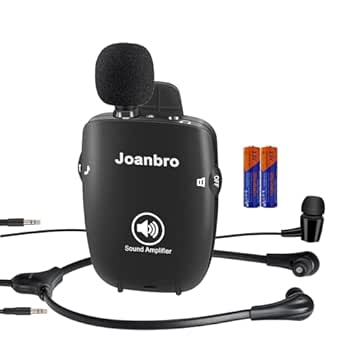
This pocket amplifier is a flexible choice for seniors who want to switch between conversations, TV listening, and outdoor use. Its three removable microphone types give it more setup options than the single removable microphone listed with the Williams Sound PockeTalker Ultra DUO. Nine volume levels and bass, normal, and treble settings also let users tailor the sound without relying on a single fixed profile. At 11 g, it is the lightest-feeling option described here, and the stated battery life is about 40 hours. The tradeoff is a reliance on two AAA batteries, which need replacing, and listening is limited to headphones or earbuds. It may suit people who value adaptability more than a rechargeable, hearing-aid-style fit.
Pros:- Three removable microphone types support different listening situations.
- Nine volume levels and three tone settings allow sound adjustment.
- Lightweight 11 g design is easy to carry.
- Approximately 40 hours of stated battery life.
Cons:- Requires two AAA batteries, so ongoing use depends on replacements.
- Listening options are limited to headphones and earbuds.
- Water resistance is not specified.
Best for: Seniors who want a lightweight amplifier with multiple microphone setups for conversations, television, and occasional outdoor listening.
Not ideal for: People who prefer a rechargeable, discreet in-ear device or cannot comfortably use headphones or earbuds.
- Power source:2 AAA batteries, included
- Microphones:3 removable types
- Headphones:Anti-dropping headphone and dual stereo earbuds
- Tone settings:Bass, normal, treble
- Volume control:9 levels
- Battery life:Approximately 40 hours
- Weight:11 g
Our verdict“Choose this model if microphone flexibility and low weight matter more than rechargeable operation or a discreet hearing-aid-style fit.”
Williams Sound Pocketalker Ultra Hearing Amplifier
The Pocketalker Ultra is a straightforward body-worn amplifier for someone who wants physical volume and tone controls rather than a small ear-worn device. It comes with headphones, an earbud, and a microphone extension, so users can choose a listening setup and place the microphone closer to a conversation. That makes it more adaptable to seated, face-to-face listening than the Nova hearing aids, which are designed to sit discreetly in the ear. The Pocketalker’s stated amplification is up to 40 dB, and its controls are intended to be simple to operate. Its compromises are the visible body-worn unit, battery dependence, and less advanced sound processing. The listing also gives a weight of 16 ounces, which is less convenient for carrying than the 11 g pocket amplifier in this roundup.
Pros:- Adjustable volume and tone controls offer direct, tactile operation.
- Includes headphones, an earbud, and a microphone extension.
- Body-worn design can keep controls accessible during listening.
- Portable format is intended for mild to moderate hearing support.
Cons:- The listed 16-ounce weight is substantially heavier than several pocket options here.
- Requires batteries for operation.
- Amplification-focused design lacks advanced sound processing and is not intended for severe hearing loss.
Best for: Seniors who prefer a body-worn device with tactile controls and want a choice of headphones, an earbud, or a microphone extension.
Not ideal for: Buyers seeking a nearly invisible device, advanced sound processing, or a lightweight pocketable unit.
- Power source:Battery powered
- Battery composition:Alkaline
- Fit type:Body-worn
- Controls:Button control
- Dimensions:3.38 in L x 2.23 in W
- Listed weight:16 ounces
- Compatible accessories:HED021 Deluxe Headphones, EAR013 Single Earbud, neckloops
Our verdict“Pick the Pocketalker Ultra if accessible physical controls and microphone placement matter more than a discreet or especially light setup.”
SuperEar SE9000HP Hearing Amplifier for Seniors, Personal Sound Amplifier
The SuperEar SE9000HP stands out for its high-medium-low frequency switch, a simple way to change the sound emphasis when one setting is not comfortable. That makes it a more focused pick for people who want basic sound tailoring than the Williams Sound Pocketalker Ultra, whose listed controls adjust volume and tone. It includes both stereo headphones and earbuds, plus a belt clip and USB cable, giving buyers options for home listening and carrying the amplifier. The product description calls it rechargeable and cites up to 40 hours of use, but the specs also list two AAA batteries; that inconsistency makes the power setup worth checking before purchase. It is also listed at 13.4 ounces, so the pocket-style name should not be taken as a guarantee of especially light carry.
Pros:- High, medium, and low frequency settings allow basic sound adjustment.
- Includes stereo headphones and earbuds.
- Up to 40 hours of battery life is stated.
- Belt clip and USB cable add carrying and connection options.
Cons:- The listing is unclear about rechargeable operation versus the two AAA batteries specified.
- Listed weight of 13.4 ounces may feel bulky for portable use.
- Amplification is limited to the product’s stated range rather than advanced hearing-aid processing.
Best for: Seniors who want a simple frequency switch and both headphone and earbud options for conversations or television.
Not ideal for: People prioritizing a clearly documented charging setup or a very lightweight amplifier for all-day carrying.
- Model:SE9000HP
- Power details:Rechargeable stated; specs also list 2 AAA batteries included
- Battery life:Up to 40 hours
- Frequency switch:High, medium, low
- Weight:13.4 ounces
- Dimensions:8.19 x 6.57 x 1.73 inches
- Included accessories:Stereo headphones, earbuds, USB cable, belt clip, owner’s manual
Our verdict“Consider the SE9000HP if a straightforward frequency switch and multiple listening accessories appeal, but verify the battery arrangement first.”
Nova Hearing Aids for Seniors and Adults with Superior Sound Quality and Noise Cancelling
Unlike the pocket amplifiers in this roundup, the Nova is an in-ear OTC hearing aid-style option for users who want sound support without carrying a separate microphone and amplifier. Its lightweight 1.4 g design, feedback suppression, and nine pairs of ear tips address fit and comfort more directly than the Williams Sound Pocketalker Ultra DUO, which uses a neck-worn setup. The charging case is listed with a 1.5-hour charge time and up to 20 hours of use per charge, making this a better match for daily wear than occasional, situational listening. It is described for mild to moderate hearing loss, not severe needs. Buyers should also expect regular charging, and the product description notes that noisy environments may still limit speech clarity. Its sweat and splash resistance is useful for active routines, but it is not stated as waterproof.
Pros:- Discreet 1.4 g in-ear design avoids a body-worn amplifier.
- Nine pairs of ear tips provide several fit options.
- Feedback suppression and noise cancellation are included.
- Sweat and splash resistance suits everyday active use.
Cons:- Requires charging for continued daily use.
- The stated fit is for mild to moderate hearing loss, not severe hearing needs.
- May be less effective in very noisy environments.
Best for: Socially active seniors with mild to moderate hearing loss who prefer discreet in-ear wear and can keep a charging case available.
Not ideal for: People with severe hearing loss, those who prefer a microphone-and-headphone amplifier, or anyone needing a device for very noisy settings.
- Use per charge:Up to 20 hours
- Charging time:1.5 hours
- Total battery life:100 hours stated
- Weight:1.4 g
- Ear tips:9 pairs; S/M/L in 3 shapes
- Water resistance:Sweat-proof and splash-proof
- Other features:Feedback suppression; charging case and anti-loss lanyard included
Our verdict“Choose Nova for discreet daily in-ear support and a varied tip selection, not for severe hearing loss or consistently noisy listening.”
Williams Sound PockeTalker Ultra DUO Sound Amplifier with Headphone & Earbud
The Pocketalker Ultra DUO is the strongest fit here for buyers who value long runtime and a familiar body-worn amplifier format. It runs on two AAA batteries and is listed for up to 100 hours of use, well beyond the approximately 40-hour claims for the SuperEar SE9000HP and the pocket amplifier with three microphone types. Its removable microphone and belt clip support conversations and TV listening without requiring an in-ear hearing-aid-style device like the Nova. The external volume and tone controls also keep adjustments accessible. There is a notable specification mismatch: the description says it reduces background noise, but the specs list noise control: none. Buyers should not assume dedicated noise-control processing. Batteries are not included, and the in-ear listening options may not suit everyone.
Pros:- Up to 100 hours of use is stated on two AAA batteries.
- Removable microphone and belt clip support flexible placement and carrying.
- External volume and tone controls are accessible during use.
- Compatible with television listening and can be used with or without hearing aids, as described.
Cons:- Two AAA batteries are required and not included.
- Noise-control information conflicts: the description mentions reduction, while the specs say none.
- In-ear listening may not be comfortable for every user.
Best for: Seniors who want a body-worn amplifier for conversations or television and prefer fewer battery changes over rechargeable in-ear wear.
Not ideal for: People who need confirmed noise-control features, dislike earbuds, or want a device with batteries included.
- Power source:2 AAA alkaline batteries, not included
- Battery life:Up to 100 hours
- Style:Neck-worn
- Controls:External volume and tone controls; button control
- Microphone:Removable
- Noise control:Listed as none in specifications
- Warranty:5 years
Our verdict“Pick the Ultra DUO for long stated battery life and accessible controls, but skip it if verified noise control is a priority.”
Eduitai Rechargeable Digital Hearing Amplifier with Noise Cancellation
The Eduitai stands out for seniors who want a small in-canal amplifier without changing disposable batteries. Its two noise reduction modes are intended to make speech easier to follow against background sound, while five volume levels offer a straightforward way to adjust loudness. Compared with the Reizen Loud Ear 110dB, which uses a separate handheld microphone and single earphone, Eduitai keeps the listening hardware close to the ear and is less conspicuous. The one-hour USB-C recharge and stated 24-hour use also suit people who prefer a regular charging routine. The tradeoff is limited fit information: the supplied details do not describe alternate tips or other fit adjustments. It also has fewer documented controls and accessories than the SuperEar SE5000.
Pros:- Two noise reduction modes are designed to reduce background sound and bring speech forward.
- Five volume levels allow basic loudness adjustment.
- USB-C charging takes one hour according to the product details.
- In-canal form is described as lightweight and discreet.
Cons:- The supplied information does not specify alternate tips or adjustable fit options.
- No app controls, streaming features, or included accessories are listed.
- Software update support is unknown.
Best for: Seniors who prefer a discreet in-ear style and can charge a small device regularly rather than replace AAA batteries.
Not ideal for: Buyers who need documented fit options, a handheld microphone for listening across a room, or detailed app-based sound adjustments.
Our verdict“Choose Eduitai if you want a discreet rechargeable in-ear amplifier with simple noise-mode and volume adjustments.”
ELEHEAR Beyond 2 Pro OTC Hearing Aids for Seniors, 39% Clearer Speech
ELEHEAR Beyond 2 Pro is the most feature-rich option here for a senior who wants speech enhancement plus Bluetooth streaming, rather than a basic amplifier for nearby sounds. VocClear 3.0 targets speech clarity, and the companion app supports self-guided hearing tests and remote professional adjustments. That gives it more fine-tuning potential than the Reizen Loud Ear 110dB or SuperEar SE5000, both of which rely on simpler physical volume controls. Bluetooth 5.3 also lets the wearer stream calls, music, and video. The IP67 rating adds protection from dust, sweat, and light rain, though it does not remove the need to follow care instructions. The central compromise is control: adjustments require a smartphone app, and there are no built-in manual controls. This model is described for mild to moderate hearing loss.
Pros:- VocClear 3.0 is designed to improve speech clarity and reduce noise.
- Bluetooth 5.3 supports streaming calls, music, and video.
- The app offers self-guided hearing tests and remote professional adjustments.
- IP67 protection is rated for dust, sweat, and light rain.
Cons:- A smartphone app is required for adjustments, which may be difficult for some users.
- There are no built-in manual controls on the devices.
- The product is specified for mild to moderate hearing loss.
Best for: Seniors with mild to moderate hearing loss who are comfortable using a smartphone app and want streaming alongside speech-focused amplification.
Not ideal for: People who want physical on-device adjustments, do not use a smartphone, or need support beyond the stated mild-to-moderate range.
Our verdict“Pick ELEHEAR if app-based fitting and Bluetooth streaming matter more to you than simple physical controls.”
Reizen Loud Ear 110dB Gain Personal Amplifier
The Reizen Loud Ear suits a different need from discreet in-ear choices such as the Eduitai: its built-in microphone can pick up sounds from up to 100 feet away, making it useful when a speaker or sound source is at a distance. The handheld unit has adjustable volume, a belt clip, and a single earphone, so it works as a simple portable listening aid rather than a Bluetooth or app-based system. Compared with the SuperEar SE5000, Reizen lists a longer stated battery life of 48 hours, but it runs on two AAA batteries rather than one AAA. Its basic approach keeps operation uncomplicated, yet it offers no listed noise reduction modes or multiple listening accessories. The single-ear listening setup may also be a poor match for people who prefer sound in both ears.
Pros:- Microphone pickup is specified for distances up to 100 feet.
- Adjustable volume provides a direct, simple control.
- Belt clip and compact dimensions support portable use.
- Stated battery life is up to 48 hours.
Cons:- Only one earphone is included, which may not suit users who prefer two-ear listening.
- It requires two AAA batteries and has no listed rechargeable option.
- The feature set is basic, with no listed noise reduction or streaming.
Best for: Seniors who want to amplify a distant speaker, television sound in the room, or other sounds picked up by a handheld microphone.
Not ideal for: People seeking discreet all-day in-ear wear, two-ear listening, rechargeable power, or advanced noise and speech settings.
Our verdict“Choose the Reizen Loud Ear if distance pickup matters more than discreet wear, rechargeable power, or advanced sound controls.”
SuperEar SE5000 Personal Sound Amplifier with Headphones and Earbuds
The SuperEar SE5000 earns its place through choice of listening style: it includes both stereo headphones and stereo earbuds, so a senior can select the fit that feels more comfortable for a particular activity. Its swivel microphone and adjustable volume wheel make it a straightforward handheld amplifier for conversations and ambient listening. Unlike the Reizen Loud Ear 110dB, which includes only a single earphone and emphasizes long-distance pickup, the SE5000 supplies two listening options and up to 50+ dB of amplification. It also offers up to 30 hours of use from one AAA battery. That simplicity has limits: it does not connect directly or wirelessly to a television, so TV listening depends on picking up room sound rather than receiving audio from the set. It is less discreet than the Eduitai in-canal model.
Pros:- Includes both stereo headphones and stereo earbuds.
- Swivel microphone and adjustable volume wheel offer simple physical operation.
- Amplification is listed as up to 50+ dB.
- Portable handheld design includes a stainless steel belt clip.
Cons:- Does not connect directly or wirelessly to a television.
- Requires a AAA battery rather than rechargeable power.
- Handheld microphone and separate listening accessories are less discreet than an in-ear amplifier.
Best for: Seniors who want a portable amplifier with both headphone and earbud options for conversations and general ambient listening.
Not ideal for: People who need direct TV audio connection, discreet in-ear wear, or a rechargeable device instead of AAA power.
Our verdict“Pick the SuperEar SE5000 if you value included headphone and earbud choices and can listen without a direct TV connection.”
Blue Deer Bluetooth Bone Conduction Hearing Amplifiers for Seniors Open Ear
Blue Deer takes a more open-wear approach than the Eduitai: bone conduction leaves the ears uncovered, which may appeal to seniors who dislike inserting earbuds or in-canal devices. Bluetooth 5.3 adds wireless audio, while button and app controls provide two ways to adjust the device. The listed independent volume control for each ear is useful for people who need different loudness levels on either side. Compared with ELEHEAR Beyond 2 Pro, Blue Deer offers open-ear bone conduction rather than behind-the-ear aids with app-based hearing tests and remote professional adjustments; the product details do not list that kind of fitting support for Blue Deer. Its up to eight hours of battery life is shorter than the stated runtimes of the Eduitai and SuperEar SE5000. IPX5 protection covers light splashes and sweat, not swimming or submersion.
Pros:- Open-ear bone-conduction design avoids inserting an earbud into the ear canal.
- Bluetooth 5.3 supports wireless connectivity.
- Independent volume control is listed for each ear.
- IPX5 water resistance is suited to light splashes and sweat.
Cons:- Battery life is listed as up to eight hours and may vary with use.
- IPX5 does not make the device suitable for swimming or submersion.
- The supplied product details do not list professional fitting adjustments or hearing-test support.
Best for: Seniors who dislike in-ear devices and want open-ear bone-conduction wear with Bluetooth and independent volume adjustment.
Not ideal for: People who need a full-day runtime beyond the stated eight hours, swimming protection, or documented professional fitting support.
Our verdict“Choose Blue Deer if open-ear comfort and Bluetooth matter more than longer battery life or professional fitting features.”
Jabra Enhance Select M2 Swift FDA-Cleared Self-Fitting Hearing Aids, Sand
For seniors who want a wearable hearing aid rather than a pocket amplifier, the Jabra Enhance Select M2 Swift offers the most connected approach in this group. Its app-based self-fitting lets users adjust sound to their needs, while automatic environmental adjustments aim to make speech clearer as surroundings change. Bluetooth streaming and hands-free calls also make it more versatile for phone and media use than the simpler SuperEar Plus SE7500, which relies on a separate listening accessory and manual volume control. The tradeoff is greater setup dependence: app controls require a compatible Apple or Android device, and the product data does not state charging time. Its rechargeable design avoids carrying AAA batteries, though actual runtime can vary with use. This is a hearing-aid-style choice, not a basic amplifier for occasional listening.
Pros:- App-based self-fitting and sound controls allow personal adjustments
- Automatically adjusts volume to help clarify speech in changing environments
- Bluetooth streaming and hands-free calling add phone and media use
- Lightweight design with IP68 water resistance
Cons:- Setup and app controls require a compatible Apple or Android device
- Battery runtime varies with use
- Charging time is not specified in the product data
Best for: Seniors comfortable using a smartphone who want app-based sound adjustment, hands-free calls, and a discreet wearable option.
Not ideal for: People who do not use a compatible Apple or Android device, or who want a simple, low-setup amplifier for occasional conversations.
- FDA status:FDA-cleared self-fitting hearing aids
- Color:Sand
- Weight:2.12 grams per hearing aid
- Water resistance:IP68
- Listening time:Over 24 hours per charge
- Portable charger capacity:Up to 96 hours of on-the-go power
- Connectivity:Bluetooth streaming, Bluetooth LE Audio, and Auracast
- Compatibility:Apple and Android devices
- Warranty and protection:1-year warranty and 1-year loss and damage protection
Our verdict“Choose the Jabra if you want a connected, self-fitting hearing aid and are comfortable managing settings through a smartphone.”
SuperEar Plus SE7500 Personal Sound Amplifier
The SuperEar Plus SE7500 is a practical pick for someone who prefers a straightforward amplifier and wants both earbuds and headphones in the box. Its adjustable volume and microphone designed to minimize handling noise suit TV listening and nearby conversation without app setup. Compared with the Jabra Enhance Select M2 Swift, it is less connected and does not offer self-fitting or Bluetooth streaming, but it uses replaceable AAA batteries and lists up to 80 hours of battery life. That can appeal to a user who would rather swap batteries than manage a rechargeable hearing aid and charging case. The included belt-clip case also makes it easier to carry than a stationary listening setup. Its key limitation is the simpler amplification approach: the product data does not describe automatic speech adjustment or background-noise reduction.
Pros:- Includes both earbuds and headphones for different listening preferences
- Up to 80 hours of battery life with automatic shut-off
- Adjustable volume control keeps operation simple
- Carry case with belt clip supports portable use
Cons:- Requires two AAA batteries rather than a rechargeable battery
- No Bluetooth streaming or app-based sound personalization is specified
- Product data does not describe background-noise reduction
Best for: Seniors who want a portable, easy-to-operate amplifier with a choice of earbuds or headphones and long stated battery life.
Not ideal for: Buyers seeking rechargeable convenience, Bluetooth phone features, or automatic sound adjustment for changing environments.
- Model:SE7500
- Ambient sound gain:Up to 50+ dB
- Battery life:Up to 80 hours
- Batteries:Two AAA batteries included
- Controls:Adjustable volume control
- Features:Automatic shut-off; microphone designed to minimize carry noise
- Included accessories:Earbuds, headphones, carry case with belt clip, and owner’s manual
- Compatibility:Disposable ear pad covers and SuperEar extension cable
Our verdict“Pick the SE7500 if you value included listening options and replaceable batteries over smartphone features and automatic sound processing.”
Williams Sound Pocketalker 2.0 Hearing Amplifier for Seniors
The Williams Sound Pocketalker 2.0 suits seniors who want uncomplicated amplification for a nearby speaker rather than a phone-connected hearing device. Its button controls and simple setup reduce the learning curve compared with the Jabra Enhance Select M2 Swift, whose app-based fitting and Bluetooth features offer more flexibility but require a compatible smartphone. The Pocketalker’s adjustable volume and tone controls give users a way to tailor listening without app menus, and its lightweight body is easy to carry. Its stated use is best suited to one-on-one or small-group conversation; it is not the stronger fit for broad listening needs across changing environments. Unlike the SuperEar Plus SE7500, the supplied product details do not list headphones, a carry case, or long battery-life figures, so buyers should check the intended listening setup and plan for AAA battery replacement.
Pros:- Simple setup and button controls are approachable for seniors
- Adjustable volume and tone allow basic sound personalization
- Lightweight 0.09 kg body is portable
- Designed to amplify nearby sounds while reducing background noise
Cons:- Requires two AAA batteries
- Best suited to one-on-one or small-group listening rather than wider coverage
- Sound quality may vary with the listening environment
Best for: Seniors who want a lightweight, button-controlled amplifier for one-to-one conversations and do not want app-based setup.
Not ideal for: People who need broad group coverage, smartphone streaming, or a clearly stated long battery runtime.
- Batteries:Two AAA batteries included
- Control type:Button
- Material:ABS/polycarbonate plastic
- Weight:0.09 kg
- Sound sensitivity:104 dB
- Features:In-ear use, noise control, sound isolation, and folding
- Compatible devices:Devices with a 3.5 mm audio jack
Our verdict“Choose the Pocketalker 2.0 for simple, portable conversation support when app features and larger-group listening are not priorities.”
Reizen Loud Ear 120dB Gain Personal Amplifier
The Reizen Loud Ear is the distance-focused choice here: its built-in microphone is described as picking up sound from as far as 100 feet, and the product lists 120 dB audio sensitivity. That makes it a different kind of option from the conversation-focused Williams Sound Pocketalker 2.0, which is better framed for nearby, small-group listening. A belt clip and stated 48-hour battery life support portable use without holding the device continuously. The tradeoff is limited sound control: the supplied details list no noise control, so amplification may also raise unwanted background sound. It uses a right-ear in-ear fit, which may not suit people who dislike an earpiece or need another wearing style. Compared with the Jabra, it also lacks app personalization and Bluetooth features, favoring straightforward gain over connected functionality.
Pros:- Product data lists 120 dB audio sensitivity
- Built-in microphone is described as picking up sound from up to 100 feet away
- Up to 48 hours of battery life
- Belt clip and compact body support portable use
Cons:- No noise-control feature is specified, so surrounding sounds may also be amplified
- Right-ear in-ear fit may not work for users who prefer headphones or another wearing style
- Offers volume control but no app-based sound personalization or Bluetooth features
Best for: Listeners who want a belt-clipped amplifier for hearing a speaker at a distance and are comfortable with a right-ear in-ear earpiece.
Not ideal for: Seniors who need background-noise management, a different fit style, or app-based customization for varied listening settings.
- Power source:Battery powered
- Audio sensitivity:120 dB
- Microphone:Built-in
- Fit type:In-ear, right ear
- Battery life:Up to 48 hours
- Dimensions:2.5 in H × 1.75 in L × 0.75 in W
- Weight:1.76 ounces
- Noise control:None
- Strap type:Belt clip
Our verdict“Choose the Reizen Loud Ear for distance-oriented amplification and skip it if background-noise control or a flexible fit matters more.”

How We Picked
I compared these 14 products by how well their format matches common senior listening needs: following one nearby speaker, hearing a television, or seeking more customized everyday support. I gave weight to ease of controls and setup, wearing and listening options, power and maintenance routines, and whether listed features appear suited to the product’s intended use. I also separated personal sound amplifiers from OTC or self-fitting hearing aids, since they are not interchangeable categories and can involve different expectations for fit and adjustment.
The ranking favors clear use cases, practical operation, and useful flexibility over headline amplification figures alone. Pocketalker Ultra ranks ahead of basic amplifiers for its focused, approachable role; the DUO earns attention for added listening accessories, while simpler SuperEar and Reizen models remain relevant for buyers who want a direct amplifier format. Rechargeable and noise-reduction models may suit particular routines, and the Jabra ranks as a premium hearing-aid option rather than a like-for-like pocket amplifier. Product names and descriptions do not establish medical performance; persistent or worsening hearing difficulty calls for a hearing evaluation.
Factors to Consider When Choosing Personal Sound Amplifiers For Seniors
Before choosing, decide what kind of listening problem you want to solve and how much adjustment the user is comfortable managing. The biggest category mistake is expecting every personal amplifier to work like a hearing aid.
Match the Device to the Listening Situation
Start by identifying when hearing is hardest: one-on-one conversation, television, group settings, or sound throughout the day. A pocket amplifier can be useful when the listener wants to direct a microphone toward one speaker, but that approach may be awkward when several people are talking. A hearing-aid-style product is intended for a different pattern of use and may involve fitting or app adjustments. Avoid buying by amplification number alone; louder output does not necessarily make speech clearer. If the difficulty changes sharply by setting, a device with adjustable listening options may be more practical than a fixed, simple amplifier.
Know the Difference Between an Amplifier and a Hearing Aid
Personal sound amplifiers make sounds louder, while hearing aids are designed to address hearing loss with more targeted adjustment. These product categories should not be treated as substitutes, even when listings use similar language. A basic amplifier may fit occasional television or conversation use, but it may not provide the personalized sound shaping a person needs across settings. Self-fitting and OTC hearing aids can offer more adjustment, though they may require time, dexterity, and comfort with setup. If hearing loss is new, uneven between ears, or accompanied by pain or ringing, seek professional guidance rather than relying on amplification alone.
Prioritize Controls the User Can Manage
Small dials, tiny buttons, and multi-step pairing can turn a capable device into one that stays in a drawer. Consider the user’s vision, hand strength, memory, and comfort with phones before choosing a model with app controls or multiple modes. A pocket unit with a simple control scheme may be easier to share or adjust, while a self-fitting product may reward someone who wants finer control. Check whether the controls can be operated without removing the device or asking for help. When possible, let the intended user handle the controls before committing.
Choose a Wearing Style That Fits Daily Life
Headphones, earbuds, open-ear designs, and bone-conduction styles each change comfort, awareness of surroundings, and how sound reaches the listener. A headset can feel straightforward but may be uncomfortable with glasses or during long sessions. An earbud can be less conspicuous, though some users dislike anything inside the ear. Open-ear and bone-conduction designs may appeal to people who want less ear coverage, but they are not automatically suitable for every hearing profile. Think about where the device will be worn, whether the user needs to hear other sounds nearby, and how easy it is to put on independently.
Plan for Power, Cleaning, and Storage
Battery type and charging routine affect whether a device is ready when needed. Rechargeable models avoid routine battery replacement but require regular charging and a dependable place to keep the charger; replaceable batteries can suit users who prefer quick swaps. Ear-contact parts and microphones also need basic care, especially when devices are used often or stored in a pocket. Ask whether replacement accessories and batteries are readily available before purchase. A labeled storage spot and a simple charging habit can prevent more inconvenience than an extra feature can solve.
Treat Noise Features and Connectivity as Tradeoffs
Noise cancellation, digital processing, Bluetooth, and multiple listening modes sound appealing, but their value depends on where and how the device is used. Background-noise reduction may help in some situations without removing every distracting sound or making speech clear in a crowded room. Bluetooth can add convenience for compatible phones or media, yet pairing and app maintenance may be unwelcome for someone seeking a basic amplifier. More settings can improve flexibility but also create more opportunities for confusion. Choose the simplest feature set that solves the actual listening problem, and pay more only when the added control or connectivity will be used.
Frequently Asked Questions
Should I choose a personal sound amplifier or an OTC hearing aid?
Choose a personal amplifier when the main goal is making nearby sound louder for a specific activity, such as conversation or television. Consider an OTC hearing aid when the user wants a device designed for hearing-loss support and is comfortable with fitting or adjustment steps. The product names alone do not confirm that a device suits a particular hearing profile. A hearing professional can help distinguish hearing loss from other causes of difficulty and advise on suitable options. Sudden changes, one-sided difficulty, pain, or dizziness warrant medical attention rather than a trial-and-error purchase.
Will a personal sound amplifier help in restaurants or group conversations?
It may make sound louder, but a basic amplifier cannot guarantee that speech will stand out from competing voices and background noise. A directional or focused listening setup may work better when the user can aim toward one speaker than when several people are talking at once. Noise-reduction features can help in some conditions, but the result depends on the room, device, and listener. If group conversation is the main challenge, look for adjustable listening modes and consider a professional hearing assessment. Try the device in the intended setting when a return option is available.
Are higher amplification figures a reliable way to compare models?
No. A larger gain figure does not by itself show that speech will sound clearer or more comfortable. Fit, microphone placement, output control, and the listener’s hearing needs all affect the result. Excessive volume can be uncomfortable, so users should follow the manufacturer’s instructions and begin at a modest setting. Compare operating style and intended use alongside any published amplification figures. If the sound is harsh, distorted, or uncomfortable, stop using the device and seek guidance.
Which style is easiest for someone who does not use a smartphone?
A basic pocket amplifier with physical controls is often a more approachable starting point than an app-dependent device. Check how the volume is changed, whether the microphone needs positioning, and how batteries or charging are handled. A model with several modes may still work well if the controls are clearly labeled and the user can practice with support. Self-fitting hearing aids can offer more adjustment, but setup may be less convenient without a compatible phone or assistance. The intended user’s ability to operate the device matters more than the number of features.
When should someone stop using an amplifier and get a hearing evaluation?
Arrange an evaluation if hearing difficulty is persistent, worsening, interfering with daily life, or not helped by reasonable device adjustments. Seek prompt medical care for sudden hearing loss, especially when it affects one ear, or when it comes with pain, dizziness, or drainage. A clinician can check for treatable causes and help identify whether hearing aids or another approach may be appropriate. Do not turn an amplifier up to compensate for poor clarity or discomfort. An evaluation can also help set realistic expectations before spending time on a device.
Conclusion
For most buyers seeking a straightforward, focused personal amplifier, I recommend the Williams Sound Pocketalker Ultra as the best overall. The SuperEar SE9000HP is my best value-style choice for someone who wants a simpler amplifier approach, while the Jabra Enhance Select M2 Swift is the best premium pick for buyers prepared to explore self-fitting hearing aids and their setup. Beginners who prefer a direct, activity-focused device should start with a basic pocket-style option such as the Pocketalker; those who value accessory choice can look at the Pocketalker Ultra DUO. For specific preferences, consider rechargeable models for a charging routine, open-ear or bone-conduction styles for fit preferences, and Reizen models for buyers comparing direct amplification options. Choose based on the user’s listening situation and ability to operate the device, not a single feature or amplification figure.
Halloween Picks
halloween
As an affiliate, we earn on qualifying purchases.