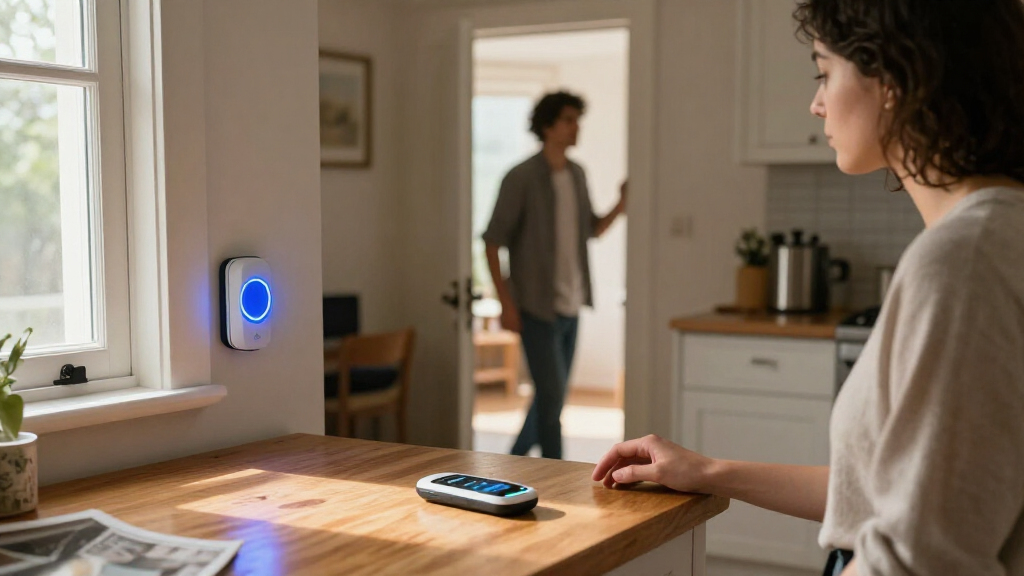
Wireless doorbell alert systems for deaf users make visitors easier to notice through flashing lights, portable receivers, or multiple alerts around the home. I name the Bellman Wireless Alert System with Flashing Receiver best overall for its dedicated visual-alert focus, while the Qepi Tiuo kit stands out for covering multiple rooms and the CallToU system for a straightforward two-receiver setup. The main tradeoffs are how many rooms need coverage, whether a receiver must travel with you, and how much control you want over light and sound settings. A larger kit can improve coverage but add setup complexity, while a simpler set may leave parts of the home uncovered. Continue reading for the full breakdown and guidance on choosing an alert system that fits your home.

Get everyday helpers delivered free with Prime
- Fast, free delivery on millions of items
- Prime Video, Amazon Music and more included
- Member-only deals all year
Key Takeaways
- Dedicated alert design separates the Bellman picks. The Bellman Wireless Alert System with Flashing Receiver and the portable-receiver model are the lineup’s clearest choices for buyers prioritizing an alert system over a conventional doorbell with a light.
- Receiver count can matter more than headline range. The Qepi Tiuo kit includes three transmitters and five receivers, making it the standout for spreading alerts across multiple rooms, though a large setup may be unnecessary in a small home.
- Two-receiver kits offer a simpler starting point. The CallToU and one-transmitter, two-receiver options suit buyers who need basic coverage without managing a larger multi-button system.
- Color choices and volume settings are not the same as a strong visual alert. The seven-color and four-volume-level models offer personalization, but buyers should check whether the light can be seen from their usual rooms and at a distance.
- Portable receivers solve a different problem from plug-in coverage. Bellman’s portable option favors mobility, while multi-receiver kits are better suited to keeping alert points in fixed locations around the home.
| Wireless Flashing Doorbell Kit with 2 Transmitters and 3 Receivers |  | Best for Multi-Room Visual Alerts | Brand: HSYIJIA | Model: A201 | Transmitters: 2 | VIEW LATEST PRICE | See Our Full Breakdown |
| Bellman Wireless Alert System with Flashing Receiver |  | Best for Multiple Alert Sources | Brand: Bellman & Symfon | Power source: Battery powered | Battery type: Lithium-ion | VIEW LATEST PRICE | See Our Full Breakdown |
| Bellman & Symfon Wireless Doorbell Alert System with Portable Receiver |  | Best for a Portable Personal Alert | Components: Door transmitter and portable receiver | Alert modes: 90 dB audible alarm and blinking LED lights | Wireless range: Up to 260 feet in open spaces | VIEW LATEST PRICE | See Our Full Breakdown |
| FUHONGRUI Wireless Doorbell with Flashing Light, 2 Buttons and 3 Receivers |  | Best for Plug-In Multi-Room Coverage | Buttons: 2 | Receivers: 3 plug-in receivers | Ringtones: 36 | VIEW LATEST PRICE | See Our Full Breakdown |
| Qepi Tiuo Wireless Flashing Doorbell with 3 Transmitters and 5 Receivers |  | Best for Large Homes with Multiple Entry Points | Model: B209 | Transmitters: 3 | Receivers: 5 | VIEW LATEST PRICE | See Our Full Breakdown |
| Wireless Doorbell with Flashing Light, 7 Light Colors, and 4 Volume Levels |  | Best for Simple Visual Alerts | Wireless range: 600 feet | Light colors: 7 | Volume levels: 4 | VIEW LATEST PRICE | See Our Full Breakdown |
| Jsieem Wireless Doorbell with Touch Button, 1200-Foot Range, 36 Melodies, and LED Indicator |  | Best for Long Open-Area Reach | Brand: Jsieem | Model: D-157 | Maximum range: 1,200 feet in open areas | VIEW LATEST PRICE | See Our Full Breakdown |
| Wireless Doorbell with 7-Color Light Alerts and 4 Volume Levels |  | Best for Flexible Battery-Powered Placement | Wireless range: 600 feet | Light colors: 7 | Volume levels: 4 | VIEW LATEST PRICE | See Our Full Breakdown |
| Wireless Flashing Doorbell with 1 Transmitter and 2 Receivers |  | Best for Two-Room Visual Coverage | Included components: 1 transmitter and 2 receivers | Wireless range: 600 feet | Light colors: 7 | VIEW LATEST PRICE | See Our Full Breakdown |
| CallToU Wireless Doorbell for Hearing-Impaired Users, 1 Button and 2 Receivers |  | Best Overall for Multimode Alerts | Button: 1 outdoor button, IP65-rated | Receivers: 2 portable, battery-operated receivers | Receiver batteries: 3 AAA batteries per receiver | VIEW LATEST PRICE | See Our Full Breakdown |
| Wireless Doorbell with Flashing Light, 1 Button and 3 Plug-In Receivers |  | Best for Multi-Room Coverage | Button and receivers: 1 button and 3 plug-in receivers | Wireless range: Up to 1,200 feet in open areas | Doorbell modes: Ringing, flashing, or flashing with ringing | VIEW LATEST PRICE | See Our Full Breakdown |
| wireless doorbell alert systems for deaf user | Volume levels | Wireless range | Model |
|---|---|---|---|
| Wireless Flashing Doorbell Kit | 4 | Up to 600 feet | A201 |
| Bellman Wireless Alert System | — | Up to 260 feet | — |
| Bellman & Symfon Wireless Door | — | Up to 260 feet in open spaces | — |
| FUHONGRUI Wireless Doorbell wi | 4, including mute | — | — |
| Qepi Tiuo Wireless Flashing Do | 4 | Up to 600 feet | B209 |
| Wireless Doorbell with Flashin | 4 | 600 feet | B209 |
| Jsieem Wireless Doorbell with | 4, including mute | — | D-157 |
| Wireless Doorbell with 7-Color | 4 | 600 feet | — |
| Wireless Flashing Doorbell wit | 4 | 600 feet | B209 |
| CallToU Wireless Doorbell for | 5, from mute to 110 dB | Up to 1,000 feet in open, unobstructed areas | — |
| Wireless Doorbell with Flashin | 4, including silent | Up to 1,200 feet in open areas | D157-1T3 3.0 |
More Details on Our Top Picks
Wireless Flashing Doorbell Kit with 2 Transmitters and 3 Receivers
For a household that needs a doorbell flash in several rooms, this kit’s three receivers and two transmitters offer a practical balance of coverage and shared access. Its seven light colors give users a choice of visual signal, while four volume levels can help household members who also benefit from sound. Compared with the Qepi Tiuo Wireless Flashing Doorbell, it includes fewer transmitters and receivers, but may suit a smaller home without as many call points. The stated 600-foot range is a manufacturer figure, and walls or other obstacles may reduce it. The main tradeoff is power: the description calls for 11 AA batteries and does not say they are included, so factor in battery sourcing and upkeep before choosing this over a plug-in receiver system.
Pros:- Three receivers can place alerts in multiple rooms.
- Two transmitters support separate door or call locations.
- Seven light colors and four volume levels allow alert customization.
- Adhesive and screw mounting options suit different installation surfaces.
Cons:- Requires 11 AA batteries, and the description does not state that they are included.
- The 600-foot range may be shorter indoors when walls and obstacles intervene.
Best for: Households that want visual alerts in several rooms and need two door transmitters for separate entrances.
Not ideal for: Buyers who want plug-in receivers, a stated rechargeable option, or a low-maintenance setup; this kit calls for 11 AA batteries.
- Brand:HSYIJIA
- Model:A201
- Transmitters:2
- Receivers:3
- Light colors:7
- Volume levels:4
- Wireless range:Up to 600 feet
- Battery requirement:11 AA batteries
- Mounting:Adhesive or screws
Our verdict“Choose this kit if you want two call points and visual alerts in several rooms and are comfortable managing its battery requirements.”
Bellman Wireless Alert System with Flashing Receiver
This is the most versatile choice here for someone who needs more than a doorbell notification: the receiver can provide flashing LED alerts for visitors, caregiver assistance, and incoming landline calls. That broader role separates it from the Bellman & Symfon Wireless Doorbell Alert System with Portable Receiver, which is described as a doorbell-focused kit with an audible alarm and blinking lights. The Bellman Wireless Alert System can also expand with compatible Visit products, which may help build a wider alert setup over time. Its 260-foot stated range is shorter than the 600-foot figures listed for the HSYIJIA and Qepi Tiuo kits, so it may be less suitable for larger properties. Landline alerts require connecting the included cable and adapter, and battery life is not specified.
Pros:- Flashing LED alerts can serve door, phone, and caregiver-call needs.
- Includes a phone cable and adapter for landline integration.
- Can expand with compatible Bellman and Symfon Visit products.
- Battery-powered receiver avoids dependence on a wall outlet.
Cons:- Its stated range of up to 260 feet is shorter than the 600-foot claims for the HSYIJIA and Qepi Tiuo kits.
- Landline alerts require connecting the included cable and adapter.
- The product information does not specify battery life.
Best for: Deaf or hard-of-hearing users who want a visual door alert alongside landline-call and caregiver-assistance alerts.
Not ideal for: Buyers seeking the longest stated wireless range, a simple doorbell-only kit, or clear information about battery life.
- Brand:Bellman & Symfon
- Power source:Battery powered
- Battery type:Lithium-ion
- Wireless range:Up to 260 feet
- Alert type:Flashing LED lights
- Phone integration:Includes phone cable and adapter
- Mounting:Wall mount
- Weight:13.3 ounces
Our verdict“Pick this system if you need one visual alert receiver to cover doorbells, landline calls, and caregiver assistance rather than just visitors.”
Bellman & Symfon Wireless Doorbell Alert System with Portable Receiver
Among these picks, this Bellman & Symfon system is the clearest fit for someone who wants to carry an alert from room to room rather than install receivers throughout the home. Its portable, battery-powered receiver combines blinking LEDs with a stated 90 dB alarm, giving users both visual and audible notification options. That differs from the HSYIJIA kit, which supplies three receivers for fixed placement but requires 11 AA batteries across the kit. This model’s stated 260-foot range applies to open spaces; walls and the layout of a home can limit practical coverage. The sound option may be useful to other household members, but the system is not a silent visual-only alert. Receiver batteries are required, and the supplied mounting materials do not remove the need to place the transmitter appropriately.
Pros:- Portable receiver can follow the user from room to room.
- Combines blinking LED alerts with a stated 90 dB audible alarm.
- Designed to work with most existing doorbell systems.
- Includes mounting screws, self-adhesive tape, and a user manual.
Cons:- Receiver batteries are required.
- The 260-foot range is stated for open spaces and may not reflect indoor performance.
- The audible alarm may not suit users seeking a visual-only system.
Best for: People who move around the home and want to carry a receiver that provides both flashing lights and a loud audible alert.
Not ideal for: Buyers who need several fixed receivers, a visual-only alert, or a range figure tested for obstructed indoor spaces.
- Components:Door transmitter and portable receiver
- Alert modes:90 dB audible alarm and blinking LED lights
- Wireless range:Up to 260 feet in open spaces
- Receiver power:Batteries required
- Installation:Mounting screws and self-adhesive tape included
- Compatibility:Designed to work with most existing doorbell systems
Our verdict“Choose this Bellman & Symfon model if carrying one dual-mode receiver matters more than having several fixed alert points.”
FUHONGRUI Wireless Doorbell with Flashing Light, 2 Buttons and 3 Receivers
FUHONGRUI stands out for people who want three plug-in receivers and do not want to manage receiver batteries. Two buttons can cover separate entry points, while flashing lights provide a visual cue for deaf and hard-of-hearing household members. Its four volume settings include mute, so the system can alert visually without adding sound; the 36 ringtone options matter more to hearing household members than to a visual-alert user. Compared with the HSYIJIA Wireless Flashing Doorbell Kit, this one trades battery-powered receivers for plug-in units and lists a longer range of up to 1,200 feet in open areas. That figure is not an indoor guarantee. Receivers need outlets, which can restrict placement, and the stated range may be reduced by walls or other obstacles.
Pros:- Three plug-in receivers can provide visual alerts in multiple rooms.
- Two buttons support separate entrances.
- Four volume settings include mute for a silent alert mode.
- Buttons are described as waterproof and dustproof and can be mounted with screws or double-sided tape.
Cons:- Receivers must be plugged into outlets, limiting placement and portability.
- The stated 1,200-foot range applies to open areas, not necessarily indoor use.
- The 36 ringtone choices offer limited direct benefit to users relying on flashing alerts.
Best for: Households with outlets in the rooms where alerts are needed, especially those covering two entrances and preferring plug-in receivers.
Not ideal for: People who need portable or battery-powered receivers, or whose preferred alert locations lack convenient outlets.
- Buttons:2
- Receivers:3 plug-in receivers
- Ringtones:36
- Volume levels:4, including mute
- Stated range:Up to 1,200 feet in open areas
- Button batteries:2 CR2032 batteries included
- Button protection:Described as waterproof and dustproof
- Warranty:1 year
Our verdict“Choose FUHONGRUI if you want multiple fixed visual alerts, two door buttons, and no receiver batteries to maintain.”
Qepi Tiuo Wireless Flashing Doorbell with 3 Transmitters and 5 Receivers
For a home with several entrances and rooms to cover, Qepi Tiuo offers the broadest supplied hardware in this group: three transmitters and five receivers. That setup can place visual alerts in more locations than the HSYIJIA kit, which includes two transmitters and three receivers. Seven-color flashing lights and four volume levels give households options for making alerts easier to distinguish, while adhesive or screw mounting supports different surfaces. The stated 600-foot range is useful as a reference, but indoor walls can reduce coverage. The main limitation is outdoor placement: the product is listed for indoor use and described as not waterproof, so transmitters should not be left exposed to weather. Its stated battery life of three to five months also means regular battery replacement may be part of ownership.
Pros:- Three transmitters can cover multiple indoor entry points.
- Five receivers provide more alert locations than the HSYIJIA kit.
- Seven light colors and four volume levels offer alert customization.
- Adhesive or screw mounting supports flexible installation.
Cons:- Not waterproof and listed for indoor use.
- Battery life is stated as three to five months, requiring periodic replacement.
- The 600-foot range is a stated figure and may be reduced by indoor obstacles.
Best for: Households with several indoor entry points that want visual alerts in many rooms and can maintain battery-powered units.
Not ideal for: Buyers who need weatherproof outdoor transmitters, plug-in receivers, or less frequent battery replacement.
- Model:B209
- Transmitters:3
- Receivers:5
- Wireless range:Up to 600 feet
- Light colors:7
- Volume levels:4
- Power source:AA batteries
- Stated battery life:3–5 months
- Usage:Indoor
Our verdict“Choose Qepi Tiuo if you need the most transmitters and receivers in this batch for a large indoor setup and can accept recurring battery changes.”
Wireless Doorbell with Flashing Light, 7 Light Colors, and 4 Volume Levels
The B209 pairs a flashing light with adjustable sound, giving deaf and hard-of-hearing users a visual cue without requiring multiple receivers or a more elaborate setup. Its seven light colors offer variety, while four volume levels let household members set the sound to suit their needs. Compared with the CallToU Wireless Doorbell for Hearing-Impaired Users, this model has no listed vibration alert or second receiver, so it offers fewer ways to catch a ring around the home. Its stated 600-foot range may suit a straightforward layout, but the product details do not specify its power source or battery life. I would choose it for a basic light-and-sound alert, not for a buyer who needs clear power-planning details or alerts distributed across rooms.
Pros:- Flashing light provides a visual alert alongside sound.
- Seven light colors offer options for distinguishing or personalizing alerts.
- Four volume levels allow sound adjustment.
- Can also be used as a pager.
Cons:- Power source and battery-life details are not provided.
- No vibration alert or multiple-receiver setup is listed.
Best for: Deaf or hard-of-hearing individuals who want a basic single-receiver doorbell with a visual alert and adjustable sound.
Not ideal for: Households needing vibration alerts, multiple receivers, or confirmed power and battery-life details before buying.
- Wireless range:600 feet
- Light colors:7
- Volume levels:4
- Additional use:Pager
- Model:B209
- Color:Black
- Dimensions:3.07 x 2.95 x 0.98 inches
- Item weight:7.4 ounces
Our verdict“Choose this B209 for a simple multicolor light-and-sound alert, but pick the CallToU if vibration or two portable receivers matter more.”
Jsieem Wireless Doorbell with Touch Button, 1200-Foot Range, 36 Melodies, and LED Indicator
For a home or property where the button and receiver may be far apart, the Jsieem D-157 has the longest stated reach among these five picks: up to 1,200 feet in open areas. Its LED indicator adds a visual cue, and the receiver can be muted when sound is not wanted. That makes it more flexible than the B209 Wireless Doorbell, which lists a 600-foot range and multicolor flashing but does not provide power details. The tradeoff is that Jsieem lists an LED indicator, not the more prominent seven-color flashing alerts offered by the B209 or the CallToU vibration option. The transmitter is waterproof and dustproof, but its CR2 battery needs replacement, and walls, metal, and electronics can cut into the stated range. I would favor it for reach and an outdoor button, rather than for strong visual or tactile signaling.
Pros:- Stated range reaches up to 1,200 feet in open areas.
- LED indicator adds a visual alert alongside the ringtone.
- Four volume settings include mute.
- Waterproof, dustproof transmitter suits outdoor doorframe mounting.
Cons:- The transmitter requires a CR2 battery.
- The listed LED indicator is less explicitly suited to visual alerting than multicolor flashing systems.
- Range can drop around obstacles, metal, and electronic devices.
Best for: Buyers with a long, relatively open distance between the door and receiver who want a weather-resistant button and a mute setting.
Not ideal for: Users who need a prominent flashing-light or vibration alert, or households where walls and metal obstacles make long-range claims less useful.
- Brand:Jsieem
- Model:D-157
- Maximum range:1,200 feet in open areas
- Melodies:36
- Volume levels:4, including mute
- Audible output:110 dB
- Transmitter battery:1 CR2 battery, included
- Included components:1 receiver and 1 touch-button transmitter
Our verdict“Choose Jsieem when open-area reach and a weather-resistant touch button lead your priorities, but choose the B209 or CallToU for more pronounced visual or tactile alerts.”
Wireless Doorbell with 7-Color Light Alerts and 4 Volume Levels
This model combines a ringtone with seven-color flashing alerts, and its receiver and transmitter can be mounted with adhesive or screws. That flexibility makes it a practical pick when drilling is unwanted but a more secure fit may later be preferred. Unlike the Jsieem D-157, which uses a plug-in receiver, this doorbell runs on four AA batteries total; that allows placement away from an outlet, at the cost of recurring battery changes. Its stated battery life is three to five months, so buyers should plan for upkeep rather than treating it as a set-and-forget system. The 600-foot range is shorter than Jsieem’s open-area claim, and it has no listed second receiver or vibration alert like the CallToU. I would choose it for a flexible, light-and-sound setup in one area, not for whole-home coverage.
Pros:- Combines ringtone alerts with seven-color flashing lights.
- Four volume levels allow sound adjustment.
- Adhesive or screw mounting accommodates different installation preferences.
- Battery operation allows placement where an outlet is not convenient.
Cons:- Uses four AA batteries across the transmitter and receiver.
- Listed battery life of three to five months means periodic replacement.
- Only one receiver is described, limiting alerts across multiple rooms.
Best for: Renters or homeowners who need a battery-powered visual-and-audible alert and want a choice between adhesive and screw mounting.
Not ideal for: People who want a plug-in receiver, minimal battery upkeep, vibration alerts, or receivers placed in several rooms.
- Wireless range:600 feet
- Light colors:7
- Volume levels:4
- Battery requirement:4 AA batteries total: 3 for receiver and 1 for transmitter
- Listed battery life:3–5 months
- Installation:Double-sided adhesive tape or screws
- Color:White
Our verdict“Pick this model for flexible battery-powered placement and multicolor visual alerts, but choose Jsieem for a plug-in receiver or CallToU for multiple alert modes and receivers.”
Wireless Flashing Doorbell with 1 Transmitter and 2 Receivers
The strongest reason to choose this B209 kit is its included two receivers: placing one in each of two rooms can make a door alert easier to notice than a single-receiver system. Both receivers are described as having seven-color flashing lights and four volume levels, bringing visual and audible cues to more than one location. That gives it a coverage advantage over the single-receiver Wireless Doorbell with 7-Color Light Alerts. The tradeoff is power upkeep: the kit uses seven AA batteries total, with a stated life of three to five months, and the batteries are not identified as included. Its 600-foot range is shorter than Jsieem’s open-area claim, while the CallToU adds vibration but uses portable receivers rather than this model’s stated flashing-light setup. I would pick this for two-room coverage, not for buyers avoiding battery changes.
Pros:- Two receivers can extend alerts to separate rooms.
- Seven-color flashing lights provide visual notice at both receivers.
- Four volume levels offer sound adjustment.
- Receivers support adhesive or screw installation.
Cons:- Requires seven AA batteries, which are not stated as included.
- Listed battery life is three to five months, calling for regular replacements.
- The stated 600-foot range is shorter than Jsieem’s open-area range claim.
Best for: Deaf or hard-of-hearing households that want flashing visual alerts in two rooms without relying on outlet placement.
Not ideal for: People who want low-maintenance power, a vibration alert, or a longer stated range than 600 feet.
- Included components:1 transmitter and 2 receivers
- Wireless range:600 feet
- Light colors:7
- Volume levels:4
- Power:7 AA batteries total
- Listed battery life:3–5 months
- Installation:Adhesive or screws
- Model:B209
Our verdict“Choose this kit when two-room flashing coverage matters more than battery upkeep or vibration alerts.”
CallToU Wireless Doorbell for Hearing-Impaired Users, 1 Button and 2 Receivers
The CallToU stands out for giving deaf and hard-of-hearing users three ways to notice a visitor: flashing light, vibration, and sound. Its two portable receivers can be placed in different rooms or carried, which is more adaptable than the fixed two-receiver arrangement described for the B209 flashing kit. Five volume settings include mute, and the range is listed as up to 1,000 feet in open, unobstructed areas. Compared with the Jsieem D-157, CallToU offers vibration and two receivers but a shorter stated open-area range; both range claims can fall with walls or other obstacles. There is no Wi-Fi, app, or hub requirement, simplifying setup, but both receivers need three AAA batteries. I rank it first for alert flexibility, while buyers seeking multicolor lights or fewer batteries may prefer a different option.
Pros:- Sound, flashing light, and vibration provide multiple alert modes.
- Two portable receivers can be carried or placed in separate rooms.
- Five volume settings range from mute to 110 dB.
- Works without Wi-Fi, an app, or a hub.
Cons:- Each receiver requires three AAA batteries, six total.
- Wireless range can be reduced by walls, metal doors, and nearby electrical appliances.
- The alert light is not described as offering the seven colors found on the B209 models.
Best for: Deaf or hard-of-hearing users who want portable alerts in two locations and need a choice of light, vibration, and sound.
Not ideal for: Buyers who want receivers that plug into outlets, want multicolor flashing lights, or prefer not to replace six AAA batteries.
- Button:1 outdoor button, IP65-rated
- Receivers:2 portable, battery-operated receivers
- Receiver batteries:3 AAA batteries per receiver
- Ringtones:20
- Volume levels:5, from mute to 110 dB
- Wireless range:Up to 1,000 feet in open, unobstructed areas
- Alert modes:Sound, flashing light, and vibration
- Connection:Pre-paired; no Wi-Fi, app, or hub required
Our verdict“Choose CallToU for the most flexible mix of visual, tactile, and audible alerts across two portable receivers.”
Wireless Doorbell with Flashing Light, 1 Button and 3 Plug-In Receivers
For buyers who need a visual alert in several parts of the home, this kit’s three plug-in receivers are its clearest advantage: place them in separate rooms so a flash is more likely to be seen. Its flashing-only mode and silent volume setting suit people who do not want to rely on sound, while four volume levels let household members choose an audible alert too. Compared with the CallToU Wireless Doorbell, which includes two receivers, this set covers more rooms out of the box. The tradeoff is that all three receivers need outlets, limiting placement, and the stated 1,200-foot range applies to open areas rather than walls and indoor obstacles. It also offers one button, so it is less suited to homes that need separate transmitters at multiple entrances.
Pros:- Three receivers can provide visual alerts in different rooms.
- Flashing-only mode and silent volume setting support sound-free alerting.
- Four volume levels and 36 chimes offer choices for household members who also use sound.
- Button is rated IP44 waterproof and described as dustproof.
Cons:- Receivers must plug into outlets, restricting where alerts can be placed.
- The 1,200-foot range is specified for open areas and may be reduced indoors.
- Only one button is included, so multiple entrances are not covered without another transmitter.
Best for: Deaf or hard-of-hearing users who want a visual alert available in several rooms and have accessible outlets for the receivers.
Not ideal for: Households that need buttons at multiple entrances, portable receivers, or alerts in rooms without convenient outlets.
- Button and receivers:1 button and 3 plug-in receivers
- Wireless range:Up to 1,200 feet in open areas
- Doorbell modes:Ringing, flashing, or flashing with ringing
- Chimes:36
- Volume levels:4, including silent
- Button protection:IP44 waterproof; described as dustproof
- Button battery:1 included CR2032 battery
- Model:D157-1T3 3.0
Our verdict“Choose this kit if you want a sound-free visual doorbell alert in three outlet-accessible rooms; skip it if you need portable receivers or multiple entrance buttons.”
How We Picked
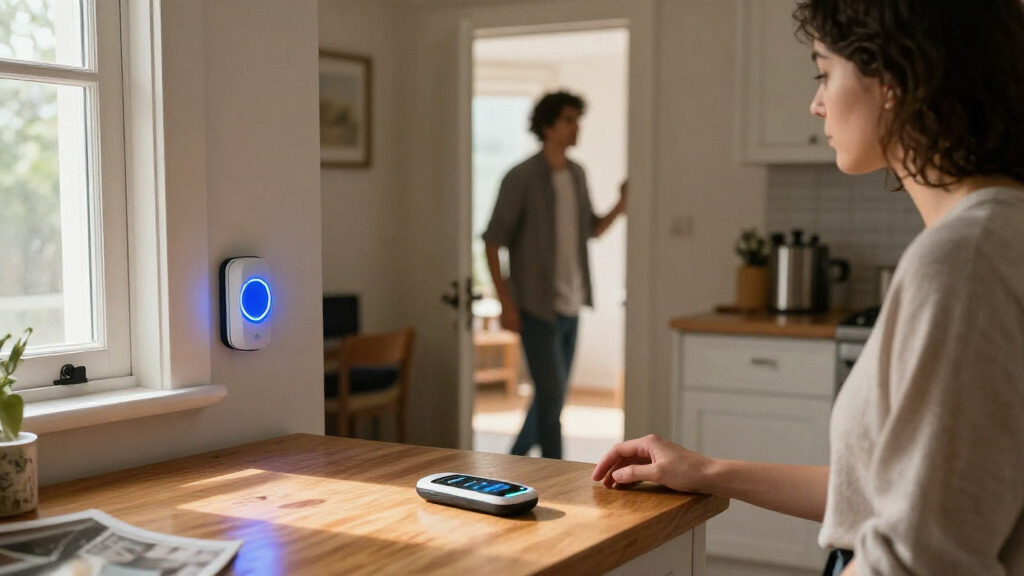
I compared each system through the needs of a deaf or hard-of-hearing buyer: whether it offers a clear visual alert, how readily receivers can be placed where they are useful, and whether the included transmitter and receiver count fits common home layouts. I also weighed usability factors such as portable versus plug-in receivers, available alert adjustments, and the likely effort required to set up and maintain a multi-part kit. A feature only matters if it helps a person notice the doorbell reliably in their actual environment.
The ranking gives priority to alert-system usefulness and practical coverage, not the number of advertised melodies or decorative light colors alone. Dedicated Bellman alert options rank ahead for buyers seeking a purpose-built visual alert; Qepi Tiuo earns a distinct place for broad multi-room coverage; and simpler two-receiver kits make sense for smaller homes or first-time buyers. Models with overlapping feature sets rank by the specific advantage they offer, while tradeoffs such as limited coverage, less mobility, or a more involved setup keep any one option from being right for everyone.
| wireless doorbell alert systems for deaf user | Model |
|---|---|
| Wireless Flashing Doorbell Kit | A201 |
| Bellman Wireless Alert System | — |
| Bellman & Symfon Wireless Door | — |
| FUHONGRUI Wireless Doorbell wi | — |
| Qepi Tiuo Wireless Flashing Do | B209 |
| Wireless Doorbell with Flashin | B209 |
| Jsieem Wireless Doorbell with | D-157 |
| Wireless Doorbell with 7-Color | — |
| Wireless Flashing Doorbell wit | B209 |
| CallToU Wireless Doorbell for | — |
| Wireless Doorbell with Flashin | D157-1T3 3.0 |
Factors to Consider When Choosing Wireless Doorbell Alert Systems For Deaf Users
Choosing a doorbell alert system is less about collecting the most features and more about making sure the signal reaches you where you spend time. I would start with your rooms, routines, and preferred alert type, then compare receiver placement and setup needs. These broader checks can prevent a common mismatch: buying a large kit that is awkward to manage, or a compact one that misses an important room.
Map Alert Coverage to Your Daily Routine
List the rooms where you regularly spend time, including a home office, bedroom, and any outdoor area where you expect to hear or see an alert. A receiver placed in a hallway may not help if a closed door or bright window makes its flash hard to notice. Multiple receivers can reduce missed alerts, but they only help when placed where you can see them. Think through whether you move between rooms or stay in one main area for much of the day. A kit with many receivers may be a poor fit for a compact home, while one receiver can leave gaps in a larger layout. If possible, plan receiver locations before choosing a bundle size.
Choose a Visual Signal You Can Notice
Visual alerts differ in brightness, placement, and how they attract attention; a choice of colors does not automatically mean the flash will be visible from across a room. Consider the lighting in your home, your distance from the receiver, and whether you tend to face the device. Strong daylight and competing lamps can make a small indicator less noticeable. If you rely on more than one type of alert, check which signals the system actually provides rather than assuming that a volume control means a visual alert is equally effective. A dedicated flashing receiver may suit a buyer who wants a direct visual cue, while customizable colors may matter more to someone seeking a personalized indicator. Prioritize visibility in the rooms you use most.
Decide Between Fixed Receivers and Portability
Plug-in receivers are convenient when you want an alert point to stay in a set room, but they depend on access to suitable outlets. A portable receiver can follow you through the home, though it introduces a charging or battery routine and can be misplaced. Ask whether you need alerts in several fixed locations or one alert that moves with you. Buyers often focus on transmitter range but overlook walls, floors, and the receiver’s position, which can affect real-world coverage. For a multi-story home, placement and mobility may matter more than a large quoted range. Choose the arrangement that matches your routines, not the one with the most impressive-looking specification.
Match the Number of Buttons to Your Entry Points
Extra transmitters can help distinguish the front door from another entrance, but only if you have a use for each button and can tell their alerts apart. If you live in a home with one main entry, a multi-transmitter package may add setup without adding much value. For multiple doors, check whether the system can identify different transmitters through distinct tones or visual patterns; do not assume it can. Also decide whether other household members need a separate button or alert point. A clear labeling plan can prevent confusion after installation. Start with the entries visitors actually use, then add coverage for secondary doors if needed.
Check Power, Setup, and Ongoing Upkeep
Wireless does not mean maintenance-free: transmitters and portable receivers may rely on batteries, while plug-in receivers need accessible outlets. Before buying, check how each component is powered and whether battery changes or charging suit your routine. Simple systems can be easier to set up, but larger kits may require pairing and testing several devices. Test the signal from each entry point and each receiver location after installation rather than assuming every pairing works throughout the home. Keep instructions and note which transmitter corresponds to each door. A manageable upkeep routine is part of dependable alerting.
Know When a Doorbell Is Not Enough
A doorbell alert system addresses visitors at an entrance; it is not a substitute for alerts tied to smoke, carbon monoxide, or other emergencies. Buyers should keep those needs separate and choose alerting equipment designed for each hazard. If a doorbell signal must reach someone who is asleep or in a room with the door closed, consider whether a visible receiver alone matches that situation. Household routines and individual access needs differ, so a doorbell kit should complement, not replace, other safety arrangements. Avoid assuming that a bright doorbell flash covers every notification need in the home. Make the doorbell decision as one part of a broader alert plan.
Frequently Asked Questions
Is a flashing doorbell enough if I cannot see the receiver from every room?
Not necessarily. A visual alert only helps when you can see it, so receiver placement is as important as the flash itself. Walk through your usual routine and identify rooms where a fixed receiver would be hidden or too far away. A multi-receiver kit can add coverage, while a portable receiver may suit someone who moves around the home. If you need alerts in several places, check the system’s receiver count and plan locations before choosing.
Should I choose a portable receiver or several plug-in receivers?
Choose based on whether you move around or want alerts to remain in fixed rooms. A portable receiver can follow you, but you will need to keep it charged or powered and remember to carry it. Several plug-in receivers offer set alert points without requiring you to move one device, though they use outlets and may take more setup. In a larger home, a combination of placement and routine matters more than the format alone. Consider where you spend time during the day and at night before deciding.
Do seven light colors or multiple volume levels make a system more suitable for deaf users?
Not by themselves. Color and volume choices can help personalize a device, but a sound adjustment does not tell you how visible its light will be from your usual seating or working position. Check the placement, visibility, and alert pattern that matter to you rather than treating the number of settings as a measure of effectiveness. A simpler flashing receiver may be a better match if its visual signal is easier to notice. Consider volume controls only as an extra feature for household members who also use sound alerts.
Will a wireless doorbell work through walls or between floors?
Wireless range claims do not guarantee reliable signaling in every home. Walls, floors, building materials, and the position of the transmitter and receiver can affect the connection. Place receivers where you plan to use them and test the button from each entry after setup. For a multi-story home, test across floors rather than relying on an advertised distance. If one location has a weak signal, moving the receiver or using another receiver may help, depending on the system.
Can a doorbell alert system replace visual smoke or carbon monoxide alarms?
No. A doorbell system alerts you to visitors and should not be treated as a fire or carbon monoxide warning device. Emergency alerts require equipment designed and listed for those hazards, with signals suited to the people in the home. Keep doorbell coverage and emergency alert coverage as separate decisions. If you need visual or other accessible emergency notifications, check the relevant alarm system’s capabilities and installation guidance. The doorbell kit can be part of a home alert setup, but it cannot take the place of safety alarms.
Conclusion
For the best overall choice, I recommend the Bellman Wireless Alert System with Flashing Receiver for buyers who prioritize a dedicated visual alert. The Qepi Tiuo kit is my best value for broad home coverage when several transmitters and receiver locations are genuinely useful; its larger setup is less appealing for a small space. For a best premium-style option centered on mobility, choose the Bellman & Symfon Wireless Doorbell Alert System with Portable Receiver. Beginners can start with the CallToU system or another two-receiver kit for a simpler setup, while people who need alerts across many rooms should favor a multi-receiver bundle. If personalization is your priority, compare the seven-color models, but choose based on visibility and placement rather than settings alone.