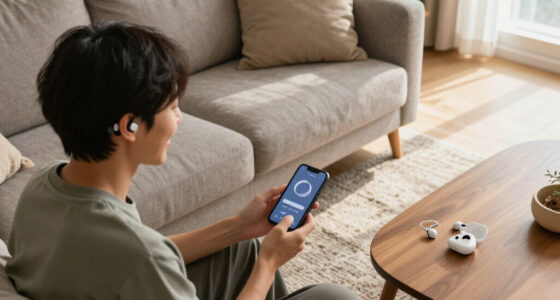
Doorbell signalers for deaf people use visual alerts, vibration, or both to make visitors easier to notice without relying on sound. My best overall pick is the CallToU kit with one button and two receivers, which offers a practical way to cover more than one room; the Yinhing flashing-light kit stands out for a visual-first setup, while the Bellman & Symfon wearable alert system suits people who need alerts on the move. The main tradeoffs are whether you need portable or plug-in receivers, how much coverage your home needs, and whether a light alone is enough. Button count, signal range, and the alert style also affect how well a kit fits your routine. Read on for the full comparison and a guide to choosing the right setup.

Get everyday helpers delivered free with Prime
- Fast, free delivery on millions of items
- Prime Video, Amazon Music and more included
- Member-only deals all year
Key Takeaways
- Receiver placement matters as much as advertised range: two or three receivers can cover separate rooms more reliably than a single portable unit, provided each receiver is positioned where its alert can be seen or felt.
- Visual alerts vary in purpose: kits with flashing or multicolor lights suit people who can see a room-based signal, while a wearable system can alert someone away from a fixed receiver.
- Multi-button kits solve a different problem from multi-receiver kits: the two-transmitter, three-receiver options can serve more than one entrance, while extra receivers mainly extend coverage around the home.
- Portable and plug-in receivers involve a real placement tradeoff: portable units can move with the user but need charging or batteries; plug-in receivers stay ready in chosen rooms but do not travel with the user.
- The lineup includes a sound-focused long-range option as well as light-based kits: the Jsieem model advertises a 1,200-foot range and 36 melodies, but buyers seeking a deaf-accessible alert should prioritize visible or wearable signaling over melody count.
| Jsieem Wireless Doorbell with 1200-Foot Range, 36 Melodies, and LED Indicator |  | Best for Long Open-Plan Coverage | Model: D-157 | Maximum range: Up to 1,200 feet in open areas | Receiver quantity: 1 plug-in receiver | VIEW LATEST PRICE | See Our Full Breakdown |
| CallToU Wireless Doorbell for Hard-of-Hearing Users, 1 Button and 2 Receivers |  | Best Overall for Alerts in Two Locations | Model: CR21 CT19 1-2 | Buttons: 1 | Receivers: 2 portable receivers | VIEW LATEST PRICE | See Our Full Breakdown |
| CallToU Wireless Doorbell for Hearing Impaired, 1 Button and 1 Portable Receiver |  | Best for a Single User on the Move | Model: CR21 DT19 | Buttons: 1 | Receivers: 1 portable, battery-powered receiver | VIEW LATEST PRICE | See Our Full Breakdown |
| CallToU Wireless Doorbell for Hearing Impaired Users, 1 Button and 2 Receivers |  | Best Two-Receiver Pick for a Coordinated Portable Setup | Model: CR21WH DT19WH | Buttons: 1 | Receivers: 2 portable battery receivers | VIEW LATEST PRICE | See Our Full Breakdown |
| Yinhing Doorbell Kit with Flashing Light for Hearing-Impaired Users |  | Best for Colorful Visual Alerts | Model: Yinhing1a7gwo4gk61141 | Ringtones: 32 | Volume levels: 5, including mute | VIEW LATEST PRICE | See Our Full Breakdown |
| Wireless Doorbell with 7-Color Flashing Light and 4 Volume Levels |  | Best for Simple Long-Range Alerts | Model: B209 | Wireless range: 600 feet | Light colors: 7 | VIEW LATEST PRICE | See Our Full Breakdown |
| Wireless Doorbell with Flashing Light, 1 Button and 3 Plug-In Receivers |  | Best for Whole-Home Coverage | Model: D157-1T3 3.0 | Button and receivers: 1 button and 3 plug-in receivers | Wireless range: Up to 1,200 feet in open areas | VIEW LATEST PRICE | See Our Full Breakdown |
| Bloepum Wireless Doorbell with Seven Color Lights |  | Best for Basic Battery-Powered Setup | Brand: Bloepum | Package contents: 1 receiver and 1 transmitter | Light colors: 7 | VIEW LATEST PRICE | See Our Full Breakdown |
| Wireless Flashing Music Doorbell for Deaf and Hard of Hearing |  | Best for Customizable Alert Modes | Model: TMT-288 | Alert modes: Flash only, ring only, or ring and flash | Receiver configuration: 1 to 6 receivers | VIEW LATEST PRICE | See Our Full Breakdown |
| FUHONGRUI Battery-Operated Wireless Doorbell with 1 Button and 2 Portable Receivers |  | Best for Portable Receiver Placement | Model: D-157-1T2DC | Included components: 1 doorbell button and 2 portable receivers | Working range: Up to 1,200 feet in open areas | VIEW LATEST PRICE | See Our Full Breakdown |
| Wireless Flashing Doorbell Kit with 2 Transmitters and 3 Receivers |  | Best for Multi-Room Coverage | Manufacturer: HSYIJIA | Model: A201 | Transmitters: 2 | VIEW LATEST PRICE | See Our Full Breakdown |
| FUHONGRUI Wireless Doorbell Kit with Flashing Light, 2 Buttons and 3 Receivers |  | Best Plug-In Multi-Room Pick | Model: FU 157-2T3 | Buttons: 2 | Receivers: 3 plug-in receivers | VIEW LATEST PRICE | See Our Full Breakdown |
| Wireless Flashing Doorbell with 7-Color Lights and 4 Volume Levels |  | Best Simple Single-Door Setup | Wireless range: Up to 600 feet | Light colors: 7 | Volume levels: 4 | VIEW LATEST PRICE | See Our Full Breakdown |
| Wireless Doorbell for Hearing Impaired with 7-Color Flashing Light |  | Best for Customizing the Alert | Wireless range: Up to 200 meters in open space | Wireless frequency: 433 MHz | Alert modes: Music, flash, or music + flash | VIEW LATEST PRICE | See Our Full Breakdown |
| Bellman & Symfon Wearable Caregiver Call Button and Watch Alert System |  | Best Wearable Alert System | Brand: Bellman & Symfon | Model: BE8216-A | Alert type: Vibration and on-screen symbols | VIEW LATEST PRICE | See Our Full Breakdown |
| doorbell signalers for deaf people | Model | Volume levels |
|---|---|---|
| Jsieem Wireless Doorbell with | D-157 | 4, including mute |
| CallToU Wireless Doorbell for | CR21 CT19 1-2 | 5, from mute to 110 dB |
| CallToU Wireless Doorbell for | CR21 DT19 | 5, from mute to 100 dB |
| CallToU Wireless Doorbell for | CR21WH DT19WH | 5, from mute to 100 dB |
| Yinhing Doorbell Kit with Flas | Yinhing1a7gwo4gk61141 | 5, including mute |
| Wireless Doorbell with 7-Color | B209 | 4 |
| Wireless Doorbell with Flashin | D157-1T3 3.0 | 4 |
| Bloepum Wireless Doorbell with | — | — |
| Wireless Flashing Music Doorbe | TMT-288 | — |
| FUHONGRUI Battery-Operated Wir | D-157-1T2DC | — |
| Wireless Flashing Doorbell Kit | A201 | 4 |
| FUHONGRUI Wireless Doorbell Ki | FU 157-2T3 | 4: mute, low, medium, high |
| Wireless Flashing Doorbell wit | — | 4 |
| Wireless Doorbell for Hearing | — | 5 |
| Bellman & Symfon Wearable Care | BE8216-A | — |
More Details on Our Top Picks
Jsieem Wireless Doorbell with 1200-Foot Range, 36 Melodies, and LED Indicator
I’d choose the Jsieem D-157 when a long stated signal range matters more than having alerts in several rooms. Its rating of up to 1,200 feet in open areas exceeds the 1,000-foot claims on both CallToU kits here, and the plug-in receiver’s LED gives a visual cue alongside sound. That makes it a simpler visual-alert option than the CallToU models, which add vibration and portability but require battery-powered receivers. The Jsieem offers 36 melodies and four volume settings, including mute, but its listing doesn’t describe a vibration alert or a multi-receiver setup. Its range is also an open-area figure: walls, metal, and nearby electronics may limit coverage, and the transmitter should be kept away from some obstacles. I’d treat the LED as a useful cue, not a substitute for a dedicated wearable alert.
Pros:- LED indicator adds a visual alert to the audible chime
- Stated open-area range reaches up to 1,200 feet
- 36 melodies and four volume levels, including mute
- Plug-in receiver avoids a separate receiver battery supply
Cons:- No vibration alert is listed
- Only one receiver is included, limiting alerts to one location
- The range claim is for open areas and placement can be affected by metal or electronics
Best for: Buyers who want a plug-in receiver with a visual indicator and need a long stated range across an open layout.
Not ideal for: People who need a portable vibration alert, coverage from two receivers, or dependable range through multiple walls.
- Model:D-157
- Maximum range:Up to 1,200 feet in open areas
- Receiver quantity:1 plug-in receiver
- Transmitter quantity:1 touch transmitter
- Melodies:36
- Volume levels:4, including mute
- Visual alert:LED indicator
- Transmitter battery:1 CR2 battery, included
Our verdict“Choose the Jsieem if a plug-in visual-and-sound receiver and long open-area range matter more than vibration or multiple receiving locations.”
CallToU Wireless Doorbell for Hard-of-Hearing Users, 1 Button and 2 Receivers
For a household that needs to notice the doorbell in more than one room, I rank this CallToU two-receiver kit ahead of the single-receiver options. Both portable receivers offer flashing light and vibration as well as sound, so a user can rely less on hearing the chime, while a second receiver can be placed where it is most useful. The CallToU one-receiver model is a more compact choice for a single person moving around the home, but it cannot alert two separate locations at once. This kit also provides five volume settings, up to 110 dB, and 20 ringtones. The tradeoff is power: each receiver needs three AAA batteries, and its advertised 1,000-foot range applies to open, unobstructed areas. Walls and other obstacles can reduce coverage.
Pros:- Two receivers can alert users in separate parts of the home
- Flashing light and vibration offer alternatives to hearing the chime
- Five volume levels include mute and reach up to 110 dB
- Pre-paired operation needs no Wi-Fi, app, or hub
Cons:- Each receiver requires three AAA batteries
- Open-area range can be reduced by walls and other obstacles
- The product listing does not specify a plug-in receiver option
Best for: Households with two commonly occupied rooms where deaf or hard-of-hearing residents need visual and tactile alerts in both locations.
Not ideal for: Buyers who want a plug-in receiver, want to avoid replacing AAA batteries, or only need one portable alert.
- Model:CR21 CT19 1-2
- Buttons:1
- Receivers:2 portable receivers
- Alert types:Sound, flashing light, and vibration
- Ringtones:20
- Volume levels:5, from mute to 110 dB
- Wireless range:Up to 1,000 feet in open, unobstructed areas
- Receiver power:3 AAA batteries per receiver
Our verdict“Pick this CallToU kit if two people or two rooms need portable light-and-vibration alerts from one doorbell button.”
CallToU Wireless Doorbell for Hearing Impaired, 1 Button and 1 Portable Receiver
I’d favor this single-receiver CallToU for someone who wants to carry an alert from room to room rather than install receivers around the home. Its portable unit combines flashing light, vibration, and sound, and a back clip makes it easier to keep close while moving. Compared with the CallToU two-receiver kit, this model costs the setup one receiving location, but it also avoids managing a second battery-powered unit. The five volume levels reach 100 dB, with mute available, and the system arrives pre-paired without Wi-Fi or an app. That simplicity suits a personal, mobile setup; it is less suited to a household where someone else needs an alert in another room. The receiver uses three AAA batteries, and the 1,000-foot claim is for unobstructed open areas.
Pros:- Portable receiver has a back clip for carrying between rooms
- Flashing light and vibration provide non-audible alert modes
- Twenty ringtones and five volume levels, including mute
- Pre-paired setup works without Wi-Fi, an app, or a hub
Cons:- One receiver cannot alert separate rooms simultaneously
- Receiver requires three AAA batteries
- The stated range may drop around walls, metal doors, and electrical appliances
Best for: A deaf or hard-of-hearing person who moves between rooms and wants one clipped, portable receiver with visual and vibration alerts.
Not ideal for: Households needing alerts in two locations at once or buyers who prefer a receiver powered from an outlet.
- Model:CR21 DT19
- Buttons:1
- Receivers:1 portable, battery-powered receiver
- Alert modes:Sound, vibration, and flashing light
- Ringtones:20
- Volume levels:5, from mute to 100 dB
- Wireless range:Up to 1,000 feet in open, unobstructed areas
- Receiver batteries:3 AAA batteries
Our verdict“Choose this single-receiver CallToU if you want to carry one light-and-vibration alert with you rather than cover several rooms.”
CallToU Wireless Doorbell for Hearing Impaired Users, 1 Button and 2 Receivers
This white CallToU two-receiver kit serves much the same role as the black CallToU kit in this roundup: sending light, vibration, and ringtone alerts to two locations. I’d choose between them by the listed sound ceiling and finish. This model reaches 100 dB, while the black version lists up to 110 dB; buyers prioritizing the higher stated sound level have a clearer case for that alternative. For deaf users, however, both offer visual and tactile alerts, so sound output need not be the deciding factor. The two portable receivers include clips, and setup requires no Wi-Fi, hub, or app. The price of that flexibility is two battery-powered units, each needing three AAA batteries, and the claimed range can fall around walls, metal, or electrical equipment.
Pros:- Two receivers can provide alerts in separate locations
- Each receiver combines flashing light, vibration, and ringtone
- Portable receivers include clips
- Pre-paired system requires no Wi-Fi, app, or hub
Cons:- Each receiver uses three AAA batteries
- Maximum listed volume is 100 dB, below the 110 dB listed for the other CallToU two-receiver kit
- Walls, metal, and electrical equipment can reduce wireless range
Best for: Deaf or hard-of-hearing households that want two portable, clip-equipped receivers and prefer the listed white finish.
Not ideal for: Buyers who need the highest listed sound level, want to avoid batteries, or need coverage beyond two receiver locations.
- Model:CR21WH DT19WH
- Buttons:1
- Receivers:2 portable battery receivers
- Alert types:Ringtone, vibration, and flashing light
- Ringtones:20
- Volume levels:5, from mute to 100 dB
- Maximum range:Up to 1,000 feet in open, unobstructed areas
- Receiver batteries:3 AAA batteries per receiver
Our verdict“Choose this version if two portable light-and-vibration receivers and its white finish suit your home, but favor the other CallToU two-receiver kit if its higher listed sound ceiling matters.”
Yinhing Doorbell Kit with Flashing Light for Hearing-Impaired Users
The Yinhing kit puts the emphasis on a flashing visual signal, with seven light colors and five volume settings that include mute. That makes it a straightforward candidate for someone who wants a visible cue but does not need the vibration alerts offered by either CallToU kit. Its 32 ringtone choices also exceed CallToU’s 20, though melody count matters less than whether the light is noticeable from the rooms where you spend time. The outdoor button has an IP44 rating, providing some weather resistance, but the supplied details do not give a wireless range or receiver power information. Those omissions make it harder to judge coverage and upkeep against the Jsieem plug-in receiver or the battery-powered CallToU systems. The listed dimensions are unusually small, so I’d verify the product’s actual size before choosing it.
Pros:- Seven flashing light colors provide visual alert options
- Five volume levels include mute
- Offers 32 ringtone choices
- Outdoor push button is rated IP44
Cons:- No vibration alert is listed, unlike the CallToU models
- Wireless range and receiver power details are not provided
- Listed dimensions appear unusually small and may need verification
Best for: Buyers who want a visual flashing-light cue with several color and ringtone choices and do not require vibration.
Not ideal for: People who need a clearly specified wireless range, tactile alerts, or confidence about receiver power and the listed product dimensions.
- Model:Yinhing1a7gwo4gk61141
- Ringtones:32
- Volume levels:5, including mute
- Flashing light colors:7
- Push-button weather resistance:IP44
- Listed dimensions:0.39 × 0.39 × 0.39 inches
- Item weight:5.3 ounces
Our verdict“Consider the Yinhing if multicolor flashing alerts are your priority, but choose a CallToU kit if you need vibration or better-specified coverage.”
Wireless Doorbell with 7-Color Flashing Light and 4 Volume Levels
This is the most straightforward pick here for someone who wants a visual signal with adjustable sound and does not need multiple receivers. Seven light colors offer a visual cue, while four volume levels let household members set an audible alert to suit their needs. Its stated 600-foot wireless range gives it a defined reach, though it is shorter than the 1,200-foot open-area claims for the FUHONGRUI and three-receiver D157 models. The description also says it can serve as a pager, which may suit a simple one-button alert setup. I would choose it for ease of use over the Bloepum, whose range is not specified, but the missing power details make planning less certain.
Pros:- Seven light colors provide a visual alert
- Four volume levels accommodate different hearing needs
- Stated 600-foot wireless range
- Can also be used as a pager
Cons:- No battery or power details are provided
- Only one receiver is described, limiting room-to-room coverage
- Its stated range is shorter than the open-area claims for the FUHONGRUI and D157 models
Best for: People who want a basic, color-coded visual doorbell alert with adjustable sound and do not need receivers in several rooms
Not ideal for: Buyers who need a clearly specified power source or multiple receivers to carry alerts throughout a larger home
- Model:B209
- Wireless range:600 feet
- Light colors:7
- Volume levels:4
- Color:Black
- Item weight:7.4 ounces
- Dimensions:3.07 x 2.95 x 0.98 inches
Our verdict“Choose this for a simple color-light alert with adjustable volume, but skip it if you need multiple receivers or clear power information.”
Wireless Doorbell with Flashing Light, 1 Button and 3 Plug-In Receivers
For deaf or hard-of-hearing users who may be in different rooms, the strongest reason to choose this model is its three plug-in receivers. They can be distributed around the home, reducing reliance on hearing a sound from a single location. The flashing, ringing, or combined modes also allow the alert to be set for visual use without a chime. Compared with the portable two-receiver FUHONGRUI, this kit supplies one more receiver, though its plug-in format is less flexible to carry around. Its 1,200-foot range applies to open areas, not necessarily a house with walls between the button and receivers. The included CR2032 battery is convenient at setup, but it will need replacement.
Pros:- Three receivers can cover multiple rooms
- Flashing mode can provide an alert without relying on sound
- Four volume levels and 36 chimes offer setup flexibility
- Button is rated IP44 and includes a CR2032 battery
Cons:- The 1,200-foot range is specified for open areas
- Receivers need suitable outlets, unlike the portable FUHONGRUI receivers
- The button requires a replaceable CR2032 battery
Best for: Households where a deaf or hard-of-hearing person moves between several rooms and can place receivers near wall outlets
Not ideal for: People who need portable receivers, or buyers expecting the stated range to apply unchanged through walls and floors
- Model:D157-1T3 3.0
- Button and receivers:1 button and 3 plug-in receivers
- Wireless range:Up to 1,200 feet in open areas
- Chimes:36
- Volume levels:4
- Alert modes:Ringing, flashing, or both
- Water resistance:IP44
- Button battery:1 included CR2032
- Item weight:12.7 ounces
Our verdict“Pick this kit when three fixed receiver locations matter more than portability or a guaranteed indoor range.”
Bloepum Wireless Doorbell with Seven Color Lights
The Bloepum takes a simple transmitter-and-receiver approach: one button sends an alert to one receiver, which combines sound with seven-color LED signals. That combination can help users who benefit from a visual cue while also letting hearing household members notice the chime. Its no-wiring setup may appeal in a home, office, or care setting where a fixed installation is inconvenient. Compared with the B209, it specifies the batteries needed but gives no transmission range; compared with the three-receiver D157, it offers less coverage around a home. The batteries are not included, and the receiver needs three AA cells, so this is a less appealing fit for someone trying to minimize battery changes or cover multiple floors.
Pros:- Seven-color LED signals provide a visual alert
- Combines visual signals with audible alerts
- Wireless installation avoids complicated wiring
- One transmitter and one receiver keep the system simple
Cons:- Transmission range is not specified
- Batteries are not included
- One receiver offers less room coverage than the three-receiver D157 kit
Best for: A buyer setting up one wireless visual-and-audio alert in a small home, office, or care room who is comfortable supplying batteries
Not ideal for: People who need a known operating range, multiple receiver locations, or a setup with batteries included
- Brand:Bloepum
- Package contents:1 receiver and 1 transmitter
- Light colors:7
- Transmitter power:1 AA battery, not included
- Receiver power:3 AA batteries, not included
- Material:ABS
- Color:Black
- Item weight:256 g
Our verdict“Choose the Bloepum for a basic two-piece visual-and-audio setup, not for broad coverage or a clearly documented range.”
Wireless Flashing Music Doorbell for Deaf and Hard of Hearing
This model is the most configurable alert option in this group: users can choose flash only, ring only, or ring and flash, and the description also lists vibration. That range of alert types makes it more adaptable than the B209, which specifies colored lights and volume levels but not vibration or selectable modes. It can link one to six receivers, potentially giving it a wider setup than the single-receiver Bloepum, although the supplied details do not explain whether receivers are included. Selectable music and custom music upload may help distinguish the signal, but they are secondary to whether the visual or vibration alert is reliably noticed. Dry batteries are required, and the listed package dimensions look unusually small, so I would verify the actual included components before buying.
Pros:- Offers flash-only, ring-only, and combined alert modes
- Description includes vibration as another alert type
- Can link one to six receivers
- Supports selectable music and custom music upload
Cons:- Requires dry batteries
- Included receiver count is not specified
- Listed package dimensions are unusually small and may need verification
Best for: Users who want several alert modes and may add receivers for different parts of a home
Not ideal for: Buyers who need a clearly documented receiver bundle, dependable battery-free operation, or confidence in package dimensions
- Model:TMT-288
- Alert modes:Flash only, ring only, or ring and flash
- Receiver configuration:1 to 6 receivers
- Maximum volume:110 dB
- Power supply:Dry batteries
- Power supply voltage:4.5 V
- Power consumption:1 W
- Connection type:Wireless
- Color:White
Our verdict“Choose this for flexible alert modes and potential multi-receiver expansion, after confirming what the package includes.”
FUHONGRUI Battery-Operated Wireless Doorbell with 1 Button and 2 Portable Receivers
The FUHONGRUI is a practical choice when alerts need to follow the user rather than stay beside wall outlets: its two portable receivers can be placed where they are useful. Flashing LEDs and a mute setting let deaf or hard-of-hearing users rely less on the ringtone, while four volume settings and 36 choices give hearing household members options too. Unlike the three-receiver D157, this kit has one fewer receiver, but its portable format can be more useful for moving between rooms. The stated 1,200-foot range is for open areas, so walls and floors may reduce reach. Batteries are included for the button and receivers, but the battery-operated design means upkeep rather than plug-in convenience.
Pros:- Two portable receivers can be placed where needed
- Flashing lights and mute mode support visual or silent alerts
- Offers 36 ringtones and four volume settings
- Batteries and basic mounting hardware are included
Cons:- All units rely on batteries, which need replacement
- The 1,200-foot range applies to open areas
- Has two receivers rather than the three supplied with the D157
Best for: People who want two movable receivers and a visual or silent alert in different parts of their home
Not ideal for: Households that prefer receivers to plug into outlets or need the coverage of three fixed receiver units
- Model:D-157-1T2DC
- Included components:1 doorbell button and 2 portable receivers
- Working range:Up to 1,200 feet in open areas
- Ringtones:36
- Volume settings:4, including mute
- Power:3 AAA batteries and 1 CR2032 battery included
- Dimensions:7.5 x 3.6 x 2.2 inches
- Weight:10.6 ounces
- Color:White
Our verdict“Pick the FUHONGRUI if two portable, battery-powered visual-alert receivers suit your routine better than fixed plug-in coverage.”
Wireless Flashing Doorbell Kit with 2 Transmitters and 3 Receivers
For a household that needs a visible door alert in several rooms, the two transmitters and three receivers give this kit a practical advantage over the single-button, single-receiver option in Wireless Flashing Doorbell with 7-Color Lights and 4 Volume Levels. Its seven-color flashes and four volume settings offer both visual and adjustable audio cues, while a stated range of up to 600 feet gives flexibility when placing receivers around the home. Adhesive or screw mounting also suits renters and owners who want a choice of installation methods. The main compromise is power: all units together require 11 AA batteries, with listed battery life of three to five months. I’d skip it if frequent battery changes or plug-in receivers are a priority.
Pros:- Three receivers can distribute alerts across multiple rooms.
- Two transmitters can cover separate doors or entrances.
- Seven flashing colors provide a visual alert alongside adjustable sound.
- Receivers and transmitters can be mounted with adhesive or screws.
Cons:- Requires 11 AA batteries across the kit.
- Listed battery life is three to five months, so replacements may be frequent.
- The stated 600-foot range may not reflect performance through walls.
Best for: Households that want visual doorbell alerts in multiple rooms and need two entry buttons covered.
Not ideal for: Buyers who want plug-in receivers or prefer to avoid managing a large number of batteries.
- Manufacturer:HSYIJIA
- Model:A201
- Transmitters:2
- Receivers:3
- Light colors:7
- Volume levels:4
- Wireless range:Up to 600 feet
- Power:11 AA batteries
Our verdict“Choose this kit if you need visual alerts from two doors in several rooms and are willing to handle regular battery replacement.”
FUHONGRUI Wireless Doorbell Kit with Flashing Light, 2 Buttons and 3 Receivers
The three plug-in receivers make this FUHONGRUI kit a strong choice for someone who wants visual alerts distributed around the home without powering each receiver with AA batteries. Compared with the battery-operated Wireless Flashing Doorbell Kit with 2 Transmitters and 3 Receivers, its receiver setup avoids that model’s 11-AA-battery burden, though it does tie alerts to available outlets. Two buttons cover separate entrances, and the flashing lights pair with 36 ringtone choices and four volume levels, including mute. That lets deaf and hard-of-hearing users rely on the visual cue while household members choose a sound setting that suits them. The stated 1,200-foot range applies to open areas, not necessarily a home with walls, and the buttons’ included CR2032 batteries will still need replacing.
Pros:- Three plug-in receivers can provide alerts in several rooms.
- Two buttons cover separate doors.
- Flashing lights support users who may not hear the ringtone.
- Four volume settings include a mute option, with 36 ringtones available.
Cons:- Receivers need outlets, limiting where alerts can be placed.
- The 1,200-foot range is specified for open areas.
- The two button batteries will eventually need replacement.
Best for: Households with two entrances, accessible outlets in the rooms that matter, and a preference for visual alerts without battery-powered receivers.
Not ideal for: People who need portable receivers, or whose preferred alert locations lack convenient power outlets.
- Model:FU 157-2T3
- Buttons:2
- Receivers:3 plug-in receivers
- Ringtones:36
- Volume levels:4: mute, low, medium, high
- Working range:Up to 1,200 feet in open areas
- Button batteries:2 CR2032 batteries, included
- Warranty:1 year
Our verdict“Pick this kit for two-door, multi-room coverage when fixed plug-in receivers suit your home better than battery-powered units.”
Wireless Flashing Doorbell with 7-Color Lights and 4 Volume Levels
For one entrance and one main alert location, this set keeps the arrangement simple: a single transmitter pairs with a receiver that flashes seven colors and plays sound at one of four volume levels. Compared with the multi-room FUHONGRUI Wireless Doorbell Kit with Flashing Light, 2 Buttons and 3 Receivers, it gives up extra buttons and receivers, but takes less coordination and may suit a compact home. A stated range of up to 600 feet and a choice of adhesive or screw mounting add placement flexibility. The visual signal is useful for deaf and hard-of-hearing users, but the product data does not describe a wearable or remote alert. It also needs four AA batteries in total, which are not stated as included, and the listed three-to-five-month battery life means ongoing upkeep.
Pros:- Seven-color flashing gives a visible cue when the doorbell is pressed.
- Four volume levels allow sound to be adjusted or reduced.
- Stated range is up to 600 feet.
- Adhesive and screw mounting offer two installation options.
Cons:- Includes only one transmitter and one receiver.
- Requires four AA batteries, which are not stated to be included.
- Listed battery life is three to five months.
Best for: People who need a visual alert for one door and one main room, without a multi-button or multi-receiver system.
Not ideal for: Households needing alerts in several rooms, coverage for multiple entrances, or a rechargeable or plug-in power setup.
- Wireless range:Up to 600 feet
- Light colors:7
- Volume levels:4
- Battery requirement:4 AA batteries total: 3 for receiver and 1 for transmitter
- Battery life:Listed as 3–5 months
- Mounting:Double-sided adhesive or screws
Our verdict“Choose this straightforward set if one flashing receiver can cover your needs and you do not need the extra coverage offered by multi-receiver kits.”
Wireless Doorbell for Hearing Impaired with 7-Color Flashing Light
This model gives buyers more control over how a doorbell announces a visitor: select flash only, music only, or both, with seven light colors, 32 melodies, and five volume levels. The flash-only mode makes it more directly adaptable for a deaf user than options whose descriptions emphasize combined sound and light, such as the Wireless Flashing Doorbell with 7-Color Lights and 4 Volume Levels. Its transmitter is rated IP44 for rain resistance, and the package includes a battery and installation accessories, reducing the need to source basic setup items separately. The stated range of 200 meters is for open space, so walls may reduce reach. This listing also warns that product type may vary between old and new versions; I’d verify the exact version before relying on a particular alert arrangement.
Pros:- Flash-only mode lets users rely on a visual alert without sound.
- Five volume levels and 32 melodies offer several audio settings.
- Includes a transmitter battery, stickers, and an installation kit.
- IP44-rated transmitter is described as rainproof.
Cons:- The 200-meter range is specified for open space and may be lower through walls.
- Product type may vary between old and new versions.
- Product data does not specify multiple receivers for alerts in several rooms.
Best for: Deaf or hard-of-hearing users who want to choose flash-only alerts or adjust sound and light to household needs.
Not ideal for: Buyers who need a clearly documented multi-room kit or who cannot confirm which product version will ship.
- Wireless range:Up to 200 meters in open space
- Wireless frequency:433 MHz
- Alert modes:Music, flash, or music + flash
- Melodies:32
- Volume levels:5
- Flashing light:7 colors
- Battery:12V 23A battery included
Our verdict“Choose this option if configurable flash-only alerts matter more than having several receivers or a version-specific setup guarantee.”
Bellman & Symfon Wearable Caregiver Call Button and Watch Alert System
This is the most distinct option in the group: rather than relying on a flashing receiver in a fixed room, it sends a silent vibration and on-screen symbols to a watch receiver. The button can be mounted as a doorbell or worn on its included lanyard, making it useful for a caregiver or someone who needs a direct alert while moving around. Compared with the room-based FUHONGRUI Wireless Doorbell Kit with Flashing Light, 2 Buttons and 3 Receivers, this system prioritizes personal, wearable notifications over multiple visible household receivers. Its role is broader than a standard doorbell signaler, and the setup is more dependent on connected components: smartphone notifications require a compatible phone and bridge transceiver. The listed information also does not specify range, battery life, or a multi-room receiver package.
Pros:- Silent vibration and on-screen symbols provide personal alerts without relying on audible signals.
- Button can be mounted as a doorbell or worn with the included lanyard.
- Watch receiver can show incoming calls and selected smartphone notifications.
- Bluetooth connection supports integration through a bridge transceiver.
Cons:- Smartphone notifications require a compatible smartphone and bridge transceiver.
- The wearable watch-based setup is more involved than a basic flashing doorbell receiver.
- Product data does not specify wireless range or battery life.
Best for: Deaf or hard-of-hearing users who need discreet, personal alerts on a watch and may also want a wearable help button.
Not ideal for: Buyers seeking a simple standalone flashing receiver or those unwilling to use the required bridge transceiver for smartphone notifications.
- Brand:Bellman & Symfon
- Model:BE8216-A
- Alert type:Vibration and on-screen symbols
- Connectivity:Bluetooth via bridge transceiver
- Compatible devices:Smartphone
- Button use:Can be mounted as a doorbell or worn with the included lanyard
- Watch notifications:Incoming calls and selected smartphone notifications
Our verdict“Choose this system if a discreet wearable vibration alert is more useful than a fixed flashing receiver, and you can accommodate its connected setup.”
How We Picked
I compared the 15 listed products on how directly they address a deaf or hard-of-hearing buyer’s main need: noticing a doorbell without depending on hearing. The ranking favors clear visual signaling, useful receiver arrangements, and flexibility for different rooms or routines. I also weighed whether a kit has one or multiple transmitters, whether receivers are portable or plug-in, and whether its stated range or alert features help solve a real coverage problem.
Products with more useful ways to place or carry alerts rank ahead of models whose listed distinctions are mainly melody or color choices. A wearable alert system earns a distinct place for mobility, though it serves a different need from a fixed home doorbell. I also account for tradeoffs: more components can mean more placement options, but buyers still need to check power, compatibility, signal coverage, and whether the alert is visible from where they spend time. Product details can vary by listing, so I treat advertised features as claims to verify before purchase rather than as guarantees.
Factors to Consider When Choosing Doorbell Signalers For Deaf People
The right doorbell signaler depends less on the number of melodies or colors than on whether the alert reaches you in the places and situations that matter. I’d start by mapping your rooms and daily routine, then match the signal type, receiver arrangement, and power needs to that plan.
Choose an Alert You Can Reliably Notice
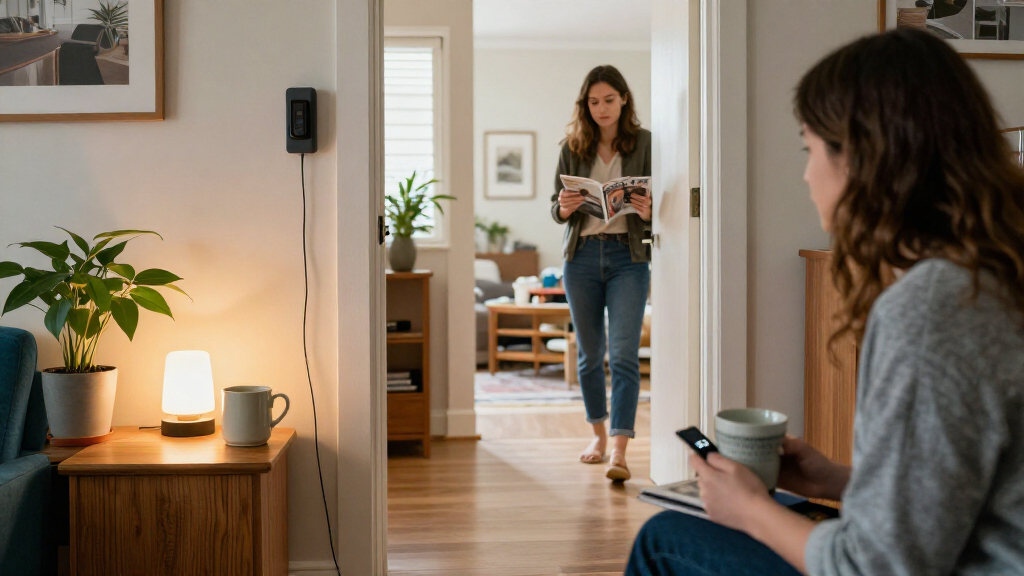
A flashing light only helps if you can see it from where you are, and a sound option may not help if you cannot hear it. Think about lighting, room layout, and whether the receiver will be in your line of sight during daily activities. A bright visual signal can work well in a shared living space, while a wearable alert may suit someone who moves between rooms or spends time outdoors. Do not assume that multiple colors mean stronger visibility; placement and contrast are often more useful than color variety. If visual alerts are not enough for your needs, look for a system that pairs them with vibration or another accessible alert method.
Plan Receiver Coverage Before Buying
Count the locations where you need to notice a visitor, rather than choosing a kit by receiver count alone. A receiver near a bedroom may not help in a kitchen or workshop if walls, distance, or background activity make the signal hard to detect. Extra plug-in receivers can provide fixed coverage, while portable receivers offer flexibility but may need to be carried and kept powered. A long advertised range is usually measured under favorable conditions, so walls and other obstacles can reduce real-world performance. When coverage is uncertain, favor a setup that lets you position receivers in more than one part of the home.
Decide Whether You Need One Button or Several
A single button is often enough for one entrance, but a second door or a separate entry point can call for multiple transmitters. Multi-button kits can reduce the need to buy separate systems, though it is worth checking whether each button can be distinguished by its own alert. If the sound or light pattern is identical for every entrance, you may know someone is at a door without knowing which one. Consider who will install and maintain the buttons, especially if they are exposed to weather. Do not pay for extra transmitters unless they solve a real entrance or caregiver-call need.
Match Power and Portability to Your Routine
Portable receivers make it easier to keep an alert nearby, but that freedom comes with a battery or charging routine. Plug-in models avoid carrying a receiver and may be a better fit for fixed locations, though they cannot follow you to another room. Check which parts use batteries and whether the listing explains battery type, expected upkeep, or included power supplies. A missed alert caused by a depleted battery defeats the purpose of the system, so choose a setup whose maintenance fits your habits. If several household members share the system, agree on who checks the power and where portable units are stored.
Check Compatibility Before Adding More Components
Similar-looking wireless kits are not automatically compatible with one another. Before buying an extra button or receiver, confirm that it is designed to pair with the exact model or product family you own. Also check whether the kit supports the number of buttons and receivers you plan to use, since a listing’s bundle count does not always describe the system’s expansion limits. Pairing instructions matter too: a setup that is hard to configure may leave a receiver inactive or trigger the wrong alert. For a simple household setup, a complete kit can be less error-prone than mixing components from separate listings.
When to Choose a Wearable Alert
A fixed receiver is a practical choice when you spend most of your time in known rooms, but it cannot alert you if you are away from its signal or not looking toward it. A wearable system can keep an alert close to the person who needs it, which may help in larger homes or care settings. That convenience depends on comfort, battery life, and whether the wearable device is kept on throughout the day. It may also cost more or involve more setup than a basic doorbell kit, so it is not automatically the right upgrade. Choose wearable signaling when mobility is the main gap in a fixed light-and-receiver arrangement.
Frequently Asked Questions
Will a wireless doorbell signaler work through every wall in my home?
No wireless range figure can guarantee performance through every home layout. Walls, floors, metal surfaces, and the placement of the transmitter and receiver can reduce the signal. A listed range is best treated as a guide under favorable conditions, not a promise for your exact rooms. Place receivers where you need them and test the setup from each door before relying on it. If the signal is inconsistent, repositioning the receiver may help, but a kit with more receivers can be a better fit for separated rooms.
Should I choose portable receivers or plug-in receivers?
Choose based on whether you need the alert to move with you or stay in fixed locations. Portable receivers suit people who change rooms often, but they need to be carried and kept powered. Plug-in receivers are easier to leave in a useful spot and do not require carrying, though they cannot follow you around the house. A mix of fixed coverage and a wearable alert may make sense when movement is a frequent part of your routine. Before ordering, check the power requirements and how the receiver alerts you.
Are flashing lights enough, or should I look for vibration too?
A flashing light may be enough if you can see the receiver from the places where you spend time. It can be less useful when you are facing away, in another room, outdoors, or asleep. Vibration offers a different kind of alert, especially through a wearable device, but it adds comfort, charging, and upkeep questions. Think about when you most often miss the doorbell and match the signal to that situation. If you are unsure, a visual alert in shared spaces plus a wearable option for mobility may cover more situations than either alone.
Can one doorbell kit cover a front door and a second entrance?
Some kits include multiple transmitters, but the number of buttons alone does not tell you whether each entrance will be easy to identify. Check whether the buttons can produce distinct alerts or whether both trigger the same signal. You should also confirm that the receivers support the number of transmitters you plan to pair. For a home with two frequently used entrances, a multi-transmitter kit can simplify installation compared with two separate systems. If knowing which door rang matters, distinguishable signals are more useful than simply adding another button.
What should I verify before buying an extra receiver or replacement button?
Check the exact model name and confirm that the accessory is listed as compatible with your existing system. Wireless doorbell components that look similar may use different pairing methods or signal protocols. Verify the maximum number of paired buttons and receivers, along with any power or battery requirements. If you cannot confirm compatibility from the listing, ask the seller or manufacturer before ordering. Buying a complete matched kit may be the safer choice when compatibility details are unclear.
Conclusion
For most buyers seeking a balanced home setup, I’d start with the CallToU one-button, two-receiver kit as the best overall direction: multiple receivers can make it easier to place alerts in separate rooms. The best value choice is a simple flashing-light kit that covers the rooms you use without adding transmitters or receivers you do not need; compare the Yinhing kit and the single-button options against your preferred alert and power setup. For a premium, mobility-focused choice, the Bellman & Symfon wearable alert system is the better fit when a fixed receiver does not stay close enough. Beginners should favor a complete, single-button kit with clear setup instructions and a receiver they can place near their main living area. If you have multiple entrances, look at the two-transmitter, three-receiver kits; if portability is the main need, choose portable or wearable signaling over a sound-focused model. Before deciding, confirm range, power, alert visibility, and component compatibility for your home.