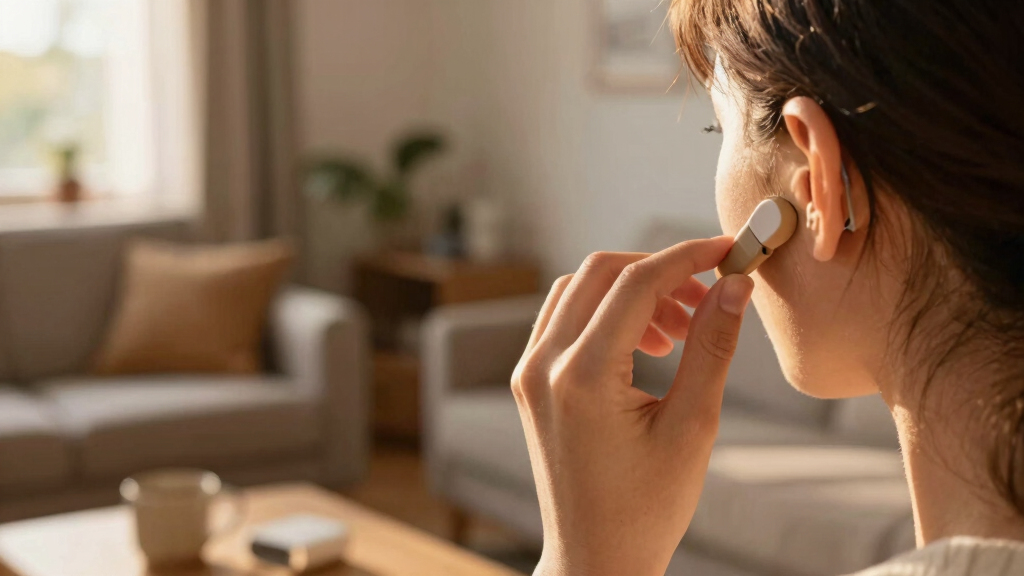

The best assistive listening devices make speech easier to follow by matching the microphone, receiver, and listening method to the setting. I rank the ConvoAssist™ Personal Sound Amplifier as the best overall pick because its wireless microphones and rechargeable case suit more everyday conversations than a basic wired amplifier. The Williams Sound Pocketalker Ultra is the stronger value choice for straightforward one-to-one listening, while the Retekess TT119 stands out for long-range churches and events. Buyers must choose between personal amplification and multi-receiver venue systems, then weigh portability, hearing-aid compatibility, charging demands, and expansion costs. Continue reading for the full breakdown of which option fits each listener, household, tour, classroom, or congregation.

Get everyday helpers delivered free with Prime
- Fast, free delivery on millions of items
- Prime Video, Amazon Music and more included
- Member-only deals all year
Complete the kit

Key Takeaways
- ConvoAssist™ ranks first for broad personal use because its wireless microphones offer more placement flexibility than the wired Pocketalker models, though it is not a substitute for a multi-receiver venue system.
- The Pocketalker Ultra is the value leader, while the Pocketalker Ultra DUO is easier for beginners who want both headphone and earbud choices without sourcing accessories separately.
- Venue size changes the buying decision: the four-person package suits small organizations, whereas the 10-person systems make more sense when receiver count, storage, and ADA-facing presentation matter.
- AuraPlex MX and Audiplex MX serve different premium needs; AuraPlex centers on Auracast broadcasting, while Audiplex is the more targeted choice for organized multi-channel school or church listening.
- Connection method matters as much as amplification: TT042 favors bone-conduction listening, the neckloop package targets telecoil users, and Quartet 2 offers a household-friendly headphone system.


More Details on Our Top Picks
ConvoAssist™ Personal Sound Amplifier with Wireless Microphones and Rechargeable Case
I rank the ConvoAssist™ Personal Sound Amplifier highest for small-group conversation because its two wireless microphones can place speakers’ voices directly in the listener’s headphones. Compared with the Williams Sound Pocketalker Ultra, which amplifies sound through a local microphone, ConvoAssist offers greater microphone flexibility and a range of up to 100 feet. It is also much simpler and more personal than the venue-focused Retekess TT119. Automatic pairing reduces setup work, while compatibility with existing headphones lets buyers choose a familiar fit. The tradeoff is dependence on headphones and wireless microphones, which may feel cumbersome during casual interactions. Its eight-hour battery life is adequate for a day of intermittent conversations, but it falls far short of the PockeTalker Ultra DUO’s 100-hour rating.
Pros:- Two wireless microphones support conversations involving more than one speaker
- Automatic pairing keeps operation approachable for less technical users
- Works with existing headphones for greater control over fit and comfort
- Charging case supports portable use without carrying loose batteries
Cons:- Requires headphones or earbuds, adding another item to wear and manage
- Eight-hour runtime is much shorter than the PockeTalker Ultra DUO’s rated battery life
- No stated water or sweat resistance for active or outdoor use
Best for: Adults who need clearer speech during family meals, appointments, TV viewing, or conversations involving two primary speakers
Not ideal for: People who dislike wearing headphones or need a weather-resistant system for exercise and outdoor activities
- Wireless microphones:2
- Battery life:Up to 8 hours
- Wireless range:Up to 100 feet
- Charging case:Included
- Headphone compatibility:Works with any headphones
- Pairing:Automatic
- Designer:ENT physician
Our verdict“I recommend ConvoAssist for conversational support when remote microphones matter more than maximum battery life or venue-scale coverage.”
Retekess TT119 Assistive Listening System with 300m Range for Church and Events
I place the Retekess TT119 first for facilities where coverage distance matters most. Its 300-meter range is nearly three times the Avantree AuraPlex MX’s 328-foot rating, making it better suited to large churches, courts, and conferences. The 17-channel design also supports simultaneous language feeds, a capability the more consumer-oriented ConvoAssist does not offer. XLR, AUX, RCA, and USB inputs make connection to varied venue equipment more practical, while one-click mute and recording controls support staffed events. That versatility brings more setup responsibility: stereo output may require a manual change because mono is the default. Receiver power also needs active management, and the ten-hour runtime is modest for back-to-back sessions. At 90 grams per receiver, however, the listening units remain manageable for guests to carry.
Pros:- 984-foot rated range covers much larger spaces than the AuraPlex MX
- Seventeen channels can accommodate multiple language feeds
- Broad input selection works with many venue audio systems
- Lightweight receivers are easier for guests to carry
Cons:- Default mono output may require manual reconfiguration for stereo
- External receiver batteries create added charging or replacement work
- Ten-hour runtime may be restrictive for long, multi-session events
Best for: Churches, courts, conference organizers, and multilingual venues that need dependable audio across a large building or event area
Not ideal for: Individuals seeking a simple personal amplifier or venues without staff to manage channels, receiver power, and audio settings
- Maximum range:300 meters / 984 feet
- Channels:17
- Receiver weight:90 grams
- Battery life:Up to 10 hours
- Audio inputs:XLR, AUX, RCA, USB
- Default audio mode:Mono; stereo can be set manually
- Control features:One-click mute and recording
- Language support:Multiple simultaneous language feeds
Our verdict“I recommend the TT119 for staffed venues that value extreme range and channel flexibility over plug-and-play simplicity.”
Williams Sound Pocketalker Ultra Hearing Amplifier
I chose the Williams Sound Pocketalker Ultra as the most approachable starter pick because its external volume and tone controls let users adjust speech without managing wireless pairing or channels. Its amplification reaches up to 40 dB, supporting one-on-one conversations, television listening, and small social settings. Compared with ConvoAssist, it lacks remote wireless microphones and cannot separate a distant speaker as effectively, but its straightforward local amplification may suit buyers who prefer fewer components. This package is more immediately complete than the PockeTalker Ultra DUO because it includes 20 AAA batteries, headphones, a mini earbud, and a microphone extension. The limits are equally clear: it amplifies surrounding sound rather than correcting hearing loss, so background noise can remain an issue. I would not treat it as a replacement for professional evaluation or prescribed hearing aids.
Pros:- Simple volume and tone controls require little technical knowledge
- Up to 40 dB of amplification provides substantial adjustment range
- Twenty included AAA batteries reduce immediate supply purchases
- Headphone, earbud, extension cord, and lanyard support several listening setups
Cons:- Amplifies sound rather than correcting an underlying hearing impairment
- Local microphone is less flexible than ConvoAssist’s wireless microphones
- Background noise may also become louder in busy environments
Best for: Seniors and caregivers seeking a straightforward personal amplifier for close conversations and television listening
Not ideal for: People with severe or complex hearing loss who need clinically fitted correction rather than general sound amplification
- Maximum amplification:Up to 40 dB
- Battery type:AAA
- Included batteries:20
- Listening accessories:Headphones and mini earbud
- Microphone accessory:Extension cord
- Carry accessories:Lanyard and microfiber cloth
- Warranty:5 years
Our verdict“I recommend the Pocketalker Ultra as a low-complexity starting point for mild listening difficulties, not as a substitute for hearing care.”
Williams Sound PockeTalker Ultra DUO Sound Amplifier with Headphone & Earbud
I rank the Williams Sound PockeTalker Ultra DUO as the battery-life leader because its rated runtime reaches 100 hours, far exceeding ConvoAssist’s eight hours and the Retekess TT119’s ten. That longevity reduces battery changes during travel, extended TV viewing, or routine daily use. Like the standard Pocketalker Ultra, it provides 20–40 dB acoustic gain with physical volume and tone controls, but the removable microphone and extension cord create more placement choices. A supplied headset and earbud also let users choose between coverage and discretion. The drawbacks center on its wired, personal-amplification design: it does not provide ConvoAssist’s remote wireless microphones or the TT119’s venue coverage. The required two AAA batteries are not included, and general amplification may make unwanted environmental sound louder alongside speech.
Pros:- Up to 100 hours of operation greatly reduces battery maintenance
- Volume and tone controls allow quick adjustments without an app
- Removable microphone and extension cord provide flexible sound pickup
- Both a headset and an earbud are supplied
Cons:- Two required AAA batteries are not included
- Wired personal amplification cannot match ConvoAssist’s remote-microphone flexibility
- May amplify distracting background sound along with speech
Best for: Frequent TV viewers, travelers, and seniors who want long-running personal amplification with physical controls
Not ideal for: Buyers who need wireless speaker microphones, large-room distribution, or hearing correction tailored by a clinician
- Acoustic gain:20–40 dB
- Battery life:Up to 100 hours
- Battery requirement:2 AAA batteries
- Batteries included:No
- Microphone:Removable
- Microphone accessory:Extension cord
- Listening options:Headset and earbud
- Warranty:5 years
Our verdict“I recommend the PockeTalker Ultra DUO when long runtime and tactile controls outweigh the benefits of wireless listening.”
Avantree AuraPlex MX Auracast Assistive Listening System for Churches and Events
I selected the Avantree AuraPlex MX for venues adopting Auracast because it combines one transmitter with ten receivers while also supporting compatible personal hearing aids and devices. That mix can reduce the number of venue receivers needed as more guests bring their own equipment. Its Bluetooth LE Audio connection delivers synchronized sound across a rated 328-foot area, which fits many churches, classrooms, and events. Compared with the Retekess TT119, the AuraPlex MX has only about one-third of the stated range and lacks the TT119’s 17-channel, multilingual focus. Its advantage is a more forward-looking connection path for compatible listeners. Compatibility remains the main hurdle: older hearing aids and standard Bluetooth products may not work. The system is also a weaker choice outdoors, around heavy obstructions, or in venues exceeding roughly 300 people.
Pros:- Includes ten receivers for immediate deployment to multiple listeners
- Works with compatible personal Auracast hearing aids and devices
- 328-foot range suits many medium-sized indoor venues
- Bluetooth LE Audio provides synchronized venue listening
Cons:- Incompatible with hearing aids and personal devices that lack Auracast
- Shorter range than the Retekess TT119
- Performance is less suitable for outdoor or heavily obstructed spaces
Best for: Medium-sized churches, classrooms, and event spaces serving a mix of loaner-receiver users and guests with Auracast-enabled hearing aids
Not ideal for: Large, obstructed, or outdoor venues, and audiences relying mainly on hearing aids or devices without Auracast support
- Transmitter quantity:1
- Receiver quantity:10
- Maximum range:328 feet
- Wireless technology:Bluetooth LE Audio
- Personal-device compatibility:Auracast-enabled hearing aids and devices
- Supported settings:Churches, classrooms, and events
- Suggested venue capacity:Up to approximately 300 people
- Environment:Indoor spaces without heavy obstructions
Our verdict“I recommend the AuraPlex MX to medium-sized indoor venues ready to serve both loaner-receiver users and Auracast adopters.”
4-Person Assistive Listening System with Carrying Case and ADA Plaque
I rank the 4-Person Assistive Listening System as the best fit for small churches, classrooms, and meeting rooms that need a ready-to-deploy accessibility kit. Its carrying case and ADA plaque reduce the number of separate items a venue must source, while the three-year U.S.-based warranty offers more support than many consumer-focused listening products. Compared with the 10-Person Assistive Listening System, this package is easier to justify for venues serving only a few listeners and can still accept R-120 or R-100 receivers later. The tradeoff is capacity: only four users are covered initially, and expansion adds cost. I also find the missing battery-life and wireless-range details limiting because buyers cannot readily judge whether it will cover long services or larger rooms.
Pros:- Complete starting package supports four listeners
- Carrying case simplifies storage and movement between rooms
- ADA plaque helps venues identify listening assistance availability
- Expandable with compatible R-120 or R-100 receivers
Cons:- Four-listener starting capacity is restrictive for growing venues
- Expansion requires separately purchased receivers
- Published data does not specify battery life or wireless range
Best for: Small churches, classrooms, and community rooms that regularly accommodate one to four listeners and want a portable ADA-oriented package
Not ideal for: Busy theaters or large congregations that routinely serve more than four listeners, since extra receivers must be purchased
- Listener capacity:Up to 4 users
- Carrying case:CAS-10 included
- Accessibility signage:ADA plaque included
- Warranty:3-year U.S.-based warranty
- Customer support:U.S.-based phone support
- Expansion:Supports additional receivers
- Compatible expansion receivers:R-120 or R-100
Our verdict“I recommend this kit for small venues that value portability and support more than high starting capacity.”
10-Person Assistive Listening System with 3-Year Warranty and ADA Plaque
The 10-Person Assistive Listening System earns its place by covering a larger audience without pushing buyers straight into a 16-device charging setup or a system built for dozens of headphones. I see it as a practical middle ground for churches, schools, and small theaters. Compared with the 4-Person Assistive Listening System, its ten-listener capacity leaves more room for attendance changes, while the included ADA plaque and three-year U.S.-based warranty support public-facing use. It is less clearly documented than the Retekess T130, however: the listing gives few details about accessories, charging, range, or audio connections. Expansion is possible, but adding receivers increases cost and setup complexity. This ranks below more flexible systems for buyers who need predictable technical coverage across a large venue.
Pros:- Serves up to ten listeners from the starting system
- Can grow through additional receivers and accessories
- Three-year warranty supports long-term venue ownership
- ADA plaque and phone support suit public-facing facilities
Cons:- Expansion requires further receiver purchases
- Included accessory list is not clearly detailed
- No stated range, battery life, or charging arrangement
Best for: Churches, schools, and small theaters that need receivers for roughly ten attendees and value U.S.-based phone support
Not ideal for: Technical buyers who need published range, battery, charging, and connectivity details before approving a venue installation
- Listener capacity:10 people
- Venue types:Churches, schools, and theaters
- Warranty:3 years
- Warranty region:U.S.-based
- Customer support:Phone support
- Accessibility signage:ADA plaque included
- Expansion:Additional receivers and accessories supported
Our verdict“I would choose this for a mid-size venue that needs ten-user coverage and dependable support without enterprise-scale capacity.”
Avantree Quartet 2 Wireless Group Listening Headphones & Transmitter
I place the Avantree Quartet 2 highest for buyers who expect their listening group to grow. Its transmitter can serve up to 100 users, and 25ms low-latency audio keeps speech and live images closely aligned. That makes it more scalable than the 10-Person Assistive Listening System and easier for casual operators than the Retekess T130, since the included headphones connect without individual pairing. Optical, AUX, and Bluetooth inputs also accommodate more source equipment, while each listener controls personal volume. Yet this is a transmitter-dependent system: the headphones do not connect directly through standard Bluetooth, and larger groups require more compatible units. Its 100-foot range is suitable for many classrooms and home viewing areas but falls well short of the Retekess TT119’s listed 300-meter reach.
Pros:- Expands to as many as 100 listeners
- 25ms latency supports synchronized live audio and video
- No-pairing setup reduces work for group administrators
- Individual headphone volume lets listeners adjust their own level
Cons:- Headphones rely on the dedicated transmitter rather than direct Bluetooth
- Scaling requires additional compatible headphones
- 100-foot range is shorter than long-range tour systems
Best for: Classrooms, worship spaces, and group TV rooms that need synchronized audio for a growing number of headphone users
Not ideal for: Large campuses or buyers wanting headphones that connect directly to ordinary Bluetooth sources without the supplied transmitter
- Input connectivity:Optical, AUX, and Bluetooth
- Headphone wireless link:Dedicated 2.4GHz transmitter
- Audio latency:25ms
- Wireless range:Up to 100 ft
- Maximum expansion:Up to 100 users
- Setup:Plug-and-play; no headphone pairing required
- Volume adjustment:Individual control on each headphone
Our verdict“I favor the Quartet 2 when easy group setup and future expansion matter more than long-distance coverage.”
Retekess T130 Assistive Listening System, Tour Guide Headsets, 16-Port USB Charging Station, Wireless System for Church and Tours
The Retekess T130 is my choice for tour operators, interpreters, and training leaders who manage many rechargeable units between sessions. Its 16-port USB charging station is the defining advantage: compared with the Avantree Quartet 2, it places less emphasis on home-style headphone listening and more on organized fleet management. The 50–60-meter range suits guided groups, churches, and training rooms, while an AUX input allows recorded material or translation audio to feed the transmitter. Protective circuitry also guards the charging setup against voltage, heat, and short-circuit problems. Buyers should recognize the format’s limits, though. Communication is one-way only, so participants cannot ask questions through their receivers, and external media requires a wired AUX connection. Published information also lacks detail about audio fidelity, making it harder to compare sound performance.
Pros:- 50–60-meter range accommodates moving groups and medium-size venues
- Charging station handles up to 16 devices together
- Rechargeable design avoids routine disposable-battery purchases
- Charging protections address voltage, temperature, and short-circuit risks
Cons:- One-way transmission prevents participant talkback
- External media sources require an AUX cable
- Audio-quality specifications are not provided
Best for: Tour companies, churches, and training teams that need to charge and distribute a fleet of one-way listening receivers
Not ideal for: Interactive classes and guided groups that need two-way conversation or wireless media input
- Transmission range:50–60 meters
- Transmission format:One-way audio
- Battery type:Built-in rechargeable lithium battery
- Charging station:16-port USB
- Charging protection:Over-voltage, temperature, and short-circuit protection
- External audio connection:AUX cable
- Certification:FCC certified
Our verdict“I recommend the T130 for organizations that value multi-device charging and guided-group range over two-way communication.”
Retekess TT042 Assistive Listening System with Bone Conduction Headphones
I selected the Retekess TT042 for listeners who dislike earbuds or need to remain aware of nearby voices and environmental sounds. Its bone-conduction design leaves the ears open, a very different proposition from the enclosed headphones supplied with the Avantree Quartet 2. Six volume levels and dual amplification modes give seniors a relatively simple path to personal adjustment, while the eight-hour battery can cover many day trips, services, or training sessions. Type-C and 3.5mm TRS connections broaden compatibility with Retekess transmitters such as the T130 and TT119. The tradeoffs are substantial for some buyers: adapters may be needed for devices lacking a TRS jack, and bone conduction may not provide enough output for severe hearing loss. This is also a specialized listening accessory rather than an all-purpose wireless headphone.
Pros:- Open-ear bone-conduction design avoids pressure inside the ear canal
- Eight-hour battery supports extended sessions
- Six volume levels and indicator lights simplify operation
- Works with several Retekess transmitters and wired source types
Cons:- Some source devices may require a 3.5mm TRS adapter
- Output may be inadequate for severe hearing loss
- Specialized design is less versatile than a standard Bluetooth headset
Best for: Seniors and tour participants who want open-ear comfort, environmental awareness, and straightforward volume adjustment
Not ideal for: Listeners with severe hearing loss or buyers seeking a general-purpose Bluetooth music headset
- Listening design:Open-ear bone conduction
- Battery capacity:200mAh
- Battery life:Up to 8 hours
- Volume levels:6
- Operating modes:Personal and external sound amplification
- Connections:Type-C and 3.5mm TRS
- Compatible transmitters:T130, TT119, T130U, and other transmitters
Our verdict“I would pick the TT042 for comfort-focused listeners who need open ears and moderate amplification rather than maximum loudness.”
Avantree Audiplex MX Multi-Channel Assistive Listening System for Schools & Churches
I rank the Avantree Audiplex MX as the strongest fit for venues running several audio feeds at once. Its four-channel design can separate translations, classrooms, or simultaneous programs, while 30ms latency helps speech remain aligned with the presenter. The included 10 receivers also make it more group-ready than the 4-Person Assistive Listening System. Compared with the Retekess TT119, however, its stated 100-meter range is less ambitious, so very large campuses may prefer the Retekess system. Setup is the other compromise: staff must distribute, pair, and manage multiple receivers. I also find the accessory bundle uneven because only three wired earbuds accompany 10 receivers. This makes the Audiplex MX a capable venue system, but buyers should budget for extra earpieces and receivers when serving larger audiences.
Pros:- Four channels can separate simultaneous programs or language feeds
- 30ms latency keeps amplified speech closely synchronized with the speaker
- 100-meter stated range supports movement across many classrooms and worship spaces
- Expandable receiver count allows the system to grow beyond the included group
Cons:- Pairing and managing numerous receivers adds setup work for venue staff
- Only 10 receivers are supplied, so larger groups require extra purchases
- Three included earbuds are insufficient for all 10 listeners
Best for: Schools, churches, and multilingual venues that need separate audio channels for groups of around 10 listeners
Not ideal for: Very large campuses needing maximum transmission distance or volunteer-run venues seeking a minimal-setup system
- Channels Supported:4
- Latency:30ms
- Stated Range:100m / 1028ft
- Included Receivers:10 clip-on receivers
- Receiver Capacity:Expandable
- Included Transmitters:1
- Included Earbuds:3 wired earbuds
Our verdict“Choose this system when multiple audio channels matter more than the longest possible range or the simplest setup.”
Assistive Listening System with Neckloops and Carrying Case (For 10 People)
I place this 10-person system in the support-focused slot because its U.S.-based lifetime limited warranty and free technical help offer more long-term reassurance than the 10-Person Assistive Listening System with a 3-Year Warranty. The 55-hour battery life also suits multi-day conferences or weekly services where frequent charging would create extra work. Compared with the Retekess T130 and its charging station, replaceable AAA power is easier to restore immediately but creates an ongoing battery expense. Neckloops make this package especially relevant for listeners using compatible hearing aids, while belt clips, armbands, and neck straps give other attendees flexible carrying choices. The CAS-10 carrying case simplifies storage between events. Its limits are scale and missing performance detail: capacity stops at 10 people, and the supplied data does not state range, channel count, or latency.
Pros:- Lifetime limited warranty provides longer coverage than typical three-year alternatives
- Free U.S.-based technical support can help small organizations troubleshoot the system
- Up to 55 hours of audio reduces battery changes during extended events
- Belt clip, armband, and neck strap options accommodate different mobility needs
Cons:- AAA batteries create recurring cost and waste compared with rechargeable receivers
- Ten-person capacity does not suit larger congregations or events without expansion
- No range, latency, or channel figures are provided in the supplied product data
Best for: Small churches, meeting rooms, and community organizations serving up to 10 listeners and prioritizing warranty coverage, neckloops, and long battery life
Not ideal for: Large venues or technical buyers who need published range, latency, and channel specifications before purchasing
- Group Capacity:10 people
- Battery Type:2 AAA batteries per receiver
- Battery Life:Up to 55 hours
- Warranty:Lifetime limited warranty
- Technical Support:Free U.S.-based support
- Carrying Case:CAS-10
- Carrying Options:Belt clip, Velcro armband, and neck strap
- Listening Accessory:Neckloops included
Our verdict“This package makes the most sense for small groups that value neckloops, long runtime, and extended support over published wireless performance details.”

How We Picked
I evaluated each device by how well its format matches a real listening problem rather than treating every amplifier and venue package as interchangeable. My main criteria were speech-delivery design, microphone flexibility, receiver capacity, connection choices, charging workflow, portability, and the effort required to manage multiple listeners. I also weighed hearing-aid compatibility, included accessories, expansion potential, and whether a buyer would pay for capabilities that rarely get used. Products moved higher when they could serve several common situations with little setup; specialist systems earned their place by solving a narrower need more convincingly. The final order balances everyday usefulness and value against the greater scale offered by church, school, tour, and event systems.
ConvoAssist™ earns Best Overall because its wireless microphones and charging case create a more flexible personal package than the cable-led Pocketalker Ultra. The TT119 is my long-range venue pick, whereas the T130 is better organized for tours and repeated group charging; Pocketalker Ultra takes Best Value, while the DUO version is the friendlier beginner bundle. AuraPlex MX is the forward-looking Auracast option, while Audiplex MX takes the multi-channel role for schools and churches. The four-person system is the smaller ADA-ready package, and the 10-person version is the better expansion choice; Quartet 2 fits shared household listening more naturally than either venue kit. TT042 is the bone-conduction specialist, while the 10-person neckloop system is the dedicated pick for compatible telecoil hearing aids, giving every product a defined reason to choose it over another entry.
Factors to Consider When Choosing Assistive Listening Devices
I would start by identifying where speech breaks down: across a table, near a television, during a tour, or throughout a large room. That answer determines whether a personal amplifier, wireless headphone set, or transmitter-and-receiver system is the right category. The following factors help separate a convenient purchase from equipment that adds cost and setup without solving the actual listening problem.
Choose Personal Amplification or a Venue System
A personal amplifier is usually the simpler choice when one listener needs help hearing a nearby speaker, companion, television, or service. It keeps ownership and setup with the individual and avoids distributing receivers before every session. A venue listening system becomes more practical when several people need the same audio feed or when the speaker is far from the audience. Buying a large receiver kit for one person adds charging, storage, and maintenance work without improving ordinary conversations. The opposite mistake is relying on one personal microphone in a hall where distance, room noise, and multiple listeners demand a direct feed. I would match the system architecture to the largest recurring listening situation, not an unusual event that may never happen again.
Match the Output to the Listener
The receiver is only useful when its output works with the listener’s preferred equipment. Headphones and earbuds are broadly accessible, but fit, hygiene, and comfort can become problems during long sessions or when units are shared. A neckloop usually depends on a compatible telecoil in the hearing aid or cochlear implant, so buyers should verify that feature and learn how to activate it before ordering a neckloop package. Bone-conduction headphones leave the ear canal open, which can appeal to people who dislike earbuds, but they do not automatically address every type or degree of hearing loss. Some listeners also need independent left-right fit choices or a familiar 3.5 mm accessory rather than a fixed headset. I would confirm the full path from microphone to receiver to listening device before comparing range or channel counts.
Prioritize Microphone Placement Over Maximum Volume
Speech clarity often improves more when the microphone is closer to the talker than when amplification is simply turned higher. Remote or wireless microphones can reduce the effect of room noise and distance during meals, appointments, lectures, or group conversations. A wired personal microphone may still be the better choice when low setup effort and predictable operation matter more than movement. Published range figures describe connection reach, but they do not promise clear speech through walls, interference, poor microphone placement, or a noisy room. For churches and events, a feed from the sound system can be more dependable than placing a microphone somewhere in the audience. I give more weight to clean source audio and practical placement than to the largest range number on the box.
Plan Receiver Counts, Channels, and Expansion
A common venue mistake is buying exactly as many receivers as the expected audience. Organizations may need spare receivers for charging failures, damaged accessories, walk-in demand, or simultaneous events. Multiple channels are useful when tours overlap, classrooms share a building, or interpretation and main-program audio must remain separate. They add little value to a small congregation broadcasting one feed, and extra controls can make distribution harder for volunteers. Buyers should check whether additional receivers can be paired later and whether the charger has room for the planned expansion. I would base capacity on peak realistic attendance plus a small reserve, then choose the fewest channels that support the actual program.
Account for Charging, Hygiene, and Storage
Multi-user systems create an equipment-management job that product specifications can hide. Central charging stations and labeled storage reduce missing cables, mixed batteries, and uncharged receivers before an event. Shared earbuds or headphones need a cleaning routine, replaceable contact parts, and enough turnaround time between users. A carrying case protects equipment only when every transmitter, receiver, microphone, and cable has a clear place inside it. For occasional use, replaceable batteries may be easier to recover from at short notice; for frequent sessions, rechargeable hardware can lower recurring waste and purchasing. I would assign responsibility for charging, inventory, and cleaning before choosing a large system.
Know When Paying More Makes Sense
A higher price is easier to justify when it buys a capability tied to repeated use. Wireless microphone flexibility can be worth more for daily conversations, while extra channels, centralized charging, and stronger receiver organization can repay their cost in a busy venue. Newer broadcasting formats such as Auracast may appeal to organizations planning for compatible devices, but compatibility should be verified across the complete setup. A basic amplifier can deliver better value when one person wants direct speech support and has no need for group distribution. Warranty coverage matters more for systems with many receivers because a single failed component can disrupt inventory and support work. I would pay extra for less friction in the buyer’s normal routine, not for unused scale or a longer feature list.
Frequently Asked Questions
Should I Buy a Personal Sound Amplifier or a Hearing Aid?
A personal sound amplifier can make a selected speaker, television, or event feed easier to hear, but it is not fitted to an individual’s hearing prescription. Hearing aids are intended for ongoing hearing needs and can be programmed by a hearing-care professional, while assistive devices often supplement them in difficult settings. I would choose an amplifier for a defined listening task rather than treating it as a remedy for unexplained or worsening hearing loss. Sudden, one-sided, painful, or rapidly changing hearing difficulty calls for professional medical attention. For many buyers, the best arrangement is hearing care plus a task-specific listening device.
Will a Neckloop Work With My Hearing Aids?
A neckloop generally works when the hearing aid or cochlear implant includes an active telecoil, often labeled T or MT. Some modern devices omit that feature, while others require it to be enabled by a hearing-care professional or selected through an app or button. The neckloop must also connect to the receiver supplied with the listening system. Buyers should verify all three pieces: telecoil support, activation method, and receiver output. When no telecoil is available, headphones, earbuds, or a compatible direct-streaming system may be the better route.
How Many Receivers Should a Church, School, or Tour Operator Buy?
I would start with the highest realistic number of simultaneous users rather than average attendance. Adding one or two spare receivers helps cover unexpected demand, charging mistakes, and equipment taken out of service. A four-person kit can work for a small organization with stable usage, but a 10-person package usually offers more breathing room for public events. Buyers should also check whether receivers can be added individually and whether the charger supports the expanded total. The best count is peak demand plus a manageable reserve, not the largest bundle available.
Is an Auracast System a Better Long-Term Purchase?
Auracast can be attractive for forward-looking venues because it is designed to broadcast audio to compatible receiving devices. Its value depends on what listeners already own, what receivers the venue supplies, and how staff will support people without compatible hardware. A newer format does not remove the need for clear source audio, microphones, signage, or loaner equipment. Established receiver-based systems may be easier for an organization that wants full control over every listener’s hardware today. I would choose Auracast for a planned compatibility strategy, not solely because it is newer.
Are Bone-Conduction Headphones Better Than Earbuds for Hearing Difficulty?
Bone-conduction headphones keep the ear canal open and can be more comfortable for listeners who dislike or cannot use conventional earbuds. They may also preserve awareness of surrounding sounds, which is helpful in some tours and public settings. Their benefit depends on the listener’s hearing profile, fit, background noise, and the source of the hearing difficulty. They are not automatically louder or clearer than a well-fitted earbud, headphone, neckloop, or hearing aid. I would treat bone conduction as a specific comfort and access option, then confirm suitability with a hearing-care professional when hearing loss is involved.
Conclusion
For most individual buyers, I recommend the ConvoAssist™ Personal Sound Amplifier as Best Overall because its wireless microphones and rechargeable case cover the widest range of everyday conversations. The Williams Sound Pocketalker Ultra is my Best Value, while the Pocketalker Ultra DUO is the better beginner choice for buyers who want two listening accessories in one package. For premium venue planning, I would choose the Audiplex MX for multi-channel schools and churches, or AuraPlex MX when Auracast is the main priority. TT119 is the long-range event pick, T130 suits organized tours, and Quartet 2 makes more sense for shared household listening. The four-person and 10-person ADA packages fit small and growing venues respectively, while TT042 serves bone-conduction users and the 10-person neckloop system is the specialist choice for compatible telecoil hearing aids.
Halloween Picks
halloween
As an affiliate, we earn on qualifying purchases.