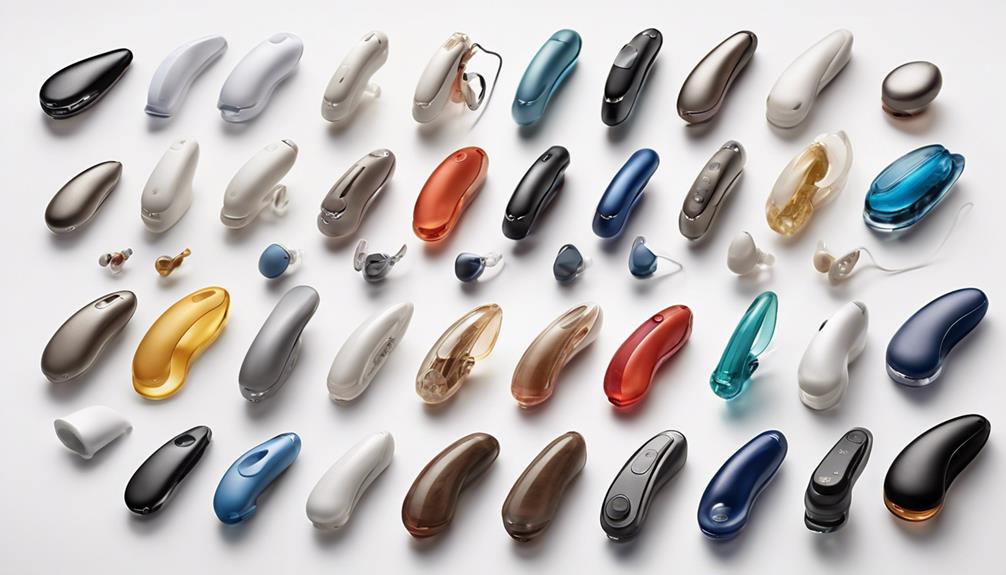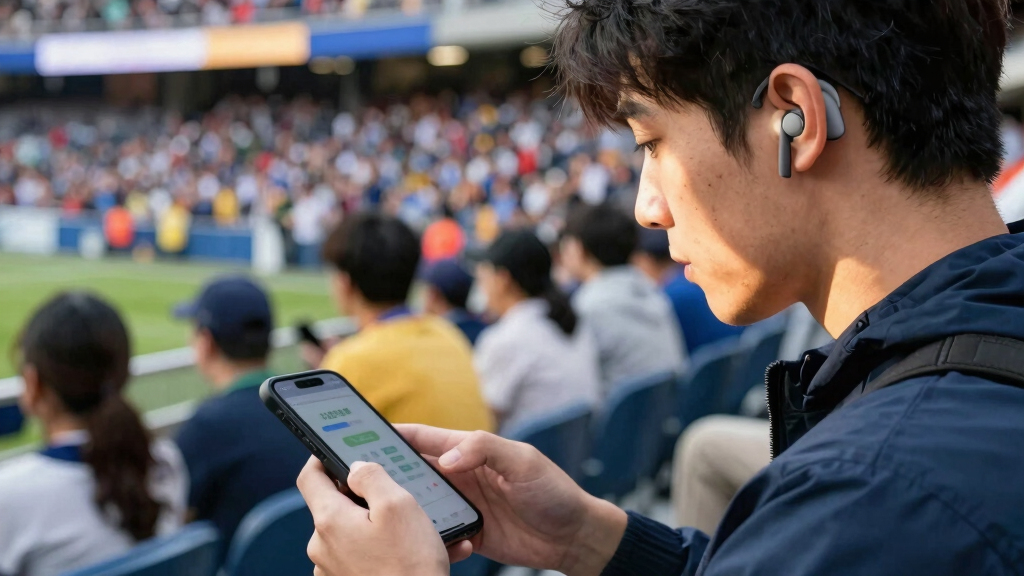
For buyers comparing assistive listening devices for sports events, I rank the Retekess TT106S as the best overall choice because its wireless-microphone format balances mobility, group use, and straightforward deployment. The Retekess T130S is better for organized groups that need many receivers, while the Avantree AuraPlex MX is the premium pick for buyers ready to adopt Auracast. Personal amplifiers from Williams Sound make more sense when one listener only needs nearby speech, but they are less capable of carrying commentary across a noisy venue. The main tradeoffs are receiver count, transmission range, hearing-aid compatibility, setup complexity, and whether the system captures a nearby companion or a dedicated event feed. Continue reading for the full breakdown and buyer-specific recommendations.

Get everyday helpers delivered free — and shop member deals
- Fast, free delivery on millions of items
- Access to Prime Big Deal Days deals on October 6–7
- Prime Video, Amazon Music and more included
Complete the kit


Key Takeaways
- Retekess TT106S ranks first because its wireless microphones suit moving presenters, coaches, and companions better than personal amplifiers designed mainly for close conversation.
- Retekess T130S is the group-capacity leader: its two-transmitter, 18-receiver package is a stronger starting point for clubs and guided parties than the TT119 or four-person system.
- Avantree AuraPlex MX offers the most forward-looking platform, but Auracast compatibility and venue coordination make it less beginner-friendly than a conventional transmitter-and-receiver kit.
- Williams Sound Pocketalker models serve a different need from the Retekess and Avantree systems: they amplify sound near one listener rather than distributing one clean feed to a group.
- Neckloops and bone-conduction headphones solve specific access problems, yet neither is universally compatible; telecoil support and the listener’s hearing profile must guide the choice.
| 4-Person Assistive Listening System with Premium Headphones and US Warranty |  | Best Supported Small-Group System | Listener Capacity: 4 people | Headphones: 4 foldable over-the-head headphones | Headphone Cables: Reinforced, tangle-resistant design | VIEW LATEST PRICE | See Our Full Breakdown |
| Williams Sound PKT D1 H26 Assistive Listening Device with Rear-Wear Headphones |  | Best Rear-Wear Headphone Option | Model: PKT D1 H26 | Device Type: Personal assistive listening amplifier | Amplifier: Included | VIEW LATEST PRICE | See Our Full Breakdown |
| Williams Sound Pocketalker Ultra Hearing Amplifier with Accessories |  | Best Accessory Bundle | Maximum Amplification: Up to 40 dB | Audio Controls: Adjustable volume and tone | Included Batteries: 20 AAA batteries | VIEW LATEST PRICE | See Our Full Breakdown |
| Williams Sound PockeTalker Ultra DUO Sound Amplifier with Headphone and Earbud |  | Best for All-Day Tournaments | Acoustic Gain: 20–40 dB | Battery Life: Up to 100 hours | Battery Requirement: 2 AAA batteries | VIEW LATEST PRICE | See Our Full Breakdown |
| Retekess TT106S Assistive Listening System with 2.4G Wireless Microphones |  | Best Overall | Wireless Band: 2.4G | Transmission Range: 200 meters | Battery Life: Up to 50 hours | VIEW LATEST PRICE | See Our Full Breakdown |
| ConvoAssist™ Personal Sound Amplifier with Wireless Microphones and Rechargeable Case |  | Best for Sideline Conversations | Wireless Microphones: 2 included | Wireless Range: Up to 100 feet | Battery Life: Up to 8 hours per charge | VIEW LATEST PRICE | See Our Full Breakdown |
| Retekess T130S 2nd Gen Assistive Listening System with 2 Transmitters and 18 Receivers |  | Best for Large Team Groups | System Configuration: 2 transmitters and 18 receivers | Wireless Range: Up to 328 feet / 100 meters | Receiver Runtime: Up to 20 hours | VIEW LATEST PRICE | See Our Full Breakdown |
| Retekess TT119 Assistive Listening System with 1 Transmitter and 10 Receivers |  | Best Long-Range Venue Coverage | System Configuration: 1 transmitter and 10 receivers | Wireless Range: 300 meters / 984 feet | Channels: 17 | VIEW LATEST PRICE | See Our Full Breakdown |
| Avantree Audiplex MX Multi-Channel Assistive Listening System |  | Best for Synchronized Broadcast Audio | System Configuration: 1 transmitter and 10 receivers | Wireless Technology: 2.4 GHz RF | Wireless Range: Up to 100 meters | VIEW LATEST PRICE | See Our Full Breakdown |
| Assistive Listening System with Neckloops and Carrying Case for 10 People |  | Best Battery Life | Listener Capacity: 10 people | Receiver Batteries: 2 AAA batteries per receiver | Battery Life: Up to 55 hours | VIEW LATEST PRICE | See Our Full Breakdown |
| Retekess T130 Assistive Listening System with Bone Conduction Headphones |  | Best for Bone Conduction Comfort | Receivers: 15 | Bone Conduction Headphones: 4 | Transmitter Channels: 99 | VIEW LATEST PRICE | See Our Full Breakdown |
| Avantree AuraPlex MX Auracast Assistive Listening System for Churches |  | Best for Auracast-Ready Indoor Arenas | Range: 328 feet | Included Equipment: 1 transmitter and 10 receivers | Wireless Technology: Bluetooth LE Audio | VIEW LATEST PRICE | See Our Full Breakdown |
| assistive listening devices for sports event | Battery Life |
|---|---|
| 4-Person Assistive Listening S | — |
| Williams Sound PKT D1 H26 Assi | — |
| Williams Sound Pocketalker Ult | — |
| Williams Sound PockeTalker Ult | Up to 100 hours |
| Retekess TT106S Assistive List | Up to 50 hours |
| ConvoAssist™ Personal Sound Am | Up to 8 hours per charge |
| Retekess T130S 2nd Gen Assisti | — |
| Retekess TT119 Assistive Liste | Up to 10 hours |
| Avantree Audiplex MX Multi-Cha | — |
| Assistive Listening System wit | Up to 55 hours |
| Retekess T130 Assistive Listen | Up to 8 hours |
| Avantree AuraPlex MX Auracast | — |
More Details on Our Top Picks
4-Person Assistive Listening System with Premium Headphones and US Warranty
I rank the 4-Person Assistive Listening System as the strongest small-group choice for community arenas, school gyms, and hospitality suites where dependable support matters more than maximum capacity. Its three-year US warranty and phone assistance give venue staff a clearer support path than less established event systems. The foldable over-ear headphones, reinforced cables, and HiFi speakers also suit guests who prefer familiar equipment over earbuds. Compared with the Retekess TT106S, however, its four-listener capacity is restrictive, and no transmission range is provided for judging coverage across large stands. Expansion is possible, but that adds cost, while the missing carrying case makes transport less tidy. I would choose this over the TT106S for a small, staff-managed setup, but not for distributing audio across a full sports venue.
Pros:- Four foldable over-ear headphones are included for immediate group use
- Reinforced cables help reduce tangling and damage during repeated distribution
- Three-year US-based warranty includes phone support
- Expandable receiver capacity can accommodate later growth
Cons:- Base package supports only four listeners
- Carrying case is not included by default
- No transmission range is supplied for evaluating stadium coverage
Best for: Small sports venues, school athletic departments, and hospitality suites serving four listeners at a time with staff available to manage the equipment
Not ideal for: Large arenas or mobile event teams that need documented long-range coverage, six or more receivers, and an included transport case
- Listener Capacity:4 people
- Headphones:4 foldable over-the-head headphones
- Headphone Cables:Reinforced, tangle-resistant design
- Speakers:HiFi headphone speakers
- System Weight:5 pounds
- Warranty:3-year US-based warranty
- Included Signage:ADA plaque
- Expansion:Supports additional receivers
Our verdict“This is my pick for a small venue that values straightforward group equipment and US-based support over range and high receiver capacity.”
Williams Sound PKT D1 H26 Assistive Listening Device with Rear-Wear Headphones
The Williams Sound PKT D1 H26 earns its place for spectators who dislike over-ear headbands or conventional earbuds. Its rear-wear headphones can be more convenient with hats, while the compact amplifier and microphone form a portable personal setup for hearing nearby speech or commentary. Unlike the Retekess TT106S, this is not a six-listener wireless event system with a stated 200-meter range; it is better suited to one spectator seated near the sound source. The package is also less informative than the Pocketalker Ultra DUO because battery life and power details are absent. That uncertainty matters during long games or tournament days. I would favor the PKT D1 H26 for its distinctive wearing style and simple included components, but buyers seeking remote microphone placement, documented endurance, or broader venue coverage should choose another model.
Pros:- Rear-wear headphones provide an alternative to over-head and in-ear designs
- Compact format is practical for carrying to games
- Amplifier, microphone, and headphones are included
- Designed to improve communication in difficult listening environments
Cons:- Battery life and power method are not specified
- No wireless transmission range is listed
- Accessory compatibility may limit alternative headphone choices
Best for: Individual spectators who wear hats or dislike standard headbands and want a compact amplifier for nearby commentary or conversation
Not ideal for: Tournament attendees who need documented all-day battery life or venues distributing a wireless audio feed to multiple listeners
- Model:PKT D1 H26
- Device Type:Personal assistive listening amplifier
- Amplifier:Included
- Microphone:Included
- Headphone Style:Rear-wear
- Intended Listening Environment:Challenging communication settings
Our verdict“I recommend this mainly to individual spectators who prioritize a rear-wear headphone fit over wireless range and published battery specifications.”
Williams Sound Pocketalker Ultra Hearing Amplifier with Accessories
I give the Williams Sound Pocketalker Ultra the accessory-bundle role because it arrives with 20 AAA batteries, two listening options, a lanyard, and a 12-foot microphone extension cable. That cable can place the microphone nearer a companion, television, radio, or localized commentary source instead of forcing the listener to rely solely on sound reaching their seat. Its adjustable volume and tone also offer more control than the simpler PKT D1 H26 package. Compared with the Pocketalker Ultra DUO, the underlying amplification range is similar, but this version provides far more supporting accessories from the start. The compromise is that it remains a personal amplifier, not a direct wireless stadium-feed system like the Retekess TT106S. Manual adjustments may also become tiresome as crowd noise changes, and its 40 dB ceiling may be inadequate for severe hearing loss.
Pros:- Up to 40 dB amplification with separate volume and tone adjustment
- Twenty AAA batteries reduce the need for an immediate supply purchase
- Twelve-foot microphone extension cable supports flexible microphone placement
- Headphones, mini earbud, lanyard, and cleaning cloth are included
Cons:- Personal amplification can also raise surrounding crowd noise
- Manual control changes may be needed as the event gets louder or quieter
- Not intended to replace a prescribed hearing aid or support severe hearing loss
Best for: Older spectators with mild to moderate hearing difficulty who want a ready-supplied personal amplifier for seated games and nearby commentary sources
Not ideal for: People with severe hearing loss or spectators expecting a direct wireless feed from an announcer across a large stadium
- Maximum Amplification:Up to 40 dB
- Audio Controls:Adjustable volume and tone
- Included Batteries:20 AAA batteries
- Listening Accessories:Headphones and mini earbud
- Microphone Extension Cord:12 feet
- Carrying Accessory:Neck lanyard
- Care Accessory:Microfiber cloth
- Warranty:5 years
Our verdict“This is my choice for a spectator who wants a generously equipped personal amplifier and accepts that it cannot replace a venue-fed listening system.”
Williams Sound PockeTalker Ultra DUO Sound Amplifier with Headphone and Earbud
The defining advantage of the Williams Sound PockeTalker Ultra DUO is its rated battery life of up to 100 hours. For spectators attending weekend tournaments, doubleheaders, or long race meetings, that extended operating time reduces concern about changing batteries midway through an event. The removable microphone, extension cord, and belt clip also make it more adaptable than the Williams Sound PKT D1 H26. Yet the other Pocketalker Ultra package includes 20 batteries and a broader accessory set, while this DUO ships with only a headphone, an earbud, and a user guide; the required AAA batteries are not included. Its 20–40 dB acoustic gain suits mild to moderate needs but may fall short for severe hearing loss. I rank it for endurance rather than venue coverage, since it does not provide the wireless group distribution or 200-meter range of the Retekess TT106S.
Pros:- Rated for up to 100 hours of battery life
- Volume and tone controls allow personalized sound adjustment
- Removable microphone works with an extension cord for flexible placement
- Headphone, earbud, and belt clip support different listening arrangements
Cons:- Two required AAA batteries are not included
- Basic accessory bundle is leaner than the other Pocketalker Ultra package
- Maximum 40 dB gain may not meet severe hearing-loss needs
Best for: Individual spectators attending long tournaments, race days, or multi-game sessions who need extended battery life and adjustable personal amplification
Not ideal for: Buyers who need batteries included, severe-loss support, or audio distributed wirelessly from event staff to multiple seats
- Acoustic Gain:20–40 dB
- Battery Life:Up to 100 hours
- Battery Requirement:2 AAA batteries
- Microphone:Removable with extension cord
- Audio Controls:Adjustable volume and tone
- Listening Accessories:Headphone and earbud
- Mounting:Belt clip
- Warranty:5 years
Our verdict“I would buy the Ultra DUO for long event days when personal amplification and battery endurance matter more than group transmission.”
Retekess TT106S Assistive Listening System with 2.4G Wireless Microphones
I rank the Retekess TT106S first because its specifications address the realities of live sports more directly than the personal amplifiers here. A 200-meter transmission range gives staff more freedom to cover stands, sidelines, or event zones, while six receivers serve a group immediately. Its 50-hour battery rating also suits long tournament schedules, and the included headset and lavalier microphones let a commentator choose between hands-free and clipped placement. Compared with the four-person assistive listening system, the TT106S supports two more listeners and publishes a usable range; compared with either Pocketalker, it can send one source to several people. The tradeoff is administrative complexity: 9,999 channels are excessive for many small venues and can make setup less approachable. Charging requires external power, and limited review data gives buyers less long-term evidence than established Williams Sound products offer.
Pros:- Wireless range of up to 200 meters suits distributed seating and event zones
- Six included receivers support a group without immediate expansion
- Fifty-hour battery rating covers long sports schedules
- Headset and lavalier microphones support different commentator setups
Cons:- Large channel count can make initial configuration confusing
- Charging depends on access to an external power source
- Limited review history provides less evidence about long-term reliability
Best for: Sports clubs, school athletic programs, tour operators, and event coordinators distributing live commentary to as many as six listeners across a large venue
Not ideal for: Solo spectators who want a pocket amplifier with simple analog controls and no charging routine or channel management
- Wireless Band:2.4G
- Transmission Range:200 meters
- Battery Life:Up to 50 hours
- Battery Capacity:450 mAh
- Channels:9,999
- Volume Levels:0–9
- Receiver Count:6 receivers
- Microphones:Headset and lavalier microphones
- Warranty:3 years
Our verdict“The TT106S is my best overall choice for organizers who need long-range, multi-listener commentary rather than simple personal sound amplification.”
ConvoAssist™ Personal Sound Amplifier with Wireless Microphones and Rechargeable Case
I rank the ConvoAssist™ Personal Sound Amplifier as the conversation-focused pick because its two wireless microphones can place a coach’s or companion’s voice directly in the listener’s preferred headphones. The 100-foot range suits a seat-to-sideline exchange or a small watch party, while automatic pairing removes much of the setup burden. Compared with the Williams Sound Pocketalker Ultra, this model offers more freedom between speaker and listener; compared with the Retekess T130S, it is far easier to carry but lacks a fleet of receivers for a whole group. I see the two-speaker capability as its clearest advantage for conversations during breaks. The tradeoffs are meaningful: eight-hour battery life may be tight for an all-day tournament, headphones are required, and heavy crowd noise can still overwhelm speech.
Pros:- Two wireless microphones can carry two speakers at once
- Automatic pairing keeps setup simple
- Works with the listener’s preferred headphones
- Portable magnetic case stores and charges the system
Cons:- Eight-hour runtime may not cover a full tournament day
- Headphones are needed for the intended listening setup
- Speech clarity may decline amid intense crowd noise
Best for: Individual spectators who want to hear a coach, companion, or two nearby speakers without relying on venue-installed equipment
Not ideal for: Large groups or spectators in loud stadium sections where crowd noise may overpower the amplified conversation
- Wireless Microphones:2 included
- Wireless Range:Up to 100 feet
- Battery Life:Up to 8 hours per charge
- Pairing:Automatic
- Headphone Compatibility:Compatible with existing headphones
- Charging Case:Portable magnetic case included
- Listening Format:Speech transmitted directly to earbuds or headphones
- Design Background:Designed by an ENT physician
Our verdict“I recommend ConvoAssist for one listener who values portable, direct conversation support more than group capacity or stadium-wide range.”
Retekess T130S 2nd Gen Assistive Listening System with 2 Transmitters and 18 Receivers
I place the Retekess T130S first for staff-led group listening because its package pairs two transmitters with 18 receivers, enough for a team bench, officiating crew, or organized fan group. Its 49-channel design lets nearby groups operate separately, while one-click muting and receiver shutdown reduce post-event admin. Compared with the Retekess TT119, the T130S has one-third of the range—328 feet versus 984 feet—but supplies eight more receivers and doubles the stated runtime to 20 hours. That balance makes it better for controlled group communication than feeding stadium program audio across distant seating blocks. I would skip it for casual personal use: the full case weighs about 4.7 kilograms, the bundle is more equipment than one listener needs, and VHF performance may depend on venue layout and local interference.
Pros:- Includes 18 receivers and two transmitters
- Twenty-hour runtime supports long tournament schedules
- Forty-nine channels accommodate multiple nearby groups
- One transmitter can mute or shut down all receivers
Cons:- Its 328-foot range trails the Retekess TT119
- The complete case weighs about 4.7 kilograms
- The large bundle is excessive for personal listening
Best for: Teams, schools, and event organizers distributing live instructions or interpretation to groups of up to 18 listeners
Not ideal for: Solo spectators or operators who need audio delivered across opposite ends of a large stadium
- System Configuration:2 transmitters and 18 receivers
- Wireless Range:Up to 328 feet / 100 meters
- Receiver Runtime:Up to 20 hours
- Channels:49
- Charging Capacity:Up to 32 units
- Charging Time:4–5 hours
- Receiver Weight:45 grams
- Transmitter Weight:140 grams
- Wireless Technology:VHF
Our verdict“I recommend the T130S for organized sports groups that value receiver capacity, long runtime, and centralized controls over maximum transmission distance.”
Retekess TT119 Assistive Listening System with 1 Transmitter and 10 Receivers
I give the Retekess TT119 the long-range role because its stated 984-foot reach is the strongest fit here for moving between concourses, field-level areas, and distant seating. Its 17 channels offer far more group separation than the two-channel Avantree Audiplex MX, and XLR, RCA, AUX, and USB inputs make it easier to connect venue audio sources. Against the Retekess T130S, it reaches roughly three times farther but includes only 10 receivers rather than 18 and offers half the battery runtime. That makes the TT119 a better infrastructure pick than a high-capacity package. I would budget time for setup: mono is the default, stereo may need adjustment, and receiver batteries must be managed separately. The 10-hour runtime covers many games, though tournament operators may need spares.
Pros:- Stated 984-foot range suits large venues
- Seventeen channels support separate listening groups
- Four input formats accommodate varied audio equipment
- One-click controls simplify muting and pausing
Cons:- Only 10 receivers are included
- Receivers rely on externally managed batteries
- Default mono output may require adjustment for stereo sources
Best for: Schools and venue operators that need to send commentary or interpretation across large sports facilities to no more than 10 listeners
Not ideal for: Groups exceeding 10 people or volunteer crews seeking rechargeable receivers with minimal battery handling
- System Configuration:1 transmitter and 10 receivers
- Wireless Range:300 meters / 984 feet
- Channels:17
- Audio Inputs:XLR, AUX, RCA, and USB
- Receiver Weight:90 grams
- Battery Life:Up to 10 hours
- Receiver Power:External batteries required
- Default Audio Mode:Mono
- Controls:One-click mute and pause
Our verdict“I recommend the TT119 when transmission distance and source flexibility matter more than receiver count or rechargeable convenience.”
Avantree Audiplex MX Multi-Channel Assistive Listening System
I rank the Avantree Audiplex MX as the best match for spectators who need venue audio to stay aligned with live action. Its low-latency 2.4 GHz RF link matters when a referee call or announcer commentary would feel confusing if it arrived late, and individual receiver volume gives each listener control. Compared with the Retekess TT119, Audiplex MX offers fewer channels and about one-third of the range, but Bluetooth, optical, and AUX inputs provide a flexible bridge to modern broadcast sources. It is also expandable beyond the included 10 receivers. I see two practical catches: only three wired earbuds are supplied for the full receiver set, and battery management remains part of event prep. With two channels, it suits a main feed plus one alternate feed, not a complex multilingual operation.
Pros:- Low-latency transmission keeps sound aligned with live action
- Bluetooth, optical, and AUX inputs support modern sources
- Individual receiver volume accommodates different hearing needs
- Additional receivers can expand the system
Cons:- Two channels limit complex interpretation setups
- Only three wired earbuds accompany 10 receivers
- Its 100-meter range is much shorter than the Retekess TT119
Best for: Sports bars, school venues, and small event teams sending synchronized broadcast audio to up to 10 initial listeners
Not ideal for: Multilingual events needing several simultaneous feeds or venues requiring close to 1,000 feet of coverage
- System Configuration:1 transmitter and 10 receivers
- Wireless Technology:2.4 GHz RF
- Wireless Range:Up to 100 meters
- Channels:2
- Audio Inputs:Bluetooth, optical, and AUX
- Included Earbuds:3 wired earbuds
- Volume Control:Individual control on receivers
- Power Source:Battery powered
- System Weight:1,200 grams
Our verdict“I recommend Audiplex MX for synchronized game or broadcast audio when two feeds are enough and buyers can supply extra listening accessories.”
Assistive Listening System with Neckloops and Carrying Case for 10 People
I assign the Assistive Listening System with Neckloops and Carrying Case the endurance role because its receivers run for up to 55 hours on two AAA batteries. That is a major operational advantage for tournament weekends, seasonal venues, or volunteer crews that cannot recharge devices between every session. Compared with the Retekess T130S at 20 hours and the ConvoAssist at eight, the 55-hour runtime reduces mid-event power swaps. Neckloops also make this package more relevant for hearing-aid or cochlear-implant users than bundles centered on generic earbuds, while belt clips, armbands, and neck straps support different mobility needs. My reservation is the thin audio detail: range, channels, and input connections are not stated, making venue compatibility harder to judge. It also tops out at 10 listeners, and recurring AAA purchases add cost and waste.
Pros:- Receivers offer up to 55 hours of audio
- Neckloops support compatible hearing aids and cochlear implants
- Several wearing options accommodate different users
- Lifetime limited warranty and U.S.-based support add long-term backing
Cons:- Wireless range, channel count, and inputs are unspecified
- Capacity is limited to 10 listeners
- Disposable AAA batteries create recurring expense and waste
Best for: Tournament venues serving up to 10 hearing-aid or cochlear-implant users and prioritizing long receiver runtime
Not ideal for: Buyers who need verified wireless range, channel capacity, or audio-input compatibility before selecting venue equipment
- Listener Capacity:10 people
- Receiver Batteries:2 AAA batteries per receiver
- Battery Life:Up to 55 hours
- Listening Accessory:Neckloops included
- Carrying Case:CAS-10 included
- Wearing Options:Belt clip, Velcro armband, and neck strap
- Warranty:Lifetime limited warranty on receivers and transmitters
- Technical Support:Free U.S.-based support
Our verdict“I recommend this system for small accessibility programs that favor neckloop compatibility and exceptional runtime despite sparse connectivity details.”
Retekess T130 Assistive Listening System with Bone Conduction Headphones
I rank the Retekess T130 as the comfort-focused choice for spectators who dislike earbuds or cannot wear them. Its non-in-ear bone conduction design leaves the ear canal open, helping users remain aware of crowd announcements and nearby companions. Compared with the Retekess TT119, the T130 offers more receivers, far more transmitter channels, and a longer stated 200-meter working range, making it better suited to large stands or sideline groups. Battery life of up to eight hours can cover most game days without a recharge. The main compromise is a 15-receiver versus four-headphone mismatch: organizers may need additional listening accessories for the full group. It is also bulkier than an earbud system, depends on a 3.5mm audio source, and may struggle when stadium noise overwhelms the transmitted feed.
Pros:- Non-in-ear bone conduction headphones accommodate listeners who cannot or prefer not to wear earbuds
- 200-meter stated range supports groups spread across large seating areas
- 99 transmitter channels provide flexibility where several audio feeds operate nearby
- Up to eight hours of battery life can cover a full sporting session
Cons:- Only four bone conduction headphones are included for the 15 receivers
- The 3.5mm connection may require adapters with newer venue equipment
- The bulkier headset design and limited performance against extreme crowd noise may reduce appeal at loud stadiums
Best for: Venue coordinators serving up to 15 spectators, especially attendees who find in-ear headphones uncomfortable or unsuitable
Not ideal for: Organizers who need identical bone conduction headsets for every receiver or venues relying solely on USB-C, Lightning, or Bluetooth audio outputs
- Receivers:15
- Bone Conduction Headphones:4
- Transmitter Channels:99
- Battery Life:Up to 8 hours
- Working Range:200 meters
- Connectivity:3.5mm jack
- Design:Non-in-ear bone conduction
Our verdict“I would choose the T130 for a large spectator group that values open-ear comfort, provided the accessory mismatch and analog connection are manageable.”
Avantree AuraPlex MX Auracast Assistive Listening System for Churches
I place the Avantree AuraPlex MX highest for indoor sports venues moving toward Auracast. Its transmitter can serve the ten included receivers while also broadcasting to compatible Auracast hearing aids and devices, reducing the number of loaner units a venue must manage. Compared with the Retekess T130, this system favors modern Bluetooth LE Audio compatibility and direct hearing-aid access over analog simplicity and longer stated reach. The 328-foot range fits many gymnasiums, ice rinks, and compact arenas, while synchronized audio helps listeners follow commentary without distracting delay. Its weakness is venue dependence: walls, packed structural layouts, and outdoor seating can shorten coverage. Compatibility is also limited to Auracast-capable personal devices, so older hearing aids may still require a supplied receiver. I see it as a forward-looking indoor installation, not the safest choice for sprawling stadiums.
Pros:- Broadcasts to the ten supplied receivers and compatible Auracast personal devices
- Direct support for several current hearing-aid families can reduce accessory handling
- Bluetooth LE Audio provides clear, synchronized event commentary
- 328-foot stated range suits many medium-sized indoor sports venues
Cons:- Outdoor use and obstructed layouts can reduce reliable coverage
- Older or non-Auracast hearing aids cannot connect directly
- Its 328-foot stated range is shorter than the Retekess T130’s stated 200-meter reach
Best for: Indoor gyms, ice rinks, and compact arenas serving a mix of receiver users and spectators with Auracast-enabled hearing aids
Not ideal for: Outdoor stadium operators or venues with heavy structural obstructions, where the stated range and Bluetooth LE Audio coverage may decline
- Range:328 feet
- Included Equipment:1 transmitter and 10 receivers
- Wireless Technology:Bluetooth LE Audio
- Device Compatibility:Auracast-enabled hearing aids and devices
- Supported Hearing-Aid Families:ReSound Nexia, Jabra Enhance Pro 20/30, Beltone Serene, Starkey Edge AI, Oticon Intent, Philips HearLink 9050
- Suitable Venues:Churches, lecture halls, and event spaces
Our verdict“I recommend the AuraPlex MX for an indoor venue that wants shared receivers now and direct Auracast hearing-aid access as adoption grows.”

How We Picked
I ranked these products by how well their formats address the realities of a sports venue: crowd noise, distance from the sound source, moving speakers, multiple listeners, and limited setup time. I placed the greatest weight on speech delivery in noisy settings, practical receiver capacity, wearable usability, connection flexibility, and the effort required to manage the system. Build format, charging demands, storage, hearing-aid compatibility, and package value also affected placement.
I compared products within their intended lanes rather than treating every amplifier as interchangeable. The Retekess TT106S, TT119, T130S, four-person package, neckloop system, and Avantree models were judged mainly as shared listening systems; the Williams Sound amplifiers and ConvoAssist were judged as personal solutions. Higher positions went to products that fit more sports-event scenarios without demanding specialized infrastructure. I marked down options that depend on compatible receiving hardware, offer limited group scale, or amplify ambient noise along with the speech a listener wants.
| assistive listening devices for sports event | Battery Life |
|---|---|
| 4-Person Assistive Listening S | — |
| Williams Sound PKT D1 H26 Assi | — |
| Williams Sound Pocketalker Ult | — |
| Williams Sound PockeTalker Ult | Up to 100 hours |
| Retekess TT106S Assistive List | Up to 50 hours |
| ConvoAssist™ Personal Sound Am | Up to 8 hours per charge |
| Retekess T130S 2nd Gen Assisti | — |
| Retekess TT119 Assistive Liste | Up to 10 hours |
| Avantree Audiplex MX Multi-Cha | — |
| Assistive Listening System wit | Up to 55 hours |
| Retekess T130 Assistive Listen | Up to 8 hours |
| Avantree AuraPlex MX Auracast | — |
Factors to Consider When Choosing Assistive Listening Devices For Sports Events
The right system depends less on headline amplification and more on where the desired voice originates. I recommend identifying the sound source, number of listeners, venue policy, and preferred earpiece before comparing packages.
Choose Between Personal Amplification and a Transmitted Feed
A personal amplifier places a microphone near the listener and raises nearby sound, which can help with conversation in a concession area or between plays. Inside a loud stadium, that same microphone may also raise crowd noise, music, and public-address reflections. A transmitter-and-receiver system can send a coach, guide, interpreter, or companion directly to one or more listeners, producing clearer separation from the surrounding noise. It does require someone to wear or position the transmitting microphone. Buyers seeking play-by-play commentary should also check whether the venue permits a connection to its audio feed, since a microphone alone cannot provide direct broadcast audio. I favor transmitted systems for organized groups and personal amplifiers for one listener staying close to a speaking companion.
Match Receiver Capacity to the Real Group Size
Receiver count changes both cost and workload. A four-person package can suit a family or small fan group without leaving many unused components, while the Retekess T130S package with 18 receivers is aimed at clubs, schools, and hosted outings. Buying a large kit for two listeners means more charging, labeling, cleaning, and storage than the outing requires. Buying too small creates a different problem because adding receivers later may cost more or introduce pairing and compatibility questions. I suggest allowing a small buffer for guests and failed batteries, but not doubling the expected audience without a clear reason. Organizations should also assign receiver numbers so missing units can be traced after the event.
Treat Range Claims as Best-Case Figures
Published range can help compare systems, but a crowded sports venue is rarely an open, interference-free space. Concrete structures, metal seating, human bodies, competing wireless traffic, and a transmitter worn under clothing may all reduce usable range. A long-range model such as the Retekess T130S gives a group more margin, yet range alone does not promise clear speech in every concourse or seating section. The transmitter should remain on the same side of major barriers as the listeners whenever possible. I would prioritize stable coverage across the group’s actual seating area over the largest number printed on a product page. For wide or divided venues, a pre-event walk-through is more informative than relying solely on a maximum-distance claim.
Verify the Listening Interface Before Buying
The receiver is only part of the listening chain; the earpiece must suit the user’s hearing needs. Neckloops can send sound to hearing aids or cochlear implant processors equipped with an active telecoil, which may be more comfortable than placing headphones over existing devices. Without telecoil support, a neckloop package may provide no benefit. Bone-conduction headphones leave the ears open to surrounding sound, but they are not a universal answer for every type or degree of hearing loss. Conventional earbuds and rear-wear headphones are simpler for many users, though fit, hygiene, and feedback near hearing aids can become issues. I recommend confirming telecoil settings, connector type, and permitted accessories with the user’s hearing-care professional before choosing a specialized interface.
Plan for Charging, Distribution, and Venue Rules
A system that works at kickoff can still fail late in the event if its charging routine is weak. Rechargeable cases, such as the one supplied with ConvoAssist, reduce loose-cable clutter for personal use, while large receiver fleets need a labeled charging and inspection process. Disposable-battery designs can be easier to revive on site, but they create recurring expense and require spare cells in the correct size. Groups should check every receiver, set safe volume levels, and distribute hygienic earpieces before entering the seating area. Venue security may restrict radio equipment, external microphones, cables, or access to house audio, so I would request permission before arrival. Good logistics often matter more than paying for an extra feature that the group cannot deploy smoothly.
Frequently Asked Questions
Should I Buy a Personal Amplifier or a Multi-Receiver Listening System for a Stadium?
Choose a personal amplifier when one listener mainly wants to hear a companion seated nearby. The Williams Sound Pocketalker models fit that role, but their microphones can pick up the same crowd noise competing with the conversation. Choose a multi-receiver system when one speaker, interpreter, or audio source needs to reach several listeners. Products such as the Retekess TT106S and T130S create a more direct speech path but require transmitter management. For play-by-play audio, ask the venue whether an accessible house feed or loan system is already available before buying separate equipment.
Will These Devices Connect Directly to a Stadium’s Public-Address System?
Direct connection is possible only when both the venue and the selected transmitter support a compatible audio path. Many portable packages are built around a microphone input, not automatic access to the stadium’s commentary feed. Venue staff may prohibit visitors from connecting equipment to the public-address system for security and operational reasons. A microphone placed near a speaker can capture commentary, but it may also capture echoes and crowd sound. I recommend asking the venue’s accessibility team about house receivers, audio-output access, and approved wireless equipment well before the event.
Are Neckloops Better Than Headphones for Hearing-Aid Users?
Neckloops can be the better interface when the listener’s hearing aids or cochlear implant processor includes an enabled telecoil. They route the receiver’s signal through the user’s programmed hearing device, avoiding the awkward fit of headphones over hearing aids. They will not help when the hearing device lacks telecoil support or when that mode has not been activated. Headphones and earbuds offer broader device compatibility, though they may cause feedback or discomfort for some users. The 10-person neckloop system makes sense for a telecoil-equipped group, while mixed groups may need several earpiece types.
Is Auracast Worth Paying More for in 2026?
Auracast is appealing for buyers building a newer accessibility setup because compatible broadcasts can serve multiple listeners without issuing a conventional receiver to every person. The Avantree AuraPlex MX is the premium option in this lineup for that use case. Its value falls when listeners’ hearing aids, earbuds, or phones cannot receive the broadcast directly, since adapters or dedicated receivers may still be needed. Auracast also does not guarantee access to a venue’s house commentary; the desired audio must still enter the broadcasting system. I would pay more for it when compatibility has been verified and the system will be reused, not for a single outing with unknown equipment.
How Many Receivers Should a Club or School Buy?
Start with the largest realistic attendance rather than the total size of the organization. Add a small spare allowance for guests, battery trouble, or a damaged earpiece, then compare that figure with fixed package sizes. The Retekess TT119’s 10-receiver format may fit a modest group, while the T130S package with 18 receivers reduces immediate expansion pressure for larger outings. A two-transmitter kit is also useful when two guides or language sources must speak, but it adds channel coordination and charging work. Before purchasing extra receivers separately, verify that they match the transmitter’s model, frequency system, and pairing process.
Conclusion
For most organized sports outings, I would choose the Retekess TT106S as the best overall option because its wireless-microphone approach balances mobility and manageable setup. The Retekess TT119 is my best-value group pick when one transmitter and 10 receivers match the attendance, while the four-person system is the leaner choice for a family-sized group. Buyers seeking newer broadcast technology should choose the Avantree AuraPlex MX as the premium pick, provided their receiving devices support Auracast. For beginners and solo listeners, the Williams Sound PKT D1 H26 offers a more approachable format; the Pocketalker Ultra DUO is better when having both a headphone and earbud matters. Clubs and schools needing greater capacity should move to the Retekess T130S, while multi-program events are better aligned with the Avantree Audiplex MX. The neckloop system is my choice for telecoil-equipped groups, the Retekess T130 with bone-conduction headphones serves listeners who need open ears, and ConvoAssist suits buyers prioritizing compact charging and close conversation. The right final choice comes from matching the sound source, audience size, and listening interface rather than buying the package with the longest feature list.
Fall Picks
fall essentials
As an affiliate, we earn on qualifying purchases.