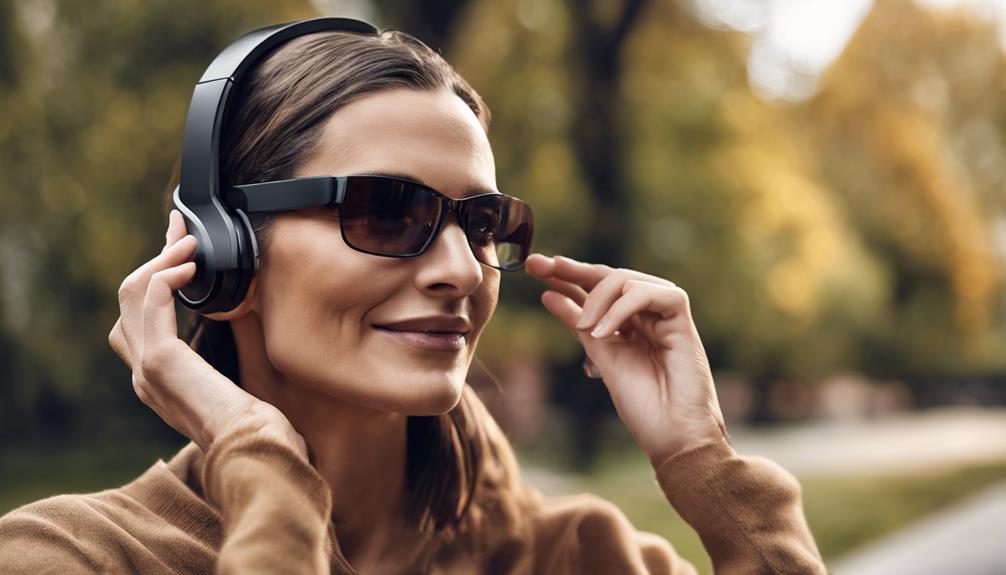
Digital conversation amplifiers can make nearby speech easier to hear, but they differ in how they capture sound, fit, and manage background noise. My best overall pick is the ConvoAssist Personal Sound Amplifier, which stands out for its dual wireless microphones and charging case, a setup suited to conversations where mic placement matters. The Bellman & Symfon Mino is a strong alternative for people who prefer a dedicated handheld amplifier with headphone or earbud options, while the SuperEar SE5000 offers a straightforward personal-amplifier format. The main tradeoffs are between focused microphone placement, discreet in-ear or behind-the-ear wear, and the effort required to adjust and maintain each device. Read on for the full comparison and guidance on choosing the right listening style.

Get everyday helpers delivered free with Prime
- Fast, free delivery on millions of items
- Prime Video, Amazon Music and more included
- Member-only deals all year
Complete the kit


Key Takeaways
- ConvoAssist’s dual wireless microphones set it apart for conversations where a microphone can be placed near the speaker; it is less like a simple personal amplifier than the other picks.
- Bellman & Symfon Mino and SuperEar SE5000 use a separate amplifier-and-listener setup, offering a different fit choice from the lineup’s many in-ear and behind-the-ear models.
- Rechargeable designs dominate this roundup, but charging convenience varies: the Qnmittry JH-A260 and some other in-ear options include a charging case, while other models use different charging arrangements.
- Behind-the-ear models appear in several distinct forms, from two-device packs such as MEDca and Glorified Mary to single-model listings such as Vimaydo and Kituwant; pack format and fit may matter as much as extra sound modes.
- Noise-reduction claims do not make the options interchangeable: buyers should prioritize microphone placement, comfortable wear, manageable controls, and the listening setting rather than choosing by a feature label alone.
| SuperEar SE5000 Personal Sound Amplifier with Headphones and Earbuds |  | Best for Flexible TV and Conversation Listening | Amplification: Up to 50+ dB | Power: 1 AAA battery | Battery life: Up to 30 hours | VIEW LATEST PRICE | See Our Full Breakdown |
| Glorified Mary Rechargeable Behind-the-Ear Hearing Amplifiers, 2-Pack |  | Best for Long-Running Two-Ear Use | Model: G-213D | Style: Behind-the-ear hearing amplifiers | Quantity: 2 | VIEW LATEST PRICE | See Our Full Breakdown |
| Bellman & Symfon Mino Rechargeable Digital Hearing Amplifier with Headphones and Earbuds |  | Best for Directional Listening and Optional TV Connection | Model: Mino (BE2030-A-09) | Power source: Rechargeable lithium-ion battery | Battery life: Up to 30 hours | VIEW LATEST PRICE | See Our Full Breakdown |
| Karthus Rechargeable In-Ear Hearing Aids with Noise Reduction |  | Best for Simple, Low-Profile Daily Wear | Style: In-ear hearing aids | Intended users: Adults 18+ with perceived mild to moderate hearing loss | Listening modes: Noise Reduction and Quiet | VIEW LATEST PRICE | See Our Full Breakdown |
| Eduitai Rechargeable Digital Hearing Amplifier with Noise Cancellation |  | Best Compact Single-Unit Pick | Model: ASD123 | Style: Canal-style digital hearing amplifier | Noise reduction modes: 2 | VIEW LATEST PRICE | See Our Full Breakdown |
| Vimaydo Rechargeable Behind-the-Ear Hearing Amplifier for Seniors |  | Best for Simple, Long-Wear Listening | Fit: Behind-the-ear | Sound gain: Up to 45dB | Battery life: Up to 40 hours | VIEW LATEST PRICE | See Our Full Breakdown |
| QIPOPC Rechargeable Behind-the-Ear Hearing Amplifiers with Noise Reduction |  | Best for Long Listening Between Charges | Model: ZF-M802 | Fit: Behind-the-ear | Battery: Included lithium-ion | VIEW LATEST PRICE | See Our Full Breakdown |
| Villear Rechargeable OTC Behind-the-Ear Hearing Aids with AI Noise Cancellation | 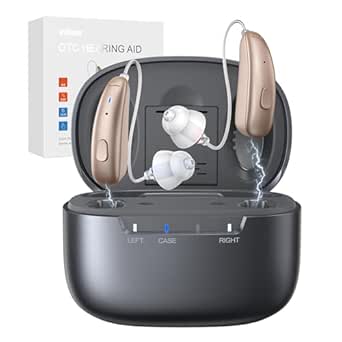 | Best for Speech Focus in Busy Settings | Fit: Behind-the-ear | Stated hearing-loss range: 25–55dB; mild to moderate | Digital chip: 16-channel | VIEW LATEST PRICE | See Our Full Breakdown |
| MEDca Behind-the-Ear Digital Sound Amplifiers, Black, 2-Pack | 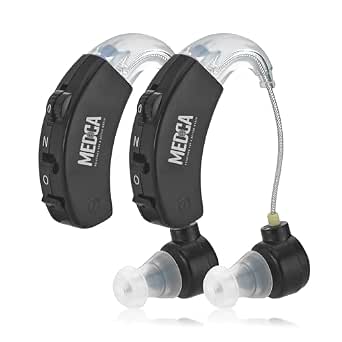 | Best Two-Device Set | Type: Behind-the-ear sound amplifier | Quantity: Two amplifiers | Power source: Battery-powered | VIEW LATEST PRICE | See Our Full Breakdown |
| Kituwant Behind-the-Ear Hearing Amplifier for Seniors |  | Best for Long Battery Life Without Recharging | Fit: Behind-the-ear | Power source: P675 zinc-air battery | Stated battery life: Up to 500 hours per battery | VIEW LATEST PRICE | See Our Full Breakdown |
| Qnmittry JH-A260 Rechargeable In-Ear Hearing Amplifiers with Charging Case, Blue and Red |  | Best Compact Pick | Fit: In-ear | Controls: Buttons; five volume levels | Noise control: Adaptive noise cancellation | VIEW LATEST PRICE | See Our Full Breakdown |
| ConvoAssist Personal Sound Amplifier with Dual Wireless Microphones and Charging Case |  | Best for Group Conversations | Microphones: Two wireless clip-on microphones | Wireless range: Up to 100 feet | Battery life: Up to 8 hours per charge | VIEW LATEST PRICE | See Our Full Breakdown |
| Rechargeable Behind-the-Ear Hearing Aids with Charging Case | 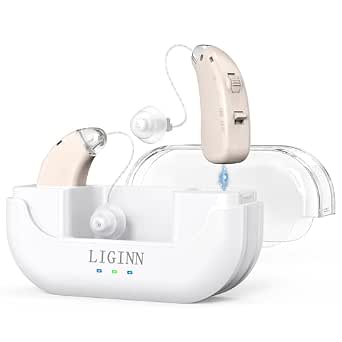 | Best for Simple All-Day Wear | Fit: Behind-the-ear | Recommended hearing loss: Mild to moderate | Weight: 4.1 g | VIEW LATEST PRICE | See Our Full Breakdown |
| EYOUBE Digital Rechargeable Hearing Aids for Seniors with Noise Cancellation |  | Best for Noise-Filtered Speech | Fit: Behind-the-ear | Sound processing: DSP chips | Noise control: Active noise cancellation | VIEW LATEST PRICE | See Our Full Breakdown |
| WLU UFO8 Rechargeable Hearing Aids for Seniors, Beige |  | Best for Adjustable Listening | Fit: Behind-the-ear | Intended hearing loss: Mild to moderate | Listening modes: Four | VIEW LATEST PRICE | See Our Full Breakdown |
| digital conversation amplifier | Fit | Battery life |
|---|---|---|
| SuperEar SE5000 Personal Sound | — | Up to 30 hours |
| Glorified Mary Rechargeable Be | — | Up to 60 hours per full charge |
| Bellman & Symfon Mino Recharge | — | Up to 30 hours |
| Karthus Rechargeable In-Ear He | — | — |
| Eduitai Rechargeable Digital H | — | Up to 24 hours |
| Vimaydo Rechargeable Behind-th | Behind-the-ear | Up to 40 hours |
| QIPOPC Rechargeable Behind-the | Behind-the-ear | — |
| Villear Rechargeable OTC Behin | Behind-the-ear | — |
| MEDca Behind-the-Ear Digital S | In-ear domes | — |
| Kituwant Behind-the-Ear Hearin | Behind-the-ear | — |
| Qnmittry JH-A260 Rechargeable | In-ear | — |
| ConvoAssist Personal Sound Amp | — | Up to 8 hours per charge |
| Rechargeable Behind-the-Ear He | Behind-the-ear | — |
| EYOUBE Digital Rechargeable He | Behind-the-ear | 18 hours |
| WLU UFO8 Rechargeable Hearing | Behind-the-ear | Up to 10 hours per charge; up to 48 hours with charging case |
More Details on Our Top Picks
SuperEar SE5000 Personal Sound Amplifier with Headphones and Earbuds
The SuperEar SE5000 is the most flexible choice here for someone who wants to amplify nearby sound without wearing an in-ear device all day. Its swivel microphone and tactile volume wheel make it straightforward to point toward a conversation and adjust the level, while the included headphones and earbuds let me choose between a more open or discreet fit. Unlike the Bellman & Symfon Mino, it does not offer a way to connect directly to a TV, so it amplifies sound picked up in the room rather than delivering audio from the television itself. Its AAA battery is easy to replace, but less convenient than the rechargeable options in this lineup. I’d choose it for portable, simple listening—not for private TV audio or someone seeking a fully rechargeable setup.
Pros:- Includes both stereo headphones and stereo earbuds for different listening preferences.
- Swivel microphone can be directed toward the sound source.
- Tactile volume wheel allows quick adjustments without navigating menus.
- Up to 30 hours of operation from one AAA battery.
Cons:- Does not connect directly or wirelessly to a television.
- Requires a separate AAA battery rather than recharging by cable.
- Headphones or earbuds must be worn to listen through the amplifier.
Best for: People who want a portable amplifier for face-to-face conversations and room sound, with a choice of headphones or earbuds.
Not ideal for: TV viewers who need direct or wireless television audio, or buyers who want a rechargeable device rather than a replaceable AAA battery.
- Amplification:Up to 50+ dB
- Power:1 AAA battery
- Battery life:Up to 30 hours
- Microphone:Swivel microphone
- Controls:Tactile adjustable volume wheel
- Included listening accessories:Stereo headphones and stereo earbuds
- Portability:Lightweight handheld design with stainless steel belt clip
- TV connection:Does not connect directly or wirelessly
Our verdict“Choose the SuperEar SE5000 for portable, adjustable amplification of conversations and room sound, but skip it if direct TV audio or rechargeable power is a priority.”
Glorified Mary Rechargeable Behind-the-Ear Hearing Amplifiers, 2-Pack
The Glorified Mary G-213D makes the most sense for buyers who want a matched pair of behind-the-ear amplifiers and fewer charging interruptions. Its up to 60-hour battery life per charge is twice the stated runtime of the Bellman & Symfon Mino, while four amplification modes and digital noise reduction give me more ways to adapt to changing listening settings. Five ear-dome sizes also help with fit, a practical advantage for anyone who has struggled with one-size tips. The tradeoff is a less clearly described charging setup: the listing specifies a Type-C magnetic base, but not a direct charging method, and it provides no water-resistance details. Compared with the single-unit Eduitai, this two-pack supports use on both ears, though it asks buyers to manage two devices and their fit.
Pros:- Two amplifiers are included for wearing on either ear.
- Up to 60 hours of use per full charge.
- Four amplification modes and digital noise reduction suit varied listening environments.
- Five ear-dome sizes allow a more tailored fit.
Cons:- Charging is specified through a Type-C magnetic base, with no direct-to-device charging method described.
- No water-resistance rating is provided.
- Behind-the-ear fit may be less discreet than the in-ear Karthus or Eduitai designs.
Best for: People who want a rechargeable pair for regular conversation, TV, and everyday listening, especially those who value long intervals between charges.
Not ideal for: Buyers who need documented water resistance, a clearly specified direct charging port, or a single compact amplifier rather than two behind-the-ear units.
- Model:G-213D
- Style:Behind-the-ear hearing amplifiers
- Quantity:2
- Charging:Type-C magnetic charging base
- Battery life:Up to 60 hours per full charge
- Amplification modes:4
- Frequency range:20 Hz–12,000 Hz
- Ear domes:5 sizes
Our verdict“Pick this pair if extended rechargeable runtime and adjustable fit matter more than a compact in-ear profile or clearly documented water protection.”
Bellman & Symfon Mino Rechargeable Digital Hearing Amplifier with Headphones and Earbuds
The Bellman & Symfon Mino stands apart from the simpler wear-and-listen amplifiers by combining dual microphones with a rechargeable pocket-sized unit. That design is useful when I want to pick up conversation from different directions, and the included headphones and earbuds offer more listening choices than the single-unit Eduitai. It can also connect to a TV or radio with an optional audio cable kit, giving it a route to private media listening that the SuperEar SE5000 lacks. The catch is that this connection requires an extra accessory, and the product data lists no noise control. Its stated runtime of up to 30 hours is solid, though shorter than the Glorified Mary pair’s 60 hours. This is the more adaptable pick, not the simplest or longest-running one.
Pros:- Dual microphones capture sound from different directions.
- Rechargeable battery provides up to 30 hours of operation per charge.
- Includes both headphones and earbuds.
- Optional audio cable kit allows connection to a TV or radio.
Cons:- TV or radio connection requires an optional audio cable kit.
- Product data lists no noise control.
- Listed item weight is 1.1 pounds, heavier than the stated 16.5 g battery weight may lead buyers to expect.
Best for: Listeners who want a pocketable rechargeable amplifier with dual microphones, included headphones and earbuds, and the option to add a TV or radio cable kit.
Not ideal for: Buyers who want TV connectivity included in the box, built-in noise control, or the longest stated runtime between charges.
- Model:Mino (BE2030-A-09)
- Power source:Rechargeable lithium-ion battery
- Battery life:Up to 30 hours
- Microphones:Dual
- Controls:Button control
- Included listening accessories:Headphones and earbuds
- Media compatibility:Television and radio with optional audio cable kit
- Warranty:2 years
Our verdict“Choose the Mino if dual-microphone listening and optional wired TV or radio connection outweigh the need for included cables or built-in noise control.”
Karthus Rechargeable In-Ear Hearing Aids with Noise Reduction
The Karthus in-ear hearing aids suit buyers who want a discreet device with simple controls rather than a pocket amplifier and separate headphones. I get two listening modes, six volume levels, and automatic power-on after removing the aids from their case, so routine use does not depend on an app or Bluetooth setup. The charging case adds up to 96 hours of total use, though each charge is limited to 24 hours; that distinction matters for people comparing it with the Glorified Mary pair’s stated 60 hours per charge. Unlike the more accessory-rich Bellman & Symfon Mino, Karthus keeps the package focused on in-ear listening and supplies cleaning tools. It is described for adults with perceived mild to moderate hearing loss, so it is not a fit for every hearing need.
Pros:- Two listening modes and six volume levels offer straightforward adjustments.
- Charging case provides up to 96 hours of total use.
- Automatic power-on and button controls keep daily operation simple.
- Includes wax-guard tools, domes, and a cleaning brush.
Cons:- No app or Bluetooth connectivity.
- Runtime is up to 24 hours per charge; 96 hours refers to total use with the case.
- Designed for perceived mild to moderate hearing loss, which may not match every listener’s needs.
Best for: Adults with perceived mild to moderate hearing loss who want low-profile in-ear devices, basic mode and volume adjustments, and case-based charging.
Not ideal for: People who need Bluetooth or app controls, prefer headphones or a handheld amplifier, or have hearing needs outside the product’s stated intended use.
- Style:In-ear hearing aids
- Intended users:Adults 18+ with perceived mild to moderate hearing loss
- Listening modes:Noise Reduction and Quiet
- Volume levels:6
- Digital channels:16
- Battery life per charge:Up to 24 hours
- Total battery life with case:Up to 96 hours
- Charging:Type-C charging case
- Connectivity:No app or Bluetooth
Our verdict“Choose Karthus for discreet, low-fuss in-ear listening and case-based charging, but skip it if wireless controls or broader device compatibility matter.”
Eduitai Rechargeable Digital Hearing Amplifier with Noise Cancellation
The Eduitai ASD123 is the most stripped-down choice in this group: one discreet canal-style amplifier, two noise reduction modes, and no second unit or accessory-heavy kit to manage. Its one-hour Type-C recharge is the quickest charging detail specified among these picks, while up to 24 hours of use suits a full day between charges. Compared with the two-device Karthus set, Eduitai is simpler if I only need one amplifier, but it lacks Karthus’s listed volume levels, charging case, and paired devices. It also offers less flexibility than the Bellman & Symfon Mino, which includes headphones and earbuds and can connect to a TV or radio with an optional cable. The canal fit may not suit every ear, and buyers should note that only one amplifier is included.
Pros:- Two noise reduction modes support different sound environments.
- Discreet, lightweight canal-style design is intended for extended wear.
- Provides up to 24 hours of use per charge.
- Type-C recharge takes one hour.
Cons:- Only one hearing amplifier is included.
- Canal-style fit may not suit every ear.
- Product data does not specify volume levels, Bluetooth, or a charging case.
Best for: Someone seeking one discreet, lightweight canal-style amplifier with two noise reduction modes and a short Type-C recharge.
Not ideal for: Buyers who need amplification on both ears, want a charging case, or prefer headphones and earbuds over a canal-style fit.
- Model:ASD123
- Style:Canal-style digital hearing amplifier
- Noise reduction modes:2
- Battery:Lithium-polymer, included
- Battery life:Up to 24 hours
- Recharge time:1 hour
- Charging port:Type-C
- Quantity:1 hearing amplifier
Our verdict“Pick the Eduitai for one compact amplifier and a quick recharge, but choose a paired set if you need amplification on both ears.”
Vimaydo Rechargeable Behind-the-Ear Hearing Amplifier for Seniors
The Vimaydo is a straightforward pick for listeners who want everyday conversation and television sound amplification without frequent charging. Its one-touch button control keeps adjustments simple, while claimed 40-hour use per charge suits routines where remembering to recharge each night is inconvenient. The behind-the-ear fit is lightweight by design, though fit comfort will still depend on the wearer.
Compared with the QIPOPC ZF-M802, Vimaydo offers less stated listening time and does not specify digital noise reduction, so it is a better match for uncomplicated listening than speech-focused use in busy rooms. Its up to 45dB gain is the main appeal, but this is basic amplification rather than a feature-rich hearing aid experience. I would skip it if you need advanced sound processing or clearly documented software support.
Pros:- Up to 40 hours of stated use per charge reduces charging frequency.
- One-touch button control is straightforward for users who prefer simple adjustments.
- Behind-the-ear design is described as lightweight for extended wear.
- Up to 45dB sound gain supports louder everyday listening.
Cons:- Basic amplification lacks the stated noise-reduction processing offered by QIPOPC and Villear.
- Software update support is not specified.
- The product information does not give a hearing-loss range or detailed fit options.
Best for: Seniors seeking a simple rechargeable amplifier for conversation and television, with minimal button-based adjustments.
Not ideal for: Listeners who spend much of their time in noisy settings or want advanced digital processing, app controls, or clearly stated update support.
- Fit:Behind-the-ear
- Sound gain:Up to 45dB
- Battery life:Up to 40 hours
- Power source:Rechargeable
- Controls:Button control
- Stated compatible device:Television
Our verdict“Choose Vimaydo for uncomplicated, rechargeable daily amplification; pick a noise-reduction model if clearer speech in busy surroundings is your priority.”
QIPOPC Rechargeable Behind-the-Ear Hearing Amplifiers with Noise Reduction
QIPOPC stands out for the combination of digital noise reduction and a charging case, aimed at people who want speech to stand out without carrying loose charging accessories. The magnetic case stores and charges the amplifiers, while the included replacement silicone domes give buyers a chance to adjust the fit. Its stated listening time reaches up to 120 hours, although actual battery life can vary with use.
Compared with the Vimaydo, QIPOPC adds noise-reduction processing and a case-based charging setup, making it the more adaptable choice for daily carry. Villear goes further with a specified 16-channel chip and adaptive noise cancellation, but QIPOPC keeps its controls and included setup more basic. The tradeoff is that the behind-the-ear fit may not suit every wearer, and the product data does not specify a hearing-loss range or noise-reduction adjustments.
Pros:- Magnetic charging case stores and charges the amplifiers.
- Digital noise reduction is designed to help speech stand out.
- Includes replacement silicone domes and a USB-C cable.
- Up to 120 hours of stated listening time offers fewer charging interruptions.
Cons:- Behind-the-ear fit may not be comfortable or secure for every wearer.
- Battery life is stated as variable with use.
- No hearing-loss range or frequency-program details are provided.
Best for: People who want rechargeable behind-the-ear amplifiers with a storage-and-charging case, spare domes, and stated noise reduction.
Not ideal for: Wearers who dislike behind-the-ear devices or need detailed guidance on hearing-loss range and adjustable sound programs.
- Model:ZF-M802
- Fit:Behind-the-ear
- Battery:Included lithium-ion
- Stated battery life:Up to 120 hours
- Controls:Button control
- Special features:Digital noise reduction; lightweight
- Included accessories:Magnetic charging case, USB-C cable, replacement silicone domes, quick-start guide
- Color:Khaki
Our verdict“Choose QIPOPC if a charging case, included fit options, and noise reduction matter more than highly specified sound controls.”
Villear Rechargeable OTC Behind-the-Ear Hearing Aids with AI Noise Cancellation
Villear is the most specifically described speech-processing option in this group: its 16-channel digital chip and adaptive noise cancellation are intended to help clarify conversation when background sound competes for attention. A charging case is stated to provide 100 hours of backup power, and the amplifiers are claimed to run up to 24 hours after a 1.5-hour charge. Three sizes of silicone domes and an anti-loss clip add practical fit and handling options.
Compared with the simpler Vimaydo, Villear offers more stated processing and accessories, while the QIPOPC claims longer total listening time. Villear’s information has a meaningful inconsistency: weight is listed as both 0.1 oz and 0.2 kg. It is also specified for mild to moderate hearing loss, so it is not the broadest-fit choice for people outside that stated range.
Pros:- 16-channel digital chip and adaptive noise cancellation target speech clarity in busy settings.
- Charging case is stated to provide 100 hours of backup power.
- Three silicone dome sizes support a more tailored fit.
- Includes an anti-loss clip, cleaning brush, and charging accessories.
Cons:- Product information gives conflicting weight figures: 0.1 oz and 0.2 kg.
- The stated 25–55dB range is for mild to moderate hearing loss, limiting its intended audience.
- Claims of up to 24 hours per charge and 100 hours of case backup may not match every use pattern.
Best for: Adults with stated mild to moderate hearing loss who want adaptive noise cancellation, multiple dome sizes, and a rechargeable case.
Not ideal for: Buyers who need a clearly verified device weight, amplification for severe hearing loss, or a simpler product with fewer fit and processing claims.
- Fit:Behind-the-ear
- Stated hearing-loss range:25–55dB; mild to moderate
- Digital chip:16-channel
- Noise control:Adaptive noise cancellation
- Charging time:1.5 hours
- Use time per charge:Up to 24 hours
- Charging case backup:Up to 100 hours
- Included components:Charging case, six pairs of ear tips, anti-loss clip, manual, quick-start guide, charging cable, cleaning brush
- Water resistance:IP65, as stated in item highlights
Our verdict“Villear is the stronger fit for speech-focused listening in noisy places if its stated hearing range suits you and the conflicting weight data is not a concern.”
MEDca Behind-the-Ear Digital Sound Amplifiers, Black, 2-Pack
MEDca’s clearest point of difference is the two-amplifier package, which gives buyers a pair rather than a single listening device. Digital circuitry and noise reduction are intended to support everyday conversation, and the on/off and volume controls keep operation direct. The supplied silicone domes matter: a well-matched fit can reduce discomfort, sound leakage, and squealing, so taking time to find the right size is part of getting useful results.
Unlike the rechargeable QIPOPC and Villear, MEDca relies on replaceable LR754 batteries. That avoids dependence on a charging case but adds the need to source a less common battery type. I would choose this set for buyers who specifically want two amplifiers and simple controls, not for anyone prioritizing rechargeable convenience, detailed noise-control settings, or an uncomplicated dome fit.
Pros:- Includes two behind-the-ear sound amplifiers.
- Digital circuitry and noise reduction are designed for everyday listening.
- On/off and volume controls are direct and uncomplicated.
- Silicone domes allow fit adjustment to help limit leakage and squealing.
Cons:- Requires nonstandard LR754 batteries rather than USB-rechargeable power.
- Incorrectly sized domes can cause discomfort, sound leakage, or squealing.
- Product data does not specify battery life or detailed sound-processing controls.
Best for: Buyers who want two behind-the-ear sound amplifiers in one package and are comfortable managing replaceable LR754 batteries.
Not ideal for: People who prefer rechargeable devices, have difficulty sourcing nonstandard batteries, or need a choice of clearly specified dome sizes.
- Type:Behind-the-ear sound amplifier
- Quantity:Two amplifiers
- Power source:Battery-powered
- Battery type:LR754; six nonstandard batteries required, included
- Special feature:Noise reduction
- Controls:On/off button and volume control
- Fit:In-ear domes
- Compatible devices:Smartphone, television
- Color:Black
Our verdict“Choose MEDca for a two-amplifier set with simple controls, but opt for QIPOPC or Villear if rechargeable power is a priority.”
Kituwant Behind-the-Ear Hearing Amplifier for Seniors
Kituwant suits buyers who would rather replace a battery occasionally than build charging into their routine. The maker states up to 500 hours per P675 zinc-air battery, a long interval compared with the rechargeable Vimaydo and QIPOPC. Its four frequency programs—high, low, mid, and wide—give listeners more ways to tailor sound than Vimaydo’s one-touch basic amplification, while active noise cancellation is intended to reduce competing sound.
The tradeoff is a battery-specific setup: Kituwant requires P675 zinc-air cells, which may be less convenient to find than charging a case. It is also described as a single-ear device, so switching ears requires manual adjustment. The stated 36dB gain and mild-to-moderate use description make it a more specialized choice than the rechargeable options, not a fit for severe hearing loss.
Pros:- Up to 500 hours of stated battery life per P675 zinc-air battery.
- Four frequency programs offer more listening adjustments than Vimaydo’s basic control setup.
- Active noise cancellation is intended to reduce background sound.
- Behind-the-ear hook is designed to stay secure during wear.
Cons:- Requires specific P675 zinc-air batteries, which may not be readily available everywhere.
- Single-ear use means switching the device manually between left and right ears.
- The stated 36dB gain and mild-to-moderate positioning do not suit severe hearing loss.
Best for: Seniors who prefer replaceable batteries, want long intervals between changes, and value selectable frequency programs for everyday listening.
Not ideal for: Listeners who want rechargeable convenience, need both ears covered without manual switching, or have severe hearing loss.
- Fit:Behind-the-ear
- Power source:P675 zinc-air battery
- Stated battery life:Up to 500 hours per battery
- Gain:36dB
- Frequency programs:High, low, mid, wide
- Noise control:Active noise cancellation
- Controls:Button control
- Included components:Hearing amplifier, two batteries, cleaning brush
- Color:Brown
Our verdict“Choose Kituwant if long battery intervals and frequency presets outweigh the convenience of a rechargeable, two-ear setup.”
Qnmittry JH-A260 Rechargeable In-Ear Hearing Amplifiers with Charging Case, Blue and Red
The Qnmittry JH-A260 is the compact choice for listeners who want speech-focused amplification without a behind-the-ear device. Its adaptive noise cancellation is designed to soften background sound while bringing conversation forward, and five button-controlled volume levels let users make quick adjustments without an app. At 2 g with silicone ear tips, it is lighter and less visible than the WLU UFO8, though an in-ear fit can feel less comfortable over long stretches and may not suit every ear shape. The charging case adds automatic power on and off, a practical touch for daily use. Qnmittry’s stated battery figures are unusually long, but they are claims rather than a guarantee of real-world runtime. Choose it for a discreet form; skip it if you prefer an over-ear fit or want more predictable wear comfort.
Pros:- Adaptive noise cancellation is intended to reduce background sound and emphasize speech.
- Five volume levels are adjusted with simple buttons.
- Lightweight 2 g in-ear design uses medical-grade silicone tips.
- Charging case supports automatic power on and off.
Cons:- In-ear comfort and fit can vary with ear shape and may not suit extended wear.
- The stated battery life and case backup figures may differ from actual use.
Best for: Adults seeking a lightweight, discreet amplifier for daily conversation, television, or calls who are comfortable with in-ear devices.
Not ideal for: Listeners who dislike silicone tips, have difficulty getting a secure in-ear fit, or prefer a behind-the-ear design like the WLU UFO8.
- Fit:In-ear
- Controls:Buttons; five volume levels
- Noise control:Adaptive noise cancellation
- Weight:2 g
- Ear tip material:Medical-grade silicone
- Stated battery life:Up to 60 hours per charge
- Charging case backup:Over 110 hours, as stated
- Color:Blue and red
Our verdict“Choose the Qnmittry JH-A260 for discreet, button-controlled speech amplification if an in-ear fit works for you.”
ConvoAssist Personal Sound Amplifier with Dual Wireless Microphones and Charging Case
ConvoAssist takes a different approach from the personal-wear amplifiers in this roundup: its two clip-on wireless microphones send nearby speakers’ voices to the listener, making it a better fit for a conversation with two people than the Qnmittry JH-A260, which relies on microphones in the earpieces. The listed range of up to 100 feet may also help when a speaker is farther away, while compatibility with personal headphones and included wired earbuds gives buyers some listening flexibility. The tradeoff is participation: someone needs to wear each microphone, so this is less spontaneous than a self-contained hearing amplifier. Its up to 8 hours per charge is also shorter than the long runtimes claimed for the Qnmittry. The case helps with recharging and storage, but does not remove the need to manage the microphones.
Pros:- Two wireless microphones can pick up voices from as many as two speakers.
- Listed wireless range reaches up to 100 feet.
- Works with personal headphones or included wired earbuds.
- Magnetic charging case stores the components and provides additional recharges.
Cons:- Speakers must clip on the microphones for the system to work as intended.
- Up to 8 hours of listening per charge is limited for extended daily use.
- The microphone-and-earbud setup involves more components to manage than a single hearing amplifier.
Best for: People who regularly need to hear one or two specific speakers in meetings, classes, or shared activities and can ask them to wear clip-on microphones.
Not ideal for: Listeners seeking a fully self-contained amplifier for casual, unplanned conversations or a full day without recharging.
- Microphones:Two wireless clip-on microphones
- Wireless range:Up to 100 feet
- Battery life:Up to 8 hours per charge
- Charging:Rechargeable batteries with magnetic charging case
- Compatibility:Headphones or earbuds
- Included listening accessories:Wired earbuds and multiple ear tip sizes
- Noise control:Active noise cancellation
- Microphone controls:Mute button on each microphone
Our verdict“Pick ConvoAssist when you can equip specific speakers with microphones and need their voices delivered directly to your earbuds.”
Rechargeable Behind-the-Ear Hearing Aids with Charging Case
This behind-the-ear model suits buyers who want straightforward amplification for mild to moderate hearing loss without app or Bluetooth setup. Multi-channel processing is described as improving speech clarity and reducing background noise, while physical button and volume controls keep adjustments direct. Compared with the Qnmittry JH-A260, the behind-the-ear fit may be easier for listeners who dislike inserting a device fully into the ear, though the included earplugs still need to fit well: a poor seal can cause feedback whistling. The up to 24 hours of operation and case capacity for up to four charges make it more appealing for long days than ConvoAssist, whose listening time is listed at up to eight hours. There is still a short adjustment period for wearing it, and fit remains personal rather than guaranteed by the three earplug sizes.
Pros:- Designed for mild to moderate hearing loss with multi-channel speech processing.
- Up to 24 hours of operation per charge.
- USB-C case is stated to provide up to four hearing aid charges.
- Three earplug sizes and simple physical controls are included.
Cons:- Users may need time to get used to wearing the device.
- A poorly fitting earplug can cause feedback whistling.
- Behind-the-ear hardware is more visible than the Qnmittry JH-A260’s in-ear design.
Best for: People with mild to moderate hearing loss who want physical controls, a behind-the-ear fit, and a rechargeable setup for long daily wear.
Not ideal for: Buyers who want a discreet in-ear device, dislike wearing behind-the-ear hardware, or need app-based adjustments.
- Fit:Behind-the-ear
- Recommended hearing loss:Mild to moderate
- Weight:4.1 g
- Processing:Multi-channel processing
- Operating time:Up to 24 hours
- Charging case capacity:96 hours; up to four hearing aid charges
- Charging port:USB-C
- Charging time:2–3 hours
- Earplug sizes included:Three
Our verdict“Choose this model for simple, long-running behind-the-ear amplification if you are willing to spend time finding a comfortable, feedback-resistant fit.”
EYOUBE Digital Rechargeable Hearing Aids for Seniors with Noise Cancellation
EYOUBE’s case is strongest for listeners who want a behind-the-ear device centered on speech clarity and noise filtering. Its DSP chips are intended to shape amplified sound, while active noise cancellation targets unwanted background noise; the design also aims to reduce whistling and squealing. That focus gives it a different pitch from the WLU UFO8, which offers four listening modes and independent controls for each ear rather than emphasizing DSP and feedback management in the supplied description. EYOUBE lists 18 hours of battery life, a substantial single-charge span, but unlike the Rechargeable Behind-the-Ear Hearing Aids in this list, no charging-case backup capacity is provided. The behind-the-ear shell is also less discreet than the Qnmittry JH-A260. This makes EYOUBE a reasonable fit for listeners who value filtering over compactness or granular mode selection.
Pros:- DSP chips are designed for natural sound amplification and speech clarity.
- Active noise cancellation targets background noise.
- Listed battery life is up to 18 hours.
- Design aims to minimize whistling and squealing.
Cons:- Behind-the-ear design is less discreet than the Qnmittry JH-A260.
- No charging-case backup capacity is listed.
- The supplied product details do not list multiple listening modes or independent left- and right-ear controls.
Best for: Seniors who prefer a behind-the-ear form and want noise-filtered speech amplification with a stated 18-hour charge.
Not ideal for: People who prioritize a discreet in-ear fit, need backup charging away from an outlet, or want independently adjustable listening modes for each ear.
- Fit:Behind-the-ear
- Sound processing:DSP chips
- Noise control:Active noise cancellation
- Battery type:Rechargeable NiMH
- Battery life:18 hours
- Color:Skin
- Compatible devices:Smartphone, television, and music player
Our verdict“Choose EYOUBE if you want a noise-filtering behind-the-ear option and value its stated 18-hour runtime over compactness or case-based backup.”
WLU UFO8 Rechargeable Hearing Aids for Seniors, Beige
The WLU UFO8 is the most adjustable choice here for listeners who want to tailor amplification without using an app. Its four listening modes, five volume levels, and separate left- and right-ear controls offer more hands-on tuning than the EYOUBE, whose listed strengths center on noise cancellation and DSP processing. Noise reduction and a 16-channel DSP chip support speech listening, while the charging case extends stated use to up to 48 hours. The tradeoff is that the aids themselves are listed for up to 10 hours per charge, shorter than the 18-hour EYOUBE claim and the 24-hour operation listed for the other behind-the-ear model in this batch. At 5 g per aid, it is also heavier than the 4.1 g rechargeable model. Skip it if you need Bluetooth, an app, or support for severe hearing loss.
Pros:- Four listening modes and five volume levels allow manual adjustments for different surroundings.
- Independent controls let users adjust each ear separately.
- Charging case extends stated total use to up to 48 hours.
- Multiple ear dome sizes and automatic power on and off support routine use.
Cons:- Up to 10 hours per charge is shorter than the stated runtimes of EYOUBE and the other rechargeable behind-the-ear model.
- No app or Bluetooth connectivity.
- Not intended for severe hearing loss.
Best for: People with mild to moderate hearing loss who want independent ear controls and several manual sound settings without app setup.
Not ideal for: Listeners who need Bluetooth or app connectivity, have severe hearing loss, or prioritize the longest stated single-charge runtime.
- Fit:Behind-the-ear
- Intended hearing loss:Mild to moderate
- Listening modes:Four
- Volume levels:Five
- Peak sound gain:Up to 35 dB
- Battery life:Up to 10 hours per charge; up to 48 hours with charging case
- Charging:USB Type-C; 1.5-hour charging time
- Weight per hearing aid:5 g
- Connectivity:No app or Bluetooth
Our verdict“Pick the WLU UFO8 if independent ear controls and several no-app listening settings matter more than Bluetooth or longer single-charge use.”
How We Picked
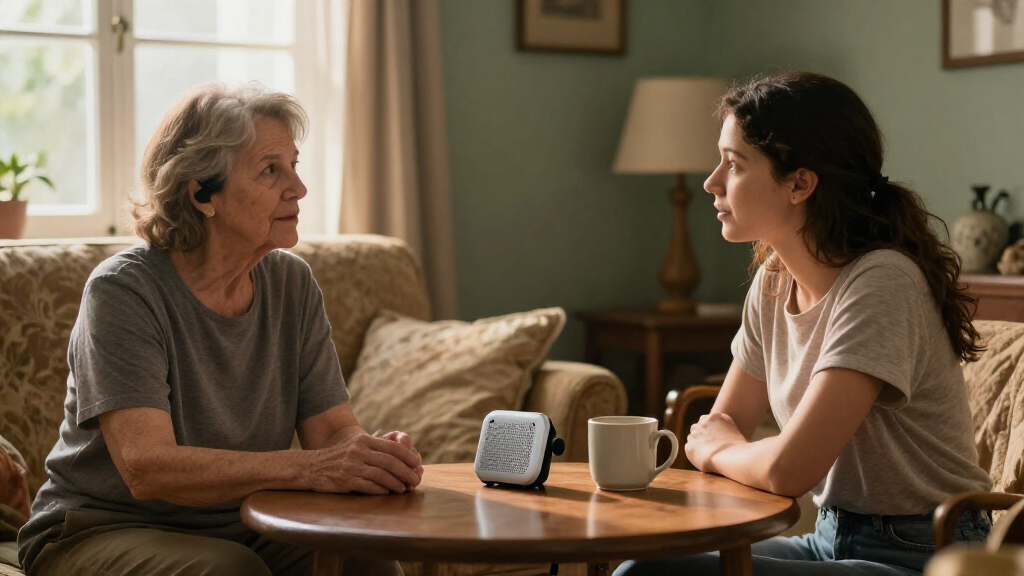
I ranked these digital conversation amplifiers by how clearly their design serves a real listening task: following nearby speech, choosing where sound is captured, wearing the device comfortably, and handling daily charging and controls. I gave extra weight to distinct, practical features such as ConvoAssist’s dual wireless microphones, the Mino’s headphone and earbud options, and the charging case supplied with the Qnmittry JH-A260. I also compared form factor, whether a product is sold as a pair or single configuration, and how much flexibility the design offers across settings.
The order reflects usefulness and differentiation, not a claim that one device suits every listener. Products with a clearly described listening approach rank ahead of models whose listings offer fewer details for comparison; simpler designs can still make sense for buyers who value ease of use or a particular fit. I treated noise cancellation and noise reduction as product claims, not proof that speech will be clearer in every environment. Comfort, fit, handling, and the ability to return or adjust a device remain personal factors buyers should check before deciding.
| digital conversation amplifier | Fit |
|---|---|
| SuperEar SE5000 Personal Sound | — |
| Glorified Mary Rechargeable Be | — |
| Bellman & Symfon Mino Recharge | — |
| Karthus Rechargeable In-Ear He | — |
| Eduitai Rechargeable Digital H | — |
| Vimaydo Rechargeable Behind-th | Behind-the-ear |
| QIPOPC Rechargeable Behind-the | Behind-the-ear |
| Villear Rechargeable OTC Behin | Behind-the-ear |
| MEDca Behind-the-Ear Digital S | In-ear domes |
| Kituwant Behind-the-Ear Hearin | Behind-the-ear |
| Qnmittry JH-A260 Rechargeable | In-ear |
| ConvoAssist Personal Sound Amp | — |
| Rechargeable Behind-the-Ear He | Behind-the-ear |
| EYOUBE Digital Rechargeable He | Behind-the-ear |
| WLU UFO8 Rechargeable Hearing | Behind-the-ear |
Factors to Consider When Choosing Digital Conversation Amplifiers
Choosing a conversation amplifier is less about collecting the most features and more about matching its sound-capture method and physical design to the conversations you want to follow. I would start with where you sit, how you prefer to wear a device, and how much adjustment you are willing to manage.
Match the microphone to the conversation
A microphone close to the speaker can be more useful than added processing when you are seated across a table or in a small group. A handheld amplifier, such as the SuperEar or Mino format, lets you point the microphone toward the person speaking, but you need to manage the device while listening. A system with separate wireless microphones, such as ConvoAssist, offers another way to place sound capture near a conversation, though it adds components to charge and keep track of. Wearable in-ear and behind-the-ear models are less hands-on, but the microphone stays with you rather than moving close to a particular speaker. Think about your usual distance from other people before choosing by a noise-control label.
Choose a form factor you can wear comfortably
Amplification is only useful if you can wear or hold the device for the length of a conversation. In-ear styles keep the hardware close to the ear, while behind-the-ear designs place part of the device outside it; neither shape is automatically more comfortable for every person. A separate headphone or earbud setup avoids some wearable-fit questions but may feel less discreet and can require more handling. Check whether the listing describes one device, a pair, or several listening accessories, and confirm what is included before ordering. If you have trouble inserting small parts or handling controls, a design that is easy to grip and adjust may be a better fit than a smaller-looking option.
Treat noise reduction as one part of speech clarity
Noise-reduction and noise-cancellation language can sound like a promise of clear speech everywhere, but background noise, room acoustics, and microphone direction all affect what you hear. A device may help in a quiet conversation yet remain difficult to use in a crowded restaurant. Decide which setting matters most, then look for a way to control amplification or adjust listening modes if the product information describes one. Avoid assuming that more processing means better speech separation; it may also change how surrounding sounds come through. When possible, check the return terms so you have a path to reassess the fit and sound in your normal environment.
Plan around charging and daily handling
Rechargeable devices remove the need to keep spare disposable batteries, but charging still becomes part of the routine. A charging case can make small in-ear devices easier to store and carry, while a separate charger or cable may suit someone who keeps equipment in one place. Check how the product charges, whether the case is included, and whether you can tell at a glance when a device needs power. Small controls and charging contacts can be awkward for people with limited dexterity, so look beyond the word rechargeable. A simple daily routine may matter more than a long feature list.
Compare what comes in the box, not just the model name
Similar product names can hide meaningful differences in pack size and accessories. In this lineup, some behind-the-ear options are sold as two-device packs, while other listings describe a single model or a distinct charging setup. Headphones, earbuds, microphones, and charging cases can each change how a device works for your routine. Before buying, verify the number of amplifiers, compatible listening pieces, included charger, and any size or fit accessories. This check can prevent a mismatch between the product you expected and the kit you receive.
Know when an amplifier may not be the right solution
Personal sound amplifiers make nearby sounds louder, but they are not interchangeable with professionally selected hearing aids. If you have persistent difficulty understanding speech, a sudden change in hearing, or trouble in multiple settings, a hearing-care professional can help identify what is causing it and discuss suitable options. Buyers should also be cautious about expecting a consumer amplifier to correct a specific hearing profile without fitting or evaluation. A simple device may suit occasional support for nearby conversation, while ongoing hearing needs call for more individualized guidance. Make that distinction before choosing based on convenience alone.
Frequently Asked Questions
Are digital conversation amplifiers the same as hearing aids?
No. A personal sound amplifier makes nearby sound louder, while hearing aids are designed and fitted to address hearing loss and may be adjusted to an individual’s needs. The products in this roundup include both amplifier-style devices and listings described as hearing aids, so the label alone does not tell you how they will perform or whether they suit you. If hearing difficulty is ongoing, professional guidance can help you decide what type of device is appropriate. Do not treat an amplifier as a substitute for an evaluation.
Which type is easiest to use for a conversation across a table?
A device that lets you place or aim its microphone toward the speaker can help when the person is not right beside you. The ConvoAssist stands apart here because it includes dual wireless microphones, while the Mino and SuperEar offer a handheld amplifier approach that requires you to direct the device yourself. In-ear and behind-the-ear options are more hands-free, but their microphones remain on your body. Consider whether you are comfortable handling a mic or would rather wear a device and accept less control over microphone position.
Should I choose an in-ear, behind-the-ear, or headphone-style amplifier?
Choose based on comfort, dexterity, and how discreet you want the setup to feel, rather than assuming one style sounds better for everyone. In-ear and behind-the-ear models keep the listening device near the ear, while headphone-style options avoid inserting a small earpiece. A handheld amplifier can offer more control over microphone direction, but it takes a hand to operate. If you are unsure, consider which form you can put on, adjust, and remove comfortably without help. Fit and handling can matter more in daily use than a long feature list.
Will noise cancellation make speech clear in a busy restaurant?
Not necessarily. Noise-control features may help manage some unwanted sound, but a busy restaurant has competing voices, distance, and reverberation that can still make speech hard to follow. Microphone placement and how close you are to the speaker may have a greater effect than the feature name suggests. If restaurants are your main challenge, look for adjustable controls and a microphone setup that suits the table, and check the return policy before purchase. No product claim guarantees clear speech in every setting.
What should I check before ordering a rechargeable model?
Confirm the charging method, whether a charging case is included, and whether the listing describes one amplifier or a pair. Also check what listening accessories come in the package, since some options use headphones or earbuds while others are designed to sit in or behind the ear. Consider whether the charging parts and controls will be manageable for you day to day. A case can simplify storage and portability, but it does not remove the need to charge the device regularly. These details are especially useful to verify when product names describe similar designs.
Conclusion
For most buyers comparing different ways to follow conversation, I recommend the ConvoAssist as the best overall because its dual wireless microphones give it a distinct approach to placing sound capture near speakers. The SuperEar SE5000 is my best value-style pick for shoppers who want a straightforward personal-amplifier format, while the Bellman & Symfon Mino is the best premium-leaning choice for those who want headphone and earbud listening options in one system. For beginners, I would start with the simpler handheld setup if aiming a microphone feels manageable, rather than choosing a compact device solely for its feature claims. For a specific need, choose the Qnmittry JH-A260 if an in-ear design with a charging case appeals, or compare the two-device behind-the-ear packs from MEDca and Glorified Mary if you want a pair. Whichever type you choose, check fit, included accessories, and return terms before relying on it for everyday conversations.