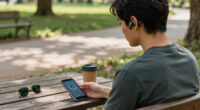
Shopping for wireless Bluetooth assistive listening devices means sorting through three very different product families: personal amplifiers for one-on-one conversation, TV speakers for home listening, and multi-receiver systems for churches and tour groups. After comparing this lineup, the Trihear Liber Open-Ear Device earns the best overall spot for individuals, thanks to its open-ear comfort and remote microphone that works in restaurants and meetings alike. For larger venues, the Venucast AuraPlex M3 stands out with Auracast broadcasting, while the SIMOLIO Wireless TV Speaker wins on value for home television use. The main tradeoff to weigh: single-user devices deliver richer, personalized sound, while multi-receiver systems trade audio refinement for range and scalability. Read on for the full breakdown, including which Retekess kit fits which budget.

Get everyday helpers delivered free with Prime
- Fast, free delivery on millions of items
- Prime Video, Amazon Music and more included
- Member-only deals all year
Complete the kit

Key Takeaways
- The lineup splits cleanly into personal devices (Trihear Liber, BeHear SMARTO, Jabees HearLink), TV speakers (SIMOLIO, SEREONIC, LARKSOUND), and venue systems (Retekess family, Venucast, Avantree) — cross-shopping between these categories is the biggest mistake buyers make.
- Receiver count drives price more than audio quality in venue systems: the Retekess TT119 jumps from a 10-receiver to a 50-receiver configuration, so matching receiver count to actual attendance matters more than chasing specs.
- Remote microphones were the single biggest differentiator for personal devices — the Trihear Liber and Jabees HearLink both include one, but the Liber’s open-ear design avoids the ear fatigue common to in-ear models.
- Auracast support (Venucast AuraPlex M3) is the forward-looking pick for churches because it broadcasts to hearing aids and phones directly, eliminating receiver management long-term.
- Among TV speakers, voice-clarity processing and dialogue enhancement varied more than price suggested — the SIMOLIO outperformed pricier neckband options on speech intelligibility.
| BeHear SMARTO Personal Hearing Amplifier |  | Best Overall for Personal Use | Amplification: Up to 70 dB | Battery Life: Up to 40 hours | Charging Time: 2-3 hours via USB-C cradle | VIEW LATEST PRICE | See Our Full Breakdown |
| Retekess TT119 Assistive Listening System (1 Transmitter, 50 Receivers) |  | Best for Large Venues and Multi-Language Events | Configuration: 1 transmitter, 50 receivers | Connectivity: RF | Working Distance: 300 m / 980 ft | VIEW LATEST PRICE | See Our Full Breakdown |
| Retekess T130U (4th Gen T130) Tour Guide System with 2 Transmitters and 32 Receivers |  | Best for Noisy Industrial and Tour Group Settings | Configuration: 2 transmitters, 32 receivers | Connectivity: U-band digital, Bluetooth | Working Range: 200 m / 656 ft (unobstructed) | VIEW LATEST PRICE | See Our Full Breakdown |
| Trihear Liber Open-Ear Assistive Listening Device with Remote Microphone |  | Best Compact Wearable for One-on-One Conversations | Design: Open-ear | Remote Microphone Range: Up to 98 ft (30 m) | Bluetooth: 5.3 | VIEW LATEST PRICE | See Our Full Breakdown |
| Retekess T130U (4th Gen T130) Tour Guide System with Church Translation Mode |  | Best for Church Translation Ministries | Working Range: 200 m / 656 ft (unobstructed) | Connectivity: U-band digital, Bluetooth | Transmitter Battery Life: 10 hours | VIEW LATEST PRICE | See Our Full Breakdown |
| Retekess T130 Wireless Tour Guide System with 1 Transmitter and 15 Receivers |  | Best for Group Tours and Interactive Activities | Included: 1 transmitter and 15 receivers | Wireless range: About 60 m | Transmitter weight: 56 g | VIEW LATEST PRICE | See Our Full Breakdown |
| Jabees HearLink 3-in-1 Hearing Enhancement Device – Wireless Remote Microphone & Audio Transmitter |  | Best for Mild Hearing Challenges and Personal Use | Connectivity: Bluetooth with aptX | Functions: Wireless mic, audio transmitter, 2-way communication | Battery Life: Up to 8 hours | VIEW LATEST PRICE | See Our Full Breakdown |
| Retekess TT119 Assistive Listening System for Church Translation (1 Transmitter, 10 Receivers) |  | Best for Large Venues with Multiple Languages | ASIN: B0D2XB8KH4 | Model: TT119 | Configuration: 1 Transmitter, 10 Receivers | VIEW LATEST PRICE | See Our Full Breakdown |
| SIMOLIO Wireless TV Speaker for Hard of Hearing – TV Sound Amplifier with Voice Enhancement |  | Best for TV Listening and Voice Clarity | Wireless Technology: 2.4GHz RF | Wireless Range: Up to 164 feet | Battery Life: 8 hours | VIEW LATEST PRICE | See Our Full Breakdown |
| Venucast AuraPlex M3 Auracast Assistive Listening System for Churches |  | Best for Modern Bluetooth LE Audio with Accessibility Integration | Included: 1 transmitter and 3 receivers | Connectivity: Bluetooth LE Audio (Auracast) | Range: Up to 100m / 328ft line-of-sight | VIEW LATEST PRICE | See Our Full Breakdown |
| SEREONIC Portable Wireless TV Speaker for Hard of Hearing & Seniors |  | Best Overall for Easy, Long-Range TV Listening | Audio Output Mode: Stereo | Maximum Range: 100 feet | Audio Latency: 12 milliseconds | VIEW LATEST PRICE | See Our Full Breakdown |
| Avantree Audiplex M3 Multi-Channel Assistive Listening System with 1 Transmitter and 3 Clip-On Receivers |  | Best for Group and Multi-Location Listening | Channels: Up to 4 selectable channels | Latency: 30 ms | Wireless range: Up to 100 m (328 ft) in open areas | VIEW LATEST PRICE | See Our Full Breakdown |
| LARKSOUND Wearable TV Speaker Neckband with Voice Enhancement for Elderly |  | Best for Personal, Wearable Dialogue Clarity | Audio Output Mode: Stereo | Maximum Output Power: 6 watts | Frequency Response: 20000 Hz | VIEW LATEST PRICE | See Our Full Breakdown |
| wireless Bluetooth assistive listening device | Connectivity |
|---|---|
| BeHear SMARTO Personal Hearing | Bluetooth |
| Retekess TT119 Assistive Liste | RF |
| Retekess T130U | U-band digital, Bluetooth |
| Trihear Liber Open-Ear Assisti | — |
| Retekess T130U | U-band digital, Bluetooth |
| Retekess T130 Wireless Tour Gu | — |
| Jabees HearLink 3-in-1 Hearing | Bluetooth with aptX |
| Retekess TT119 Assistive Liste | Auxiliary, FM, Wireless |
| SIMOLIO Wireless TV Speaker fo | Optical, RCA, AUX, Bluetooth |
| Venucast AuraPlex M3 Auracast | Bluetooth LE Audio (Auracast) |
| SEREONIC Portable Wireless TV | Wireless RF (base wired to TV via RCA, 3.5mm, or optical) |
| Avantree Audiplex M3 Multi-Cha | — |
| LARKSOUND Wearable TV Speaker | HDMI ARC, Optical, AUX |
More Details on Our Top Picks
BeHear SMARTO Personal Hearing Amplifier
BeHear SMARTO earns the top spot because it’s the only option in this lineup built for one person’s daily hearing needs rather than a group audience. Its 70 dB amplification plus app-based hearing assessments means the sound can actually be tailored to an individual’s hearing profile, something no tour guide or venue system here can do. Compared with the Trihear Liber, it offers far more amplification headroom and 40 hours of battery versus 10. The tradeoff is complexity: Bluetooth pairing and app setup are real hurdles for the very seniors it targets, and a family caregiver may need to handle initial configuration. Unlike the Retekess TT119, which needs a transmitter and 50 receivers, SMARTO is genuinely pocket-portable.
Pros:- Up to 70 dB amplification with background noise reduction for clear conversations
- 40-hour battery life with fast 2-3 hour recharging via cradle
- Personalized hearing profiles and self-administered hearing assessments through the BeHear app
- Large senior-friendly buttons and one-touch emergency calling
Cons:- Not a medically certified hearing aid — strictly an assistive device
- Bluetooth pairing and app setup can be challenging for elderly users without assistance
- Software update support is listed as unknown, raising longevity questions
Best for: Seniors with mild to moderate hearing loss who want an all-in-one amplifier for TV, phone calls, and conversations at home or on the go
Not ideal for: Tech-averse elderly users living alone — Bluetooth pairing and app-based customization will frustrate without a helper
- Amplification:Up to 70 dB
- Battery Life:Up to 40 hours
- Charging Time:2-3 hours via USB-C cradle
- Connectivity:Bluetooth
- Headset Options:Over-ear and in-ear included
- Noise Control:Background noise reduction for voice
- Special Features:One-touch emergency call, programmable hearing compensation, app customization
Our verdict“This is the pick for an individual senior who wants a customizable, wearable amplification solution rather than a venue or group system.”
Retekess TT119 Assistive Listening System (1 Transmitter, 50 Receivers)
When the audience is measured in the dozens, the Retekess TT119 is in a class of its own here. Its 300 m / 980 ft working range outdistances the T130U systems by 100 meters, and 17 channels let it carry up to six simultaneous languages — the reason it fits houses of worship with translation ministries better than the single-language T130U Church Translation model. Compared with personal devices like the BeHear SMARTO, this is infrastructure, not a wearable. Buyers should plan for ongoing AA battery costs across 50 receivers, and note that audio defaults to mono unless stereo is switched on in settings. The 9.78 kg kit also demands a permanent storage spot.
Pros:- Ultra-long 300 m / 980 ft range covering large venues without dead zones
- 17 channels supporting up to six simultaneous languages with unlimited receivers
- Plug-and-play operation with one-click pairing, mute, and language switching
- Broad input compatibility including XLR, AUX, RCA, and USB audio sources
Cons:- 50 AA-battery receivers create ongoing replacement cost and logistical upkeep
- Default audio output is mono; stereo requires a manual settings change
- Full kit weighs 9.78 kg and takes up serious storage space
Best for: Large churches, conference centers, and event venues needing to serve audiences of 50+ with translation or assistive listening
Not ideal for: Personal or family use — this is a multi-receiver venue system that’s overkill, expensive, and bulky for one listener
- Configuration:1 transmitter, 50 receivers
- Connectivity:RF
- Working Distance:300 m / 980 ft
- Channels:17 (up to 6 simultaneous languages)
- Receiver Battery:2x AA, up to 10 hours
- Receiver Weight:90 grams
- Audio Inputs:XLR, AUX, RCA, USB
- Total Kit Weight:9.78 kg
Our verdict“Buy this only if you’re equipping a venue with large audiences and multi-language needs; individual listeners should look elsewhere in this guide.”
Retekess T130U (4th Gen T130) Tour Guide System with 2 Transmitters and 32 Receivers
What separates the T130U from the TT119 is its DSP noise-reduction chip, engineered to stay intelligible in environments running 80-100 dB of ambient noise — think factory floors and machinery-filled plant tours. The two-transmitter configuration also allows two presenters to share duties, which the single-transmitter TT119 can’t do. Its 200 m range and 38 g receivers make it comfortable for all-day group use, though the range shrinks behind walls. Compared with the Church Translation edition of the same T130U, this bundle trades the hygienic D-type headphones for standard earpieces and leans toward corporate and educational use. The 10-hour transmitter battery is the weak link against its own 40-hour receivers.
Pros:- DSP noise reduction keeps speech clear in loud 80-100 dB environments
- Two transmitters allow dual presenters or backup units during long events
- 40-hour receiver battery life minimizes mid-day recharging disruptions
- Featherweight 38 g receivers comfortable for extended wear in either ear
Cons:- 200 m range applies only to unobstructed paths; walls and obstacles cut it down
- Transmitter battery (10 hours) is far shorter than receiver battery, requiring mid-event swaps
- Full system weighs 8 kg and needs a dedicated charging and storage routine
Best for: Factory tours, schools, and conference organizers who need clear one-to-many communication in loud environments
Not ideal for: Home TV listening or personal amplification — this 34-device, 8 kg system serves groups, not individuals
- Configuration:2 transmitters, 32 receivers
- Connectivity:U-band digital, Bluetooth
- Working Range:200 m / 656 ft (unobstructed)
- Transmitter Battery Life:10 hours
- Receiver Battery Life:40 hours
- Weight:71 g transmitter, 38 g receiver
- Audio Formats:MP3, WMA
- Speaker Type:Stereo
Our verdict“The strongest choice when noise is the enemy — factories, workshops, and busy tour sites where lesser systems turn to mud.”
Trihear Liber Open-Ear Assistive Listening Device with Remote Microphone
The Trihear Liber fills the gap between personal amplifiers and venue systems: a discreet 70 g wearable whose open-ear design leaves the ear canal free, so users keep natural ambient awareness — a real advantage over the occluded feel of the BeHear SMARTO’s in-ear and over-ear headsets. Its remote microphone reaching 98 ft makes restaurant and meeting conversations dramatically easier, and 16 ms latency keeps streamed audio in sync. The compromises are honest ones: 10-hour battery life is a quarter of SMARTO’s, and TV streaming requires the wired 3.5 mm cable rather than a wireless link. It also amplifies far less than SMARTO, so severe hearing loss is out of scope.
Pros:- Open-ear design keeps the ear canal unobstructed and preserves situational awareness
- Remote microphone captures speech from up to 98 ft away
- Bluetooth 5.3 streaming with very low 16 ms latency
- Light 70 g wearable with quick 1-hour USB-C charging
Cons:- TV audio requires the included 3.5 mm cable rather than wireless streaming
- Only 10 hours of battery life per charge, limiting long days out
- Limited real-world review history makes reliability harder to judge
Best for: Adults with mild hearing difficulty who want a lightweight, nearly invisible boost for conversations in restaurants, meetings, and around the house
Not ideal for: Anyone with significant hearing loss needing strong amplification, or users wanting a fully wireless TV setup — the TV link is a physical cable
- Design:Open-ear
- Remote Microphone Range:Up to 98 ft (30 m)
- Bluetooth:5.3
- Latency:16 ms
- Noise Reduction:16 dB digital
- Battery Life:Up to 10 hours
- Charging:About 1 hour via USB-C
- TV Connection:3.5 mm audio cable
Our verdict“The most comfortable, low-profile option here for conversational hearing support — just don’t expect heavy amplification or all-day battery.”
Retekess T130U (4th Gen T130) Tour Guide System with Church Translation Mode
This T130U variant is tuned for a specific job: simultaneous interpretation in worship services. Its non-in-ear D-type headphones are the differentiator — more hygienic for shared congregational use than the standard earbuds in the factory-oriented T130U bundle, and easier to sanitize between services. Compared with the TT119 church kit, it trades channel count and range (200 m vs 300 m, fewer simultaneous languages) for digital interference resistance and lighter 38 g receivers with 40-hour batteries. One misconception to clear up: this system does not translate automatically — it delivers a human interpreter’s voice to the congregation, so a bilingual volunteer is mandatory. One-button operation keeps volunteers productive without training.
Pros:- Hygienic non-in-ear D-type headphones ideal for shared congregational use
- Digital U-band signal resists interference with built-in noise reduction
- 40-hour receiver battery easily covers multiple services between charges
- One-button operation requires minimal volunteer training
Cons:- Cannot translate automatically; a live human interpreter is required for every service
- 200 m range drops when walls or building structures obstruct the signal
- Transmitter battery (10 hours) requires charging between long service days
Best for: Churches and ministries running live interpretation services with volunteer translators for multilingual congregations
Not ideal for: Organizations hoping for automatic machine translation — this system only transmits a human interpreter’s audio
- Working Range:200 m / 656 ft (unobstructed)
- Connectivity:U-band digital, Bluetooth
- Transmitter Battery Life:10 hours
- Receiver Battery Life:40 hours
- Transmitter Weight:71 g
- Receiver Weight:38 g
- Headphone Type:Non-in-ear D-type
- Microphone Gain Levels:1-4
Our verdict“The right fit for a church with committed volunteer interpreters and a shared, hygiene-conscious congregation — not a shortcut to automatic translation.”
Retekess T130 Wireless Tour Guide System with 1 Transmitter and 15 Receivers
This system excels in settings where a clear, reliable audio broadcast over a moderate distance is needed, such as guided tours or group activities. Compared with systems like the Retekess TT119, it offers a much simpler setup with one-click pairing and rechargeable batteries, making it more user-friendly for frequent use. However, its 60-meter range and lack of automatic translation mean it’s less suited for large venues or multilingual events. The support for AUX input and volume adjustment enhances flexibility, but the system’s limited compatibility—excluding the T130U Slim—can be a drawback for users seeking more versatile hardware integration.
Pros:- One-click pairing simplifies setup for multiple receivers
- Expandable with additional receivers on the same channel
- Rechargeable batteries support long operation times
Cons:- Limited wireless range of about 60 meters may restrict movement
- Does not support automatic language translation or multi-language features
Best for: Guides, tour operators, and educators who need to manage multiple listeners easily in moderate-sized groups
Not ideal for: Large outdoor events or multilingual conferences requiring extensive range or automatic translation, where longer distance or language support is crucial
- Included:1 transmitter and 15 receivers
- Wireless range:About 60 m
- Transmitter weight:56 g
- Receiver weight:46 g
- Transmitter battery:Built-in 900 mAh; up to 12 hours
- Receiver battery life:Up to 18 hours
- Volume levels:10
- Pairing:One-click automatic pairing within 5 seconds
- Audio input:AUX
Our verdict“This system is ideal for guided tours and small to medium group activities where ease of use and rechargeability are priorities.”
Jabees HearLink 3-in-1 Hearing Enhancement Device – Wireless Remote Microphone & Audio Transmitter
The Jabees HearLink offers versatile functionality in a compact design, making it suitable for individuals with mild hearing issues or those needing a portable audio stream from TVs or other devices. Its 3-in-1 design—acting as a microphone, transmitter, and communication device—sets it apart from simpler Bluetooth receivers like the SIMOLIO. While its aptX low-latency technology provides high-quality, lag-free audio, the limited 8-hour battery life may be a constraint for all-day use. Unlike dedicated hearing aids, it’s not designed to replace medical-grade devices for severe hearing loss but is perfect for casual, personal amplification and communication.
Pros:- Multi-functionality as mic, transmitter, and 2-way communicator
- High-quality audio with aptX low-latency technology
- Compact, clip-on design suitable for various settings
Cons:- Limited to about 8 hours of battery life per charge
- Not a substitute for medical-grade hearing aids for severe hearing loss
Best for: Individuals with mild hearing difficulties or those seeking a versatile, portable Bluetooth solution for everyday listening and communication
Not ideal for: Users with severe hearing loss or requiring all-day usage without frequent recharging, as battery life may fall short
- Connectivity:Bluetooth with aptX
- Functions:Wireless mic, audio transmitter, 2-way communication
- Battery Life:Up to 8 hours
- Design:Clip-on, portable
- Compatibility:Bluetooth headphones and bone conduction headsets
- Intended Users:Individuals with Microtia, Atresia, Glue Ear, or mild hearing challenges
Our verdict“This device is best suited for mild hearing challenges and personal amplification needs that benefit from portability and multi-functionality.”
Retekess TT119 Assistive Listening System for Church Translation (1 Transmitter, 10 Receivers)
The Retekess TT119 stands out for its extensive range of up to 300 meters and support for 17 channels, making it ideal for large venues like churches, conferences, or courtrooms where multiple languages or groups require simultaneous listening. Its wide audio input options—including XLR, RCA, AUX, and USB—offer flexibility, surpassing simpler systems like the T130 in connectivity. However, the corded transmitter limits placement options, and frequent battery replacements for the AA-powered receivers can be inconvenient. Compared to systems with rechargeable units, this setup favors large, fixed installations over portable use.
Pros:- Ultra-long operating range of up to 300 meters
- Supports 17 channels for multiple languages or groups
- Compatible with various audio inputs for versatile setups
Cons:- Transmitter is corded, reducing placement flexibility
- Receivers require AA batteries, increasing ongoing costs and maintenance
Best for: Religious institutions, large conference venues, or courts needing long-distance, multi-channel audio distribution
Not ideal for: Small rooms or outdoor events where portability and wireless flexibility are more important than extensive range
- ASIN:B0D2XB8KH4
- Model:TT119
- Configuration:1 Transmitter, 10 Receivers
- Working Distance:300 m / 984 ft
- Channels:17
- Connectivity:Auxiliary, FM, Wireless
- Audio Inputs:XLR/AUX/RCA/USB
- Receiver Weight:90 grams
- Battery:2 AA batteries; up to 10 hours
Our verdict“This system suits large, fixed venues with multi-language or multi-group needs where long-range coverage is critical.”
SIMOLIO Wireless TV Speaker for Hard of Hearing – TV Sound Amplifier with Voice Enhancement
The SIMOLIO Wireless TV Speaker excels at making dialogue clearer for seniors and those with hearing difficulties, especially compared with basic Bluetooth speakers like the Venucast AuraPlex. Its voice enhancement technology and EQ switch allow users to customize sound for their hearing preferences, which is a step above typical TV speakers. The impressive 164-foot wireless range offers flexibility to move around the house, but the need to remove the battery when not in use, and potential port conflicts with soundbars, are notable inconveniences. It’s designed primarily for TV listening, not for broader assistive listening applications, but its mix of features makes it a strong choice for personal use.
Pros:- Voice enhancement technology improves speech clarity
- Long wireless range of up to 164 feet
- Multiple connectivity options including optical, RCA, AUX, and Bluetooth
Cons:- Battery removal recommended when not in use to prevent degradation
- Optical port may conflict with soundbar connections or cause setup complications
Best for: Seniors or individuals needing improved dialogue clarity while watching TV, especially in larger homes
Not ideal for: Users seeking a multi-purpose assistive listening device for live events or group settings, due to its focus on TV audio
- Wireless Technology:2.4GHz RF
- Wireless Range:Up to 164 feet
- Battery Life:8 hours
- Audio Inputs:Optical, RCA, 3.5mm AUX
- Connectivity:Optical, RCA, AUX, Bluetooth
- Includes:3 audio cables, 2 AC adapters, wired headset
Our verdict“This TV speaker is best for individuals who prioritize clear dialogue and flexible movement within their home environment.”
Venucast AuraPlex M3 Auracast Assistive Listening System for Churches
The Venucast AuraPlex M3 introduces a new approach with Bluetooth LE Audio (Auracast), supporting venue-provided and personal devices, including compatible hearing aids. Its 100-meter line-of-sight range makes it suitable for medium-sized venues like churches or classrooms, with the added benefit of supporting BYOD devices and select hearing aids such as Beltone and Starkey. This makes it a compelling choice for those looking to avoid traditional FM systems, offering a straightforward setup with modern Bluetooth technology. However, its limited support for only certain hearing aid models and outdoor or obstructed environments means it’s not a universal solution for all venues or users.
Pros:- Supports Bluetooth LE Audio (Auracast) for seamless integration
- Works with select hearing aids and BYOD devices
- Long 100-meter line-of-sight range suitable for medium venues
Cons:- Limited to specific hearing aid models supported
- Not suitable for outdoor or heavily obstructed spaces
Best for: Churches, classrooms, and community spaces seeking a modern, Bluetooth-based assistive listening solution compatible with hearing aids and personal devices
Not ideal for: Outdoor events or venues with large crowds and obstructions, where longer range or broader device support is needed
- Included:1 transmitter and 3 receivers
- Connectivity:Bluetooth LE Audio (Auracast)
- Range:Up to 100m / 328ft line-of-sight
- Recommended Venue Size:Up to ~300 seats
- Compatible Hearing Aids:ReSound Nexia, Jabra Enhance, Beltone, Starkey, Oticon, Philips
- BYOD Support:Yes
Our verdict“This Auracast system is ideal for venues wanting a modern Bluetooth solution compatible with hearing aids and personal devices, within medium-range environments.”
SEREONIC Portable Wireless TV Speaker for Hard of Hearing & Seniors
This speaker excels in delivering clear dialogue for seniors and those with hearing challenges, especially when compared to Bluetooth-based options like the LARKSOUND Wearable TV Speaker. Its zero-lag RF transmission ensures no audio delay, making it ideal for watching TV without lip-sync issues. Unlike Bluetooth devices, it doesn’t require pairing or updates, simplifying setup for less tech-savvy users. The 100-foot range and 8-hour battery life support extended use around the home or outdoor spaces, though the wired base limits portability and outdoor water exposure. Its multiple input options make it compatible with various TVs, but the need for wired connection to the base can be a drawback for some.
Pros:- Zero-lag RF audio transmission up to 100 feet without Wi-Fi or Bluetooth
- Multiple input options including RCA, 3.5mm, and optical for broad compatibility
- Portable with up to 8 hours of playback per charge
Cons:- Base must be wired to the TV with included cables, limiting placement options
- HDMI connection requires an external converter for some setups
- Not water-resistant, restricting outdoor use
Best for: Seniors or hard of hearing individuals who want a reliable, easy-to-use TV listening device with long-range capability.
Not ideal for: People seeking a fully wireless, outdoor-capable device, as the base must be wired to the TV and it’s not waterproof.
- Audio Output Mode:Stereo
- Maximum Range:100 feet
- Audio Latency:12 milliseconds
- Connectivity:Wireless RF (base wired to TV via RCA, 3.5mm, or optical)
- Speaker Size:2 inches
- Battery Life:Up to 8 hours of playback
- Charging:USB-powered base, ~3 hours
- Audio Encoding:Analog, Dolby Digital 2.1, PCM 2.0 Stereo
- Control Method:Touch
Our verdict“This pick is ideal for seniors or hard of hearing users who prioritize long-range, reliable TV audio without complex setup.”
Avantree Audiplex M3 Multi-Channel Assistive Listening System with 1 Transmitter and 3 Clip-On Receivers
This system stands out for venues like classrooms, churches, or large gatherings, supporting up to four channels for different groups, unlike the single-channel SEREONIC. Its low 30 ms latency helps keep audio synchronized during presentations or performances, addressing common lag issues in wireless systems. The included three clip-on receivers and earbuds make it ready for immediate use, though the wireless range is specified for open areas, which may be less reliable indoors. The ability to expand with additional receivers makes it a flexible choice for larger setups but limits the number of included devices initially. Compared to simpler personal devices, it’s better suited for environments with multiple groups needing separate audio feeds.
Pros:- Supports up to four separate channels for multi-group listening
- Low 30 ms latency maintains sync with live presentations
- Includes three receivers and earbuds for immediate setup
- Supports additional receivers for larger venues
Cons:- Wireless range is specified for open areas, which may not translate perfectly indoors
- Only three receivers included initially, requiring extra purchase for expansion
Best for: Educational or religious venues needing multiple hearing assist devices for different groups or locations.
Not ideal for: Small households or casual TV watchers, as the system is more complex and designed for larger groups.
- Channels:Up to 4 selectable channels
- Latency:30 ms
- Wireless range:Up to 100 m (328 ft) in open areas
- Included devices:1 transmitter and 3 clip-on receivers
- Expandable:Supports additional receivers
- Receiver controls:Individual volume control
Our verdict“This system is perfect for venues needing multiple, simultaneous assistive listening channels for groups or large audiences.”
LARKSOUND Wearable TV Speaker Neckband with Voice Enhancement for Elderly
This neckband device is designed specifically for seniors and hearing-impaired users who need clear dialogue without loud TV volumes, standing out against bulkier speaker solutions like the SEREONIC. Its Voice Enhancement Technology isolates speech and reduces background noise, making it easier to follow conversations. Unlike the Avantree system, it offers independent left/right volume controls for personalized hearing balance, which is especially helpful for those with asymmetric hearing loss. Setup is straightforward with plug-and-play HDMI ARC, Optical, or AUX inputs, avoiding Bluetooth pairing hassles but lacks an included HDMI cable. The 10-hour battery life makes it suitable for long viewing sessions, though the device’s limited battery duration could be a concern for prolonged use.
Pros:- Voice enhancement technology clarifies dialogue effectively
- Plug-and-play setup with HDMI ARC, Optical, or AUX inputs
- Independent left/right volume controls for personalized hearing
- Long 10-hour battery life for extended use
Cons:- HDMI cable is not included, adding to setup cost
- Battery life is limited to 10 hours, which may be insufficient for some users
Best for: Elderly individuals or hearing-impaired users who prefer a wearable, personal device with adjustable sound clarity and no Bluetooth fuss.
Not ideal for: People needing outdoor or water-resistant devices, as it’s not waterproof and limited to 10 hours of continuous use.
- Audio Output Mode:Stereo
- Maximum Output Power:6 watts
- Frequency Response:20000 Hz
- Connectivity:HDMI ARC, Optical, AUX
- Battery Life:Up to 10 hours
- Charging:Drop-to-charge base, Type-C port
- EQ Modes:Voice Enhancement, Movie, Normal
- Dimensions:2.36″D x 9.41″W x 7.12″H
- Compatible Devices:TVs, computers, tablets, DVD players
Our verdict“This wearable neckband suits seniors or hearing-impaired individuals seeking a simple, adjustable device for clear dialogue during TV viewing.”

How We Picked
My ranking starts with a simple question: what job is the device actually being bought to do? I grouped all 13 products into personal amplification, TV listening, and multi-user venue systems, because a device that excels in one group is often a poor fit for another. Within each group, I weighed speech clarity over raw volume, since every product here claims amplification but far fewer preserve dialogue intelligibility in noisy rooms. For venue systems, the criteria shifted to receiver scalability, transmission range, battery life, and channel flexibility — the factors that decide whether a church or tour operation runs smoothly.
Usability played a large role in ordering, especially for products aimed at seniors: physical buttons, charging docks, and simple pairing beat touchscreen complexity every time. I also factored in long-term cost of ownership, including replacement receivers, proprietary batteries, and whether a system supports Auracast so it won’t be obsolete as hearing aids adopt the standard. Value was judged relative to each product’s intended audience — a $500 church system serving 50 congregants can be better value than a $150 gadget that gets abandoned in a drawer. Products that justified their price with a clear, distinct use case ranked higher than versatile-but-mediocre alternatives.
Factors to Consider When Choosing Wireless Bluetooth Assistive Listening Devices
Before settling on a specific model, it helps to understand the broader landscape of wireless Bluetooth assistive listening devices — including a few pitfalls that catch first-time buyers off guard.Match the Device Type to the Listening Scenario First
The most common mistake in this category is buying the wrong product family entirely. A personal amplifier like the BeHear SMARTO will struggle in a sanctuary seating 200 people, while a 32-receiver tour system is absurd overkill for watching the evening news. Ask where the hearing difficulty actually happens: one-on-one conversation, television at home, or group settings like church services and museum tours. Each scenario maps to a different device class, and no single product covers all three well. Buyers who skip this step often end up returning perfectly good devices that were simply built for a different job. Write down your two most common listening situations before comparing specs at all.
Latency Matters More Than Most Buyers Realize
Bluetooth audio traditionally introduces a delay between sound and its source, which shows up as lip-sync mismatch on TV — a dealbreaker for anyone relying on visual cues to parse speech. Devices using dedicated 2.4GHz wireless links, like the SIMOLIO and SEREONIC TV speakers, keep latency low enough that dialogue stays aligned with mouth movement. Generic Bluetooth speakers and earbuds, even expensive ones, often fail this test. If television is the primary use case, verify that the system is explicitly designed for low-latency TV audio rather than assuming any Bluetooth device will work. The symptom — audio arriving a beat after lips move — is disorienting for anyone, but especially so for listeners already straining to follow conversation.
Receiver Count and Scalability for Venues
Churches and tour operators should buy for realistic peak attendance, not average attendance, plus a small buffer for growth and broken units. The Retekess lineup spans 10 to 50 receivers precisely because congregations vary, and adding receivers later is usually possible but costs more per unit than buying a matched kit. Consider who will manage the hardware: receivers that charge in a case or dock are far easier for volunteers than individually cabled units. Also check whether the system supports multiple transmitters and channels — the T130U’s dual-transmitter configuration matters if you run simultaneous translation or split tours. A cheap system that requires constant troubleshooting becomes expensive in volunteer goodwill.
Auracast and Future-Proofing
Auracast is the emerging Bluetooth standard for assistive listening, letting venues broadcast audio directly to hearing aids, cochlear implants, and smartphones — no receivers to distribute or sanitize. The Venucast AuraPlex M3 is built around it, which makes it a bet on where hearing technology is heading over the next five years. Traditional FM-style systems still work fine today and cost less upfront, but they lock you into receiver management indefinitely. Venues planning a long-term investment should weigh the higher entry price of Auracast against gradually shrinking receiver logistics. Individual buyers with Bluetooth-enabled hearing aids should check whether a device supports direct streaming before buying anything with a separate receiver.
Comfort and Daily Usability for Seniors
The best-sounding device is worthless if the user won’t wear it, so ergonomics deserve as much attention as audio specs. Open-ear designs like the Trihear Liber avoid the ear-canal pressure and occlusion that make in-ear amplifiers uncomfortable for all-day wear. Neckband TV speakers like the LARKSOUND sit comfortably for long sessions but are less discreet in public. Button size, tactile feedback, and charging simplicity all matter more for seniors managing hearing loss alongside other daily friction. If possible, choose a device with a return window long enough for a genuine week of use, because comfort problems rarely show up in the first hour.
Total Cost of Ownership Beyond the Sticker Price
Compare the full lifecycle cost, not just the checkout price. Multi-receiver systems incur ongoing expenses for replacement earpieces, batteries, and sanitation supplies that can exceed the hardware cost within a few years. Personal devices with rechargeable batteries save money over disposable-button-cell models but eventually need battery replacement service. Watch for proprietary accessories — a system that only works with one brand of receiver or charger limits your options if the manufacturer discontinues support. Warranty length is a useful proxy for build confidence in this category, where devices are handled daily by many users or worn for ten-plus hours at a time.
Frequently Asked Questions
Can a wireless assistive listening device replace a hearing aid?
No, and the distinction matters legally and practically. Hearing aids are medical devices programmed to an audiogram, compensating for your specific hearing loss profile across frequencies. Assistive listening devices amplify broadly and work best as complements — for TV, restaurants, or venues — rather than corrections. That said, personal amplifiers like the BeHear SMARTO offer adjustable tone profiles that help users with mild to moderate loss who aren’t ready for hearing aids. If you suspect significant hearing loss, an audiology exam first is money better spent than any device on this list. Many of these products also pair with hearing aids, especially via Auracast or telecoil-compatible systems.
How many receivers do I need for a church system?
Count your peak attendance of people who would use the system, not your total congregation — typically 10 to 20 percent of attendees request assistive listening in most churches. Add two or three spare units for breakdowns and first-time visitors. The Retekess TT119 with 10 receivers suits congregations under 100, while the 50-receiver version and the T130U kits serve larger sanctuaries or multi-site use. Buying more capacity than you need ties up budget in receivers that sit uncharged; buying too few frustrates the very members the system is meant to serve. Check whether additional receivers can be added to the same transmitter later, which most Retekess kits allow.
Why does the TV audio sound out of sync with the picture?
This is a latency problem, and it’s the most common complaint with Bluetooth-based TV listening. Standard Bluetooth adds 100–300 milliseconds of delay, which is enough to make lips move before speech arrives. Systems designed for TV — the SIMOLIO, SEREONIC, and LARKSOUND — use dedicated low-latency wireless links or codecs that keep delay under perceptible thresholds. If you’re pairing a generic Bluetooth speaker to your TV, no setting will fully fix it. Some TVs offer an audio-delay adjustment that helps partially, but the cleaner solution is buying a system built for television from the start.
Is Auracast worth paying extra for in 2026?
For venues making a long-term investment, yes — with a caveat. Auracast lets a transmitter broadcast directly to hearing aids and phones, eliminating receiver distribution, charging, and sanitation, which is where most of the operational cost of church systems actually lives. The Venucast AuraPlex M3 is the pick here, but adoption depends on your congregation owning Auracast-capable devices, and many current hearing aids don’t support it yet. A practical middle path is running Auracast alongside a traditional receiver system during the transition years. Individual buyers should check their hearing aid’s spec sheet before assuming compatibility.
What’s the difference between a remote microphone and a personal amplifier?
A remote microphone is a separate unit placed near the person speaking, transmitting their voice wirelessly to your ear — this dramatically cuts background noise because distance no longer weakens the signal. A personal amplifier like the BeHear SMARTO uses onboard microphones and processing to boost nearby sound, which helps but can’t match a mic inches from the speaker’s mouth. Devices like the Trihear Liber and Jabees HearLink combine both approaches, giving you ambient amplification plus a clip-on mic for restaurants and meetings. If your main struggle is conversation in noisy places, the remote microphone is the feature to prioritize.
Conclusion
For best overall, the Trihear Liber takes it — the combination of open-ear comfort and a remote microphone handles the widest range of daily listening situations without fatigue. The SIMOLIO Wireless TV Speaker is my best value pick, delivering stronger voice enhancement than pricier alternatives at a price that’s hard to argue with. On the premium side, the Venucast AuraPlex M3 earns its cost for venues planning a decade ahead with Auracast broadcasting, while the BeHear SMARTO is the premium choice for individuals wanting app control and tone customization. Beginners should start with the Jabees HearLink — its 3-in-1 simplicity makes it forgiving for first-time users. For specific needs: the Retekess TT119 (10 receivers) for small churches on a budget, the T130U 32-receiver kit for tour operators and large congregations, the SEREONIC or LARKSOUND for TV listeners who prefer a speaker over earpieces, and the Avantree Audiplex for small groups wanting multi-channel flexibility. Match the device to the room, and the right pick becomes obvious.
Halloween Picks
halloween
As an affiliate, we earn on qualifying purchases.