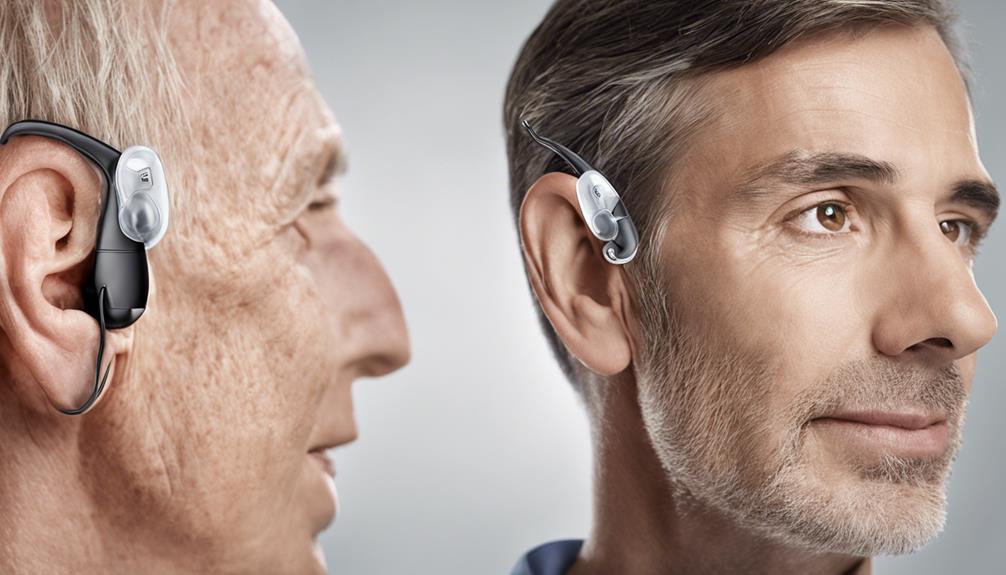

Choosing the right crossover hearing aids requires balancing sound clarity with discreet design, especially for those managing single-sided hearing loss. My top recommendation is the Ceretone Core One Pro, which stands out for its advanced digital chip and effective wind noise reduction, making it ideal for active users. For those prioritizing ease of use, the Vivtone Supermini offers excellent 16-channel sound processing in a tiny form factor. The main tradeoff in this category lies between battery longevity and connectivity features; while Bluetooth-enabled models offer smartphone integration, they often sacrifice battery life compared to simpler amplifiers. Continue reading to see how these devices compare in noise handling and comfort.

Get everyday helpers delivered free with Prime
- Fast, free delivery on millions of items
- Prime Video, Amazon Music and more included
- Member-only deals all year
Complete the kit

Key Takeaways
- Models with auto-on/off features significantly reduce the daily friction of wearing hearing aids, a key differentiator in this lineup.
- The Ceretone Core One Pro leads in noise cancellation specifically tuned for wind, a common pain point for outdoor users.
- Bluetooth connectivity adds versatility for media consumption but often requires more frequent charging cycles than non-connected models.
- Smaller supermini designs like the Vivtone offer superior discretion but can be harder to handle for users with limited dexterity.
- Most devices in this roundup focus on rechargeable cases, shifting the value proposition from battery replacement costs to initial hardware quality.
| Hearing Aids for Seniors, Rechargeable Noise Cancelling Amplifiers with Charging Case – Blue/Red |  | Best for Simple Everyday Use | Battery life: Up to 60 hours on a single charge | Charging case backup: Over 110 hours | Weight: 2 g | VIEW ON AMAZON | See Our Full Breakdown |
| Vivtone Supermini Digital Hearing Aids, Rechargeable, 16-Channel Sound Processing, Auto-On/Off, Pair |  | Best for Adjustable Sound Processing | Sound processing: 16-channel digital | Battery life: Over 16 hours after a two-hour charge | Charging time: 2 hours | VIEW ON AMAZON | See Our Full Breakdown |
| Karthus OTC Hearing Aids for Seniors, Rechargeable with Noise Reduction |  | Best for Straightforward Behind-the-Ear Wear | Style: Behind the ear | Intended hearing-loss range: Mild to moderate | Battery type: Lithium-ion | VIEW ON AMAZON | See Our Full Breakdown |
| Rechargeable Hearing Aids for Seniors with Noise Cancelling |  | Best for Buyers Seeking a Basic Rechargeable Option | Power source: Rechargeable battery | Target users: Seniors with hearing loss | Noise handling: Noise cancelling | VIEW ON AMAZON | See Our Full Breakdown |
| Ceretone Core One Pro OTC Hearing Aids for Seniors, Rechargeable, Invisible, Digital Chip, Wind Noise Reduction, Auto On/Off, Charging Case, Easy Volume Control |  | Best for Program Choice and Wind Reduction | Type: OTC hearing aids | Intended users: Seniors and adults with mild to moderate hearing loss | Battery life: 20–25 hours per charge | VIEW ON AMAZON | See Our Full Breakdown |
| Hearing Aids for Seniors & Adults with Superior Sound Quality |  | Best for Discreet, Low-Maintenance Use | Fit Type: Completely-in-canal | Power Source: Rechargeable Lithium Polymer | Water Resistance: IP56 | VIEW ON AMAZON | See Our Full Breakdown |
| Karthus Hearing Aids for Seniors with Noise Reduction, Rechargeable In-Ear |  | Best for Seniors Avoiding Complex Tech | Fit Type: In-Ear | Case Battery Life: 96 Hours | Noise Control: Active Noise Cancellation | VIEW ON AMAZON | See Our Full Breakdown |
| Bluetooth Hearing Aids with App Control for Seniors and Adults – Silver |  | Best for Customizable Sound Profiles | Connectivity: Bluetooth 5.0+ | App Support: Android 8.0+ / iOS 12.0+ | Battery Life: 10+ Hours per Charge | VIEW ON AMAZON | See Our Full Breakdown |
| Oction Touchscreen Rechargeable Hearing Aids with Bluetooth |  | Best for Modern Interface Enthusiasts | Control Type: Touchscreen | Connectivity: Bluetooth 5.4 | Weight: 3.5g per aid | VIEW ON AMAZON | See Our Full Breakdown |
| OTC Hearing Aids for Seniors with Noise Cancelling, 100 Hours Battery Life | 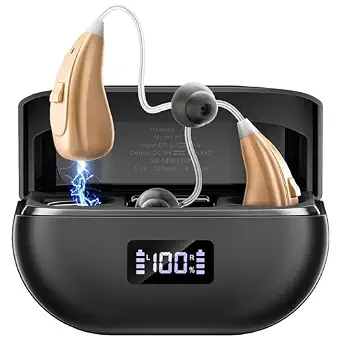 | Best for Maximum Battery Life and Simplicity | Battery Life: 25+ Hours (Aids), 100+ Hours (Case) | Control: One-Button with 5 Volume Levels | Sound Processing: 16-Channel HD | VIEW ON AMAZON | See Our Full Breakdown |
| crossover hearing aid | Battery life |
|---|---|
| Hearing Aids for Seniors | Up to 60 hours on a single charge |
| Vivtone Supermini Digital Hear | Over 16 hours after a two-hour charge |
| Karthus OTC Hearing Aids for S | Up to 30 hours per charge |
| Rechargeable Hearing Aids for | — |
| Ceretone Core One Pro OTC Hear | 20–25 hours per charge |
| Hearing Aids for Seniors & Adu | — |
| Karthus Hearing Aids for Senio | — |
| Bluetooth Hearing Aids with Ap | 10+ Hours per Charge |
| Oction Touchscreen Rechargeabl | Up to 100 Hours (Standard Mode) |
| OTC Hearing Aids for Seniors w | 25+ Hours (Aids), 100+ Hours (Case) |
More Details on Our Top Picks
Hearing Aids for Seniors, Rechargeable Noise Cancelling Amplifiers with Charging Case – Blue/Red
For a buyer who wants a straightforward crossover option without app setup, this model pairs single-button volume control with automatic noise reduction. Its listed 60-hour battery life and case backup of over 110 hours make it a stronger fit for extended stretches away from an outlet than the Ceretone Core One Pro, whose stated runtime is 20–25 hours per charge. The 2 g mini design also suits people who prefer a light, discreet device. The tradeoff is limited control: unlike Ceretone’s four listening programs, this model does not list selectable modes or adjustable sound profiles. New users may need time to adapt, and the description does not specify hearing-loss range or provide detailed fitting guidance. I’d choose it for ease and battery endurance, not fine-tuning.
Pros:- Single-button volume control keeps daily operation simple
- Listed battery life of up to 60 hours per charge
- Charging case provides over 110 hours of backup
- Light 2 g design and automatic noise reduction
Cons:- No selectable listening modes or detailed adjustment options are listed
- May take time to get used to, particularly for first-time users
- Only blue and red color options are specified
Best for: Seniors seeking a lightweight, button-operated amplifier for routine conversations and TV listening, especially those who value long intervals between charges.
Not ideal for: Buyers who want several listening programs, detailed sound adjustments, or clear information about suitability for a particular degree of hearing loss.
- Battery life:Up to 60 hours on a single charge
- Charging case backup:Over 110 hours
- Weight:2 g
- Colors:Blue, red
- Controls:Single-button volume control
- Noise handling:Automatic noise reduction
Our verdict“Choose this model for uncomplicated operation and extended battery life, but pick the Ceretone Core One Pro if you want multiple listening programs.”
Vivtone Supermini Digital Hearing Aids, Rechargeable, 16-Channel Sound Processing, Auto-On/Off, Pair
The Vivtone Supermini is the strongest choice here for buyers who want more than basic amplification while keeping a compact in-ear form. Its 16-channel digital processing and two modes—general and noisy environments—offer more ways to adapt than the one-button Karthus OTC model, which focuses on simple operation and noise reduction. Auto-on/off and memory also reduce routine handling, while four earbud sizes give buyers a better chance of finding a secure fit. The tradeoff is that the listed runtime is over 16 hours after a two-hour charge, shorter than the 30-hour claim for Karthus and the 60-hour claim for the blue/red amplifier. Fitting may take help, and waterproof or sweat resistance is not specified. I’d favor Vivtone for mode choice, not maximum battery endurance.
Pros:- 16-channel digital sound processing
- General and noisy-environment modes provide listening flexibility
- Four earbud sizes support a more tailored fit
- Auto-on/off and memory reduce repeated manual setup
Cons:- Listed runtime is over 16 hours, shorter than several alternatives here
- Requires a two-hour charge
- Fitting may need assistance, and water or sweat resistance is unspecified
Best for: Adults who want discreet in-ear devices with multiple sound modes and are willing to spend time finding the right earbud fit.
Not ideal for: Buyers who prioritize the longest stated runtime, need clearly documented water resistance, or want a particularly simple behind-the-ear fit.
- Sound processing:16-channel digital
- Battery life:Over 16 hours after a two-hour charge
- Charging time:2 hours
- Standby power:Approximately 1 week
- Design:Inconspicuous in-ear
- Earbud sizes:X-small, small, medium, and large
- Modes:General and noisy environment
- Automatic features:Auto-on/off and memory function
Our verdict“Choose Vivtone for discreet wear and sound-mode flexibility, but favor the Karthus OTC model if longer stated runtime and simpler controls matter more.”
Karthus OTC Hearing Aids for Seniors, Rechargeable with Noise Reduction
The Karthus OTC model is a practical crossover pick for buyers who prefer a behind-the-ear design and uncomplicated button control over hidden in-ear styling or extra modes. It is described for mild to moderate hearing loss, with noise reduction aimed at making conversation and TV listening easier. Its up-to-30-hour charge and 100-hour case capacity offer more stated endurance than the Vivtone Supermini’s 16-plus hours, while a 15-minute quick charge can help when the battery runs low. That simplicity comes with limits: there is no Bluetooth or wireless connectivity, and the product calls for a charging station. Compared with Ceretone’s four programs, Karthus gives buyers less stated sound customization. It makes most sense for basic daily amplification, not streaming or extensive personalization.
Pros:- Behind-the-ear style with simple button control
- Up to 30 hours of use per charge and 100 hours with the case
- 15-minute quick-charge feature is useful when time is short
- Noise reduction is intended to support conversations and TV listening
Cons:- No Bluetooth or other wireless features
- No selectable listening programs are specified
- Recharging requires the charging station
Best for: Seniors with mild to moderate hearing loss who want a rechargeable behind-the-ear device with one-button controls and no app or wireless setup.
Not ideal for: People seeking Bluetooth streaming, extensive sound-program choices, or amplification intended for severe hearing loss.
- Style:Behind the ear
- Intended hearing-loss range:Mild to moderate
- Battery type:Lithium-ion
- Battery voltage:3.7 V
- Battery life:Up to 30 hours per charge
- Charging case capacity:100 hours
- Quick charge:15 minutes for hours of use
- Controls:Button control
- Color:Matte black
Our verdict“Pick Karthus for simple behind-the-ear amplification and a quick-charge option, but choose Ceretone if you want multiple programs or Vivtone for a compact in-ear design.”
Rechargeable Hearing Aids for Seniors with Noise Cancelling
This model’s appeal is limited but clear: it specifies a rechargeable power source and noise-cancelling technology, with seniors identified as its intended users. That gives it a basic crossover profile for someone who wants to avoid disposable batteries and reduce background sound. Compared with the Karthus OTC hearing aids, however, it provides no stated wear style, battery runtime, charging-case capacity, control method, or hearing-loss range. Ceretone’s Core One Pro offers far more usable detail, including ear-tip sizes, programs, and a stated charge duration, so I’d rank this option below products whose fit and day-to-day limits are easier to judge. The missing information is a real buying drawback: without it, readers cannot compare endurance or setup needs. I’d choose it only when those details can be confirmed before purchase.
Pros:- Rechargeable power source avoids disposable batteries
- Noise-cancelling feature is specified
- Seniors are identified as the target users
Cons:- No battery runtime or charging-case capacity is provided
- Wear style, controls, and fitting details are unspecified
- The listed details do not establish which hearing-loss range it suits
Best for: A buyer specifically seeking a rechargeable senior-focused hearing aid who can verify fit, runtime, and controls before choosing.
Not ideal for: First-time hearing-aid buyers who need clear fitting guidance, a stated battery runtime, or known controls and listening modes to make a confident choice.
- Power source:Rechargeable battery
- Target users:Seniors with hearing loss
- Noise handling:Noise cancelling
- Wear style:Not specified
- Battery runtime:Not specified
- Controls:Not specified
Our verdict“Consider this only if rechargeability and noise cancelling are your main requirements and you can confirm the missing fit and battery details first.”
Ceretone Core One Pro OTC Hearing Aids for Seniors, Rechargeable, Invisible, Digital Chip, Wind Noise Reduction, Auto On/Off, Charging Case, Easy Volume Control
Ceretone stands apart from the simpler amplifiers in this group by pairing four listening programs with wind-noise reduction and digital sound processing. That gives buyers more room to adjust for changing surroundings than the Karthus OTC model, whose listing emphasizes one-button operation and does not specify multiple programs. The auto-on/off feature, volume control, and portable charging case keep daily handling approachable, while three medical-grade ear-tip sizes support fit adjustment. Its stated 20–25-hour runtime is respectable, though below the blue/red amplifier’s 60-hour claim and Karthus’s 30-hour claim. Ceretone is described for mild to moderate hearing loss, not severe cases, and proper tip fitting may take patience. I’d choose it for program flexibility and wind handling, rather than the longest time between charges.
Pros:- Four listening programs offer more choice than basic one-button models
- Wind-noise reduction addresses a specific outdoor listening annoyance
- Auto-on/off and easy volume control simplify routine use
- Portable case and S/M/L medical-grade ear tips support daily use and fit adjustment
Cons:- Designed for mild to moderate hearing loss, not severe cases
- 20–25-hour stated runtime is shorter than the 30- and 60-hour claims from other picks
- Finding a comfortable fit may require trying multiple ear tips
Best for: Adults with mild to moderate hearing loss who want discreet in-ear wear, multiple listening programs, and wind-noise reduction for varied everyday settings.
Not ideal for: People with severe hearing loss, buyers who want the longest listed battery runtime, or anyone unwilling to spend time fitting ear tips.
- Type:OTC hearing aids
- Intended users:Seniors and adults with mild to moderate hearing loss
- Battery life:20–25 hours per charge
- Charging case:Portable case with multiple recharges
- Ear tips:Medical-grade S, M, and L
- Sound processing:Intricon digital chip with Knowles speakers
- Programs:Four (P1–P4)
- Features:Wind-noise reduction, auto-on/off, and easy volume control
Our verdict“Choose Ceretone for program flexibility and wind-noise handling, but select the blue/red amplifier or Karthus if longer stated battery life takes priority.”
Hearing Aids for Seniors & Adults with Superior Sound Quality
This model stands out for users who prioritize invisibility and simplicity over complex connectivity. Unlike the Bluetooth Hearing Aids with App Control, which requires smartphone pairing, this device operates independently with smart noise reduction built directly into the hardware. The completely-in-canal fit offers superior discretion compared to the bulkier in-ear designs of competitors, making it ideal for those who dislike visible technology on their ears. However, the tradeoff is a lack of fine-tuned customization; you cannot adjust settings via an app, relying instead on preset modes. The IP56 water resistance is a significant advantage for active users or those in humid climates, surpassing many standard OTC aids. While the USB-C charging is convenient, the reliance on multiple internal batteries means maintenance is slightly higher than single-battery models. This is a solid choice for privacy-focused buyers who want clear speech without the learning curve of digital interfaces.
Pros:- Completely-in-canal design offers maximum invisibility
- IP56 rating provides reliable protection against sweat and rain
- Smart noise reduction automatically adapts to background sound
- Fast USB-C charging reduces downtime between uses
Cons:- No app support limits customization of sound profiles
- Multiple internal batteries may complicate long-term maintenance
- Lack of Bluetooth prevents direct audio streaming
Best for: Users who prioritize absolute discretion and do not want to manage smartphone apps or Bluetooth connections.
Not ideal for: Tech-savvy users who want to fine-tune audio profiles or stream media directly from their phones.
- Fit Type:Completely-in-canal
- Power Source:Rechargeable Lithium Polymer
- Water Resistance:IP56
- Noise Control:Active Noise Cancellation
- Charging Interface:USB-C
- Material:Medical-grade Plastic
- Listening Modes:Multiple Presets
Our verdict“Choose this if you want a hidden, set-it-and-forget-it solution that prioritizes speech clarity over connectivity.”
Karthus Hearing Aids for Seniors with Noise Reduction, Rechargeable In-Ear
This option is engineered for seniors who find smartphone apps frustrating. Unlike the Oction Touchscreen Rechargeable Hearing Aids, which relies on a digital interface, the Karthus model uses simple physical controls and a dedicated charging case. The 96-hour case battery is a standout feature, offering nearly four days of standby power, which is significantly longer than the 80-hour case found in the Bluetooth model. This reduces the frequency of charging, a major convenience for users with dexterity issues. However, the lack of active noise cancellation in very noisy environments is a notable limitation compared to higher-end digital processors. The white color may also be less discreet for darker hair or skin tones. It is a straightforward, no-nonsense device that delivers clear speech without the need for software updates or Bluetooth pairing, making it ideal for low-tech households.
Pros:- Extremely long-lasting 96-hour charging case
- Simple controls require no technical knowledge or apps
- Lightweight 14.2g weight ensures all-day comfort
- Active noise reduction improves speech clarity in moderate settings
Cons:- No app support means no personalized audiogram fitting
- White casing may be visible against dark hair or skin
- Performance drops in extremely noisy environments
Best for: Older adults who prefer physical buttons and simple operation over digital menus or smartphone integration.
Not ideal for: Users who frequently attend concerts or noisy restaurants and need advanced multi-band noise suppression.
- Fit Type:In-Ear
- Case Battery Life:96 Hours
- Noise Control:Active Noise Cancellation
- Item Weight:14.2 g
- Battery Type:Lithium Polymer
- Control Method:Physical Buttons
- Color:White
Our verdict“A reliable, simple choice for seniors who want reliable amplification without navigating digital interfaces.”
Bluetooth Hearing Aids with App Control for Seniors and Adults – Silver
This model is the clear winner for users who want personalized audio. Unlike the Karthus Hearing Aids, which offer fixed settings, this device allows for a hearing test and audiogram fitting via an app. This means the sound output can be tailored precisely to your specific hearing loss frequencies. The multi-directional noise reduction is more sophisticated than the basic cancellation found in the OTC Hearing Aids with 100 Hours Battery, adapting better to complex environments like cafes. With Bluetooth connectivity for Android and iOS, you can stream phone calls and music directly, a feature absent in the completely-in-canal options. The tradeoff is the learning curve; users must be comfortable with smartphone interfaces. For those willing to invest time in setup, the customizable environment modes provide a level of clarity and control that simpler OTC aids cannot match.
Pros:- App-based audiogram fitting for personalized sound
- Bluetooth streaming for calls, music, and TV
- Multi-directional noise reduction adapts to various settings
- Charging case provides 80 hours of backup power
Cons:- Requires a compatible smartphone for full functionality
- Setup and tuning can be complex for non-tech users
- App dependency may lead to software compatibility issues
Best for: Tech-comfortable users who want to fine-tune their hearing profile and stream audio from their phone.
Not ideal for: Seniors who are not comfortable using smartphone apps or who prefer a zero-setup experience.
- Connectivity:Bluetooth 5.0+
- App Support:Android 8.0+ / iOS 12.0+
- Battery Life:10+ Hours per Charge
- Charging Case Life:80 Hours
- Noise Reduction:Intelligent Multi-directional Chip
- Modes:Normal, Indoor, Outdoor, TV/Music
- Charging Time:2 Hours
Our verdict“Ideal for those who want a tailored hearing experience and the convenience of wireless audio streaming.”
Oction Touchscreen Rechargeable Hearing Aids with Bluetooth
This device bridges the gap between physical controls and digital apps by featuring a user-friendly touchscreen. Unlike the Bluetooth Hearing Aids with App Control, which relies entirely on a phone for adjustments, the Oction model allows direct on-device interaction, which is faster for quick volume or mode changes. The Bluetooth 5.4 connectivity offers a more stable and energy-efficient connection than older Bluetooth versions found in competitors. At just 3.5g per aid, it is lighter than the Karthus model, enhancing comfort during long wear. The 1-hour recharge time for the aids themselves is significantly faster than the 2-hour charge of the Bluetooth model, reducing downtime. However, the lack of explicit waterproofing details is a concern compared to the IP56-rated options. This is a great choice for active users who want modern connectivity without being tethered to their phone for every adjustment.
Pros:- Intuitive touchscreen interface for quick adjustments
- Bluetooth 5.4 provides stable, low-latency connectivity
- Ultra-lightweight 3.5g design for maximum comfort
- Fast 1-hour charging for the hearing aids themselves
Cons:- No stated IP rating for water or sweat resistance
- Touchscreen may be difficult for users with severe dexterity loss
- Smaller battery capacity than the 100-hour OTC models
Best for: Active users who want quick, on-device adjustments and modern Bluetooth stability without constant app use.
Not ideal for: Users who swim or sweat heavily, as waterproofing ratings are not clearly specified.
- Control Type:Touchscreen
- Connectivity:Bluetooth 5.4
- Weight:3.5g per aid
- Recharge Time:1 Hour (Aids), 2 Hours (Case)
- Case Recharges:5 Full Charges
- Hearing Modes:4 Customizable Modes
- Battery Life:Up to 100 Hours (Standard Mode)
Our verdict“A modern, lightweight option for users who value quick on-device controls and reliable Bluetooth streaming.”
OTC Hearing Aids for Seniors with Noise Cancelling, 100 Hours Battery Life
This model prioritizes endurance and ease of use above all else. With 100+ hours of total battery life, it outlasts the 80-hour case of the Bluetooth Hearing Aids and the 96-hour case of the Karthus, making it ideal for users who forget to charge devices regularly. The one-button control is simpler than the Oction Touchscreen, reducing the risk of accidental setting changes. The 16-channel HD sound processing provides natural sound quality that rivals more expensive digital aids, while the medical-grade silicone ensures a comfortable, hypoallergenic fit. However, the adaptive noise cancellation may take time to adjust to, and some users might find the automatic filtering too aggressive in quiet rooms. The blackish-silver color is discreet, but the lack of color options limits aesthetic choice. This is the definitive pick for low-maintenance users who need reliable power and straightforward operation.
Pros:- Industry-leading 100+ hour total battery life
- One-button control eliminates confusion for elderly users
- 16-channel processing delivers natural, high-fidelity sound
- Medical-grade silicone ensures a safe, comfortable fit
Cons:- No Bluetooth or app connectivity for customization
- Adaptive noise cancellation may feel unnatural in quiet settings
- Limited color options (only blackish-silver)
Best for: Seniors who need maximum battery endurance and the simplest possible one-button operation.
Not ideal for: Users who want to customize sound frequencies or stream media via Bluetooth.
- Battery Life:25+ Hours (Aids), 100+ Hours (Case)
- Control:One-Button with 5 Volume Levels
- Sound Processing:16-Channel HD
- Material:Medical-grade Silicone
- Noise Cancellation:Adaptive
- Weight:3 grams each
- Fit Type:In-Ear
Our verdict“The best choice for those who want to charge less often and operate their hearing aids with zero complexity.”

How We Picked
I evaluated these devices based on their ability to transmit sound from the better ear to the poorer ear, a core function of crossover systems. My assessment prioritized sound processing channels and noise reduction algorithms, as these directly impact speech intelligibility in complex environments. I also weighed usability factors such as charging convenience, app connectivity, and physical size. Products were ranked by how well they balanced these technical specs with real-world comfort and discretion, ensuring the top picks offer a genuine improvement in daily listening experiences rather than just feature lists.
Factors to Consider When Choosing Crossover Hearing Aids
Selecting a crossover hearing aid involves more than just picking the most expensive model. You need to match the device’s capabilities to your specific hearing profile and lifestyle.Understanding Crossover Signal Processing
Unlike standard hearing aids that amplify sound in each ear independently, crossover systems route sound from the poorer ear to the better ear. This requires sophisticated signal processing to prevent feedback and maintain directional awareness. When comparing models, look for multi-channel compression, which allows the device to adjust different frequency ranges separately. This technology ensures that loud background noises don’t drown out speech, a common issue in basic amplifiers. Devices with fewer channels may sound flat or distorted in noisy environments, so prioritize models with at least 12 to 16 channels for better clarity.
The Tradeoff Between Discretion and Dexterity
Many users desire invisible hearing aids, but smaller devices often come with handling challenges. Supermini models are nearly undetectable but can be difficult to insert or adjust, particularly for individuals with arthritis or poor vision. Larger behind-the-ear or in-the-ear styles offer easier grip and clearer controls but are more visible. I recommend considering your manual dexterity before choosing the smallest option available. If ease of handling is a priority, opt for models with larger volume wheels or touch controls that provide tactile feedback.
Battery Life vs. Connectivity Features
Modern hearing aids often include Bluetooth connectivity for phone calls and streaming audio. While this adds convenience, it typically drains the battery faster than analog-only devices. If you spend long days away from a charging case, a non-connected model with extended battery life might serve you better. Conversely, if you frequently take calls or listen to podcasts, the connectivity is worth the extra charging routine. Assess your daily routine to decide if smart features are a necessity or a distraction.
Noise Reduction and Environmental Adaptation
Background noise is the biggest enemy of hearing aid users, especially in crowded settings. Advanced noise cancellation algorithms distinguish between speech and ambient sound, enhancing focus on conversations. Some models specialize in wind noise reduction, which is critical for outdoor activities or travel. Simpler devices may amplify all sounds equally, leading to fatigue and listening effort. Check if the device offers automatic environment detection, which adjusts settings based on whether you are in a quiet room or a busy street, reducing the need for manual adjustments.
Fit Comfort and Long-Term Wearability
Discomfort is a primary reason users abandon hearing aids. Look for models with ergonomic designs and hypoallergenic materials to prevent skin irritation. Custom-molded tips provide a secure fit but require professional fitting, while universal tips offer flexibility. Consider whether the device uses open-fit domes that allow natural airflow, reducing the plugged-up feeling. A comfortable fit ensures you will wear the device consistently, which is vital for the brain to adapt to the crossover signal processing.
Frequently Asked Questions
What is the difference between a crossover hearing aid and a standard hearing aid?
A standard hearing aid amplifies sound for the ear it is placed in. In contrast, a crossover system captures sound at the poorer ear and transmits it to the better ear, effectively giving you a sense of hearing from both sides. This is specifically designed for single-sided deafness or severe asymmetrical hearing loss. Standard aids cannot replicate this cross-ear signal transfer, which helps improve spatial awareness and reduces the isolation felt by users with unilateral hearing loss.
Do I need an audiologist to fit a crossover hearing aid?
While many devices in this roundup are Over-the-Counter (OTC) and can be self-fitted, consulting an audiologist is beneficial for crossover cases. An expert can help configure the gain and compression settings to match your specific hearing loss profile. Self-fitting apps are improving, but they may not fully address the complex needs of single-sided hearing. If you experience difficulty adjusting to the sound, professional tuning can make a significant difference in comfort and effectiveness.
How long does the adjustment period take for crossover devices?
Adapting to crossover hearing aids can take longer than standard aids because your brain must learn to interpret sounds coming from the opposite side. Most users report noticeable improvement within two to four weeks of consistent daily wear. During this period, you may experience fatigue or confusion in noisy environments. Starting with quiet settings and gradually increasing exposure to complex sounds helps ease the process. Patience is required as your auditory system relearns spatial cues.
Can I use crossover hearing aids for phone calls?
Yes, if the device supports Bluetooth connectivity. Many modern models allow you to stream audio directly from your smartphone, enabling hands-free calls and media consumption. However, not all crossover aids have this feature; some are designed purely for environmental sound amplification. If phone usage is important to you, verify that the model explicitly lists Bluetooth streaming capabilities. Check the connectivity stability, as some devices may disconnect if you move out of range from your phone.
Are rechargeable cases more hygienic than traditional batteries?
Rechargeable cases generally offer a more hygienic experience because they eliminate the need to handle small, potentially contaminated batteries. The sealed nature of rechargeable units reduces the risk of introducing bacteria or earwax into the device’s internal components. Additionally, they prevent the hassle of replacing tiny batteries, which can be difficult for users with dexterity issues. However, you must keep the charging contacts clean to ensure proper functionality, requiring a simple wipe-down routine every few days.
Conclusion
Choosing the right crossover hearing aid depends on your specific balance of discretion, connectivity, and ease of use. For the best overall performance, the Ceretone Core One Pro offers superior noise handling and a user-friendly design. If you prioritize minimal visibility and basic functionality, the Vivtone Supermini is a strong contender. Those seeking advanced smartphone integration should look at the Bluetooth Hearing Aids with App Control, despite the shorter battery life. For beginners who want a simple, reliable start, the Karthus OTC Hearing Aids provide a straightforward entry point without overwhelming features. Evaluate your daily listening environments and dexterity needs to make the final decision.