For daily hearing aid care, I’d put the PerfectDry LUX first for its combination of electric drying and UV-C treatment, with the Super Dri Aid as a simple, low-fuss choice and the Redux Ultra Dry & Charge as a standout for people who want drying and charging together. The main tradeoff is between passive moisture absorption, which is simple but takes longer, and electric systems, which add speed and features but need power and device compatibility checks. UV-C can be a useful added feature, but it does not replace cleaning or follow the hearing-aid manufacturer’s care instructions. I compare these 15 options by drying approach, ease of use, device fit, and maintenance needs. Continue reading for the full breakdown and a guide to choosing one that suits your routine.

Get everyday helpers delivered free with Prime
- Fast, free delivery on millions of items
- Prime Video, Amazon Music and more included
- Member-only deals all year
Complete the kit


Key Takeaways
- Electric models lead on convenience: The PerfectDry LUX, PerfectDry Q.R., and other powered dryers offer a more guided drying routine than the passive Super Dri Aid, but they depend on power and model-specific operating instructions.
- Fast cycle claims are not the whole story: The 15-minute and 30-minute options may suit tight routines, while longer-cycle products can be a better match for overnight care; buyers should follow the cycle recommended for their devices.
- Charging compatibility separates the field: The Redux Ultra Dry & Charge and PerfectDome are aimed at rechargeable-aid users, but not every dryer or charging case supports every aid design.
- UV-C is an add-on, not a replacement for cleaning: Several products pair drying with UV-C or surface hygiene features, while the Super Dri Aid and Veri-Dry put more emphasis on moisture care without the same feature set.
- The best fit depends on routine and device type: A simple desiccant option can suit occasional moisture management, while cochlear implant users, rechargeable-aid owners, and frequent travelers should prioritize fit, power, and portability separately.
| Electronic Ultra Violet C Hearing Aid Dehumidifier Automatic Dryer Case for Hearing Amplifiers |  | Best for Flexible Cleaning Cycles | Cleaning modes: 1-hour basic; 6-hour deep-clean | Drying method: Heat and UV light | Compatibility: All types and brands of hearing aids, earbuds, and electronic protection devices | VIEW ON AMAZON | See Our Full Breakdown |
| Hearing Aid Dryer, Fast Dehumidifier with UV-C Sanitizer, Portable for Seniors and Adults |  | Best for a Specified Fast Cycle | Drying time: 30 minutes | Sanitization feature: UV-C ultraviolet light | Intended users: Seniors and adults | VIEW ON AMAZON | See Our Full Breakdown |
| Super Dri Aid Hearing Aid Dehumidifier – Single Dryer |  | Best for Power-Free Moisture Control | Product type: Single hearing-aid dehumidifier | Size: Compact | Moisture-control method: Reusable pellets | VIEW ON AMAZON | See Our Full Breakdown |
| PerfectDry Q.R. 45 min. Ultra Fast Hearing Aid Dryer & Dehumidifier Accessory |  | Best for Controlled Warm-Air Drying | Drying time: 45 minutes | Drying system: Proprietary pulsed hot air | Temperature limit: 113°F | VIEW ON AMAZON | See Our Full Breakdown |
| Hearing Aid Dryer Dehumidifier for Cochlear Implants & Hearing Aids |  | Best for Battery Management | Drying cycles: 2, 4, and 8 hours | Maximum temperature: 113°F | Functions: Cleaning, drying, and refresh | VIEW ON AMAZON | See Our Full Breakdown |
| Hearing Aid Dehumidifier Dryer, 15-Minute Fast Dry, Vacuum Dehumidifier |  | Best for the Fastest Routine | Drying time: 15 minutes | Temperature: 45°C | Operation noise: 20–34 decibels | VIEW ON AMAZON | See Our Full Breakdown |
| Hearing Aid Dryer Dehumidifier with UV Surface Hygiene and Digital Control |  | Best for Multiple Hearing Aid Styles | Temperature: 43°C | UV coverage: 360° UV-C and UVA surface hygiene | Cycle control: Digital timer with real-time display | VIEW ON AMAZON | See Our Full Breakdown |
| PerfectDome World’s Fastest Hearing Aid Dryer Dehumidifier Accessory for Rechargeable Hearing Aids |  | Best for Rechargeable Aids That Need Charging | Designed for: Rechargeable hearing aids | Drying time: 60 minutes | Temperature regulation: Automatic, limited to 95°F | VIEW ON AMAZON | See Our Full Breakdown |
| Redux Ultra Dry & Charge Hearing Aid Dryer Dehumidifier |  | Best Heatless Pick for Rechargeable Devices | Function: Dry and charge | Technology: Heat-free moisture protection | Compatibility: Rechargeable hearing aids and earbuds | VIEW ON AMAZON | See Our Full Breakdown |
| Global II by Dry & Store Electric Hearing Aid Dehumidifier with UV-C Sanitizer |  | Best for Set-and-Forget Travel Use | Operation time: 8 hours | Power source: USB | Sanitizer: UV-C lamp | VIEW ON AMAZON | See Our Full Breakdown |
| Hearing Aid Dryer Dehumidifier with UV-C Light, 30-Minute Fast Drying, Ultra Quiet, Portable USB-Powered |  | Best for Fast, Quiet USB Drying | Drying time: 30 minutes quick dry; 60–90 minutes deep dry | UV-C: 360-degree coverage with ring-shaped lamp | Noise level: Below 35 dB | VIEW ON AMAZON | See Our Full Breakdown |
| PerfectDry LUX Hearing Aid Dryer and Dehumidifier with UV-C Light | 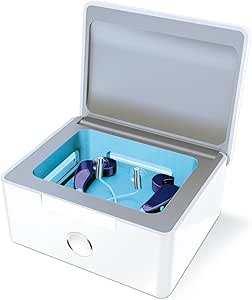 | Best for a Defined 45-Minute Cycle | Cycle time: 45 minutes | Maximum temperature: 113°F | UV-C: 360-degree UV-C light | VIEW ON AMAZON | See Our Full Breakdown |
| Portable USB Electric Dehumidifier Hearing Aid Dryer with UV-C Light, Temperature Range 104-122°F |  | Best for Simple One-Touch Operation | Operation: Portable, one-touch operation | Temperature range: 104–122°F | Drying features: Gentle heat, automatic temperature modulation, and UV-C light | VIEW ON AMAZON | See Our Full Breakdown |
| Veri-Dry Heatless Hearing Aid Dryer Box and Dehumidifier |  | Best Heatless Option | Drying method: Heatless electronic rice technology | Operation mode: Continuous | Noise feature: Quiet operation | VIEW ON AMAZON | See Our Full Breakdown |
| Flow Med Dry-Cap UV2 Electronic Hearing Aid Dryer for Rechargeable Aids |  | Best for Drying and Charging Rechargeable Aids | Modes: Dry & Clean; Clean | Drying features: Air blower | Cleaning feature: UV-C light | VIEW ON AMAZON | See Our Full Breakdown |
| hearing aid dryers and dehumidifiers for | Compatibility |
|---|---|
| Electronic Ultra Violet C Hear | All types and brands of hearing aids, earbuds, and electronic protection devices |
| Hearing Aid Dryer | — |
| Super Dri Aid Hearing Aid Dehu | — |
| PerfectDry Q.R. 45 min. Ultra | Hearing aids, cochlear implants, and rechargeable hearing devices |
| Hearing Aid Dryer Dehumidifier | — |
| Hearing Aid Dehumidifier Dryer | All hearing aid types and electronic devices, as stated |
| Hearing Aid Dryer Dehumidifier | — |
| PerfectDome World’s Fastest He | — |
| Redux Ultra Dry & Charge Heari | Rechargeable hearing aids and earbuds |
| Global II by Dry & Store Elect | Hearing aids |
| Hearing Aid Dryer Dehumidifier | Hearing aids, earbuds, AirPods, and in-ear monitors |
| PerfectDry LUX Hearing Aid Dry | Hearing aids, earbuds, in-ear monitors, and electronic hearing protection devices |
| Portable USB Electric Dehumidi | — |
| Veri-Dry Heatless Hearing Aid | Hearing aids, AirPods, and earbuds |
| Flow Med Dry-Cap UV2 Electroni | — |
More Details on Our Top Picks
Electronic Ultra Violet C Hearing Aid Dehumidifier Automatic Dryer Case for Hearing Amplifiers
Automatic operation and a choice of short or extended cycles make this case a good fit for people who want drying built into a simple routine. Its 1-hour basic mode offers a shorter option than the 6-hour deep-clean cycle on nights when a longer run is unnecessary. Compared with the Hearing Aid Dryer, Fast Dehumidifier with UV-C Sanitizer, which specifies a 30-minute cycle, this model trades speed for more cycle choice and broad stated compatibility with hearing aids and earbuds.
Heat and UV light are intended to reduce moisture and support hygiene, but the supplied details do not establish a separate cleaning or disinfection function. It also needs a power source, so it is less convenient away from home than the reusable-pellet Super Dri Aid. The 3-year warranty is a useful ownership detail, though noise levels and capacity are not specified.
Pros:- Automatic operation with a 1-hour basic cycle and a 6-hour deep-clean cycle
- Uses heat and UV light as part of its moisture and hygiene routine
- States compatibility with hearing aids, earbuds, and electronic protection devices
- Includes a 3-year warranty and food-grade thermoplastic construction
Cons:- Requires a power source, limiting use where an outlet is unavailable
- No operating noise or device capacity details are provided
- Product information does not establish a distinct cleaning or disinfection function
Best for: Hearing-aid and earbud owners who want automatic operation, two cycle lengths, and one case for several compatible device types.
Not ideal for: Travelers who need a power-free option, or buyers who prioritize a specified fast cycle or verified disinfection performance.
- Cleaning modes:1-hour basic; 6-hour deep-clean
- Drying method:Heat and UV light
- Compatibility:All types and brands of hearing aids, earbuds, and electronic protection devices
- Material:Food-grade thermoplastic
- Operation:Fully automatic with auto shut-off
- Warranty:3 years
- Return policy:30-day no-questions-asked
Our verdict“Choose this case if you want automatic, adjustable cycles for compatible hearing aids or earbuds and do not need a travel-ready, power-free dryer.”
Hearing Aid Dryer, Fast Dehumidifier with UV-C Sanitizer, Portable for Seniors and Adults
The clearest reason to choose this dryer is its stated 30-minute cycle: it suits users who want a quick drying routine rather than an overnight process. The product also pairs dehumidifying with UV-C light, giving it a hygiene-focused angle that the passive-pellet Super Dri Aid does not offer. Its design is described as compact and user-friendly for seniors and adults, although the available information does not explain the controls or give measurements.
Compared with the PerfectDry Q.R., which specifies a 45-minute pulsed hot-air cycle and a temperature limit, this model claims a shorter run but provides fewer technical details about its drying method and capacity. I would treat the UV-C feature as an added function, not proof of sterilization. The 3-year warranty is helpful, but buyers who need more than hearing-aid drying should look elsewhere.
Pros:- Specified 30-minute drying cycle
- Combines dehumidifying with UV-C ultraviolet light
- Described as compact and suited to senior and adult users
- Includes a 3-year warranty
Cons:- No dimensions or capacity information is provided
- Limited to hearing-aid drying according to the supplied details
- Drying temperature and specific cycle controls are not stated
Best for: Adults and seniors who want a short, stated 30-minute powered drying cycle and a straightforward hearing-aid-focused device.
Not ideal for: Buyers who need documented capacity, detailed operating specifications, or a dryer for a range of devices beyond hearing aids.
- Drying time:30 minutes
- Sanitization feature:UV-C ultraviolet light
- Intended users:Seniors and adults
- Design:Compact and portable
- Primary use:Hearing-aid drying and dehumidifying
- Warranty:3 years
Our verdict“Pick this model if a stated 30-minute cycle matters more to you than detailed capacity and drying-method specifications.”
Super Dri Aid Hearing Aid Dehumidifier – Single Dryer
The Super Dri Aid takes a simpler route than the powered cases in this roundup: reusable pellets draw moisture without a timed electric drying cycle. That makes it a practical choice for a desk, bedside table, or travel bag where an outlet is inconvenient. Compared with the Electronic Ultra Violet C Hearing Aid Dehumidifier, it gives up automatic cycles and UV light, but avoids dependence on household power.
The tradeoff is that the pellets need microwave reactivation, so upkeep is part of ownership rather than something the dryer handles automatically. This is a moisture-control option, not a fast dryer or a hygiene device, and its stated application is hearing aids rather than a broader set of electronics. Buyers wanting a defined quick cycle should look instead at the Hearing Aid Dryer, Fast Dehumidifier, which specifies 30 minutes. For simple, reusable dehumidification, this compact design keeps the routine uncomplicated.
Pros:- Compact design suits home, office, and travel use
- Reusable pellets provide moisture control without an electric drying cycle
- Pellets can be reactivated in a microwave
- Focused design keeps operation simple
Cons:- Pellets require microwave reactivation
- Does not offer a specified timed drying cycle or UV feature
- Listed for hearing aids rather than a broad range of electronics
Best for: Hearing-aid users who want a compact, reusable moisture-control container for home, office, or travel without relying on a powered cycle.
Not ideal for: People who want fast electric drying, UV features, or a device that does not require periodic microwave pellet reactivation.
- Product type:Single hearing-aid dehumidifier
- Size:Compact
- Moisture-control method:Reusable pellets
- Pellet reactivation:Microwave
- Application:Hearing aids
- Suggested settings:Home, office, and travel
Our verdict“Choose the Super Dri Aid if you value compact, reusable dehumidification over powered speed or added hygiene features.”
PerfectDry Q.R. 45 min. Ultra Fast Hearing Aid Dryer & Dehumidifier Accessory
The PerfectDry Q.R. stands out for pairing a defined 45-minute cycle with pulsed hot air capped at 113°F. That gives buyers more detail about its drying approach than the 30-minute Hearing Aid Dryer, Fast Dehumidifier, whose supplied specs do not list a temperature. It is also described as suitable for rechargeable hearing aids and cochlear implants, so it can serve users with more than one type of hearing device.
The compact 4.1-by-0.8-by-2.2-inch dimensions help limit counter space, but the product notes that larger devices may not fit comfortably inside. Compared with the Hearing Aid Dryer Dehumidifier for Cochlear Implants & Hearing Aids, which offers cycles up to eight hours and battery-management features, the Q.R. favors a short, fixed run over broader functions. Its lid must stay closed during drying, and no travel-specific design is stated.
Pros:- Specified 45-minute pulsed hot-air drying cycle
- Temperature limit of 113°F
- Described as compatible with hearing aids, cochlear implants, and rechargeable models
- Compact listed dimensions and a 2-year warranty
Cons:- Internal space may not accommodate larger devices
- Lid must remain closed while the cycle runs
- No travel-focused design details are provided
Best for: Users with compatible hearing aids or cochlear implants who want a short, temperature-limited drying cycle and a compact countertop accessory.
Not ideal for: Owners of larger devices or buyers who need adjustable long cycles, battery-management functions, or a specifically travel-oriented design.
- Drying time:45 minutes
- Drying system:Proprietary pulsed hot air
- Temperature limit:113°F
- Dimensions:4.1 x 0.8 x 2.2 inches
- Compatibility:Hearing aids, cochlear implants, and rechargeable hearing devices
- Device capacity:Accommodates multiple hearing aids or cochlear implants
- Warranty:2 years
Our verdict“Choose the PerfectDry Q.R. if you want a compact, defined warm-air cycle and your devices fit its limited internal space.”
Hearing Aid Dryer Dehumidifier for Cochlear Implants & Hearing Aids
This model is the most function-focused choice here for owners who want more than moisture removal. Its 2-, 4-, and 8-hour cycles let users choose a longer run for heavier moisture exposure, while built-in battery features add a practical storage and checking station. Compared with the PerfectDry Q.R., which emphasizes a fixed 45-minute warm-air cycle, this dryer is better suited to people who prefer adjustable run times and battery management over a quick, compact routine.
The tradeoff is a more hands-on process: the supplied details call for manual operation, and there is no short cycle comparable to the 30-minute Hearing Aid Dryer, Fast Dehumidifier. Its maximum temperature is 113°F, and the product is described for hearing aids and cochlear implants, not as a universal electronics dryer. Cleaning and refresh functions broaden its use, but do not remove the need to manage the cycle yourself.
Pros:- Offers 2-, 4-, and 8-hour drying cycles
- Includes magnetic battery storage and a built-in tester
- Provides cleaning, drying, and refresh functions
- Maximum temperature is specified at 113°F
Cons:- Requires regular manual operation
- Does not offer the specified 30-minute cycle of the faster alternative
- Described for hearing aids and cochlear implants rather than universal device use
Best for: Hearing-aid or cochlear-implant users who want adjustable drying durations plus magnetic battery storage and a built-in battery tester.
Not ideal for: People seeking an automatic quick-cycle dryer, a universal electronics device, or a minimal-maintenance routine.
- Drying cycles:2, 4, and 8 hours
- Maximum temperature:113°F
- Functions:Cleaning, drying, and refresh
- Battery storage:Magnetic battery storage
- Battery testing:Built-in tester
- Intended devices:Hearing aids and cochlear implants
- Operation:Manual operation
Our verdict“Choose this model if battery-management features and adjustable drying time matter more than automatic operation or a short cycle.”
Hearing Aid Dehumidifier Dryer, 15-Minute Fast Dry, Vacuum Dehumidifier
For buyers who want a short maintenance cycle, this model pairs 15-minute drying with vacuum dehumidification and UV-C light. Its 45°C setting and quick cycle make it a more time-focused choice than the Global II by Dry & Store, which runs automatically for eight hours. An LED display gives cycle information at a glance, while the stated 20–34 decibel operation may suit a bedroom or shared space. It is described as compatible with all hearing aid types and other electronic devices, giving it broader stated use than the rechargeable-only PerfectDome. The tradeoff is that a short cycle may call for regular use, and the listing provides no longer-cycle option beyond 15 minutes. Its one-year warranty is also shorter than PerfectDome’s two years.
Pros:- 15-minute cycle suits users who want a brief daily routine
- Vacuum dehumidification and UV-C light add moisture removal and surface treatment
- LED display makes cycle status easy to check
- Stated compatibility includes all hearing aid types and electronic devices
Cons:- Drying sessions are limited to 15 minutes
- Regular use is suggested for ongoing maintenance
- One-year warranty is shorter than the two-year coverage listed for PerfectDome
Best for: Hearing aid owners who want a quick, displayed maintenance cycle and broad stated compatibility across hearing aid styles.
Not ideal for: Buyers who prefer a longer or adjustable drying program, or who want a warranty longer than one year.
- Drying time:15 minutes
- Temperature:45°C
- Operation noise:20–34 decibels
- Moisture removal:Vacuum dehumidification
- Light treatment:UV-C
- Display:LED
- Compatibility:All hearing aid types and electronic devices, as stated
- Warranty:1 year
Our verdict“Choose this model if a short cycle and broad stated compatibility matter more than adjustable drying time or longer warranty coverage.”
Hearing Aid Dryer Dehumidifier with UV Surface Hygiene and Digital Control
This model’s strongest distinction is its extra-large chamber, which is described as fitting BTE, RIC, ITC, and ITE hearing aids and holding multiple devices at once. That makes it a better fit for households managing more than one pair than the compact, hearing-aid-focused Global II by Dry & Store. A gentle 43°C heat cycle handles moisture, while 360° UV-C and UVA coverage adds a surface-hygiene feature absent from the heatless Redux Ultra Dry & Charge. Digital timing and a real-time display give more visible control than an automatic fixed-duration routine. Dual USB ports add power flexibility, but the unit still needs a power source, and the available product details do not establish its cycle length or warranty coverage. Buyers should weigh the roomy layout against those missing specifics.
Pros:- Extra-large chamber is described as fitting several hearing aid styles and multiple devices
- 360° UV-C and UVA surface treatment offers broad stated light coverage
- 43°C heat is a gentle specified temperature for moisture evaporation
- Digital timer and real-time display provide visible cycle control
Cons:- No specific drying-cycle duration is provided
- Warranty coverage is not detailed
- Requires a power source despite dual USB power options
Best for: Households with multiple hearing aid users or people who need room for different BTE, RIC, ITC, or ITE styles.
Not ideal for: Buyers who need a clearly stated drying duration, documented warranty coverage, or a device that works without an external power source.
- Temperature:43°C
- UV coverage:360° UV-C and UVA surface hygiene
- Cycle control:Digital timer with real-time display
- Chamber:Extra-large; fits BTE, RIC, ITC, and ITE styles
- Power ports:Dual 5V1A USB input/output
- Material:Plastic
- Color:White
Our verdict“Pick this dryer when chamber space and broad hearing aid style fit matter more than having a published cycle length or warranty detail.”
PerfectDome World’s Fastest Hearing Aid Dryer Dehumidifier Accessory for Rechargeable Hearing Aids
PerfectDome is designed around one specific routine: dry rechargeable hearing aids while they charge. Its 60-minute cycle and built-in USB-C port combine two overnight or between-use tasks, unlike the Hearing Aid Dehumidifier Dryer, 15-Minute Fast Dry, which emphasizes a shorter drying cycle but does not list charging support. Automatic temperature regulation capped at 95°F is a useful point for buyers cautious about heat around rechargeable electronics. The two-year warranty also exceeds the one year listed for the 15-minute model. That focus comes with a firm boundary: PerfectDome is specified for rechargeable hearing aids, and the product description says it is not suitable for non-rechargeable devices. Buyers who need UV treatment or broad compatibility should compare it with the Hearing Aid Dryer Dehumidifier with UV Surface Hygiene and Digital Control instead.
Pros:- USB-C port supports charging during the 60-minute drying cycle
- Automatic temperature regulation is capped at 95°F
- Two-year warranty is longer than the one-year coverage listed for the 15-minute dryer
- Purpose-built for rechargeable hearing aid maintenance
Cons:- Designed specifically for rechargeable hearing aids
- USB-C connection is required for charging
- No UV sanitation feature is listed
Best for: Owners of rechargeable hearing aids who want a device that dries and charges them in the same session.
Not ideal for: People with non-rechargeable hearing aids, or buyers seeking UV-C surface treatment or use with a wider range of devices.
- Designed for:Rechargeable hearing aids
- Drying time:60 minutes
- Temperature regulation:Automatic, limited to 95°F
- Charging port:USB-C
- Charging during drying:Yes
- Moisture removal:Heat
- Regulatory detail:FDA-registered
- Warranty:2 years
Our verdict“Choose PerfectDome if you use rechargeable hearing aids and want charging integrated with a controlled drying cycle.”
Redux Ultra Dry & Charge Hearing Aid Dryer Dehumidifier
The Redux Ultra Dry & Charge takes a different route from heated dryers: its heat-free moisture protection is intended for rechargeable hearing aids and earbuds, with one-touch operation for a simple routine. That makes it a natural alternative to the PerfectDome, which uses heat and specifies a 60-minute cycle while also charging through USB-C. Redux instead prioritizes avoiding heat and keeping operation quiet, which may appeal to people who run a dryer overnight or want to treat earbuds too. The tradeoff is limited detail: no drying time, chamber capacity, charging connection, or warranty is provided. Its stated compatibility also excludes non-rechargeable hearing aids. Compared with the Global II by Dry & Store, Redux offers broader stated device use but does not list a UV-C lamp or a defined automatic run time.
Pros:- Heat-free technology avoids applying a heated drying cycle
- One-touch operation keeps routine use simple
- Whisper-quiet operation is suited to overnight placement
- Stated compatibility includes rechargeable hearing aids and earbuds
Cons:- No specific drying time is provided
- Chamber capacity and charging-port details are not stated
- Limited to rechargeable hearing aids and earbuds
Best for: Owners of rechargeable hearing aids or earbuds who prefer heat-free moisture protection and straightforward one-touch operation.
Not ideal for: Users with non-rechargeable aids, or buyers who need a published cycle length, capacity, or specific charging-port details.
- Function:Dry and charge
- Technology:Heat-free moisture protection
- Compatibility:Rechargeable hearing aids and earbuds
- Operation:One-touch
- Noise level:Whisper-quiet
- Drying time:Not specified
Our verdict“Choose Redux if heat-free, quiet operation is your priority and you can accept limited information about cycle time and capacity.”
Global II by Dry & Store Electric Hearing Aid Dehumidifier with UV-C Sanitizer
The Global II favors a predictable, hands-off routine over a quick cycle: it runs automatically for eight hours and uses USB power, so it suits travelers who can leave hearing aids in the case overnight. Its compact, hinged-lid design is more travel-focused than the Hearing Aid Dryer Dehumidifier with UV Surface Hygiene and Digital Control, whose extra-large chamber is aimed at accommodating multiple devices and styles. Global II also includes a UV-C lamp and is described as absorbing moisture and odor. In contrast with the rechargeable-focused PerfectDome, it is presented as a hearing aid dryer rather than a combined charging solution. The main compromises are its hearing-aid-only use and potentially limited space for larger aids. USB power is also required, so travelers need a compatible power source.
Pros:- Automatic eight-hour operation supports a hands-off overnight routine
- Compact portable design with a hinged lid suits travel
- USB power offers a common power connection
- UV-C lamp and stated moisture and odor absorption add maintenance functions
Cons:- Designed for hearing aid drying rather than other electronic devices
- Capacity may be limited for larger hearing aids
- Requires a USB power source and does not list a charging function
Best for: Hearing aid users who travel and prefer a compact case that runs an automatic overnight cycle from USB power.
Not ideal for: People who need a dryer for earbuds or other electronics, have larger devices that may not fit, or want a short cycle or charging function.
- Operation time:8 hours
- Power source:USB
- Sanitizer:UV-C lamp
- Design:Hinged lid with rounded drying compartment
- Portability:Portable
- Moisture and odor care:Moisture and odor absorption
- Compatibility:Hearing aids
Our verdict“Choose Global II if you want a portable, automatic overnight hearing aid dryer and do not need broad device compatibility or fast drying.”
Hearing Aid Dryer Dehumidifier with UV-C Light, 30-Minute Fast Drying, Ultra Quiet, Portable USB-Powered
This model stands out for pairing a 30-minute quick-dry cycle with a compact, quiet design. The 60–90-minute deep-dry mode gives users another option when devices need longer moisture removal, while the 360-degree UV-C lamp adds a hygiene feature not specified for the heatless Veri-Dry box. At just 4.2 ounces and powered by USB, it is easier to pack than a stationary routine-focused dryer, though it needs a connected power source rather than offering battery operation. Its noise level is listed below 35 dB, a useful detail for people who run a cycle near a workspace or bedroom. The tradeoffs are a small stated tank capacity and limited brand-specific compatibility detail, so buyers with unusual or bulky devices should check fit before choosing it.
Pros:- Offers both 30-minute quick drying and a 60–90-minute deep-dry mode.
- 360-degree UV-C coverage adds a hygiene feature alongside moisture removal.
- Compact 4.2-ounce body is convenient to pack.
- USB power and noise below 35 dB suit travel or quiet rooms.
Cons:- Requires USB power; battery operation is not specified.
- The listed 0.18-gallon tank capacity may limit use between emptying.
- Compatibility with individual hearing-aid brands and larger devices is not detailed.
Best for: Travelers and busy hearing-aid users who want a quiet, short drying cycle and can keep a USB power source nearby.
Not ideal for: Buyers who need cordless operation, a large moisture reservoir, or confirmed fit for a specific oversized hearing device.
- Drying time:30 minutes quick dry; 60–90 minutes deep dry
- UV-C:360-degree coverage with ring-shaped lamp
- Noise level:Below 35 dB
- Weight:4.2 oz
- Dimensions:3.66 × 3.66 × 2.02 in
- Power:USB, 5 V; 10 W
- Compatibility:Hearing aids, earbuds, AirPods, and in-ear monitors
Our verdict“Choose this dryer if quick cycles, low noise, and USB portability matter more than cordless use or a larger capacity.”
PerfectDry LUX Hearing Aid Dryer and Dehumidifier with UV-C Light
The PerfectDry LUX is a straightforward pick for buyers who want a single, clearly specified 45-minute cycle rather than choosing between multiple drying modes. Its combination of heat, pulsed dehumidification, and 360-degree UV-C light brings several maintenance approaches into one compact unit. The maximum temperature is listed as 113°F, giving buyers a concrete reference point when comparing it with the USB dryer in this lineup, which lists two cycle lengths but no temperature. Unlike the heatless Veri-Dry, this model uses heat, so it may not suit someone specifically seeking a no-heat routine. The product information does not spell out power details or capacity, and its small dimensions may constrain larger devices. It makes most sense when a predictable cycle matters more than cordless convenience or extensive fit information.
Pros:- Specified 45-minute cycle makes routine planning simple.
- Combines heat and pulsed dehumidification with 360-degree UV-C.
- Maximum temperature is stated as 113°F.
- Compatibility includes hearing aids, earbuds, and in-ear monitors.
Cons:- Uses heat, unlike the heatless Veri-Dry option.
- A power source is required, and the supplied details do not specify the connection type.
- No capacity figure is provided, and the compact interior may not suit larger devices.
Best for: Hearing-aid owners who prefer a fixed, relatively short drying routine and want heat, pulsed dehumidification, and UV-C in one compact unit.
Not ideal for: Users who want heatless moisture removal, battery-powered operation, or clearly documented space for larger devices.
- Cycle time:45 minutes
- Maximum temperature:113°F
- UV-C:360-degree UV-C light
- Drying approach:Heat and pulsed dehumidification
- Dimensions:3.6 × 1.9 × 3.0 in
- Compatibility:Hearing aids, earbuds, in-ear monitors, and electronic hearing protection devices
Our verdict“Pick the PerfectDry LUX for a defined 45-minute heated cycle, but skip it if heatless drying or detailed capacity information is a priority.”
Portable USB Electric Dehumidifier Hearing Aid Dryer with UV-C Light, Temperature Range 104-122°F
This dryer is aimed at buyers who value a simple routine: one-touch operation, automatic temperature modulation, and room for two hearing aids or headphones at once. Its stated 104–122°F range gives more temperature detail than the PerfectDry LUX listing, whose maximum is 113°F, but the wider range may leave heat-sensitive-device owners wanting guidance about their specific model. The compact 100-gram body is portable, and UV-C light plus gentle heat combines hygiene-oriented treatment with moisture removal. Unlike the Veri-Dry, it is not a heatless option; unlike the rechargeable-aid-focused Flow Med Dry-Cap UV2, it does not list charging as part of the routine. Warranty information and capacity for larger devices are not specified, so this suits standard-size devices and uncomplicated use better than buyers seeking extensive documentation.
Pros:- One-touch operation keeps the routine simple.
- Automatic temperature modulation is paired with a stated 104–122°F range.
- Can dry two hearing aids or headphones simultaneously.
- Portable form weighs 100 g and includes UV-C light.
Cons:- The listed temperature range may not suit every heat-sensitive device.
- Capacity for larger headphones or hearing devices is not specified.
- Warranty details are not provided.
Best for: Users who want an easy, portable dryer for two standard-size hearing aids and prefer one-touch controls over multiple settings.
Not ideal for: Owners of heat-sensitive or unusually large devices who need detailed temperature guidance, confirmed capacity, or clearly stated warranty coverage.
- Operation:Portable, one-touch operation
- Temperature range:104–122°F
- Drying features:Gentle heat, automatic temperature modulation, and UV-C light
- Capacity:Two hearing aids or headphones
- Dimensions:3.54 × 3.94 × 1.18 in
- Weight:100 g
- Material:Metal and plastic
Our verdict“Choose it for a simple, portable two-device drying routine, provided its heat range and unspecified larger-device fit work for your equipment.”
Veri-Dry Heatless Hearing Aid Dryer Box and Dehumidifier
The Veri-Dry takes a different route from the heated PerfectDry LUX and USB electric dryer: its heatless, continuous moisture removal is intended for buyers who want to avoid adding warmth to their devices. Electronic rice technology and quiet operation make it suited to a low-fuss drying routine, while the included kit is framed for easy setup and travel. That approach trades timed electric cycles and UV-C features for gentle, ongoing dehumidification; the product details do not specify a UV-C lamp, power source, or drying duration. Its 4.4 × 5.3 × 4.4-inch footprint is also less pocketable than the 100-gram USB model, despite the travel-friendly description. The listed capacity is only 1 microliter, so buyers should clarify what that figure means and whether the box fits their devices before relying on it.
Pros:- Heatless operation avoids the heated drying approach used by the PerfectDry LUX.
- Continuous moisture removal supports a routine without selecting a cycle.
- Quiet operation is suited to shared or restful spaces.
- Includes a kit and is described as travel-friendly.
Cons:- No UV-C feature, drying time, or power-source compatibility is specified.
- Requires reactivation using the included sleeve.
- The stated 1-microliter capacity is limited and may be difficult to interpret.
Best for: Hearing-aid owners who prefer heatless, quiet moisture removal and want a simple kit for home use or occasional travel.
Not ideal for: Buyers who need a timed fast cycle, UV-C treatment, powered operation, or clearly documented capacity for multiple or large devices.
- Drying method:Heatless electronic rice technology
- Operation mode:Continuous
- Noise feature:Quiet operation
- Capacity:1 microliter (as listed)
- Dimensions:4.4 × 5.3 × 4.4 in
- Color:Transparent
- Compatibility:Hearing aids, AirPods, and earbuds
Our verdict“Choose the Veri-Dry if heatless, quiet dehumidification is your priority and you do not need UV-C or a fast powered cycle.”
Flow Med Dry-Cap UV2 Electronic Hearing Aid Dryer for Rechargeable Aids
The Flow Med Dry-Cap UV2 earns a distinct place for combining drying, UV-C cleaning, and charging in one routine for rechargeable hearing aids. That makes it a closer fit for rechargeable-aid owners than the PerfectDry LUX, which lists drying and UV-C but no charging function. Two modes—Dry & Clean and Clean—also let users select whether they want air drying alongside UV-C or cleaning without the stated drying combination. The tradeoff is a narrow fit: the product is specified for rechargeable hearing aids, while the USB dryer and Veri-Dry describe broader device compatibility. It also needs a power outlet, and the available details omit cycle duration, dimensions, capacity, and charging specifications. Buyers should confirm that their particular aids work with the charging setup before treating this as an all-in-one replacement for separate equipment.
Pros:- Combines drying, UV-C cleaning, and charging for rechargeable hearing aids.
- Two modes offer Dry & Clean and Clean routines.
- Air blower is included alongside UV-C light.
- Designed to serve as a consolidated maintenance station rather than a dryer alone.
Cons:- Specified for rechargeable hearing aids, limiting its fit for other users.
- Requires a power outlet rather than offering stated cordless operation.
- Cycle time, dimensions, capacity, and charging details are not provided.
Best for: Owners of compatible rechargeable hearing aids who want drying, UV-C cleaning, and charging together on a powered home station.
Not ideal for: Users with non-rechargeable aids, buyers seeking a portable USB-powered option, or anyone needing published size, cycle, and charging details before purchase.
- Modes:Dry & Clean; Clean
- Drying features:Air blower
- Cleaning feature:UV-C light
- Charging:Charging function for rechargeable hearing aids
- Application:Rechargeable hearing aids
- Power:Power outlet required
Our verdict“Choose the Dry-Cap UV2 if you own compatible rechargeable aids and value combined charging and maintenance more than portability or detailed published specifications.”

How We Picked
I compared these products around the job buyers actually need them to do: manage moisture around hearing devices without adding needless effort to daily care. The main criteria were drying method and cycle information, compatibility cues for hearing aids or cochlear implants, ease of operation, portability, power needs, and added features such as UV-C treatment or charging. I also weighed maintenance demands and whether the product’s stated use case was clear enough to help a buyer match it to a routine.
The ranking favors products that balance practical drying with clear usability and a distinct benefit, rather than rewarding a single headline feature such as speed or UV-C alone. That puts versatile powered options near the top, while simple passive dryers remain worthwhile for buyers who want a straightforward routine. Products aimed at rechargeable aids or specific device types earn a distinct place, but compatibility must be confirmed before purchase. Where product details do not establish universal compatibility or clinical disinfection, I treat those as questions for the manufacturer rather than assumed benefits.
Factors to Consider When Choosing 15 Best Hearing Aid Dryers And Dehumidifiers For
Before choosing a dryer, I’d start with the hearing device and care instructions, then match the product to your daily routine. The category spans simple containers and powered units with heat, UV-C, timers, or charging functions, so a longer feature list does not automatically mean a better fit.
Match the dryer to your exact hearing device
Check the hearing-aid or cochlear-implant manufacturer’s care guidance before buying, especially if the device has rechargeable batteries, delicate components, or a dedicated charging case. A product described as suitable for hearing aids may not fit every shape or charging arrangement. Confirm whether the device should be placed in the dryer with batteries removed, with the battery door open, or in a particular position. Avoid assuming a dryer can safely handle both the aids and their charging case. If the product listing is vague, ask the hearing-care provider or manufacturer about that exact dryer model. A small compatibility check can prevent a feature-rich unit from becoming an awkward addition to your routine.
Choose a drying method that fits your schedule
Passive desiccant dryers are simple and do not need electricity, but their moisture-absorbing material may need replacement or reactivation and they generally do not offer a timed powered cycle. Electric dryers can make care more repeatable and may suit people who want to place aids in a unit overnight or follow a set cycle. Fast-cycle claims can be appealing, yet a shorter cycle is only useful if it aligns with the device maker’s instructions and your actual routine. Consider when moisture tends to be a problem: after exercise, in humid weather, or as part of everyday care. If you often forget manual steps, a straightforward electric cycle may be more practical than a low-maintenance-looking option that requires tracking desiccant condition.
Treat UV-C as an extra feature, not the main purchase reason
UV-C features appear on several options in this roundup, but buyers should distinguish surface hygiene claims from moisture removal. UV-C does not clean wax or debris, and it should not be treated as a substitute for routine wiping or professional maintenance. Ask how the light is enclosed and whether the maker gives clear operating and safety instructions. A dryer without UV-C may still suit someone whose priority is moisture control and uncomplicated use. Paying extra for UV-C makes more sense when you value an added hygiene step and understand what the product claims to address. Avoid relying on broad sanitation wording without checking the manufacturer’s explanation.
Decide whether charging in the dryer matters
Some rechargeable hearing-aid owners prefer a unit that combines drying and charging, while others may need to keep the manufacturer’s charging case in the routine. Check whether the dryer charges the aids directly, accommodates a separate case, or only dries them. These are different functions, and a product name alone may not answer the question. Combining tasks can reduce counter clutter and simplify a bedtime routine, but it can also limit compatibility or make the unit less useful for non-rechargeable aids. If you travel, verify whether the charging arrangement works with the power source and accessories you already carry. Choose an integrated model only when its charging setup matches your exact aids.
Account for where the dryer will live
A powered dryer needs a convenient place near an outlet or a suitable USB power source, while a passive container is easier to position but may need consumable desiccant. For travel, check the unit’s size, power requirements, and whether its cycle depends on a stable connection. A compact product is not automatically travel-ready if it needs accessories that are easy to leave behind. At home, a larger unit with clear controls may be easier for someone with limited dexterity than a small device with tiny buttons. Think through the whole routine, including where aids are stored during the day and who will maintain the dryer. The most useful choice is the one that fits the space and habits already in place.
Compare upkeep and ownership beyond the first setup
Dryers can differ in ongoing care: passive units may need fresh or reactivated desiccant, while electronic models require cleaning and careful handling of their components. Look for clear instructions on replacing consumables, cleaning the chamber, and checking the device after a cycle. Consider whether the controls are simple enough to use consistently, particularly if several household members share the routine. A low-feature product can be easier to maintain, while a more advanced unit may reduce manual steps but add power and setup needs. Ask about warranty support and replacement parts when those details matter to you. This broader upkeep check helps prevent a convenient purchase from becoming another task you avoid.
Frequently Asked Questions
Can I use a hearing aid dryer with rechargeable hearing aids?
Often, but compatibility depends on the dryer and the specific hearing aids. Some products are designed around rechargeable devices or combine drying with charging, while others may require the aids to be removed from their charging case. Check the hearing-aid maker’s care instructions and the dryer’s operating guide before placing rechargeable aids inside. Do not assume that a unit described as a dryer and charger supports your particular brand or charging case. If the guidance is unclear, ask your hearing-care provider before using it.
Is UV-C necessary if I already clean my hearing aids?
No; UV-C is an added feature rather than a replacement for regular care. It does not remove wax, oil, or debris, so routine cleaning remains necessary. Buyers should check what a product specifically claims its UV-C feature does and follow its safety instructions. If your main concern is moisture, a dryer without UV-C may meet that need with fewer features to manage. Consider UV-C only if the extra hygiene step is useful to you and is compatible with your device maker’s guidance.
Should I choose a fast-cycle electric dryer or a passive desiccant container?
Choose based on how much convenience and routine control matter to you. An electric dryer can provide a timed process and may suit someone who wants a regular, repeatable step, while a passive container avoids power and has fewer controls. Passive systems still require attention to the desiccant, including replacement or reactivation when specified. A short cycle does not automatically mean better care, so follow the hearing-aid manufacturer’s recommendations rather than selecting by minutes alone. If you travel often or have no convenient power source, the passive option may be easier to use consistently.
Can a hearing aid dryer also dry a cochlear implant processor?
Some products are marketed for cochlear implant equipment, but fit and care requirements vary by processor and accessories. Confirm that the specific processor can be placed in the unit and check whether the manufacturer allows heat, UV-C, or the dryer’s particular cycle. Do not put external components or accessories in a dryer unless the instructions approve it. A model’s broad compatibility wording is a starting point, not a guarantee for every processor. Your implant clinic or device manufacturer can clarify which drying approach is appropriate.
Do I need to dry my hearing aids every night?
That depends on your device maker’s recommendations, the climate, and how much sweat or moisture your aids encounter. People in humid conditions or those who exercise regularly may find a drying routine more useful than someone in a dry environment with minimal moisture exposure. A dryer is not a substitute for removing visible debris or checking the devices for damage. Ask your hearing-care provider whether nightly drying suits your aids and whether a particular cycle should be avoided. Consistent care matters more than choosing the most feature-heavy unit.
Conclusion
For the broadest mix of drying and added care features, I’d choose the PerfectDry LUX as best overall, while buyers wanting a simple, lower-complexity routine can look to the Super Dri Aid as the value-oriented pick. The Redux Ultra Dry & Charge is my premium-style choice for rechargeable-aid owners who want an integrated setup, subject to confirming exact compatibility. Beginners may find the passive Super Dri Aid easier to understand than a powered model with more settings, while frequent travelers should compare the portable USB-powered options against a no-power desiccant container. For cochlear implant users, the option explicitly marketed for cochlear implants is a sensible place to start, but I would verify processor fit and approved care methods with the manufacturer before buying. The right choice is the one that suits your devices and care instructions, not the one with the longest feature list.
Halloween Picks
halloween
As an affiliate, we earn on qualifying purchases.