
Finding the best hearing impaired phones for home use involves balancing sound amplification, ease of use, and compatibility with your hearing needs. The Hamilton CapTel 2400iSPNBT stands out as the best overall choice, offering clear captioning and reliable performance. For those prioritizing affordability, the AT&T CL4940 provides essential features without breaking the bank, while the Clarity P300 excels in sound amplification for severe hearing loss. Readers will face tradeoffs between advanced features and simplicity, so continue reading for a detailed comparison of the top options and what suits different needs best.
Key Takeaways
- The best phones for severe hearing loss prioritize high amplification and clear visual cues over sleek design.
- Captioned phones like the Hamilton CapTel are ideal for users who rely heavily on visual text to understand conversations.
- Simpler, dedicated amplified phones often offer better ease of use but may lack advanced features like call blocking or cordless convenience.
- Tradeoffs between price and functionality are common; more expensive models tend to include advanced features that benefit specific user needs.
- Compatibility with existing home phone systems and ease of setup are often overlooked but critical factors in long-term satisfaction.
| Hamilton CapTel 2400iSPNBT Captioned Telephone |  | Best Overall for U.S.-Based Captioned Calling | Power Source: Corded Electric | Dialer Type: Single Keypad | Answering System Type: Digital | VIEW LATEST PRICE | See Our Full Breakdown |
| Hamilton CapTel 2400iSPNBT Captioned Telephone |  | Best for U.S. Captioning with Large Screen | Amplification Gain: Up to 40dB | Display Type: Large Touch Screen | Connectivity Options: Wi-Fi, Ethernet | VIEW LATEST PRICE | See Our Full Breakdown |
| AT&T BL102-2 DECT 6.0 Cordless Phone System with Answering Machine and Call Blocking |  | Best for Long Range and Call Blocking | Number of Handsets: 2 | Technology: DECT 6.0 | Answering Machine Capacity: 22 minutes | VIEW LATEST PRICE | See Our Full Breakdown |
| AT&T CL4940 Corded Phone with Answering System and Backlit Display | 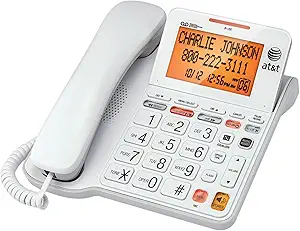 | Best for Simple, Reliable Corded Use | Color: White | Answering System Capacity: 25 minutes | Display Type: Extra-large LCD with tilt | VIEW LATEST PRICE | See Our Full Breakdown |
| Clarity P300 Landline Phone with Sound Amplification |  | Best for High Amplification Needs | Sound Amplification: Up to 26dB | Ringer Settings: Adjustable pitch and volume | Design Features: Large buttons | VIEW LATEST PRICE | See Our Full Breakdown |
| Panasonic KX-TGM420W Cordless Phone with Amplified Volume and Large Display |  | Best Overall for Versatile Home Use | Model Number: KX-TGM420W | Color: White | Volume Boost: 40dB | VIEW LATEST PRICE | See Our Full Breakdown |
| Extra-Loud Landline Phone for Seniors and Hearing Impaired with Large Buttons, Speakerphone, and Speed Dial |  | Best for Simplicity and Immediate Use | Ringtone Volume: 110dB | Handset Amplification: +80dB | Button Size: 1.1″ x 0.8″ | VIEW LATEST PRICE | See Our Full Breakdown |
| Big Button Landline Phone for Seniors with Handsfree and One-Touch Dialing (EX-LD-858HF) |  | Best for Ease of Use and Memory Storage | Power Source: Corded Electric | Compatible Devices: PSTN | Recording Capacity: 18 Minutes | VIEW LATEST PRICE | See Our Full Breakdown |
| HePesTer P-02 Big Button Amplified Corded Phone for Seniors and Hearing Impaired |  | Best for Wall-Mountable Space Saving Design | Model Number: P-02 | Phone Type: Corded Landline | Target Users: Seniors/Hearing Impaired | VIEW LATEST PRICE | See Our Full Breakdown |
| Red Home Intuition Corded Phone with Extra Loud Ringer for Hearing Impaired Seniors |  | Best as a Backup or Classic Option | Power Source: Corded Electric | Dialer Type: Single Keypad | Compatible Devices: Hearing aids, Caller ID, Answering Machine | VIEW LATEST PRICE | See Our Full Breakdown |
| Large Button Landline Phone for Seniors with Amplified Ringer and Volume |  | Best Overall for Simplicity and Reliability | Power Source: Corded Electric | Dial Type: Tone Dialing | Ringer Volume: 110dB+ | VIEW LATEST PRICE | See Our Full Breakdown |
| Big Button Landline Phone for Seniors with Amplified Ringer and Ergonomic Design |  | Best for Comfort and Ease of Use | Power Source: Corded Electric | Dialer Type: Single Keypad | Answering System Type: Microcassette | VIEW LATEST PRICE | See Our Full Breakdown |
| VTech SN5147 Amplified Corded/Cordless Senior Phone with Answering Machine |  | Best for Advanced Features and Call Management | Color: White | Audio Amplification: 50dB | Ringer Volume: 90dB | VIEW LATEST PRICE | See Our Full Breakdown |
| Clarity XLC3.4+ Amplified Cordless Landline Phone for Seniors |  | Best for Dual Amplification and Visual Aids | Amplification (Incoming): 50dB | Amplification (Outgoing): 15dB | Tone Settings: 4 | VIEW LATEST PRICE | See Our Full Breakdown |
| Serene Innovations Amplified Big Button Landline Phone for Seniors with Dementia – 26dB Home Phone with Photo Buttons |  | Best for Memory Support and Simplicity | Power Source: Phone Landline | Dialer Type: Single Keypad | Answering System Type: Microcassette | VIEW LATEST PRICE | See Our Full Breakdown |
More Details on Our Top Picks
Hamilton CapTel 2400iSPNBT Captioned Telephone
This model stands out for its comprehensive features tailored to those who need real-time captions during calls. Its large touchscreen display ensures captions are visible without straining, and the 40dB amplification offers significant volume boost for severe hearing loss. Compared with the B00ZYHA1KI, this version’s Wi-Fi capability allows internet-based captioning, which is more flexible but adds dependency on high-speed internet and U.S. service registration. The built-in answering machine with captioned messages makes it a solid all-in-one solution, though its reliance on internet and geographic restrictions limit its use outside the U.S. This pick makes the most sense for users in the U.S. who prioritize clear, captioned communication over portability or extensive call features.
Pros:- Large touchscreen with real-time captions for clarity
- Up to 40dB volume amplification for severe hearing loss
- Wi-Fi capability for internet-based captioning
- Integrated captioned answering machine
Cons:- Requires high-speed internet and U.S. service registration
- Limited to U.S. availability
- Hearing loss certification is mandatory
Best for: Individuals in the U.S. who need reliable, high-quality captioned landline calls with internet connectivity.
Not ideal for: Users outside the U.S. or those seeking a portable, cordless solution with no internet dependency.
- Power Source:Corded Electric
- Dialer Type:Single Keypad
- Answering System Type:Digital
- Compatible Devices:VoIP, analog/digital cable, DSL, FIOS
- Recording Capacity:18 Minutes
- Conference Call Capability:3 way
- Caller ID:Yes
- Color Options:Black, Silver
Bottom line: This is best suited for U.S. users who want a dependable, captioned landline with internet features and are okay with a corded device.
Hamilton CapTel 2400iSPNBT Captioned Telephone
Although sharing the same model name, this variant emphasizes its large touch screen and versatile connectivity. It offers up to 40dB amplification, making it suitable for users with profound hearing loss. Its Wi-Fi and Ethernet options provide flexible internet access, similar to the B077XZ2VJ3, but it also features two captioning modes—auto and assisted with a live operator—offering tailored communication experiences. Both versions require U.S.-based service registration and internet, but this particular model’s emphasis on captioning modes can benefit those who want more control over their captions. While its reliance on internet and geographic restrictions remain limitations, it’s a strong choice for U.S.-based users prioritizing versatile captioning and large, clear visuals.
Pros:- Large touch screen with real-time captions
- Adjustable volume gain up to 40dB
- Two captioning modes (auto and assisted)
- Built-in captioned answering machine
Cons:- Service limited to the U.S.
- Requires constant internet connection
- Mandatory hearing loss certification
Best for: U.S. residents seeking a captioned phone with customizable captioning options and a large display.
Not ideal for: Users outside the U.S. or those preferring cordless or mobile captioned options.
- Amplification Gain:Up to 40dB
- Display Type:Large Touch Screen
- Connectivity Options:Wi-Fi, Ethernet
- Power Requirement:Standard Electrical
- Service Availability:U.S. Only
Bottom line: Ideal for U.S. users who want a adaptable captioned phone with multiple captioning modes and a large display.
AT&T BL102-2 DECT 6.0 Cordless Phone System with Answering Machine and Call Blocking
This cordless system emphasizes its extended range and call management capabilities, making it suitable for larger homes. Its DECT 6.0 technology ensures clear audio quality and less interference. The system’s key advantage over simple amplified phones like the Clarity P300 is its advanced call blocking, including automatic robocall filtering and a large directory of up to 1,000 blocked numbers. The two 2-inch backlit displays and audio assist features improve usability for users with hearing difficulty. However, it lacks internet-based captioning or amplification above moderate levels, making it less suitable for those with severe hearing impairments or who need captioned communication. This system is best for seniors needing reliable call management and extended range, but not for those who require captioning or high-volume amplification.
Pros:- Excellent DECT 6.0 range and clarity
- Automatic call blocking and robocall filtering
- Large, backlit display and audio assist
- Expandable to 5 handsets
Cons:- No internet or captioning features
- Limited to moderate amplification levels
- Additional handsets are sold separately
Best for: Seniors and large-home users needing long-range cordless clarity and robust call blocking.
Not ideal for: Individuals who need captioned calls or very high amplification levels, as it offers no captioning or severe hearing loss features.
- Number of Handsets:2
- Technology:DECT 6.0
- Answering Machine Capacity:22 minutes
- Call Block Directory Entries:1,000
- Screen Size:2-inch
Bottom line: This system excels for users needing extended range and call blocking, but not for those requiring captioned or amplified communication.
AT&T CL4940 Corded Phone with Answering System and Backlit Display
This corded model offers straightforward, dependable performance with a focus on clarity and ease of use. Its extra-large, tilting LCD display simplifies call viewing, while the 25-minute answering system provides ample message storage for most users. Unlike the Hamilton models, it lacks internet connectivity or advanced features like captioning, but its sturdy build and simple operation make it a practical choice for users who prefer a wired connection. The Caller ID and call waiting features add convenience, but the limited message capacity and absence of amplified sound may fall short for users with severe hearing loss or those who want more advanced call management. This phone makes sense for users seeking a basic, durable landline with easy-to-read display and message control, especially in fixed locations.
Pros:- Reliable corded design eliminates battery concerns
- Extra-large, tilt-adjustable LCD display
- Good call clarity and simple operation
- Includes caller ID and call waiting
Cons:- Limited mobility due to corded design
- Only 25-minute message capacity
- No amplification or captioning
Best for: Seniors or users who prioritize durability, simplicity, and stable wired operation over advanced features.
Not ideal for: People seeking wireless mobility, captioning, or extensive call management features.
- Color:White
- Answering System Capacity:25 minutes
- Display Type:Extra-large LCD with tilt
- Features:Caller ID, Call Waiting
- Connection Type:Wired
Bottom line: This phone suits users who want a simple, dependable, wired landline with easy-to-read display and basic features.
Clarity P300 Landline Phone with Sound Amplification
This corded phone targets users with significant hearing impairment, providing up to 26 dB of sound amplification. Its large buttons and simple design make it accessible for seniors with dexterity or vision challenges. Unlike the Hamilton models, it doesn’t have internet or captioning features, but its focus on high-volume sound makes it an essential tool for those who struggle with standard phones. Ringer pitch and volume adjustments further customize the experience, though the wired setup limits mobility, and the maximum amplification may still be insufficient for some with profound hearing loss. This device is ideal for users requiring straightforward, high-volume audio, but not for those seeking captioned or wireless options.
Pros:- High sound amplification up to 26dB
- Customizable ringer pitch and volume
- Large, easy-to-press buttons
- Reliable wired connection
Cons:- Limited mobility due to corded design
- No captioning or wireless features
- Maximum amplification may not suffice for profound hearing loss
Best for: Individuals with severe hearing loss who need high amplification and simple operation in a fixed location.
Not ideal for: People who want wireless or captioned communication, or moderate amplification needs.
- Sound Amplification:Up to 26dB
- Ringer Settings:Adjustable pitch and volume
- Design Features:Large buttons
- Connection Type:Wired
- Included Accessories:25-foot cord
Bottom line: This is suitable for users needing high-volume sound in a stable, wired setup without extra features.
Panasonic KX-TGM420W Cordless Phone with Amplified Volume and Large Display
This cordless option stands out for its combination of strong amplification and modern features, making it ideal for households needing clear communication without sacrificing convenience. Its 40dB volume boost and 100dB visual ringer ensure calls are heard, even in noisy environments, while the Slow Talk function improves speech clarity. Compared to the Extra-Loud Landline Phone for Seniors, it offers more flexibility with multiple handsets and call blocking, but requires landline installation and isn’t portable. The large, backlit 1.8″ display enhances ease of use, especially for users with visual impairments. While it lacks wireless features or smartphone integration, its expandability and hearing aid compatibility make it a strong all-around choice for home use with moderate tech needs.
Pros:- 40dB volume boost ensures clear sound for hearing-impaired users
- 100dB loud visual ringer prevents missed calls
- Expandable to up to 6 handsets for multi-room coverage
- Includes call blocking and talking caller ID features
Cons:- Requires landline installation, limiting flexibility
- No wireless or smartphone connectivity options
- Limited to home use, not suitable for mobile needs
Best for: Families who want a reliable, expandable cordless phone with amplified sound and visual alerts.
Not ideal for: Users seeking a portable or mobile solution, as this model requires a landline connection and isn’t cordless.
- Model Number:KX-TGM420W
- Color:White
- Volume Boost:40dB
- Ringer Loudness:100dB
- Handsets (Expandable):1 (up to 6)
- Display Size:1.8″ (4.4 cm)
- Hearing Aid Compatibility:Yes
Bottom line: This model suits households needing a dependable, amplified cordless phone with visual alerts and expandability.
Extra-Loud Landline Phone for Seniors and Hearing Impaired with Large Buttons, Speakerphone, and Speed Dial
This corded landline offers straightforward operation with essential features tailored for seniors and hearing-impaired users. Its 110dB ringtone and +80dB amplified handset make sure users won’t miss calls, while large high-contrast buttons improve dialing accuracy. Unlike the more feature-rich Panasonic KX-TGM420W, this phone focuses on simplicity and immediate accessibility, though it lacks modern features like caller ID or wireless connectivity. Emergency buttons and a durable ABS construction provide added safety and reliability during power outages. It’s a practical choice for those who prefer a no-fuss device that prioritizes hearing assistance and ease of use over advanced functions.
Pros:- Extra-loud 110dB ringtone ensures missed calls are unlikely
- Large, high-contrast buttons aid visually impaired users
- Amplified handset with +80dB volume enhances sound clarity
- Emergency call buttons provide quick access to help
Cons:- No wireless or cordless capabilities
- Limited to basic landline functions without caller ID
- Speed dial programming can be cumbersome
Best for: Seniors who need a reliable, easy-to-use landline with high-volume alerts and emergency features.
Not ideal for: Tech-savvy users wanting modern features like caller ID, VoIP, or cordless mobility.
- Ringtone Volume:110dB
- Handset Amplification:+80dB
- Button Size:1.1″ x 0.8″
- Speed Dials:3 one-touch + 10 two-touch
- Hearing Aid Compatibility:Yes
- Power Source:Standard phone jack
Bottom line: This phone is ideal for seniors seeking a simple, loud, and reliable landline with emergency features.
Big Button Landline Phone for Seniors with Handsfree and One-Touch Dialing (EX-LD-858HF)
This corded phone simplifies communication for seniors with large buttons and a hands-free option, making it a solid choice for those with visual or hearing challenges. Its 10 memory groups and one-touch dialing streamline frequent calls, while adjustable volume and emergency SOS enhance safety. Compared with the HePesTer P-02, it offers more user-friendly features like easier memory access and a larger form factor, but its corded design limits mobility, and it lacks wireless or Bluetooth options. Its straightforward design makes it suitable for those who prefer a basic, reliable device without unnecessary complexity, especially in a fixed home environment.
Pros:- Large buttons aid users with visual impairments
- Hands-free calling for convenience
- Multiple memory groups for quick dialing
- Adjustable volume and emergency SOS for safety
Cons:- Limited to corded operation, restricting mobility
- No wireless or modern smart features
- Basic design may lack aesthetic appeal for some users
Best for: Seniors and users with limited mobility who need large buttons and quick call access.
Not ideal for: Those seeking wireless mobility or advanced smart features like Bluetooth or VoIP.
- Power Source:Corded Electric
- Compatible Devices:PSTN
- Recording Capacity:18 Minutes
- Conference Call Capability:3 way
- Color:White
- Enclosure Material:ABS
Bottom line: Best suited for seniors who prioritize simplicity, large controls, and safety features in a stationary device.
HePesTer P-02 Big Button Amplified Corded Phone for Seniors and Hearing Impaired
The HePesTer P-02 emphasizes space-saving with its wall-mountable design, making it ideal for compact areas. Its large buttons and amplified sound cater directly to seniors and hearing-impaired users, ensuring easy operation. Unlike the Panasonic KX-TGM420W, which offers wireless flexibility, this model is strictly corded, limiting mobility but providing a straightforward, reliable connection. Its simplicity and wall-mount feature make it suitable for fixed locations like kitchens or hallways, though it lacks advanced features such as caller ID or modern connectivity options. This device is best when space is at a premium and basic hearing assistance is the priority.
Pros:- Wall-mountable saves space in small areas
- Large buttons facilitate easy dialing
- Amplified sound and loud ringer aid hearing
- Simple corded operation is highly reliable
Cons:- Corded design limits mobility
- No wireless or smart features
- Limited to basic calling functions
Best for: Users with limited space who need a reliable, wall-mountable corded phone with amplified sound.
Not ideal for: Those seeking wireless or cordless functionality or multi-room coverage.
- Model Number:P-02
- Phone Type:Corded Landline
- Target Users:Seniors/Hearing Impaired
Bottom line: Ideal for space-constrained environments where a dependable, amplified corded phone is needed.
Red Home Intuition Corded Phone with Extra Loud Ringer for Hearing Impaired Seniors
This vintage-style phone combines simplicity with a loud double-gong ringer, making it a reliable backup or secondary device for users with hearing impairments. Its compatibility with hearing aids and assistive devices enhances accessibility, and the 9-foot cord offers flexibility for placement. Unlike modern cordless or smart phones, this model focuses on fundamental features, making it less versatile but highly dependable during power outages or in emergency situations. Its aesthetic appeal may suit those who prefer a traditional look, though its corded design and lack of modern connectivity limit its utility for everyday mobile use.
Pros:- Extra loud double-gong ringer for hearing-impaired users
- Compatible with hearing aids and assistive devices
- Reliable backup during power outages
- Classic aesthetic appeals to traditional preferences
Cons:- Corded design limits mobility
- No wireless or advanced features
- Limited to basic calling functions
Best for: Seniors or users who want a straightforward, loud ringing backup phone with hearing aid compatibility.
Not ideal for: People seeking modern features, wireless mobility, or integration with smart home devices.
- Power Source:Corded Electric
- Dialer Type:Single Keypad
- Compatible Devices:Hearing aids, Caller ID, Answering Machine
- Multiline Operation:Single-Line
- Color:Red
- Enclosure Material:Plastic
Bottom line: Best for those wanting a dependable, loud ring backup with classic style and hearing aid compatibility.
Large Button Landline Phone for Seniors with Amplified Ringer and Volume
This landline stands out for its straightforward design that prioritizes visibility and hearing assistance. Its oversized buttons make dialing effortless for seniors with visual impairments, and the combination of a 110dB+ amplified ringer with an 80dB handset volume ensures alerts are unmistakable, especially when compared with the less powerful volume controls on the Big Button Landline. The corded setup guarantees consistent performance during power outages, which is a key advantage over cordless options. However, the absence of speakerphone limits hands-free convenience, and caller ID isn’t included, which might be a drawback for users who rely on call screening. Overall, this model is best suited for those seeking a dependable, simple device that emphasizes core hearing and visibility features without extra bells and whistles.Pros:- Oversized buttons for easy visibility and dialing
- High-volume ringer and adjustable handset volume for hearing impairment
- Quick-dial memory buttons for fast access to favorite contacts
Cons:- No speakerphone function available for hands-free use
- Lacks caller ID feature, limiting call management options
Best for: Seniors or visually impaired users who prioritize reliability and straightforward operation.
Not ideal for: Users who need mobility or prefer wireless setups, as this is a corded phone with no speakerphone feature.
- Power Source:Corded Electric
- Dial Type:Tone Dialing
- Ringer Volume:110dB+
- Handset Volume:80dB+
- Color:White
- Enclosure Material:Plastic
Bottom line: This phone is ideal for seniors who need a reliable, easy-to-use landline with amplified sound and clear visual cues.
Big Button Landline Phone for Seniors with Amplified Ringer and Ergonomic Design
Compared to the larger, more feature-rich models like the VTech SN5147, this phone emphasizes ergonomic comfort alongside amplification. Its non-slip foam handset cover offers a better grip for users with dexterity challenges, making daily handling easier. The 80dB amplified ringer with flashing light ensures users are alerted visually and audibly, similar to the SN5147’s visual alerts but with a simpler, single-line design. The one-touch dialing simplifies calling loved ones or emergency services, although the lack of caller ID limits call management. The corded form factor ensures reliability, but mobility is limited. This model makes the most sense for users who need a straightforward, comfortable device with basic amplification and visual alerts.Pros:- Large buttons and one-touch dialing for quick access
- 80dB amplified ringer with flashing light for alerts
- Ergonomic non-slip foam handset cover for comfort
Cons:- No caller ID functionality, limiting incoming call info
- Corded design restricts mobility and flexibility
Best for: Seniors or users with grip impairments who want a simple, ergonomic phone with loud alerts.
Not ideal for: People who prefer cordless or caller ID features, or require a more advanced answering system.
- Power Source:Corded Electric
- Dialer Type:Single Keypad
- Answering System Type:Microcassette
- Recording Capacity:22 Minutes
- Ringer Volume:80dB+
- Caller ID Support:No
Bottom line: This phone is best for users needing an ergonomic, easy-to-operate landline with amplified sound and visual signals.
VTech SN5147 Amplified Corded/Cordless Senior Phone with Answering Machine
The VTech SN5147 combines high amplification with modern digital features, making it a step above basic models like the Large Button Landline. Its 90dB ringer with visual alerts ensures users won’t miss calls, while the 50dB audio amplification provides clear conversation even in noisy environments. Unlike purely corded phones, this model offers cordless flexibility, which is a major advantage for mobility, but the base unit’s corded nature could limit placement options. The call blocker and caller ID announce are excellent for managing robocalls, though the device’s price and complexity might be overwhelming for users seeking simplicity. This phone makes sense for seniors who want a balance of amplification, call screening, and convenience.Pros:- Extra-large buttons and high-contrast display for easy use
- 90dB visual ringer with flashing alerts ensures missed calls are rare
- Built-in call blocker effectively filters robocalls
Cons:- Corded base limits placement options
- Price may be high for users seeking basic functionality
Best for: Tech-savvy seniors or those with hearing impairments who want advanced call management and cordless mobility.
Not ideal for: Users who prefer simple, corded-only phones without additional features or who are on a tight budget.
- Color:White
- Audio Amplification:50dB
- Ringer Volume:90dB
- Call Blocking Capacity:1,000
- Technology:DECT 6.0
- System Type:Corded base + cordless handset
Bottom line: This model suits seniors who desire a feature-rich, flexible phone with strong amplification and call screening capabilities.
Clarity XLC3.4+ Amplified Cordless Landline Phone for Seniors
Compared with the VTech SN5147, the Clarity XLC3.4+ offers slightly higher outgoing amplification and talking caller ID, making it better suited for users with both hearing and vision impairments. Its 50dB incoming and 15dB outgoing amplification offer clear conversations, especially in noisy settings, while the talking caller ID and keypad serve users with low vision—features absent in many competitors. The cordless design provides greater room-to-room mobility, but the device’s higher price and bulkiness could be drawbacks for users with dexterity issues. The expandable handset capability adds flexibility for multi-room use, making it ideal for those seeking a comprehensive cordless solution with customizable sound and visual aids.Pros:- Dual amplification for incoming and outgoing calls
- Talking caller ID and keypad for visual impairment assistance
- Loud 95dB ringer with visual indicator for noisy environments
Cons:- Higher price point compared to basic cordless phones
- Potential bulkiness for users with dexterity issues
Best for: Seniors with dual hearing and vision challenges who want a cordless phone with talking features and expandability.
Not ideal for: Budget-conscious users or those preferring a simple, corded device without talking caller ID or multiple handsets.
- Amplification (Incoming):50dB
- Amplification (Outgoing):15dB
- Tone Settings:4
- Ringer Volume:95dB
- Expandable Handsets:3
- Battery Backup:Yes
Bottom line: This cordless phone is best for users needing high amplification, visual talking features, and expandability in multiple rooms.
Serene Innovations Amplified Big Button Landline Phone for Seniors with Dementia – 26dB Home Phone with Photo Buttons
The Serene Innovations model excels for users with memory or visual impairments, thanks to its large photo buttons that aid quick recognition—something standard large-button phones like the Big Button Landline lack. Its 85dB ring volume and simple operation make it accessible, and the fact that it runs solely on the phone line without electronic power is a major plus during outages. However, its limited 24-minute recording capacity for the answering system and absence of caller ID reduce its appeal for those wanting more call management features. This phone makes the most sense for users with dementia or severe visual impairments who prioritize simplicity and visual cues over digital functionality.Pros:- Large buttons and high-volume ring for accessibility
- Photo speed dial buttons support visual recognition and memory aid
- Operates solely via phone line—no electrical power needed
Cons:- No caller ID feature, limiting incoming call info
- Limited 24-minute recording capacity for answering system
Best for: Seniors with memory issues or visual impairments who need a straightforward, photo-assisted dialing device.
Not ideal for: Users seeking caller ID, extensive recording options, or cordless mobility.
- Power Source:Phone Landline
- Dialer Type:Single Keypad
- Answering System Type:Microcassette
- Recording Capacity:24 Minutes
- Ringer Volume:85dB
- Caller ID:No
Bottom line: This phone is ideal for users with memory or visual challenges who need a simple, line-powered device with visual cues.
How We Picked
Products were evaluated based on key factors that matter most to hearing-impaired users: sound amplification capacity, clarity of visual display (like captioning or large screens), ease of installation and use, durability, and additional features such as call blocking or cordless operation. We prioritized models that offer reliable performance in everyday home environments, balancing affordability with functionality. The ranking reflects a combination of user-friendly design, feature set, and overall value, ensuring options suit different levels of hearing difficulty and tech familiarity.Factors to Consider When Choosing Best Hearing Impaired Phones For Home Use
Choosing the right hearing impaired phone for home use involves more than just high volume. Consider how the phone amplifies sound, how easy it is to operate, and whether it provides visual assistance like captioning or large buttons. Additional features such as call blocking, cordless operation, and compatibility with existing systems can significantly impact daily usability. Being aware of common pitfalls, like over-reliance on a single feature or poor sound quality, helps ensure you select a device that truly meets your needs.Sound Amplification and Clarity
Look for phones that offer high decibel amplification with adjustable settings to match your hearing level. Clarity is just as important as volume—poorly amplified sound can still be difficult to understand. Some models include noise reduction or feedback cancellation, which improve overall clarity. Remember, the most powerful amplifier isn’t helpful if the sound quality distorts or background noise overwhelms speech.
Visual Aids and Display
Many hearing impaired phones incorporate captioning or large, illuminated displays to supplement audio. Devices like captioned phones are invaluable for users who rely on visual text, especially in noisy environments. When choosing, consider how visible the display is in different lighting conditions, and whether the captioning is synchronized accurately and easily readable.
Ease of Use and Accessibility
Intuitive controls, large buttons, and simple menus are essential, especially for seniors or those with dexterity challenges. Cordless models offer mobility within the home, but setup can be more complex. Conversely, corded models tend to be straightforward but less flexible. Evaluate how much effort it takes to set up and operate the device, as frustration can lead to underuse.
Additional Features and Compatibility
Features like call blocking, speed dial, and hearing aid compatibility can enhance usability. Consider whether the phone integrates smoothly with your existing home system and hearing aids. Some models include emergency dialing or photo buttons, which are beneficial for users with dementia or cognitive impairments. Be mindful that extra features often increase cost and complexity.
Durability and Maintenance
Devices should be sturdy enough for everyday use, with easy-to-clean surfaces and reliable hardware. Check for warranties and customer support options, as repair costs can add up. Simpler maintenance routines are preferable, so consider models that don’t require frequent updates or complicated troubleshooting. Longevity and dependable service are key to lasting satisfaction.
Frequently Asked Questions
How do captioned phones improve communication for hearing-impaired users?
Captioned phones display real-time text of the conversation, allowing users to read what the caller says. This feature is especially helpful in noisy environments or when hearing is severely impaired. Many captioned phones also allow for adjustable font size and contrast, making the text easier to read. They serve as a reliable backup when audio clarity isn’t sufficient, ensuring better understanding during calls.
Are cordless phones better for hearing-impaired users than corded models?
Cordless phones offer mobility within the home, making it easier to answer calls from different rooms or while multitasking. This flexibility can be especially valuable for users with mobility issues or those who prefer to keep the handset close. However, cordless models can be more complex to set up and may have signal interference issues. If simplicity and reliability are priorities, a corded model might be better, but for convenience, cordless often wins out.
What features should I prioritize if I have severe hearing loss?
For severe hearing loss, focus on phones with high decibel amplification, strong feedback reduction, and clear visual aids like captioning or large displays. Look for models that offer multiple volume and tone adjustments to customize sound quality. Additional features like flashing ringers or vibrating alert options can also enhance accessibility, ensuring you don’t miss calls in any situation.
Can I use these phones with hearing aids?
Many hearing impaired phones are compatible with hearing aids, especially those with telecoil or T-coil functionality, which allows the phone to connect directly with hearing aids equipped with T-coils. Check each model’s specifications for compatibility details. Using a hearing aid with a compatible phone can significantly improve sound quality, reducing background noise and feedback. Always consult with your audiologist to confirm compatibility before purchasing.
Is it worth investing in a premium model, or are basic amplified phones sufficient?
The decision depends on your specific needs. Premium models often include advanced features like better sound clarity, integrated captioning, and additional accessibility options, which can greatly improve daily communication. However, if your hearing loss is moderate and you primarily need volume boost, a basic amplified phone may suffice. Investing in a higher-end model makes sense if you require precise control, visual aids, or extra features for more complex hearing needs.
Conclusion
For those seeking the best overall experience, the Hamilton CapTel 2400iSPNBT offers comprehensive captioning and clarity. Budget-conscious users will find the AT&T CL4940 provides essential features at a lower price point. If advanced amplification and visual aids are priorities, the Clarity P300 or VTech SN5147 stand out. Beginners or those with simple needs may prefer straightforward, easy-to-use models, while users with severe hearing loss should look for devices with high decibel output and visual support. Your choice ultimately depends on your hearing level, lifestyle, and budget, but understanding these distinctions helps ensure a satisfying purchase.