
Personal sound amplifiers make nearby speech and sounds easier to hear, but they differ in how they pick up voices, deliver sound, and fit into daily routines. My best overall pick is the Williams Sound PockeTalker Ultra Duo, which pairs a simple handheld amplifier with both headphones and an earbud. The ConvoAssist stands out for its dual wireless microphones and charging case, while the SuperEar Plus SE7500 offers a straightforward alternative for focused listening. The main tradeoffs are between a microphone you can point toward a speaker, discreet wearable designs, and rechargeable or replaceable-battery power. Read on for the full breakdown and help choosing the right personal sound amplifier for your listening habits.

Get everyday helpers delivered free with Prime
- Fast, free delivery on millions of items
- Prime Video, Amazon Music and more included
- Member-only deals all year
Complete the kit


Key Takeaways
Microphone placement is a defining difference: the PockeTalker Ultra Duo and other handheld designs let you position the pickup closer to a speaker, while wearable amplifiers prioritize hands-free use.
The ConvoAssist is the most conversation-focused standout: its dual wireless microphones and charging case suit setups where a microphone can be placed near a talker, though that adds more parts to manage.
Williams Sound offers several distinct choices, not just duplicates: the PockeTalker Ultra Duo emphasizes included listening options, the Ultra bundle adds a battery bundle, and the Pocketalker 2.0 is a separate model to compare for its own fit and controls.
Power and upkeep vary across the field: rechargeable options such as the SuperEar SE9000HP and Eduitai reduce disposable battery handling, while battery-powered models can suit buyers who prefer carrying spares.
More features do not automatically mean a better fit: Bluetooth, noise-control claims, multiple microphones, or a compact wearable shape matter only when they match the way and places you plan to listen.
| Williams Sound PockeTalker Ultra Duo Sound Amplifier with Headphone and Earbud |  | Best Overall for Flexible Listening | Model: PKT D1 EH | Acoustic gain: 20–40 dB | Power: Two replaceable AAA batteries; not included | VIEW LATEST PRICE | See Our Full Breakdown |
| Reizen Loud Ear 120 dB Personal Hearing Amplifier |  | Best for Long-Distance Pickup | Model: Loud Ear; model numbers 907654 and HED021 | Audio sensitivity: 120 dB | Pickup distance: Up to 100 feet | VIEW LATEST PRICE | See Our Full Breakdown |
| ConvoAssist Personal Sound Amplifier with Dual Wireless Microphones and Charging Case |  | Best for Group Conversations | Microphones: Two wireless clip-on microphones | Microphone range: Up to 100 feet | Battery life: Up to 8 hours per charge | VIEW LATEST PRICE | See Our Full Breakdown |
| Reizen Loud Ear Personal Hearing Amplifier |  | Best Simple Belt-Clip Option | Sensitivity: 110 dB ±3 dB per mW | Frequency range: 20 Hz–20 kHz | Pickup distance: Up to 100 feet | VIEW LATEST PRICE | See Our Full Breakdown |
| MEDca Personal Sound Amplifier with Built-In Microphone | 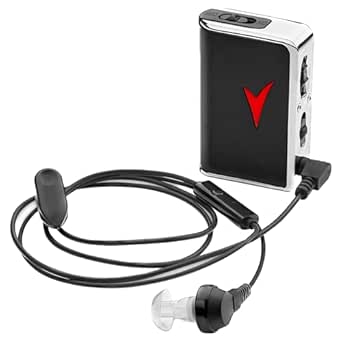 | Best Compact, Adjustable Pick | Sound gain: Up to 50 dB | Claimed listening distance: Up to 100 feet | Power: One AAA battery | VIEW LATEST PRICE | See Our Full Breakdown |
| SuperEar Plus SE7500 Personal Sound Amplifier |  | Best for Long Battery Life | Sound gain: Up to 50+ dB | Battery type: 2 AAA batteries | Battery life: Up to 80 hours | VIEW LATEST PRICE | See Our Full Breakdown |
| JMTO G55 Bluetooth Hearing Amplifier for Seniors |  | Best for Bluetooth Calls and Audio | Fit: In-ear | Connectivity: Bluetooth | Listening modes: General, Noise Canceling, Indoor, and Outdoor | VIEW LATEST PRICE | See Our Full Breakdown |
| SuperEar SE9000HP Rechargeable Personal Hearing Amplifier |  | Best for Frequency Adjustment | Model: SE9000HP | Amplification gain: Up to 50+ dB | Frequency settings: High, medium, and low | VIEW LATEST PRICE | See Our Full Breakdown |
| Eduitai Rechargeable Digital Hearing Amplifier with Noise Cancellation |  | Best Compact Canal-Style Pick | Model: HEARING AMPLIFIER | Model number: ASD123 | Design: Discreet, lightweight canal style | VIEW LATEST PRICE | See Our Full Breakdown |
| Williams Sound Pocketalker Ultra Personal Sound Amplifier with Headphones, Earbud, and Battery Bundle |  | Best for Conversation and TV Listening | Product type: Personal sound amplifier | Maximum amplification: Up to 40 dB | Controls: Separate volume and tone controls | VIEW LATEST PRICE | See Our Full Breakdown |
| Williams Sound Pocketalker 2.0 Personal Hearing Amplifier |  | Best for Conversation-Focused Listening | Brand: Williams Sound | Model: Pocketalker 2.0 | Battery requirement: 2 AAA alkaline batteries (included) | VIEW LATEST PRICE | See Our Full Breakdown |
| MSA PRO Rechargeable Personal Sound Amplifier, Nude |  | Best Rechargeable In-Ear Option | Brand: MSA 30X | Model: MSA PRO | Sound amplification: Up to 30 times | VIEW LATEST PRICE | See Our Full Breakdown |
| Joanbro Pocket Personal Sound Amplifier with 3 Microphones | 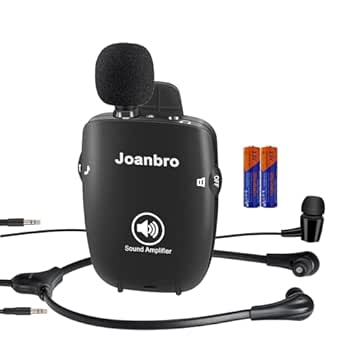 | Best for Microphone and Tone Flexibility | Additional acoustic gain: 50 dB | Total gain: Up to 108 dB | Microphones: 3 removable types | VIEW LATEST PRICE | See Our Full Breakdown |
| SuperEar SE5000 Personal Sound Amplifier with Headphones and Earbuds |  | Best Simple Handheld Ambient Amplifier | Amplification: Up to 50+ dB | Battery life: Up to 30 hours | Battery type: 1 AAA battery | VIEW LATEST PRICE | See Our Full Breakdown |
| iRoger I8-Pro Rechargeable Hearing Amplifier with Headphones and Earbuds |  | Best for Long Rechargeable Runtime | Model: I8-Pro | Power source: Rechargeable lithium-ion battery | Battery life: Up to 120 hours | VIEW LATEST PRICE | See Our Full Breakdown |
| personal sound amplifier | Battery life | Controls | Included accessories |
|---|---|---|---|
| Williams Sound PockeTalker Ult | Up to 100 hours | External volume and tone controls | — |
| Reizen Loud Ear 120 dB Persona | — | — | Single earphone, additional pair of headphones, and batteries |
| ConvoAssist Personal Sound Amp | Up to 8 hours per charge | Mute button on each microphone | Wired earbuds with multiple ear-tip sizes, magnetic charging case, and USB charging cable |
| Reizen Loud Ear Personal Heari | — | Adjustable volume | Single earphone and belt clip |
| MEDca Personal Sound Amplifier | — | Volume and tone | Earphones and stainless steel belt clip |
| SuperEar Plus SE7500 Personal | Up to 80 hours | Adjustable volume | Earbuds, headphones, carry case with belt clip, owner’s manual, and 2 AAA batteries |
| JMTO G55 Bluetooth Hearing Amp | Up to 45 hours | Push-button volume and mode controls; LED display | — |
| SuperEar SE9000HP Rechargeable | Up to 40 hours per charge | — | Stereo headphones, ergonomic earbuds, belt clip, charging cube, USB cable, and owner’s manual |
| Eduitai Rechargeable Digital H | Up to 24 hours | — | — |
| Williams Sound Pocketalker Ult | — | Separate volume and tone controls | Headphones, single earbud, 12 ft microphone extension cord, neck lanyard, microfiber cloth, and user manual |
| Williams Sound Pocketalker 2.0 | — | Button control with separate volume and tone controls | — |
| MSA PRO Rechargeable Personal | Up to 20 hours | — | Recharging base, 6 silicone tips, cleaning brush, and user guide |
| Joanbro Pocket Personal Sound | Approximately 40 hours of moderate use | — | — |
| SuperEar SE5000 Personal Sound | Up to 30 hours | — | Stereo headphones, stereo earbuds, belt clip, screw, and 1 AAA battery |
| iRoger I8-Pro Rechargeable Hea | Up to 120 hours | Manual dial | — |
More Details on Our Top Picks
Williams Sound PockeTalker Ultra Duo Sound Amplifier with Headphone and Earbud
I’d put the PockeTalker Ultra Duo first for buyers who want one amplifier for conversations and TV, with a choice of listening styles. Its removable microphone, external volume and tone controls, and included folding headphone and single-ear earbud make it more adaptable than the single-ear Reizen Loud Ear 120 dB Personal Hearing Amplifier. The listed 20–40 dB acoustic gain and background-noise reduction suit nearby speech rather than relying on a long claimed pickup distance. It can also be used with or without hearing aids, a useful point for households with different listening preferences. The tradeoffs are replaceable AAA batteries, not included, and conflicting listed TV-cord lengths and warranty terms. I’d choose it over the Reizen for accessory flexibility, but not for rechargeable convenience.
Pros:- Includes both a folding headphone and a single-ear earbud
- External volume and tone controls allow direct listening adjustments
- Removable microphone supports flexible placement
- Can be used with or without hearing aids
Cons:- Requires two AAA batteries, which are not included
- Listed TV listening cord lengths conflict
- Warranty duration is inconsistent across the supplied product details
Best for: People who want one amplifier for conversations and TV, with both headphone and single-ear listening options
Not ideal for: Buyers who want a rechargeable unit or need unambiguous TV-cord and warranty details before purchase
- Model:PKT D1 EH
- Acoustic gain:20–40 dB
- Power:Two replaceable AAA batteries; not included
- Battery life:Up to 100 hours
- Controls:External volume and tone controls
- Microphone:Removable, with extension cord
- Included listening accessories:Folding headphone and single-ear earbud
- TV listening cord:Listed as 12 ft in package contents and 2 ft in features
Our verdict“Choose this for flexible conversation and TV listening with multiple included accessories, provided replaceable batteries are acceptable.”
Reizen Loud Ear 120 dB Personal Hearing Amplifier
The Reizen Loud Ear 120 dB is the lineup’s clearest fit for someone who wants a simple, belt-clipped amplifier with a stated pickup distance of up to 100 feet. It comes with two AAA batteries and an additional pair of headphones, so it is more ready to use out of the box than the MEDca Personal Sound Amplifier, which requires a separately supplied AAA battery. Its single in-ear earphone keeps the setup compact, while the extra headphones give buyers another listening option. That simplicity comes with limits: there are no listed tone controls or wireless microphones, and the single-ear setup may not suit listeners who prefer sound in both ears. The estimated 48-hour battery life is shorter than the PockeTalker Ultra Duo’s listed maximum, and the 90-day warranty is relatively brief.
Pros:- Stated pickup distance of up to 100 feet
- Includes two AAA batteries and an additional pair of headphones
- Built-in belt clip supports portable use
- Estimated 48-hour battery life
Cons:- Uses a single in-ear earphone rather than a two-ear setup
- Requires AAA batteries instead of rechargeable power
- Manufacturer warranty is 90 days
Best for: Listeners who want a battery-included, belt-clipped amplifier for hearing nearby speakers across a room or larger space
Not ideal for: Buyers who want two-ear listening, tone adjustment, or rechargeable operation
- Model:Loud Ear; model numbers 907654 and HED021
- Audio sensitivity:120 dB
- Pickup distance:Up to 100 feet
- Frequency range:20 Hz–20 kHz
- Power:Two AAA batteries; included
- Estimated battery life:48 hours
- Included accessories:Single earphone, additional pair of headphones, and batteries
- Dimensions and weight:2.5 × 1.75 × 0.75 inches; 1.76 ounces
Our verdict“Pick this Reizen model for a straightforward, battery-included amplifier with a long stated pickup distance, not for adjustable or rechargeable listening.”
ConvoAssist Personal Sound Amplifier with Dual Wireless Microphones and Charging Case
ConvoAssist stands apart because it sends voices from two clip-on wireless microphones to the listener’s earbuds or headphones. That makes it a more conversation-focused choice for following two speakers than either Reizen Loud Ear model, which uses a built-in microphone and a single earphone. The microphones have mute buttons, and the listed range reaches up to 100 feet, giving speakers room to move without being tethered to the listener. A charging case and automatic connection simplify setup, while compatibility with existing headphones can reduce reliance on the included wired earbuds. The main compromise is runtime: up to eight hours per charge is far below the PockeTalker Ultra Duo’s listed battery life, and the included earbuds are wired. I’d favor it for multi-speaker situations, not all-day use away from charging.
Pros:- Two clip-on microphones can pick up voices from two speakers
- Listed wireless microphone range reaches up to 100 feet
- Charging case supports automatic connection and recharging
- Works with compatible headphones or earbuds and includes multiple ear-tip sizes
Cons:- Up to eight hours of listening per charge is limited compared with long-life battery models
- Included earbuds are wired
- Requires charging rather than quick AAA battery replacement
Best for: People who regularly follow conversations with two speakers, such as family discussions or small group activities
Not ideal for: Listeners who need all-day operation without recharging or want a fully wireless included earbud setup
- Microphones:Two wireless clip-on microphones
- Microphone range:Up to 100 feet
- Battery life:Up to 8 hours per charge
- Power:Rechargeable lithium battery
- Noise control:Active noise cancellation
- Controls:Mute button on each microphone
- Compatibility:Headphones or earbuds
- Included accessories:Wired earbuds with multiple ear-tip sizes, magnetic charging case, and USB charging cable
Our verdict“Choose ConvoAssist when capturing two speakers matters more than long runtime or an entirely wireless listening setup.”
Reizen Loud Ear Personal Hearing Amplifier
This Reizen Loud Ear is the simpler alternative to the Reizen Loud Ear 120 dB Personal Hearing Amplifier: both offer a built-in microphone, a belt clip, and a stated pickup distance of up to 100 feet, but this version lists 110 dB ±3 dB per mW sensitivity rather than 120 dB audio sensitivity. It supplies an earphone and two AAA batteries, making it a straightforward choice for someone who wants to start with a basic portable amplifier. The adjustable volume control gives the listener a direct way to change loudness, though the supplied details do not list tone controls or a second listening accessory. Its single in-ear earphone is less flexible than the Williams Sound PockeTalker Ultra Duo’s headphone-and-earbud bundle. With an estimated 48-hour battery life and a 90-day warranty, it prioritizes simple portability over extras.
Pros:- Includes two AAA alkaline batteries and a single earphone
- Belt clip supports portable carrying
- Adjustable volume control
- Stated pickup distance reaches up to 100 feet
Cons:- Only one earphone is listed, limiting listening-style choice
- No tone control is listed
- 90-day warranty and estimated 48-hour battery life offer limited reassurance for extended ownership
Best for: Listeners seeking a basic, battery-included amplifier with a belt clip and a simple volume adjustment
Not ideal for: Buyers who want tone controls, multiple listening accessories, or a longer stated warranty
- Sensitivity:110 dB ±3 dB per mW
- Frequency range:20 Hz–20 kHz
- Pickup distance:Up to 100 feet
- Power:Two AAA alkaline batteries; included
- Estimated battery life:48 hours
- Controls:Adjustable volume
- Included accessories:Single earphone and belt clip
- Dimensions and weight:2.5 × 1.75 × 0.75 inches; 2.4 ounces
Our verdict“Pick this model for basic belt-clip portability and included batteries, but choose the PockeTalker Ultra Duo for more listening accessories and tone adjustment.”
MEDca Personal Sound Amplifier with Built-In Microphone
MEDca makes the most sense for buyers who value a compact, pocket-sized amplifier with both volume and tone controls. Those adjustments offer more control over the listening sound than the basic Reizen Loud Ear Personal Hearing Amplifier, which lists volume adjustment but no tone control. MEDca also includes earphones and a stainless steel belt clip, so it can move between indoor and outdoor listening without a bulky accessory kit. Its stated gain reaches up to 50 dB, though the supplied details do not describe how that figure translates to everyday speech clarity. The claimed 100-foot listening distance may vary with conditions, so I would not choose it on range alone. Unlike the Williams Sound PockeTalker Ultra Duo, this unit needs just one AAA battery but that battery is not listed as included.
Pros:- Compact, lightweight design with a stainless steel belt clip
- Volume and tone controls allow sound adjustments
- Includes earphones for listening
- Lists up to 50 dB of sound gain
Cons:- Requires one AAA battery, with no battery inclusion specified
- Claimed listening distance of up to 100 feet may depend on conditions
- Built-in microphone offers less placement flexibility than the PockeTalker Ultra Duo’s removable microphone
Best for: People who want a small belt-clipped amplifier with separate volume and tone adjustments for everyday indoor and outdoor listening
Not ideal for: Buyers who want included batteries, a removable microphone, or a pickup-distance claim they can treat as guaranteed
- Sound gain:Up to 50 dB
- Claimed listening distance:Up to 100 feet
- Power:One AAA battery
- Microphone:Built-in
- Controls:Volume and tone
- Fit:In-ear
- Included accessories:Earphones and stainless steel belt clip
- Features:Lightweight design and noise reduction
Our verdict“Choose MEDca for compact carrying and tone adjustment, but not if you need a removable microphone or a supplied battery.”
SuperEar Plus SE7500 Personal Sound Amplifier
The SuperEar Plus SE7500 is the strongest fit here for buyers who want a straightforward amplifier they can carry through long days without frequent battery changes. Its claimed up to 80 hours of operation exceeds the rechargeable SE9000HP’s up to 40 hours per charge, though the SE7500 relies on replaceable AAA batteries rather than a charging routine. Adjustable volume and a microphone designed to reduce handling noise suit conversation and general listening, while the included earbuds and headphones give you a choice of listening style. A carry case with belt clip also helps keep the unit close at hand. The tradeoff is a less tailored listening setup than the SE9000HP’s frequency switch, and it is described as a sound amplifier, not a hearing aid.
Pros:- Up to 80 hours of battery life
- Adjustable volume control
- Includes both earbuds and headphones
- Carry case with belt clip supports portable use
Cons:- Requires two AAA batteries rather than rechargeable power
- Does not offer the SE9000HP’s selectable frequency settings
- Described as a sound amplifier, not a hearing aid
Best for: People who want a portable amplifier for extended indoor or outdoor use and prefer carrying spare AAA batteries over recharging.
Not ideal for: Listeners who want rechargeable power, frequency adjustment, or a device described as a medical hearing aid.
- Sound gain:Up to 50+ dB
- Battery type:2 AAA batteries
- Battery life:Up to 80 hours
- Controls:Adjustable volume
- Microphone:Designed to minimize handling noise
- Automatic shut-off:Yes
- Included accessories:Earbuds, headphones, carry case with belt clip, owner’s manual, and 2 AAA batteries
Our verdict“Choose the SE7500 if long runtime and flexible included listening accessories matter more than rechargeable power or frequency controls.”
JMTO G55 Bluetooth Hearing Amplifier for Seniors
The JMTO G55 is the most connected option in this group: Bluetooth lets it handle calls and audio playback as well as amplified environmental sound. That makes it more versatile for someone who wants one in-ear device for everyday listening, unlike the SuperEar Plus SE7500, which is a simpler amplifier with separate earbuds or headphones. Four modes—General, Noise Canceling, Indoor, and Outdoor—give the G55 more ways to adapt than the SE7500’s adjustable-volume setup, and its physical buttons and LED display make changes visible and direct. The tradeoff is a shorter stated runtime than the SE7500’s 80 hours, at up to 45 hours per charge. The provided details also omit the charging connector and case, so buyers have less information about charging and storage.
Pros:- Bluetooth supports hands-free calls and audio playback
- Four listening modes suit different environments
- Physical buttons and LED display provide direct controls
- Up to 45 hours of use per charge
Cons:- Listed battery life is shorter than the SuperEar Plus SE7500’s
- Charging connector and case are not specified
- Requires charging rather than replaceable AAA batteries
Best for: People who want an in-ear amplifier that can also connect to an iOS, Android, or other Bluetooth device for calls and audio.
Not ideal for: Buyers who prefer a simple non-Bluetooth sound amplifier, want a stated charging connector or case, or prioritize the SE7500’s longer listed runtime.
- Fit:In-ear
- Connectivity:Bluetooth
- Listening modes:General, Noise Canceling, Indoor, and Outdoor
- Peak gain:Up to 53 dB
- Battery life:Up to 45 hours
- Charging time:2 hours
- Controls:Push-button volume and mode controls; LED display
- Dimensions and weight:34 × 20 × 65 mm; 22.68 g
Our verdict“Pick the G55 if Bluetooth calling and multiple listening modes matter more to you than a simpler amplifier with longer listed battery life.”
SuperEar SE9000HP Rechargeable Personal Hearing Amplifier
The SuperEar SE9000HP suits listeners who want more control over sound character without moving to a Bluetooth in-ear model like the JMTO G55. Its three-position frequency switch—high, medium, or low—works alongside adjustable volume, giving users a simple way to tune listening for conversations, television, or daily activities. It also includes both stereo headphones and ergonomic earbuds, so the listening style can change with the situation. Compared with the battery-powered SE7500, the SE9000HP adds rechargeable operation but lists up to 40 hours per charge, half the SE7500’s stated runtime. The product data also lists two AAA batteries while describing a rechargeable battery system, so buyers should check the supplied charging setup and battery details before relying on a particular power arrangement.
Pros:- Three frequency settings plus adjustable volume
- Includes stereo headphones and ergonomic earbuds
- Up to 40 hours of operation per charge is listed
- Belt clip supports portable use
Cons:- Listed runtime is shorter than the SE7500’s up to 80 hours
- Battery information is mixed between rechargeable operation and two AAA batteries
- Does not list Bluetooth connectivity
Best for: Listeners who want a portable, headphone-style amplifier with basic frequency choices and both headphones and earbuds included.
Not ideal for: People who prioritize the longest stated runtime, Bluetooth streaming, or clear, uncomplicated information about the battery setup.
- Model:SE9000HP
- Amplification gain:Up to 50+ dB
- Frequency settings:High, medium, and low
- Battery life:Up to 40 hours per charge
- Batteries listed:2 AAA batteries included
- Included accessories:Stereo headphones, ergonomic earbuds, belt clip, charging cube, USB cable, and owner’s manual
- Item weight:13.4 ounces
- Package dimensions:8.19 × 6.57 × 1.73 inches
Our verdict“Choose the SE9000HP if frequency adjustment and included listening options matter more than the SE7500’s longer stated runtime.”
Eduitai Rechargeable Digital Hearing Amplifier with Noise Cancellation
The Eduitai Rechargeable Digital Hearing Amplifier takes a different approach from the larger, accessory-rich SuperEar models: its discreet canal design is meant for extended wear, and its two noise reduction modes target clearer speech in varying sound environments. Five volume levels offer more steps for adjustment than the basic volume control listed for the SuperEar Plus SE7500, though the Eduitai provides no gain figure or detailed explanation of how its modes differ. Its up to 24 hours of use and one-hour USB-C recharge may suit someone who can charge it daily; the JMTO G55 lists up to 45 hours and adds Bluetooth, making that a better fit for longer use or connected audio. The Eduitai’s product wording is inconsistent, and only one battery is listed as included, so confirm the package contents before buying.
Pros:- Discreet, lightweight canal design intended for extended wear
- Two noise reduction modes
- Five volume levels
- Up to 24 hours of use with a one-hour USB-C recharge
Cons:- Listed runtime is shorter than the JMTO G55’s up to 45 hours
- Only one battery is listed as included
- Product description contains wording inconsistencies and gives limited mode detail
Best for: People seeking a discreet canal-style amplifier with several volume steps, noise reduction modes, and quick USB-C recharging.
Not ideal for: Buyers who need a long listed runtime, Bluetooth functions, or clearer product and included-battery information.
- Model:HEARING AMPLIFIER
- Model number:ASD123
- Design:Discreet, lightweight canal style
- Noise reduction modes:2
- Volume levels:5
- Battery:1 included lithium-polymer battery
- Battery life:Up to 24 hours
- Recharge time and connector:1 hour; USB-C
Our verdict“Consider the Eduitai if discreet in-ear wear and USB-C charging are your priorities, but favor the G55 for longer runtime and Bluetooth.”
Williams Sound Pocketalker Ultra Personal Sound Amplifier with Headphones, Earbud, and Battery Bundle
The Williams Sound Pocketalker Ultra is built around nearby speech: separate volume and tone controls let listeners adjust loudness and sound character independently, a useful distinction for conversation, small groups, and television. Its included 12-foot microphone extension cord can place the microphone closer to a speaker or sound source, unlike the wearable, Bluetooth-focused JMTO G55. The bundle also supplies headphones, a single earbud, and 20 AAA batteries, reducing the need to assemble a basic setup separately. Its maximum amplification is listed at up to 40 dB, below the 50+ dB stated for the SuperEar SE9000HP, and it requires disposable batteries. The five-year manufacturer warranty adds longer-term coverage, but this remains a personal sound amplifier—not a hearing aid—so it is not a substitute for a hearing assessment or prescribed device.
Pros:- Separate volume and tone controls
- Includes a 12-foot microphone extension cord
- Bundle includes headphones, a single earbud, and 20 AAA batteries
- Five-year manufacturer warranty
Cons:- Requires AAA batteries rather than rechargeable power
- Maximum amplification is listed at up to 40 dB, below the SuperEar SE9000HP’s 50+ dB
- Not a hearing aid
Best for: People who mainly want help hearing nearby voices or television and value separate tone and volume controls plus a microphone extension cord.
Not ideal for: Buyers who want rechargeable operation, Bluetooth audio, or the higher stated gain of the SuperEar SE9000HP.
- Product type:Personal sound amplifier
- Maximum amplification:Up to 40 dB
- Controls:Separate volume and tone controls
- Power source:AAA batteries
- Included batteries:20 AAA batteries
- Included accessories:Headphones, single earbud, 12 ft microphone extension cord, neck lanyard, microfiber cloth, and user manual
- Dimensions:3.38 × 2.23 in
- Warranty:5 years
Our verdict“Choose the Pocketalker Ultra for speech-focused listening with flexible tone controls and a ready-to-use battery bundle, not for rechargeable or Bluetooth features.”
Williams Sound Pocketalker 2.0 Personal Hearing Amplifier
The Pocketalker 2.0 is geared toward face-to-face listening: it amplifies nearby sound while reducing background noise, making it a more conversation-focused choice than the SuperEar SE5000, which is designed to amplify ambient sound for a wider range of everyday activities. Separate volume and tone controls let listeners adjust loudness and sound character independently, which can help tailor voices without relying on a single setting. Setup is straightforward, and the package includes batteries and listening accessories. Its limits are just as clear: it is intended mainly for one-on-one and small-group conversations, not broad TV connectivity, and it relies on replaceable AAA batteries rather than a rechargeable setup like the MSA PRO. I’d choose it for focused conversation support, not for someone seeking a discreet in-ear design or a rechargeable device.
Pros:- Amplifies nearby sounds while reducing background noise
- Separate volume and tone controls allow more tailored listening
- Includes batteries and listening accessories for a simple start
- Straightforward setup and operation
Cons:- Designed mainly for one-on-one and small-group conversations
- Requires two AAA batteries rather than charging
- The listed 3.5 mm compatibility may limit use with devices lacking that jack
Best for: People who want a simple, adjustable amplifier for conversations with one or a few people nearby.
Not ideal for: Listeners who need direct or wireless TV connection, frequent large-group listening, or rechargeable power.
- Brand:Williams Sound
- Model:Pocketalker 2.0
- Battery requirement:2 AAA alkaline batteries (included)
- Compatible devices:Devices with a 3.5 mm audio jack
- Controls:Button control with separate volume and tone controls
- Audio sensitivity:104 dB
- Weight:0.09 kg
- Warranty:5 years
Our verdict“Choose the Pocketalker 2.0 for adjustable, conversation-focused amplification if its AAA power and small-group emphasis suit your routine.”
MSA PRO Rechargeable Personal Sound Amplifier, Nude
The MSA PRO suits listeners who prefer a lightweight, discreet on-ear amplifier over a handheld unit. Its rechargeable design offers up to 20 hours per charge, avoiding the AAA replacements required by the Williams Sound Pocketalker 2.0 and Joanbro Pocket Personal Sound Amplifier. Six silicone tips make it easier to try different fits, while the included cleaning brush supports routine care. The amplifier is described for conversations, music, TV, and everyday listening, but it has no noise control; listeners in busy spaces may have less help separating speech from competing sounds than with options that specify background-noise reduction. It also offers adjustable volume without the separate tone control found on the Pocketalker 2.0. I’d favor it for simple, cordless wear and skip it when sound filtering is a priority.
Pros:- Up to 20 hours of use per charge
- Lightweight, discreet on-ear design with tubing for either ear
- Six silicone tips provide fit options
- Includes a charging base and cleaning brush
Cons:- No noise control is specified
- Does not offer separate tone adjustment
- Fit depends on choosing a comfortable silicone tip
Best for: Listeners seeking a lightweight, discreet amplifier with rechargeable power and multiple tip sizes for fit adjustment.
Not ideal for: People who often listen in noisy settings and want noise control, or who want separate tone adjustment.
- Brand:MSA 30X
- Model:MSA PRO
- Sound amplification:Up to 30 times
- Battery life:Up to 20 hours
- Charging:Rechargeable; fast charging station included
- Fit:On-ear, with tubing for right or left ear
- Color:Nude
- Included accessories:Recharging base, 6 silicone tips, cleaning brush, and user guide
Our verdict“Pick the MSA PRO if rechargeable, discreet wear matters more to you than noise filtering or separate tone controls.”
Joanbro Pocket Personal Sound Amplifier with 3 Microphones
Where the Williams Sound Pocketalker 2.0 keeps its setup simple, the Joanbro gives listeners more ways to adapt the pickup and sound: it includes three removable microphone types, bass/normal/treble tone settings, and nine volume levels. That flexibility can suit different listening situations, including conversation and TV use, while the 2 m and 6 m extension cables allow the microphone to be placed farther from the listener. The tradeoff is a more hands-on setup: users must choose among the microphones and adjust volume and tone themselves. Its wired microphones and listening accessories also make it less streamlined than the rechargeable, on-ear MSA PRO. With approximately 40 hours of moderate use from two AAA batteries, it is a practical pocket option for people willing to manage the connections in exchange for more adjustment choices.
Pros:- Three removable microphone types support different listening setups
- Bass, normal, and treble settings plus nine volume levels
- Includes headphones, earbuds, batteries, cables, and a belt clip
- Approximately 40 hours of moderate-use battery life
Cons:- Microphones and listening accessories require wired connections
- Users must choose microphone and tone settings themselves
- Requires two AAA batteries
Best for: Hands-on listeners who want microphone placement options, adjustable tone, and long moderate-use battery life for conversation or TV listening.
Not ideal for: People who want a low-setup, wireless, or rechargeable amplifier and do not want to manage wired accessories.
- Additional acoustic gain:50 dB
- Total gain:Up to 108 dB
- Microphones:3 removable types
- Tone control:Bass, normal, and treble
- Volume control:9 levels
- Battery:2 AAA alkaline batteries (included)
- Battery life:Approximately 40 hours of moderate use
- Extension cables:2 m and 6 m
Our verdict“Choose Joanbro if you value microphone placement and sound adjustments enough to accept a wired, manually configured setup.”
SuperEar SE5000 Personal Sound Amplifier with Headphones and Earbuds
The SuperEar SE5000 is a straightforward handheld choice for amplifying ambient sound, with a swivel microphone and a tactile wheel for volume changes. It is less adjustable than the Joanbro Pocket Personal Sound Amplifier, which adds three microphone options and tone settings, but that simpler control scheme may suit someone who wants fewer adjustments to manage. Headphones and earbuds are both included, so listeners can choose between them without buying a separate listening accessory. The unit runs for up to 30 hours on one AAA battery, though it does not recharge like the MSA PRO. A key limitation for TV use is that it does not connect directly or wirelessly to a TV; it amplifies sound through its microphone instead. This is best for portable ambient listening, not a dedicated TV audio link.
Pros:- Swivel microphone captures ambient sound
- Tactile wheel provides adjustable volume
- Includes both stereo headphones and stereo earbuds
- Up to 30 hours of battery life from one AAA battery
Cons:- Does not connect directly or wirelessly to a TV
- Requires a replaceable AAA battery
- Does not offer the microphone and tone-setting range of the Joanbro
Best for: People who want a simple handheld amplifier for ambient listening and value having both headphones and earbuds included.
Not ideal for: TV viewers seeking direct or wireless audio connection, or listeners who want rechargeable power and tone controls.
- Amplification:Up to 50+ dB
- Battery life:Up to 30 hours
- Battery type:1 AAA battery
- Microphone:Swivel microphone
- Volume control:Adjustable tactile wheel
- Included accessories:Stereo headphones, stereo earbuds, belt clip, screw, and 1 AAA battery
- TV connectivity:Does not connect directly or wirelessly to a TV
Our verdict“Pick the SE5000 for simple portable amplification with two listening accessory choices, but not for direct TV audio or extensive sound tuning.”
iRoger I8-Pro Rechargeable Hearing Amplifier with Headphones and Earbuds
The iRoger I8-Pro stands apart on runtime: it lists up to 120 hours per charge and about one hour to recharge. That makes it a stronger fit for people who want fewer charging interruptions than the MSA PRO, which lists up to 20 hours per charge. Its directional microphone and smart auto-gain control are intended to favor voices and fine details while managing audio levels, giving it a more speech-focused approach than the ambient-sound SuperEar SE5000. The package includes both over-the-head headphones and earbuds, although the product data also lists no noise control, so I would not treat the directional microphone as a guarantee of filtering out background sound. Controls are limited to a manual dial, with no display or button-based adjustment. Choose it for long runtime and included listening options, not precise on-device control.
Pros:- Up to 120 hours of use per charge
- About one hour charging time
- Directional microphone and smart auto-gain control are designed to support voice listening
- Includes over-the-head headphones and earbuds
Cons:- Noise control is listed as none despite the directional microphone
- Manual dial offers fewer control options than button-based interfaces
- No display is specified for monitoring settings
Best for: Listeners who want a rechargeable amplifier with long stated runtime, short charging time, and both headphone and earbud options.
Not ideal for: People who need clearly specified noise reduction or prefer buttons and a display over a manual dial.
- Model:I8-Pro
- Power source:Rechargeable lithium-ion battery
- Battery life:Up to 120 hours
- Charging time:About 1 hour
- Microphone:Directional
- Controls:Manual dial
- Included listening options:Over-the-head headphones and earbuds
- Dimensions:6 x 2.5 in
- Item weight:4.8 oz
Our verdict“Choose the iRoger I8-Pro if long rechargeable runtime is your priority and a manual dial with no listed noise control is acceptable.”

How We Picked
I compared these personal sound amplifiers by the practical decisions buyers face: how sound is picked up, how it reaches the listener, how simple the controls and setup appear, and whether power and included accessories suit regular use. I also looked at the tradeoffs among handheld units, wearable styles, wireless microphones, and rechargeable designs. Because a personal sound amplifier is not the same as a hearing aid, I treated product labeling and advertised features as category information rather than proof that a device can diagnose or treat hearing loss.
The ranking gives priority to versatile, understandable setups that can serve common listening situations, then distinguishes products by their strongest use case. The PockeTalker Ultra Duo leads for its combination of a familiar handheld format and two listening options; ConvoAssist ranks highly for a more flexible microphone arrangement. Simpler models such as the Reizen Loud Ear and SuperEar SE5000 may suit buyers who want fewer setup decisions, while Bluetooth, rechargeable, and wearable picks rank better for specific preferences than as universal choices. I weigh documented features and meaningful tradeoffs, not price, ratings, or claims that every buyer will hear the same results.
Factors to Consider When Choosing Personal Sound Amplifiers
Choosing a personal sound amplifier is less about collecting the most features and more about matching the device to where you listen and how much setup you will tolerate. I would start with microphone placement and listening style, then check power, fit, controls, and what the product can realistically do for your needs.
Choose Between Handheld and Wearable Microphones
A handheld amplifier lets you aim or place its microphone near the person or sound you want to hear, which can help in a quiet one-to-one conversation or while listening to a speaker. That approach also means holding or positioning a separate unit, so it may be awkward when you need both hands free. Wearable designs are easier to keep on your body, but the microphone may pick up nearby room noise along with the voice you want. Wireless microphone systems add placement flexibility, though they require you to keep track of extra pieces and their power. Think about the actual distance and setting before choosing by size alone. A compact device is not automatically the easiest option if it cannot be placed where the sound is clearest.
Match the Listening Output to Your Comfort
Personal amplifiers may include headphones, earbuds, or more than one listening option, and those choices affect comfort as much as convenience. Headphones can be easier to put on and remove, while an earbud may feel less bulky but can be uncomfortable or unsuitable for some ears. If you need a particular style, confirm that it is included rather than assuming an accessory shown in a product name is interchangeable across models. Fit matters over a full conversation, not only during a quick setup. Buyers who wear glasses, use other audio devices, or dislike putting objects in their ears should give this factor extra weight. A device with multiple outputs can offer flexibility, but only if its included options work for you.
Decide Whether Rechargeable Power or Replaceable Batteries Suit You
Rechargeable models can reduce the need to keep spare disposable batteries, but they create a charging routine and need access to a suitable power source. Battery-powered units may be easier to keep ready with spare batteries, although ongoing replacement and storage become part of ownership. Check what the box includes: a charging case, a battery bundle, or neither can change how prepared the device is for daily use. A charging case is most useful when it fits the way you travel or store the amplifier, not simply because it sounds convenient. For occasional use, replaceable batteries may be less of a burden than frequent charging. For regular use, consider whether you will remember to recharge before the next listening session.
Keep Noise-Control Claims in Perspective
Terms such as noise cancellation or noise reduction do not tell you how a device will behave in every room. Background sound can compete with speech, and an amplifier may raise unwanted sounds along with the voice you want to hear. A directional microphone that can be aimed toward a speaker may be more useful in some situations than a feature label alone. Consider where you expect to use the device: a quiet home conversation places different demands on it than a group gathering or a noisy public space. Avoid choosing solely on a claim that suggests all background noise disappears. If possible, check the manufacturer’s operating guidance and return terms before relying on an amplifier for settings where clear speech matters.
Prioritize Simple Controls Before Extra Connectivity
Bluetooth and multiple listening modes can appeal to buyers who want their amplifier to work with other devices, but each added function can bring more pairing and setup steps. If your main goal is to hear a nearby person, straightforward volume and power controls may matter more than connectivity. Look for controls you can locate and adjust without interrupting a conversation, especially if you do not want to manage a phone app. A basic handheld model can be a better fit for occasional focused listening, while a Bluetooth design makes more sense when wireless connections are part of your routine. Do not assume Bluetooth means the amplifier will connect to every phone or audio source in the way you expect. Check compatibility details before buying.
Set Expectations About Personal Amplifiers and Hearing Care
Personal sound amplifiers are designed to make sound louder; that is different from a hearing aid fitted to address an individual hearing loss. Amplification may help in selected listening situations, but it does not establish why hearing is difficult or whether a particular setting is appropriate. A common mistake is to choose the loudest-sounding device without considering comfort, clarity, or the possibility that louder sound will also amplify unwanted noise. If hearing changes suddenly, affects one ear more than the other, or continues to interfere with daily life, seek advice from a qualified hearing professional. Buyers with diagnosed hearing needs should ask whether an amplifier is suitable for their circumstances before relying on it. Treat advertised amplification and noise-control language as product claims, not a substitute for individualized care.
Frequently Asked Questions
Can a personal sound amplifier replace a hearing aid?
No. A personal sound amplifier makes sounds louder, while a hearing aid is selected and adjusted to address a person’s hearing needs. An amplifier may be useful for a specific listening situation, such as hearing a nearby speaker, but it does not diagnose hearing loss or provide individualized fitting. If you already use hearing aids, ask your hearing-care professional before substituting an amplifier. New or worsening hearing difficulties are a reason to seek professional advice rather than relying on amplification alone.
Should I choose a handheld amplifier or a wearable one for conversations?
Choose based on where the microphone can be placed and whether you need your hands free. A handheld unit lets you move or aim its microphone toward a nearby speaker, which can be useful in a one-to-one conversation. A wearable design is less dependent on holding a device but may pick up sounds from around you. For a talker who can use or wear a separate microphone, a wireless-microphone system may offer another approach, with more pieces to charge and manage. If you mostly listen to people across a room, confirm that the product’s microphone setup suits that distance.
Is a rechargeable model always better than one that uses replaceable batteries?
Not necessarily; the better choice depends on how you use and maintain the amplifier. Rechargeable models avoid routine battery replacement but need regular charging and a place to recharge. Replaceable-battery models can be ready with spares, which may suit occasional use or situations where charging is inconvenient. Check whether the product includes the needed batteries, charger, or charging case rather than assuming those items come in the box. Think about the routine you are most likely to keep up with, since a device left uncharged or without a fresh battery is not useful when needed.
Will noise cancellation make a personal sound amplifier work well in a busy room?
Not by itself. Amplifiers can raise unwanted sounds as well as speech, and a feature description does not guarantee that background noise will disappear. In a busy room, microphone position and the distance between the listener and the speaker can make a meaningful difference. A microphone that can be placed closer to the person talking may suit some situations better than relying on a noise-control label. If you need clear speech in challenging environments, review the device’s operating details and seek professional advice about whether an amplifier fits that need.
What should I check before ordering if I am unsure about comfort or compatibility?
Check the included listening accessories, how the unit is worn or held, and the manufacturer’s guidance for the phone or audio equipment you plan to connect. If you are sensitive to earbuds or already wear glasses, do not assume the included style will feel comfortable for long sessions. Confirm whether Bluetooth is supported for your intended device and what functions the connection actually provides. Read the return and warranty terms before buying, since comfort and setup can be difficult to judge from a feature list. If you have a diagnosed hearing condition, ask a qualified professional whether the product is appropriate for your use.
Conclusion
For most buyers who want flexible, focused listening, I recommend the Williams Sound PockeTalker Ultra Duo as the best overall pick because it combines a handheld microphone with both headphones and an earbud. The Reizen Loud Ear 120 dB is a best-value choice for shoppers drawn to a direct, simple amplifier format, while the ConvoAssist is my best premium-style pick for its dual wireless microphones and charging case. Beginners who prefer a familiar handheld setup should start with the SuperEar Plus SE7500 or compare it with the PockeTalker Ultra Duo if they want more listening accessory choice. For buyers who prioritize recharging, the SuperEar SE9000HP or Eduitai may fit better; those seeking Bluetooth or a wearable shape can look at the JMTO G55 or MSA PRO. Choose by microphone placement, comfort, and power routine—not by the longest feature list—and consult a hearing professional if you need help addressing ongoing hearing loss.
Halloween Picks

Haunted Hill Farm 2-Ft. Zombie Raccoon Halloween Animatronic

Star Wars Yoda and R2-D2 Inflatable Halloween Decor, 6 ft with LEDs, Indoor/Outdoor

JOYIN 5-Foot Halloween Animatronic Drinking Skeleton
As an affiliate, we earn on qualifying purchases.