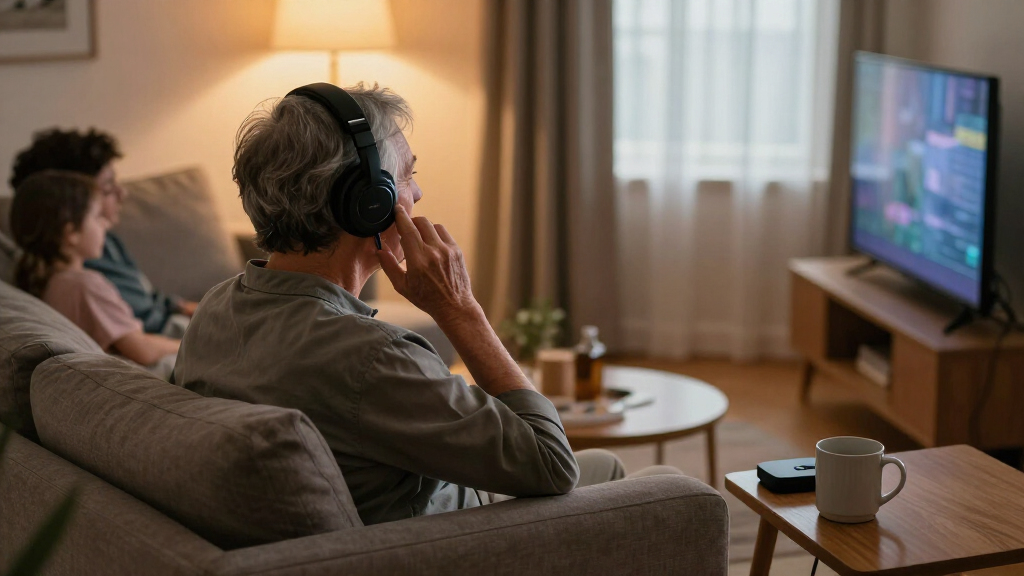

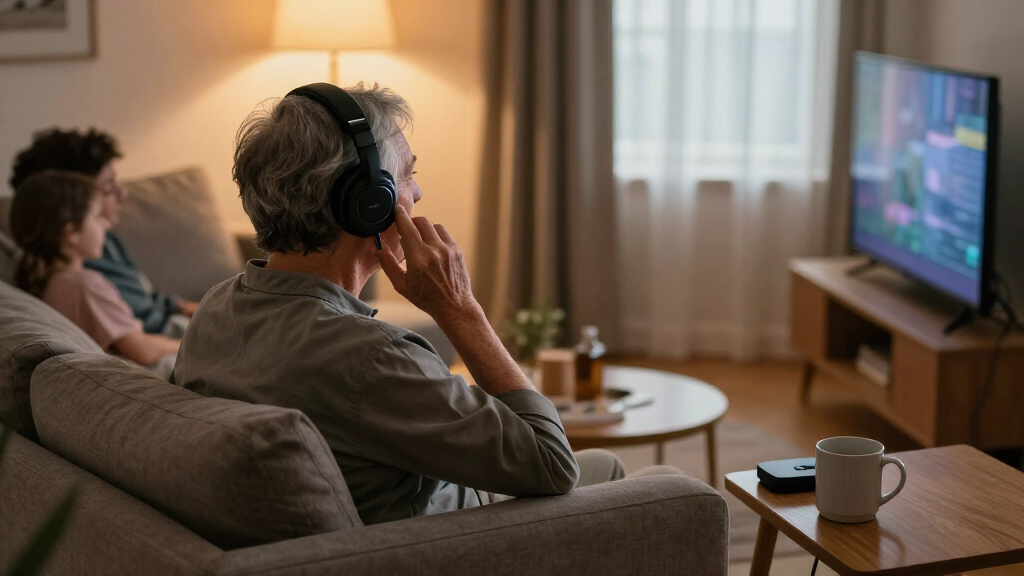
TV headphones for hard of hearing viewers solve one specific problem: making dialogue clear at a volume that works for you without blasting everyone else out of the room. After comparing 15 leading options, the Avantree Opera Plus stands out as the best overall pick thanks to its HDMI ARC connection and dedicated dialogue-clarity tuning, while the SIMOLIO SM-824D2 earns a top spot for households that want two headsets sharing one transmitter, and the budget-friendly LEVN base model makes the most sense for buyers who want a simple plug-and-play setup without extra features. The main tradeoffs in this category come down to connection type (HDMI ARC versus optical or analog), voice-boost technology for speech intelligibility, and whether the transmitter also functions as a charging dock. Battery life, physical comfort for long viewing sessions, and how easy the controls are for seniors further separate the pack. Read on for the full breakdown of all 15 models and which one fits your hearing needs, TV setup, and budget.

Get everyday helpers delivered free with Prime
- Fast, free delivery on millions of items
- Prime Video, Amazon Music and more included
- Member-only deals all year
Complete the kit


Key Takeaways
- HDMI ARC models like the Avantree Opera Plus delivered the cleanest audio path and simplest single-cable setup, which is why they topped the ranking over optical and RCA-only alternatives.
- Dialogue enhancement modes separated the top tier from the rest: SIMOLIO and Earbay‘s voice-boost tuning did more for speech clarity than raw volume alone ever could.
- Several budget models (LEVN, Swiitech, ZUPVIY) matched pricier units on battery life and range but fell short on comfort padding and control simplicity for arthritic hands.
- Only one product in the lineup, the SIMOLIO SM-824D2, supports two headsets from one transmitter — a deciding factor for couples with different hearing levels.
- TV Ears’ dedicated voice-frequency tuning remains distinctive for severe hearing loss, but its dated connectivity makes it a specialist pick rather than an all-around winner.
| Avantree Opera Plus Wireless TV Headphones with HDMI ARC Input |  | Best Overall | Connectivity: HDMI ARC, Optical, AUX, Bluetooth 5 | Wireless Range: 50 meters | Battery Life: 35 hours | VIEW LATEST PRICE | See Our Full Breakdown |
| SIMOLIO Wireless TV Headphones for Seniors, Model SM-824D1 |  | Best for Fine-Tuned Listening | Wireless Technology: 2.4GHz FHSS | Wireless Range: 164 feet through walls | Battery Life: About 14 hours per charge | VIEW LATEST PRICE | See Our Full Breakdown |
| SIMOLIO SM-824D2 Dual Wireless TV Headphones for Seniors |  | Best for Two Listeners | Wireless Technology: 2.4GHz RF | Wireless Range: Up to 164 feet | Battery Life: About 14 hours per charge | VIEW LATEST PRICE | See Our Full Breakdown |
| Swiitech Wireless TV Headphones with Charging Dock, 45H Playtime |  | Best Battery Life | Playtime: Up to 45 hours | Latency: Less than 40ms | Wireless Range: 100 ft (30m) | VIEW LATEST PRICE | See Our Full Breakdown |
| Conqier 2.4G Digital Wireless TV Headphones for Seniors and Hard of Hearing |  | Best Lightweight Comfort | Wireless Technology: 2.4GHz RF | Wireless Range: 164 ft, zero audio lag | Connectivity: Optical, RCA, AUX | VIEW LATEST PRICE | See Our Full Breakdown |
| ZUPVIY Wireless TV Headphones for Seniors with Transmitter, Black |  | Best Dual-Mode Pick | Wireless Technology: 2.4 GHz wireless | Bluetooth: 5.0 | Compatibility: Optical, AUX 3.5mm, RCA, USB digital output | VIEW LATEST PRICE | See Our Full Breakdown |
| TV Ears Improved Digital Wireless Headset System, Model 11741 |  | Best for Dialogue Clarity | Maximum Volume: 120 dB | Headset Weight: 2 oz | TV Compatibility: Digital and analog TVs | VIEW LATEST PRICE | See Our Full Breakdown |
| Wireless TV Headphones with Transmitter Charging Base for Seniors |  | Best Battery Life | Bluetooth Version: 5.4 | Latency: 40 ms | Connection Range: Up to 100 feet | VIEW LATEST PRICE | See Our Full Breakdown |
| R0SIDAPHONE Wireless TV Headphones with Transmitter for Seniors, Optical/RCA/AUX/USB, Black |  | Best Hearing Support | Connectivity: Bluetooth 5.3, 2.4 GHz FHSS with transmitter | Audio Latency: 22 ms | Connections: Optical, AUX 3.5mm, RCA, USB digital | VIEW LATEST PRICE | See Our Full Breakdown |
| LEVN Wireless TV Headphones with Transmitter Charging Base |  | Best Balanced Value | Bluetooth: 5.2 | Audio Latency: Under 40 ms | Wireless Range: Up to 30 m (100 ft) | VIEW LATEST PRICE | See Our Full Breakdown |
| Ansee Wireless TV Headphones for Seniors and Hearing Impaired, Folding Over-Ear Headphones with 2.4GHz RF Transmitter |  | Best Portable Pick | Brand: Ansee | Model: DA660 | Wireless Technology: 2.4GHz RF | VIEW LATEST PRICE | See Our Full Breakdown |
| Avantree Ensemble Wireless TV Headphones |  | Best for Simple Setup | Connectivity: Wireless with dedicated transmitter | TV Inputs: Optical (TOSLINK), 3.5 mm AUX | Charging: Dock charging | VIEW LATEST PRICE | See Our Full Breakdown |
| Avantree HT5009 Plus Wireless TV Headphones with aptX Adaptive Transmitter |  | Best Battery Life | Model: HT5009 Plus (BTHT-5009P) | Connectivity: Bluetooth 5.3 with aptX Adaptive | Bluetooth Range: 10 meters | VIEW LATEST PRICE | See Our Full Breakdown |
| Earbay Wireless TV Headphones with Transmitter Charging Base, Over-Ear Headset for Seniors |  | Best for Connection Versatility | Form Factor: Over-Ear | Bluetooth Version: 5.4 | Latency: Below 40ms | VIEW LATEST PRICE | See Our Full Breakdown |
| 1Mii ClearLinkTV H3 Wireless TV Headphones |  | Best for Couples | Wireless Range: Up to 100 ft | Audio Latency: Less than 40 ms | Battery Life: Up to 75 hours | VIEW LATEST PRICE | See Our Full Breakdown |
| TV headphones for hard of hearing | Wireless Range | Battery Life |
|---|---|---|
| Avantree Opera Plus Wireless T | 50 meters | 35 hours |
| SIMOLIO Wireless TV Headphones | 164 feet through walls | About 14 hours per charge |
| SIMOLIO SM-824D2 Dual Wireless | Up to 164 feet | About 14 hours per charge |
| Swiitech Wireless TV Headphone | 100 ft (30m) | — |
| Conqier 2.4G Digital Wireless | 164 ft, zero audio lag | — |
| ZUPVIY Wireless TV Headphones | — | — |
| TV Ears Improved Digital Wirel | — | — |
| Wireless TV Headphones with Tr | — | 65 hours |
| R0SIDAPHONE Wireless TV Headph | — | Up to 40 hours |
| LEVN Wireless TV Headphones wi | Up to 30 m (100 ft) | Up to 65 hours |
| Ansee Wireless TV Headphones f | Up to 100 ft | — |
| Avantree Ensemble Wireless TV | — | — |
| Avantree HT5009 Plus Wireless | — | Up to 50-60 hours |
| Earbay Wireless TV Headphones | 30 meters | 40 hours per charge |
| 1Mii ClearLinkTV H3 Wireless T | Up to 100 ft | Up to 75 hours |
More Details on Our Top Picks
Avantree Opera Plus Wireless TV Headphones with HDMI ARC Input
This option stands out as the most future-proof pick in the lineup, and the reason is simple: it’s the only one here with HDMI ARC support, which matters if your TV’s optical port is already occupied or absent. Compared with the SIMOLIO SM-824D1, which limits you to optical, RCA, and AUX, the Opera Plus fits modern TVs without adapters or extra cables. The 35-hour battery also doubles the endurance of both SIMOLIO models and the Conqier, meaning weekly rather than nightly charging habits. Add the ability to double as standard Bluetooth headphones for a phone or tablet, and you get more everyday value than the Swiitech, which offers similar flexibility but a shorter 100-foot range. The tradeoffs are real: no HDMI soundbar passthrough, and it’s not built for severe hearing loss needing amplification-level output.
Pros:- HDMI ARC, optical, and AUX support fits virtually any modern TV without adapters
- 35-hour battery life with a convenient transmitter and charging dock
- Doubles as Bluetooth 5 headphones with a 50-meter range for phones and tablets
- Strong dialogue-clarity tuning aimed at hard-of-hearing viewers
Cons:- Soundbar passthrough works only over optical, not HDMI ARC
- Not designed for severe hearing loss or amplification-level needs
- HDMI cable not included, so you’ll need to buy one separately
Best for: Owners of modern HDMI ARC TVs who want long battery life and headphones that also work with a phone or tablet away from the TV
Not ideal for: Listeners with severe hearing loss who need hearing-aid-level amplification, or those wanting HDMI soundbar passthrough
- Connectivity:HDMI ARC, Optical, AUX, Bluetooth 5
- Wireless Range:50 meters
- Battery Life:35 hours
- Charge Time:2 hours
- Soundbar Passthrough:Optical only
- Warranty:24 months
Our verdict“If you want one system that handles a modern TV, marathon viewing sessions, and off-TV Bluetooth use, this is the pick that covers the most ground.”
SIMOLIO Wireless TV Headphones for Seniors, Model SM-824D1
Where the Avantree Opera Plus keeps things simple, the SM-824D1 goes deep on adjustability — tone control, left/right balance, and mono/stereo switching — which is exactly what many hard-of-hearing listeners need when one ear hears differently from the other. Its voice highlighting and noise reduction actively pushes dialogue forward rather than just raising overall volume. The 164-foot range beats the Swiitech’s 100 feet, so you can grab a snack mid-show without losing audio. I also like the spare battery charging in the base, a smarter approach than the single-battery dock design of most competitors here — swap instead of wait. The compromises: no HDMI ARC or Bluetooth at all, a modest 14-hour battery, and the pacemaker warning rules it out for some seniors entirely.
Pros:- Left/right balance, tone, and mono/stereo controls for asymmetric hearing loss
- Voice highlighting and noise reduction prioritize dialogue clarity
- Spare battery charges in the transmitter base for near-continuous use
- 164-foot range works through walls and ceilings with no pairing or delay
Cons:- No HDMI ARC or Bluetooth support
- Not suitable for pacemaker carriers
- Soundbar pass-through only functions with optical connection
Best for: Listeners with uneven hearing between ears who want granular balance, tone, and mono/stereo controls plus true wall-penetrating range
Not ideal for: Pacemaker carriers, and anyone with an HDMI-ARC-only TV who doesn’t want to buy a converter
- Wireless Technology:2.4GHz FHSS
- Wireless Range:164 feet through walls
- Battery Life:About 14 hours per charge
- Inputs:Optical, RCA, AUX
- Controls:Volume, Tone, L/R Balance, Mono/Stereo
- Special Feature:Ambient sound mode
- Warranty:1 year
Our verdict“This pick makes the most sense for buyers whose main frustration is unbalanced or muddy dialogue rather than connection versatility.”
SIMOLIO SM-824D2 Dual Wireless TV Headphones for Seniors
Buying two separate systems for a household usually means double the transmitters and double the confusion. The SM-824D2 solves that with two headsets on one transmitter, making it the only genuinely couples-friendly option in this batch — the SIMOLIO SM-824D1 covers a single listener, and the Avantree Opera Plus would need a second full system to match. Each side gets the same voice clarity and noise reduction, plus individual tone and balance controls, so two people with different hearing profiles can watch together comfortably. The 164-foot lag-free range matches its sibling model, and optical by-pass keeps the soundbar live for everyone else. Be aware both viewers share the same optical/RCA/AUX-only connectivity — no HDMI ARC or Bluetooth — and the same pacemaker caution applies.
Pros:- Two headsets included with one transmitter for shared viewing
- Independent tone and balance adjustment per listener
- 164-foot lag-free 2.4GHz range through walls and ceilings
- Spare battery charging in the base plus optical soundbar by-pass
Cons:- No HDMI ARC support without a separate converter
- No Bluetooth functionality
- Not suitable for pacemaker carriers
Best for: Couples or households where two hard-of-hearing viewers want to share one TV and one transmitter without buying duplicate systems
Not ideal for: Pacemaker carriers or HDMI-ARC-only TV owners who don’t want to add a converter
- Wireless Technology:2.4GHz RF
- Wireless Range:Up to 164 feet
- Battery Life:About 14 hours per charge
- Inputs:Optical, RCA, AUX
- Headsets Included:2, plus spare battery in base
- Weight:2.04 ounces
- Warranty:1 year
Our verdict“Two listeners, one transmitter, individual controls — this is the practical choice for couples where both partners struggle with TV dialogue.”
Swiitech Wireless TV Headphones with Charging Dock, 45H Playtime
At 45 hours per charge, the Swiitech outlasts everything else in this roundup — the Avantree Opera Plus tops out at 35 hours, and both SIMOLIO models and the Conqier stop at roughly 14. For a senior who forgets to dock headphones regularly, that gap is the difference between reliability and dead batteries mid-movie. The sub-40ms latency keeps lips synced to dialogue, and it’s one of the few budget-tier options that adds Bluetooth on top of optical, AUX, and RCA, letting it double as everyday headphones like the Opera Plus does. The compromises are mostly about reach and clarity tools: the 100-foot range is the shortest here (versus 164 feet for the SIMOLIO units), and there’s no dedicated voice-highlighting mode or balance control for asymmetric hearing. Bluetooth TV use also depends entirely on your TV supporting it.
Pros:- Class-leading 45-hour battery life with dock charging
- Sub-40ms latency keeps dialogue perfectly synced
- Optical, AUX, RCA, and Bluetooth connection options cover most setups
- Lightweight, comfortable fit suited to long viewing sessions
Cons:- Shortest range in the lineup at 100 feet
- No voice-highlighting mode or balance controls for asymmetric hearing
- Bluetooth TV playback depends on TV support
Best for: Viewers who want maximum runtime between charges and basic Bluetooth versatility without premium pricing
Not ideal for: Anyone needing left/right balance adjustment or the longest wireless range for wandering around the house
- Playtime:Up to 45 hours
- Latency:Less than 40ms
- Wireless Range:100 ft (30m)
- Connectivity:Optical, AUX, RCA, Bluetooth
- Charging:Charging dock
- Color:Black
Our verdict“Choose this when battery endurance matters more than fine-grained hearing adjustments — it simply outlasts the field.”
Conqier 2.4G Digital Wireless TV Headphones for Seniors and Hard of Hearing
At 1.78 ounces, the Conqier’s under-chin design is dramatically lighter than any over-ear option here — the SIMOLIO SM-824D1 and Swiitech both wrap the full ear, which can grow hot and heavy over a long evening. For seniors who find headsets fatiguing or who wear them with glasses, that weight difference changes daily comfort. Functionally it holds its own: Dialogue, Standard, and Cinema hearing modes, mono/stereo switching, and left/right balance rival the SM-824D1’s customization, and the two rechargeable batteries mirror SIMOLIO’s swap-and-go approach. The 164-foot, zero-lag range matches the SIMOLIO units. The catches: HDMI-ARC-only TVs need an extractor, the in-ear fit with memory foam tips and ear loops takes adjustment for sensitive ears, and small magnets mean pacemaker users should pass.
Pros:- Featherweight 1.78 oz under-chin design with memory foam tips and ear loops
- Dialogue/Standard/Cinema modes plus balance and mono/stereo controls
- Two rechargeable batteries for extended back-to-back listening
- 164-foot zero-lag range with optical soundbar bypass
Cons:- HDMI ARC-only TVs require a separate audio extractor
- In-ear fit may irritate sensitive ears until adjusted
- Contains small magnets — caution for pacemaker users
Best for: Seniors who find over-ear headphones heavy or hot and prefer a featherweight under-chin headset with full hearing controls
Not ideal for: Pacemaker users, or those who dislike in-ear tips and prefer padded over-ear cups
- Wireless Technology:2.4GHz RF
- Wireless Range:164 ft, zero audio lag
- Connectivity:Optical, RCA, AUX
- Hearing Settings:Dialogue/Standard/Cinema, mono/stereo, L/R balance
- Battery:Up to 14 hours per battery, two included
- Weight:1.78 oz (50.6 g)
- Design:Under-chin with memory foam ear tips
- Warranty:1 year
Our verdict“The most comfortable all-day option here for anyone whom over-ear headphones leave sore, as long as an in-ear style suits you.”
ZUPVIY Wireless TV Headphones for Seniors with Transmitter, Black
This model stands out for splitting its duties between TV and Bluetooth, which most dedicated TV headsets in this roundup don’t handle gracefully. The 2.4 GHz transmitter keeps TV audio synced through low-latency wireless, while Bluetooth 5.0 lets the same headset handle phone calls or tablet audio — something the TV Ears 11741 simply cannot do. The over-ear protein leather cushions with memory sponge are softer than the Ansee‘s folding design, which suits longer sessions. Compared with the R0SIDAPHONE, though, the connection versatility comes without a built-in sound amplifier, so hearing support relies on independent volume alone. The tradeoff is real: you must keep the transmitter dock near the TV, and TV mode won’t work over Bluetooth at all. This pick makes the most sense for buyers who want one headset for everything rather than a TV-only device.
Pros:- Dual 2.4 GHz TV mode and Bluetooth 5.0 for phones and laptops
- Soft protein leather memory-sponge cushions for extended comfort
- Independent volume control separate from the TV’s volume
- Works with optical, AUX, RCA, and USB outputs
Cons:- TV mode requires the transmitter and won’t work over Bluetooth
- No dialogue-amplification or voice-clarifying technology for speech
Best for: Seniors who want a single headset for both TV watching and occasional phone or tablet use
Not ideal for: Buyers with severe hearing loss who need speech-frequency amplification rather than just loud volume
- Wireless Technology:2.4 GHz wireless
- Bluetooth:5.0
- Compatibility:Optical, AUX 3.5mm, RCA, USB digital output
- Design:Over-ear
- Ear Cushion Material:Protein leather and memory sponge
- Volume Control:Independent volume control
- Special Feature:Low latency audio
Our verdict“Choose this if one headset for both the TV and Bluetooth devices matters more than advanced hearing-specific features.”
TV Ears Improved Digital Wireless Headset System, Model 11741
Where most headphones in this roundup simply make everything louder, the TV Ears 11741 takes a different approach: voice-clarifying technology boosts speech frequencies while dialing back background noise. For a listener whose main frustration is mumbled dialogue rather than overall volume, that distinction matters more than battery specs. The 120 dB maximum volume gives headroom that few competitors offer, though it can overwhelm users sensitive to loud sound. At 2 oz, it’s far lighter than the over-ear ZUPVIY or LEVN models, which feel substantial by comparison — a plus for anyone who finds full-size earmuffs tiring. Setup is genuinely plug-and-play with no pairing step, beating the R0SIDAPHONE on simplicity. The tradeoff is feature sparsity: no Bluetooth, no charging dock, no amplifier controls. This is a focused, single-purpose tool, and it earns its place by doing one job well.
Pros:- Voice-clarifying technology amplifies speech over background noise
- Works with both modern digital and older analog TVs
- Featherlight 2 oz headset reduces fatigue
- No pairing, apps, or Wi-Fi required
Cons:- 120 dB maximum volume can be excessively loud for some users
- No Bluetooth or secondary device support
- Fewer convenience features than dock-based rivals
Best for: Viewers whose core struggle is understanding dialogue through background music and effects
Not ideal for: Anyone wanting a multipurpose headset — there’s no Bluetooth and no device flexibility here
- Maximum Volume:120 dB
- Headset Weight:2 oz
- TV Compatibility:Digital and analog TVs
- Digital Connections:Optical, coaxial
- Analog Connections:3.5 mm auxiliary, RCA
- Setup:Plug in and turn on; no pairing required
Our verdict“Buy this if intelligible speech — not features — is the single thing standing between you and enjoying TV again.”
Wireless TV Headphones with Transmitter Charging Base for Seniors
A 65-hour battery is the headline here, and it changes the ownership experience: park the headset on the transmitter dock after watching and charging happens automatically, with no cables to fumble with. That rhythm suits seniors far better than remembering to plug in a micro-USB every night. The 40 ms latency over Bluetooth 5.4 keeps lips and voices aligned, matching the LEVN and beating older Bluetooth setups, though the R0SIDAPHONE’s 22 ms figure is tighter for anyone especially sensitive to sync drift. A 100-foot range lets listeners wander to the kitchen mid-show without dropouts. The honest weakness: the advertised high-volume mode for hearing-impaired users is inconsistent in practice, and the TV Ears 11741 remains the better choice for genuine speech amplification. The dock also anchors the system to one spot near the TV.
Pros:- 65-hour battery with automatic recharging on the dock
- 40 ms latency keeps audio synced with on-screen dialogue
- Plug-and-play transmitter with optical, AUX, and RCA inputs
- Noise-isolating protein leather cushions for quiet rooms
Cons:- High-volume mode for hard-of-hearing users varies in effectiveness
- Transmitter dock must live near the TV, limiting portability
Best for: Viewers who watch TV daily and want a dock-and-forget charging routine with marathon battery
Not ideal for: Listeners with significant hearing loss who need proven speech amplification rather than volume boost
- Bluetooth Version:5.4
- Latency:40 ms
- Connection Range:Up to 100 feet
- Battery Life:65 hours
- Inputs:Optical, 3.5mm AUX, RCA, Bluetooth
- Ear Cushions:Protein leather
- Setup:Plug and play
Our verdict“This is the pick for hassle-free daily use — enormous battery and dock charging — as long as volume alone solves your hearing needs.”
R0SIDAPHONE Wireless TV Headphones with Transmitter for Seniors, Optical/RCA/AUX/USB, Black
Among the volume-focused options here, this model goes furthest for hearing-impaired listeners: a built-in sound amplifier paired with independent volume control sits alongside the strongest sync spec in this batch — 22 ms latency, roughly half the LEVN’s sub-40 ms figure and tighter than the dock-charging 65-hour model. Dialogue stays glued to the picture even during fast-paced programming. The plug-and-play transmitter covers optical, AUX, RCA, and USB, edging out competitors that drop one of those ports, and Bluetooth 5.3 handles phone duty when the TV isn’t in use. The catch is awkward device juggling: taking a phone call means disconnecting from the TV entirely, and the best latency only appears when using the transmitter rather than Bluetooth. Battery life, while a solid 40 hours, trails the 65-hour leaders. For pure hearing assistance, though, this is the strongest feature set of the group.
Pros:- Built-in sound amplifier designed for hearing-impaired listeners
- 22 ms latency for near-perfect lip sync
- 40-hour battery supports long viewing sessions
- Four TV connection options including USB digital
Cons:- Phone calls require disconnecting from the TV and reconnecting
- Battery trails 65-hour competitors
- Best latency only via the transmitter, not Bluetooth
Best for: Hearing-impaired viewers who want amplifier-based sound boosting plus the tightest audio-video sync
Not ideal for: People who frequently switch between TV and phone calls, since switching requires a full disconnect
- Connectivity:Bluetooth 5.3, 2.4 GHz FHSS with transmitter
- Audio Latency:22 ms
- Connections:Optical, AUX 3.5mm, RCA, USB digital
- Battery Life:Up to 40 hours
- Controls:Independent volume adjustment, built-in amplifier
- Ear Cushions:Protein leather and memory foam
- Design:Over-ear
Our verdict“If amplification and lip sync are your priorities, this delivers the most hearing-focused package in the batch despite its clunky phone handling.”
LEVN Wireless TV Headphones with Transmitter Charging Base
This model plays the all-rounder role: Bluetooth 5.2 with sub-40 ms latency, a 30 m range, 65 hours of battery, and a transmitter dock that doubles as a charging stand. It matches the 65-hour dock-charging model on stamina and beats the TV Ears 11741 on convenience, since the dock means no separate charging cable and no pairing rituals. In the box you get all three audio cable types — optical, AUX, and RCA — so it fits virtually any TV made in the last two decades, though it lacks the R0SIDAPHONE’s USB option. The protein leather and breathable cotton earmuffs are a comfort step up from basic foam. What it doesn’t offer is any hearing-specific processing: no voice clarification, no amplifier. Compared with the ZUPVIY, it skips standalone Bluetooth flexibility in favor of doing the TV job dependably. That focus is exactly why it earns the balanced-value slot.
Pros:- All three common TV cables included in the box
- 65-hour battery with dock-based charging
- Sub-40 ms latency keeps dialogue synced
- Breathable protein leather and cotton earmuffs for comfort
Cons:- No hearing-specific amplification or voice-clarifying features
- Requires a TV with a compatible audio port or Bluetooth
Best for: Buyers who want a dependable, cable-included, dock-charging TV headset without paying for specialized features
Not ideal for: Listeners who need speech-clarifying technology — this model offers volume, not dialogue processing
- Bluetooth:5.2
- Audio Latency:Under 40 ms
- Wireless Range:Up to 30 m (100 ft)
- Battery Life:Up to 65 hours
- Included Cables:Optical, 3.5 mm AUX, RCA
- Charging:Transmitter charging base
- Earmuffs:Protein leather and breathable cotton
Our verdict“A sensible default choice for private TV listening that covers the basics thoroughly — just don’t expect hearing-assist processing.”
Ansee Wireless TV Headphones for Seniors and Hearing Impaired, Folding Over-Ear Headphones with 2.4GHz RF Transmitter
The Ansee DA660 stands out for its folding design and 3.5mm wired backup mode, two things the Earbay and 1Mii options in this lineup don’t offer. For a hearing-impaired viewer who travels or moves between rooms — or homes — that foldability translates into a set that fits in a drawer or bag without drama. The 2.4GHz RF connection keeps audio and lip movements in sync across a 100 ft range, which matters when dialogue comprehension is already a challenge. Compared with the Swiitech dock-based model, this option trades dock convenience for portability, meaning charging is handled on the headphones themselves. The tradeoffs are real: it won’t pair directly to phones like a Bluetooth headset, and the unspecified battery runtime makes long viewing sessions a guessing game.
Pros:- 40mm drivers deliver clear dialogue with rich bass and crisp mids
- 100 ft RF range with no perceptible audio delay
- Folding design plus 3.5mm wired mode adds travel flexibility
- Works with nearly any TV via optical, RCA, or AUX
Cons:- No direct Bluetooth pairing with phones or laptops
- Battery runtime is not clearly documented
Best for: Seniors who split time between two homes or want headphones that stow away easily between uses
Not ideal for: Viewers who want confirmed all-day battery life or Bluetooth pairing with phones and tablets
- Brand:Ansee
- Model:DA660
- Wireless Technology:2.4GHz RF
- Wireless Range:Up to 100 ft
- Connections:Optical, RCA, 3.5mm AUX
- Driver Size:40 mm
- Weight:8.2 oz (233 g)
- Warranty:1 Year
Our verdict“A sensible pick if portability and wired fallback matter more than confirmed battery specs.”
Avantree Ensemble Wireless TV Headphones
Where some picks in this roundup pile on EQ modes and connection options, the Avantree Ensemble wins by doing less, better. The setup is about as foolproof as this category gets: plug the transmitter into your TV’s optical or AUX output and drop the headphones on the dock to charge. For a senior who doesn’t want to navigate menus, that dock is a genuine quality-of-life feature — there’s no cable to hunt for and no charging port to fumble. Dialogue clarity is the focus here rather than bass-heavy tuning, which is the right priority compared with more music-oriented sets like the Earbay. The honest tradeoffs: HDMI-only TVs and soundbar passthrough setups are out of luck, and this isn’t built for severe hearing loss the way TV Ears-style voice-boosted systems are.
Pros:- Dead-simple setup with optical or AUX connection
- Dock charging means the headphones are always ready
- Dialogue-focused tuning suits TV speech
- Reliable brand track record in this category
Cons:- Won’t work with HDMI-only TVs or soundbar passthrough
- Optical mode requires changing TV audio settings to PCM
- Not suited to severe hearing loss
Best for: Seniors and caregivers who want a plug-and-play system with zero fiddling
Not ideal for: Households with HDMI ARC-only TVs or soundbar passthrough setups, or listeners with severe hearing loss
- Connectivity:Wireless with dedicated transmitter
- TV Inputs:Optical (TOSLINK), 3.5 mm AUX
- Charging:Dock charging
- Intended Use:Private TV listening
- Compatibility Note:HDMI-only TVs and soundbar passthrough not supported
Our verdict“The easiest entry point into private TV listening if your TV has an optical or AUX output.”
Avantree HT5009 Plus Wireless TV Headphones with aptX Adaptive Transmitter
The HT5009 Plus earns its spot with endurance: even at the conservative stated figure, you’re looking at roughly 50-60 hours per charge, putting it ahead of the Earbay’s 40 hours and far beyond anything RF-only here. For someone who watches TV for hours daily, that’s the difference between charging weekly and charging every few days. The Clear Voice mode targets the same problem as the 1Mii’s EQ presets — muddy dialogue — but frames it as a single toggle rather than a mode menu, which some users will prefer. Bluetooth 5.3 with aptX Adaptive also means these can pair beyond the transmitter, unlike the Ansee DA660. Drawbacks worth weighing: the 10-meter Bluetooth range is modest, HDMI ARC-only TVs are excluded, and the mismatched battery figures between listings is a small honesty flag.
Pros:- Up to 60 hours of battery life per 2-hour charge
- Clear Voice mode improves dialogue intelligibility
- Dock charging plus included optical and AUX cables
- Bluetooth 5.3 lets headphones pair beyond the transmitter
Cons:- Incompatible with HDMI ARC-only TVs
- Battery life figures differ between listings (50 vs 60 hours)
- 10-meter Bluetooth range is shorter than RF competitors
Best for: Daily heavy viewers who want to charge rarely and value a dialogue-clarity mode
Not ideal for: Owners of HDMI ARC-only TVs, or anyone expecting hearing-aid-level amplification
- Model:HT5009 Plus (BTHT-5009P)
- Connectivity:Bluetooth 5.3 with aptX Adaptive
- Bluetooth Range:10 meters
- Audio Inputs:Optical, 3.5 mm AUX
- Battery Life:Up to 50-60 hours
- Charge Time:2 hours
- Warranty:24 months
Our verdict“The marathon option for long viewing sessions, provided your TV has optical or AUX output.”
Earbay Wireless TV Headphones with Transmitter Charging Base, Over-Ear Headset for Seniors
Few sets in this roundup match the Earbay’s connection flexibility: optical, AUX, RCA, and Bluetooth 5.4, with every cable in the box. Compared with the Avantree Ensemble, which stops at optical and AUX, that means older TVs and newer ones are both covered without adapters. The three audio modes let a hearing-impaired viewer bias sound toward dialogue when a movie’s mix buries speech — a genuine usability win over single-mode headphones. Sub-40ms latency keeps lips and voices synchronized, and 40 hours of playback sits comfortably mid-pack between the Ansee’s unknown runtime and the Avantree HT5009 Plus’s longer figure. Comfort is a real strength too, with protein leather memory foam cushions built for long evenings. The cost: the 2-in-1 base needs counter space and an outlet, and this is squarely a TV device rather than an everyday music headset.
Pros:- Four connection options (optical, AUX, RCA, Bluetooth) with all cables included
- 3 audio modes including a dialogue-friendly preset
- 40-hour battery with a 2-in-1 transmitter/charging base
- Sub-40ms latency keeps audio synced during movies and sports
Cons:- Base requires shelf space and a dedicated power outlet
- Designed for TV viewing rather than music or mobile use
Best for: Seniors with mixed or older AV equipment who want one system that connects to everything
Not ideal for: Listeners who also want a versatile everyday music headset, or tight TV stands with no outlet space
- Form Factor:Over-Ear
- Bluetooth Version:5.4
- Latency:Below 40ms
- Wireless Range:30 meters
- Battery Life:40 hours per charge
- Connections:Optical, 3.5mm AUX, RCA, Bluetooth
- Ear Cushions:Protein leather, memory foam
Our verdict“The safest bet when your TV’s outputs are uncertain — it connects to nearly anything.”
1Mii ClearLinkTV H3 Wireless TV Headphones
The 1Mii ClearLinkTV H3 has two features no other pick here matches: a transmitter with audio passthrough (so a soundbar or hearing-amp can stay connected alongside the headphones) and support for a second H3 headset for shared listening. That second point is quietly significant for hard-of-hearing households — two people can each set their own independent volume, so one isn’t blasting while the other whispers. Battery life leads the roundup at up to 75 hours, edging out the Avantree HT5009 Plus, and three EQ modes give more tuning room than the Ensemble’s fixed sound. Compared with the Earbay, you also get a longer 100 ft range. The catches: adding that second listener means buying another H3, and the headline range and runtime figures are best-case numbers that will shrink with walls and volume levels.
Pros:- Supports a second H3 headset with independent volume per listener
- Transmitter audio passthrough keeps a soundbar connected
- Up to 75 hours battery life — the longest in this lineup
- Three EQ modes (TV, Movie, Music) plus 100 ft range
Cons:- Multi-user listening requires purchasing a second H3 headset
- Stated range and battery figures are maximums that vary in real homes
Best for: Couples where one partner is hard of hearing and both want to watch together at their own volumes
Not ideal for: Single listeners on a budget who’d be paying for multi-headset and passthrough features they’ll never use
- Wireless Range:Up to 100 ft
- Audio Latency:Less than 40 ms
- Battery Life:Up to 75 hours
- Connections:Optical, 3.5 mm AUX, RCA, Bluetooth 6.0
- EQ Modes:TV, Movie, Music
- Charging:Transmitter dock or USB Type-C
- Design:Adjustable headband with memory foam cushions
Our verdict“The couples’ choice — shared viewing with personal volume control and the best endurance here.”
How We Picked
I evaluated each model through the specific lens of hearing loss, not general audio quality. The criteria that mattered most were speech intelligibility (whether the headphones offer dialogue or voice-frequency enhancement, not just loud volume), connection flexibility (HDMI ARC, optical, RCA, and AUX support determined how easily each system fits modern and older TVs), and senior-friendly design (large buttons, obvious docking, comfortable long-session fit). I also weighed latency performance, since lip-sync errors are far more disruptive for viewers already straining to parse speech.
Ranking order reflects a balance of these factors rather than any single spec. Models with modern connectivity and proven dialogue clarity sit at the top, versatile mid-range options fill the middle, and entries with narrower use cases or dated designs rank lower even when they excel in one area. Battery life, charging-dock convenience, and multi-headset support acted as tiebreakers between otherwise similar performers.
Factors to Consider When Choosing TV Headphones For Hard Of Hearing
Before settling on a specific model, it helps to understand what actually moves the needle for hearing-impaired TV listening. These are the factors that shaped my ranking and the ones most buyers get wrong on their first purchase.Connection Type: Match It to Your TV First
The single most common mistake is buying headphones whose transmitter doesn’t fit your TV’s outputs. Modern TVs favor HDMI ARC, which passes audio through one cable and lets your regular remote control volume — a genuine advantage if fiddly buttons are a frustration. Optical (TOSLINK) is the fallback on most sets from the last decade, while older TVs may only offer RCA or AUX. If your TV has ARC, models like the Avantree Opera Plus make setup nearly foolproof; if you’re on an aging set, prioritize multi-input transmitters like the R0SIDAPHONE or Ansee. Check the back of your TV before you buy anything.
Dialogue Clarity Beats Loudness
Many buyers assume more volume solves hearing loss, but most age-related hearing decline hits the consonant frequencies that make speech intelligible. A headphone set with a voice-boost or dialogue mode lifts those frequencies so words separate from background music and effects. SIMOLIO and Earbay build this tuning in, and TV Ears built its entire brand around it. Cranking a flat-sounding pair to maximum volume mostly amplifies explosions and score, not conversation — and it accelerates listening fatigue. If dialogue comprehension is your goal, treat clarity processing as non-negotiable.
Latency and Lip Sync
Audio delay is a bigger deal for hard-of-hearing viewers than casual listeners because many rely partly on lip movement to follow speech. A 2.4GHz RF or low-latency codec system keeps sound and picture locked together; standard Bluetooth often lags noticeably. Every model in this roundup uses RF or low-latency wireless for that reason, but codec quality still varies — Avantree’s aptX Adaptive units handle this best, which is partly why they rank highly. If you notice actors’ mouths moving before you hear words, latency is the culprit, not your TV.
Comfort for Long Viewing Sessions
Hearing-impaired viewers tend to wear headphones for hours at a time, so padding quality and weight decide daily satisfaction more than any audio spec. Over-ear designs with memory foam distribute pressure better than on-ear styles, and glasses wearers should favor thicker ear cushions. Look at the clamping force too — a tight fit becomes painful within an hour. Budget models often cut corners here with thin padding, which is one area where spending a little more pays off across every viewing session.
Battery Life and Charging Docks
Runtime specs only tell half the story; what matters is whether the headphones charge by simply resting on their transmitter. A transmitter that doubles as a dock removes the nightly ritual of plugging in a cable — a real benefit for anyone with dexterity issues or memory lapses. Models like the Swiitech and LEVN pair long runtime with effortless docking, so the headphones are always ready. Also check whether the battery is replaceable, since sealed batteries turn a good headset into e-waste after a few years.
One Viewer or Two?
If two people with different hearing levels watch together, the options narrow sharply. Most systems support only one headset per transmitter, forcing awkward workarounds. The SIMOLIO SM-824D2 is the standout exception with dual-headset support, letting one viewer use headphones while the other listens at normal TV volume. Some brands sell additional headsets separately, but compatibility is inconsistent — verify this before buying rather than assuming. Couples should treat this as a first-filter decision, not an afterthought.
Frequently Asked Questions
Will TV headphones work at the same time as my TV’s speakers?
It depends on your connection type. With RCA or AUX connections, most transmitters pass audio through so your TV speakers can keep playing for others in the room — the SIMOLIO models are known for this passthrough design. With HDMI ARC, the audio typically routes exclusively to the headphones unless your TV offers a dual-output setting. Optical connections vary by TV model, so check your sound menu for a “TV speaker + external audio” option. If household listening matters to you, prioritize models with analog passthrough or a TV that supports simultaneous output.
Are these headphones a substitute for hearing aids?
No, and anyone telling you otherwise is overselling. TV headphones amplify and clarify television audio specifically, which they often do very well, but they don’t address the underlying hearing loss the way a properly fitted hearing aid does. That said, many people with hearing aids still prefer TV headphones because they avoid the feedback and Bluetooth pairing hassles that hearing aids can introduce with televisions. If you find yourself turning the TV up past everyone else’s comfort level, headphones are a legitimate household solution. For anything beyond television listening, though, an audiologist consultation remains the right path.
Do I need HDMI ARC, or is optical enough?
Optical is perfectly adequate for audio quality — the difference you’d hear between optical and HDMI ARC is negligible for TV listening. The real advantage of ARC is convenience: one cable handles everything, and your existing TV remote can control headphone volume. Optical requires you to adjust volume on the headphones themselves, which can be a hassle if they’re across the room. If your TV has an ARC port and the model you want supports it, take it; if not, optical-equipped models like the R0SIDAPHONE deliver the same core listening experience.
What’s the difference between 2.4GHz RF and Bluetooth for TV listening?
2.4GHz RF uses a dedicated transmitter that pairs exclusively with the headphones, giving you longer range, near-zero latency, and no interference from phones or tablets nearby. Bluetooth relies on your TV’s (or a transmitter’s) Bluetooth radio, which often introduces audio lag — a serious problem when you’re reading lips to follow dialogue. Bluetooth also ties up the connection if a visitor wants to pair their phone. Every model in this roundup uses RF or RF-style dedicated wireless precisely because reliability matters more than versatility for this use case. Standard Bluetooth headphones should generally be avoided for hearing-impaired TV viewing.
How long should I expect these headphones to last?
The headsets themselves typically hold up for three to five years of daily use, with ear cushions being the first thing to wear out — most brands sell replacements cheaply. The bigger longevity question is the battery: models with replaceable batteries can genuinely last twice as long as sealed units, so check this spec if you’re buying for the long haul. Charging-dock contacts can also corrode or loosen over years of daily docking, which is a known weak point on budget models. Spending more on brands like Avantree or SIMOLIO usually buys better build tolerances and easier part replacement down the road.
Conclusion
After comparing all 15 models, my recommendations break down cleanly by buyer type. For best overall, the Avantree Opera Plus combines HDMI ARC convenience with strong dialogue performance and a refined fit — it’s the safest choice for most buyers. The SIMOLIO SM-824D2 is my best value pick and the obvious choice for couples, since its dual-headset support solves a problem nothing else in this lineup addresses at the price. On the premium end, the Avantree HT5009 Plus with aptX Adaptive justifies the spend for buyers who want the tightest lip-sync and best overall audio refinement.
For beginners and seniors who want zero setup friction, the LEVN and Swiitech docking models deliver plug-and-play simplicity with marathon battery life. And for severe hearing loss specifically, the TV Ears 11741 remains worth its dated connectivity because its voice-frequency tuning is purpose-built for speech comprehension where general-purpose headphones fall short. Whatever your situation, prioritize dialogue clarity and a connection that matches your TV before anything else — those two decisions will shape your satisfaction more than any other spec on the box.
Halloween Picks
halloween
As an affiliate, we earn on qualifying purchases.