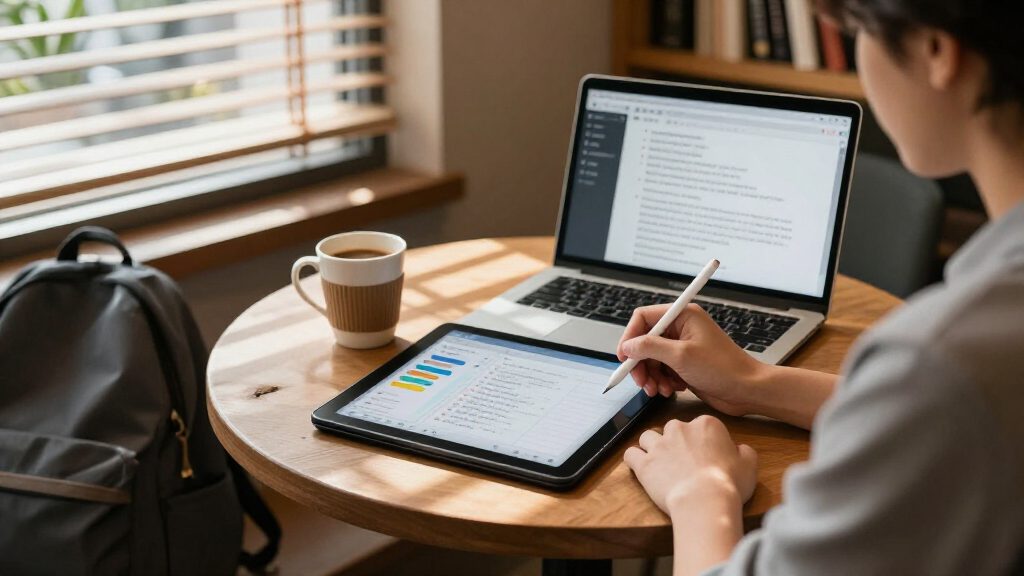

Choosing between digital note-taking devices for students comes down to one core tradeoff: distraction-free E Ink writing versus multifunction color screens that can run apps and play media. My top pick for most students is the iFLYTEK AINOTE 2, because its 10.65-inch E Ink display, AI-powered note summaries, and 18-language voice transcription cover the two things students do most: writing fast and capturing lectures. If budget leads the decision, the refurbished Kindle Scribe (32GB) delivers the best pure writing experience per dollar, while the XPPen 3-in-1 Color Notebook suits students who want a color screen for diagrams and slides. Below, I break down all seven options, who each one fits, and where they fall short.

Get everyday helpers delivered free with Prime
- Fast, free delivery on millions of items
- Prime Video, Amazon Music and more included
- Member-only deals all year
Key Takeaways
- The amazon.com/dp/B0D4JHQGW2?tag=deafvibes01-20&ascsubtag=dc-644709″ target=”_blank” rel=”nofollow sponsored noopener”>amazon.com/dp/B0DLKSR2P4?tag=deafvibes01-20&ascsubtag=dc-644709″ target=”_blank” rel=”nofollow sponsored noopener”>iFLYTEK AINOTE 2 earned the top spot because it is the only pick that combines lecture recording, AI meeting summaries, and Google Play app support on one E Ink screen — the exact combination classroom note-taking demands.
- Two Kindle Scribe models made the list, but they serve different buyers: the 16GB version is the entry point for beginners, while the 32GB refurbished unit with Premium Pen is the better value once storage fills with semester-long notes and PDFs.
- The reMarkable Paper Pure offers the most paper-like writing feel in the lineup, but its lack of voice transcription and app support makes it a poor fit for lecture-heavy courses compared to either iFLYTEK tablet.
- The iFLYTEK AINOTE Air 2 is the only compact 8.2-inch option, which makes it the default choice for backpack-conscious students — as long as they accept a smaller writing surface for math and diagrams.
- The XPPen 3-in-1 is the lone color LCD option, trading the month-long E Ink battery life for color output, 16,384 pressure levels, and a more tablet-like experience — best for design students, worst for distraction-prone studiers.
| XPPen 3-in-1 Color Digital Notebook 10.95” with 16384 Pressure Levels, Battery-Free X3 Pro Pencil, 128GB Storage |  | Best Full-Featured Pick | Display: 10.95-inch AG nano-etched LCD, 16.7M colors | Refresh Rate: 90Hz | Operating System: Android 14 | VIEW LATEST PRICE | See Our Full Breakdown |
| iFLYTEK AINOTE Air 2 Bundle – 8.2″ E Ink AI Note-taking Tablet with Stylus, 4096 Pressure Levels, Digital Notebook with Voice-to-Text Transcription |  | Best for Lecture Capture | VIEW LATEST PRICE | See Our Full Breakdown | |||
| reMarkable Paper Pure with Marker Plus and Mist Green Sleeve Folio |  | Best Distraction-Free Writing | Display: 10.3-inch monochrome digital paper | Ink Response: 21 ms | Color Support: Black and white only | VIEW LATEST PRICE | See Our Full Breakdown |
| iFlytek AINOTE 2 10.65″ E Ink Tablet with Recording & AI Meeting Summaries |  | Best Big-Screen AI Notebook | Display: 10.65-inch E Ink | Battery Life: Up to 14 days use, 113 days standby | Thickness: Approximately 4.2 mm | VIEW LATEST PRICE | See Our Full Breakdown |
| Amazon Kindle Scribe (32GB) – Refurbished with Premium Pen |  | Best Value E-Reader Hybrid | Display: 10.2-inch glare-free, 300 ppi, front-lit | Storage: 32GB (16GB and 64GB variants exist) | Battery Life: Up to 12 weeks reading, 3 weeks writing | VIEW LATEST PRICE | See Our Full Breakdown |
| iFLYTEK AINOTE 2 Paper Tablet, 10.65″ Electronic Notebook with Pen |  | Best for Lecture Transcription | Display Size: 10.65 inches | Thickness: 4.2 mm | Battery Life: Up to 14 days usage, 113 days standby | VIEW LATEST PRICE | See Our Full Breakdown |
| Amazon Kindle Scribe (16GB) with Premium Pen |  | Best Two-in-One Reader and Notebook | Display: 10.2-inch glare-free, 300 ppi, front-lit | Storage: 16GB | Included Stylus: Premium Pen | VIEW LATEST PRICE | See Our Full Breakdown |
| digital note-taking devices for student | Display | Battery Life |
|---|---|---|
| XPPen 3-in-1 Color Digital Not | 10.95-inch AG nano-etched LCD, 16.7M colors | — |
| iFLYTEK AINOTE Air 2 Bundle | — | — |
| reMarkable Paper Pure with Mar | 10.3-inch monochrome digital paper | — |
| iFlytek AINOTE 2 10.65" E Ink | 10.65-inch E Ink | Up to 14 days use, 113 days standby |
| Amazon Kindle Scribe | 10.2-inch glare-free, 300 ppi, front-lit | Up to 12 weeks reading, 3 weeks writing |
| iFLYTEK AINOTE 2 Paper Tablet | — | Up to 14 days usage, 113 days standby |
| Amazon Kindle Scribe | 10.2-inch glare-free, 300 ppi, front-lit | Months of reading, weeks of writing |
More Details on Our Top Picks
XPPen 3-in-1 Color Digital Notebook 10.95” with 16384 Pressure Levels, Battery-Free X3 Pro Pencil, 128GB Storage
XPPen’s color notebook is the closest thing here to a full tablet built for schoolwork. Running Android 14 with 128GB of storage, it can hold textbooks, PDFs, and apps alongside your notes — something no other device in this lineup can claim. The 16K pressure levels double the AINOTE Air 2’s sensitivity, which matters most for students who annotate diagrams or sketch. The 90Hz color LCD is sharper and faster than the reMarkable’s monochrome screen, but it’s a tradeoff: you get vibrant textbook pages at the cost of the distraction-free, week-long-battery e-ink experience. The narrow viewing angle and a required system upgrade for AI features mean it demands a bit more setup patience than the Kindle Scribe.
Pros:- Full Android 14 OS with 128GB storage for textbooks, PDFs, and apps
- 16K pressure levels and battery-free pen for precise writing and sketching
- Color display with 90Hz refresh and 75% blue light reduction
- Lightweight 495g design with included magnetic folio
Cons:- Narrow viewing angle limits visibility off-axis in shared study spaces
- Not e-ink, so battery life and eye comfort fall short of e-paper rivals
- Full AI feature set requires a system upgrade out of the box
Best for: Students who want one device for notes, digital textbooks, and apps instead of carrying a laptop everywhere
Not ideal for: Anyone easily distracted — full Android access makes it as much a tablet as a notebook
- Display:10.95-inch AG nano-etched LCD, 16.7M colors
- Refresh Rate:90Hz
- Operating System:Android 14
- Storage:128GB
- Pen Sensitivity:16,384 pressure levels (X3 Pro Pencil 2)
- Battery:8000mAh, 20W charging
- Weight:495g, 7mm thick
Our verdict“The right choice for students who need note-taking, reading, and app functionality in a single device and can accept shorter battery life for a color screen.”
iFLYTEK AINOTE Air 2 Bundle – 8.2″ E Ink AI Note-taking Tablet with Stylus, 4096 Pressure Levels, Digital Notebook with Voice-to-Text Transcription
The AINOTE Air 2 earns its spot by solving a specific student problem: keeping up with fast-moving lectures. Its real-time voice-to-text transcription in 18 languages, paired with AI-generated summaries, means you can actually listen instead of scribbling frantically — a capability the reMarkable Paper Pure simply doesn’t offer. At 230g and pocketable dimensions, it slips into a bag far more easily than the 10.65-inch AINOTE 2, making it the grab-and-go option between classes. The tradeoffs are real: the 8.2-inch screen feels cramped for full-page textbook PDFs, and e-ink’s slower refresh makes scrolling less fluid than the XPPen’s LCD. The bundled 5 years of Pro service adds genuine long-term value for heavy transcription users.
Pros:- Real-time transcription in 18 languages with AI meeting/lecture summaries
- Ultra-portable 230g body that fits in a jacket pocket
- Matte e-ink surface with 4,096 pressure levels for natural writing
- 5 years of Pro service included with activation
Cons:- Voice transcription and handwriting-to-text cannot run at the same time
- Small screen limits textbook and document readability
- E-ink page turns and scrolling feel sluggish compared to LCD options
Best for: Students in lecture-heavy programs, especially language learners, who need accurate transcription in a pocket-sized device
Not ideal for: Anyone who primarily reads or annotates full-page PDFs — the 8.2-inch screen is too small for comfortable document work
Our verdict“A niche but excellent pick for students whose main challenge is capturing spoken content rather than reading long documents.”
reMarkable Paper Pure with Marker Plus and Mist Green Sleeve Folio
If the XPPen is a tablet that takes notes, the reMarkable Paper Pure is a notebook that happens to be digital. Its 21ms ink response is the fastest-feeling writing experience in this lineup, and the monochrome, app-free design removes every temptation to check messages mid-study session — the opposite philosophy of the Android-powered XPPen. Compared with the Kindle Scribe, organization is more flexible here, with tags, folders, and easy cloud import for slides and handouts. The drawbacks are equally clear: no color, no audio recording, no transcription, and a steeper learning curve than Amazon’s more polished interface. Students who think in handwriting and want their notes to feel like paper will forgive all of that; students who want AI summaries should look at the iFlytek models instead.
Pros:- 21ms digital ink response feels closest to real pen on paper
- Tags and folders keep large note collections organized
- Simple importing and sharing via cloud services and apps
- Bundle includes Marker Plus and a protective sleeve folio
Cons:- Black-and-white only — color diagrams and slides lose fidelity
- No audio recording or AI transcription unlike the iFlytek options
- Interface learning curve for first-time users
Best for: Students who write to think and want zero digital distractions while studying or reviewing documents
Not ideal for: Students who need lecture recording, transcription, or color content — none of that exists here
- Display:10.3-inch monochrome digital paper
- Ink Response:21 ms
- Color Support:Black and white only
- Organization:Tags and folders
- Includes:Marker Plus, Mist Green Sleeve Folio
Our verdict“The purest writing experience in this roundup, best for focused notetakers who don’t need smart features.”
iFlytek AINOTE 2 10.65″ E Ink Tablet with Recording & AI Meeting Summaries
The AINOTE 2 is what happens when you take the Air 2’s transcription brain and give it a 10.65-inch screen sized for real documents. Students can view a full textbook page or slide deck while the AI transcribes the lecture — a workflow neither the smaller Air 2 nor the summary-less reMarkable can match. Battery life is a standout at up to 14 days of use, and the 4.2mm profile makes it thinner than most paper notebooks. Two caveats temper the recommendation: AI features require Wi-Fi, which rules out offline use in basement lecture halls, and there’s no front light, so late-night study needs a lamp — a clear step behind the Kindle Scribe’s lit display. Mixed customer reviews suggest checking the return window.
Pros:- 10.65-inch e-ink screen large enough for full-page documents
- AI summaries and multi-language transcription built in
- Up to 14 days of battery life and 113 days standby
- Ultra-thin 4.2mm lightweight design
Cons:- AI features depend on Wi-Fi, limiting offline and confidential use
- No front light for dim environments
- Mixed customer ratings indicate an inconsistent experience
Best for: Students who want AI transcription and document-friendly screen size together in one e-ink device
Not ideal for: Students who often study in dim libraries or dorms at night — the unlit screen needs external lighting
- Display:10.65-inch E Ink
- Battery Life:Up to 14 days use, 113 days standby
- Thickness:Approximately 4.2 mm
- Connectivity:Wi-Fi, Bluetooth 5, USB Type C, 5G
- Camera:Not supported
- Warranty:1 year
Our verdict“The best blend of screen size and smart features here, provided you study in well-lit, connected spaces.”
Amazon Kindle Scribe (32GB) – Refurbished with Premium Pen
Refurbished pricing makes this the budget-friendly entry point into serious digital note-taking, and unlike most cheap options, the Scribe doesn’t cut corners on fundamentals. The 300 ppi front-lit display is the sharpest here and the only e-ink screen with built-in lighting — a direct advantage over the unlit AINOTE 2 for late-night study. Battery life measured in weeks, not days, crushes the XPPen’s daily charging routine. The compromises come from ecosystem lock-in: notes and documents live inside Amazon’s world, with no app store or Android flexibility, and the front light offers limited adjustability. Compared with the reMarkable, you gain reading, lighting, and AI note summaries, but lose the deeper organization tools. The 1-year warranty softens the refurbished risk reasonably well.
Pros:- Sharpest display in the lineup at 300 ppi with built-in front light
- Weeks of battery life for both reading and writing
- AI-powered note summarization and handwriting conversion
- Refurbished price with 1-year limited warranty
Cons:- Locked to Amazon’s ecosystem and supported formats
- Limited lighting adjustability compared to dedicated e-readers
- Refurbished unit ships in generic packaging
Best for: Budget-conscious students who read heavily and want a lit screen plus basic note-taking for less money
Not ideal for: Students outside the Amazon ecosystem who need open file workflows or third-party apps
- Display:10.2-inch glare-free, 300 ppi, front-lit
- Storage:32GB (16GB and 64GB variants exist)
- Battery Life:Up to 12 weeks reading, 3 weeks writing
- Weight:15.3 oz (device only)
- Connectivity:Wi-Fi 5, Bluetooth 5.2
- Formats:PDF, EPUB, DOCX, MOBI, TXT, HTML, images, and more
- Warranty:1-year limited warranty
Our verdict“The smartest value for readers first, notetakers second, as long as Amazon’s ecosystem doesn’t bother you.”
iFLYTEK AINOTE 2 Paper Tablet, 10.65″ Electronic Notebook with Pen
Among everything in this roundup, the iFLYTEK AINOTE 2 stands out for a skill most students actually need: turning spoken lectures into searchable text across 18 languages. Compared with the Kindle Scribe, which handles transcription only after you’ve written the notes yourself, this model captures audio and converts it on the spot — a genuine advantage for fast-talking professors or seminars in a second language. At 4.2 mm thick with up to 14 days of battery, it also outlasts the color-screen XPPen 3-in-1, which trades battery life for display versatility. The tradeoffs are real, though: AI features and transcription demand a Wi-Fi connection, and the E Ink display is unusable in dark lecture halls without external light. Students who primarily read textbooks may find the Scribe’s ecosystem stronger.
Pros:- Real-time transcription in 18 languages, ideal for capturing lecture content verbatim
- Ultra-thin 4.2 mm chassis that slips into any backpack alongside textbooks
- Up to 14 days of battery per charge, so overnight dorm outlets aren’t mandatory
- Google Play compatibility adds study apps the reMarkable Paper Pure can’t run
Cons:- AI transcription and assistance stop working entirely without Wi-Fi
- No front light means it’s effectively unusable in dark rooms or late-night study sessions
- Extreme temperatures can degrade performance for students commuting in harsh climates
Best for: Students attending recorded lectures, language learners, and international students who need multilingual voice-to-text transcription
Not ideal for: Students who study in dim libraries or lecture halls — the non-backlit E Ink screen needs decent ambient light, and AI features fail without Wi-Fi
- Display Size:10.65 inches
- Thickness:4.2 mm
- Battery Life:Up to 14 days usage, 113 days standby
- Languages Supported:18 languages
- Connectivity:Wi-Fi, Google Play compatible
- AI Features:AI-powered note-taking and transcription (requires Wi-Fi)
Our verdict“Buy this if live lecture transcription in multiple languages matters more to you than reading books or working offline.”
Amazon Kindle Scribe (16GB) with Premium Pen
The Kindle Scribe (16GB) makes the most sense for the student who annotates as much as reads. Unlike the iFLYTEK AINOTE 2, which leans on live transcription, the Scribe’s strength is handwriting conversion and AI note summarization on a glare-free 300 ppi front-lit display — meaning it works in a dark dorm while the AINOTE 2 does not. The included Premium Pen beats the basic styluses bundled with many rivals, though the 32GB refurbished Scribe elsewhere in this lineup offers double the storage for students hoarding PDFs and textbooks. Compared with the distraction-free reMarkable Paper Pure, the Scribe’s Kindle ecosystem makes it heavier on content but weaker as a pure writing tool. If notes live mostly on paper you photograph or type later, this is overkill.
Pros:- Glare-free, front-lit display that works in bright sunlight and dark rooms alike
- AI summarization and handwriting-to-text conversion keep notes searchable
- Months of reading battery means charging anxiety basically disappears
- Premium Pen included in the box, unlike entry styluses on competing tablets
Cons:- 16GB of storage fills fast for students storing scanned textbooks and large PDFs
- No waterproofing or rugged build, so café spills and bag bumps carry risk
- Optimal note-taking depends on the bundled pen — losing it means an extra purchase
Best for: Students who read heavily and want to annotate PDFs and ebooks directly, especially those studying late at night
Not ideal for: Students needing live lecture transcription or offline AI features — and anyone with a large library of course PDFs, since 16GB fills quickly
- Display:10.2-inch glare-free, 300 ppi, front-lit
- Storage:16GB
- Included Stylus:Premium Pen
- Battery Life:Months of reading, weeks of writing
- AI Tools:Note summarization and handwriting conversion
- Durability:No waterproof or rugged rating
Our verdict“The Scribe is the pick for readers first, note-takers second — especially anyone who studies at night or outside.”

How We Picked
I evaluated each device through a single lens: how well it serves a student during a full semester of lectures, readings, and exam prep. That meant prioritizing writing feel and latency first, then lecture-capture features like voice-to-text transcription and audio recording, then battery life across a full day of classes, and finally ecosystem factors such as cloud sync, PDF annotation support, and whether the device resists the pull of social media during study sessions.
The ranking reflects how these factors stack up for real coursework rather than spec-sheet appeal. Devices that combine E Ink focus with lecture capture (the iFLYTEK models) ranked above pure writing tablets (reMarkable, Kindle Scribe) because students rarely need only one of those two functions. The XPPen placed mid-pack: its hardware is impressive, but a color LCD with app access cuts both ways for students. Price-per-semester-of-use, including stylus replacement cost and storage headroom, broke ties between similar options.
| digital note-taking devices for student | Battery Life |
|---|---|
| XPPen 3-in-1 Color Digital Not | — |
| iFLYTEK AINOTE Air 2 Bundle | — |
| reMarkable Paper Pure with Mar | — |
| iFlytek AINOTE 2 10.65" E Ink | Up to 14 days use, 113 days standby |
| Amazon Kindle Scribe | Up to 12 weeks reading, 3 weeks writing |
| iFLYTEK AINOTE 2 Paper Tablet | Up to 14 days usage, 113 days standby |
| Amazon Kindle Scribe | Months of reading, weeks of writing |
Factors to Consider When Choosing Digital Note-taking Devices For Students
Before clicking buy on any of these devices, it helps to understand the broader patterns in this category — because the most common regret I see reported is not a bad device, but a mismatched one. These are the factors that actually change how a device performs across a semester.E Ink Versus Color LCD: The Decision That Shapes Everything Else
This is the single biggest fork in the road, and it affects battery life, eye comfort, and your ability to focus. E Ink devices (reMarkable, Kindle Scribe, both iFLYTEK models) last weeks on a charge, read like paper under classroom lighting, and — critically for students — cannot easily pull you into video apps or social feeds. Color LCD devices like the XPPen render diagrams, highlighted slides, and color-coded notes accurately, but you will be charging them nightly and fighting distraction. A common mistake is choosing LCD for the occasional color diagram when 90% of notes are plain text. If your coursework is diagram-heavy — anatomy, engineering, design — color justifies the tradeoff; otherwise it usually does not.
Lecture Capture: Transcription and Recording Are Not Optional Extras
Students consistently underestimate how much of note-taking is capturing spoken information quickly, not just writing neatly. Devices with built-in recording and voice-to-text, like the iFLYTEK lineup, let you revisit a confusing explanation or generate searchable transcripts of a fast-talking professor. Without this, you are back to recording on your phone and manually matching audio to handwritten notes later — a workflow most students abandon within weeks. If you take seminar-style or language courses, multi-language transcription support moves from nice-to-have to necessary. Check which languages and accents a device actually supports before assuming it will handle your course load.
Storage and the Hidden Cost of Semester-Long Use
Sixteen gigabytes sounds generous until you account for annotated textbook PDFs, recorded lectures, and two years of accumulated notes. Voice recordings are the real storage hogs — a semester of weekly lectures can consume several gigabytes on its own. This is why the 32GB refurbished Scribe outperforms its 16GB sibling on value despite identical hardware otherwise. Also check whether the device offers cloud backup or expandable storage, because a lost or damaged tablet with no sync is a lost semester of notes. Buying one tier of storage above your estimate is cheaper than replacing the device mid-degree.
Stylus Quality, Pressure Levels, and Replacement Costs
Pressure sensitivity numbers (4,096 versus 16,384 levels) matter far less than latency and pen comfort — a responsive 4,096-level pen feels better than a laggy high-spec one. What matters more is whether the stylus needs charging, whether it includes an eraser end (the Marker Plus and Premium Pen do, and students report using it constantly), and what a replacement costs when the original gets left in a lecture hall. Battery-free pens, like the XPPen’s X3 Pro, remove one more charging routine from your week. Budget for a spare or a folio with a pen loop as part of the real purchase price.
Ecosystem Lock-In and Getting Notes Out
A note-taking device is only as good as your ability to export and sync your notes to where you actually study — usually a laptop. Kindle Scribe notes live in Amazon’s ecosystem, reMarkable’s in its own cloud service (with subscription pricing to watch), and iFLYTEK’s Google Play compatibility opens the widest door for third-party apps like Notion or OneNote. Before buying, trace the exact path a handwritten page takes to reach your laptop: export formats (PDF, PNG, text), whether handwriting converts to typed text, and whether sync requires a paid plan. Students who skip this check often end up photographing their tablet screen with a phone — the exact problem the device was meant to solve.
Frequently Asked Questions
Is an E Ink note-taking device actually better than just using an iPad for class notes?
For many students, yes — but for different reasons than the marketing suggests. The advantage is not writing quality; modern iPads write beautifully. The advantage is focus and battery life: an E Ink device cannot host TikTok, lasts weeks per charge, and reads comfortably under harsh lecture-hall lighting. Where the iPad wins is versatility — color diagrams, split-screen with a recorded lecture, and one device for everything. If you already own a tablet, a dedicated E Ink device only makes sense if distraction is a genuine problem for you. If you own neither and coursework is text-heavy, the E Ink route is usually cheaper and calmer.
Do I need voice-to-text transcription, or is it a gimmick for students?
Transcription is the feature students most often regret skipping. It converts a professor’s spoken explanation into searchable, reviewable text, which means you can search ‘Krebs cycle’ before an exam and pull up exactly what was said in week three. It genuinely helps in fast-paced lectures, courses in a second language, or seminars where participating and writing simultaneously is impossible. The catch is language support: check that your lecture language and accent are covered — the iFLYTEK models support 18 languages, but quality varies. If your courses are problem-set based rather than lecture based, you can safely deprioritize this and save money.
Is buying a refurbished Kindle Scribe risky for a student on a budget?
Refurbished units from Amazon come with the same one-year warranty as new ones, which makes the risk low and the math attractive — you effectively get double the storage and the Premium Pen for less than the new 16GB bundle. The things to verify are the warranty terms in your region and the return window in case the battery health disappoints. Because E Ink screens are not wear items the way OLED panels are, a refurbished Scribe typically feels indistinguishable from new. For a student budget, I would take the 32GB refurb over the 16GB new unit in almost every scenario. The only exception is if a resale-in-two-years plan matters to you, since refurbs carry slightly lower resale value.
Will a smaller screen like the 8.2-inch AINOTE Air 2 be big enough for my notes?
It depends entirely on what you write. For text-heavy subjects — essays, history, literature — an 8.2-inch screen handles full sentences comfortably and saves serious weight in a bag. For math, engineering, chemistry, or anything with wide diagrams, a small screen forces constant zooming and scrolling, which breaks your thinking flow during fast lectures. A practical test: if your paper notebooks are filled with wide equations or system diagrams, go 10 inches or larger. If they are mostly lined text with occasional margin notes, the Air 2’s portability advantage wins. Also remember smaller screens mean smaller keyboards if you ever type on the device.
Can these devices replace paper notebooks entirely, or should I keep some paper as backup?
Most students who switch fully do fine within a month, but there are two honest caveats. First, exams: many courses still require handwritten paper exams, and some students like keeping some paper practice so exam-day writing speed and layout feel familiar. Second, certain tasks remain awkward digitally — quickly sketching across a fold-out page, tearing out a sheet to share with a study group, or writing during a power outage the night before a deadline. My suggestion is to go digital for daily lectures and keep a cheap paper notebook for exam practice and edge cases. The goal is a lighter backpack, not paper purity.
Conclusion
Match the device to how you actually study, and the choice becomes straightforward. For best overall, the iFLYTEK AINOTE 2 stands out as the most complete student tool: lecture recording, AI summaries, 18-language transcription, and Google Play flexibility on a large E Ink screen. For best value, the refurbished Kindle Scribe (32GB) delivers a premium writing experience at a mid-range price, while the 16GB Scribe earns the best for beginners slot as the easiest device to learn and the least expensive way to test whether digital notes suit you. For a premium pick, the reMarkable Paper Pure offers the closest thing to paper that electronics can achieve — ideal for focused writers who do not need transcription. For specific needs: the AINOTE Air 2 for commuters and minimalists who prioritize portability and voice capture, the AINOTE 2 Paper Tablet bundle for students who want everything in one box with pen included, and the XPPen 3-in-1 for design and STEM students whose notes demand color. Whichever route you take, prioritize the features tied to your weekly routine — lectures, diagrams, or deep reading — over raw specifications, and the right device will be obvious.
Evergreen bestsellers Picks
bestsellers
As an affiliate, we earn on qualifying purchases.