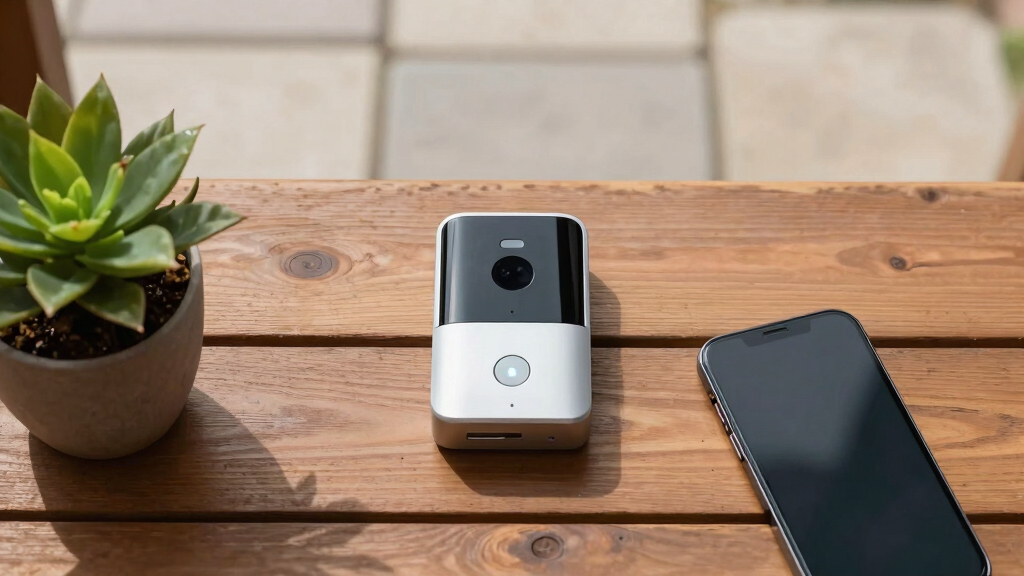

Visual alert doorbells turn a visitor’s press into a visible signal, making them useful for people with hearing loss, loud households, and rooms where an ordinary chime may go unnoticed. My best overall pick is the CallToU system with two push buttons and three receivers because its multi-room coverage, 1,000-foot stated range, and several alert modes suit the widest range of homes. The 4000 ft Wireless Doorbell Kit is the stronger long-distance choice, while the two-receiver CallToU kit offers a better balance for smaller homes. The main tradeoffs are receiver coverage versus cost, bold strobe visibility versus a more discreet light, and advertised open-area range versus likely indoor performance. Continue reading for my full breakdown of which setup fits each buyer type.

Get everyday helpers delivered free with Prime
- Fast, free delivery on millions of items
- Prime Video, Amazon Music and more included
- Member-only deals all year
Key Takeaways
- CallToU’s two-button, three-receiver kit ranks first because it covers more rooms and entrances out of the box than the single-button or two-receiver alternatives.
- The 4000 ft Wireless Doorbell Kit is the range leader, but its extra reach is most useful on large properties rather than typical apartments or compact houses.
- The two Loud Flash seven-color models favor customizable visual cues, making them more appealing when buyers want distinct colors rather than the largest receiver network.
- CallToU’s two-receiver IPX5 kit is the value pick because it retains weather protection and mixed sound-and-light alerts without charging for three receivers.
- Heasound is the beginner-friendly choice, while Yinhing better suits buyers who place ringtone adjustment above multi-entrance coverage or extreme range.


| visual alert doorbell | Wireless Range | Volume Levels |
|---|---|---|
| Heasound Wireless Doorbell wit | 200 meters / 656 feet | 5 |
| CallToU Wireless Doorbell for | 1000 feet | — |
| Loud Flash Doorbell with 7 Col | 600 feet | 4 |
| Wireless Doorbell Kit with 400 | 4000 feet | — |
| Loud Flash Doorbell with 7 Col | 600 feet | 4 |
| CallToU Hearing Impaired Wirel | Up to 1,000ft | — |
| Yinhing Wireless Doorbell Kit | — | 5 |
More Details on Our Top Picks
Heasound Wireless Doorbell with Flashlight for Hearing Impairment
I rank the Heasound Wireless Doorbell as the value pick because it combines a seven-color visual alert, five volume settings, and a 656-foot range in a lightweight package. Its 32 melodies offer more sound choices than the Wireless Doorbell Kit with 4000 ft Range, which has only 12. The Heasound model is a better fit for an apartment, classroom, or average home than for a sprawling property. Anti-jamming technology also helps reduce missed alerts where nearby wireless devices compete for airtime. The tradeoff is a simpler single-alert setup than the multi-receiver CallToU kit, and the supplied battery will eventually need replacement. Setup may also feel less straightforward to buyers who want a fully preconfigured system. I favor it for shoppers seeking strong visual visibility without buying a large kit.
Pros:- Seven LED colors provide a clear alternative to relying on sound
- Five volume levels and 32 melodies allow useful alert customization
- 656-foot stated range covers many homes, classrooms, and small offices
- Anti-jamming technology supports more dependable wireless signaling
Cons:- Battery operation creates an ongoing replacement requirement
- Offers less whole-home coverage than kits with multiple receivers
- Initial configuration may be confusing for buyers seeking a plug-and-play setup
Best for: Budget-conscious apartment residents, teachers, or caregivers who need a bright visual alert and flexible sound settings within a moderate coverage area
Not ideal for: Large-property owners or buyers needing several receivers in separate rooms, since this is a simpler system with a shorter range than the 4000-foot kit
- Wireless Range:200 meters / 656 feet
- Melodies:32
- Volume Levels:5
- LED Colors:7
- Wireless Technology:Anti-jamming
- Power Source:12V 23A battery
- Battery Included:Yes
- Package Weight:146 g / 5.1 oz
Our verdict“I recommend this model to value-focused buyers who need a visible, customizable alert but do not require multi-building coverage.”
CallToU Wireless Doorbell for Hearing Impaired, Waterproof, 1000ft Range, Includes 2 Push Buttons and 3 Receivers, Multiple Alert Modes
The CallToU Wireless Doorbell takes my top position because its three receivers and two push buttons cover more rooms and entrances than the Heasound model or the two-receiver Loud Flash Doorbell. Its mix of vibration, flash, ring, and combined modes gives buyers several ways to notice a visitor; that versatility is especially useful in households with different hearing or visual needs. A 0–110 dB volume range also permits silent visual alerts or a forceful audible signal. Although its 1000-foot range cannot match the 4000-foot Wireless Doorbell Kit, it offers a better balance of coverage and receiver count for most homes. The waterproof buttons add outdoor practicality, but every component depends on batteries. I also see the many mode combinations as a benefit with a learning curve: caregivers may need to configure the system for less technical users.
Pros:- Three portable receivers spread alerts across several rooms
- Two waterproof push buttons support separate entrances
- Flash, vibration, ring, and combined modes serve varied sensory needs
- Volume adjusts from silent to 110 dB
Cons:- Multiple battery-operated components increase replacement work and expense
- Alert combinations may be confusing for users who prefer basic controls
- 1000-foot range is insufficient for some farms and detached outbuildings
Best for: Multi-room households and caregivers who need separate entrance buttons plus flash, vibration, and sound alerts for residents with differing sensory needs
Not ideal for: Users who want mains-powered receivers or a very simple one-button setup, since multiple battery-operated components and alert combinations add maintenance and configuration
- Wireless Range:1000 feet
- Push Buttons:2
- Receivers:3
- Alert Modes:Vibration, flash, ring, and combined modes
- Volume Range:0–110 dB
- Power Source:Battery operated
- Button Weather Protection:Waterproof
Our verdict“I place this first for households that need the most flexible mix of visual, tactile, and audible alerts across several rooms and entrances.”
Loud Flash Doorbell with 7 Colors and 4 Volumes – Wireless, Long Range, Suitable for Elderly and Hearing Impaired
For a smaller home with two main listening areas, I would choose the Loud Flash Doorbell with two receivers. Its seven light colors create an obvious visual cue, while four volume levels let residents balance audibility against disruption. Compared with the three-receiver CallToU system, this model offers fewer placement points and lacks a stated vibration mode, but its simpler one-button layout is easier to match to a single entrance. The 600-foot range is adequate for many houses and offices, though it falls behind both CallToU’s 1000 feet and the 4000-foot Wireless Doorbell Kit. Installation by adhesive tape avoids drilling, with screws available for a firmer mount. The largest compromise is power management: seven AA batteries are required, and the stated three-to-five-month life creates recurring cost and waste. I see it as a practical, room-to-room visual alert, not a low-maintenance system.
Pros:- Two receivers provide visual alerts in separate rooms
- Seven light colors make the notification easy to distinguish
- Four volume settings support quieter and louder spaces
- Adhesive or screw mounting accommodates rental and permanent installations
Cons:- Seven AA batteries must be replaced every three to five months
- No vibration alert is listed for users who need tactile notification
- 600-foot range and two receivers limit coverage compared with larger kits
Best for: Residents of small or medium homes who need one entrance button and visible alerts in two commonly occupied rooms
Not ideal for: Buyers seeking vibration alerts, long battery life, or broad outbuilding coverage, since it uses seven AA batteries and has a 600-foot stated range
- Transmitters:1
- Receivers:2
- Wireless Range:600 feet
- Light Colors:7
- Volume Levels:4
- Power Requirement:7 AA batteries
- Stated Battery Life:3–5 months
- Installation:Adhesive tape or screws
Our verdict“I recommend this option for a two-room alert setup when bright lights and uncomplicated installation matter more than battery economy.”
Wireless Doorbell Kit with 4000 ft Range, Flashing Strobe, and Adjustable Volume
The defining advantage of this Wireless Doorbell Kit is its 4000-foot stated range, four times the reach of the CallToU model and far beyond either 600-foot Loud Flash Doorbell. That makes it my preferred choice for large houses, workshops, commercial spaces, or a gate set well away from the receiver. The flashing strobe supplies the visual notification central to this roundup, while the weatherproof button and LED confirmation help users know a press registered outdoors. A transmitter battery life of two to four years also reduces upkeep compared with the AA-powered models. Range comes with compromises: the maximum 90 dB volume is lower than CallToU’s 110 dB ceiling, and only 12 melodies are offered versus Heasound’s 32. The transmitter battery is not included, adding a small setup hurdle. I would prioritize it for distance and low maintenance, rather than maximum alert variety.
Pros:- 4000-foot stated range is the longest among these five picks
- Flashing strobe provides a direct visual visitor alert
- Weatherproof button suits exposed entrance locations
- Two-to-four-year stated transmitter battery life reduces routine maintenance
Cons:- 90 dB maximum is quieter than the CallToU system’s 110 dB ceiling
- Twelve melodies offer less choice than the Heasound model
- Required transmitter battery is not included
Best for: Owners of large homes, workshops, commercial premises, or gated properties who need a visual doorbell signal across unusually long distances
Not ideal for: Buyers needing the loudest audible alert or broad ringtone choice, since output tops out at 90 dB and the system provides 12 melodies
- Wireless Range:4000 feet
- Operating Frequency:433 MHz
- Maximum Volume:90 dB
- Melodies:12 selectable
- Visual Alert:Flashing strobe
- Push-Button Protection:Weatherproof
- Press Confirmation:LED indicator
- Transmitter Battery Life:2–4 years
- Transmitter Battery Included:No
Our verdict“I would buy this kit for a distant gate, outbuilding, or large workplace where range matters more than sound variety.”
Loud Flash Doorbell with 7 Colors and 4 Volumes, Wireless Long-Range Doorbell for Home/Office
I place this Loud Flash Doorbell kit in the multiple-entrance role because its two transmitters and three receivers can cover a front door, back door, and several occupied rooms. The smaller B0CH57BBRB Loud Flash Doorbell shares the same 600-foot range, seven colors, and four volume levels, but provides only one transmitter and two receivers. This expanded version is the better fit for a larger household or office needing wider indoor distribution. Adhesive and screw mounting also allow either a low-impact or more secure installation. Yet expansion carries a steep battery burden: the complete system needs 11 AA batteries, with replacement expected every three to five months. CallToU offers the same two-button, three-receiver arrangement plus vibration and a longer 1000-foot range, making it more versatile. I would select this model when bright color alerts and simple mounting outweigh battery cost.
Pros:- Two transmitters cover separate doors or service points
- Three receivers distribute visual alerts across several rooms
- Seven light colors and four volume levels support recognizable notifications
- Adhesive and screw mounting provide flexible installation
Cons:- Eleven AA batteries create substantial recurring cost and waste
- Three-to-five-month stated battery life demands frequent replacement
- Shorter range and fewer alert types than the comparable CallToU kit
Best for: Homes and small offices with two entrances that need bright visual alerts distributed across three regularly occupied rooms
Not ideal for: Battery-conscious buyers or people needing tactile alerts, because the system consumes 11 AA batteries and no vibration mode is listed
- Transmitters:2
- Receivers:3
- Wireless Range:600 feet
- Light Colors:7
- Volume Levels:4
- Power Requirement:11 AA batteries
- Receiver Battery Use:3 AA batteries per receiver
- Transmitter Battery Use:1 AA battery per transmitter
- Stated Battery Life:3–5 months
Our verdict“I recommend this kit for two-entrance homes or offices that prioritize colorful alerts in three rooms and accept frequent battery changes.”
CallToU Hearing Impaired Wireless Doorbell with Flashing Light
I rank the CallToU Hearing Impaired Wireless Doorbell as the best choice for multi-room coverage because its two plug-in receivers and 1,000-foot range make alerts easier to notice across a large or divided home. The adjustable output reaches 100dB, while strong, dim, and off light settings let buyers balance visibility against distraction. Compared with the Yinhing Wireless Doorbell Kit, this model provides a stated operating range, a higher IPX5 water-resistance rating, and more receiver coverage. The tradeoff is placement: both receivers need available outlets, and there is no Wi-Fi connection for phone alerts or smart-home routines. Although the system can accept extra CallToU components, expanding it may cost more than choosing the larger CallToU kit with two buttons and three receivers from the outset.
Pros:- Two receivers provide broader alert coverage than a basic single-receiver kit
- Strong, dim, and off light modes accommodate different visual-alert preferences
- Up to 100dB volume supports households with mixed hearing needs
- IPX5 button and 1,000-foot stated range suit exposed entrances and larger homes
Cons:- Plug-in receivers can only be placed near available power outlets
- No Wi-Fi, mobile notifications, or smart-home integration
- Additional entrances require compatible CallToU components
Best for: People with hearing loss who need visible and loud alerts across several rooms or on different floors
Not ideal for: Smart-home users or households with scarce wall outlets, since the receivers must remain plugged in and offer no Wi-Fi integration
- Receiver Quantity:2
- Volume Range:0-100dB
- Light Modes:Strong, dim, or off
- Wireless Range:Up to 1,000ft
- Waterproof Rating:IPX5
- Receiver Power:Plug-in
- Button Mounting:Adhesive or screws
- Expandable System:Yes
Our verdict“This is my pick for buyers who prioritize dependable multi-room visual alerts over app connectivity and portable receiver placement.”
Yinhing Wireless Doorbell Kit with Flashing Light and Adjustable Ringtones
The Yinhing Wireless Doorbell Kit earns a place as a lightweight basic option for buyers who want a visible alert without a more elaborate multi-receiver package. Its colorful flashing lights, 32 ringtones, and five volume levels allow separate visual and audible cues, while the touch-style button may be easier for older visitors to operate. At 5.3 ounces, it is less substantial than the CallToU Hearing Impaired Wireless Doorbell, but the comparison also exposes its limits: Yinhing does not provide clear range or battery-life figures in the supplied data, and its IP44 rating offers less weather protection than CallToU’s IPX5 button. I would place it below CallToU for large homes or exposed entryways.
Pros:- Colorful flashes provide an alternative cue for people who may miss an audible chime
- 32 ringtones offer more sound variety than many basic doorbells
- Five volume settings suit households with different sound-sensitivity needs
- Lightweight touch-button design supports straightforward operation
Cons:- No stated wireless range or battery-life information
- IP44 protection is less robust than the CallToU model’s IPX5 rating
Best for: Older adults or people with hearing loss who want a lightweight, simple doorbell with colorful visual cues and ringtone choice
Not ideal for: Buyers with large properties or exposed entrances, because the stated data does not confirm wireless range or battery life and weather resistance is limited to IP44
- Number of Ringtones:32
- Volume Levels:5
- Visual Alert:Colorful flashing lights
- Button Type:Touch button
- Waterproof Rating:IP44
- Item Weight:5.3 ounces
- Product Dimensions:0.39 x 0.39 x 0.39 inches
Our verdict“I would choose Yinhing for a small, sheltered home where simple visual alerts matter more than documented range, stronger weather protection, or broad receiver coverage.”
How We Picked
I ranked these visual alert doorbells by how reliably their listed designs can make a visitor noticeable across a real home. The largest weight went to flash visibility and alert flexibility, followed by receiver count, stated range, and button weather resistance. I also compared whether each package can cover several rooms or entrances without immediate add-on purchases. Sound volume mattered, but it did not outweigh the visual signal because this roundup is centered on visible alerts.
The top positions went to kits offering the strongest mix of multi-room coverage, installation flexibility, and value. Long advertised range earned extra credit when paired with a flashing strobe, though I treated those figures as open-area claims rather than guaranteed indoor distances. Simpler kits ranked lower when a similarly priced-looking configuration offered more receivers, more buttons, or clearer outdoor protection. Each product also received a distinct role so my order reflects different buyer priorities rather than seven near-identical feature lists.
Factors to Consider When Choosing Visual Alert Doorbells
The right doorbell depends less on the number of melodies and more on whether its alert can be seen from the places where a resident spends time. I would start with room coverage and flash placement, then match range, weather protection, and controls to the property. The factors below explain where paying more helps and where an elaborate package may add clutter without improving awareness.
Match Receiver Count to Daily Living Areas
A single flashing receiver only works when someone can see it, so receiver placement matters more than maximum loudness for many buyers. Map the bedroom, living room, kitchen, home office, and any closed-door workspace before choosing a kit. A three-receiver package can cover separated zones without requiring the resident to carry equipment between rooms. In a studio or small apartment, one or two receivers may be enough and can keep both cost and outlet use down. Buyers often count floors but forget sight lines; a bright unit in a hallway may still be hidden from a seated position. I would pay for more receivers before extra melodies when missed visitors are the main concern.
Choose a Flash Pattern That Is Easy to Interpret
Visual alerts vary from a small illuminated ring to a bold strobe, and those designs do not serve every resident equally well. A large, high-contrast flash is easier to notice through peripheral vision or across a bright room. Seven-color lighting can help assign meanings to entrances or provide a preferred color, but only if the system supports a clear, repeatable setup. Rapid flashing may feel intrusive in a bedroom, while a subtle glow can disappear in daylight. Buyers sensitive to flashing light should favor adjustable modes and place receivers away from direct eye level. The best choice creates a recognizable signal without unnecessary discomfort.
Treat Advertised Range as a Best-Case Figure
Wireless range figures are usually measured with fewer obstacles than a typical home contains. Brick, concrete, metal doors, appliances, and multiple floors can reduce the usable distance between a button and receiver. A 1,000-foot rating may be ample indoors, while a 4,000-foot claim provides extra margin for gates, workshops, barns, or detached offices. More range is not automatically better if the property is compact and the longer-range kit costs more. I would place a receiver closer to the entrance rather than rely on the headline number alone. For large or obstacle-heavy properties, extra signal headroom is worth paying for.
Check Outdoor Protection and Installation Details
The push button faces rain, dust, temperature swings, and repeated handling, making its housing a key durability point. An IPX5-listed button offers clearer water-resistance guidance than a product described only as waterproof, though neither label means it should be submerged. A covered porch reduces exposure and can extend the life of almost any transmitter. Adhesive mounting is convenient for renters, but screws are usually more secure on rough surfaces or in changing weather. Buyers should also check battery type, replacement access, receiver power requirements, and whether pairing survives a power interruption. These practical details affect maintenance and long-term reliability more than a large ringtone library.
Decide Whether You Need Multiple Buttons or Custom Alerts
Two push buttons are useful when a home has front and rear entrances, a gate, or a separate office door. The feature has less value if both buttons trigger identical signals and the resident cannot tell which entrance was used. Distinct tones or colors can identify the source, reducing unnecessary trips to the wrong door. Buyers with one entrance may get better value from extra receivers instead of a second transmitter. Shared homes can also benefit from separate alert patterns, provided every resident understands the setup. I would prioritize clear entrance identification over raw customization.
Balance Sound With Visual-Only Use
Many visual doorbells combine a light with an adjustable chime, which helps households containing people with different hearing abilities. A loud setting can support the flash during daytime activity, while a light-only mode may suit quiet hours or noise-sensitive spaces. The lowest volume still may be too noticeable in a nursery or shared office, so independent control of sound and light is more useful than a long melody list. Residents with partial hearing loss may prefer a lower-pitched or sustained tone, though available options vary by kit. Buyers should also check whether settings remain saved after the receiver is unplugged. The most versatile system provides separate, simple alert controls that do not require frequent reconfiguration.
Frequently Asked Questions
How many flashing receivers do I need for my home?
I would plan for one receiver in each occupied area where the door cannot already be seen or heard. A small apartment may need only one or two receivers, while a multi-floor home often benefits from three. Closed doors and long hallways can create blind spots even when rooms are physically close. Place the lights within normal sight lines rather than behind furniture or above eye level. If coverage is uncertain, a kit with three included receivers reduces the need to find compatible add-ons later.
Is a 4,000-foot doorbell range better than a 1,000-foot range?
A 4,000-foot rating is more useful for gates, detached buildings, or very large properties, but it may offer little practical gain in a standard house. Both figures are likely based on relatively open conditions, so walls and metal surfaces can shorten actual performance. A 1,000-foot model can still cover many homes when the receiver is positioned sensibly. Buyers dealing with several masonry walls or an outdoor workshop may appreciate the larger margin. I would choose range based on obstacles and property layout, not the largest number alone.
Can a visual alert doorbell be used without sound?
Some kits provide separate light, sound, and combined alert modes, but buyers should verify that the specific model supports a true silent setting. Adjustable volume does not always mean mute, since the lowest level may still produce a chime. A light-only option is useful for bedrooms, home offices, and households with sleeping children. It can also prevent repeated loud alerts while retaining a visible visitor signal. For flexible shared use, I would favor independent light-and-sound controls over a model where both always activate together.
Are seven-color flashing doorbells better for hearing-impaired users?
Seven colors add customization, but visibility depends more on brightness, flash area, placement, and contrast with the room. Color choice may help distinguish entrances if the doorbell supports separate assignments, yet a single bold white flash can be easier to notice. Buyers with color-vision differences should avoid relying on color alone to identify a visitor. A consistent flash pattern plus clear placement is usually more dependable than decorative variety. I view seven-color models as best for custom visual cues, not automatically as the strongest accessibility option.
Will a waterproof doorbell button work in exposed weather?
A weather-resistant rating helps, but the exact label matters. IPX5 indicates resistance to water jets, while a general waterproof claim may provide less detail about testing. Neither description guarantees protection from immersion, standing water, or every temperature extreme. Mounting the button beneath a porch, eave, or small cover lowers exposure and supports longer service life. For an uncovered gate or doorway, I would favor a stated ingress rating and secure screw mounting.
Conclusion
For most buyers, my best overall choice is the CallToU kit with two buttons and three receivers because it combines multi-entrance support with the broadest ready-made room coverage in this lineup. The CallToU IPX5 two-receiver kit is the best value for a smaller home, while the 4000 ft Wireless Doorbell Kit is my premium range pick for gates, workshops, and detached spaces. Heasound makes the most sense for beginners seeking a straightforward hearing-friendly setup. Buyers who want color-based customization should choose the Loud Flash seven-color model aimed at elderly and hearing-impaired users; the similar home-and-office version better fits mixed workspaces. Yinhing suits shoppers focused on adjustable ringtones, while the remaining CallToU configuration is the stronger choice when outdoor protection and paired multi-room alerts take priority.
Halloween Picks
halloween
As an affiliate, we earn on qualifying purchases.