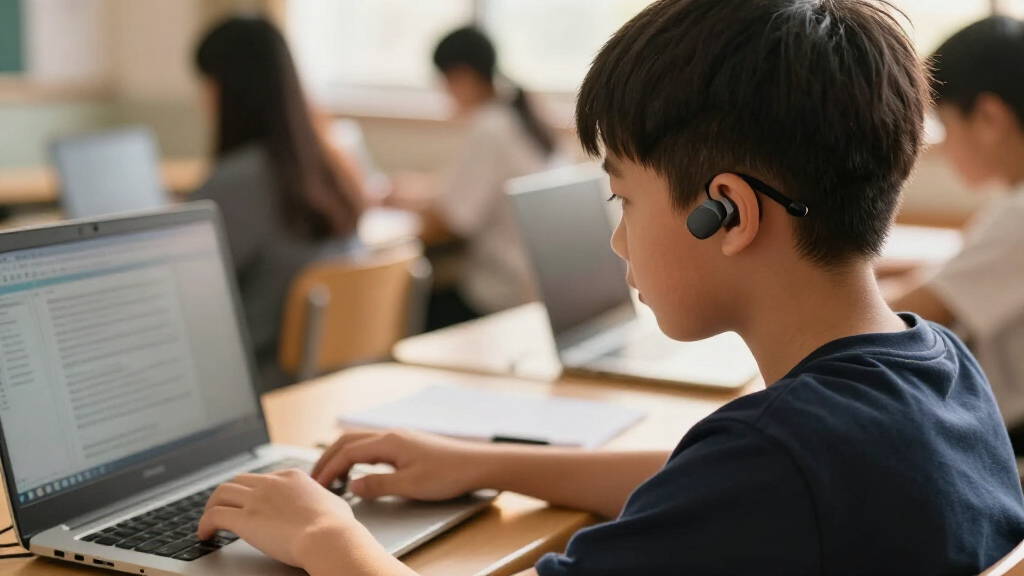
The best assistive listening devices for students must deliver clear speech without creating extra work for teachers or singling out the listener. My best overall pick is the Retekess T130S because its longer range and expanded channel capacity suit classrooms, assemblies, and multi-group school programs. The Retekess T130 offers stronger value for schools that need a ready-made package with two transmitters and 20 receivers, while the 4-Person Assistive Listening System is a more approachable starting point for tutoring and small-group support. The main choices involve receiver count, private versus shared audio, wireless range, channel management, battery demands, and compatibility with a student’s hearing equipment. Continue reading for my full breakdown of which system fits each type of student group and learning environment.

Get everyday helpers delivered free with Prime
- Fast, free delivery on millions of items
- Prime Video, Amazon Music and more included
- Member-only deals all year
Complete the kit


Key Takeaways
- The Retekess T130S ranks first because its longer range and multiple channels give schools more room to adapt than the original T130 package.
- The original Retekess T130 is the value leader: two transmitters and 20 receivers make it better equipped out of the box than many smaller starter systems.
- Large-group capacity changes the buying decision. The 30-receiver Retekess TT119 package is better suited to lectures and assemblies than systems built around a few listeners.
- Battery life can outweigh maximum range for schools using devices across a full timetable, which gives the 50-hour Retekess TT106S a distinct role.
- More advanced wireless formats are not automatically the best classroom choice. Venucast AuraPlex MX and Avantree Audiplex MX offer flexible listening options, but schools must verify device compatibility and staff readiness before paying more.
| Retekess T130 Tour Guide System with Over Ear Headphones |  | Best for Large Student Groups | Wireless Range: 164–197 ft | Transmitters: 2 | Receivers: 20 | VIEW LATEST PRICE | See Our Full Breakdown |
| Retekess TT119 Assistive Listening and Translation System |  | Best for Large Lecture Halls | Working Distance: Up to 300 m / 980 ft | Channels: 17 | Input Compatibility: XLR, AUX, RCA, USB | VIEW LATEST PRICE | See Our Full Breakdown |
| Venucast AuraPlex MX Auracast Assistive Listening System |  | Best for Auracast Hearing Aids | Transmitters: 1 | Receivers: 10 | Range: Up to 328 ft | VIEW LATEST PRICE | See Our Full Breakdown |
| Retekess T130S 2nd Gen Assistive Listening System |  | Best for Multiple Classroom Groups | Wireless Technology: 2.4 GHz | Working Range: Up to 328 ft | Channels: 49 | VIEW LATEST PRICE | See Our Full Breakdown |
| Retekess TT119 17-Channel Long-Range Assistive Listening System |  | Best for Fixed School AV Installations | Connectivity: Wireless | Transmitter Type: Desktop FM transmitter | Working Range: Up to 300 m | VIEW LATEST PRICE | See Our Full Breakdown |
| Retekess TT106S Assistive Listening System |  | Best for All-Day Campus Use | Battery Life: Up to 50 hours | Wireless Range: 200 meters / 656 feet | Battery Capacity: 450mAh | VIEW LATEST PRICE | See Our Full Breakdown |
| Avantree Audiplex MX Multi-Channel Assistive Listening System |  | Best Classroom Group Kit | Wireless Technology: 2.4GHz RF | Wireless Range: Up to 100 meters | Latency: 30ms | VIEW LATEST PRICE | See Our Full Breakdown |
| 4-Person Assistive Listening System with 3-Year Warranty and Phone Support |  | Best Supported Starter System | Base Listener Capacity: Up to 4 users | Warranty: 3 years | Customer Support: Phone support included | VIEW LATEST PRICE | See Our Full Breakdown |
| assistive listening devices for student | Channels |
|---|---|
| Retekess T130 Tour Guide Syste | — |
| Retekess TT119 Assistive Liste | 17 |
| Venucast AuraPlex MX Auracast | — |
| Retekess T130S 2nd Gen Assisti | 49 |
| Retekess TT119 17-Channel Long | 17 |
| Retekess TT106S Assistive List | 9,999 |
| Avantree Audiplex MX Multi-Cha | 2 |
| 4-Person Assistive Listening S | — |
More Details on Our Top Picks
Retekess T130 Tour Guide System with Over Ear Headphones
I rank the Retekess T130 as the strongest group-ready choice for field trips, campus tours, and lectures where many students need dedicated receivers. Its two transmitters and 20 receivers allow two instructors or interpreters to address a class, while the over-ear headphones offer more acoustic separation than the lightweight listening setups supplied with many tour systems. The charging case holds 32 devices, making storage easier for a school media department. Compared with the Retekess T130S, however, its 164–197-foot range is shorter and its manual channel adjustment feels dated. The foam must also be removed before charging, adding a repetitive setup task. I place it below newer systems for coverage, but ahead of smaller bundles when receiver count and organized transport matter most.
Pros:- Includes 20 receivers and two transmitters for full-class distribution
- Over-ear headphones help students hear speech in noisy surroundings
- Charging case stores and charges up to 32 devices
- Quick pairing keeps routine classroom setup manageable
Cons:- Shorter range than the Retekess T130S and both TT119 packages
- Manual channel adjustment can slow initial pairing
- Protective white foam must be removed before charging
Best for: Schools equipping classes of up to 20 students for guided instruction, field trips, or interpreted lessons
Not ideal for: Large campuses or outdoor programs that need coverage beyond roughly 197 feet
- Wireless Range:164–197 ft
- Transmitters:2
- Receivers:20
- Headphone Type:Over ear
- Charging Case Capacity:32 devices
- Channel Pairing:Manual adjustment with quick pairing
Our verdict“I recommend this bundle for schools that value a ready-made 20-student kit and organized charging more than maximum range.”
Retekess TT119 Assistive Listening and Translation System
The Retekess TT119 30-receiver package earns my large-lecture-hall role because it combines a 980-foot working distance with enough receivers for a sizable class. Its XLR, AUX, RCA, and USB inputs make it easier to connect a lecturer’s microphone, computer, or installed sound system than the more portable Retekess T130. With 17 channels, a school can also support parallel interpretation or separate instructional groups. Compared with the Retekess T130S, it reaches much farther and serves more listeners, but each 90-gram receiver is heavier and its rated battery life is only 10 hours versus the T130S’s stated 20 hours. Sound defaults to mono, while recording still needs an external device. I rank it highly for coverage and capacity, not for discreet wear or simple mobile teaching.
Pros:- Up to 980 feet of coverage suits large educational venues
- Thirty receivers support larger classes without another kit
- Seventeen channels accommodate separate groups or languages
- XLR, AUX, RCA, and USB inputs suit varied school AV systems
Cons:- The 90-gram receivers may feel heavy during long sessions
- Ten-hour battery rating trails the Retekess T130S
- Stereo may require adjustment, and recording needs external hardware
Best for: Universities and secondary schools serving up to 30 listeners in auditoriums, assemblies, or multilingual lectures
Not ideal for: Students who need a light receiver for all-day wear or schools seeking built-in recording
- Working Distance:Up to 300 m / 980 ft
- Channels:17
- Input Compatibility:XLR, AUX, RCA, USB
- Battery Life:Up to 10 hours
- Receiver Weight:90 g
- Receiver Count:Up to 30
Our verdict“I would choose this TT119 bundle for a large lecture space where receiver count, input flexibility, and exceptional range outweigh portability.”
Venucast AuraPlex MX Auracast Assistive Listening System
I give the Venucast AuraPlex MX the specialist slot for schools adopting Auracast-enabled hearing aids and personal devices. Its Bluetooth LE Audio broadcast can send classroom speech across 328 feet, while BYOD support reduces the number of school-owned receivers that must be issued, cleaned, and tracked. That makes it more forward-looking than the Retekess T130, whose 20 dedicated receivers create a larger equipment-management burden. The tradeoff is compatibility: students need suitable Auracast hardware to gain the system’s full benefit, and the included bundle covers only ten receiver users. Compared with the Retekess TT119, its range is much shorter and it is less dependable outdoors or through heavy obstructions. I rank it for integrated accessibility in medium classrooms, not as the safest universal choice for mixed personal-device fleets.
Pros:- Works with select Auracast-enabled hearing aids and listening devices
- BYOD support can reduce receiver distribution and hygiene work
- Bluetooth LE Audio provides stable coverage across medium venues
- Included ten receivers support students without personal compatible devices
Cons:- Full functionality depends on Auracast-compatible student hardware
- Not recommended for outdoor or heavily obstructed locations
- Designed for medium venues rather than very large halls
Best for: Schools with Auracast-enabled hearing aids or student devices that want direct Bluetooth LE Audio broadcasting
Not ideal for: Programs using older hearing aids, outdoor teaching areas, or heavily obstructed buildings
- Transmitters:1
- Receivers:10
- Range:Up to 328 ft
- Compatibility:Select Auracast hearing aids and devices
- Connectivity:Bluetooth LE Audio
- Suggested Venue Size:Seating for up to approximately 300 people
Our verdict“I see the AuraPlex MX as the best fit for an Auracast-ready school, while mixed or older hearing-aid fleets should favor a dedicated-receiver system.”
Retekess T130S 2nd Gen Assistive Listening System
The Retekess T130S takes my multi-group role because its 49 channels give schools far more room to separate nearby classes, interpreters, or tour groups than either 17-channel TT119 package. A 328-foot range and 20-hour runtime also make it better suited to a full school day than the original Retekess T130, which has shorter coverage and less detailed battery information. One-click mute and group control can reduce disruption when an instructor needs to pause or address several receivers together. This flexibility comes with more charging administration, and the 45-gram receivers are not the lightest choice for extended student wear. The complete kit is also bulky at 19.69 inches wide and about 4.7 kilograms. I rank it above the T130 for coordination and endurance, but below the TT119 when extreme distance is the deciding factor.
Pros:- Forty-nine channels reduce conflicts between nearby teaching groups
- Up to 328 feet of coverage doubles the original T130’s approximate reach
- Twenty-hour runtime supports long school days
- One-click mute and group control simplify instructor management
Cons:- Complete kit is bulkier and heavier to transport than compact systems
- Receivers may become uncomfortable during extended wear
- Charging a group set creates ongoing equipment-management work
Best for: Schools running several nearby classes, language groups, or campus tours that need separate channels and all-day battery life
Not ideal for: Single-room programs that need only a few channels or students sensitive to receiver weight
- Wireless Technology:2.4 GHz
- Working Range:Up to 328 ft
- Channels:49
- Battery Life:Up to 20 hours
- Receiver Weight:45 g
- Connectors:AUX, USB
- Compatible Devices:Laptop, smartphone, tablet
- Item Dimensions:19.69 x 5.51 x 12.28 in
- Enclosure Material:ABS
Our verdict“I favor the T130S for schools coordinating several groups at once, provided staff can manage the larger charging and transport setup.”
Retekess TT119 17-Channel Long-Range Assistive Listening System
I assign this Retekess TT119 desktop system to fixed school AV installations because its corded transmitter, audio-mixer compatibility, and 3.5 mm connection suit an auditorium booth better than a roaming instructor. The 300-meter range reaches farther than the Retekess T130S, while 17 channels and stereo support provide room for interpretation feeds or separate listener groups. Recording compatibility can also help schools capture a lecture when paired with external equipment. Portability is the clear sacrifice: at 3.86 kilograms and nearly 18 inches wide, this is less convenient for daily movement between classrooms than the 30-receiver TT119 package or the original T130 case system. Setup may challenge staff unfamiliar with mixers, and the receiver side requires an AA battery. I rank it for permanent coverage and AV integration rather than quick, teacher-led deployment.
Pros:- Up to 300 meters of transmission range covers large school venues
- Desktop transmitter integrates with an audio mixer
- Seventeen channels support interpretation or separate listening groups
- Stereo and external recording compatibility add AV flexibility
Cons:- The 3.86-kilogram system is poorly suited to frequent transport
- Mixer-based setup may be difficult for nontechnical school staff
- AA battery dependence adds replacement cost and inventory work
Best for: Schools installing a long-range listening transmitter in an auditorium, courtroom classroom, or central AV booth
Not ideal for: Teachers who must carry one system between rooms or need a simple rechargeable setup
- Connectivity:Wireless
- Transmitter Type:Desktop FM transmitter
- Working Range:Up to 300 m
- Channels:17
- Connector:3.5 mm jack
- Compatible Device:Audio mixer
- Power Source:Corded transmitter; 1 AA battery required
- Item Weight:3.86 kg
- Item Dimensions:17.91 x 12.2 x 10.63 in
Our verdict“I recommend this TT119 configuration for a permanent school AV position, while mobile instructors will be better served by the T130 or T130S.”
Retekess TT106S Assistive Listening System
I rank the Retekess TT106S as the strongest fit for field trips, campus tours, and long school events because its 50-hour battery life reduces midweek charging and its 200-meter range gives groups room to spread out. The 9,999 channels provide far more separation than the two-channel Avantree Audiplex MX, which helps when several classes or language groups operate nearby. Compared with the Retekess TT119 and its longer 300-meter reach, however, this model favors battery endurance over maximum distance. The simple controls and earhook receivers may suit students who need minimal setup, while adjustable volume supports individual listening needs. I would hesitate to choose it for lectures with extended silent periods: the 20-minute signal-loss shutdown could interrupt a session, and the supplied data offers little detail about audio fidelity in acoustically difficult classrooms.
Pros:- 50-hour battery life supports several school days between charges
- 200-meter range gives student groups considerable freedom of movement
- 9,999 channels help separate multiple classes or language teams
- One-touch controls and adjustable receiver volume reduce setup demands
Cons:- Automatic shutdown after 20 minutes without a signal may interrupt quiet sessions
- Large channel count requires organized channel assignment across groups
- Available product data gives little detail about frequency response or speech performance in noisy rooms
Best for: Schools running full-day field trips, campus tours, or multilingual events with several groups operating at once
Not ideal for: Lecture programs with long silent intervals or buyers who need documented sound-quality measurements before purchase
- Battery Life:Up to 50 hours
- Wireless Range:200 meters / 656 feet
- Battery Capacity:450mAh
- Charging Time:3 hours
- Channels:9,999
- Receiver Volume Levels:0-9
- Auto Shutdown:After 20 minutes without a signal
- Audio Input:AUX with wide device compatibility
Our verdict“I recommend the TT106S for schools that value long battery life and multi-group flexibility more than maximum range or published audio measurements.”
Avantree Audiplex MX Multi-Channel Assistive Listening System
I give the Avantree Audiplex MX the classroom-group role because its package starts with one transmitter and 10 receivers, making it more practical for a class than the four-user system below. Its 30ms latency matters when students watch a teacher, presentation, or video while listening; lower delay keeps speech closer to visible lip movement. The 100-meter range is ample for many classrooms, auditoriums, and school assemblies, though it falls well short of the Retekess TT106S and TT119. Optical, AUX, and Bluetooth compatibility also broadens the source choices available to teachers. My main reservation is capacity management: only two channels are supported, so it is less flexible than the TT106S when several groups share a building. The bundle also includes just three wired earbuds for 10 receivers, leaving schools to source compatible listening accessories for most students.
Pros:- Ten included receivers provide a practical starting capacity for classroom groups
- 30ms latency keeps amplified speech closely aligned with live instruction and video
- Individual receiver volume lets students adjust sound without changing the whole group
- Bluetooth, optical, and AUX compatibility supports varied classroom sources
Cons:- Two-channel limit restricts use when several classes or interpreters operate nearby
- 100-meter range is shorter than the Retekess TT106S and TT119
- Only three wired earbuds are supplied for 10 receivers
Best for: Teachers and accessibility coordinators equipping a small class for synchronized lessons, videos, or assemblies
Not ideal for: Large campuses that need many simultaneous language channels or a complete earbud set for every included receiver
- Wireless Technology:2.4GHz RF
- Wireless Range:Up to 100 meters
- Latency:30ms
- Channels:2
- Compatible Connections:Bluetooth, optical, and AUX
- Package Contents:1 transmitter, 10 receivers, and 3 wired earbuds
- Item Weight:1,200 g
- Power Source:Battery powered
Our verdict“I would choose the Audiplex MX for a small class that needs low-delay audio and flexible source connections, provided the school can add suitable listening accessories.”
4-Person Assistive Listening System with 3-Year Warranty and Phone Support
I place the 4-Person Assistive Listening System in the starter-system slot because its three-year warranty, phone support, and included ADA plaque address the administrative side of adding listening access to a small school venue. It is a more manageable starting point than the 10-receiver Avantree Audiplex MX or 30-receiver Retekess TT119 when only a few students need accommodation. The system can grow through extra receivers, so a resource room, school theater, or front office does not have to replace the base equipment as demand rises. That simplicity comes with a major information gap: the listing supplies no stated range, battery life, channel count, or connection standard. I would not treat it as a direct technical match for the TT106S without those details. Expansion and upgraded accessories also carry added purchase costs, weakening its value for rapidly growing programs.
Pros:- Base package supports four listeners without buying a large institutional kit
- Three-year warranty and phone support provide a clearer help path for school staff
- Included ADA plaque supports visible communication of listening assistance
- Additional receivers allow the system to grow beyond its starting capacity
Cons:- Base package serves only four listeners
- Range, battery life, channel count, and connection method are not stated
- Additional receivers, accessories, and upgraded versions require separate purchases
Best for: Small schools, resource rooms, and school theaters serving up to four listeners and prioritizing warranty coverage plus phone support
Not ideal for: District buyers who need verified range, battery, channel, and audio-connection data for a formal accessibility specification
- Base Listener Capacity:Up to 4 users
- Warranty:3 years
- Customer Support:Phone support included
- Accessibility Signage:ADA plaque included
- Expandability:Supports additional receivers
- Intended Venues:Schools, churches, theaters, and other venues
- Available Add-ons:Optional accessories and upgraded versions
Our verdict“I see this as a low-capacity, support-focused entry point for schools willing to request missing technical details before ordering.”
How We Picked
I ranked these systems around the needs that affect students during real school days: speech access, usable range, receiver capacity, channel flexibility, battery endurance, and ease of distribution. I gave extra weight to configurations that can move from a classroom to an assembly or campus activity without requiring a replacement system. Published receiver counts, stated ranges, channel totals, included transmitter quantities, mute controls, and support policies formed the basis of the comparison; I did not treat advertised maximum range as a promise of identical performance inside every building.
The order also reflects how much management each system places on school staff. A feature-rich model ranked higher when its flexibility served several student groups, but a simpler package earned a stronger role when it reduced setup or purchasing risk. I also separated value from low purchase price: included receivers, charging workload, expansion needs, and support can change the real cost. Products with a narrower audience remain in the lineup because they solve distinct problems, such as long school days, large cohorts, multi-channel programs, or small-group instruction.
Factors to Consider When Choosing Assistive Listening Devices For Students
I would choose a student listening system by starting with the learning setting, not the longest range or largest receiver bundle. The right package must fit the number of listeners, the way teachers move, the student’s hearing setup, and the staff time available for charging and distribution. The factors below help separate a practical school tool from a system that looks capable on paper but creates daily friction.
Match the Audio Path to the Student
I would begin by identifying how the student receives sound: over-ear headphones, earbuds, a neckloop, a hearing aid, or a cochlear implant accessory. A package that includes headphones may be convenient, yet its supplied earpieces may not suit sensory needs, unilateral hearing loss, or existing clinical equipment. Schools should verify connector type, output level controls, and accessory compatibility before ordering a class set. Private receiver audio can reduce distraction and protect dignity better than a shared speaker in a quiet classroom. A speaker-based option may still make sense for tutoring, small groups, or students who cannot tolerate headphones. I would also involve the student and their hearing professional when the system must connect with prescribed hearing technology.
Buy for the Actual Listener Count
Receiver bundles range from four-person kits to packages serving 20 or 30 listeners, and unused capacity still creates charging and inventory work. I would count regular users, occasional users, staff monitors, and a small pool of spares rather than buying solely for the largest possible event. A 30-receiver system can be economical for assemblies, language access, or district lending, but it may be cumbersome for one student in one classroom. Small kits are easier to label and maintain, though their per-listener cost may rise when a program expands. Check whether additional receivers can join the same transmitter and channel without replacing the core system. Expansion rules matter more than the initial bundle size when enrollment or accommodation needs may change.
Treat Advertised Range as a Ceiling
Long-range claims are usually measured under favorable conditions, while schools contain walls, metal structures, crowded hallways, and competing wireless signals. I would choose enough margin for the teacher to move around the intended space, but I would not pay for hundreds of meters solely for a standard classroom. Greater range earns its cost in auditoriums, gymnasiums, outdoor lessons, court-style rooms, and campus tours. Channel selection can matter more than distance when several classes use matching systems nearby. A short on-site trial or a seller with a workable return policy can reveal dead spots that a specification sheet cannot predict. Reliable coverage inside the room is more useful than an impressive maximum measured outdoors.
Plan Charging, Storage, and Cleaning Before Purchase
An assistive listening system only helps when every required unit is charged, assigned, and easy to find. I would map who collects the devices, where they charge, how receivers are numbered, and what happens when a unit fails during class. Long battery life reduces midweek charging pressure, but a larger fleet can still require dedicated power strips, cases, or charging stations. Shared headphones also need a cleaning routine and replaceable ear pads or tips. Schools should check charging connector availability and replacement battery policies, since small accessories often determine how long a system remains usable. A simple checkout log and labeled storage can produce more dependable access than paying for features staff rarely use.
Know When Multiple Channels Merit the Extra Cost
Multiple channels allow separate teachers, interpreters, or groups to operate nearby without sharing the same audio feed. I would pay more for this capability when a school runs parallel classes, multilingual sessions, or several supported groups in one building. A single classroom serving one student may gain little from a large channel count, and extra controls can make setup harder for substitute teachers. Channel plans should be written down so transmitters and receivers are paired consistently each day. Schools also need to check local frequency rules and whether nearby equipment uses the same band. Channel flexibility has value only when it solves a known coordination problem.
Balance Purchase Price Against Support and Replacement Costs
I define value by cost per usable listening position, not the lowest price on the product page. Included transmitters, receivers, earpieces, cases, charging hardware, warranty coverage, and phone support can alter the final spend. A premium wireless platform may be worthwhile when students can connect compatible personal devices or when the venue serves many changing audiences. A conventional receiver kit is often easier to standardize when the school owns and controls every listening unit. Beginner buyers may benefit from accessible phone support even if the kit has fewer advanced settings. Replacement availability and staff assistance can make a modest system less expensive across several school years.
Frequently Asked Questions
Should a School Choose a Personal Receiver System or a Shared Speaker?
I would favor a personal receiver when one or more students need a clearer speech signal without raising the room volume. It can reduce the effect of distance and background noise while giving each listener control over the earpiece. A shared speaker may fit tutoring, small groups, or students who dislike wearing headphones, but it does not provide the same privacy or individualized level control. Speaker output can also distract classmates or make confidential support more visible. The student’s comfort, hearing plan, and classroom acoustics should guide the choice.
Can These Systems Connect Directly to Hearing Aids or Cochlear Implants?
Some systems can work with hearing devices through a neckloop, telecoil accessory, direct audio cable, or compatible wireless receiver, but compatibility is not universal. I would not assume that an included headphone output can connect safely to every hearing aid or implant processor. Check the listening device model, required accessory, connector type, and output controls with the manufacturer or the student’s audiologist. Auracast-based systems may support compatible personal devices, yet many current hearing devices still need another receiver or accessory. Confirming the full signal path before purchase prevents an expensive package from arriving without the needed connection.
How Many Spare Receivers Should a School Buy?
I would add one or two spare receivers for a small classroom set and a larger reserve for fleets shared across departments. Spares cover discharged batteries, damaged earpieces, new students, visiting staff, and units sent for repair. Buying too many creates avoidable charging and tracking work, so the reserve should reflect how quickly replacements can be obtained. For a 20- or 30-person program, a reserve near 10 percent is a practical starting point rather than a fixed rule. Schools with slow purchasing procedures may prefer a slightly larger buffer.
Is a 300-Meter Range Necessary for Classroom Use?
For most classrooms, 300 meters is more range than the teaching space requires. The extra reach becomes useful in auditoriums, gymnasiums, outdoor lessons, field trips, or large buildings where the speaker moves far from listeners. Walls and interference can reduce real coverage, so the stated figure should be treated as a best-case maximum. I would place channel stability, clear controls, and dependable room coverage ahead of the largest number on the box. A shorter-range system with easier daily management may serve a single classroom better.
What Should a School Trial Before Ordering a Full Class Set?
I would trial speech clarity from the student’s normal seat, coverage while the teacher moves, headset comfort, volume adjustment, and resistance to nearby wireless interference. Staff should also practice pairing units, muting the transmitter, changing channels, charging devices, and recovering from an accidental setting change. The trial should include a busy lesson rather than only an empty room, since student movement and background noise affect usability. Ask the student whether the device feels discreet and whether wearing it causes fatigue or sensory discomfort. A small pilot can expose compatibility and workflow problems before they are multiplied across 20 or 30 receivers.
Conclusion
For most schools, I would choose the Retekess T130S as the best overall option because its longer range and multiple channels offer the strongest balance of flexibility and room to grow. The Retekess T130 is my best-value pick for buyers who want two transmitters and 20 receivers in a defined package, while the Venucast AuraPlex MX is the premium choice for institutions ready to adopt Auracast and verify compatibility. Beginners and small tutoring groups should start with the 4-Person Assistive Listening System, where the three-year warranty and phone support reduce setup risk. For specific needs, I would select the 30-receiver Retekess TT119 for large cohorts, the 17-channel TT119 for long-range multi-group use, the TT106S for long school days, and the Avantree Audiplex MX when multi-channel listening is the main priority. The final choice should follow the student’s audio connection, the daily listener count, and the staff workflow that will keep the system ready for every lesson.
Fall Picks
fall essentials
As an affiliate, we earn on qualifying purchases.