
For a broad home alert system, I’d start with the Sonic Alert HomeAware II Basic Starter Kit; its starter-system approach is more versatile than a single-purpose strobe. The Wireless Doorbell with Flashing Light and Three Plug-In Receivers is a straightforward choice for door alerts around the home, while the First Alert BRK 7030BSL is the focused pick for smoke and carbon monoxide warnings. The main tradeoff is between a dedicated alert for one source and a system that can cover multiple locations or alert types. Wiring, receiver placement, and compatibility also affect which option makes sense. Read on for the full comparison and guidance on choosing flashing strobe lights for deaf alerts.

Get everyday helpers delivered free with Prime
- Fast, free delivery on millions of items
- Prime Video, Amazon Music and more included
- Member-only deals all year
Key Takeaways
- The HomeAware II kit stands apart for broader alert coverage; most other picks focus on a doorbell, telephone, or smoke and carbon monoxide detection.
- The 7030BSL and SLED177 hardwired lights serve different roles: one combines a strobe with a smoke and carbon monoxide alarm, while the other is a standalone strobe light.
- Plug-in doorbell kits prioritize simpler setup and receiver placement, but they do not replace alerts for phones or household emergencies.
- The two Krown phone flashers are specialized choices; they make the most sense when a landline is the alert source, not as general-purpose home signaling systems.
- Several products have similar names but different functions: check whether a listing is a full alarm, a standalone strobe, or a transmitter-and-receiver kit before choosing.
| First Alert BRK 7030BSL Hardwired Smoke and Carbon Monoxide Alarm with LED Strobe | 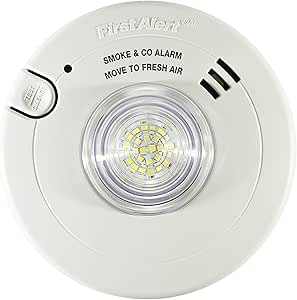 | Best Integrated Smoke and CO Alert | Model: 7030BSL | Alarm type: Smoke and carbon monoxide combination alarm | Power source: Corded electric; hardwired | VIEW LATEST PRICE | See Our Full Breakdown |
| Security2020 WC180 Wireless Door Chime with Flashing Strobe Light |  | Best Expandable Door Alert | Model: WC180 | Wireless range: Up to 600 feet | Sound level: Product details list both 92 dB and 95 dB | VIEW LATEST PRICE | See Our Full Breakdown |
| BRK Electronics SLED177 LED Strobe Light |  | Best Standalone Outdoor Strobe | Model: SLED177 | Light source: LED | Wattage: 4.5 watts | VIEW LATEST PRICE | See Our Full Breakdown |
| Sonic Alert HomeAware II Basic Starter Kit |  | Best Multi-Sensory Home Alert System | Model: HA360MBK | Power source: Corded electric | Sensor type: Acoustic | VIEW LATEST PRICE | See Our Full Breakdown |
| Wireless Doorbell with Flashing Light, 1 Button and 3 Plug-In Receivers |  | Best for Whole-Home Doorbell Coverage | Included units: 1 button and 3 plug-in receivers | Wireless range: Up to 1,200 feet in open areas | Chimes: 36 | VIEW LATEST PRICE | See Our Full Breakdown |
| Wireless Flashing Doorbell Kit with 2 Transmitters and 3 Receivers |  | Best for Multi-Room Door Alerts | Manufacturer: HSYIJIA | Model: A201 | Transmitters: 2 | VIEW LATEST PRICE | See Our Full Breakdown |
| Krown Phone Strobe Flasher |  | Best for Battery-Free Phone Alerts | Power source: Phone line | Battery required: No | Compatibility: Some PBX systems and video phone equipment | VIEW LATEST PRICE | See Our Full Breakdown |
| Krown Phone Flasher (LED) |  | Best for PSTN Telephone Call Alerts | Brand: Krown Manufacturing | Model: KRN-PF200 | Power source: Corded electric | VIEW LATEST PRICE | See Our Full Breakdown |
| First Alert SLED177 Hardwired LED Strobe Light for Hearing-Impaired Residents |  | Best for Integrated Home Safety Alerts | Model: SLED177 | Light source: LED | Power source: Hardwired | VIEW LATEST PRICE | See Our Full Breakdown |
| flashing strobe lights for deaf alert | Model | Power source |
|---|---|---|
| First Alert BRK 7030BSL Hardwi | 7030BSL | Corded electric; hardwired |
| Security2020 WC180 Wireless Do | WC180 | — |
| BRK Electronics SLED177 LED St | SLED177 | Battery powered |
| Sonic Alert HomeAware II Basic | HA360MBK | Corded electric |
| Wireless Doorbell with Flashin | D157-1T3 3.0 | — |
| Wireless Flashing Doorbell Kit | A201 | — |
| Krown Phone Strobe Flasher | — | Phone line |
| Krown Phone Flasher | KRN-PF200 | Corded electric |
| First Alert SLED177 Hardwired | SLED177 | Hardwired |
More Details on Our Top Picks
First Alert BRK 7030BSL Hardwired Smoke and Carbon Monoxide Alarm with LED Strobe
For a deaf or hard-of-hearing household choosing a life-safety alert, the 7030BSL pairs smoke and carbon monoxide detection with an integrated LED strobe, rather than relying on a separate alert accessory. Its 10-year battery backup adds a layer of protection if household power is interrupted. Compared with the Sonic Alert HomeAware II Basic Starter Kit, this alarm detects smoke and CO itself; the Sonic Alert system listens for compatible alarms and adds bed-shaker and text alerts. The tradeoff is installation: this model is hardwired, so it is not a simple plug-in or portable strobe. Product details also conflict on strobe output, listing both 77 and 177 candela, so I would not choose it based on a presumed intensity. It is a focused alarm upgrade, not a general-purpose door or phone signaler.
Pros:- Detects smoke and carbon monoxide in one alarm
- Integrated LED strobe provides a visual alert
- 10-year battery backup
- Photoelectric sensor
Cons:- Hardwired installation limits placement and may require an electrician
- Product details conflict on strobe intensity, listing 77 and 177 candela
- Does not provide the bed-shaker or text alerts offered by the Sonic Alert HomeAware II system
Best for: Homeowners replacing or adding a hardwired smoke-and-CO alarm who need an integrated visual alert and backup power.
Not ideal for: Renters or buyers seeking a portable, plug-in alert for doorbells, phone calls, or rooms without compatible hardwiring.
- Model:7030BSL
- Alarm type:Smoke and carbon monoxide combination alarm
- Power source:Corded electric; hardwired
- Backup power:10-year battery backup
- Sensor:Photoelectric
- Strobe:LED; listed as 77 and 177 candela in product details
- Dimensions:2.5 × 5.4 × 6.8 inches
- Warranty:10-year limited warranty
Our verdict“Choose this if you need a hardwired smoke-and-CO alarm with an integrated strobe, but skip it for a portable or multi-signal alert system.”
Security2020 WC180 Wireless Door Chime with Flashing Strobe Light
The WC180 suits buyers who want a doorbell signal that can be seen or heard, with the choice to mute sound through its strobe-only mode. Its receiver offers 58 melodies and adjustable volume, while the system can take additional buttons and receivers as household needs change. Against the Wireless Doorbell with Flashing Light and three receivers, this kit is more appealing when expandability and melody choice matter; the other bundle starts with more receivers already included. The WC180’s stated range reaches up to 600 feet, shorter than that doorbell’s open-area claim of 1,200 feet. Those figures are not directly comparable in every home, since walls and layout affect wireless signals. The receiver also needs an outlet, and the sound specification is inconsistent between 92 and 95 dB.
Pros:- Strobe-only mode allows a silent door alert
- 58 selectable melodies and adjustable volume
- Expandable with additional buttons and receivers
- Includes a push button, receiver, battery, and mounting hardware
Cons:- Receiver requires a plug-in outlet
- Sound level is listed as both 92 dB and 95 dB
- Stated range is up to 600 feet, below the other doorbell’s open-area claim
Best for: Households that want a customizable door alert with a visible strobe, adjustable sound, and the option to add receivers or buttons.
Not ideal for: Buyers who need a battery-powered receiver, several receivers included from the start, or a product with one clearly stated sound-level figure.
- Model:WC180
- Wireless range:Up to 600 feet
- Sound level:Product details list both 92 dB and 95 dB
- Melodies:58 selectable
- Alert modes:Includes strobe-only mode
- Expandability:Supports additional buttons and receivers
- Included components:Receiver, push button, battery, and mounting hardware
- Certification:UL Listed
Our verdict“Pick the WC180 for a customizable, expandable door alert, but choose the three-receiver doorbell if you need coverage in multiple rooms right away.”
BRK Electronics SLED177 LED Strobe Light
The SLED177 is the most specialized option here: it is a standalone LED strobe, not a doorbell kit or an alarm that detects hazards. Its waterproof construction and 4.5-watt light source make it the clearest fit when a strobe needs to be installed where weather exposure is a concern. Unlike the First Alert BRK 7030BSL, it does not combine the visual signal with smoke or carbon monoxide detection; unlike the WC180, it is not described as a wireless receiver paired with a door button. Buyers will need to plan the power and alert connection around their setup. The product data says it is battery powered but also lists 12 volts, without clarifying battery type or runtime. The unusually stated weight and large dimensions also deserve verification before purchase.
Pros:- Waterproof design supports outdoor placement
- 4.5-watt LED strobe light source
- Standalone light can suit an existing alert setup
- Single-light design avoids adding an unnecessary multi-unit kit
Cons:- Does not include smoke or CO detection, a door button, or a receiver system
- Battery life and battery details are not specified
- Listed 12-volt rating and unusually stated weight and dimensions may need confirmation
Best for: Buyers who already have an alert system and need a separate waterproof LED strobe for an indoor or outdoor installation.
Not ideal for: Anyone seeking a complete deaf-alert system, a doorbell transmitter, hazard detection, or clearly specified battery runtime and installation details.
- Model:SLED177
- Light source:LED
- Wattage:4.5 watts
- Voltage:12 volts
- Power source:Battery powered
- Water resistance:Waterproof
- Dimensions:6 × 9 × 9 inches
- Weight:Listed as 0.27 g
Our verdict“Choose this as a separate waterproof strobe for a system you already own, not as a complete alert solution.”
Sonic Alert HomeAware II Basic Starter Kit
The HomeAware II is the strongest fit for buyers who need more than a flashing light: it combines a strobe, bed shaker, audio tones, and scrolling text. It can also show cellphone calls and texts through its app and alert for incoming landline calls, giving it broader household coverage than the door-focused WC180. Its key limitation is easy to miss: this system does not detect smoke or carbon monoxide. It listens for patterns from compatible alarms, so correct placement in the same room and regular testing matter. By contrast, the First Alert BRK 7030BSL is a smoke-and-CO detector with its own integrated strobe, but it does not offer this system’s range of alert types. The HomeAware II therefore makes most sense as an alerting hub paired with compatible devices, not as a replacement for them.
Pros:- Combines flashing light, bed shaker, audio tones, and scrolling text
- Can display cellphone calls and texts through the HomeAware app
- Supports incoming landline call alerts
- Rechargeable battery backup helps during power outages
Cons:- Does not detect smoke or carbon monoxide itself
- Must be placed in the same room as the existing alarm and tested regularly
- More involved setup than a simple doorbell strobe such as the WC180
Best for: Deaf or hard-of-hearing households seeking visual, vibration, text, and phone-call alerts from compatible alarms and connected devices.
Not ideal for: Buyers who need a standalone smoke-and-CO detector or cannot place and regularly test the unit near a compatible alarm.
- Model:HA360MBK
- Power source:Corded electric
- Sensor type:Acoustic
- Connectivity:Bluetooth
- Alert types:Flashing strobe, bed shaker, audio tones, and scrolling text
- Phone alerts:Cellphone calls and texts through the HomeAware app; incoming landline calls
- Dimensions:5 × 6 × 6.5 inches
- Weight:1.8 lb
Our verdict“Choose the HomeAware II when you want layered alerts across compatible alarms, phones, and calls, but pair it with proper smoke and CO detection.”
Wireless Doorbell with Flashing Light, 1 Button and 3 Plug-In Receivers
This kit’s main advantage is coverage inside the home: three plug-in receivers let a door alert reach multiple rooms without buying extra receivers first. Its three modes—ringing, flashing, or both—make it adaptable for deaf and hard-of-hearing users, while four volume settings include a silent option. Compared with the Security2020 WC180, this bundle arrives with more receivers and claims up to 1,200 feet in open areas, though that range is not a promise for a home with walls and interference. The WC180 offers more melodies and expandable components, so it may suit buyers planning a customizable setup better. This product includes 36 chimes, but its receivers need outlets, and the push-button battery will eventually need replacement.
Pros:- Three receivers can cover different rooms
- Flashing-only, ringing-only, and combined alert modes
- Four volume levels, including silent
- Includes 36 chimes and an IP44-rated button
Cons:- Receivers require plug-in outlets
- The 1,200-foot range applies to open areas, not necessarily a typical home
- Included CR2032 button battery needs replacement when depleted
Best for: Households that want a visible doorbell alert in several rooms using the three included plug-in receivers.
Not ideal for: Buyers who need a portable receiver, a fully specified indoor range, or a system centered on more melodies and future add-ons.
- Included units:1 button and 3 plug-in receivers
- Wireless range:Up to 1,200 feet in open areas
- Chimes:36
- Volume levels:4, including silent
- Alert modes:Ringing only, flashing only, or ringing with flashing
- Button battery:1 included CR2032
- Model:D157-1T3 3.0
Our verdict“Choose this kit for ready-made flashing doorbell coverage across several rooms, but favor the WC180 if expandability and melody selection matter more.”
Wireless Flashing Doorbell Kit with 2 Transmitters and 3 Receivers
For a household that needs a doorbell signal in several rooms, this kit’s two transmitters and three receivers offer broader coverage than either Krown phone flasher, which alerts only to incoming calls. Its seven-color flashing lights make the alert visually distinct, while four volume levels let hearing household members add sound if useful. The stated 600-foot wireless range may suit larger homes, though walls and layout can affect real-world reach. Installation offers a choice of adhesive tape or screws, but the battery setup is a real tradeoff: the system needs 11 AA batteries, which are not included, and stated battery life is three to five months. I’d choose this for flexible room coverage, not for low-maintenance operation or smoke and carbon monoxide warnings like the First Alert SLED177.
Pros:- Two transmitters and three receivers can cover multiple entry points and rooms
- Seven light colors offer visible alert choices
- Four volume levels add flexibility for hearing household members
- Transmitters can be attached with adhesive tape or screws
Cons:- Requires 11 AA batteries, which are not included
- Stated battery life of three to five months means recurring replacements
- Doorbell alerts do not provide the smoke or carbon monoxide warning function of the First Alert SLED177
Best for: Households that want visible doorbell alerts in multiple rooms and can manage regular battery replacement.
Not ideal for: Buyers seeking a battery-free alert system, emergency alarm signaling, or a setup with a single receiver.
- Manufacturer:HSYIJIA
- Model:A201
- Transmitters:2
- Receivers:3
- Volume levels:4
- Light colors:7
- Stated wireless range:Up to 600 feet
- Power:11 AA batteries, not included
Our verdict“Choose this kit for multi-room visual doorbell alerts if you accept the ongoing battery upkeep.”
Krown Phone Strobe Flasher
This is the most focused pick here: it turns an incoming phone call into a visible strobe alert without batteries or a separate power supply, drawing power from the phone line. That makes it simpler to maintain than the Wireless Flashing Doorbell Kit, but it does not alert to someone at the door or cover several rooms through multiple receivers. Its dome-shaped lens spreads the flash, which may make the signal easier to notice than a small point of light. The main limitation is compatibility: it works with some PBX systems and video phone equipment, not every phone setup. Compared with the Krown Phone Flasher (LED), the product details here emphasize phone-line power and dome-shaped light distribution rather than PSTN network connection requirements. Check system compatibility before choosing it; the included one-year limited warranty adds a defined support period.
Pros:- Uses phone-line power, so it needs no batteries or separate power supply
- Dome shape spreads the flash for a visible incoming-call signal
- Lightweight design is described as easy to install
- Includes a one-year limited warranty
Cons:- Compatibility is limited to some PBX systems and video phone equipment
- Signals phone calls only, unlike the Wireless Flashing Doorbell Kit’s entry alerts
- Does not include multiple receivers for distributing alerts around a home
Best for: Deaf or hard-of-hearing phone users with a compatible PBX or video phone system who want a call alert without battery upkeep.
Not ideal for: People who need a doorbell alert, use an incompatible phone system, or want a multi-room receiver network.
- Power source:Phone line
- Battery required:No
- Compatibility:Some PBX systems and video phone equipment
- Light design:Dome-shaped
- Installation:Described as lightweight and easy to install
- Warranty:1-year limited
Our verdict“Pick this for battery-free visual call alerts only if your PBX or video phone setup is compatible.”
Krown Phone Flasher (LED)
For a standard PSTN telephone, this corded Krown unit offers a straightforward way to turn incoming calls into a visual alert without batteries. It connects between the telephone and wall jack, making its intended use clearer than the other Krown Phone Strobe Flasher, whose compatibility is described around some PBX and video phone systems. The listed 75 V minimum operating voltage is a practical constraint: buyers should check that their telephone line meets the requirement rather than assume every setup will work. At just 3.2 ounces, it is lighter than the multi-receiver wireless doorbell kit, but it is still a phone alert, not a doorbell or emergency strobe. The wall-mount design also suits a fixed location better than a portable signal. I’d choose it for PSTN call visibility, not broader household alert coverage.
Pros:- Provides a visible signal for incoming telephone calls
- Requires no batteries
- Lightweight at 3.2 ounces
- Wall-mount design supports a fixed installation
Cons:- Requires at least 75 V to operate properly
- Designed for PSTN telephone networks rather than universal phone compatibility
- Alerts to calls only, unlike the multi-entry Wireless Flashing Doorbell Kit
Best for: PSTN telephone users with hearing impairments who want a fixed visual call alert and can confirm the line meets the operating requirement.
Not ideal for: People using PBX or non-PSTN systems, or anyone needing doorbell, smoke, or carbon monoxide alerts.
- Brand:Krown Manufacturing
- Model:KRN-PF200
- Power source:Corded electric
- Compatible devices:PSTN telephone networks
- Mounting type:Wall mount
- Minimum operating voltage:75 V
- Item weight:3.2 ounces
- Certification:FCC compliant
Our verdict“Choose this lightweight Krown flasher for a compatible PSTN line, but skip it if you need alerts beyond telephone calls.”
First Alert SLED177 Hardwired LED Strobe Light for Hearing-Impaired Residents
Unlike the Krown phone flashers and wireless doorbell kit, the First Alert SLED177 is designed to provide a visual warning from compatible smoke or heat and carbon monoxide alarms. That makes it the most safety-focused option in this group, rather than a general-purpose signal for calls or visitors. When used with compatible alarms, it can distinguish between alarm types, and compatible interconnected units can flash in synchronization across a larger installation. The slim light mounts on a ceiling or wall, but this is not a plug-in accessory: its 120-volt hardwired installation may require electrical work. Interconnection is also limited to compatible First Alert or BRK alarms, so it is a poor fit for homes with other alarm systems. I’d prioritize this for accessible life-safety signaling, while choosing the wireless doorbell kit for everyday visitor alerts.
Pros:- Provides a visual warning for residents with hearing impairments
- Can distinguish smoke or heat alerts from carbon monoxide alerts with compatible alarms
- Compatible units can flash in synchronization
- Slim design supports ceiling or wall mounting
Cons:- Requires hardwired 120-volt installation
- Interconnection requires compatible First Alert or BRK alarms
- Does not replace a doorbell or telephone flasher for everyday incoming alerts
Best for: Deaf or hard-of-hearing residents planning a compatible First Alert or BRK alarm system with synchronized visual safety alerts.
Not ideal for: Renters, buyers who need a portable or battery-powered alert, or households with incompatible smoke and carbon monoxide alarms.
- Model:SLED177
- Light source:LED
- Power source:Hardwired
- Voltage:120 volts
- Mounting:Ceiling or wall
- Special features:Smart strobe, interconnectivity, synchronized flashing
- Maximum interconnected devices:Up to 18
- Item weight:8.16 ounces
Our verdict“Choose the SLED177 for visual life-safety alerts in a compatible hardwired alarm system, not as a general doorbell strobe.”

How We Picked
I compared these nine products by the alert source they serve, how the alert reaches the user, and how much of a home they can reasonably cover. I gave more weight to options that match a clear need—such as smoke and carbon monoxide detection, door alerts, or phone alerts—than to a strobe feature on its own. I also considered setup demands, including hardwiring, plug-in receivers, transmitters, and the need to check system compatibility.
The ranking favors useful coverage and a clear role over a narrow device that only works for one alert source. That puts the HomeAware II kit ahead for buyers seeking a broader system, while specialized alarms and doorbell kits rank well for people with a specific need. I treat similarly named products as separate choices because a standalone strobe is not interchangeable with a complete alarm or a multi-receiver kit. A product may be a poor fit if it does not cover the alert sources or rooms a buyer needs.
| flashing strobe lights for deaf alert | Power source |
|---|---|
| First Alert BRK 7030BSL Hardwi | Corded electric; hardwired |
| Security2020 WC180 Wireless Do | — |
| BRK Electronics SLED177 LED St | Battery powered |
| Sonic Alert HomeAware II Basic | Corded electric |
| Wireless Doorbell with Flashin | — |
| Wireless Flashing Doorbell Kit | — |
| Krown Phone Strobe Flasher | Phone line |
| Krown Phone Flasher | Corded electric |
| First Alert SLED177 Hardwired | Hardwired |
Factors to Consider When Choosing Flashing Strobe Lights For Deaf Alerts
Choosing a strobe is only part of building a dependable alert setup. I’d start with the events you need to notice, then check how each signal reaches the rooms where you spend time. The right balance of coverage, installation, and alert-source compatibility matters more than choosing the kit with the most visible features.
Match the device to the alert source
List the events you need to notice: smoke or carbon monoxide, someone at the door, or an incoming phone call. A smoke alarm with a strobe addresses a different risk from a doorbell receiver, even if both flash. A phone flasher will not help with visitors unless it also connects to a doorbell system. One common mistake is buying a general-looking strobe without checking what triggers it. If you need coverage for several sources, look for a system designed to connect those sources rather than assuming separate products will communicate. Prioritize life-safety alerts before convenience alerts.
Plan coverage room by room
Count the rooms and locations where you need to see an alert, including bedrooms and spaces with closed doors. A multi-receiver kit can spread a door signal around a home, while one hardwired strobe serves only its installed location unless paired with other equipment. A bright flash in a hallway may not be visible from a bedroom or a sunny room. Before buying, map where receivers can plug in and whether a transmitter can reach them through walls. Avoid assuming that a stated wireless range will match your home; building materials and layout can affect reception. Add receivers or alerts only where they solve a specific coverage gap.
Choose installation that fits the home
Hardwired products can suit a planned installation or a compatible existing setup, but they may call for electrical work or professional help. Plug-in receivers are easier to reposition and often simpler to set up, though they occupy outlets and depend on suitable locations. Battery-powered transmitters can offer placement flexibility, but their batteries need periodic attention. Check what installation steps and power sources the complete system requires rather than judging by the strobe alone. Renters may favor portable options they can take with them, while homeowners planning a permanent alert setup may accept wiring work. If you are unsure about electrical compatibility, ask a qualified installer before buying.
Check compatibility before adding devices
A separate strobe, transmitter, and receiver do not automatically work together just because they are all alert products. Confirm whether the device requires a particular alarm, doorbell, telephone connection, or matching receiver. This matters most when expanding a system later: a receiver from one kit may not pair with a different brand or product family. Read the setup details for each component and confirm what is included, since a standalone light is not the same purchase as a complete alert kit. If you already own equipment, record its exact model number before shopping. That small check can prevent buying a device that cannot be triggered by your existing setup.
Treat visual alerts as part of a safety plan
A flashing light can make an alert visible, but it may be missed if you are asleep, facing away, or outside its line of sight. Consider how you will receive urgent warnings at night and in rooms where a strobe is not visible. Follow the smoke and carbon monoxide alarm maker’s installation and maintenance instructions, and do not replace required alarms with a standalone strobe. Check applicable local requirements and seek qualified advice when setting up life-safety equipment. For door or phone alerts, think about what should happen if power or wireless communication fails. A layered alert plan is more dependable than relying on one light in one location.
Frequently Asked Questions
Can a standalone strobe light alert me to smoke or carbon monoxide?
Only if it is connected to a compatible alarm or system that detects those hazards. A standalone strobe such as the BRK SLED177 is not a substitute for a smoke or carbon monoxide detector. Check the product documentation for supported alarms and connection requirements before treating it as part of a safety setup. The 7030BSL combines detection and a strobe, but installation and maintenance still need to follow its instructions. Keep the alert visible from the places where you need to notice it.
Should I choose a doorbell kit with multiple receivers or a broader alert system?
Choose a multi-receiver doorbell kit if your main need is to see a visitor alert in several rooms. A broader system is a better match if you also need alerts from other sources, such as a phone or household alarm. Do not assume that a doorbell kit can accept those additional signals; check compatibility and supported transmitters. Multiple receivers improve placement options, but they do not automatically expand the types of alerts the kit handles. Base the decision on which events you need to notice, not just the number of components.
Do Krown phone flashers work with mobile phones?
The Krown Phone Strobe Flasher and Krown Phone Flasher (LED) are phone-alert products, so check their connection requirements before buying. A product designed for a traditional telephone line may not respond to a mobile phone without a compatible adapter or separate system. Confirm the phone type, connector, and any required accessories in the product details. If your main alert source is a smartphone, choose equipment that explicitly supports that setup rather than relying on a name that says “phone.” Ask the manufacturer if the connection details are unclear.
Is a hardwired strobe better than a plug-in receiver?
Neither is automatically better; the right choice depends on installation and where you need the alert. A hardwired strobe can suit a permanent, compatible setup, but installation may be more involved. Plug-in receivers are easier to move between outlets, though outlet locations and wireless reception can limit placement. For a safety alert, confirm that the strobe is connected to the right alarm and installed as directed. If wiring changes are needed, get qualified help instead of adapting the device yourself.
What should I buy if I need visual alerts for both visitors and emergencies?
Start by separating convenience alerts from life-safety alerts: a doorbell kit handles visitors, while a smoke and carbon monoxide alarm addresses hazards. A broader system such as the HomeAware II starter kit may suit buyers seeking coverage beyond a single alert source, but verify which devices it supports and what is included. Do not assume a doorbell receiver will display an alarm signal or that a standalone strobe detects hazards. Map the rooms where you need to see each alert and check compatibility before combining products. Keep dedicated safety alarms in place and follow their installation and maintenance directions.
Conclusion
Best overall: I’d choose the Sonic Alert HomeAware II Basic Starter Kit for buyers who want a broader alert-system starting point, after checking supported devices and coverage needs. Best value: the Wireless Doorbell with Flashing Light and Three Plug-In Receivers suits shoppers who need door alerts in several rooms without seeking phone or emergency coverage. Best premium: the First Alert BRK 7030BSL is the focused pick for buyers who want smoke and carbon monoxide detection paired with a strobe. Best for beginners: a plug-in wireless doorbell kit is a practical first step when the need is limited to visitors and the setup matches the home. Best for specific needs: choose a Krown phone flasher for a compatible landline alert, or the hardwired SLED177 for a compatible installation that needs a standalone visual alert. I’d make the final choice by matching the alert source first, then checking room coverage, installation, and compatibility.
Halloween Picks
halloween
As an affiliate, we earn on qualifying purchases.