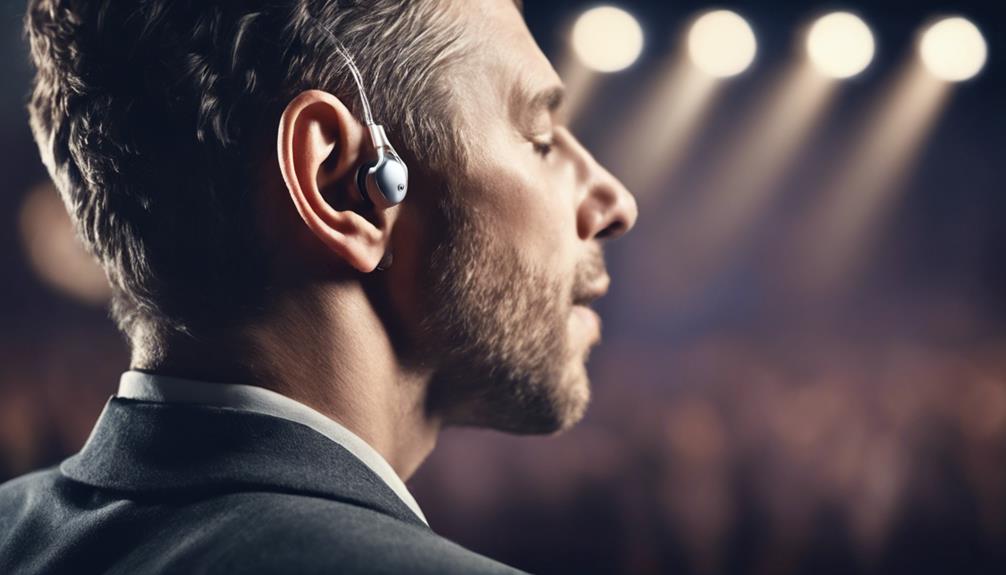
Examples of assistive listening devices range from simple personal sound amplifiers to multi-receiver systems for churches and group events. My best overall pick is the Avantree Audiplex MX, which suits venues that need flexible, multi-channel listening; for a church considering newer broadcast technology, the Avantree AuraPlex MX is a standout, while the Williams Sound Pocketalker Ultra Duo is a more direct choice for one-to-one conversations. The main tradeoffs are personal portability versus shared coverage, and straightforward setup versus support for multiple listeners or channels. A device that helps one person hear a nearby speaker may not work well across a room or for a congregation. Read on for all 14 examples and how I’d match them to different listening needs.

Get everyday helpers delivered free with Prime
- Fast, free delivery on millions of items
- Prime Video, Amazon Music and more included
- Member-only deals all year
Key Takeaways
- Venue size and listener count drive the biggest differences. Multi-receiver options such as the Avantree Audiplex M3 and Retekess TT119 are built for group use, while Pocketalker and SuperEar models focus on personal listening.
- Auracast systems address a different need than conventional receiver kits. The Avantree and Venucast AuraPlex models suit churches exploring broadcast listening, while traditional systems provide dedicated receivers for people who need them.
- One-to-one conversation devices prioritize proximity. The ConvoAssist and voice-enhancement amplifiers are designed around nearby speech, not coverage across a hall.
- Included listening accessories affect usability. The Pocketalker Ultra Duo includes both headphones and an earbud, while the Retekess T130 pairs its system with bone-conduction headphones for users who prefer that listening style.
- More channels and receivers add flexibility but also setup work. Multi-channel and multi-user systems offer broader event support than personal amplifiers, but buyers should plan for charging, distribution, and operation.
| Avantree AuraPlex MX Auracast Assistive Listening System for Churches |  | Best for Auracast-Ready Venues | Supported standards: Auracast, Bluetooth LE Audio | Included equipment: 1 transmitter, 10 clip-on receivers | Coverage: Up to 328 ft (100 m) line of sight | VIEW ON AMAZON | See Our Full Breakdown |
| ConvoAssist Personal Sound Amplifier – Wireless Conversation Listening Device with Dual Wireless Microphones & Rechargeable Case |  | Best for Following Two Speakers | Microphones: Two wireless clip-on microphones | Wireless range: Up to 100 ft | Battery life: Up to 8 hours per charge | VIEW ON AMAZON | See Our Full Breakdown |
| Avantree Audiplex MX Multi-Channel Assistive Listening System |  | Best for Two-Group RF Listening | Connectivity: 2.4G RF | Included equipment: 1 transmitter, 10 clip-on receivers | Channels: 2 | VIEW ON AMAZON | See Our Full Breakdown |
| Avantree Audiplex M3 Multi-Channel Assistive Listening System with Transmitter and 3 Receivers |  | Best for Multi-Channel Flexibility | Channels: Up to 4 | Latency: 30 ms | Wireless range: Up to 100 m (328 ft) | VIEW ON AMAZON | See Our Full Breakdown |
| Williams Sound Pocketalker Ultra Duo Sound Amplifier with Headphone and Earbud |  | Best for Simple One-to-One Listening | Amplification gain: 20–40 dB | Power source: Two AAA batteries | Battery life: Up to 100 hours | VIEW ON AMAZON | See Our Full Breakdown |
| 4-Person Assistive Listening System with 3-Year Warranty and ADA Plaque |  | Best for Small Venues Seeking Support | Capacity: 4 people | Warranty: 3 years | Support: US-based phone support | VIEW ON AMAZON | See Our Full Breakdown |
| Venucast AuraPlex M3 Auracast Assistive Listening System for Churches |  | Best for Auracast-Compatible Venues | Model: BTTC-500K / AuraPlex M3 | Connectivity: Auracast, Bluetooth | Range: 100 meters | VIEW ON AMAZON | See Our Full Breakdown |
| Williams Sound Pocketalker Ultra Hearing Amplifier |  | Best for Simple Personal Listening | Power source: Alkaline batteries | Form factor: Body-worn | Audio sensitivity: 40 dB | VIEW ON AMAZON | See Our Full Breakdown |
| Reizen Loud Ear 110dB Gain Personal Amplifier |  | Best Compact Personal Amplifier | Sensitivity: 110 dB ±3 dB per mW | Frequency range: 20 Hz–20 kHz | Battery life: Approximately 48 hours | VIEW ON AMAZON | See Our Full Breakdown |
| Retekess TT119 Assistive Listening System, Church Translation (1 TX + 10 RX) |  | Best for Large, Multichannel Venues | Included system: 1 transmitter and 10 receivers | Range: Up to 300 meters | Channels: Up to 17 | VIEW ON AMAZON | See Our Full Breakdown |
| Personal Sound Amplifier for Seniors with Voice Enhancement and Adjustable Microphones | 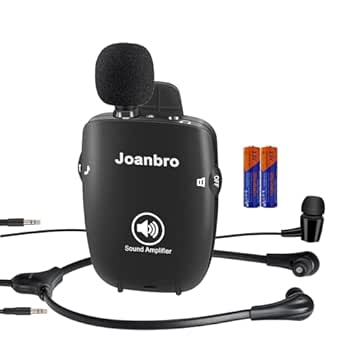 | Best for Flexible Listening | Gain: 50 dB | Total gain: Up to 108 dB | Microphone types: 3: standard, extension cable, and long-distance | VIEW ON AMAZON | See Our Full Breakdown |
| Bluetooth Hearing Amplifiers for Seniors and People with Hearing Impairments |  | Best Rechargeable In-Ear Option | Connectivity: Bluetooth | Fit: In-ear | Battery capacity: 400 mAh | VIEW ON AMAZON | See Our Full Breakdown |
| Retekess T130 Assistive Listening System with Bone Conduction Headphones |  | Best for Group and Venue Listening | Receivers: 15 | Transmitter channels: Up to 99 | Range: Up to 200 meters | VIEW ON AMAZON | See Our Full Breakdown |
| SuperEar SE5000 Hearing Amplifier for Seniors, Sound Amplifier, Headphones |  | Best for Simple Everyday Amplification | Amplification: 50+ dB | Battery life: Up to 30 hours | Power source: 1 AAA battery | VIEW ON AMAZON | See Our Full Breakdown |
| assistive listening devices example | Battery life | Power source |
|---|---|---|
| Avantree AuraPlex MX Auracast | — | — |
| ConvoAssist Personal Sound Amp | Up to 8 hours per charge | Rechargeable lithium polymer |
| Avantree Audiplex MX Multi-Cha | — | Battery powered |
| Avantree Audiplex M3 Multi-Cha | — | — |
| Williams Sound Pocketalker Ult | Up to 100 hours | Two AAA batteries |
| 4-Person Assistive Listening S | — | — |
| Venucast AuraPlex M3 Auracast | — | — |
| Williams Sound Pocketalker Ult | — | Alkaline batteries |
| Reizen Loud Ear 110dB Gain Per | Approximately 48 hours | 2 AAA batteries |
| Retekess TT119 Assistive Liste | — | — |
| Personal Sound Amplifier for S | Up to 40 hours | 2 AAA batteries, included |
| Bluetooth Hearing Amplifiers f | Up to 45 hours | — |
| Retekess T130 Assistive Listen | Up to 8 hours | — |
| SuperEar SE5000 Hearing Amplif | Up to 30 hours | 1 AAA battery |
More Details on Our Top Picks
Avantree AuraPlex MX Auracast Assistive Listening System for Churches
For churches and event spaces already adopting Auracast, the AuraPlex MX offers a way to serve both visitors using compatible hearing aids and those borrowing venue receivers. Its ten clip-on receivers give a venue a practical starting pool, while the stated 328-foot line-of-sight range suits medium spaces better than a small-room-only setup. Compared with the Audiplex MX, this system’s defining advantage is Auracast and BYOD support, rather than a two-channel RF approach. That flexibility depends on guests having compatible devices, though, and ten included receivers will not cover every attendee at a busy service. I would skip it for large, obstructed venues or audiences that need a receiver for most seats; signal conditions and receiver quantity set real limits.
Pros:- Supports both Auracast-enabled hearing aids and included clip-on receivers.
- Up to 328 feet of stated line-of-sight coverage suits medium venues.
- Optical, AUX, and USB-C connections provide several source options.
- Includes ten receivers and a 24-month warranty.
Cons:- Only ten receivers are included, so larger audiences need additional units.
- BYOD listening requires compatible Auracast hearing aids.
- Range can be reduced by obstructions, making it a poor fit for some large or complex spaces.
Best for: Churches and medium event venues with Auracast-enabled hearing aid users that also need a small pool of loaner receivers.
Not ideal for: Large or heavily obstructed venues, or organizations whose audience mostly needs venue-provided receivers and would quickly outgrow the ten included units.
- Supported standards:Auracast, Bluetooth LE Audio
- Included equipment:1 transmitter, 10 clip-on receivers
- Coverage:Up to 328 ft (100 m) line of sight
- Stated venue capacity:Approximately 300 seats
- Audio inputs:Optical, AUX, USB-C
- Audio output:3.5 mm AUX stereo
- Channels:4
- Warranty:24 months
Our verdict“Choose the AuraPlex MX for a medium venue that wants Auracast hearing-aid access plus a limited set of loaner receivers.”
ConvoAssist Personal Sound Amplifier – Wireless Conversation Listening Device with Dual Wireless Microphones & Rechargeable Case
ConvoAssist is the personal, conversation-first choice in this group. Its two clip-on microphones can be placed near separate speakers, giving it a different job from venue systems such as the Avantree AuraPlex MX, which broadcast audio around a room. It sends speech to the included earbuds or compatible headphones, so listeners can choose a familiar wearing style rather than rely on a specific receiver headset. Automatic pairing from the magnetic case also keeps setup simpler than a multi-channel venue kit. The tradeoff is personal scale: this is not a shared-room listening system, and its up-to-eight-hour battery life may call for a recharge during a long day. I would also check headphone fit and comfort before choosing it for extended listening.
Pros:- Two wireless microphones can pick up speech from separate speakers.
- Automatic pairing avoids app-based setup and manual channel selection.
- Works with compatible personal headphones as well as the included earbuds.
- Charging case provides multiple recharges, according to the product description.
Cons:- Up to eight hours per charge may not cover extended all-day use.
- Designed for individual listening rather than broadcasting to a group.
- Listening depends on wearing earbuds or headphones, which may not suit everyone.
Best for: People who want to hear two conversation partners more clearly at home or while out, and prefer using their own headphones or earbuds.
Not ideal for: Churches, classrooms, or event organizers seeking audio for a group, or anyone needing continuous listening beyond a charge without recharging.
- Microphones:Two wireless clip-on microphones
- Wireless range:Up to 100 ft
- Battery life:Up to 8 hours per charge
- Power source:Rechargeable lithium polymer
- Headphone compatibility:Works with headphones or earbuds; wired earbuds included
- Charging case:Magnetic case with USB charging cable
- Noise control:Active noise cancellation
- Weight:Approximately 33 g (listed as 8 ounces in product data)
Our verdict“Choose ConvoAssist for portable conversations with two speakers, not for venue-wide assistive listening.”
Avantree Audiplex MX Multi-Channel Assistive Listening System
The Audiplex MX suits venues that need two separate listening channels without making Auracast compatibility a requirement. Its 2.4G RF system includes ten clip-on receivers, so an organizer can provide listening devices to multiple attendees, unlike the Audiplex M3, which arrives with only three. The two-channel design can serve separate audio feeds or groups, while low latency helps keep sound aligned with the event. Its listed inputs—Bluetooth, optical, and AUX—also accommodate different source equipment. The tradeoff is that two channels offer less flexibility than the M3’s stated four, and the product data describes it as battery powered without clarifying runtime. I would choose it over the AuraPlex MX when RF receivers and two feeds matter more than Auracast hearing-aid access.
Pros:- Includes ten receivers for group listening.
- Two channels allow separate audio feeds or listening groups.
- Bluetooth, optical, and AUX inputs support varied source devices.
- Low-latency audio is suited to live speech and events.
Cons:- Two channels provide less routing flexibility than the four-channel Audiplex M3.
- Battery power is listed, but runtime details are not provided.
- The system requires receivers and setup, unlike a compatible-hearing-aid BYOD approach.
Best for: Schools, churches, and event organizers who need a ten-receiver RF kit and no more than two separate audio channels.
Not ideal for: Venues needing four channels, Auracast access for guests’ compatible hearing aids, or clearly specified battery runtime.
- Connectivity:2.4G RF
- Included equipment:1 transmitter, 10 clip-on receivers
- Channels:2
- Audio inputs:Bluetooth, optical, AUX
- Stated range:100 meters (product data also lists 1,028 feet)
- Power source:Battery powered
- Weight:1,200 g
- Enclosure material:Plastic
Our verdict“Pick the Audiplex MX when a venue needs ten RF receivers and two listening channels rather than Auracast access or four-channel routing.”
Avantree Audiplex M3 Multi-Channel Assistive Listening System with Transmitter and 3 Receivers
The Audiplex M3 is the most flexible routing option here, with up to four channels for venues that need more than the two offered by the Audiplex MX. Its stated 30 ms latency is intended to keep amplified speech closely synchronized with the event, while the 100-meter range suits medium spaces under favorable conditions. The kit includes three receivers and wired earbuds, making it a smaller starting package than the MX’s ten-receiver bundle. That can be useful for a modest group, but organizations serving more listeners may need to add receivers. Unlike the AuraPlex MX, it does not list Auracast support, so guests cannot rely on compatible hearing aids as their receiver. I would favor this model for channel choice, not for a large audience out of the box.
Pros:- Supports up to four channels for more audio-feed flexibility than the Audiplex MX.
- Stated 30 ms latency is suited to synchronized live listening.
- Includes wired earbuds with the three receivers.
- Supports Bluetooth, optical, and AUX-connected sources.
Cons:- Only three receivers are included, so group use may require additional units.
- Receiver battery details and runtime are not specified in the product data.
- Auracast hearing-aid compatibility is not listed.
Best for: Small venues and event teams that need up to four audio channels and can begin with three receivers.
Not ideal for: Large audiences needing many included receivers, or venues seeking Auracast BYOD support for compatible hearing aids.
- Channels:Up to 4
- Latency:30 ms
- Wireless range:Up to 100 m (328 ft)
- Included equipment:1 transmitter, 3 receivers, wired earbuds
- Compatibility:Bluetooth, optical, and AUX devices
- Power:5V DC; battery powered
- Included batteries:3 lithium-ion batteries
- Weight:706 g
Our verdict“Choose the Audiplex M3 when four-channel flexibility matters more than having a large receiver pool included.”
Williams Sound Pocketalker Ultra Duo Sound Amplifier with Headphone and Earbud
The Pocketalker Ultra Duo is a straightforward personal amplifier for conversations, television, or listening in a car. Unlike the wireless ConvoAssist, it uses an external microphone and a listening cord, so it is less suited to moving freely around a room; in return, its replaceable AAA batteries are listed for up to 100 hours of playback. The included folding headphone and single earbud let the listener choose between covering both ears and keeping one ear open, while the belt clip helps keep the unit nearby. Its 20–40 dB amplification gain and volume and tone controls offer direct adjustment without a venue transmitter. The tradeoffs are dependence on AAA batteries and a 12-foot TV cord that may not reach every seating position.
Pros:- Up to 100 hours of playback from two AAA batteries.
- Includes both a folding headphone and a single earbud.
- Removable external microphone and extension cord support flexible microphone placement.
- Volume and tone controls allow direct listening adjustments.
Cons:- Two AAA batteries are required and are not included.
- The 12-foot TV listening cord may not reach distant seating.
- A wired listening setup offers less freedom of movement than ConvoAssist.
Best for: Individuals who want a portable, simple amplifier for one-to-one conversations or TV and value long battery life with replaceable batteries.
Not ideal for: Listeners who need wireless freedom, a shared venue system, or a long TV connection beyond the included 12-foot cord.
- Amplification gain:20–40 dB
- Power source:Two AAA batteries
- Battery life:Up to 100 hours
- TV listening cord:12 ft
- Included listening options:Folding headphone and single earbud
- Microphone:Removable microphone with extension cord
- Controls:Button controls for volume and tone
- Warranty:5 years
Our verdict“Choose the Pocketalker Ultra Duo for long-running, personal listening with simple controls, provided a wired connection and AAA batteries suit your routine.”
4-Person Assistive Listening System with 3-Year Warranty and ADA Plaque
This system makes sense for a church, school, or theater that needs a straightforward starting setup for four listeners and values manufacturer support. Its three-year warranty and phone support distinguish it from the Reizen Loud Ear, which is a personal amplifier rather than a shared venue system. The included ADA plaque also helps venues identify an assistive-listening service for patrons.
The main tradeoff is capacity: four people are covered as supplied, but serving more requires additional receivers. The system can expand, which gives it a growth path, though extra accessories are needed for greater customization. Compared with the Venucast AuraPlex M3, this listing provides less detail about connectivity and range, so buyers prioritizing Auracast or a specified long-distance signal may prefer that more clearly defined setup.
Pros:- Supplied configuration serves four listeners
- Three-year warranty and US-based phone support
- Can expand with additional receivers and accessories
- ADA plaque is included for venue signage
Cons:- More than four listeners require additional receivers
- Expanded customization requires buying extra accessories
- Connectivity and range details are not provided
Best for: Churches, schools, and small theaters that need listening support for four people plus warranty and phone assistance.
Not ideal for: Venues expecting a large audience from the outset or buyers who need published details about wireless technology and transmission range.
- Capacity:4 people
- Warranty:3 years
- Support:US-based phone support
- Included item:ADA plaque
- Expandability:Additional receivers and accessories available
- Item weight:4 pounds
Our verdict“Choose this for a small venue that values support and a defined four-person setup, but compare system details before planning broader coverage.”
Venucast AuraPlex M3 Auracast Assistive Listening System for Churches
The AuraPlex M3 is the clearest fit here for a church or classroom that wants Auracast and Bluetooth LE Audio in a packaged venue system. It includes a transmitter and three AuraClip receivers, while compatible hearing aids can connect directly, giving listeners with supported devices another way to hear the program. Its listed 100-meter range offers more reach than the four-person system, whose product details do not specify a transmission distance.
That modern connection is also the main limitation: the direct hearing-aid benefit depends on device compatibility. The system is not water resistant, and the maker warns against outdoor or heavily obstructed settings, so an open-air event is a poor match. Compared with the Retekess TT119, it has Auracast integration but fewer included receivers and no listed multi-channel language support.
Pros:- Auracast and Bluetooth LE Audio support
- Includes transmitter and three receivers
- Listed transmission range of 100 meters
- Includes charging base and multiple audio connection cables
Cons:- Direct hearing-aid use depends on compatible devices
- Not water resistant and unsuitable for obstructed or outdoor settings
- Includes three receivers, fewer than a larger group may need
Best for: Churches and classrooms with Auracast-compatible hearing aids that want a transmitter and several dedicated receivers for indoor services or events.
Not ideal for: Outdoor event organizers, venues with heavy obstructions, or buyers whose listeners lack compatible Auracast devices and need broad receiver capacity.
- Model:BTTC-500K / AuraPlex M3
- Connectivity:Auracast, Bluetooth
- Range:100 meters
- Included receivers:3 AuraClip receivers
- Included transmitter:1 Oasis Aura transmitter
- Charging:3-slot charging base
- Audio connections:3.5 mm cable, optical cable, and dual 6.35 mm TS to 3.5 mm TRS adapter
- Water resistance:Not water resistant
Our verdict“Pick the AuraPlex M3 for indoor venues seeking Auracast access, provided the audience has compatible devices or can use the included receivers.”
Williams Sound Pocketalker Ultra Hearing Amplifier
The Pocketalker Ultra is a personal amplifier rather than a venue-wide listening system, making it a practical example for someone who wants help following one conversation or a television. Button controls and adjustable volume and tone put basic sound shaping within reach without requiring a multi-receiver setup. Compared with the Reizen Loud Ear, the Pocketalker lists compatible headphones, a single earbud, and neckloops, giving buyers more documented listening options.
That flexibility comes with limits: this is intended for mild to moderate hearing needs and is not a replacement for a hearing aid for severe loss. It is body-worn and weighs 16 ounces according to the supplied specifications, so it is less pocket-friendly than the 2.4-ounce Reizen. Battery power also means ongoing battery replacement. Choose it for straightforward personal listening, not shared coverage for a congregation or classroom.
Pros:- Adjustable volume and tone controls
- Button operation keeps controls straightforward
- Compatible with headphones, a single earbud, and neckloops
- Portable body-worn design for personal listening
Cons:- Not a substitute for a hearing aid for severe hearing loss
- Battery powered, so batteries need replacement
- Heavier than the Reizen Loud Ear listed in this roundup
Best for: People with mild to moderate hearing needs who want a button-operated amplifier for one-to-one conversation, TV listening, or outdoor use.
Not ideal for: People seeking a hearing aid replacement for severe hearing loss or venues that need to serve multiple listeners at once.
- Power source:Alkaline batteries
- Form factor:Body-worn
- Audio sensitivity:40 dB
- Controls:Button control
- Dimensions:3.38 × 2.23 inches
- Item weight:16 ounces
- Compatible listening accessories:HED021 Deluxe Headphones, EAR013 Single Earbud, and neckloops
Our verdict“Choose the Pocketalker Ultra for adjustable, individual listening with multiple documented accessory options, not for group amplification.”
Reizen Loud Ear 110dB Gain Personal Amplifier
The Reizen Loud Ear is the compact, simple option for someone who wants an individual amplifier with a built-in microphone and a belt clip. At 2.4 ounces, it is much lighter than the Pocketalker Ultra, and its listed pickup distance of up to 100 feet may suit listeners who want to amplify nearby speech without wearing a larger body-worn unit. Its 48-hour battery-life claim also makes it appealing for extended use between battery changes.
The tradeoff is a more basic listening setup: the package includes one earphone, and the product information describes in-ear use without the accessory range listed for the Pocketalker. Fit may not suit every ear, and basic controls may frustrate buyers who want more sound adjustment. This is a personal amplifier, not a multi-listener venue system like the Retekess TT119.
Pros:- Compact 2.4-ounce body with belt clip
- Built-in microphone and adjustable volume
- Listed pickup distance of up to 100 feet
- Battery life listed at approximately 48 hours
Cons:- Includes only one earphone
- In-ear fit may be uncomfortable or unsuitable for some users
- Basic controls offer limited adjustment
Best for: Listeners who want a lightweight, belt-clip personal amplifier for nearby speech and prefer a single-ear listening setup.
Not ideal for: Buyers who need dual-ear listening out of the box, advanced sound controls, or a system for a group or venue.
- Sensitivity:110 dB ±3 dB per mW
- Frequency range:20 Hz–20 kHz
- Battery life:Approximately 48 hours
- Power source:2 AAA batteries
- Dimensions:2.5 × 1.75 × 0.75 inches
- Weight:2.4 ounces
- Included accessories:Single earphone and belt clip
Our verdict“Choose the Reizen for lightweight, single-ear personal amplification, but opt for the Pocketalker Ultra if accessory flexibility matters more.”
Retekess TT119 Assistive Listening System, Church Translation (1 TX + 10 RX)
The TT119 is the group-coverage pick for churches, conferences, and other venues that need more receivers and language options than the AuraPlex M3 provides out of the box. Its listed 300-meter range and support for up to 17 channels suit larger spaces or multilingual events, while automatic pairing and one-click mute can simplify receiver handout and use. The included package has one transmitter and ten receivers, a substantial step up from the three-receiver AuraPlex M3.
Those venue features require accepting a less compact installation: the transmitter weighs 3.86 kg, and it runs from corded electric power. The receiver uses one AA battery for up to 10 hours, so event teams need to manage battery availability. Stereo is supported, but the system defaults to mono and requires a manual change. For a small group, the four-person system is a simpler scale match.
Pros:- Listed range of up to 300 meters
- Supports up to 17 channels for language or program selection
- Includes one transmitter and ten receivers
- Automatic pairing and one-click mute simplify operation
Cons:- Transmitter weighs 3.86 kg and requires corded power
- Receiver battery life is up to 10 hours
- Stereo mode requires a manual change from the default mono setting
Best for: Churches, conference organizers, and large venues needing multiple receivers, long-range coverage, or several simultaneous language channels.
Not ideal for: Small groups seeking a lightweight personal setup, or mobile events where a heavy, corded transmitter is impractical.
- Included system:1 transmitter and 10 receivers
- Range:Up to 300 meters
- Channels:Up to 17
- Connectivity:Auxiliary, FM, and wireless
- Compatible inputs:XLR, AUX, RCA, and USB
- Receiver battery:1 AA battery
- Receiver battery life:Up to 10 hours of continuous use
- Connector:3.5 mm jack
- Transmitter weight:3.86 kg
Our verdict“Choose the TT119 when a venue needs broad receiver capacity and channel options, but skip it for personal use or installations that need portable hardware.”
Personal Sound Amplifier for Seniors with Voice Enhancement and Adjustable Microphones
Among the personal amplifiers here, this model’s main advantage is choice: three microphone types let listeners switch between nearby conversation and sounds farther away, rather than relying on a single listening setup. Its noise cancellation and adjustable tone and volume can help tailor ambient sound for conversations, TV, or outdoor use. Compared with the SuperEar SE5000, it includes more microphone options and up to 40 hours of battery life, while the SuperEar is a simpler one-AAA option rated for up to 30 hours. That flexibility comes with a learning curve: several controls and accessories may take time to sort out, and operation depends on replacing two AAA batteries. This is a personal sound amplifier, not a Bluetooth venue system like the Retekess T130.
Pros:- Three microphone options support different listening distances and situations.
- Noise cancellation and adjustable tone and volume allow sound personalization.
- Includes headphones, earbuds, extension cables, and a belt clip.
- Lightweight design and up to 40 hours of battery life support portable use.
Cons:- Requires two AAA batteries, which need replacement.
- Controls and microphone options may take time to learn.
- In-ear, noise-isolating headphones may not suit listeners who prefer an open fit.
Best for: Adults or caregivers who want a portable amplifier with different microphone setups for conversation, TV listening, and outdoor use.
Not ideal for: People who want rechargeable or Bluetooth listening, or who prefer a very simple device with few controls and accessories.
- Gain:50 dB
- Total gain:Up to 108 dB
- Microphone types:3: standard, extension cable, and long-distance
- Power source:2 AAA batteries, included
- Battery life:Up to 40 hours
- Noise cancellation:Yes
- Headphone type:In-ear, noise-isolating
- Included accessories:Headphones, earbuds, extension cables, and belt clip
Our verdict“Choose this amplifier if you value flexible microphone placement more than rechargeable power or the simpler controls of the SuperEar SE5000.”
Bluetooth Hearing Amplifiers for Seniors and People with Hearing Impairments
This compact amplifier suits listeners who want rechargeable, in-ear listening rather than a wired ambient-sound setup. Bluetooth connectivity and four listening modes offer a different kind of flexibility from the Personal Sound Amplifier for Seniors, whose strength is its three physical microphone options. Here, the appeal is simpler daily carry: the unit weighs 22.68 g, has push-button controls and an LED display, and is listed for up to 45 hours of battery life after a two-hour charge. Environmental noise cancellation may help tailor listening, but the in-ear fit is a firm preference, not a universal one. Bluetooth also adds setup and device-familiarity demands absent from the more straightforward SuperEar SE5000. Product information does not explain software updates, so buyers seeking detailed long-term support information may want another option.
Pros:- Rechargeable battery is listed for up to 45 hours of use.
- Four listening modes and environmental noise cancellation provide listening adjustments.
- Compact 22.68 g design is easy to carry.
- Push-button controls and an LED display make device status easier to check.
Cons:- Bluetooth may add setup steps for users unfamiliar with wireless devices.
- In-ear fit will not suit everyone.
- Available product information does not detail software update support.
Best for: Seniors and adults comfortable using Bluetooth who want a small rechargeable amplifier for everyday in-ear listening and outdoor activities.
Not ideal for: Listeners who dislike in-ear devices, want a non-Bluetooth plug-and-play amplifier, or need a venue-based transmitter-and-receiver system.
- Connectivity:Bluetooth
- Fit:In-ear
- Battery capacity:400 mAh
- Battery voltage:3.7 V
- Battery life:Up to 45 hours
- Charging time:2 hours
- Listening modes:4
- Controls and display:Push buttons and LED display
- Dimensions and weight:2.5 × 0.5 inches; 22.68 g
Our verdict“Pick this model for compact rechargeable Bluetooth listening, but choose the SuperEar SE5000 if you prefer a basic ambient-sound amplifier without wireless setup.”
Retekess T130 Assistive Listening System with Bone Conduction Headphones
Unlike the personal amplifiers in this roundup, the Retekess T130 is built around a transmitter and multiple receivers, making it the clearest fit for group listening in a church, large venue, or guided setting. Its included set has 15 receivers, while four bone-conduction headphones are supplied; the non-in-ear design can appeal to people who do not want earbuds covering or entering the ear. A claimed 200-meter range and up to 99 transmitter channels suit larger spaces and help separate compatible transmissions. This is a different job from the Personal Sound Amplifier for Seniors, which is a portable one-listener device with several microphone options. The tradeoff is setup: the T130 needs an audio source with a 3.5 mm jack, and its battery life is listed at up to eight hours—shorter than the personal amplifiers’ stated runtimes. Bone conduction also will not suit every listener.
Pros:- One transmitter and 15 receivers support group listening.
- Bone-conduction headphones provide a non-in-ear alternative.
- Up to 200 meters of stated range suits larger spaces and outdoor use.
- Up to 99 transmitter channels offer channel selection flexibility.
Cons:- Requires an audio device with a compatible 3.5 mm jack.
- Up to eight hours of battery life is shorter than the personal amplifiers listed here.
- Bone-conduction headphones may not feel or sound right for every listener.
Best for: Churches, tour leaders, or event organizers who need to send audio from one transmitter to multiple listeners, including people who prefer non-in-ear headphones.
Not ideal for: Individuals seeking a simple personal amplifier for daily conversation or TV, or groups whose audio source lacks a 3.5 mm jack.
- Receivers:15
- Transmitter channels:Up to 99
- Range:Up to 200 meters
- Battery life:Up to 8 hours
- Headphone type:Bone conduction
- Connectivity:3.5 mm jack
- Included system:1 transmitter and 15 receivers
- Included headphones:4 bone-conduction headphones
Our verdict“Choose the T130 when one audio source needs to serve a group; for individual listening, the Personal Sound Amplifier for Seniors is a more direct fit.”
SuperEar SE5000 Hearing Amplifier for Seniors, Sound Amplifier, Headphones
The SuperEar SE5000 is the straightforward choice for listeners who want to amplify nearby ambient sound without Bluetooth or a multi-receiver setup. Its adjustable volume and included headphones and earbuds cover basic TV and conversation listening, while a belt clip supports carrying it between rooms or outdoors. Compared with the Personal Sound Amplifier for Seniors, the SuperEar is simpler to power—one AAA battery rather than two—but it offers no alternate microphone types and is listed for up to 30 hours, versus 40 hours for that model. It also works differently from the rechargeable Bluetooth amplifier: the SE5000 does not connect wirelessly to a device, so it amplifies ambient sound instead of providing direct device audio. Manual volume adjustment is part of the experience, and buyers who want more control over sound pickup should look at the three-microphone alternative.
Pros:- Simple adjustable volume supports basic personal listening.
- Uses one AAA battery and is listed for up to 30 hours of use.
- Portable, lightweight design includes a belt clip.
- Includes headphones and earbuds for different listening preferences.
Cons:- Does not connect wirelessly to phones, TVs, or other devices.
- Requires manual volume adjustment for changing listening situations.
- Provides ambient sound amplification without the microphone flexibility of the Personal Sound Amplifier for Seniors.
Best for: Seniors who want a portable, basic amplifier for ambient conversation or TV sound and are comfortable changing a AAA battery and adjusting volume manually.
Not ideal for: People who want Bluetooth or direct wireless audio, a rechargeable device, or multiple microphone choices for different listening distances.
- Amplification:50+ dB
- Battery life:Up to 30 hours
- Power source:1 AAA battery
- Volume control:Adjustable
- Included listening accessories:Headphones and earbuds
- Included carrying accessory:Belt clip
- Wireless connectivity:None specified
Our verdict“Choose the SE5000 for uncomplicated ambient-sound amplification; opt for the Bluetooth amplifier or the Personal Sound Amplifier for Seniors if you need direct connectivity or more listening adjustments.”

How We Picked
I compared these 14 assistive listening examples by intended use: personal conversation, one listener at home, or multiple listeners at a venue. I gave more weight to a product’s fit for its stated setting, practical listening format, and the amount of setup or shared equipment a buyer would need. The ranking favors options that clearly serve their target users, rather than treating a personal amplifier and a church transmitter as interchangeable.
Group coverage, usability, and flexibility shape the upper part of the list, while compact personal devices rank higher for buyers who need a simple, individual solution. I also considered meaningful tradeoffs: Auracast availability may suit some venues better than a receiver-based setup, while a basic amplifier can be easier to use but less capable across distance or with several listeners. Product names alone do not establish compatibility, accessibility, or performance for every user, so I would verify fit, included equipment, and venue requirements before choosing.
Factors to Consider When Choosing Assistive Listening Devices Examples
Before choosing among these assistive listening device examples, start with the listening situation rather than the feature list. A personal amplifier, a wireless conversation aid, and a venue system solve different problems. These factors can help prevent buying a device that works well on paper but does not match the room, listener, or event.
Match the Device to the Listening Distance
Ask where the speaker will be relative to the listener most of the time. A personal amplifier may help when conversation happens nearby, but it is not automatically a substitute for a system that sends audio from a stage or lectern across a room. Buyers often focus on amplification strength and overlook microphone placement and distance. For meetings, services, or presentations, check whether the system is designed to transmit a speaker’s audio to individual receivers. For home conversation, a simpler device may be easier to position and use. If the listening position changes often, favor a setup that can move with the listener or support the room layout.
Count Listeners and Plan for Growth
Choose based on how many people may need assisted audio at the same time, not just the number attending an event. A personal amplifier serves one listener, while a receiver system can distribute audio to several people. A common mistake is buying exactly enough receivers for a regular event without accounting for guests, staff, or charging downtime. Consider how receivers will be handed out, labeled, returned, and stored. If demand varies, ask whether the system can expand or whether added units need to match a specific model. A larger system brings more coordination, so capacity should reflect realistic use rather than the biggest event on the calendar.
Choose a Broadcast Format That Fits the Venue
Some venue systems use dedicated receivers, while Auracast-based options are intended for broadcast listening with compatible equipment. Do not assume every attendee’s phone, hearing aid, or headphones can connect simply because a product uses a newer wireless format. Check device compatibility, accessibility procedures, and whether the venue must supply receivers for visitors who lack compatible equipment. A conventional receiver kit can offer a predictable loaner option, though it requires inventory and upkeep. For a church or public venue, the right format depends on the audience as much as the transmitter. Confirm the complete listening path before buying: source, transmitter, receiver or personal device, and listening accessory.
Think About Fit, Comfort, and Listening Style
Comfort can determine whether a device gets used after the first few minutes. Headphones, earbuds, and bone-conduction headphones create different listening experiences, and no one format suits every wearer. Buyers should account for glasses, mobility, dexterity, and whether the listener prefers not to block the ear. Try to establish which accessories are included and whether alternatives can be connected. For shared systems, ask how listeners with different preferences will be accommodated. Do not choose only by amplification claims; practical fit and controls may matter more during a long service or meeting.
Account for Setup, Charging, and Maintenance
A system that serves a group needs an operating routine as well as working hardware. Identify who will set levels, charge devices, distribute receivers, and handle cleaning between users. Personal devices generally involve fewer pieces to track, but batteries and accessories still need attention. Rechargeable cases can simplify storage and charging, while larger receiver inventories call for a clear charging schedule. Before committing, check what is included, how replacement accessories are obtained, and what warranty support covers. A product with more capabilities can create more upkeep, so match complexity to the people who will run it.
Set Expectations for Amplification and Hearing Care
Assistive listening devices can make speech easier to hear in some situations, but they do not diagnose or treat hearing loss. Sound amplification may also raise unwanted background noise, especially when a microphone is far from the speaker. Buyers should avoid treating a high gain figure as proof that a device will suit every listener. If hearing changes suddenly, one ear hears differently, or amplification causes discomfort, seek advice from a hearing professional. For everyday use, ask the listener what sounds difficult and whether a trial or return period is available. A good match is the one that supports the actual listening task comfortably, not simply the one with the strongest claim.
Frequently Asked Questions
Should I buy a personal amplifier or a multi-receiver system?
Choose a personal amplifier when one person mainly needs help hearing nearby conversation or audio. A multi-receiver system makes more sense when a venue sends the same program to several listeners, especially from a stage or lectern. Think about distance and how many listeners need access at once; those needs matter more than the general label “hearing amplifier.” Also factor in who will manage charging and distribution. If both settings matter, a venue system and a personal device may serve different roles rather than replace each other.
Can a church use an Auracast system without supplying receivers?
That depends on whether attendees have compatible devices and can connect to the venue’s broadcast. A product name or wireless feature does not guarantee compatibility with every phone, hearing aid, or headphone. A venue should verify the full connection process with the equipment it plans to support and provide clear instructions for visitors. It may still need loaner receivers for people without compatible personal devices. Plan for accessibility across the whole congregation, not only for regular attendees who already know the setup.
Is a higher amplification figure enough to choose a personal sound amplifier?
No. A strong amplification claim does not tell you how clearly the device captures speech, how much background sound it also raises, or whether its controls suit the listener. Microphone position and the distance to the speaker can shape results as much as the device itself. Look for a comfortable listening format and manageable controls, then check whether a trial or return option is available. If the listener has persistent hearing difficulty, a hearing professional can help distinguish an assistive listening aid from a device intended to address a medical hearing need.
What should I check before buying a system for a public venue?
Start with the venue’s layout, the sound source, and the number of simultaneous listeners who need access. Confirm which receivers or compatible personal devices can receive the broadcast, and whether the included accessories suit a varied audience. Ask how units will be charged, cleaned, stored, and handed out during events. A system that performs well but lacks a workable checkout routine may see little use. Also verify that staff can explain setup quickly and that the venue has a plan for visitors who arrive without compatible equipment.
Are bone-conduction headphones a good fit for every listener?
No; they are one listening format, not a universal solution. Some people may prefer them because they do not sit in the ear canal, while others may find their fit or sound unsuitable. Comfort can vary with head shape, glasses, and how long the device is worn. Check whether the system can use another supported listening accessory before deciding. If the buyer has a specific hearing condition or uncertainty about fit, professional guidance or a practical trial can help avoid choosing by category name alone.
Conclusion
For a venue that needs a flexible multi-channel setup, I’d start with the Avantree Audiplex MX as best overall; it stands ahead of single-listener amplifiers because its role is broader. The 4-Person Assistive Listening System is my best value-style choice for a smaller group that needs a defined receiver setup, while the Avantree AuraPlex MX is the best premium direction for a church investigating Auracast broadcasts and compatibility. Beginners who want personal conversation support should compare the Williams Sound Pocketalker Ultra Duo with the simpler Pocketalker Ultra, choosing based on whether both included listening options are useful. For translation events, the Retekess TT119 is the most purpose-specific pick; for bone-conduction listening, consider the Retekess T130. If one person mainly needs nearby speech amplified, a personal model such as the Reizen Loud Ear or SuperEar SE5000 may be a more suitable starting point than a venue system.