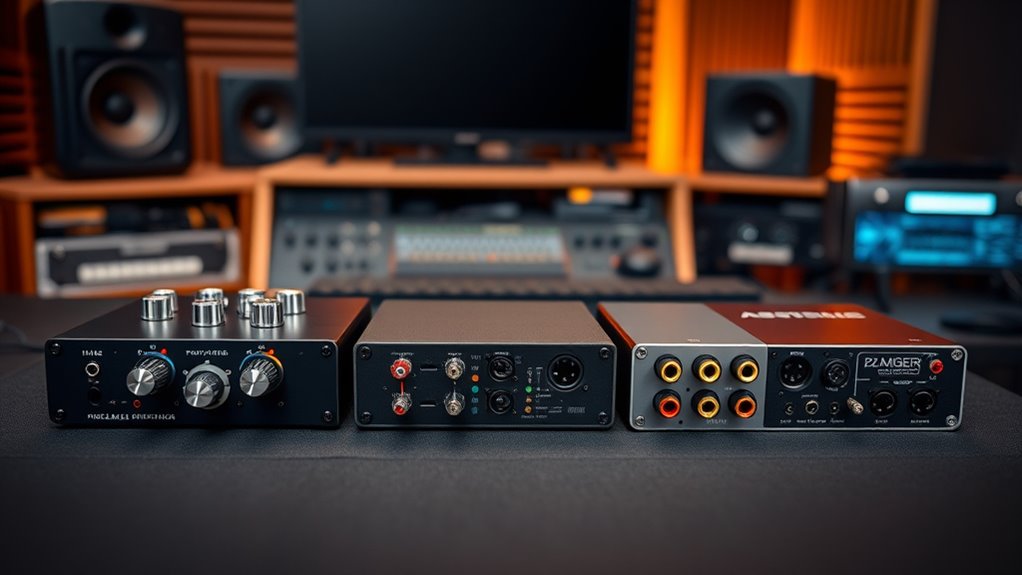

Finding a reliable audio interface under 200 dollars can be challenging, as you want solid sound quality without overspending. The Focusrite Scarlett Solo 3rd Gen stands out as the best overall choice, offering great preamps and straightforward usability. For those who need more inputs, the Audient iD14 MKII provides professional-grade sound and dual preamps at an accessible price point. Meanwhile, the M-Audio M-Track Solo delivers excellent value for beginners. Keep reading to see how these and other options compare, along with insights into what tradeoffs to expect in this budget segment.

Get everyday helpers delivered free with Prime
- Fast, free delivery on millions of items
- Prime Video, Amazon Music and more included
- Member-only deals all year
Key Takeaways
- Top-tier preamp quality is achievable within the $200 limit, especially with brands like Audient and Focusrite.
- More inputs and features often come at the expense of simplicity; choose based on your recording needs.
- Build quality varies; sturdier models tend to last longer but may be slightly bulkier.
- USB-C connectivity is increasingly common, ensuring faster data transfer for compatible devices.
- Price often correlates with included features—opt for what aligns with your recording style to avoid paying for unnecessary extras.
| Zoom AMS-22 USB Audio Interface for Recording & Streaming, 1 In / 2 Out |  | Best for Compact Streaming and On-the-Go Content Creators | Inputs: 1 XLR/TRS combo, 1 stereo 3.5mm | Outputs: 2 | Monitoring: Direct Monitor switch | VIEW ON AMAZON | See Our Full Breakdown |
| Audient iD14 MKII Audio Interface with 2 Class-A Microphone Preamps |  | Best for Professional-Quality Home and Mobile Recording | Compatible Devices: PC, iOS, macOS | Supported Software: Cubase LE, Cubasis LE 2, others | Connectivity Technology: USB | VIEW ON AMAZON | See Our Full Breakdown |
| 2×2 USB-C Audio Interface for PC/Mac Recording, 24-bit/192kHz, Dual TS/XLR Inputs, +48V Phantom Power |  | Best for Versatile High-Resolution Recording and Beginners | Input Channels: 2 | Output Channels: 2 | Sampling Rate: 192kHz | VIEW ON AMAZON | See Our Full Breakdown |
| Arturia MiniFuse USB Audio & MIDI Interface, MiniFuse 1 |  | Best for Versatile Home Studio and MIDI Integration | Input: 1 combo Mic/Inst/Line with 48V phantom | Additional Inputs: 2 TRS line/Instrument | Outputs: 1/4″ TRS balanced line | VIEW ON AMAZON | See Our Full Breakdown |
| M-Audio M-Track Solo USB Audio Interface |  | Best for Beginners Needing Simplicity and Value | Audio Resolution: 48kHz | Inputs: 1 combo XLR/Line with phantom, 1 Line/Instrument | Outputs: Stereo RCA, 1/8″ headphone | VIEW ON AMAZON | See Our Full Breakdown |
| Audient iD4 MKII Audio Interface with Class A Preamplifier, USB-C, Mac/PC/iOS Compatible, Black |  | Best Compact and Durable for Mobile Recording | Supported Devices: Personal Computer, iOS, macOS | Connectivity Technology: USB | Number of Channels: 2 | VIEW ON AMAZON | See Our Full Breakdown |
| Focusrite Scarlett Solo 3rd Gen USB Audio Interface for Guitarists, Vocalists, Podcasters, and Producers |  | Best for Beginners and Versatile Recording | Type: USB Audio Interface | Generation: 3rd Gen | Inputs: 1 XLR Mic Preamp, 1 Hi-Z Instrument Input | VIEW ON AMAZON | See Our Full Breakdown |
| Behringer U-PHORIA UM2 Audiophile 2×2 USB Audio Interface with XENYX Mic Preamplifier |  | Best Budget Choice for Simple Microphone and Instrument Recording | Connectivity: USB | Number of Inputs: 2 | Number of Outputs: 2 | VIEW ON AMAZON | See Our Full Breakdown |
| PreSonus AudioBox 96 25th Anniversary USB Audio Interface |  | Best Software Bundle and Professional Sound Quality | Number of channels: 2 | Sample rate: up to 96 kHz | Bit depth: 24-bit | VIEW ON AMAZON | See Our Full Breakdown |
| PIYONE 2×2 USB C Audio Interface for High-Fidelity Recording |  | Best for High-Resolution, Professional Sound on a Budget | Compatible Devices: Guitar, PC, Mac, iOS | Connectivity Technology: USB | Number of Channels: 2 | VIEW ON AMAZON | See Our Full Breakdown |
| M-AUDIO M-Track Duo USB Audio Interface |  | Best Budget-Friendly Dual Input Interface | Inputs: 2 combo XLR/Line/Instrument | Audio Resolution: 48kHz | Phantom Power: Yes | VIEW ON AMAZON | See Our Full Breakdown |
| audio interfaces under 200 | Outputs |
|---|---|
| Zoom AMS-22 USB Audio Interfac | 2 |
| Audient iD14 MKII Audio Interf | — |
| 2×2 USB-C Audio Interface for | — |
| Arturia MiniFuse USB Audio & M | 1/4" TRS balanced line |
| M-Audio M-Track Solo USB Audio | Stereo RCA, 1/8" headphone |
| Audient iD4 MKII Audio Interfa | — |
| Focusrite Scarlett Solo 3rd Ge | 2 Balanced Outputs |
| Behringer U-PHORIA UM2 Audioph | — |
| PreSonus AudioBox 96 25th Anni | Balanced ¼” TRS, headphone |
| PIYONE 2×2 USB C Audio Interfa | — |
| M-AUDIO M-Track Duo USB Audio | 1/4" headphone and stereo 1/4" outputs |
More Details on Our Top Picks
Zoom AMS-22 USB Audio Interface for Recording & Streaming, 1 In / 2 Out
The Zoom AMS-22 stands out for its portability and dual-purpose design, blending a simple interface with streaming-friendly features like loopback mode. Compared to the Audient iD14 MKII, it sacrifices some input flexibility but excels in ease of use and mobility. Its single XLR/TRS combo input and stereo 3.5mm make it ideal for solo creators who value quick setup over expanding inputs. The absence of external power limits its use with multiple devices, and its limited inputs make it less suitable for complex recording sessions. This makes it perfect for podcasters and streamers who prioritize lightweight gear and straightforward operation, but not for multi-mic setups or musicians demanding more inputs.
Pros:- Compact, lightweight design ideal for portable use
- USB-C bus power for easy connectivity on the go
- Switchable studio and streaming modes for versatile use
- Real-time monitoring without additional software
Cons:- Limited input options restrict complex setups
- No external power option for future expandability
Best for: Content creators, streamers, and podcasters needing a portable, all-in-one device
Not ideal for: Multi-mic recording setups or users needing numerous inputs and advanced features
- Inputs:1 XLR/TRS combo, 1 stereo 3.5mm
- Outputs:2
- Monitoring:Direct Monitor switch
- Loopback:Yes
- Power:Bus-powered via USB-C
- Compatibility:Mac, PC, iOS, Android
Our verdict“This interface suits solo content creators who prioritize portability and streaming features over input capacity.”
Audient iD14 MKII Audio Interface with 2 Class-A Microphone Preamps
The Audient iD14 MKII is tailored for musicians and home studio owners seeking high-quality sound, thanks to its dual Class-A preamps. It surpasses the M-Audio M-Track Solo in preamp quality and durability, offering a more premium experience for critical recordings. Its all-metal chassis and USB-C port enhance durability and speed, making it suitable for mobile setups. However, with only two inputs, it falls short for larger recording sessions, and the lack of onboard DSP limits real-time processing. Its support for high sample rates and robust build make it a clear choice for serious musicians, but not for those needing many inputs or advanced onboard effects.
Pros:- Exceptional Class-A preamps for professional sound quality
- Robust, all-metal construction for durability
- USB-C connection for faster data transfer
- Supports up to 192 kHz sample rates
Cons:- Limited to 2 inputs, restricting multi-mic setups
- No onboard DSP or effects for processing
Best for: Musicians and producers requiring high-fidelity recordings in a durable, portable package
Not ideal for: Producers needing multiple channels or onboard effects for live mixing
- Compatible Devices:PC, iOS, macOS
- Supported Software:Cubase LE, Cubasis LE 2, others
- Connectivity Technology:USB
- Number of Channels:4
- Frequency Response:96 KHz
- Maximum Sample Rate:192 KHz
Our verdict“This interface is ideal for solo artists and home studio owners prioritizing sound quality and build quality over input count.”
2×2 USB-C Audio Interface for PC/Mac Recording, 24-bit/192kHz, Dual TS/XLR Inputs, +48V Phantom Power
This 2×2 USB-C interface offers a balance of high fidelity and ease of use, supporting professional-grade 24-bit/192kHz recordings. Its dual combo inputs with phantom power make it suitable for vocals and instruments alike. Compared to the M-Audio M-Track Solo, it provides more input flexibility and support for condenser microphones. Its plug-and-play compatibility simplifies setup, but with only two inputs, it isn’t suited for multi-mic or complex live recording sessions. The inclusion of multiple adapters expands its versatility, making it attractive for beginners or hobbyists who want quality without complexity. However, power options are limited to bus power, and it lacks onboard effects, which could be a downside for advanced users.
Pros:- High-resolution 24-bit/192kHz audio quality
- Plug-and-play with Mac, PC, and mobile devices
- Includes multiple adapters for flexible connectivity
- Supports +48V phantom power for condenser mics
Cons:- Limited to 2 inputs, restricting complex recordings
- No onboard effects or DSP for processing
Best for: Beginners and hobbyists looking for high-quality, straightforward recording with versatile connectivity
Not ideal for: Producers needing extensive inputs, onboard effects, or multi-mic setups
- Input Channels:2
- Output Channels:2
- Sampling Rate:192kHz
- Bit Depth:24-bit
- Phantom Power:+48V
- Connectivity:USB-C, USB-A, 3.5mm
Our verdict“This interface is a solid choice for newcomers seeking high-res audio and simple operation in a compact form.”
Arturia MiniFuse USB Audio & MIDI Interface, MiniFuse 1
The Arturia MiniFuse 1 excels as a compact, versatile interface combining audio and MIDI, making it perfect for musicians working with both vocals and MIDI instruments. Its single combo XLR/line input with phantom power is a limitation compared to multi-input models like the Audient iD14 MKII, but its inclusion of MIDI In and Out broadens creative possibilities. The high-quality preamp and extensive software bundle add value for producers, though the limited input count may frustrate those needing multi-mic setups. Its rugged build and five-year warranty suggest reliability for mobile or home use, but it isn’t suited for large recording sessions.
Pros:- High-quality audio with robust specs
- Includes MIDI In and Out for comprehensive instrument control
- Long warranty and durable build
- Comprehensive software bundle for music production
Cons:- Only one microphone input at a time
- Limited input channels for multi-mic recording
Best for: Home musicians and producers who need a compact interface with MIDI capabilities and good sound quality
Not ideal for: Pro studios or those needing multiple mic inputs for complex recordings
- Input:1 combo Mic/Inst/Line with 48V phantom
- Additional Inputs:2 TRS line/Instrument
- Outputs:1/4″ TRS balanced line
- Headphone Output:Yes
- USB Type:Type A
- Warranty:5 years
Our verdict“This interface suits solo musicians and producers seeking a reliable, all-in-one solution with MIDI integration.”
M-Audio M-Track Solo USB Audio Interface
The M-Audio M-Track Solo is a straightforward, budget-friendly interface that offers 48kHz resolution, making it suitable for basic vocal, guitar, and line recordings. It’s comparable to the Zoom AMS-22 in portability but focuses more on simplicity rather than streaming features. Its single combo XLR/Line input with phantom power and a dedicated instrument input make it flexible for entry-level users, though its limited channels restrict complex multi-mic setups. The included MPC Beats and ProTools First software add value, but the overall feature set remains basic, making it less appealing for more advanced or expanding studios.
Pros:- Easy to set up and use with USB power
- Versatile inputs for microphones and instruments
- Includes professional-grade software for music creation
- Zero-latency monitoring for real-time recording
Cons:- Limited to 2 channels, not suitable for complex sessions
- Software bundle may seem basic for advanced users
Best for: Beginners and casual users who want a simple, portable interface with decent software support
Not ideal for: Advanced producers or those requiring multiple inputs and onboard effects
- Audio Resolution:48kHz
- Inputs:1 combo XLR/Line with phantom, 1 Line/Instrument
- Outputs:Stereo RCA, 1/8″ headphone
- Power:USB powered
- Software Included:MPC Beats, ProTools First
Our verdict“This interface fits new musicians and podcasters seeking an affordable, easy-to-use device for simple recordings.”
Audient iD4 MKII Audio Interface with Class A Preamplifier, USB-C, Mac/PC/iOS Compatible, Black
The Audient iD4 MKII stands out for its high-quality Class-A preamp, which delivers a professional sound typically found in larger, more expensive interfaces like the Focusrite Scarlett Solo 3rd Gen. Compared to more feature-rich options, its minimal input count limits multi-instrument recording, but its robust construction and portable size make it perfect for mobile setups. The all-metal housing enhances durability, while the USB-C connection simplifies cabling. However, it lacks advanced features like onboard DSP or multiple inputs, making it less suitable for complex projects. This model is ideal for solo musicians or podcasters who prioritize sound quality and portability over expandability.Pros:- High-quality Class-A microphone preamp from a professional console
- Durable all-metal housing for portability and longevity
- Easy-to-use USB-C connection reduces cable clutter
Cons:- Limited to 2 input channels, restricting larger recording setups
- No built-in DSP or effects for real-time processing
Best for: Musicians and podcasters who need a reliable, high-quality interface for on-the-go recording
Not ideal for: Producers working with multi-mic setups or requiring multiple channels at once
- Supported Devices:Personal Computer, iOS, macOS
- Connectivity Technology:USB
- Number of Channels:2
- Maximum Sample Rate:96 KHz
- Dimensions:4.72″D x 5.2″W x 1.57″H
- Weight:740 g
Our verdict“This interface is best suited for mobile recording enthusiasts prioritizing sound quality and durability over expandability.”
Focusrite Scarlett Solo 3rd Gen USB Audio Interface for Guitarists, Vocalists, Podcasters, and Producers
The Focusrite Scarlett Solo 3rd Gen excels as an entry-level interface with versatile features like the switchable Air mode that brightens vocals and acoustic recordings, making it ideal for singer-songwriters. Unlike the Behringer U-PHORIA UM2, which offers basic functionality at a lower price, the Scarlett provides higher-quality 24-bit/192kHz converters for clearer sound. Its simple setup and included software make it accessible for newcomers, but the limited two-input design may restrict growth for those needing multi-instrument recording. Without onboard effects, advanced users might find it less suitable for complex productions. This model suits beginners or hobbyists seeking reliable, high-quality sound without advanced features.Pros:- High-quality 24-bit/192kHz recording for professional sound clarity
- Switchable Air mode adds brightness to vocals and acoustic instruments
- Includes a comprehensive software bundle for music creation
Cons:- Limited to two inputs, restricting multi-mic or multi-instrument recording
- No onboard effects or DSP for real-time processing
Best for: Beginners, solo artists, and podcasters starting their home studio setup
Not ideal for: Producers or musicians needing multi-mic or multi-instrument recording capabilities
- Type:USB Audio Interface
- Generation:3rd Gen
- Inputs:1 XLR Mic Preamp, 1 Hi-Z Instrument Input
- Outputs:2 Balanced Outputs
- Sample Rate:24-Bit/192kHz
- Compatibility:macOS, Windows, iPadOS
Our verdict“This interface offers great value and ease of use for beginners focused on high-quality sound and straightforward operation.”
Behringer U-PHORIA UM2 Audiophile 2×2 USB Audio Interface with XENYX Mic Preamplifier
The Behringer U-PHORIA UM2 provides a solid entry point with its XENYX mic preamp offering 100 dB dynamic range, making it suitable for basic home recordings. Compared to the PreSonus AudioBox 96, which offers slightly higher sample rates and included software, the UM2’s main advantage lies in its affordability. Its 48 kHz limit makes it less ideal for professional-grade projects but perfect for casual or beginner use. The simple interface and direct monitoring feature are user-friendly, but the lack of higher sample rates and effects can be limiting for more advanced users. This device is well-suited for beginners and those on a tight budget who need reliable mic and instrument inputs.Pros:- High-quality XENYX mic preamp with 100 dB dynamic range
- Compact and portable design for easy transport
- Compatible with popular DAWs like Pro Tools, Ableton, and Cubase
Cons:- Limited to 48 kHz sample rate, restricting professional quality
- No built-in effects or advanced features
Best for: Beginners seeking a straightforward, affordable interface for basic recording
Not ideal for: Advanced users or professionals requiring higher sample rates or onboard effects
- Connectivity:USB
- Number of Inputs:2
- Number of Outputs:2
- Sample Rate:48 kHz
- Mic Preamplifier:XENYX
- Warranty:1 year
Our verdict“This interface offers straightforward, budget-friendly recording for beginners or casual users.”
PreSonus AudioBox 96 25th Anniversary USB Audio Interface
The PreSonus AudioBox 96 offers a compelling balance of professional sound and value, with studio-grade 24-bit/96kHz converters and high-quality mic preamps. Its included software package, valued over $1000, makes it an attractive choice for musicians and producers seeking an all-in-one package. Compared to the M-Audio M-Track Solo, which is more limited in software offerings, the AudioBox 96 provides a more complete production environment. Its 2-channel design makes it suitable for solo recordings or small setups, but it may fall short for larger multi-mic projects. The USB 2.0 connection, while reliable, isn’t as fast as newer standards. This interface is perfect for those who want professional sound and a rich software bundle at an accessible price.Pros:- High-quality Class-A mic preamps for clear recordings
- Includes over $1000 worth of professional software
- Bus-powered and portable for on-the-go recording
Cons:- Limited to 2 channels, not suitable for large multi-mic setups
- No onboard effects or processing
Best for: Musicians and producers needing a portable, software-rich interface for small projects
Not ideal for: Users requiring more than two channels or higher sample rates for complex recordings
- Number of channels:2
- Sample rate:up to 96 kHz
- Bit depth:24-bit
- Outputs:Balanced ¼” TRS, headphone
- Phantom power:Yes
- Software included:Studio One Artist, Ableton Live Lite
Our verdict“This interface provides professional-grade sound and software for solo artists and small studios on a budget.”
PIYONE 2×2 USB C Audio Interface for High-Fidelity Recording
The PIYONE 2×2 USB C Audio Interface distinguishes itself with its 192kHz/24-bit resolution and zero-latency monitoring, making it suitable for professional-quality recordings. Compared with the Focusrite Scarlett Solo, which offers a broader software bundle, the PIYONE emphasizes high-resolution audio and sleek design. Its plug-and-play USB-C connection ensures compatibility with modern devices, but the lack of bundled software or advanced controls might limit users expecting more features. The minimalistic design and simple interface appeal to those who prioritize sound fidelity without extra bells and whistles. However, the absence of onboard effects or multiple inputs could be a drawback for more complex setups. This interface is ideal for solo professionals and serious hobbyists seeking high-resolution audio in a compact form.Pros:- High-resolution 24-bit/192kHz sound for detailed recordings
- Plug-and-play USB-C connection for modern compatibility
- Illuminated controls for easy use in dim environments
Cons:- Limited to 2 channels, not suited for multi-mic setups
- No bundled software or onboard effects
Best for: Hobbyist or professional musicians needing top-tier sound quality in a straightforward package
Not ideal for: Users who need multi-channel recording or bundled production software
- Compatible Devices:Guitar, PC, Mac, iOS
- Connectivity Technology:USB
- Number of Channels:2
- Maximum Sample Rate:192 KHz
- Weight:0.74 kg
- Inputs:XLR/TRS combo
Our verdict“This interface is best for individuals requiring high-fidelity recordings with a sleek, simple interface and modern connectivity.”
M-AUDIO M-Track Duo USB Audio Interface
The M-AUDIO M-Track Duo stands out for its affordability and versatility, offering dual combo XLR/Line/Instrument inputs that suit musicians and podcasters on a tight budget. Compared to the Focusrite Scarlett Solo, it provides more input options at a lower price, making it a solid choice for multi-source recordings. However, its basic feature set means it lacks built-in effects or advanced processing, limiting creative control. The 48kHz audio resolution ensures clear recordings, but users will need external microphones or instruments to maximize its potential. This interface is ideal for beginners or hobbyists who want reliable sound quality without extra bells and whistles. Its simple design and included MPC Beats software make it accessible, but it may fall short for more advanced or professional studio needs.Pros:- Affordable price point making it accessible for beginners
- Dual combo inputs support microphones and instruments
- Includes MPC Beats software for quick production setup
- Solid 48kHz audio quality for clear recordings
Cons:- Limited to basic recording and streaming functions
- No built-in effects or advanced processing features
- Requires external microphone/instrument for full use
Best for: Budget-conscious musicians, streamers, or podcasters who need versatile inputs and decent quality without breaking the bank.
Not ideal for: Producers or musicians seeking high-end features like 96kHz recording, onboard effects, or multi-channel setups, as this model’s capabilities are more entry-level.
- Inputs:2 combo XLR/Line/Instrument
- Audio Resolution:48kHz
- Phantom Power:Yes
- Outputs:1/4″ headphone and stereo 1/4″ outputs
- Software:MPC Beats
- Dimensions:Standard portable size
- Power:USB bus-powered
Our verdict“This interface makes the most sense for newcomers or hobbyists needing simple, reliable recordings on a budget.”

How We Picked
The selection process focused on performance, build quality, ease of use, and value for money. Each interface was evaluated on its sound quality, preamp quality, number of inputs and outputs, compatibility with different devices, and user-friendly features like direct monitoring and software bundles. We prioritized models that provide reliable, clear audio at a price point under 200, choosing options that balance features and affordability. The ranking reflects which interfaces offer the best overall experience for different types of users, from beginners to semi-professionals, while considering durability and future-proofing.Factors to Consider When Choosing Audio Interfaces Under 200
Choosing the right audio interface under 200 involves weighing several factors to match your recording needs and setup. While budget constraints limit some options, focusing on key features ensures you get the best value and performance for your money. Below are the main considerations to keep in mind before making a decision.Number of Inputs and Outputs
Consider how many instruments, microphones, or lines you’ll need to connect simultaneously. If you’re just starting out with vocals or a single instrument, a 1-in/2-out interface like the Focusrite Scarlett Solo is sufficient. For more complex setups involving multiple mics or instruments, look for interfaces with 2 or more inputs, such as the Audient iD14 MKII. Remember, more inputs mean greater flexibility but often come with a higher price tag and increased complexity.
Connectivity Options
Most budget interfaces now support USB, but USB-C is becoming more prevalent and offers faster data transfer—important for low-latency recording. Ensure your computer or device has compatible ports or that the interface comes with the necessary adapters. Additionally, some models offer MIDI or other connectivity options, which can be useful if you plan to integrate keyboards or controllers. Compatibility with your operating system and DAW software is also essential to avoid setup issues.
Preamp Quality and Sound Clarity
Preamps significantly affect your recording quality, especially with vocals and microphones. Brands like Focusrite and Audient are known for their high-quality preamps that deliver clear, noise-free sound. Cheaper interfaces may use basic preamps that introduce hiss or distortion, which can be problematic for professional-sounding recordings. If your project depends on pristine audio, prioritizing preamp quality is worth the extra attention within your budget.
Build Quality and Portability
Since you’ll likely move your interface between locations or use it in different setups, durability counts. Metal chassis and sturdy connectors prevent damage from everyday handling. Compact designs improve portability, but sometimes sacrifice space for controls and connections. Evaluate whether you need a rugged, portable device or a more stationary, feature-rich unit. A well-built interface reduces the risk of failure over time.
Software and Additional Features
Many interfaces include bundled DAW software, plugins, or monitoring features like direct monitoring or loopback. These add value but should align with your workflow. For beginners, straightforward plug-and-play operation might be preferable, while semi-professionals might want advanced routing or MIDI capabilities. Be cautious of models that promise too many features you won’t use, as this can complicate setup and increase costs if upgrades are needed later.
Frequently Asked Questions
Can I connect a microphone directly to a budget audio interface?
Yes, most audio interfaces under 200 include built-in microphone preamps that allow you to connect a microphone directly. The quality of these preamps varies, so for professional-quality recordings, look for models with higher-quality preamps, such as those from Focusrite or Audient. Using a good microphone is equally important, but the interface’s preamp will significantly influence your overall sound clarity and noise levels.
Is USB-C essential in an audio interface under 200?
While not strictly essential, USB-C offers faster data transfer and lower latency, which benefits real-time recording and monitoring. Many budget interfaces still use USB-A, which is compatible with most computers, but USB-C models tend to be more future-proof as more devices adopt this standard. If your computer has USB-C ports or you’re planning to upgrade soon, choosing a USB-C interface can save you compatibility headaches later.
Should I prioritize inputs over features in this price range?
Yes, for most users, the number of inputs directly impacts your flexibility, especially if you plan to record multiple sources simultaneously. Features like DSP effects or advanced routing are nice but less critical at this price point. Focus on getting a model with enough inputs and good preamps first; additional features can be added through software or future upgrades as your needs grow.
Are bundled software packages worth considering?
Bundled software can add significant value, especially for beginners or those on a tight budget. Many interfaces come with DAWs, plugins, or sample packs that can jump-start your projects. However, verify the quality and compatibility of these packages before relying on them. Sometimes, investing in a better interface without software can be more beneficial if you already own preferred DAWs or plugins.
How important is build quality in a budget audio interface?
Build quality is quite important because a sturdy, well-constructed interface will last longer and be more resistant to damage from transport or frequent use. Cheaper plastic models may be more prone to breakage or connection issues over time. If portability or durability is a priority, opt for models with metal chassis and solid connectors, even if it slightly increases the size or weight.
Conclusion
The best overall pick for most users under 200 is the Focusrite Scarlett Solo 3rd Gen, thanks to its reliable preamps and straightforward interface. If you need more inputs and professional sound, the Audient iD14 MKII offers excellent value for semi-professionals. Beginners or those on a tight budget will appreciate the M-Audio M-Track Solo for its simplicity and affordability. For portable users, models with sturdy build and USB-C connectivity are ideal. Consider your specific needs—whether it’s inputs, portability, or software compatibility—and choose the interface that aligns best with your recording goals.
Halloween Picks
halloween
As an affiliate, we earn on qualifying purchases.