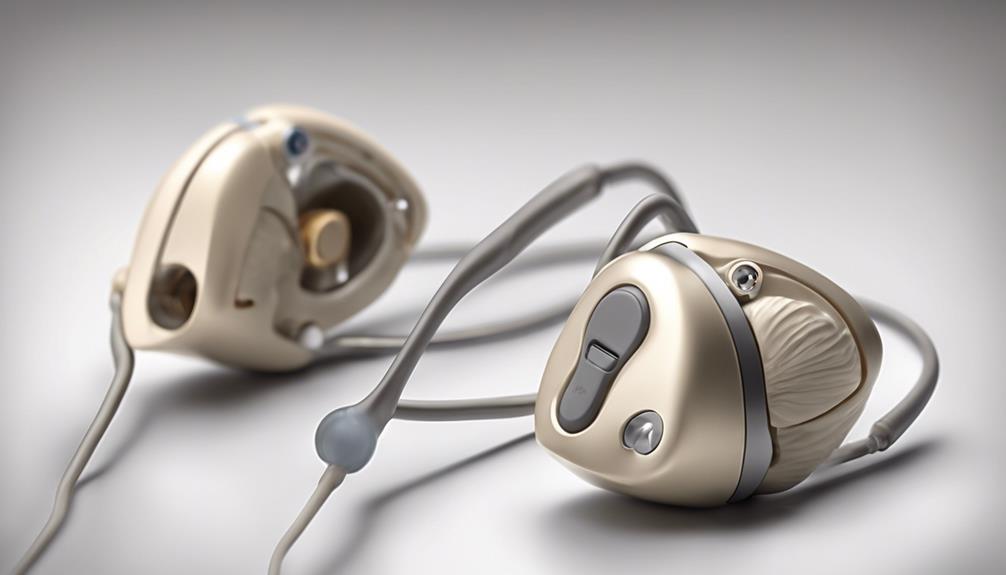

Infrared assistive listening devices range from simple personal amplifiers to installed systems that send audio to receivers across a room. For venues that need a full, secure listening setup, my best overall pick is the Williams AV IR SY11 IR Plus Complete Assistive Listening System; the SY11 D adds Dante input for networked audio, while the Williams Sound Pocketalker Ultra is a simpler personal option. The main tradeoffs are room coverage, installation complexity, receiver compatibility, and whether infrared is needed for privacy or light-sensitive spaces. Not every product in this roundup uses infrared: the Retekess TT106S uses 2.4 GHz technology, so it serves a different use case. Read on for the full breakdown and guidance on matching a system to your room, source, and listeners.

Get everyday helpers delivered free with Prime
- Fast, free delivery on millions of items
- Prime Video, Amazon Music and more included
- Member-only deals all year
Complete the kit


Key Takeaways
- The SY11 and SY11 D are the strongest starting points for venue-scale listening: the Dante version is better suited to facilities routing audio over a network, while the standard SY11 avoids that added integration requirement.
- The SY12 models put security first: the SY12 D combines a secure infrared setup with Dante input, while the non-D version fits buyers who do not need Dante.
- Portable and installed systems solve different problems: the IR SY6 is designed for portable courtroom use, whereas the SY4 is a medium-area commercial system for more fixed room coverage.
- Personal amplifiers are not substitutes for room-wide infrared systems: the Pocketalker Ultra and Pyle headset are more appropriate for individual listening than serving a group in a venue.
- The lineup includes different transmission technologies: Retekess TT106S uses 2.4 GHz rather than infrared, so buyers prioritizing infrared transmission should not treat it as a like-for-like alternative.
| Williams Sound Pocketalker Ultra Hearing Amplifier |  | Best for Personal, Everyday Listening | Amplification: Up to 40 dB | Adjustable controls: Volume and tone | Compatibility: Neckloops and telecoil devices | VIEW ON AMAZON | See Our Full Breakdown |
| Williams AV IR SY4 Commercial-Grade Medium-Area Infrared System with Stethoset Receivers |  | Best for Straightforward Commercial Group Listening | System type: Infrared assistive listening system | Coverage area: Up to 18,000 sq. ft. | Power supply: 48 VDC, 18 W | VIEW ON AMAZON | See Our Full Breakdown |
| Williams AV IR SY11 IR Plus Complete Assistive Listening System |  | Best for Large Venues and Multi-Channel Listening | Frequency response: 40–16,000 Hz | System coverage: Up to 30,000 sq. ft. | Emitter coverage: Up to 18,000 sq. ft. | VIEW ON AMAZON | See Our Full Breakdown |
| Williams AV IR SY12 D IR Plus Secure Assistive Listening System with Dante |  | Best for Dante-Equipped Secure Installations | Wireless technology: Infrared | Coverage area: Up to 18,000 sq. ft. | Receiver: IR RX20, stereo, under-the-chin style | VIEW ON AMAZON | See Our Full Breakdown |
| Williams AV IR SY6 Commercial-Grade Portable Infrared Courtroom System – Medium Area |  | Best Portable Kit for Temporary Venue Setups | Brand: Williams AV | Connectivity technology: Infrared | Channels: 4 | VIEW ON AMAZON | See Our Full Breakdown |
| Williams AV IR SY12 IR Plus Secure Assistive Listening System | | Best for Secure, Large-Venue Coverage | Coverage area: 18,000 sq. ft. | Receiver: IR RX20 stereo, under-the-chin style | Emitter output: Four RJ-45 ports for CAT5e cables | VIEW ON AMAZON | See Our Full Breakdown |
| OWI-KSTM-LT84-KIT 2-Channel Infrared Assistive Listening System |  | Best for Flexible Two-Channel Installation | Channels: 2 | Operating frequencies: 2.3, 2.8, 3.3, and 3.8 MHz | IR power: Up to twice the power of similar systems | VIEW ON AMAZON | See Our Full Breakdown |
| Williams AV IR SY11 D IR Plus Complete Assistive Listening System with Dante Input | | Best for Large Multi-Channel Venues | Channels: 4 | Range: Up to 30,000 sq. ft. | Coverage per emitter: 18,000 sq. ft. | VIEW ON AMAZON | See Our Full Breakdown |
| Pyle Dual Infrared Hearing Assistance System |  | Best for Shared TV Listening at Home | Transmitter frequency: 2.3 MHz | Maximum sound level: 125 dB | Weight: 1.33 lb. | VIEW ON AMAZON | See Our Full Breakdown |
| Retekess TT106S Assistive Listening System |  | Best for Long-Range Group Events | Technology: 2.4G | Range: 200 meters | Battery life: Up to 50 hours | VIEW ON AMAZON | See Our Full Breakdown |
| infrared assistive listening device | Battery life |
|---|---|
| Williams Sound Pocketalker Ult | — |
| Williams AV IR SY4 Commercial- | — |
| Williams AV IR SY11 IR Plus Co | Up to 60 hours alkaline; up to 30 hours NiMH |
| Williams AV IR SY12 D IR Plus | 8 hours |
| Williams AV IR SY6 Commercial- | — |
| Williams AV IR SY12 IR Plus Se | 8 hours |
| OWI-KSTM-LT84-KIT 2-Channel In | — |
| Williams AV IR SY11 D IR Plus | Alkaline: 60 hours; NiMH: 30 hours |
| Pyle Dual Infrared Hearing Ass | — |
| Retekess TT106S Assistive List | Up to 50 hours |
More Details on Our Top Picks
Williams Sound Pocketalker Ultra Hearing Amplifier
The Pocketalker Ultra is the most personal and portable option here, but it is a hearing amplifier, not an infrared listening system. That distinction matters: it can bring nearby speech, television audio, or conversation forward without requiring a venue transmitter, while the IR SY4 and IR SY11 serve multiple listeners through dedicated infrared transmitters. Its volume and tone controls let users adjust sound manually, and the included headphones, earbud, and microphone extension cord give buyers a few ways to set it up. The package also includes 20 AAA batteries. The tradeoff is that it lacks the room-wide, multi-receiver coverage of the commercial systems and may not suit severe hearing loss. I’d choose it for one person who wants a simple portable aid, not for a shared auditorium or a replacement hearing aid.
Pros:- Volume and tone controls allow manual sound adjustment.
- Lightweight design and included lanyard support portable use.
- Headphones, an earbud, and a microphone extension cord offer setup flexibility.
- Includes 20 AAA batteries.
Cons:- Does not provide infrared transmission or shared listening for a venue.
- Manual adjustment may take experimentation to suit the listener and setting.
- Designed mainly for mild to moderate hearing needs, not as a hearing-aid replacement.
Best for: Individuals seeking a lightweight amplifier for one-to-one conversation, television listening, or occasional use on the go.
Not ideal for: Venues needing simultaneous assisted listening for a group, or people seeking an infrared transmitter-and-receiver system or a substitute for prescribed hearing aids.
- Amplification:Up to 40 dB
- Adjustable controls:Volume and tone
- Compatibility:Neckloops and telecoil devices
- Included listening accessories:Headphones and earbud
- Additional included accessories:Microphone extension cord, neck lanyard, microfiber cloth, and user manual
- Batteries included:20 AAA batteries
Our verdict“Choose the Pocketalker Ultra for a single listener who wants a portable personal amplifier rather than a venue-based infrared system.”
Williams AV IR SY4 Commercial-Grade Medium-Area Infrared System with Stethoset Receivers
The IR SY4 is the clearest fit here for a venue that needs a ready-to-deploy infrared package with multiple receivers. Its stated coverage reaches up to 18,000 square feet, and five stethoset receivers let several attendees listen at once. Compared with the IR SY11, which lists a larger system coverage area and multiple channels, the SY4 is a more focused medium-area choice for spaces that do not need that broader configuration. Balanced or unbalanced line-level inputs help it connect to common venue audio feeds. Infrared transmission keeps listening within the covered space, but obstacles can interrupt the signal, so layout and emitter placement matter. It also needs mains power and careful setup; this is not a portable personal device like the Pocketalker Ultra. I’d favor it for an installed room with a defined listening area and a small group of receivers.
Pros:- Includes five stethoset receivers for simultaneous listeners.
- Specified coverage extends up to 18,000 square feet.
- Line-level balanced or unbalanced audio inputs suit venue sound feeds.
- Package includes a charger, wall mount, power supply, and ADA wall plaque.
Cons:- Infrared reception can be affected by obstacles and emitter placement.
- Commercial installation and setup may call for technical support.
- Requires an external power supply rather than offering portable battery operation.
Best for: Conference rooms, classrooms, and small theaters that need a commercial infrared system supplied with several receivers.
Not ideal for: Buyers needing a portable, battery-powered setup or a system that can maintain reception through obstructed spaces.
- System type:Infrared assistive listening system
- Coverage area:Up to 18,000 sq. ft.
- Power supply:48 VDC, 18 W
- Power input:100–240 VAC, 50–60 Hz
- Audio inputs:Line level, balanced or unbalanced
- Included receivers:5 stethoset receivers
- Other included components:Infrared transmitter, charger, wall mount, ADA wall plaque, and power supply
Our verdict“Pick the IR SY4 for a powered venue that needs a complete medium-area infrared setup and several included receivers.”
Williams AV IR SY11 IR Plus Complete Assistive Listening System
The IR SY11 is the strongest match in this group for a venue that needs large-area coverage and multiple listening channels. Its stated system coverage reaches up to 30,000 square feet, though the listed emitter coverage is up to 18,000 square feet, so buyers should plan around the emitter figure for room layout rather than assume one emitter covers the full system area. Four-channel receivers add flexibility for different audio feeds or languages, while T-coil compatibility lets suitable hearing aids and cochlear implants receive the signal through a neckloop. Compared with the IR SY4, this is a more configurable installation, not the simpler medium-area package. That capability brings more components, CAT5e cabling, and setup work. The receiver battery figures also vary by chemistry: up to 60 hours on alkaline or 30 on NiMH, with a 16-hour charging time. It suits well-planned venues, not quick portable use.
Pros:- Four-channel receivers support more than one audio feed.
- System coverage is specified up to 30,000 sq. ft., with emitter coverage up to 18,000 sq. ft.
- T-coil support can connect compatible hearing aids and cochlear implants.
- Rack-mount format and included mounting options suit permanent venue installations.
Cons:- Multiple components and CAT5e emitter cabling make installation more involved than the IR SY4.
- Emitter coverage is lower than the stated system coverage, so venue planning needs care.
- Charging takes 16 hours, and NiMH battery life is listed at 30 hours.
Best for: Large theaters, conference facilities, and interpretation venues that need multiple channels and support for telecoil-equipped hearing devices.
Not ideal for: Small rooms or buyers seeking a simple plug-in setup, minimal cabling, or a portable single-listener amplifier.
- Frequency response:40–16,000 Hz
- System coverage:Up to 30,000 sq. ft.
- Emitter coverage:Up to 18,000 sq. ft.
- Emitter power:48 VDC via CAT5e cable
- Receiver batteries:2 AA
- Battery life:Up to 60 hours alkaline; up to 30 hours NiMH
- Charging time:16 hours
- Rack mounting:Single rack unit
- Receiver movement:190° head tilt and 360° head rotation
Our verdict“Choose the IR SY11 when a large venue needs multi-channel infrared listening and is equipped to manage a more involved installation.”
Williams AV IR SY12 D IR Plus Secure Assistive Listening System with Dante
The IR SY12 D is the specialist choice for venues that need infrared privacy alongside Dante audio networking. Infrared confines reception to the illuminated area, which can suit secure listening environments where radio-frequency transmission is not wanted. Its stated coverage reaches up to 18,000 square feet, making it closer in scale to the IR SY4 than the IR SY11’s larger listed system area. The distinction is the networking-oriented Dante feature, not a broader coverage claim. Included IR RX20 stereo under-the-chin receivers and chargers provide a practical listener setup, while CAT5e connections link emitters. Compared with the SY11, this model’s supplied information gives fewer details about battery life and does not specify warranty coverage, so buyers should confirm those points before deployment. The multi-component installation also favors an AV team over a casual user.
Pros:- Dante support suits venues with compatible networked audio infrastructure.
- Infrared transmission confines listening to the covered area.
- Specified coverage reaches up to 18,000 sq. ft.
- Includes stereo under-the-chin receivers and chargers.
Cons:- Emitter connections and multiple components make setup more technical than a personal amplifier.
- Infrared reception remains dependent on emitter coverage and can be blocked by obstacles.
- The supplied specifications do not state warranty coverage or receiver battery life.
Best for: AV-managed venues that already use Dante and need an infrared listening system for a defined, privacy-sensitive area.
Not ideal for: Small organizations without technical installation support, or buyers who need clearly documented warranty and receiver-runtime details before purchase.
- Wireless technology:Infrared
- Coverage area:Up to 18,000 sq. ft.
- Receiver:IR RX20, stereo, under-the-chin style
- Emitter connections:Four RJ-45 ports for CAT5e cables
- Power supply:100–240 V / 12 VDC
- Battery life:8 hours
- Frequency response:40–16,000 Hz
- Rack mounting:Single rack unit
- Color:Black
Our verdict“Choose the IR SY12 D when Dante integration and contained infrared reception matter more than a simple installation or fully detailed runtime specifications.”
Williams AV IR SY6 Commercial-Grade Portable Infrared Courtroom System – Medium Area
The IR SY6 earns its place as the portable, all-in-one venue kit in this group. Its carry case, tripod, microphones, receivers, earphones, neckloops, batteries, and power supply are aimed at teams that need to set up assisted listening in courtrooms, classrooms, or meeting spaces without leaving a full system installed. That makes it more deployable than the fixed-install IR SY4, while the IR SY11 is the stronger fit for larger, more elaborate multi-channel coverage. The SY6 offers four channels and is described as providing 50% more coverage than previous models, but the supplied specs do not state a precise area figure, so I would not rank it by square footage against the SY4 or SY11. Infrared’s line-of-sight limit remains the main constraint: blocked paths can interrupt reception, and the system is intended for indoor use.
Pros:- Portable package includes a carry case and tripod for temporary deployments.
- Accessory kit includes receivers, microphones, earphones, neckloops, batteries, and power supply.
- Four channels support multiple audio options.
- Infrared avoids radio-frequency interference within the covered listening area.
Cons:- Infrared reception depends on line of sight and can be blocked by obstacles.
- The supplied product data does not provide an exact coverage-area figure.
- Indoor range constraints make it unsuitable for outdoor listening setups.
Best for: Court staff, educators, and event teams that need to carry and deploy an infrared listening kit across different indoor medium-area venues.
Not ideal for: Buyers seeking a permanently installed large-room system with a clearly stated coverage figure, or anyone needing reliable reception through obstructed areas.
- Brand:Williams AV
- Connectivity technology:Infrared
- Channels:4
- Power:18 W
- Speaker connectors:3.5 mm jack and USB
- Audio output mode:Surround
- Audio output type:Speakers
- Audio format:WMA
- Included kit:Transmitter, receivers, microphone, earphones, neckloops, batteries, carry case, tripod, power supply, and cable
Our verdict“Pick the IR SY6 for a team that needs a complete, transportable infrared kit for recurring indoor setups rather than a fixed large-venue installation.”
Williams AV IR SY12 IR Plus Secure Assistive Listening System
The IR SY12 IR Plus is the strongest fit here for venues that need a managed infrared setup across a large area, rather than a simple TV-listening kit. Its listed coverage reaches 18,000 square feet, and the system can support up to five units, giving venue staff room to build out or coordinate a larger installation. Four RJ-45 emitter outputs make CAT5e-based connections part of the setup, while the rack-mount form suits fixed AV equipment rooms. Compared with the OWI-KSTM-LT84-KIT, this is a more complete system package, but also a more involved one: installation and multi-unit management may call for AV expertise. The included under-the-chin receivers offer a direct listening option, though this is not a lightweight personal device for casual home use.
Pros:- Listed coverage of up to 18,000 square feet suits large venues
- Supports up to five units for multi-unit system management
- Four RJ-45 emitter outputs accommodate CAT5e connections
- Rechargeable receiver battery life is listed at eight hours
Cons:- Setup and multi-unit management may require technical expertise
- Rack-oriented components are bulky compared with personal listening devices
- The product information provides limited detail about installation instructions
Best for: Venue operators and AV teams equipping a large room who need a secure infrared system, rack integration, and the option to manage multiple units.
Not ideal for: Individuals seeking a simple TV listener or small organizations without the time or technical support to install and manage multiple components.
- Coverage area:18,000 sq. ft.
- Receiver:IR RX20 stereo, under-the-chin style
- Emitter output:Four RJ-45 ports for CAT5e cables
- Battery life:8 hours
- Frequency response:40–16,000 Hz
- System capacity:Up to 5 units
- Rack mount:Single rack unit
- Power supply:100–240 V / 12 VDC
Our verdict“Choose the IR SY12 IR Plus for a large venue that needs a rack-mountable, expandable infrared system and has AV support for setup.”
OWI-KSTM-LT84-KIT 2-Channel Infrared Assistive Listening System
The OWI-KSTM-LT84-KIT suits rooms that need a configurable infrared transmitter without the broader multi-unit package of the Williams AV IR SY12 IR Plus. Its two channels and four selectable frequencies give installers options for separating audio or managing interference, while microphone, stereo, and terminal-block line inputs accommodate different room sources. Wall, ceiling, or table mounting also makes it adaptable to classrooms, courtrooms, and meeting spaces. The listed coverage claims are broad relative to comparable products, but the description gives no absolute square-foot figure, so I would not use it to plan a venue solely from that claim. Like other infrared systems, it needs a clear path between transmitter and receiver; it also relies on external power rather than offering a battery backup.
Pros:- Two channels and four selectable operating frequencies support flexible room setups
- Microphone, stereo, and line-level inputs handle varied audio sources
- Wall, ceiling, and table mounting options simplify placement choices
- High IR output is intended to extend coverage compared with similar systems
Cons:- No built-in battery or wireless backup is specified
- Infrared transmission requires a clear line of sight
- The coverage claim lacks an absolute area figure in the supplied product data
Best for: Schools, courtrooms, and meeting-room operators who want two-channel audio, varied input connections, and mounting flexibility in a fixed installation.
Not ideal for: Buyers needing a portable battery-powered kit, confirmed square-foot coverage for venue planning, or reliable listening around obstacles that block infrared line of sight.
- Channels:2
- Operating frequencies:2.3, 2.8, 3.3, and 3.8 MHz
- IR power:Up to twice the power of similar systems
- Coverage claim:Up to six times that of comparable IR products
- Audio inputs:Microphone, stereo audio, terminal-block line-level
- Mounting options:Wall, ceiling, or table
Our verdict“Pick the OWI kit for a fixed room that needs two audio channels and adaptable inputs, but confirm coverage and line-of-sight conditions before installation.”
Williams AV IR SY11 D IR Plus Complete Assistive Listening System with Dante Input
For venues that need several audio feeds and extensive infrared coverage, the IR SY11 D IR Plus makes a stronger case than the two-channel OWI-KSTM-LT84-KIT. It offers four channels and a listed range of up to 30,000 square feet, with coverage per emitter listed at 18,000 square feet. The Dante input is part of this model’s identity, making it the relevant pick when Dante audio distribution is required; the product details supplied here do not describe its Dante configuration further. T-coil support lets compatible hearing aids and cochlear implants connect without relying only on the included receiver style. The tradeoff is scale: emitters, receivers, chargers, and mounting hardware mean more installation work, and the 16-hour charging time calls for advance battery planning.
Pros:- Four channels support multiple audio feeds
- Listed range reaches up to 30,000 square feet
- T-coil compatibility supports users with compatible hearing aids or cochlear implants
- Includes receivers, emitters, chargers, and mounting brackets for system installation
Cons:- Multiple components and brackets add installation and maintenance work
- Infrared coverage can be affected by room conditions and blocked line of sight
- Listed charging time is 16 hours, requiring charging schedules
Best for: AV teams in large theaters, auditoriums, or institutional venues that need multiple infrared channels, Dante input, and access for users with compatible T-coil devices.
Not ideal for: Home listeners or small rooms that need a simple, low-setup solution, or operators who cannot plan around the listed charging time.
- Channels:4
- Range:Up to 30,000 sq. ft.
- Coverage per emitter:18,000 sq. ft.
- Frequency response:40–16,000 Hz
- Emitter power supply:48 VDC via CAT5e cable
- Battery type:2 x AA, alkaline or NiMH
- Battery life:Alkaline: 60 hours; NiMH: 30 hours
- Charging time:16 hours
Our verdict“Choose the IR SY11 D for a large, professionally managed venue that needs four channels, Dante input, and T-coil compatibility.”
Pyle Dual Infrared Hearing Assistance System
The Pyle Dual Infrared Hearing Assistance System is the home-focused choice in this group: it includes two receivers and a dual docking transmitter, so two listeners can use the same audio source without the venue-scale equipment of the Williams AV IR SY12 IR Plus. Its 3.5 mm input suits compatible TVs and other audio devices, and the microphone extension cable offers another way to position the pickup. Noise reduction and voice clarification are aimed at making speech easier to follow, while the shared dock gives both receivers a dedicated charging place. The compromise is a narrower role: the supplied information gives no coverage-area figure, and infrared still depends on placement and a clear path. With a maximum sound level listed at 125 dB, users should keep listening levels conservative.
Pros:- Includes two receivers for shared listening
- Dual docking transmitter provides a central charging location
- Noise reduction and voice clarification are designed for speech listening
- 3.5 mm input and microphone extension cable offer source and placement flexibility
Cons:- No coverage-area or operating-range figure is supplied
- Infrared performance depends on transmitter placement and an unobstructed path
- A 125 dB maximum sound level makes careful volume control important
Best for: Households where two people want separate receivers for TV or another compatible 3.5 mm audio source, with a shared docking station for charging.
Not ideal for: Large venues, users who need published room-coverage figures, or buyers seeking a multi-channel installed infrared system such as the Williams AV IR SY11 D.
- Transmitter frequency:2.3 MHz
- Maximum sound level:125 dB
- Weight:1.33 lb.
- Battery type:Lithium-ion
- Connectivity:3.5 mm audio input
- Included receivers:2
- Included accessories:Dual-dock transmitter and microphone extension cable
Our verdict“The Pyle is a practical choice for two people sharing compatible TV audio at home, not for venue-wide assistive listening.”
Retekess TT106S Assistive Listening System
The Retekess TT106S is the outlier in this infrared-focused roundup: its listed 2.4G technology places it apart from the infrared systems here, which may suit event teams prioritizing the stated 200-meter range over infrared’s room-based setup. Its built-in microphone and one-touch mute and frequency synchronization features aim to keep operation straightforward during training, interpretation, or events. The stated 50-hour battery life also makes it more event-oriented than the rechargeable receivers in the Pyle Dual Infrared Hearing Assistance System. That convenience comes with a different tradeoff: the supplied product data does not detail sound quality, and the 20-minute no-signal auto-shutdown could interrupt sessions with long pauses. I would shortlist it for group communication, but not treat it as an infrared substitute when infrared compatibility is a requirement.
Pros:- Listed operating range is up to 200 meters
- Battery life is listed at up to 50 hours
- Built-in microphone and one-touch controls support quick event operation
- Large channel count can support multiple simultaneous groups
Cons:- Uses 2.4G technology rather than infrared, so it does not meet an infrared-only requirement
- Auto-shutdown after 20 minutes without signal may interrupt sessions with long pauses
- Supplied details do not specify sound-quality performance
Best for: Event organizers, trainers, and interpreters who need a portable 2.4G listening system with a built-in microphone and a long stated operating range.
Not ideal for: Buyers specifically seeking infrared transmission, or users whose sessions include long silent intervals that could trigger auto-shutdown.
- Technology:2.4G
- Range:200 meters
- Battery life:Up to 50 hours
- Channels:9999
- Battery capacity:450 mAh
- Charging time:3 hours
- Receiver volume levels:0–9
- Auto shutdown:After 20 minutes without signal
- Microphone:Built-in
Our verdict“Choose the TT106S for portable, long-range group events if 2.4G transmission meets your needs; skip it when infrared is mandatory.”
How We Picked
I ranked these products by how well they match the needs implied by infrared assistive listening: reliable speech delivery for the intended space, suitable receiver arrangements, and a clear fit for personal, portable, or installed use. I also weighed setup demands, audio-source connections, portability, and whether a system adds features such as Dante input or a security-oriented design that a buyer can actually use.
The order gives priority to complete systems with a defined venue use and a practical path to serving listeners. Among the Williams AV options, the SY11 earns the lead as a broadly useful complete system; Dante and secure variants rank according to the extra integration or privacy needs they address. Portable court systems and medium-area systems follow, then products intended mainly for individual listening. The Retekess is included for comparison, but its 2.4 GHz transmission places it outside the infrared category and limits its fit for buyers specifically seeking IR.
Factors to Consider When Choosing Infrared Assistive Listening Devices
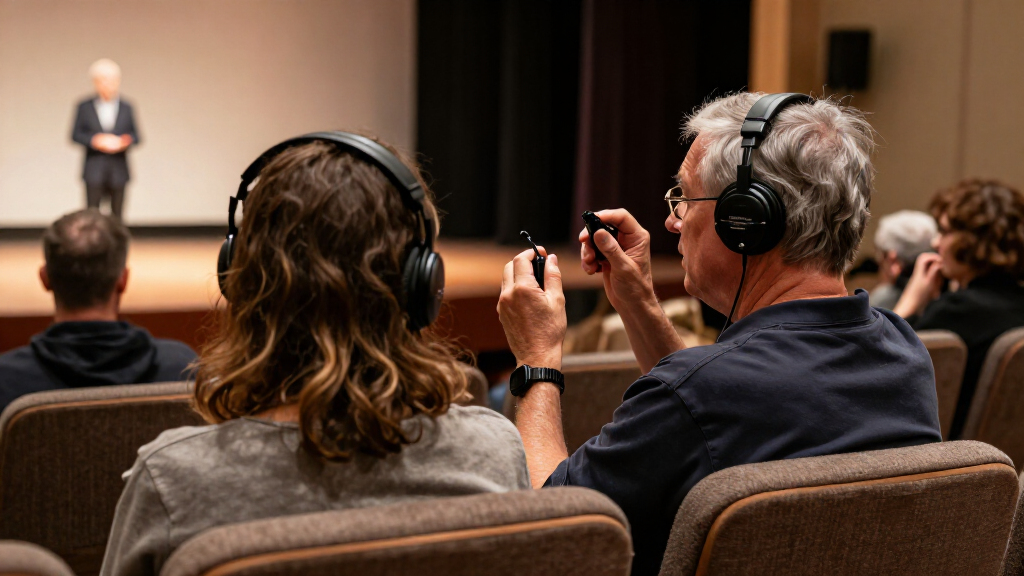
Choosing a listening aid starts with the listening environment, not the longest feature list. I would first define how many people need audio, where they will sit or move, and whether the system must be portable, installed, or private to a room. Those answers help prevent buying a personal amplifier for a group—or paying for venue infrastructure when one listener needs a simple aid.
Match the system to the audience size
Start by estimating how many listeners may need receivers at the same time, including occasional visitors rather than only regular users. A personal amplifier is generally a one-listener solution, while an installed infrared system is intended to distribute audio to multiple compatible receivers. Receiver count, storage, charging, cleaning, and check-out procedures can matter as much as the transmitter itself. A common mistake is to select a transmitter first and discover later that the receiver pool is too small or difficult to manage. Ask the supplier what receivers are included and what additional compatible units can be added. For changing attendance, plan for peak use rather than the quietest event.
Check room layout and infrared coverage
Infrared audio depends on light reaching the receiver, so room shape, seating, partitions, and obstructions can affect coverage. A system that suits a compact meeting room may not serve a larger or irregular space evenly. Before purchase, map likely seating areas and ask how many emitters or installation points the layout requires. Do not assume a stated area figure guarantees clear reception in every seat; placement and room conditions matter. If listeners move around, confirm that coverage follows them across the whole listening area. A site survey can be more useful than selecting a model based on a broad coverage label alone.
Decide whether privacy is a real requirement
Infrared can be a sensible choice when audio should remain within a room, since its signal does not pass through walls in the same way as many radio-frequency systems. That benefit depends on installation and room boundaries, so buyers with confidentiality requirements should ask how the proposed system handles spillover through openings or adjacent spaces. A secure-design model may suit sensitive meetings, but it can add cost and setup considerations without helping a casual TV listener. Consider who could overhear the source, what the consequences would be, and whether ordinary room separation is enough. If privacy is not a meaningful need, prioritize ease of use and fit instead of paying for security features by default.
Plan the audio connection before choosing Dante
Dante input is useful when a venue already routes sound through an audio-over-IP network or wants to integrate listening audio with networked equipment. It can be unnecessary complexity for a room using a straightforward analog source. Before choosing a Dante model, confirm that the audio team can configure and maintain the network connection and that the desired source can feed it. Also check whether the system supports the connection types your existing mixer, television, or public-address equipment provides. A connector mismatch can lead to adapters, extra setup, or a system that cannot be used as planned. Pay for network integration only when it solves a real routing need.
Compare portable use with fixed installation
A portable system makes sense when it must move between courtrooms, meeting spaces, or temporary events. That mobility can save effort across locations, but it also means staff need a repeatable setup routine and a plan for safe transport and storage. Fixed systems can be more convenient for regular use in one room, though installation and emitter placement take planning. Think about who will operate the equipment on a busy day and how much setup time is available. If the system will serve multiple rooms, check whether each room needs its own transmission equipment or whether one portable kit can realistically cover the schedule. Operational fit often matters more than portability on a product label.
Verify receiver fit, maintenance, and user comfort
Listeners may use stethoset receivers, headphones, or hearing aids with a compatible connection, and those choices affect comfort and accessibility. Confirm which receivers are supplied, what accessories are available, and whether users can adjust volume themselves. Battery runtime claims should be weighed against charging time, battery replacement, and the length of a typical event. Shared equipment also needs a routine for cleaning ear-contact surfaces and checking that every unit works before use. Ask whether replacement receivers and parts will remain available, especially for a venue that depends on the system every day. A feature-rich transmitter cannot compensate for uncomfortable receivers or poorly managed batteries.
Frequently Asked Questions
Can I use the Retekess TT106S as an infrared system?
No. The TT106S is described as using 2.4 GHz technology, not infrared, so its transmission method differs from the Williams AV IR systems in this roundup. It may suit someone comparing wireless listening options broadly, but it is not the right match when infrared transmission is a firm requirement. Confirm the technology on the exact model and any receiver before ordering, since product labels can group very different listening systems together. If room-contained infrared transmission is the reason for your search, focus on models explicitly identified as IR.
Should I choose the SY11 D or the standard SY11?
Choose the SY11 D when your venue has a Dante network and you want the listening system to receive audio through that network. The standard SY11 is the more direct fit when you do not need Dante routing and want to avoid adding network configuration to the installation. Before deciding, ask your audio or IT staff which source connections are available and who will maintain them. Dante is a useful capability only when it matches the facility’s existing workflow. If there is no clear network use case, the standard model is the simpler choice.
Is a personal amplifier enough for a church, courtroom, or meeting room?
A personal amplifier can help one listener hear a nearby source, but it does not provide the same room-wide service as a multi-receiver infrared system. For a venue that needs to accommodate several attendees, plan around a transmitter, coverage, receiver supply, and a way to distribute and collect equipment. A portable kit such as the IR SY6 may be relevant when the service moves between rooms, while installed systems suit regular use in a set location. Consider expected attendance and how staff will support listeners before choosing. If only one person needs assistance, a personal amplifier may be the more practical scale.
Will an infrared system work through walls or around room obstructions?
Infrared is generally intended to serve a defined room rather than transmit through walls, which can help limit audio outside the space. That also means walls, partitions, furniture, and other obstructions can interfere with reception inside it. Room shape and emitter placement affect where listeners receive a usable signal, so coverage should be planned for actual seating positions. Ask the vendor whether the intended room needs additional emitters or a site survey. For listeners who need to move between rooms, confirm coverage in every area rather than assuming one transmitter will serve the whole facility.
What should I verify before buying receivers for people who use hearing aids?
Check how each receiver connects to hearing aids and whether the required accessories are included or sold separately. Some listeners may prefer a stethoset or headphones, while others need a compatible neckloop or another connection to their hearing devices. Fit and comfort vary, so ask whether users can choose among receiver styles and control volume independently. For a shared venue, plan enough receiver types to meet the needs of regular attendees rather than buying one style for everyone. Confirm compatibility with the specific hearing aids in use before purchasing a large receiver pool.
Conclusion
For most venues seeking a complete infrared setup, I recommend the Williams AV IR SY11 as the best overall balance of room-focused use and straightforward system fit. The best premium choice is the SY12 D when secure listening and Dante integration are both needed; choose the non-D SY12 when security matters but Dante does not. For a more budget-conscious venue buyer, compare the SY4 or portable IR SY6 against the required coverage and mobility rather than assuming a personal amplifier can serve a group. The best choice for beginners is the Pocketalker Ultra when one person needs a simple listening aid, not a venue transmitter. For networked facilities, the SY11 D is the specific-fit pick; for private installations, look to the SY12 models. I would skip the Retekess TT106S if infrared is non-negotiable, since it uses 2.4 GHz transmission.
Halloween Picks

11.2-Foot Halloween Inflatable Pumpkin with LED Lights

MGparty 14.5FT Halloween Inflatable Walk-in Pumpkin House with LED Lights

DomKom 6 ft Halloween Inflatable Ghosts Roasting Marshmallows
As an affiliate, we earn on qualifying purchases.