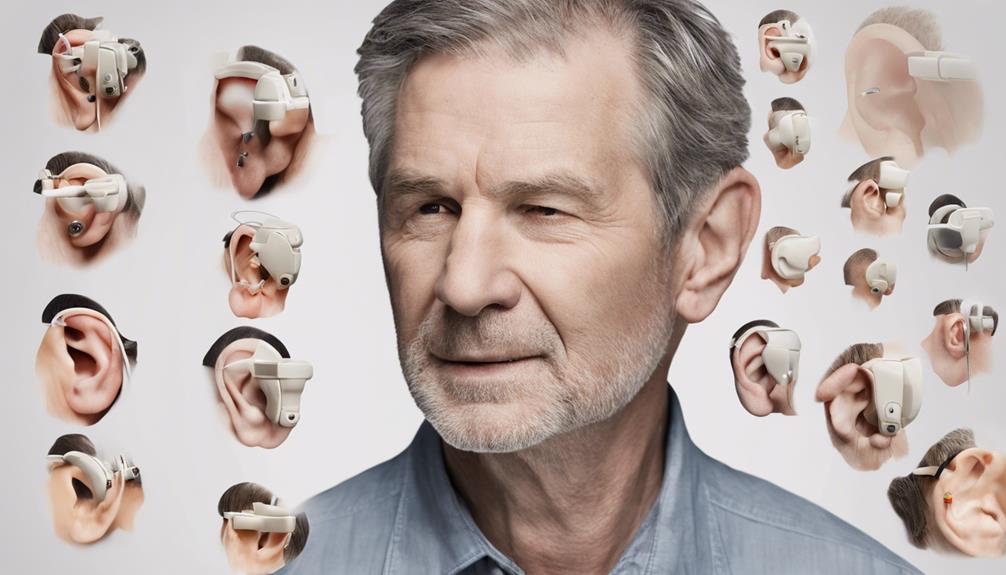
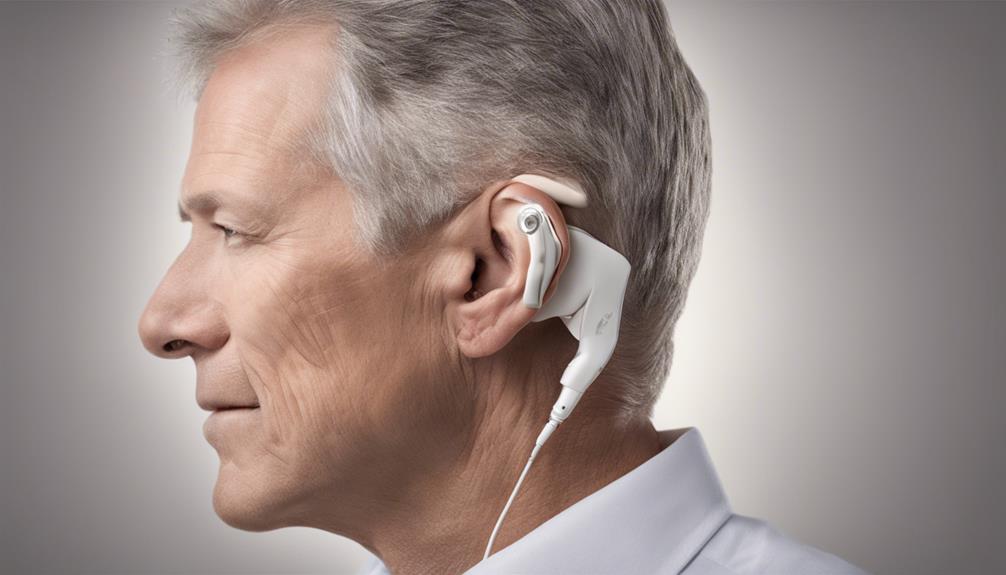
People searching for OTC hearing aids for severe hearing loss need to start with a qualification: the five products here are not established as suitable for severe loss. Several are described for mild to moderate or mild to moderately severe hearing loss, while others provide too little fitting information to confirm their range. OTC devices are intended for adults with perceived mild to moderate hearing loss under U.S. FDA guidance. For severe loss, a hearing professional can assess the cause and degree of loss and help identify appropriate amplification.

Get everyday helpers delivered free with Prime
- Fast, free delivery on millions of items
- Prime Video, Amazon Music and more included
- Member-only deals all year
Within those limits, Nano 2 stands out for app personalization and compact fit, while the Flaygo offers the longest stated case-cycle listening time and uncomplicated controls. The drying case on Product 3 adds a practical care feature, but does not resolve the missing fit and assessment details. My ranking weighs stated hearing-loss suitability first, then adjustability, usability, battery details and care features. Treat these as comparisons for readers also considering devices for milder loss—not as recommendations for severe loss.
Complete the kit


Key Takeaways
- None of these five is confirmed for severe hearing loss. Karthus is explicitly intended for mild to moderate loss; Nano 2 states mild to moderately severe, which still does not establish suitability for severe loss.
- Nano 2 provides the most adjustment guidance through an app hearing check and five named listening modes, but it lacks phone calls and music streaming.
- Flaygo leads on stated battery endurance with up to 80 hours per charging-box cycle; its four volume levels offer less granular adjustment than Karthus’s seven.
- Product 3 prioritizes device care with a low-heat drying case and four modes, though fit adjustment and hearing assessment details are not supplied.
- Get a professional hearing assessment for severe or sudden loss before relying on any OTC device; amplification cannot establish or treat the underlying cause.
| Nano 2 OTC Hearing Aids for Seniors with App Personalization |  | Best for guided adjustment within the stated range | Stated hearing-loss range: Mild to moderately severe | Fit: In-canal | Listening modes: Everywhere, Indoor, Outdoor, Restaurant, TV | VIEW ON AMAZON | See Our Full Breakdown |
| Flaygo Rechargeable Hearing Aids with Noise Reduction, Beige | 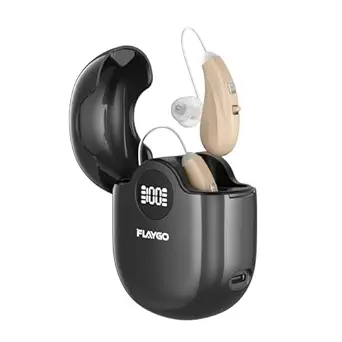 | Best for long battery intervals and simple controls | Fit: Behind-the-ear | Weight: 3.5 g | Processing: 16-channel digital chip | VIEW ON AMAZON | See Our Full Breakdown |
| Rechargeable OTC Hearing Aids for Seniors with Noise Reduction and Drying Case |  | Best for moisture care and listening-mode variety | Type: OTC rechargeable hearing aids | Hearing-loss range: Not specified | Charging: Magnetic rechargeable | VIEW ON AMAZON | See Our Full Breakdown |
| Rechargeable OTC Hearing Aids with Noise Cancellation | 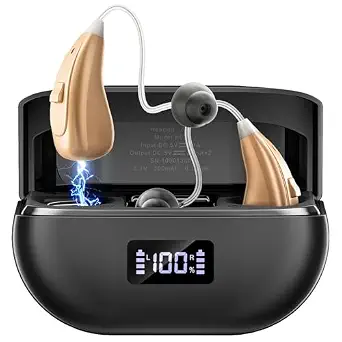 | Best for in-ear wear with adaptive noise control | Fit: In-ear | Processing: 16-channel | Noise control: Adaptive noise cancellation | VIEW ON AMAZON | See Our Full Breakdown |
| Karthus Rechargeable OTC Hearing Aids for Seniors |  | Best for tactile volume adjustment, but mild-to-moderate only | Fit: Behind-the-ear RIC | Intended hearing-loss range: Mild to moderate | Processing: 16-channel | VIEW ON AMAZON | See Our Full Breakdown |
| otc hearing aids for severe hearing loss | Fit | Listening modes | Battery life | Weight |
|---|---|---|---|---|
| Nano 2 OTC Hearing Aids for Se | In-canal | Everywhere, Indoor, Outdoor, Restaurant, TV | Up to 16 hours per charge; 50 hours with case | About 2.4 g per hearing aid |
| Flaygo Rechargeable Hearing Ai | Behind-the-ear | — | — | 3.5 g |
| Rechargeable OTC Hearing Aids | — | 4 | — | — |
| Rechargeable OTC Hearing Aids | In-ear | — | 25+ hours per charge; 100+ hours with case | 3 g per hearing aid; 34 g battery |
| Karthus Rechargeable OTC Heari | Behind-the-ear RIC | Quiet Mode and Noise Mode | Up to 30 hours per charge; up to 100 hours with case | — |
More Details on Our Top Picks
Nano 2 OTC Hearing Aids for Seniors with App Personalization
Nano 2 earns the first spot because it gives the clearest adjustment path in this group: an app-based hearing check, five named listening modes and a stated range of mild to moderately severe loss. That is more decision-useful than a generic noise-reduction claim. Still, “moderately severe” does not establish suitability for severe loss, and a self-guided app check is not a substitute for a diagnostic hearing assessment. If your loss is severe, get professional guidance before buying.
Its in-canal 2.4 g design may appeal to someone who values a discreet fit, while IPX5 water resistance and UV cleaning in the case address routine care. Compared with the behind-the-ear Flaygo, Nano 2 appears less conspicuous and offers more named program choices, but its stated battery life is shorter: up to 16 hours per charge and 50 hours with the case, versus Flaygo’s 80-hour case-cycle claim. A 15-minute charge gives about three hours, which can help in a pinch.
The limits are concrete: it does not support phone calls or music streaming, and the product notes that tinnitus masking sounds are not a treatment. Five modes also do not tell me how well the device can be individually fitted to a severe audiogram. I would place it ahead of the others for someone whose loss is within its stated range and who wants app-led adjustment, but I would not treat its range label as proof it can address severe loss.
Pros:- App-based hearing check supports personalized amplification
- Five named modes cover common listening environments
- Compact 2.4 g in-canal design with IPX5 water resistance
- UV cleaning and quick-charge support in the case
Cons:- Stated range stops at mild to moderately severe; severe suitability is unconfirmed
- No music streaming or phone calls
- Up to 16 hours per charge is shorter than Flaygo’s stated case-cycle endurance
Best for: Adults with mild to moderately severe loss who want app personalization, discreet in-canal hardware and several environment-specific modes.
Not ideal for: Anyone with confirmed severe loss who needs professionally verified output or phone and music streaming.
- Stated hearing-loss range:Mild to moderately severe
- Fit:In-canal
- Listening modes:Everywhere, Indoor, Outdoor, Restaurant, TV
- Maximum gain:Up to 40 dB
- Noise reduction:Up to 20 dB
- Battery life:Up to 16 hours per charge; 50 hours with case
- Weight:About 2.4 g per hearing aid
- Connectivity:No music streaming or phone calls
Our verdict“I rank Nano 2 first for its stated range and adjustment tools, while advising buyers with severe loss to seek a professional assessment instead of relying on its app check.”
Flaygo Rechargeable Hearing Aids with Noise Reduction, Beige
Flaygo is the strongest pick here for buyers who put charging frequency and straightforward operation ahead of fine-grained adjustment. The behind-the-ear units have one-button controls and four volume levels, so there is little setup complexity. Its claim of up to 80 hours per charging-box cycle is the longest stated endurance among these five; that may suit someone who wants fewer charging interruptions, though the listing does not clarify a per-charge duration separate from the case cycle.
Against Nano 2, Flaygo trades app personalization and five environment modes for simpler physical controls and a longer stated case-cycle figure. It also lists a 16-channel digital chip, noise reduction and whistling suppression, but does not provide a hearing-loss range or maximum gain. That missing information matters more than the processing-channel count for a person with severe loss. The lightweight 3.5 g design and beige finish may be comfortable and less conspicuous than the matte-black Karthus, but comfort and fit depend on the individual ear and should not be assumed from weight alone.
I would consider Flaygo only after confirming with a hearing professional that its output and fitting options meet the listener’s needs. Four volume levels may feel limiting beside Karthus’s seven, and software update support is listed as unknown. The broad compatibility claim names smartphones, tablets and televisions, but no specific streaming capability is described. It therefore should not be read as confirmation of direct audio streaming or call support.
Pros:- Up to 80 hours of listening per charging-box cycle
- Lightweight 3.5 g behind-the-ear design
- Noise reduction and whistling suppression are specified
- One-button operation keeps daily controls simple
Cons:- No stated hearing-loss range or maximum gain
- Four volume levels provide fewer adjustment steps than Karthus
- Software update support is unknown
Best for: A buyer with needs within an appropriate OTC range who prefers behind-the-ear fit, simple button controls and fewer charging interruptions.
Not ideal for: Someone needing confirmed severe-loss amplification, detailed personalization or clearly documented software support.
- Fit:Behind-the-ear
- Weight:3.5 g
- Processing:16-channel digital chip
- Controls:One button; four volume levels
- Charging:USB-C; 2-hour charge
- Listening time:Up to 80 hours per charging-box cycle
- Noise features:Noise reduction and whistling suppression
- Battery:Lithium-ion, 3.7 V
Our verdict“Flaygo is the battery-focused, easy-control option, but its missing fitting range makes it a poor blind purchase for severe hearing loss.”
Rechargeable OTC Hearing Aids for Seniors with Noise Reduction and Drying Case
This model’s distinguishing feature is not a claim about stronger amplification; it is the low-heat drying module in the charging case. For someone who wears hearing aids through warm, active days, a dedicated drying function may be a useful maintenance feature. The listing also specifies four listening modes, DSP noise reduction and up to 30 hours per charge, with up to 120 hours of total case capacity. Those details make it more care-oriented than Flaygo, whose standout is endurance without a stated drying function.
For a severe-loss shopper, however, its information gaps are central. The listing gives no hearing-loss range, maximum gain, fitting adjustment process or hearing assessment details. A stated 20 dB noise-reduction figure describes one aspect of sound handling; it does not say whether the device can deliver enough amplification for a particular severe audiogram. Compared with Nano 2, which at least names a range and an app-based hearing check, this product leaves more of the suitability question unanswered.
I would shortlist it for a buyer with an appropriate professionally confirmed range who values moisture care and longer case capacity. I would not infer clinical fit from the four modes, and the supplied description’s lack of user feedback does not establish either quality or poor performance. Ask for clear fitting and output information before choosing it, especially when severe loss is involved. Its strongest role is as a maintenance-conscious alternative, not a verified severe-loss solution.
Pros:- Low-heat drying function helps address moisture and sweat
- Four listening modes for different environments
- Up to 30 hours per charge and 120 hours of case capacity
- DSP noise reduction is specified
Cons:- No stated hearing-loss range or maximum gain
- Fit adjustment and hearing assessment details are absent
- The 20 dB noise-reduction figure does not establish severe-loss suitability
Best for: A user within an appropriate OTC range who wants a drying case, multiple listening modes and substantial stated case capacity.
Not ideal for: A person who needs clearly documented severe-loss fit, gain limits or an adjustment process before purchasing.
- Type:OTC rechargeable hearing aids
- Hearing-loss range:Not specified
- Charging:Magnetic rechargeable
- Playback per charge:Up to 30 hours
- Total case capacity:Up to 120 hours
- Listening modes:4
- Noise reduction:20 dB
- Case feature:Low-heat drying module
Our verdict“I favor this model for case-based moisture care, but its sparse fitting details put it behind options with clearer adjustment information.”
Rechargeable OTC Hearing Aids with Noise Cancellation
Product 2 takes a different route from the behind-the-ear Flaygo: it uses a lightweight in-ear design and adaptive noise cancellation with speech enhancement. The 16-channel processing and five volume levels give it a reasonable feature set for basic adjustment, and the stated 25-plus hours per charge and 100-plus hours with the case offer a useful endurance reference. An LED power display can make it easier to see when the case needs charging.
Its stated hearing-loss range is missing, which is a serious limitation in a roundup focused on severe loss. Adaptive noise cancellation describes how background sound may be handled; it does not establish maximum output or suitability for a severe audiogram. Nano 2 is a more informative choice for fit decisions because it names a hearing-loss range and app adjustment, while this model is the simpler alternative for someone who prefers in-ear hardware and does not need app setup.
The controls are intentionally basic: one button and five volume levels. That is slightly more granular than Flaygo’s four steps, though still far less descriptive than a documented personalized fitting. The supplied information lists a one-year warranty and silicone material, but does not clarify the fitting options or software update support. Charging takes up to two hours, and software support is unknown. I would put it on a shortlist only when a professional confirms the device’s output is appropriate; the feature list alone cannot answer that question.
Pros:- Adaptive noise cancellation and speech enhancement are specified
- Five volume levels and straightforward one-button control
- Up to 25 hours per charge and over 100 hours with the case
- LED display shows charging-case power
Cons:- No stated hearing-loss range or maximum gain
- Software update support is unknown
- Up to two-hour charge time and limited fitting details
Best for: Someone with needs within an appropriate OTC range who prefers an in-ear form, simple button operation and adaptive noise handling.
Not ideal for: A person with severe loss who needs a stated fitting range, app-based fine adjustment or verified maximum output.
- Fit:In-ear
- Processing:16-channel
- Noise control:Adaptive noise cancellation
- Controls:One button; five volume levels
- Battery life:25+ hours per charge; 100+ hours with case
- Charging time:Within 2 hours
- Weight:3 g per hearing aid; 34 g battery
- Warranty:1 year
Our verdict“This is a plausible basic in-ear option for confirmed OTC-range needs, but the missing range information keeps it below Nano 2 for this search.”
Karthus Rechargeable OTC Hearing Aids for Seniors
Karthus has the most explicit limitation in this group: its listing says it is designed for mild to moderate hearing loss. That makes it the least appropriate match for a search centered on severe loss, even though several controls are clearly documented. I rank it last on the title’s core need, while recognizing that its seven volume levels offer finer button-based changes than Flaygo’s four or Product 2’s five.
The behind-the-ear RIC design includes two modes, Quiet and Noise, and up to 30 hours per charge or 100 hours with the case. A 15-minute quick charge is a practical fallback. Compared with Nano 2, Karthus lacks an app-based hearing check and names a narrower range; compared with Flaygo, it provides more volume steps but a shorter stated total case-cycle figure. Its no-app, no-Bluetooth approach may appeal to someone who wants direct controls and no wireless setup, but it also rules out connected features.
For a person with severe loss, the limitation outweighs those conveniences. The listing does not supply maximum gain, and its intended mild-to-moderate range cannot be stretched by selecting a louder volume. More amplification is not automatically safer or clearer, and the right device depends on the hearing profile. I would consider Karthus only for an adult whose professional assessment places their needs within the stated range and who wants simple, tactile controls.
Pros:- Seven volume levels provide more steps than Flaygo or Product 2
- Two modes target quieter and noisier settings
- Up to 30 hours per charge and 100 hours with case
- 15-minute quick charge is listed
Cons:- Explicitly intended for mild to moderate loss, not severe loss
- No maximum gain information is supplied
- No app, Bluetooth or wireless connectivity
Best for: An adult with professionally confirmed mild to moderate loss who wants seven volume steps and straightforward, non-connected controls.
Not ideal for: Anyone with severe loss or anyone who wants app personalization, Bluetooth, calls or audio streaming.
- Fit:Behind-the-ear RIC
- Intended hearing-loss range:Mild to moderate
- Processing:16-channel
- Listening modes:Quiet Mode and Noise Mode
- Volume control:One button; 7 levels
- Battery life:Up to 30 hours per charge; up to 100 hours with case
- Quick charge:15 minutes
- Connectivity:No app, Bluetooth or wireless function
Our verdict“Karthus has useful tactile controls for mild-to-moderate needs, but its stated range makes it the weakest match for severe loss.”

How We Picked
I ranked these options for readers searching for severe-loss help by first checking what the supplied product information actually says about intended hearing-loss range. That is the key filter: a long battery claim, noise reduction feature or multiple modes cannot show that a device can provide enough appropriately fitted amplification for severe loss. Karthus explicitly names mild to moderate loss, and Nano 2 names mild to moderately severe loss. The other three do not provide a stated range in the supplied details, so I treat their suitability as unverified rather than assuming a broader range.
Within that boundary, I compared how much practical control each device appears to offer: app personalization, volume steps, named modes and fit style. I also considered the usability implications of charging claims, case capacity, drying or UV cleaning, and whether connectivity is supported. These matter to day-to-day use, but they do not replace a hearing evaluation or professional fitting. I give more weight to specific, interpretable information than to broad claims such as speech enhancement or noise cancellation without fitting data.
The order therefore reflects usefulness as a comparison for adults whose needs may fall within OTC limits, while keeping the severe-loss caveat visible. Nano 2 ranks first among the supplied details for its stated range and adjustment tools; Flaygo follows for battery endurance and simple operation, with its intended range unstated. Product 3 is next for its care case and modes, also with key fit details absent. Product 2 has adaptive processing and simple controls but no stated hearing-loss range. Karthus ranks last for this particular search because its own description limits it to mild to moderate loss. A clinician can help determine whether any of these is appropriate for an individual listener.
| otc hearing aids for severe hearing loss | Fit |
|---|---|
| Nano 2 OTC Hearing Aids for Se | In-canal |
| Flaygo Rechargeable Hearing Ai | Behind-the-ear |
| Rechargeable OTC Hearing Aids | — |
| Rechargeable OTC Hearing Aids | In-ear |
| Karthus Rechargeable OTC Heari | Behind-the-ear RIC |
Factors to Consider When Choosing Otc Hearing Aids For Severe Hearing Loss
For severe hearing loss, I would make the hearing assessment the first buying step and treat these product features as secondary. OTC hearing aids are intended for adults with perceived mild to moderate hearing loss. A feature list cannot establish whether an individual device can match a severe audiogram or whether the hearing change has a medical cause.Start with the stated hearing-loss range
Read the intended range before comparing battery figures or listening modes. In this group, Karthus expressly names mild to moderate loss, and Nano 2 names mild to moderately severe loss. The other three supplied descriptions do not state a range. None is confirmed here as appropriate for severe loss. If an audiogram shows severe loss, ask an audiologist or other hearing professional which devices can meet the needed output and fitting requirements.
Understand what adjustment features can and cannot do
More volume steps can make everyday changes less abrupt: Karthus lists seven, Product 2 lists five, and Flaygo lists four. Nano 2 adds app-based personalization and named modes, while Product 3 lists four modes. Those features may help a listener adapt to different settings, but they do not prove adequate amplification for severe loss. Ask how the device is matched to hearing thresholds and whether follow-up adjustment is available.
Choose a fit around comfort and handling
Flaygo and Karthus use behind-the-ear styles, while Product 2 and Nano 2 are described as in-ear or in-canal. A smaller device may be less visible, but can be harder for some people to handle; behind-the-ear components may be easier to grasp, though fit and comfort vary. Product 3 does not specify its fit in the supplied details. If dexterity, ear shape or vision is a concern, ask to see and handle the device before committing.
Compare battery claims carefully
Battery descriptions are not fully equivalent. Flaygo states up to 80 hours per charging-box cycle, Product 2 claims 25-plus hours per charge and 100-plus with its case, and Nano 2 lists up to 16 hours per charge and 50 with the case. Product 3 claims up to 30 hours per charge and 120 total case capacity; Karthus lists up to 30 and 100. Actual time depends on settings and use, so prioritize a clearly stated per-charge figure if daily reliability matters.
Treat noise reduction and tinnitus features as limited tools
Noise reduction can make busy environments more comfortable for some listeners, but a decibel figure or processing-channel count does not tell the whole story about speech clarity. Nano 2 includes tinnitus masking sounds, and its listing states these are not treatment. New, sudden, one-sided or rapidly worsening hearing loss, ear pain, drainage or dizziness calls for prompt medical advice rather than an OTC purchase.
Check support, connectivity and care
Nano 2’s UV cleaning, Product 3’s drying function and Product 2’s LED case display address different practical needs. Karthus explicitly has no app or wireless connectivity, while Nano 2 does not support phone calls or music streaming. Flaygo and Product 2 list software update support as unknown. Before buying, confirm return and fitting support, warranty terms, replacement accessories and whether the connectivity you need is actually supported.
Frequently Asked Questions
Can any of these OTC hearing aids be recommended for severe hearing loss?
The supplied information does not confirm any of these five for severe hearing loss. Karthus is described for mild to moderate loss, and Nano 2 for mild to moderately severe loss; the remaining listings omit a range. Because OTC hearing aids are intended for adults with perceived mild to moderate loss, a person with severe loss should get a hearing assessment and ask a professional about devices matched to their audiogram.
What should I do if I think my hearing loss is severe?
Arrange an evaluation with an audiologist or another qualified hearing professional, especially if the loss is new, sudden, one-sided or worsening. A hearing test can measure the degree and pattern of loss and help identify whether medical care is needed. Do not use an OTC device’s volume range or app hearing check as a diagnosis or as proof that it can safely meet severe-loss needs.
Which model offers the most adjustment options?
Nano 2 has the broadest named program set with five listening modes and app-based personalization. Karthus has the most physical volume steps at seven, while Product 2 has five volume levels and Product 3 offers four modes. These describe different kinds of control, and none alone confirms that the amplification is matched to an individual hearing profile.
Which option has the longest stated battery endurance?
Flaygo lists up to 80 hours per charging-box cycle, while Product 3 states up to 30 hours per charge and 120 hours of total case capacity. Product 2 claims over 100 hours with its case, and Karthus lists up to 100 hours. Since the listings use different descriptions, compare the per-charge time and case capacity separately, and expect actual use to vary with volume and settings.
Do noise cancellation or tinnitus masking make an OTC device suitable for severe loss?
No. Noise handling features may affect comfort in particular environments, and tinnitus masking sounds may offer an audio option, but neither establishes the device’s maximum output or its fit for severe loss. Nano 2’s listing specifically says tinnitus masking is not a treatment. Suitability depends on hearing measurements, device capability and professional guidance.
Conclusion
For a buyer whose assessment places their loss within the OTC range, I would start with Nano 2 for app-guided adjustment and named modes, or Flaygo if long stated case-cycle endurance and simple controls matter more. Choose Product 3 when moisture care is a priority, and look at Product 2 for an in-ear design with adaptive noise handling. Karthus makes sense only for the mild-to-moderate range named in its listing and for someone who values direct controls over connectivity.
If your hearing loss is severe, none of these listings provides enough evidence for me to recommend it as a match. Begin with a professional hearing assessment, then compare devices against the measured loss, required output, fit and follow-up support. That route gives you a more reliable basis for choosing than battery life, noise reduction or a broad OTC label alone.
Halloween Picks
halloween
As an affiliate, we earn on qualifying purchases.