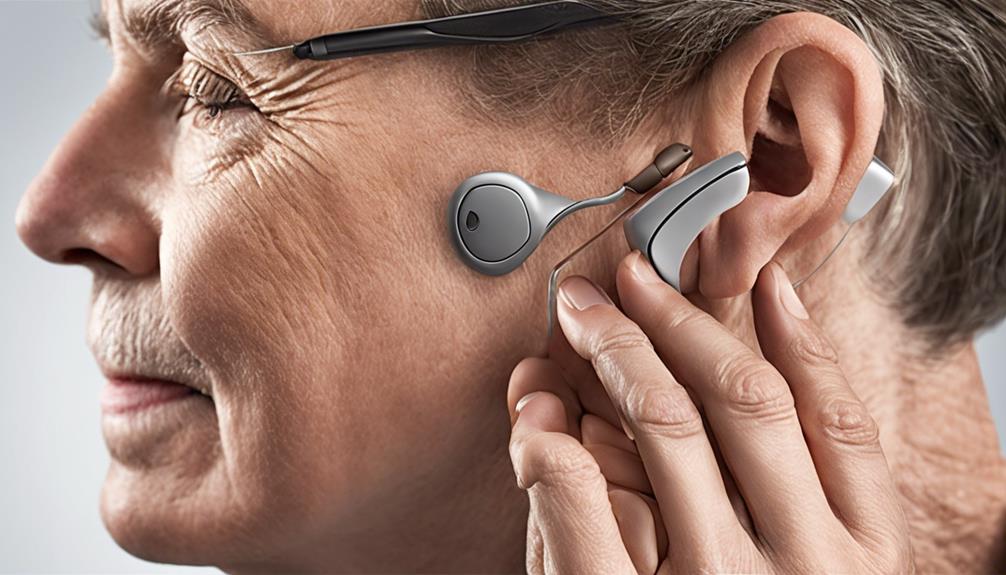
For high-frequency hearing loss, the right hearing aids need to make speech sounds clearer without simply making every sound louder. I’d put the ELEHEAR Beyond Pro among the strongest candidates for its speech-focused features, while the ELEHEAR Beyond OTC stands out for buyers who want a simpler rechargeable option and Vivtone suits shoppers who value app-based fitting and streaming. The main tradeoffs are how precisely a device can be adjusted, how it handles background noise, and whether its fit and controls are comfortable for daily use. OTC hearing aids may work for some adults with perceived mild-to-moderate loss, but they are not a substitute for an exam when symptoms or results are unclear. Read on for the full comparison, selection criteria, and advice on choosing for your hearing pattern.

Get everyday helpers delivered free with Prime
- Fast, free delivery on millions of items
- Prime Video, Amazon Music and more included
- Member-only deals all year
Complete the kit


Key Takeaways
- Speech tuning matters more than a high amplification number: ELEHEAR’s Beyond models stand out in this lineup for features aimed at speech clarity, while basic amplification claims alone do not show whether high-pitched consonants will be easier to hear.
- The ELEHEAR Beyond Pro family offers the strongest feature-led options: several listings name the Beyond Pro, so compare the exact package and model details rather than assuming every listing includes the same functions.
- Vivtone and AuraLink emphasize app control and Bluetooth: these options make more sense for buyers who want phone-based adjustments or streaming, but connected features may add setup steps.
- Oction’s touchscreen models prioritize case-based controls: they may appeal to shoppers who prefer a display over app menus, though the two Oction listings appear closely related and their exact differences need checking.
- Long battery claims and compact designs solve different problems: models advertising extended battery life may suit frequent users, while Audien Atom One appeals to buyers seeking a smaller in-ear style; neither trait alone establishes fit for high-frequency loss.
| AuraLink Bluetooth Hearing Aids for Seniors Adults, App-Controlled, AI Noise Reduction, Bluetooth 5.4, Compatible with iOS & Android |  | Best for Active, Connected Wearers | Hearing-loss range: 25–85 dB HL | Design: Receiver-in-canal (RIC) | Connectivity: Bluetooth 5.4 | VIEW ON AMAZON | See Our Full Breakdown |
| ELEHEAR Beyond Pro Hearing Aids, Bluetooth Rechargeable OTC Hearing Aids for Seniors and Adults, Soft Gold |  | Best for Speech-Focused App Adjustments | Sound enhancement: VocClear 2.0; stated 30% clearer speech | Frequency range: Up to 8,500 Hz | Latency: 8 ms | VIEW ON AMAZON | See Our Full Breakdown |
| Rechargeable Hearing Aids for Seniors with Noise Cancelling |  | Best for Simple, Phone-Free Use | Processing: 16-channel chip | Volume levels: 5 levels: 24, 28, 32, 36, and 40 dB | Battery life: Up to 25 hours per charge | VIEW ON AMAZON | See Our Full Breakdown |
| ELEHEAR Beyond Pro Bluetooth Hearing Aids |  | Best for App Extras and Everyday Convenience | Type: Over-the-counter RIC hearing aids | Sound processing: VocClear 2.0 | Frequency detail: Up to 8,500 Hz | VIEW ON AMAZON | See Our Full Breakdown |
| Hearing Aids for Seniors, OTC Hearing Aids with Long Battery Life and Upgraded Sound Quality |  | Best for Long Daily Wear Without an App | Processor: 16-channel | Battery life: Over 24 hours per charge | Charging time: 1.5 hours | VIEW ON AMAZON | See Our Full Breakdown |
| ELEHEAR Beyond Pro Hearing Aids, Bluetooth OTC Hearing Aids for Seniors and Adults |  | Best for Speech Clarity | Technology: VocClear 2.0 | Frequency range: Up to 8,500 Hz | Sound enhancement claim: 30% clearer speech | VIEW ON AMAZON | See Our Full Breakdown |
| Oction Rechargeable Touchscreen Hearing Aids with Bluetooth |  | Best for On-Device Controls | Fit: Behind-the-ear | Bluetooth: Bluetooth 5.4 | Hearing modes: 4 | VIEW ON AMAZON | See Our Full Breakdown |
| ELEHEAR Beyond Rechargeable OTC Hearing Aids with 50 dB Amplification |  | Best for Fine-Tuning in the App | Type: Rechargeable OTC hearing aids | Intended hearing loss: Mild to moderate | Amplification: 50 dB | VIEW ON AMAZON | See Our Full Breakdown |
| Karthus Hearing Aids for Seniors and Adults with Hearing Loss, 2 Modes, In-Ear Design, Noise Cancelling, 6 Volume Levels, 96H+ Battery Life, White |  | Best for App-Free Simplicity | Design: In-ear | Modes: 2 | Volume levels: 6 | VIEW ON AMAZON | See Our Full Breakdown |
| OTC Hearing Aids for Seniors with Noise Cancelling, 100 Hours Battery Life | 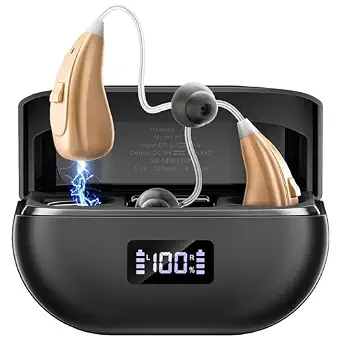 | Best for Simple, Long-Lasting Use | Controls: One-button; automatic memory | Channels: 16-channel HD sound | Noise cancellation: Yes | VIEW ON AMAZON | See Our Full Breakdown |
| Audien Atom One OTC Hearing Aids |  | Best for Simple Manual Tuning | Fit: In-ear | Hearing loss support: Mild to moderate | Controls: Analog volume and frequency dials | VIEW ON AMAZON | See Our Full Breakdown |
| Rechargeable Hearing Amplifiers for Seniors with Noise Cancelling and Charging Case (Blue/Red) |  | Best for First-Time Users | Weight per device: 2 g | Material: Medical-grade silicone | Battery life: Up to 60 hours | VIEW ON AMAZON | See Our Full Breakdown |
| Vivtone Bluetooth Hearing Aids with App Control for Precise Fitting, Phone Calls & Music Streaming, Rechargeable OTC Hearing Aids for Seniors and Adults | 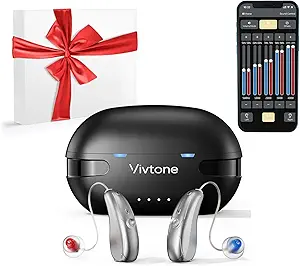 | Best for App-Based Personalization and Streaming | Design: Receiver-in-canal | Connectivity: Bluetooth | App compatibility: iOS 12 and Android 11.0 or later | VIEW ON AMAZON | See Our Full Breakdown |
| ELEHEAR Beyond OTC Hearing Aids with AI Speech Enhancement |  | Best for Speech-Focused Processing | Hearing loss range: Mild to moderate | Maximum gain: Up to 50 dB | Noise attenuation: 24 dB | VIEW ON AMAZON | See Our Full Breakdown |
| Oction Touchscreen Rechargeable Hearing Aids with Bluetooth |  | Best for On-Device Controls and Long Standard-Mode Runtime | Design: Dolphin-style behind-the-ear | Weight: 3.5 g | Controls: Touchscreen | VIEW ON AMAZON | See Our Full Breakdown |
| hearing aids for high frequency loss | Battery life | Design |
|---|---|---|
| AuraLink Bluetooth Hearing Aid | — | Receiver-in-canal (RIC) |
| ELEHEAR Beyond Pro Hearing Aid | Up to 20 hours per charge | — |
| Rechargeable Hearing Aids for | Up to 25 hours per charge | Mini receiver-in-canal (RIC) |
| ELEHEAR Beyond Pro Bluetooth H | Up to 20 hours per charge | — |
| Hearing Aids for Seniors | Over 24 hours per charge | Receiver-in-ear (RIE) |
| ELEHEAR Beyond Pro Hearing Aid | Up to 20 hours per charge | Receiver-in-Canal (RIC) |
| Oction Rechargeable Touchscree | Up to 30 hours Bluetooth playback; up to 100 hours standard hearing mode | — |
| ELEHEAR Beyond Rechargeable OT | — | — |
| Karthus Hearing Aids for Senio | 96+ hours with case | In-ear |
| OTC Hearing Aids for Seniors w | 25+ hours per charge; 100+ hours with case | — |
| Audien Atom One OTC Hearing Ai | Up to 24 hours per charge | — |
| Rechargeable Hearing Amplifier | Up to 60 hours | — |
| Vivtone Bluetooth Hearing Aids | Up to 24 hours of use; up to 3 hours of streaming | Receiver-in-canal |
| ELEHEAR Beyond OTC Hearing Aid | Up to 20 hours per charge; up to 100 hours with case | Receiver-in-the-canal |
| Oction Touchscreen Rechargeabl | Up to 30 hours Bluetooth playback; up to 100 hours in standard mode | Dolphin-style behind-the-ear |
More Details on Our Top Picks
AuraLink Bluetooth Hearing Aids for Seniors Adults, App-Controlled, AI Noise Reduction, Bluetooth 5.4, Compatible with iOS & Android
AuraLink earns its place for buyers who want app-adjustable sound and Bluetooth streaming alongside a discreet receiver-in-canal fit. For high-frequency loss, personalized profiles may help tailor amplification to individual listening needs, while the product listing gives a stated hearing-loss range of 25–85 dB HL. That range alone does not confirm suitability for a particular hearing profile, so I would not treat it as a substitute for a hearing assessment. Compared with the ELEHEAR Beyond Pro, AuraLink adds IP68 water and dust resistance and a UV-sanitizing case, making it the more weather-ready choice. Its tradeoff is dependence on the app for full control; the simpler rechargeable model with five fixed volume levels is a better fit for someone who wants fewer digital controls. The listing limits AuraLink to mild-to-moderate hearing loss.
Pros:- App-based sound profiles allow personal adjustments.
- Bluetooth 5.4 supports calls and music connection.
- IP68 water and dust resistance suits active daily routines.
- RIC design and UV-sanitizing charging case add practical convenience.
Cons:- Full functionality depends on a compatible smartphone and app.
- Listed for mild-to-moderate hearing loss, not severe loss.
- The product information does not specify battery runtime or charging time.
Best for: Active adults with mild-to-moderate hearing loss who want app-based sound adjustments, phone and music streaming, and added water and dust protection.
Not ideal for: People who do not use a smartphone, want straightforward fixed controls, or need a device selected and fitted for more severe hearing loss.
- Hearing-loss range:25–85 dB HL
- Design:Receiver-in-canal (RIC)
- Connectivity:Bluetooth 5.4
- App compatibility:iOS and Android
- Water and dust resistance:IP68
- Charging case:UV-sanitizing
Our verdict“Choose AuraLink if you want connected, adjustable hearing support with stronger stated environmental protection than the ELEHEAR Beyond Pro.”
ELEHEAR Beyond Pro Hearing Aids, Bluetooth Rechargeable OTC Hearing Aids for Seniors and Adults, Soft Gold
The Beyond Pro is the clearest fit here for shoppers prioritizing speech enhancement with app-based fine-tuning. Its VocClear 2.0 processing is described as improving speech clarity, and the stated frequency range reaches 8,500 Hz—relevant when comparing devices for high-frequency audibility, though it does not guarantee a particular fitting outcome. An 8 ms latency and music mode also broaden its use beyond conversation. Against AuraLink, the Beyond Pro offers a documented 15-minute quick charge for up to six hours, while AuraLink has the stronger stated water and dust protection. The Beyond Pro’s soft materials, multiple dome sizes, and app controls suit people willing to adjust their fit and sound. I would skip it for severe loss or for regular use in wet or sweaty conditions, since resistance details are not provided.
Pros:- VocClear 2.0 is designed to improve speech clarity.
- Frequency range is specified up to 8,500 Hz.
- A 15-minute charge is stated to provide up to six hours of use.
- Multiple dome sizes and soft RIC materials support fit adjustments.
Cons:- Designed for mild-to-moderate hearing loss and may not suit severe cases.
- Full adjustments rely on the smartphone app.
- Water and sweat resistance are not specified.
Best for: Adults with mild-to-moderate hearing loss who want app-adjustable speech support, Bluetooth, and a quick-charge option for busy days.
Not ideal for: People with severe hearing loss, those who prefer controls that work without a smartphone, or wearers needing clearly specified water and sweat resistance.
- Sound enhancement:VocClear 2.0; stated 30% clearer speech
- Frequency range:Up to 8,500 Hz
- Latency:8 ms
- Amplification:50 dB
- Battery life:Up to 20 hours per charge
- Quick charge:15 minutes for up to 6 hours of use
- Charging case:Provides 4 full charges
- Design and connectivity:RIC; Bluetooth; iOS and Android app compatibility
Our verdict“Pick the Beyond Pro over AuraLink if speech-focused processing and a documented quick charge matter more to you than stated IP68 protection.”
Rechargeable Hearing Aids for Seniors with Noise Cancelling
This model stands apart from the app-connected AuraLink and ELEHEAR Beyond Pro by keeping Bluetooth and smartphone controls out of the picture. Its 16-channel chip, speech-focused noise processing, and five volume levels offer a more direct way to adjust everyday listening. For someone with high-frequency loss who wants to raise volume without managing an app, that simplicity may be appealing; however, the fixed steps are less precise than personalized profiles. Battery life is a major differentiator: the listing states up to 25 hours per charge and 80–100 hours with the case, compared with up to 20 hours per charge for the Beyond Pro. The tradeoff is limited flexibility: there is no Bluetooth, and the product data does not specify a frequency range or individualized high-frequency fitting. Buyers seeking streaming or finer tuning should choose AuraLink instead.
Pros:- 16-channel processing is paired with speech-oriented noise reduction.
- Up to 25 hours of use per charge is stated.
- Charging case is listed to extend total use to 80–100 hours.
- One-handed volume operation includes memory of the selected setting.
Cons:- No Bluetooth connectivity for calls or music.
- Five fixed volume levels offer less precise adjustment than an app.
- No frequency range or high-frequency fitting details are provided.
Best for: People who want rechargeable, discreet RIC hearing aids with basic one-handed volume control and no need for Bluetooth or an app.
Not ideal for: Wearers who want phone calls, music streaming, fine-grained app adjustments, or documented high-frequency frequency-response details.
- Processing:16-channel chip
- Volume levels:5 levels: 24, 28, 32, 36, and 40 dB
- Battery life:Up to 25 hours per charge
- Charging-case runtime:80–100 hours stated
- Design:Mini receiver-in-canal (RIC)
- Rechargeable:Yes
- Bluetooth:No
Our verdict“Choose this model over the Bluetooth-enabled ELEHEAR Beyond Pro if you value long stated case runtime and simple controls more than streaming or personalization.”
ELEHEAR Beyond Pro Bluetooth Hearing Aids
This version of the ELEHEAR Beyond Pro is the pick for buyers drawn to app-based soundscapes and convenience features, not just basic amplification. VocClear 2.0, an up-to-8,500 Hz frequency detail, and 8 ms latency make it a feature-rich option for speech and connected listening. It also adds automatic power on and off, multiple dome sizes, and stated translation support for 20 languages. Compared with the similarly named Beyond Pro in soft gold, the core runtime and quick-charge claims match; this listing puts more emphasis on soundscapes and translation. Those extras depend on the app and should not be mistaken for a substitute for a properly matched hearing aid. AuraLink is a stronger alternative for buyers who put stated IP68 protection first. The Beyond Pro remains limited by its up-to-20-hour per-charge runtime and absent water-resistance details.
Pros:- VocClear 2.0 sound processing and frequency detail up to 8,500 Hz.
- App includes 20 customizable soundscapes.
- Automatic power on and off when removed from or returned to the case.
- Quick charge and case support reduce interruptions between uses.
Cons:- Translation and sound adjustments rely on the app.
- Runtime is stated as up to 20 hours per charge.
- Water and sweat resistance are not specified.
Best for: Smartphone users who want app-adjustable sound, multiple listening soundscapes, Bluetooth, and automatic case-based power controls.
Not ideal for: People who avoid app-dependent features, need water-resistance information, or want longer stated runtime between charges than 20 hours.
- Type:Over-the-counter RIC hearing aids
- Sound processing:VocClear 2.0
- Frequency detail:Up to 8,500 Hz
- Latency:8 ms
- Battery life:Up to 20 hours per charge
- Quick charge:15 minutes for up to 6 hours of use
- Charging case:Provides 4 additional charges
- App and listening features:iOS and Android; 20 soundscapes; translation support for 20 languages
Our verdict“Choose this Beyond Pro over AuraLink if app soundscapes and automatic power controls matter more than stated water and dust resistance.”
Hearing Aids for Seniors, OTC Hearing Aids with Long Battery Life and Upgraded Sound Quality
For buyers who want to avoid app setup, this model offers a straightforward alternative to the Bluetooth-enabled ELEHEAR Beyond Pro. It pairs a 16-channel processor with Normal, Restaurant, Outdoor, and Music modes, giving wearers a way to adapt listening without smartphone controls. The strongest practical distinction is its stated over-24-hour battery life, which exceeds the Beyond Pro’s listed maximum of 20 hours per charge. That could suit long days away from a charger, though the listing does not explain how each listening mode affects runtime. The RIE design is described as lightweight and discreet, but no fit accessories or frequency-response detail are provided. For high-frequency loss specifically, the lack of a stated frequency range makes it harder to judge how well the device may address a particular hearing profile. Buyers wanting individualized adjustments should look to AuraLink instead.
Pros:- Over 24 hours of use per charge is stated.
- Four listening modes cover common environments and music.
- 16-channel processing is paired with noise reduction.
- Lightweight RIE design is intended for discreet extended wear.
Cons:- No smartphone app for personalized sound adjustments.
- Automatic mode switching may not match every wearer’s preferences.
- Frequency range and detailed fitting information are not provided.
Best for: People who want a lightweight rechargeable hearing aid with preset listening modes and long stated runtime, without smartphone-based controls.
Not ideal for: Buyers who need app-based personalization, Bluetooth streaming, or clear specifications about high-frequency response and fitting.
- Processor:16-channel
- Battery life:Over 24 hours per charge
- Charging time:1.5 hours
- Listening modes:Normal, Restaurant, Outdoor, Music
- Design:Receiver-in-ear (RIE)
- Weight:Lightweight; exact weight not specified
- App control:None listed
Our verdict“Choose this over the ELEHEAR Beyond Pro if you prefer preset modes and longer stated daily runtime to Bluetooth and app customization.”
ELEHEAR Beyond Pro Hearing Aids, Bluetooth OTC Hearing Aids for Seniors and Adults
For high-frequency loss, the ELEHEAR Beyond Pro is the most speech-focused choice in this group: its listed range reaches 8,500 Hz, and VocClear 2.0 is designed to make speech easier to distinguish. That emphasis may help when consonants sound blurred, though the stated “30% clearer” figure is a product claim, not a guarantee of an individual result. Compared with the ELEHEAR Beyond, this model adds Bluetooth and AI translation, while the Beyond offers more explicit app controls for frequency and directionality. A 15-minute quick charge also suits people who forget to charge overnight. The tradeoff is reliance on an app for full customization; buyers seeking straightforward, app-free controls may prefer the Karthus. A fitting assessment still matters: these OTC aids are not a substitute for care when hearing loss is severe or one-sided.
Pros:- VocClear 2.0 and a listed frequency range up to 8,500 Hz target speech detail that can be difficult to hear with high-frequency loss.
- Bluetooth and AI translation add phone connectivity beyond the ELEHEAR Beyond’s listed controls.
- A 15-minute charge is specified to provide up to six hours of use.
- RIC fit and multiple dome sizes support personalizing the earpiece fit.
Cons:- Full control and customization require a smartphone app.
- AI translation may add complexity for buyers who only need basic amplification.
- The product description does not provide a detailed prescription-style fitting range for individual high-frequency needs.
Best for: Adults with mild-to-moderate high-frequency difficulty who want speech-focused processing, Bluetooth connectivity, and app-based adjustments.
Not ideal for: People who want app-free operation, or anyone with severe, sudden, or one-sided hearing loss who needs professional evaluation rather than an OTC device.
- Technology:VocClear 2.0
- Frequency range:Up to 8,500 Hz
- Sound enhancement claim:30% clearer speech
- Design:Receiver-in-Canal (RIC)
- Battery life:Up to 20 hours per charge
- Quick charge:15 minutes for up to 6 hours of use
- Connectivity and app:Bluetooth; iOS and Android app compatibility
- AI translation:11 languages
Our verdict“Choose the Beyond Pro if speech-focused processing and Bluetooth matter more than app-free simplicity.”
Oction Rechargeable Touchscreen Hearing Aids with Bluetooth
The Oction Rechargeable Touchscreen is the pick for buyers who want visible, direct controls instead of relying on a phone app. Its screen adjusts each ear separately, selects among four hearing modes, and displays battery status—a more hands-on setup than the app-centered ELEHEAR Beyond. Bluetooth 5.4 adds streaming, while the listed 16-channel chip and four modes offer ways to adapt listening, though the available details do not specify how precisely it boosts high-frequency sounds. Battery figures also depend on use: up to 100 hours in standard hearing mode falls to up to 30 hours of Bluetooth playback. The touchscreen and behind-the-ear form may be less discreet than the in-ear Karthus, and charging the aids and case takes different amounts of time. This suits control-oriented users more than buyers seeking a clearly documented high-frequency fitting range.
Pros:- Touchscreen provides direct access to each ear’s volume, hearing modes, and battery status.
- Bluetooth 5.4 supports calls and audio streaming from compatible smartphones.
- The case is specified to provide five full recharges.
- Lightweight behind-the-ear design is described as suitable for glasses wearers.
Cons:- Bluetooth playback is listed at up to 30 hours, well below the up-to-100-hour standard hearing-mode figure.
- The hearing aids and case have separate charging times of one and two hours.
- The supplied details do not state a frequency range or a specific high-frequency adjustment function.
Best for: Adults who want on-device adjustments, separate left/right volume control, and smartphone streaming without depending on an app for everyday changes.
Not ideal for: Buyers prioritizing a discreet in-ear device or those who need documented frequency-specific fitting information for high-frequency loss.
- Fit:Behind-the-ear
- Bluetooth:Bluetooth 5.4
- Hearing modes:4
- Volume levels:10
- Digital chip:16-channel
- Battery life:Up to 30 hours Bluetooth playback; up to 100 hours standard hearing mode
- Charging time:1 hour for aids; 2 hours for case
- Weight:3.5 g
Our verdict“Pick Oction if direct touchscreen control and streaming are priorities, but skip it if you need clearly documented frequency-specific fitting.”
ELEHEAR Beyond Rechargeable OTC Hearing Aids with 50 dB Amplification
Among these five, the ELEHEAR Beyond gives the clearest account of how a buyer can adjust sound: its app offers controls for frequency, directionality, volume, and listening environment. That makes it a more targeted starting point for someone who wants to tune speech and surroundings than the one-button OTC Hearing Aids for Seniors with Noise Cancelling. It is listed for mild-to-moderate loss with 50 dB amplification and up to 24 dB noise reduction, but those figures alone do not show whether its settings will match a particular high-frequency audiogram. Nine dome sizes and a quick-charge feature add practical flexibility. The tradeoff is that scene switching and customization depend on the companion app, unlike the direct controls on the Oction Touchscreen. I would choose it for adjustability, not for buyers who want a simple, app-free routine.
Pros:- App controls include frequency and directionality, providing more sound adjustment than the one-button model.
- Four scene modes let users change settings for different listening environments.
- Nine dome sizes provide a broad range of fit options.
- A 15-minute charge is specified to provide up to six hours of runtime.
Cons:- Designed for mild-to-moderate loss, so it may not suit more significant hearing impairment.
- Scene switching and sound customization require the companion app.
- The 50 dB amplification figure does not by itself establish a personalized high-frequency fitting.
Best for: Adults with mild-to-moderate hearing loss who are comfortable using an app and want controls for frequency response and listening environments.
Not ideal for: People who avoid smartphone apps, want physical on-device scene controls, or need a professionally fitted device for complex hearing loss.
- Type:Rechargeable OTC hearing aids
- Intended hearing loss:Mild to moderate
- Amplification:50 dB
- Noise reduction:Up to 24 dB
- Scene modes:4
- App controls:Volume, frequency, sound directionality, and environment profiles
- Runtime:Up to 20 hours per charge; up to 100 hours with charging case
- Fit:Behind-the-ear; 9 dome sizes
Our verdict“Choose the ELEHEAR Beyond if app-based frequency tuning is your priority and you are comfortable managing settings on a phone.”
Karthus Hearing Aids for Seniors and Adults with Hearing Loss, 2 Modes, In-Ear Design, Noise Cancelling, 6 Volume Levels, 96H+ Battery Life, White
The Karthus is the straightforward choice here: its in-ear design, two modes, and six volume levels avoid the apps and streaming features found on the ELEHEAR Beyond Pro and Oction Touchscreen. That simplicity may appeal to someone who wants basic amplification without a smartphone in the daily routine. Its stated 96-plus hours with the case also reduces charging interruptions, and noise cancellation is listed for everyday listening. For high-frequency loss, though, the product information does not specify a frequency range or offer frequency-specific controls. That makes it harder to judge whether it can address the particular consonant audibility problems a buyer may have. Compared with the adjustable ELEHEAR Beyond, Karthus gives up fine tuning and Bluetooth in exchange for simpler operation. Its mild-to-moderate limitation also makes professional advice sensible if hearing difficulty is substantial.
Pros:- In-ear design offers a more discreet alternative to the behind-the-ear Oction and ELEHEAR models.
- Two modes and six volume levels keep operation relatively simple.
- The listed 96-plus hours with the case supports extended use between charging sessions.
- No app or Bluetooth setup is specified.
Cons:- No Bluetooth connectivity for calls, music, or other phone audio.
- Volume requires manual adjustment and the controls are less flexible than the ELEHEAR Beyond app.
- Product details do not provide a frequency range or high-frequency-specific tuning options.
Best for: Adults with mild-to-moderate hearing loss who prefer a discreet in-ear aid with basic manual controls and no app or Bluetooth setup.
Not ideal for: Buyers who need frequency-specific adjustments, phone streaming, or a professionally fitted solution for severe or complex hearing loss.
- Design:In-ear
- Modes:2
- Volume levels:6
- Noise cancellation:Yes
- Battery life:96+ hours with case
- Charging:USB Type-C
- Intended users:Adults 18+ with mild-to-moderate hearing loss
Our verdict“Choose Karthus for simple, discreet, app-free amplification, but look elsewhere if precise high-frequency tuning or streaming matters.”
OTC Hearing Aids for Seniors with Noise Cancelling, 100 Hours Battery Life
This one-button model is aimed at buyers who want a low-effort routine: automatic memory and a single control remove the app setup and multiple adjustments offered by the ELEHEAR Beyond. Its 16-channel processing and noise cancellation are presented as aids to clearer conversations, but the product details do not identify a frequency range or a specific high-frequency adjustment. That leaves less evidence for choosing it specifically to improve high-pitched speech sounds than the frequency-control ELEHEAR Beyond. Battery life is a strong practical point: the listing gives 25-plus hours per charge and 100-plus hours with the case. The tradeoff is less user control; buyers who need to tailor sound by frequency or listening environment may find the automatic approach limiting. Compared with Karthus, this model offers simpler one-button operation but is not described as an in-ear design.
Pros:- One-button operation and automatic memory reduce the number of adjustments users need to manage.
- The stated runtime is 25-plus hours per charge and 100-plus hours with the charging case.
- 16-channel processing and noise cancellation are intended to support clearer listening.
- Three-gram weight per aid and medical-grade silicone are specified for a lightweight fit.
Cons:- No frequency range or frequency-specific controls are listed for tailoring high-frequency amplification.
- Automatic settings offer less direct adjustment than the ELEHEAR Beyond app.
- Requires regular charging and may not suit users who prefer disposable batteries.
Best for: Seniors who want rechargeable aids with one-button operation, automatic memory, and long stated runtime rather than detailed manual tuning.
Not ideal for: People who need to adjust high-frequency response, prefer disposable batteries, or want control over multiple listening profiles.
- Controls:One-button; automatic memory
- Channels:16-channel HD sound
- Noise cancellation:Yes
- Battery life:25+ hours per charge; 100+ hours with case
- Battery type:Lithium-ion
- Charging time:2 hours
- Weight:3 g each
- Material:Medical-grade silicone
Our verdict“Pick this model for simple controls and extended rechargeable use, not for buyers who need documented high-frequency tuning.”
Audien Atom One OTC Hearing Aids
For mild to moderate high-frequency loss, the Audien Atom One is the most straightforward pick here for someone who wants to adjust sound without using an app. Its separate analog volume and frequency dials offer direct control, which may suit buyers who prefer hands-on adjustments over the customizable smartphone settings on the Vivtone Xpure or ELEHEAR Beyond. That simplicity also limits fine-tuning: the product data does not describe speech enhancement or noise reduction, so busy restaurants may be a tougher setting than quieter conversations. The in-ear design comes with three dome sizes and a removal pull-wire, while the rechargeable battery is rated for up to 24 hours. I’d choose it for uncomplicated daily use, not for listeners seeking advanced sound processing or detailed app adjustments.
Pros:- Separate analog dials adjust volume and frequency without an app.
- Rechargeable battery provides up to 24 hours of use per charge.
- Three ear dome sizes help users find a more secure fit.
- Universal in-ear design includes a pull-wire for removal.
Cons:- No noise-control feature is listed, which may limit comfort in busy environments.
- Designed for mild to moderate hearing loss rather than more severe loss.
- A full recharge takes about three hours.
Best for: Adults with mild to moderate hearing loss who want manual volume and frequency adjustments without smartphone setup.
Not ideal for: Listeners who need noise reduction for crowded settings or want app-based fine-tuning and speech enhancement.
- Fit:In-ear
- Hearing loss support:Mild to moderate
- Controls:Analog volume and frequency dials
- Battery life:Up to 24 hours per charge
- Charging time:About 3 hours
- Charging connector:USB-C
- Included fit options:Small, medium, and large ear domes
- Warranty:1 year
Our verdict“Choose the Audien Atom One if you want direct, app-free adjustments and can do without advanced noise processing.”
Rechargeable Hearing Amplifiers for Seniors with Noise Cancelling and Charging Case (Blue/Red)
This pair is the simplest entry point in the group: one-button volume control, automatic on/off through the case, and no app-based setup are described. The five volume levels and adaptive digital noise cancellation offer a more guided experience than the Audien Atom One’s manual frequency and volume dials, but they do not provide the same kind of direct frequency adjustment. That distinction matters for high-frequency loss, where a buyer may want more than general amplification. The standout practical advantage is stamina: the maker lists up to 60 hours per charge and more than 110 hours of backup from the case. At just 2 g per device, the silicone build is also designed for low-profile wear. I’d treat these as amplifiers, not a substitute for individualized fitting or medically prescribed hearing aids.
Pros:- One-button control offers five volume levels without app setup.
- Automatic power on and off through the charging case simplifies daily handling.
- Up to 60 hours of use per charge, with more than 110 hours of case backup listed.
- Each device weighs 2 g and uses medical-grade silicone.
Cons:- Described as an amplifier rather than a medically prescribed hearing aid.
- No custom programming or professional fitting support is specified.
- No exact noise-reduction performance or frequency-specific tuning details are provided.
Best for: First-time users who want a lightweight, simple-to-operate amplifier and long stretches between charging.
Not ideal for: Buyers seeking verified hearing-loss-specific programming, professional fitting support, or detailed frequency adjustment.
- Weight per device:2 g
- Material:Medical-grade silicone
- Battery life:Up to 60 hours
- Charging case backup:More than 110 hours
- Volume control:5 levels
- Power control:Long-press for 5 seconds; automatic on/off via case
- Colors:Blue and red
Our verdict“Pick this model for low-effort controls and extended battery backup, but not for individualized high-frequency tuning.”
Vivtone Bluetooth Hearing Aids with App Control for Precise Fitting, Phone Calls & Music Streaming, Rechargeable OTC Hearing Aids for Seniors and Adults
The Vivtone Xpure is the choice here for buyers who want app-adjustable sound alongside Bluetooth calls and music. Its multiple environment modes and customizable settings offer more ways to adapt than the Audien Atom One’s physical dials, while the ELEHEAR Beyond adds stated AI speech enhancement and noise attenuation that are not listed for the Vivtone. For high-frequency loss, app control can be useful when a listener wants to change settings across situations, but the product data does not specify a dedicated high-frequency adjustment range or maximum gain. The receiver-in-canal design and up-to-24-hour battery support routine wear, although streaming is listed for only three hours. A smartphone is needed for app control, and the added features may feel like extra work for someone who wants basic amplification and physical controls.
Pros:- App-based sound customization and multiple environment modes allow adjustments for different settings.
- Bluetooth supports calls and music streaming.
- Rechargeable battery is rated for up to 24 hours of use.
- Receiver-in-canal design keeps the main device behind the ear.
Cons:- App control requires iOS 12 or Android 11.0 and later.
- Streaming is listed for up to 3 hours, far less than the general-use battery figure.
- No specific high-frequency tuning range or noise-attenuation figure is provided.
Best for: Smartphone users with mild to moderate hearing needs who want customizable listening modes and regular Bluetooth calls or music.
Not ideal for: People who do not use a compatible smartphone, prefer simple physical controls, or need long daily streaming sessions.
- Design:Receiver-in-canal
- Connectivity:Bluetooth
- App compatibility:iOS 12 and Android 11.0 or later
- Battery life:Up to 24 hours of use; up to 3 hours of streaming
- Charging time:2.5 hours
- Standby time:Up to 1 week
- Listening modes:Multiple environment modes
Our verdict“Choose the Vivtone Xpure if app customization and streaming matter more to you than simple controls or stated AI speech processing.”
ELEHEAR Beyond OTC Hearing Aids with AI Speech Enhancement
Among these five, the ELEHEAR Beyond gives the clearest stated emphasis on speech in noisy surroundings, pairing AI speech enhancement with 24 dB of noise attenuation and feedback control. That makes it a stronger fit for conversation-focused listening than the Audien Atom One, which lists manual frequency and volume dials but no noise control. The receiver-in-canal design, multiple dome sizes, and remote audiologist care add fitting support that the Vivtone Xpure’s listed features do not mention. Its app also provides personalized settings, though some functions depend on a compatible smartphone, and the stated support range is mild to moderate hearing loss. Battery life reaches up to 20 hours per charge, with up to 100 hours total using the case. I’d favor it for speech clarity and guided care, while buyers who want minimal app involvement may prefer simpler controls.
Pros:- AI speech enhancement, noise attenuation, and feedback control target clearer conversations.
- App offers adjustable volume and personalized hearing settings.
- Remote audiologist care provides support beyond basic self-setup.
- Charging case supports up to 100 hours of total battery life.
Cons:- The stated hearing-loss range is mild to moderate, not severe.
- Some settings and features require the companion app.
- Battery life is listed as up to 20 hours per charge, less than the Audien Atom One’s stated 24 hours.
Best for: Adults with mild to moderate hearing loss who prioritize speech clarity and want app adjustments plus remote audiologist care.
Not ideal for: People with severe hearing loss or buyers who want all adjustments available without a smartphone.
- Hearing loss range:Mild to moderate
- Maximum gain:Up to 50 dB
- Noise attenuation:24 dB
- Design:Receiver-in-the-canal
- Connectivity:Bluetooth
- App compatibility:iOS and Android
- Battery life:Up to 20 hours per charge; up to 100 hours with case
- Fit options:Multiple dome sizes
- Support:Remote audiologist care
Our verdict“Choose the ELEHEAR Beyond if speech processing and remote fitting support outweigh the need for app-free operation.”
Oction Touchscreen Rechargeable Hearing Aids with Bluetooth
Oction stands apart by putting controls on a touchscreen interface rather than relying mainly on an app or small physical dials. The screen adjusts volume, switches among four hearing modes, and displays battery status, which may appeal to users who want settings and charge information at a glance. Its listed 16-channel chip and 5 ms latency are intended to support clearer, more responsive sound, while Bluetooth 5.4 adds calls and music. Compared with the Vivtone Xpure, Oction claims up to 100 hours in standard hearing mode, but that falls to 30 hours during Bluetooth playback. The product data does not specify high-frequency gain or a noise-attenuation figure, so those seeking explicit speech-focused processing may prefer the ELEHEAR Beyond. The touchscreen may also take practice, and the behind-the-ear form is less discreet than a deep in-ear amplifier.
Pros:- Touchscreen controls show battery status and adjust volume and hearing modes.
- Four hearing modes and ten volume levels provide several on-device settings.
- Up to 100 hours of standard hearing-mode use is listed with the charging case.
- Bluetooth 5.4 supports calls and music on iOS and Android devices.
Cons:- Bluetooth playback is listed at up to 30 hours, much shorter than standard hearing mode.
- Touchscreen controls may take time to learn compared with the Audien Atom One’s physical dials.
- No specific high-frequency gain or noise-attenuation figure is supplied.
Best for: Buyers who want on-device mode and volume adjustments, visible battery status, and long standard-mode runtime.
Not ideal for: Listeners who prioritize a nearly invisible in-ear fit, simple buttons, or clearly specified high-frequency amplification.
- Design:Dolphin-style behind-the-ear
- Weight:3.5 g
- Controls:Touchscreen
- Hearing modes:4
- Volume levels:10
- Sound processing:16-channel digital chip; 5 ms latency
- Connectivity:Bluetooth 5.4; iOS and Android compatibility
- Battery life:Up to 30 hours Bluetooth playback; up to 100 hours in standard mode
- Charging:Hearing aids: 1 hour; case: 2 hours; case provides 5 full recharges
Our verdict“Pick Oction if you want visible touchscreen controls and extended standard-mode battery life, not a discreet fit or documented frequency-specific tuning.”

How We Picked
I ranked these options around the needs that shape a high-frequency-loss purchase: speech intelligibility, the ability to adjust sound, fit and comfort, ease of daily controls, battery and charging, and useful connectivity. Features such as AI speech enhancement, noise reduction, app fitting, and multiple listening modes matter when they give a buyer a practical way to handle conversations in different settings. I also treated broad claims like “noise cancelling,” “upgraded sound,” and long battery life as incomplete evidence; those descriptions do not by themselves show how well a device handles the specific frequencies a wearer struggles to hear.
The ranking gives more weight to models whose stated features support speech-focused adjustment and flexible everyday use, then distinguishes simpler, compact, or long-runtime choices by the buyers they may suit. Several entries are similar ELEHEAR Beyond or Oction listings, so I would check the exact model name, included accessories, and fitting options before choosing between them. Product names and provided feature descriptions do not establish prescription suitability or clinical performance. Anyone with sudden, one-sided, painful, or rapidly worsening hearing changes should seek professional care rather than relying on an OTC device.
Factors to Consider When Choosing Hearing Aids For High Frequency Loss
Choosing for high-frequency loss is not just a matter of selecting the loudest device. I’d match the product’s fitting approach and daily controls to the situations where speech is hardest to follow, then check whether the device can be returned or adjusted if the first setup does not help.
Match the fitting to the sounds you miss
High-frequency loss often makes consonants such as “s,” “f,” and “th” harder to distinguish, even when voices sound loud enough. A device that raises volume across the board may make background noise more intrusive without restoring speech detail. Look for clear information about frequency-specific adjustment or an app-based fitting process, and check whether you can change settings after the initial setup. Do not assume an advertised amplification figure tells you how well a device addresses your particular hearing pattern. If you have an audiogram, use it to guide a fitting discussion rather than choosing from a product name alone. When no adjustment method is explained, treat claims about clearer speech as a reason to investigate, not proof of a suitable match.
Choose noise features for your real listening situations
Noise reduction can help in a busy room, but it is not the same as separating one speaker from a crowd. Think about where you most often miss words: television, a quiet conversation, a restaurant, or a group meeting. Different environments may call for different listening modes, so check how settings are changed and whether those controls are manageable for you. A common mistake is to choose the strongest-sounding noise claim without considering whether the device preserves speech detail. If most of your conversations happen in quiet places, comfortable sound and a good fit may matter more than a long list of noise features. For frequent group settings, ask a hearing professional what benefit to expect from the specific device.
Treat app control and Bluetooth as convenience features
App control can make volume and program changes easier to reach, particularly when small buttons are difficult to handle. Bluetooth adds potential for calls or streamed audio, but compatibility and setup can vary by phone and operating system. Check whether the advertised connection supports the tasks you actually want, rather than assuming every Bluetooth hearing aid streams calls in the same way. Consider whether you are comfortable keeping an app installed and managing pairing or updates. If you prefer straightforward operation, a touchscreen case or physical controls may feel simpler, though a case display can be less convenient when it is not nearby. Connectivity should support your routine, not compensate for a poor fit or unsuitable sound settings.
Look past battery claims to the charging routine
Long runtime can reduce charging interruptions, but advertised figures may depend on listening level, streaming, and other use conditions. Ask whether the stated battery duration refers to the hearing aids, the charging case, or a combined total. Think about your own schedule: a case that is easy to recharge may matter more than a headline runtime if you can charge overnight. A rechargeable model also removes the need to handle small disposable batteries, but it depends on remembering to charge the device. Check how clearly the case indicates charging status and whether it is practical to carry. Choose the routine you are most likely to maintain, not just the largest number in a product description.
Prioritize comfort and handling over a discreet look alone
An in-ear design may be less visible, but comfort depends on ear shape, dome fit, and how many hours you wear it. A device that feels fine for a short trial can become irritating over a full day, so learn what fit options and return terms are available before buying. Small controls can also be difficult for people with limited dexterity or vision. Compare app controls, physical buttons, and touchscreen cases based on how you will make adjustments while wearing the aids. Do not choose solely by compactness if the product gives you few ways to tailor the sound. A secure, comfortable fit is more useful than a discreet device that you avoid wearing.
Know when OTC is not the right first step
OTC hearing aids are intended for adults managing perceived mild-to-moderate hearing loss, but a product listing cannot diagnose the cause or degree of loss. A hearing test can reveal whether your difficulty is concentrated in high frequencies and whether another issue needs attention. Seek professional care for sudden changes, pain, drainage, dizziness, one-sided hearing trouble, or a major difference between ears. If speech remains unclear after reasonable adjustments, a clinician can help check the fit and determine whether a different level of care is needed. Buying several devices based on amplification claims can cost time without answering the underlying question. Start with an assessment when symptoms are unexplained or more than mild.
Frequently Asked Questions
Can I choose an OTC hearing aid for high-frequency loss without an audiogram?
Some adults with perceived mild-to-moderate hearing loss can try OTC hearing aids, but an audiogram gives a clearer picture of which frequencies are affected. That matters because a device that sounds louder may not make high-pitched speech cues clearer. If you buy without a test, favor an option with understandable adjustment controls and a clear return policy. Arrange a hearing assessment if the device does not help conversations or if you are unsure about the cause of your symptoms. Sudden or one-sided changes call for prompt professional attention, not a trial-and-error purchase.
Should I prioritize speech enhancement or noise reduction?
For high-frequency loss, speech clarity is usually the central goal, while noise reduction is useful when competing sounds make conversations harder. These features are not interchangeable: reducing background sound does not necessarily restore consonants that are difficult to hear. Consider where you struggle most and look for controls that let you adapt the sound to that setting. If you mainly talk in quiet rooms, fit and speech-focused adjustment may matter more than aggressive noise processing. For restaurants or groups, ask how the model handles those settings and whether it offers practical listening modes.
Is Bluetooth worth choosing if I mainly want help with conversation?
Bluetooth is optional if your main goal is hearing nearby speech, and it does not by itself indicate better hearing support. It can be useful for phone calls or streamed audio, but pairing and compatibility add setup considerations. Check which phones and functions the exact model supports before relying on it for calls. If you rarely stream, you may be better served by straightforward controls and a fitting process you can manage. If calls are a major source of difficulty, compare call handling alongside everyday speech performance rather than choosing on connectivity alone.
How can I tell whether a long battery claim reflects everyday use?
Product descriptions may report hearing-aid runtime, case-supported runtime, or a combined figure, and these numbers are not directly interchangeable. Streaming, volume, and listening habits can also affect how often a device needs charging. Check the wording carefully and look for details about what is included in the claim. Consider whether the charger is easy to use and whether its indicators show when the aids are ready. A slightly shorter stated runtime may suit you better if the charging routine is simpler and more reliable for your day.
What should I do if an OTC hearing aid makes sound louder but speech is still unclear?
First check that the device sits correctly and that you have followed its fitting and adjustment instructions. Avoid continually raising volume, since that can make background noise uncomfortable without improving speech detail. Try available speech or environment settings, then note which situations remain difficult. If the problem continues, seek a hearing assessment and ask whether the device can be adjusted for your hearing profile. Persistent trouble, sudden changes, pain, or one-sided symptoms are reasons to consult a professional rather than continuing to experiment.
Conclusion
For buyers who want a feature-rich starting point, I’d shortlist the ELEHEAR Beyond Pro as the best overall candidate in this lineup because its stated speech-focused and connected features address more of the day-to-day adjustments high-frequency loss can require. For best value, compare the simpler ELEHEAR Beyond rechargeable listings and confirm exactly which model and fitting functions are included. The best premium-style choice is the Beyond Pro configuration that matches your preferred color and connectivity, though the repeated listings make checking model details especially important. For beginners, a straightforward rechargeable option with accessible controls may be easier to live with than a feature-heavy app setup; compare the basic rechargeable models and choose the one with the clearest fitting and return information. For app-focused buyers, AuraLink or Vivtone deserve a closer look, while shoppers who prefer case controls can compare the Oction touchscreen listings. If you are unsure about your hearing pattern or an OTC device does not improve speech clarity, start with a hearing professional before buying another amplifier.