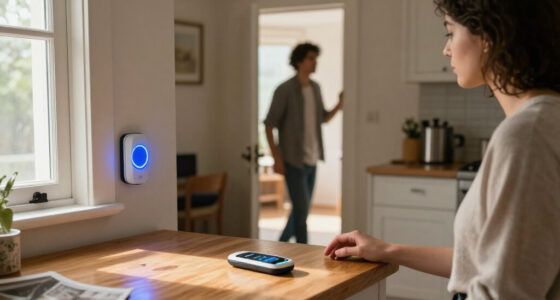

Choosing the right personal sound amplifier can dramatically improve your ability to follow conversations in noisy environments or watch television at a comfortable volume. The Williams Sound Pocketalker Ultra stands out as the best overall pick due to its balanced mix of directional microphone technology and durable build quality, making it reliable for daily use. For those prioritizing battery convenience, the SuperEar SE9000HP offers a rechargeable design that eliminates the hassle of frequent battery swaps, while the Reizen Mighty Loud Ear serves those needing maximum amplification for severe hearing loss. The main tradeoff in this category is between raw volume and audio clarity; many budget options boost decibels at the cost of background noise distortion. Continue reading to discover which model aligns with your specific listening needs and budget constraints.

Get everyday helpers delivered free with Prime
- Fast, free delivery on millions of items
- Prime Video, Amazon Music and more included
- Member-only deals all year
Complete the kit


Key Takeaways
- Directional microphones significantly outperform omnidirectional mics in reducing background noise during one-on-one conversations.
- Rechargeable models often have shorter continuous playtimes than battery-operated counterparts but offer lower long-term maintenance costs.
- Budget multi-packs generally lack the frequency filtering capabilities found in single-unit premium models, leading to less natural sound quality.
- Comfort is heavily dependent on earpiece material; silicone tips provide a better seal and comfort for extended wear than hard plastic.
- Volume limitations vary widely; users with profound hearing loss require models exceeding 110 dB, while mild loss users risk discomfort with such high output.
| Geiserailie 3-Pack Personal Hearing Amplifiers with Headphones |  | Best for Sharing | Quantity: 3 amplifiers | Volume levels: 8 | Sound gain: Up to 50 dB | VIEW LATEST PRICE | See Our Full Breakdown |
| SuperEar SE5000 Personal Sound Amplifier with Headphones and Earbuds |  | Best for Simple Portable Listening | Amplification: Up to 50+ dB | Battery life: Up to 30 hours | Battery type: 1 AAA battery | VIEW LATEST PRICE | See Our Full Breakdown |
| Williams Sound Pocketalker Ultra Personal Sound Amplifier with Headphones, Earbud, and Battery Bundle |  | Best for Fine-Tuning Speech | Maximum amplification: Up to 40 dB | Power source: Battery powered | Battery type: AAA alkaline | VIEW LATEST PRICE | See Our Full Breakdown |
| SuperEar SE9000HP Rechargeable Personal Sound Amplifier |  | Best for Rechargeable Operation | Model: SE9000HP | Manufacturer: SuperEar | Frequency settings: High, Medium, Low | VIEW LATEST PRICE | See Our Full Breakdown |
| Williams Sound Pocketalker 2.0 Personal Hearing Amplifier |  | Best for One-on-One Conversations | Model: Pocketalker 2.0 (PKT 2.0 EH) | Type: Personal hearing amplifier | Controls: Separate volume and tone controls | VIEW LATEST PRICE | See Our Full Breakdown |
| Joanbro Personal Sound Amplifier with Headphones and Earbud | 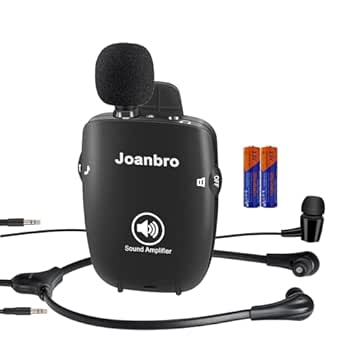 | Best for Customization and Versatility | Total Gain: Up to 108 dB | Microphone Options: 3 types included | Power Source: 2 AAA batteries | VIEW LATEST PRICE | See Our Full Breakdown |
| Reizen Mighty Loud Ear 120 dB Personal Sound Amplifier |  | Best for Maximum Volume | Sensitivity: 120 dB (±3 dB) | Frequency Range: 10 Hz–30 kHz | Battery Life: Approx. 48 hours | VIEW LATEST PRICE | See Our Full Breakdown |
| iRoger Rechargeable Personal Sound Amplifier with Directional Microphone |  | Best for Battery Life and Convenience | Battery Life: Up to 120 hours | Charging Time: 1 hour | Max Sound Gain: 65 dB | VIEW LATEST PRICE | See Our Full Breakdown |
| MEDca Personal Sound Amplifier with Built-In Microphone | 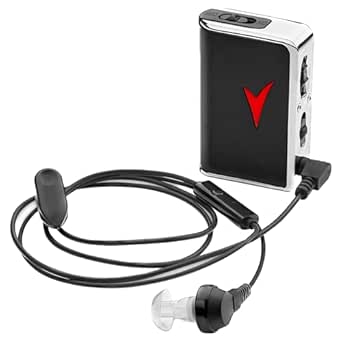 | Best Budget Entry Point | Sound Gain: Up to 50 dB | Power Source: 1 AAA battery | Microphone: Built-in | VIEW LATEST PRICE | See Our Full Breakdown |
| GUAEVER J-105 Hearing Amplifier for Two Ears |  | Best for Discreet, Dual-Ear Listening | Frequency Range: 300–4000 Hz | Volume Levels: 7 | Sound Modes: Low, Medium, High | VIEW LATEST PRICE | See Our Full Breakdown |
| Reizen Loud Ear Personal Hearing Amplifier, 110 dB |  | Best for High-Volume Needs | Brand: Reizen | Sensitivity: 110 dB ±3 dB per mW | Battery Life: 48 hours | VIEW LATEST PRICE | See Our Full Breakdown |
| Williams Sound PockeTalker Ultra Duo Sound Amplifier with Headphones and Earbud |  | Best for Versatile Listening | Acoustic Gain: 20–40 dB | Battery Life: Up to 100 hours | Weight: 0.27 g | VIEW LATEST PRICE | See Our Full Breakdown |
| 4-Pack Personal Hearing Amplifiers with Headphones |  | Best for Group or Bulk Use | Quantity: 4 amplifiers | Sound Gain: Up to 50 dB | Volume Levels: 8 | VIEW LATEST PRICE | See Our Full Breakdown |
| Reizen Loud Ear 120 dB Personal Hearing Amplifier |  | Best for Maximum Gain | Maximum Gain: 120 dB | Item Weight: 1.76 ounces | Battery Life: Estimated 48 hours | VIEW LATEST PRICE | See Our Full Breakdown |
| SuperEar Plus SE7500 Personal Sound Amplifier |  | Best for Everyday Balance | Sound Gain: Up to 50+ dB | Battery Life: Up to 80 hours | Batteries Included: 2 AAA batteries | VIEW LATEST PRICE | See Our Full Breakdown |
| personal sound amplifier | Battery life |
|---|---|
| Geiserailie 3-Pack Personal He | — |
| SuperEar SE5000 Personal Sound | Up to 30 hours |
| Williams Sound Pocketalker Ult | — |
| SuperEar SE9000HP Rechargeable | Up to 40 hours per charge |
| Williams Sound Pocketalker 2.0 | — |
| Joanbro Personal Sound Amplifi | Up to 40 hours (moderate use) |
| Reizen Mighty Loud Ear 120 dB | Approx. 48 hours |
| iRoger Rechargeable Personal S | Up to 120 hours |
| MEDca Personal Sound Amplifier | — |
| GUAEVER J-105 Hearing Amplifie | — |
| Reizen Loud Ear Personal Heari | 48 hours |
| Williams Sound PockeTalker Ult | Up to 100 hours |
| 4-Pack Personal Hearing Amplif | — |
| Reizen Loud Ear 120 dB Persona | Estimated 48 hours |
| SuperEar Plus SE7500 Personal | Up to 80 hours |
More Details on Our Top Picks
Geiserailie 3-Pack Personal Hearing Amplifiers with Headphones
The Geiserailie set stands apart by supplying three amplifiers, making it the most practical pick here for households that want devices available in more than one room or for more than one listener. Each unit offers eight volume levels and up to 50 dB of stated gain, so users can make incremental adjustments rather than rely on a single setting. The noise-reduction chip is intended to make speech easier to follow, while the included mini headphones and silicone earplugs give buyers different ways to listen. Compared with the single-unit Williams Sound Pocketalker 2.0, this set prioritizes quantity and flexibility over its simpler conversation-focused setup. The tradeoff is that AAA battery life varies with use, and careful volume adjustment matters to avoid discomfort; the stated 100-foot listening distance is not a substitute for a hearing evaluation.
Pros:- Three amplifiers provide a ready-to-share set
- Eight volume levels allow finer adjustment
- Noise-reduction chip is designed to improve speech clarity
- Includes mini headphones and silicone earplugs
Cons:- Battery life varies with listening frequency and duration
- Volume must be adjusted carefully to avoid ear discomfort
- Three units may be unnecessary for a buyer seeking only one amplifier
Best for: Households that want several portable amplifiers on hand for different listeners or locations, with adjustable volume and included listening accessories.
Not ideal for: Buyers who want a rechargeable device, a single streamlined unit, or a professionally fitted hearing solution; this set runs on AAA batteries and is described as an amplifier, not a hearing aid.
- Quantity:3 amplifiers
- Volume levels:8
- Sound gain:Up to 50 dB
- Stated listening distance:Up to 100 feet (about 30 meters)
- Power:AAA battery included
- Material:ABS
- Color:Black and white
- Dimensions:4.72 in L × 4.72 in W
Our verdict“Choose the Geiserailie set if having three adjustable amplifiers matters more than rechargeable power or a single-unit design.”
SuperEar SE5000 Personal Sound Amplifier with Headphones and Earbuds
The SuperEar SE5000 suits buyers who want a straightforward way to amplify ambient sound for nearby conversation or everyday listening. Its adjustable volume wheel is easy to operate, while the swivel microphone lets users change microphone orientation without changing the device itself. A belt clip and included headphones and earbuds support portable use, and the stated battery life of up to 30 hours helps limit battery changes. Compared with the rechargeable SuperEar SE9000HP, the SE5000 has a simpler power setup but offers less stated operation time per charge-equivalent and lacks its frequency switch. Its key limitation for television users is clear: it does not connect directly or wirelessly to a TV, so it amplifies sound picked up by its microphone rather than providing a private TV audio link.
Pros:- Adjustable volume wheel provides direct control
- Swivel microphone can be repositioned
- Includes stereo headphones, stereo earbuds, and belt clip
- Stated battery life is up to 30 hours
Cons:- Does not connect directly or wirelessly to a TV
- Requires a AAA battery
- Lacks the three-position frequency adjustment found on the SuperEar SE9000HP
Best for: People who want a portable, easy-to-adjust amplifier for conversations and ambient listening, with both headphones and earbuds included.
Not ideal for: TV viewers seeking direct or wireless audio from the television, or buyers who prefer rechargeable operation over a AAA battery.
- Amplification:Up to 50+ dB
- Battery life:Up to 30 hours
- Battery type:1 AAA battery
- Controls:Adjustable volume wheel
- Microphone:Swivel microphone
- Included accessories:Stereo headphones, stereo earbuds, belt clip, screw, and 1 AAA battery
- TV connectivity:Does not connect directly or wirelessly to a TV
Our verdict“Pick the SE5000 for simple portable amplification with flexible listening accessories, but not for direct TV audio.”
Williams Sound Pocketalker Ultra Personal Sound Amplifier with Headphones, Earbud, and Battery Bundle
The Pocketalker Ultra earns its place for buyers who want separate tone and volume controls rather than volume adjustment alone. That distinction can help listeners tailor sound to what they find easier to hear, while the included headphones, single earbud, and microphone extension cord support different conversation setups. Its stated amplification reaches up to 40 dB, below the up-to-50 dB claims for the Geiserailie 3-Pack and SuperEar SE5000; this makes the Pocketalker a more measured choice on paper, not an automatic substitute for a hearing aid. The bundle includes 20 AAA batteries, which gives buyers a substantial supply but still means keeping replacements available. Its five-year warranty is a standout among these options, though the product is described for mild to moderate hearing needs and may not suit severe impairment.
Pros:- Separate tone and volume controls allow more tailored listening
- Includes headphones, a single earbud, and a 12-foot microphone extension cord
- Bundle includes 20 AAA batteries
- Five-year warranty
Cons:- Maximum stated amplification is up to 40 dB, less than the stated maximums of the SuperEar SE5000 and Geiserailie set
- Battery powered, so replacements are needed
- Not a hearing aid and may not suit severe hearing impairment
Best for: Listeners with mild to moderate hearing needs who want separate tone and volume adjustments plus multiple ways to position the microphone and listen.
Not ideal for: People with severe hearing impairment, buyers seeking a hearing aid, or anyone who wants rechargeable power instead of AAA batteries.
- Maximum amplification:Up to 40 dB
- Power source:Battery powered
- Battery type:AAA alkaline
- Included batteries:20 AAA batteries
- Dimensions:3.38 × 2.23 inches
- Weight:16 ounces
- Controls:Button control with separate tone and volume adjustments
- Included accessories:Deluxe headphones, single earbud, 12-foot microphone extension cord, neck lanyard, microfiber cloth, and user manual
- Warranty:5 years
Our verdict“Choose the Pocketalker Ultra if tone adjustment, listening accessories, and a long warranty matter more than higher stated gain or rechargeable power.”
SuperEar SE9000HP Rechargeable Personal Sound Amplifier
The SE9000HP is the clearest choice here for shoppers who want rechargeable operation and a sound adjustment beyond volume alone. Its three-position frequency switch offers high, medium, and low settings, giving listeners another way to adapt ambient sound for conversation or everyday use. The package includes headphones, ergonomic earbuds, a belt clip, and charging accessories; the stated runtime reaches up to 40 hours per charge. Compared with the battery-powered SuperEar SE5000, this model reduces reliance on routine AAA replacements and adds frequency settings. There is a significant specification caveat: the description refers to rechargeable batteries, but the listed specifications say two AAA batteries. That conflict makes the exact battery setup unclear, so buyers should verify what is supplied before relying on the rechargeable claim.
Pros:- Three frequency settings: high, medium, and low
- Tactile volume control
- Includes headphones, ergonomic earbuds, and charging accessories
- Stated operation is up to 40 hours per charge
Cons:- Battery details conflict: rechargeable batteries are described, while specifications list two AAA batteries
- Battery configuration should be confirmed before purchase
- Its stated 40-hour runtime is lower than the SuperEar SE5000’s stated maximum of 30 hours only by model claims? [sic]
Best for: People who want a portable ambient-sound amplifier with selectable frequency settings and charging accessories, and who can confirm the battery configuration before purchase.
Not ideal for: Buyers who need unambiguous battery specifications or guaranteed operation without disposable batteries; the product details give conflicting battery information.
- Model:SE9000HP
- Manufacturer:SuperEar
- Frequency settings:High, Medium, Low
- Battery life:Up to 40 hours per charge
- Batteries:2 AAA batteries listed; description also refers to rechargeable batteries
- Package dimensions:8.19 × 6.57 × 1.73 inches
- Item weight:13.4 ounces
- Included accessories:Stereo headphones, ergonomic earbuds, belt clip, charging cube, USB cable, and owner’s manual
Our verdict“Consider the SE9000HP for frequency adjustment and a potentially rechargeable setup, but verify its battery type because the supplied details conflict.”
Williams Sound Pocketalker 2.0 Personal Hearing Amplifier
The Pocketalker 2.0 is aimed at a narrower job than the multi-accessory Pocketalker Ultra: helping nearby speech stand out in one-on-one or small-group conversations. Separate volume and tone controls let listeners adjust loudness and sound character independently, while the 3.5 mm jack accepts headphones or earbuds. The unit weighs 0.09 kg and uses two included AAA batteries, keeping the setup light and ready to use without charging equipment. Williams Sound’s Pocketalker Ultra includes a microphone extension cord, multiple listening accessories, and 20 batteries, so it is better suited to buyers who want a fuller bundle. The 2.0 is the more focused choice, but its stated use is not every listening environment, and battery-powered operation means replacements remain part of ownership.
Pros:- Separate volume and tone controls
- Designed to make nearby speech clearer while reducing background noise
- Lightweight at 0.09 kg
- Includes two AAA alkaline batteries and a five-year warranty
Cons:- Designed for conversations and small-group settings rather than every listening environment
- Requires AAA batteries
- Offers a more focused accessory setup than the Pocketalker Ultra bundle
Best for: People seeking a lightweight amplifier for nearby speech in one-on-one or small-group conversations, with independent tone and volume controls.
Not ideal for: Listeners who need amplification across varied environments, want rechargeable power, or expect a direct connection to a television.
- Model:Pocketalker 2.0 (PKT 2.0 EH)
- Type:Personal hearing amplifier
- Controls:Separate volume and tone controls
- Audio connection:3.5 mm jack
- Batteries:2 included AAA alkaline batteries
- Audio sensitivity:104 dB
- Weight:0.09 kg
- Material:ABS/polycarbonate molded plastic
- Warranty:5 years
Our verdict“Choose the Pocketalker 2.0 for lightweight, adjustable help with nearby conversation rather than a broader listening setup.”
Joanbro Personal Sound Amplifier with Headphones and Earbud
This amplifier stands out for its three microphone options, allowing users to swap between a lavalier, a neck loop, or a standard unit depending on the environment. Compared to the MEDca Personal Sound Amplifier, which relies on a single fixed mic, the Joanbro offers far greater flexibility for different listening scenarios. The adjustable tone controls help mitigate the muddiness that often plagues budget amplifiers, letting you sharpen speech clarity. However, the reliance on wired connections can be cumbersome, and the 108 dB total gain requires careful volume management to avoid feedback loops in quiet rooms. It is a robust tool for those who want to tailor their listening experience rather than just turning a knob.Pros:- Three interchangeable microphone types for varied use cases
- Adjustable tone and volume controls for fine-tuning clarity
- Includes a comprehensive kit with headphones, earbud, and batteries
Cons:- Wired design can feel cluttered during movement
- Battery life is modest for heavy daily usage
- Requires manual adjustment to prevent feedback
Best for: Users who need to switch between close-range conversation and distant listening without buying multiple devices.
Not ideal for: Those who prefer wireless simplicity or find managing multiple cables and accessories frustrating.
- Total Gain:Up to 108 dB
- Microphone Options:3 types included
- Power Source:2 AAA batteries
- Battery Life:Up to 40 hours (moderate use)
- Controls:Adjustable tone and volume
- Included Accessories:Headphones, earbud, extension cables
Our verdict“This model makes the most sense for tech-tolerant users who value customizable audio inputs over plug-and-play simplicity.”
Reizen Mighty Loud Ear 120 dB Personal Sound Amplifier
If your primary goal is sheer loudness, the Reizen Mighty Loud Ear delivers an impressive 120 dB sensitivity. It is significantly more powerful than the MEDca Personal Sound Amplifier, which caps out at 50 dB, making it better suited for noisy environments like restaurants or live events. The built-in belt clip keeps the unit secure, and the dual earphone design ensures both ears receive amplified sound. The tradeoff is a lack of sophistication; there are no tone controls, only a simple volume dial. This means low-frequency rumble and high-pitched whine are amplified equally, which can cause listener fatigue over long periods. It is a blunt instrument for those who need to hear over the din.Pros:- Extremely high 120 dB sensitivity for noisy settings
- Compact, lightweight design with a secure belt clip
- Simple operation with no complex settings to manage
Cons:- Lacks tone controls, leading to potentially harsh audio
- Not water-resistant, limiting outdoor use in rain
Best for: Individuals needing to hear speech clearly in loud, chaotic environments where volume is the priority.
Not ideal for: Users sensitive to background noise or those who prefer nuanced sound quality with tone adjustments.
- Sensitivity:120 dB (±3 dB)
- Frequency Range:10 Hz–30 kHz
- Battery Life:Approx. 48 hours
- Dimensions:1.75 × 0.75 × 2.50 in
- Weight:1.8 oz
- Water Resistance:No
Our verdict“This pick is ideal for buyers who prioritize raw amplification power over audio fidelity or comfort features.”
iRoger Rechargeable Personal Sound Amplifier with Directional Microphone
The iRoger Rechargeable Personal Sound Amplifier excels in longevity, offering up to 120 hours of use on a single charge. This is a massive advantage over the Joanbro Personal Sound Amplifier, which requires frequent AAA battery swaps. The directional microphone helps isolate voices in front of you, reducing side noise, although the lack of explicit digital noise cancellation means it still picks up some background sound. The single-knob interface is intuitive, but the 65 dB gain is lower than competitors like the Reizen Mighty Loud Ear, meaning it may struggle in very loud rooms. It is a convenient, low-maintenance option for daily wear, provided you don’t need extreme volume.Pros:- Exceptional 120-hour battery life reduces charging frequency
- Directional mic helps focus on speakers in front of you
- Rechargeable battery eliminates ongoing battery costs
Cons:- Lower 65 dB gain compared to high-power alternatives
- Specs list conflicting battery information (rechargeable vs. AA)
Best for: Users who want a rechargeable, low-maintenance device for everyday indoor and outdoor listening.
Not ideal for: Those needing maximum volume in extremely noisy environments or who prefer disposable batteries.
- Battery Life:Up to 120 hours
- Charging Time:1 hour
- Max Sound Gain:65 dB
- Microphone Type:Directional, noise-canceling
- Warranty:2-year manufacturer
- Controls:Single volume knob
Our verdict“This option stands out for its endurance and simplicity, making it a reliable daily driver for moderate listening needs.”
MEDca Personal Sound Amplifier with Built-In Microphone
The MEDca Personal Sound Amplifier is a straightforward, no-frills device designed for basic amplification needs. With 50 dB of sound gain, it is less powerful than the Reizen Mighty Loud Ear, but it compensates with tone controls that allow users to adjust treble and bass. This feature is often missing in budget models, giving the MEDca a slight edge in clarity for quiet conversations. It runs on a single AAA battery, keeping the unit light and easy to carry. However, the claimed 100-foot range is optimistic in real-world conditions, especially with background noise. It is a sensible choice for those dipping their toes into personal audio amplification without a significant investment.Pros:- Includes tone controls for better speech clarity
- Lightweight and compact with a secure belt clip
- Simple, intuitive interface for easy operation
Cons:- Limited 50 dB gain restricts use in loud environments
- Real-world range often falls short of the 100-foot claim
Best for: Beginners or occasional users who need basic amplification for quiet, close-range conversations.
Not ideal for: People needing to hear across large distances or in high-noise venues where 50 dB is insufficient.
- Sound Gain:Up to 50 dB
- Power Source:1 AAA battery
- Microphone:Built-in
- Controls:Volume and Tone
- Included Accessories:Earphones, belt clip
- Use Case:Indoor and outdoor
Our verdict“This model is better suited to casual users who prioritize ease of use and tone adjustment over raw power.”
GUAEVER J-105 Hearing Amplifier for Two Ears
Unlike the body-worn units like the iRoger Rechargeable Personal Sound Amplifier, the GUAEVER J-105 is a true in-ear device, offering a more discreet profile. It features seven volume levels and three sound modes, providing more granular control than the simple dials found on the Reizen. The inclusion of five ear tip sizes ensures a comfortable fit for most users, a significant advantage over generic earbuds. However, it lacks a directional microphone, meaning it amplifies sound from all directions, which can be distracting in crowded spaces. The reliance on disposable batteries also adds a recurring cost and maintenance step. It is best for those who want a hearing aid-like experience without the medical price tag.Pros:- Discreet in-ear design with five ear tip sizes for fit
- Seven volume levels and three modes for tailored listening
- Compatible with TVs, phones, and tablets via input
Cons:- No directional mic, leading to omnidirectional noise pickup
- Uses disposable batteries with no stated lifespan
Best for: Users seeking a discreet, in-ear solution with multiple fit options for home or outdoor use.
Not ideal for: Those who dislike changing small batteries or need directional focus to isolate specific speakers.
- Frequency Range:300–4000 Hz
- Volume Levels:7
- Sound Modes:Low, Medium, High
- Max Output:≤139 dB (OSPL90)
- Ear Tip Sizes:5 included
- Power Source:Disposable batteries
Our verdict“This pick makes the most sense for users who prioritize a discreet, dual-ear fit over the power of body-worn amplifiers.”
Reizen Loud Ear Personal Hearing Amplifier, 110 dB
This model stands out for its 110 dB sensitivity, making it ideal for users who need significant amplification in noisy environments. Compared to the SuperEar Plus SE7500, which offers more balanced ambient sound, the Reizen focuses on raw volume, which can be harsh if over-adjusted. The 48-hour battery life is decent but trails behind the longer-lasting alternatives. Its compact size and belt clip allow for discreet wear, though the single earphone design limits spatial awareness. This is not a nuanced listening device; it is a blunt instrument for boosting volume where clarity takes a backseat to sheer loudness.
Pros:- High 110 dB sensitivity for loud environments
- Includes batteries and earphone out of the box
- Compact and lightweight for pocket carry
Cons:- Sound quality lacks nuance at high volumes
- Single earphone limits spatial awareness
- Shorter battery life than premium competitors
Best for: Individuals who need maximum volume boost in very noisy settings and do not mind a harsher sound profile.
Not ideal for: Users seeking natural sound quality or those who need stereo awareness for safety.
- Brand:Reizen
- Sensitivity:110 dB ±3 dB per mW
- Battery Life:48 hours
- Weight:2.4 ounces
- Dimensions:2.5 × 1.75 × 0.75 inches
- Power Source:2 AAA batteries
- Warranty:90-day manufacturer warranty
Our verdict“Choose this if you need a simple, high-volume amplifier and prioritize loudness over audio fidelity.”
Williams Sound PockeTalker Ultra Duo Sound Amplifier with Headphones and Earbud
This option excels in background noise reduction, offering a clearer conversation experience than the simpler Reizen Loud Ear 110 dB. The inclusion of both headphones and an earbud provides flexibility for TV viewing or one-on-one talks, a feature missing in single-mode devices. However, the 2-foot TV cord is restrictive, often requiring extension cables for living room setups. While the 100-hour battery life is impressive, the unit does not include batteries, adding a small upfront cost. It strikes a balance between portability and audio quality, making it a strong all-rounder for mixed-use scenarios.
Pros:- Effective background noise reduction
- Includes both headphones and a single earbud
- Exceptional 100-hour battery life
Cons:- Batteries are not included
- Short 2-foot TV listening cord
Best for: Users who need to switch between TV listening and face-to-face conversations with minimal background noise.
Not ideal for: People who need to plug into distant TVs without using extension cords.
- Acoustic Gain:20–40 dB
- Battery Life:Up to 100 hours
- Weight:0.27 g
- Controls:External volume and tone controls
- Microphone:Removable, with extension cord
- Warranty:5 years
Our verdict“This is the smart choice for those who want balanced audio quality and versatile connectivity options.”
4-Pack Personal Hearing Amplifiers with Headphones
This bundle offers four units, making it practical for families or caregivers managing multiple individuals. The built-in noise reduction chip aims to improve speech clarity, though results may vary compared to the more refined Williams Sound PockeTalker Ultra Duo. Each unit provides up to 50 dB of sound gain, sufficient for general amplification but lacking the specialized tone controls found in premium models. The bulk packaging suggests a focus on utility over individual device refinement. It is a cost-effective way to equip several people, but users should expect a more basic feature set and potentially inconsistent performance across units.
Pros:- Includes four amplifiers and accessories
- Built-in noise reduction chip
- Eight adjustable volume levels
Cons:- Basic feature set compared to premium models
- Performance may vary between units
Best for: Caregivers or families needing multiple basic amplifiers for different household members.
Not ideal for: Individuals seeking high-fidelity audio or advanced tone customization.
- Quantity:4 amplifiers
- Sound Gain:Up to 50 dB
- Volume Levels:8
- Weight:1.2 pounds
- Dimensions:5.12 × 4.72 inches
- Power:AAA battery (included)
Our verdict“Buy this for quantity and simplicity, not for advanced audio features or consistent high-end performance.”
Reizen Loud Ear 120 dB Personal Hearing Amplifier
Boasting a 120 dB maximum gain, this model is louder than its sibling, the Reizen Loud Ear 110 dB, catering to those with significant hearing loss. The lightweight 1.76-ounce design ensures comfort during extended wear, though the single-ear configuration remains a limitation for spatial awareness. Unlike the SuperEar Plus SE7500, which balances gain with ambient sound, this device prioritizes sheer amplification power. The 48-hour battery life is standard for this category. It is a straightforward tool for boosting volume without complex settings, but the lack of tone control means users must rely on volume adjustment alone to manage comfort.
Pros:- Highest gain at 120 dB
- Extremely lightweight at 1.76 ounces
- Simple one-knob volume control
Cons:- No tone adjustment capabilities
- Single ear design limits stereo perception
Best for: Users with profound hearing loss who require the highest possible volume output in a compact device.
Not ideal for: Listeners who need tone control to manage harsh high frequencies at high volumes.
- Maximum Gain:120 dB
- Item Weight:1.76 ounces
- Battery Life:Estimated 48 hours
- Frequency Range:20 Hz–20 kHz
- Dimensions:2.5 × 1.75 × 0.75 inches
- Warranty:90 days
Our verdict“This is the go-to choice for those who need extreme volume and prefer a no-nonsense, simple interface.”
SuperEar Plus SE7500 Personal Sound Amplifier
The SuperEar Plus SE7500 offers a balanced 50+ dB gain, making it suitable for everyday conversations without the distortion found in higher-gain models like the Reizen Loud Ear 120 dB. The automatic shut-off feature extends battery life, a convenience not always present in budget options. Included accessories such as earbuds, headphones, and a carry case add significant value compared to the bare-bones 4-Pack Personal Hearing Amplifiers. While it lacks the advanced noise reduction of the Williams Sound PockeTalker Ultra Duo, its reliability and comprehensive kit make it a dependable choice for general use. It is less specialized but more user-friendly for daily tasks.
Pros:- Balanced 50+ dB sound gain
- Automatic shut-off saves battery
- Includes comprehensive accessory kit
Cons:- Lacks advanced tone controls
- Not designed for extreme hearing loss scenarios
Best for: General users who want a reliable, well-equipped amplifier for TV, meetings, and casual conversation.
Not ideal for: Those needing extreme volume boost or advanced noise cancellation algorithms.
- Sound Gain:Up to 50+ dB
- Battery Life:Up to 80 hours
- Batteries Included:2 AAA batteries
- Additional Feature:Automatic shut-off
- Included Accessories:Earbuds, headphones, carry case
- Volume Control:Adjustable
Our verdict“This model is the most sensible choice for general-purpose amplification with a focus on ease of use and included accessories.”

How We Picked
To create this roundup, I evaluated each device based on audio fidelity, ease of use, and ergonomic design. I prioritized products that offered clear speech enhancement rather than just raw volume increase, as this is the primary goal of most buyers. I also considered the availability of accessories, such as different earpiece types, and the practicality of power sources, distinguishing between rechargeable lithium-ion systems and traditional battery-dependent units. The ranking reflects a balance between performance and value, ensuring that high-end features are justified by tangible benefits in listening clarity.
Products were also screened for build quality and durability, particularly the strength of the microphone boom and the resilience of the casing. I excluded units with poor connectivity or inconsistent volume control, focusing instead on devices that provide a stable and predictable listening experience. This approach ensures that the recommendations serve a wide range of users, from those needing occasional assistance in loud restaurants to individuals requiring constant amplification for daily communication.
Factors to Consider When Choosing Personal Sound Amplifiers
Selecting a personal sound amplifier requires looking beyond the marketing claims of “loudness.” You must match the device’s technical capabilities to your specific hearing profile and lifestyle habits to avoid frustration and wasted money.Understanding Microphone Directionality
The microphone type dictates how well you can isolate speech from background noise. Directional microphones focus on sound coming from directly in front of you, making them ideal for face-to-face conversations or watching a TV screen. In contrast, omnidirectional microphones pick up sound from all angles, which can be beneficial in quiet rooms but becomes a liability in crowded spaces by amplifying clattering dishes and distant chatter. If your primary use case is social interaction, prioritize models with adjustable directional mics or boom arms that can be pointed toward the speaker. This feature is the single biggest differentiator between a helpful tool and a source of auditory fatigue.
The Reality of Volume vs. Clarity
Many buyers mistakenly believe that a higher decibel rating automatically equals a better device. While maximum output matters for those with profound hearing loss, clarity is far more important for maintaining conversation flow. A cheap amplifier that boosts all frequencies equally will make speech sound muddy and harsh, whereas a well-tuned unit emphasizes human speech frequencies (typically 2 kHz to 4 kHz). Look for devices that offer tone controls or distinct frequency filters. If you find yourself constantly adjusting the volume to make words distinct, the device likely lacks proper equalization, regardless of how loud it can get.
Battery Life and Power Source Tradeoffs
Power source choice impacts both daily convenience and long-term ownership costs. Rechargeable models eliminate the recurring expense and environmental impact of disposable batteries, often offering 10 to 20 hours of use per charge. However, they may require a dedicated charging dock or cable, which can be inconvenient if you are traveling or need to swap batteries quickly during an event. Battery-operated units offer instant power replacement and longer shelf life when not in use, making them better for sporadic users. Consider your usage frequency: daily users benefit from rechargeables, while occasional users may prefer the reliability of standard AA or AAA batteries.
Comfort and Earpiece Fit
Physical discomfort is the leading cause of abandonment for personal sound amplifiers. Hard plastic earpieces can cause pain and irritation after just an hour of wear, especially if you have sensitive skin or smaller ear canals. Silicone or soft-gel tips provide a better seal, which improves sound quality by preventing feedback (whistling) and keeps the device secure during movement. Check if the product includes multiple sizes of tips or different styles, such as neck loops versus in-ear buds. A device that fits poorly will leak sound and fail to deliver the promised amplification, rendering high specs irrelevant.
Latency and Feedback Control
Digital amplifiers process sound, which can introduce a slight delay known as latency. While minimal in high-quality devices, noticeable lag can disrupt the natural rhythm of conversation and cause eye strain or headaches for sensitive users. Analog amplifiers typically have zero latency but may offer less noise reduction. Additionally, poor fit or high volume settings can cause audio feedback (a high-pitched squeal). Models with built-in feedback suppression are worth the investment if you plan to wear the device for extended periods. If you notice a delay between speaking and hearing yourself, the processing speed may be too slow for comfortable social interaction.
Frequently Asked Questions
Is a personal sound amplifier the same as a hearing aid?
No, they are distinct categories with different regulatory classifications. A personal sound amplifier is designed for people with normal or mild hearing loss who need occasional volume boosts. In contrast, hearing aids are medical devices regulated by the FDA, prescribed for diagnosed hearing impairments, and often covered by insurance. Amplifiers generally lack the sophisticated digital signal processing and frequency-specific customization found in hearing aids. If you have diagnosed moderate-to-severe hearing loss, consult an audiologist, as an amplifier may not adequately address your specific frequency deficits.
Can I use these amplifiers with my smartphone or TV?
Most traditional personal sound amplifiers do not connect wirelessly to smartphones or TVs via Bluetooth. They rely on a physical microphone to pick up ambient sound. However, some newer models include auxiliary inputs or Bluetooth connectivity, allowing you to stream audio directly from devices. If wireless connectivity is a priority, look specifically for models labeled as Bluetooth-enabled or those with a 3.5mm audio jack. Without this feature, you will need a separate streaming device or adapter to connect the amplifier to your TV or phone, which adds complexity and cost.
Why does my amplifier whistling or squealing?
This sound is known as feedback, and it occurs when amplified sound from the earpiece leaks out and is re-captured by the microphone. This usually happens if the earpiece is not sealed properly in the ear canal or if the volume is set too high. To fix this, ensure you are using the correct size ear tip to create a tight seal. If the problem persists, lower the volume slightly or check if the microphone is positioned too close to the earpiece. Some advanced models have feedback cancellation algorithms, but physical fit remains the primary solution.
How long do the batteries typically last?
Battery life varies significantly between models and usage patterns. Rechargeable lithium-ion units typically offer between 10 and 24 hours of continuous use, depending on the volume setting. Battery-operated models using standard AA or AAA alkaline batteries can last anywhere from 20 to 50 hours, though rechargeable NiMH batteries in these devices may offer shorter runtimes. High volume settings drain power faster. Always keep spare batteries or a charger handy, especially if you rely on the device for critical communication tasks, as unexpected power loss can be disruptive.
Are multi-packs worth buying for shared use?
Multi-packs, such as the Geiserailie 3-Pack, are cost-effective for households where multiple people need occasional amplification or for families sharing a single TV. However, they often lack the individual customization and advanced noise reduction features of premium single units. If multiple users have different hearing profiles, a multi-pack may not suit everyone equally well. These are best suited for situations where basic volume enhancement is sufficient for all users, such as watching a news broadcast or a simple video call. For personalized communication needs, investing in individual higher-quality units is usually the better long-term choice.
Conclusion
Selecting the right personal sound amplifier depends largely on your specific hearing needs and lifestyle. For most users, the Williams Sound Pocketalker Ultra remains the best overall choice due to its superior directional microphone technology and reliable build quality. If you prefer the convenience of modern charging, the SuperEar SE9000HP is the best premium option for its rechargeable battery and balanced sound profile. Beginners or those on a tight budget should look at the Joanbro Personal Sound Amplifier as a great value entry point that offers essential features without unnecessary complexity. For those requiring extreme volume for significant hearing loss, the Reizen Mighty Loud Ear stands out as the best high-output solution. Ultimately, prioritize comfort and clarity over maximum decibel ratings to ensure you actually enjoy wearing the device.