TL;DR

Get everyday helpers delivered free with Prime
- Fast, free delivery on millions of items
- Prime Video, Amazon Music and more included
- Member-only deals all year
Pennsylvania has reported more than 1,350 measles cases this year, with over a third in Lancaster County, where the outbreak has affected Amish and conservative Mennonite communities. Local clinics have administered about 450 measles shots to Plain-community residents, and some people who were previously unvaccinated are reconsidering, though views remain mixed.
Some Amish and conservative Mennonite residents in Lancaster County are showing greater openness to measles vaccination as Pennsylvania’s outbreak grows, according to a report published October 31. The state has recorded more than 1,350 cases this year, including more than a third in Lancaster County, and local health providers say outreach clinics have given about 450 measles shots in Plain communities.
The outbreak has affected Amish and conservative Mennonite communities, whose vaccination rates are generally lower than those of the wider population, although attitudes vary. Community leaders and researchers interviewed for the report said lower uptake often reflects longstanding habits rather than religious opposition. Some residents are now seeking vaccination after seeing illness among relatives or neighbors; others remain opposed.
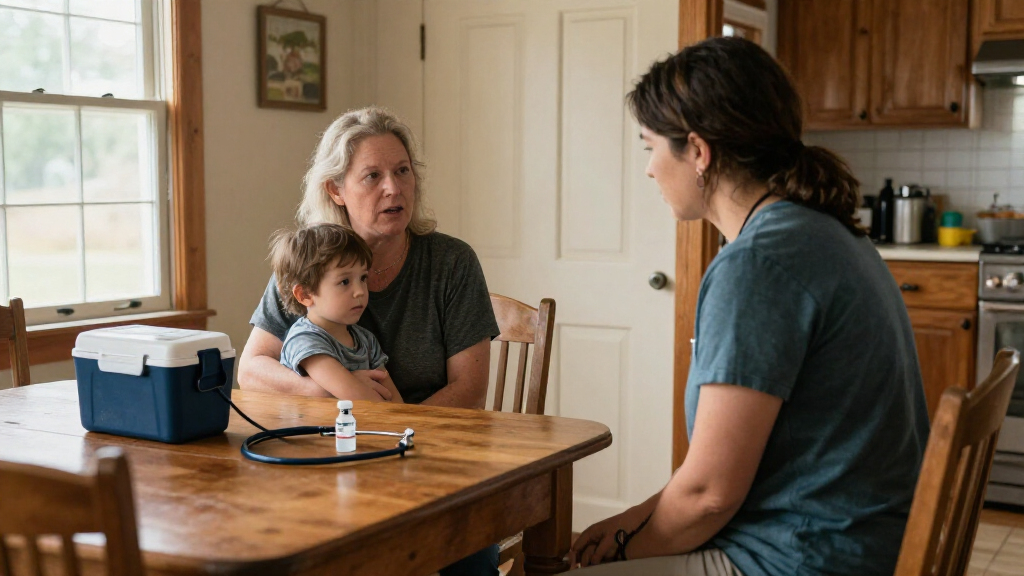
Union Community Care, a nonprofit with clinics in Lancaster and nearby towns, has used small-scale clinics and a mobile outreach effort called Plain Healthy to offer vaccines. Its chief medical officer, Dr. Anne-Marie Derrico, said the clinics had provided about 450 measles vaccinations. The organization is also offering infants doses earlier than the routine schedule, following health experts’ advice for areas experiencing outbreaks.
The outbreak extends beyond one community. Amish and Mennonite residents regularly shop, work and interact with people in surrounding towns, while residents of the wider public share schools and other programs with children from Plain communities. Pennsylvania’s reported case count has fallen since its September peak, but some doctors expect transmission could increase as colder weather brings more indoor gatherings. State figures also record five measles-associated deaths: three in Lancaster County and two elsewhere in Pennsylvania.
Outbreak Reaches Across Communities
The local shift in vaccine interest matters because measles spreads readily among people without immunity, and community boundaries do not prevent everyday contact. Dr. Diego Hijano of St. Jude Children’s Research Hospital described the groups as interconnected. Dr. Derrico said patients from Plain communities visit Lancaster City and that unvaccinated city residents also attend schools and programs alongside other children.
Vaccination can help limit the chance of infection and further spread, while outbreaks can expose infants and others who are not yet vaccinated or cannot receive a vaccine. The report says most measles cases are mild, but the illness can lead to serious complications, including pneumonia and encephalitis, and can be fatal. The reported deaths in Pennsylvania show why public health officials are monitoring the outbreak closely.
Products Worth Considering

Anker SOLIX C300 Portable Power Station, 288Wh

Amazon Kindle Scribe (64GB) with Premium Pen, Metallic Jade

Bose QuietComfort Ultra Headphones (2nd Gen), Wireless Bluetooth Noise-Cancelling Over-Ear Headphones, Black
As an affiliate, we earn on qualifying purchases.
Why Vaccine Uptake Has Varied
Vaccination attitudes in Plain communities have shifted over time, according to community leaders and scholars cited in the report. They said sentiment cooled in response to strict COVID-19 public health measures, while the current measles outbreak has led some people to reconsider. The report does not present Amish communities as uniform: some residents vaccinate, some do not, and their reasons differ.
Allen Hoover, an Old Order Mennonite and former administrator of a medical center in New Holland, said many people who had not vaccinated were not acting from a fixed opposition. Rather, he said, they had followed a family pattern and believed they had done well without vaccines. Hoover advised medical workers to encourage vaccination without aggressive pressure, saying trust in Plain communities takes time to build.
Measles was officially considered eliminated from the United States in 2000, but that status does not mean the virus cannot be brought into the country or spread when it encounters people without immunity. The report says vaccination rates have fallen among the general public as well, adding to the conditions for transmission. It also describes a separate dispute: a cluster of Amish schools and individuals in New York is asking the U.S. Supreme Court to require the state to allow religious exemptions to school vaccination rules. That case is distinct from the Pennsylvania outbreak.
“There’s no way to imagine that this is going to be an isolated community.”
— Dr. Anne-Marie Derrico, Union Community Care chief medical officer
Case Counts and Attitudes Still Vary
The state’s reported total may not capture the full extent of the outbreak. Community leaders told the report they believe it is a significant undercount because some people with measles do not seek medical care. The report does not give an alternative estimate, so the actual number of infections is unknown.
It is also unclear whether the recent increase in openness to vaccination will continue or how many people in Plain communities remain unvaccinated. Views vary, and the outbreak has reinforced skepticism for some even as others seek shots. Pennsylvania’s case decline since September may not hold through winter; the timing and scale of any renewed rise remain uncertain.
Winter Could Test the Decline
Health providers are continuing outreach and vaccination clinics, including early doses for infants in the affected area. Doctors will watch case reports and transmission as winter brings more indoor gatherings. The report does not provide a date for when the state expects the outbreak to end or a forecast for future case totals.
The next indicators will be whether reported infections continue to fall and whether vaccination efforts reach more people at risk. For now, the confirmed trend is mixed: Pennsylvania’s cases have declined from their September high, while local providers report that some residents who previously did not vaccinate are seeking measles shots.
Key Questions
How many measles cases has Pennsylvania reported?
State figures cited in the October 31 report show more than 1,350 cases this year, with more than a third in Lancaster County. Community leaders say the total may be an undercount because some people do not seek medical care.
Are Amish and Mennonite residents becoming more open to vaccines?
Some are, but views vary. The report describes residents seeking vaccination after illness among relatives or neighbors, while others continue to oppose vaccines. Local Union Community Care clinics have provided about 450 measles shots to people in Plain communities.
Is vaccine opposition mainly a religious issue?
Community leaders and experts interviewed for the report said lower vaccination rates often reflect family habits and past experience rather than religious doctrine. They also described a range of views within Amish and Mennonite communities.
Could Pennsylvania cases rise again?
Some doctors cited in the report expect cases could rise as colder weather leads to more indoor gatherings. The state’s reported cases had fallen from a September peak, but the future trend is not yet clear.
Source: medpagetoday.com